


About this worksheet
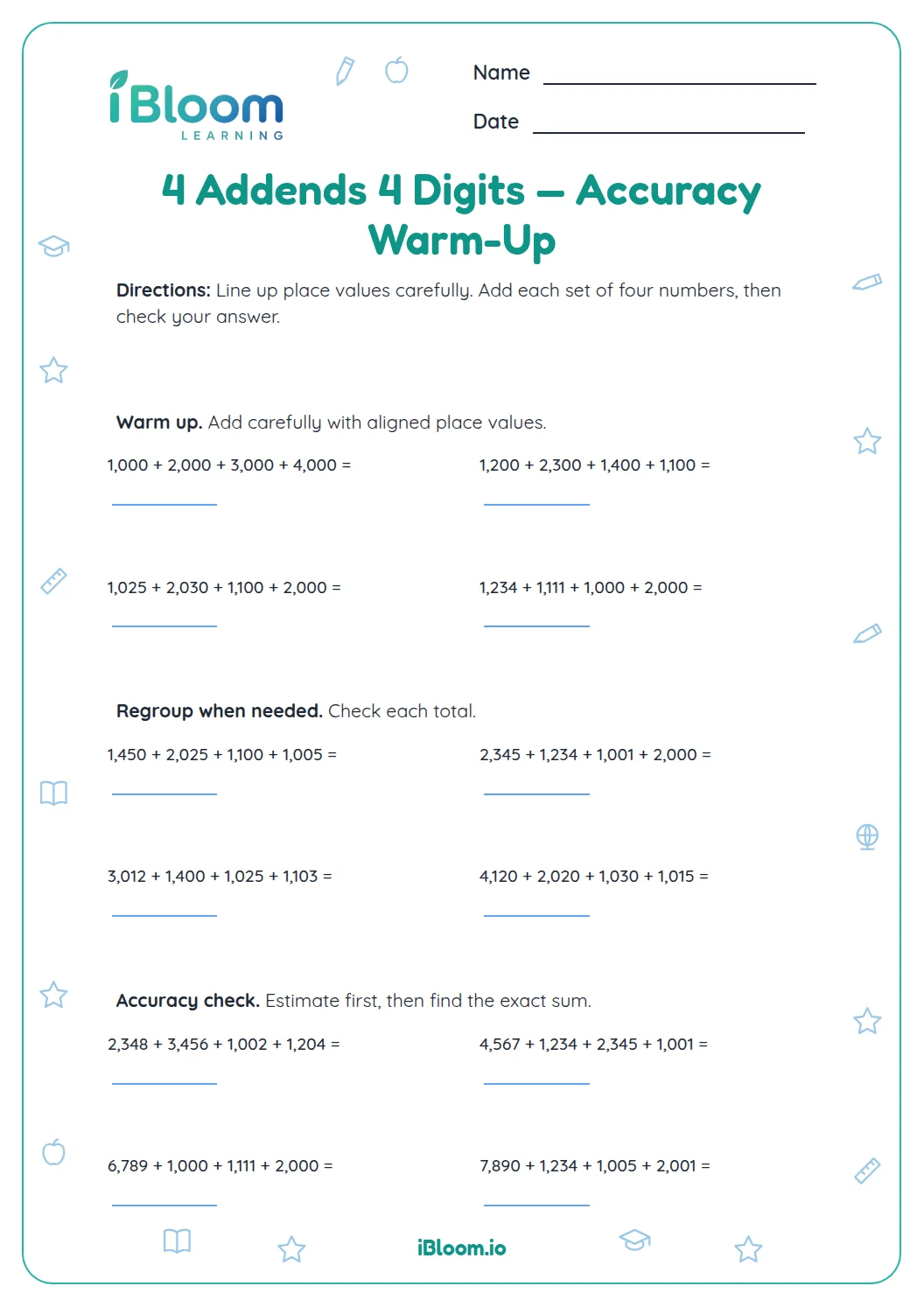
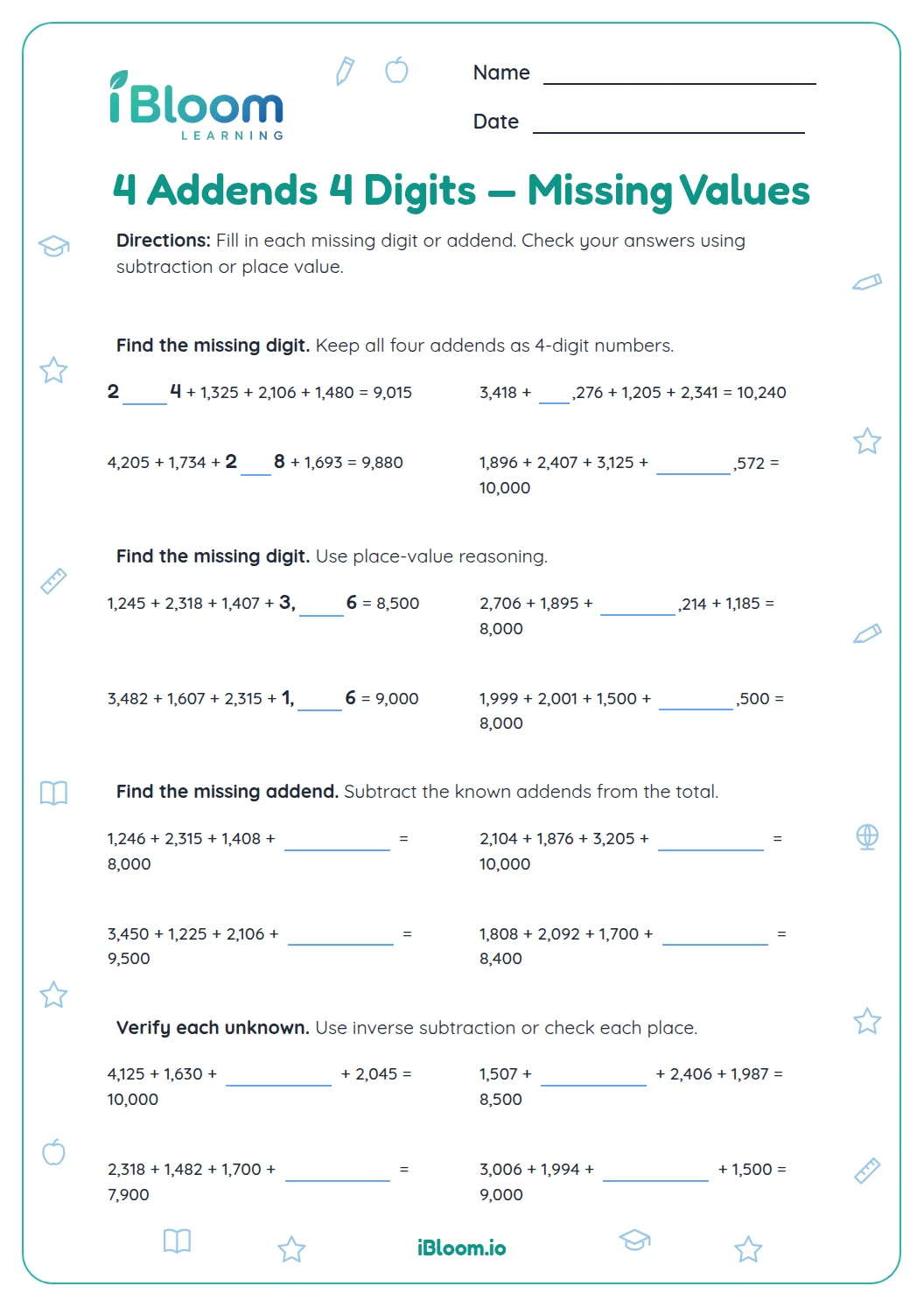
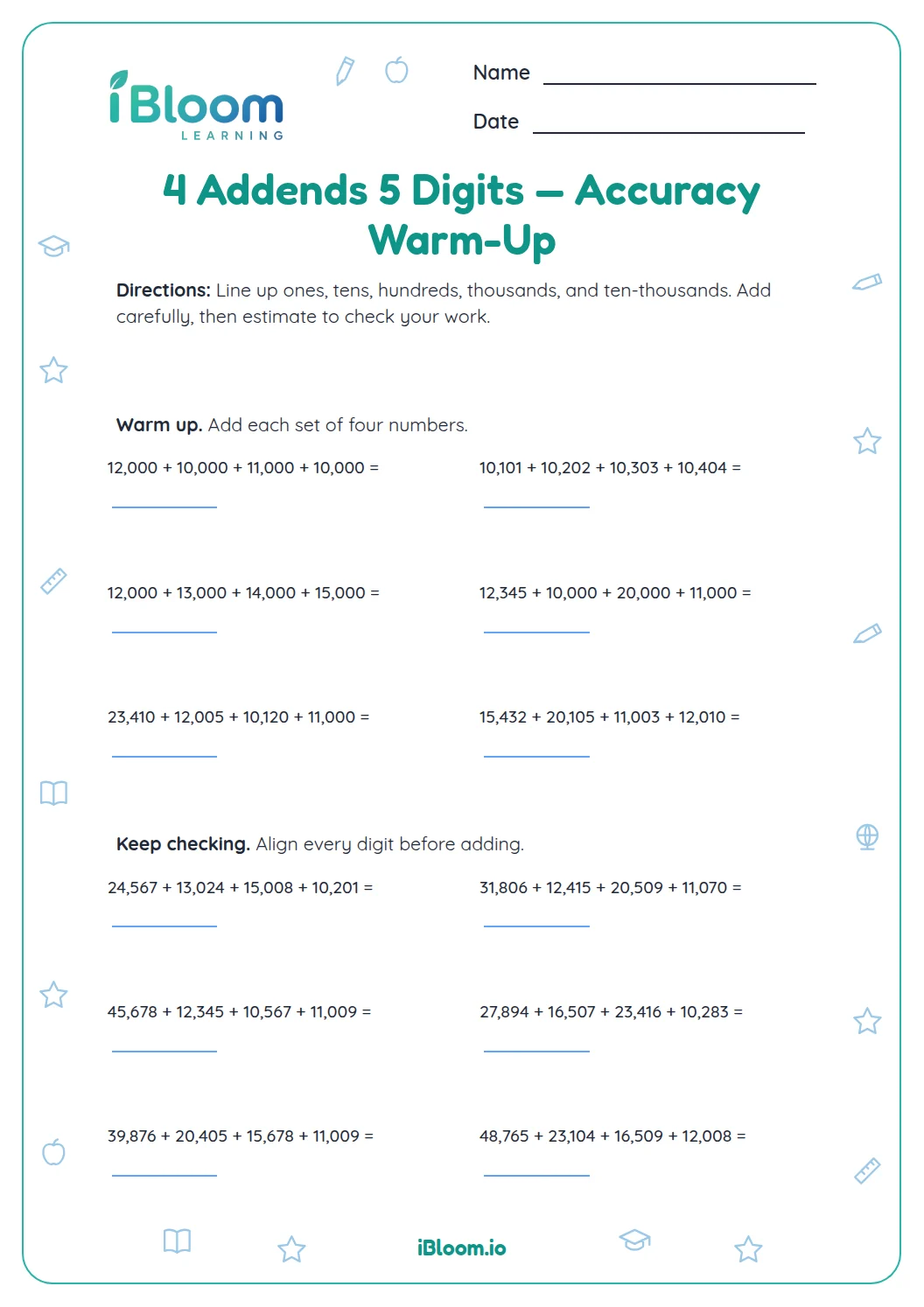
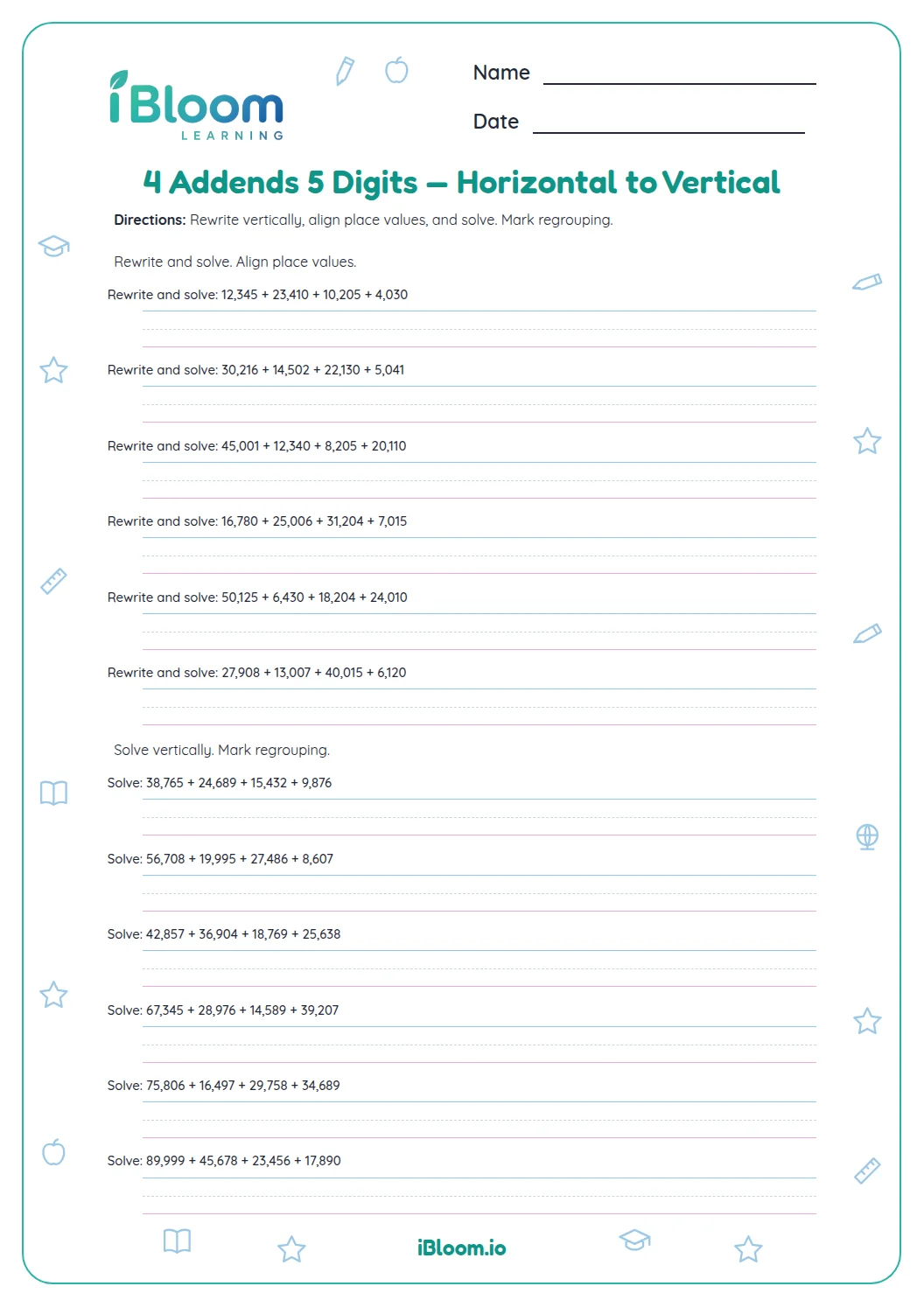
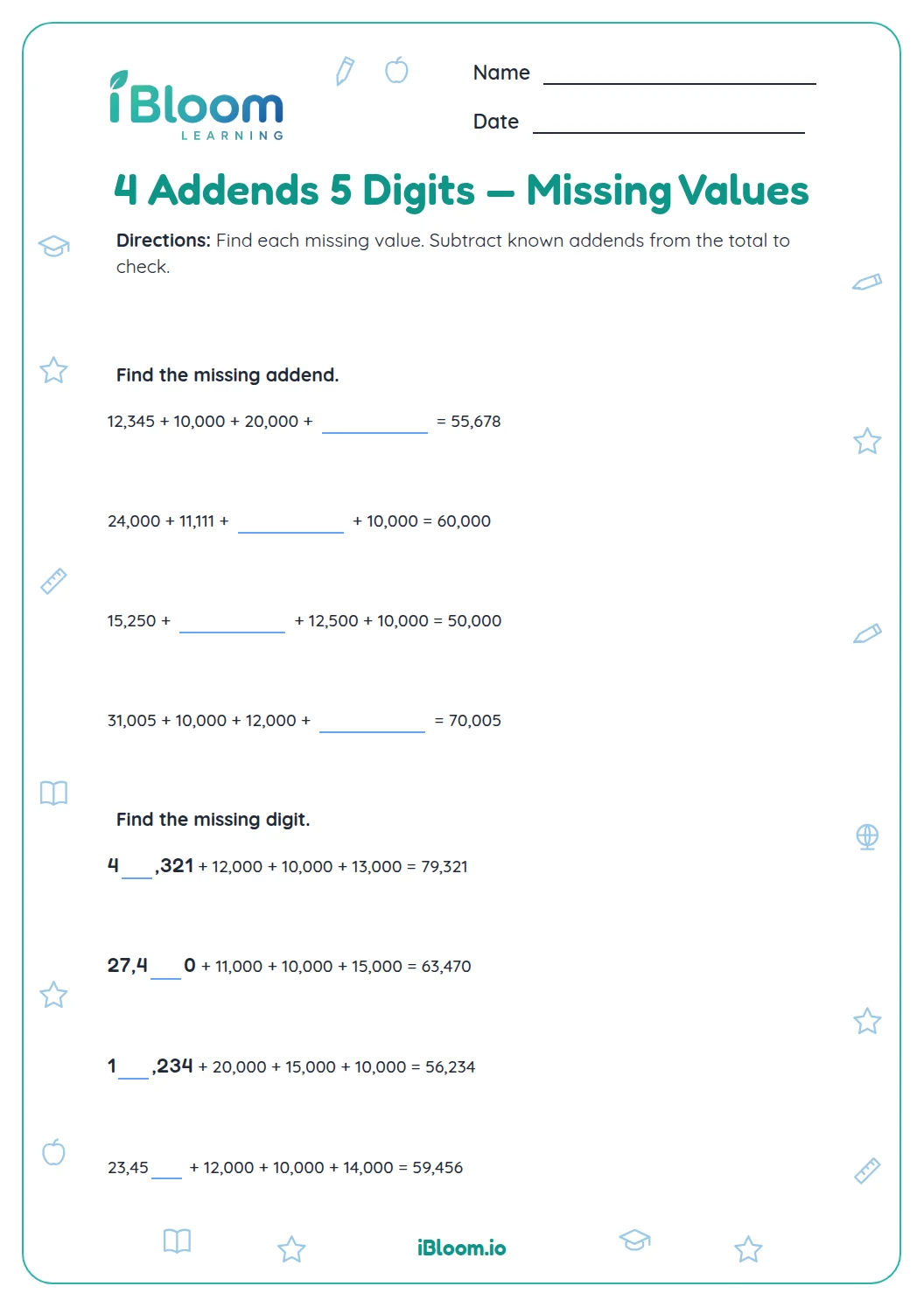
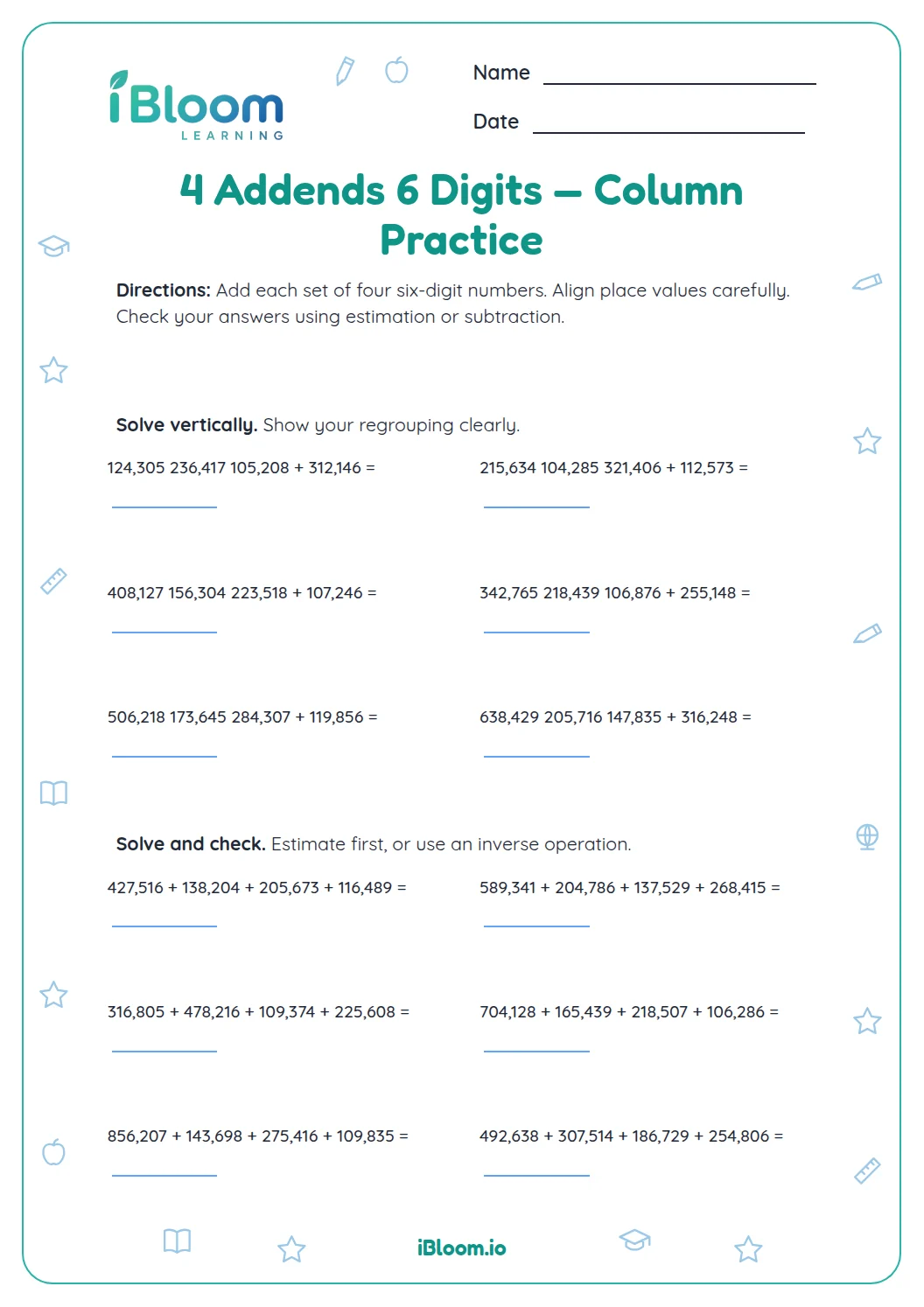
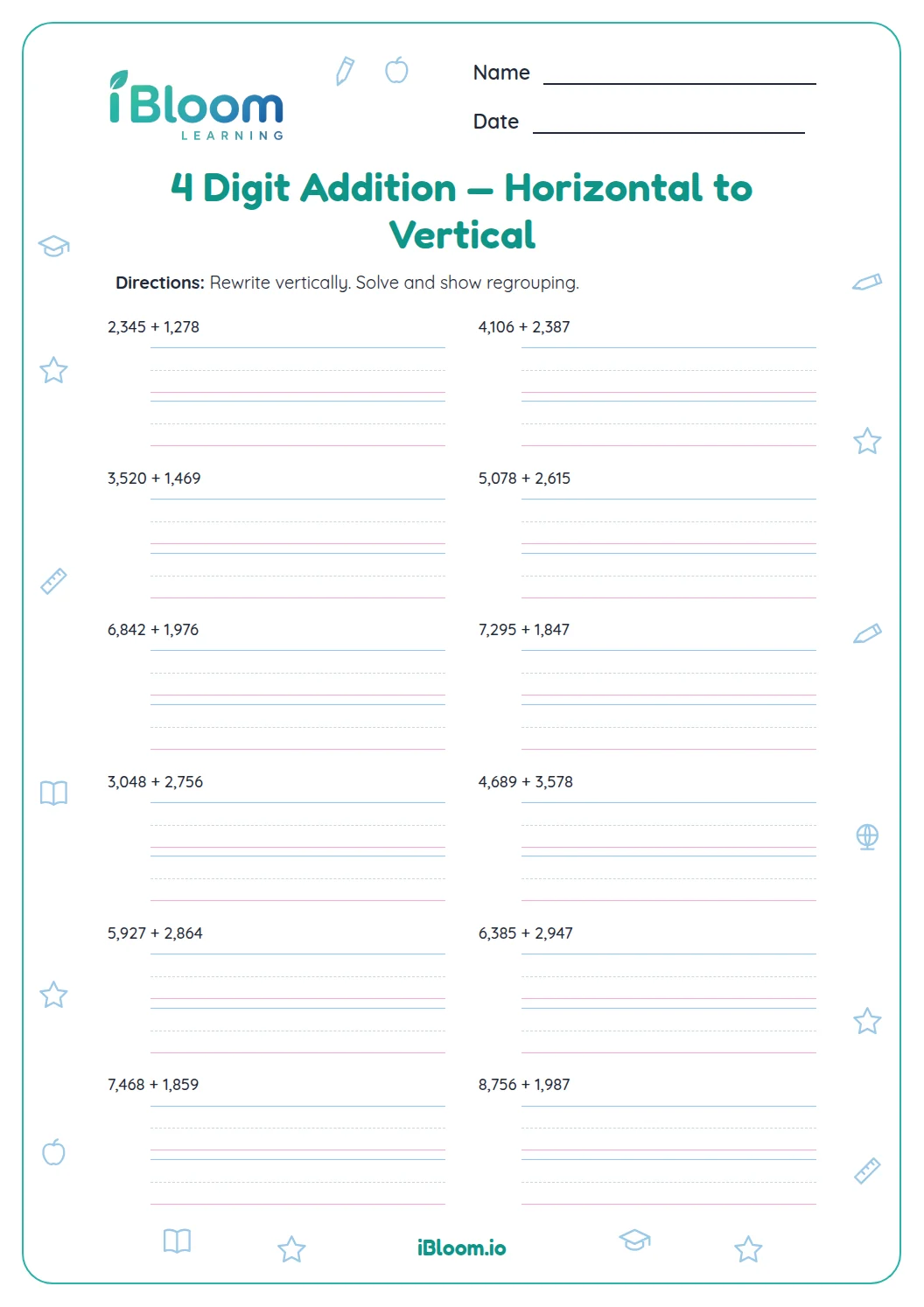
This Grade 4–5 printable gives sixteen horizontal sums, each with four four-digit addends. Children rewrite each expression vertically, line up equal place values, regroup across columns and record the total. The work practices the standard algorithm for multi-digit addition in Common Core 4.NBT.B.4. The answer key provides each sum, while the worksheet leaves room to show the column setup and calculation.
Aligned to 4.NBT.B.4
How do you move a horizontal sum into columns?
Rewrite each addend on its own line. Align the ones digits, then the tens, hundreds and thousands so each column holds one place value. Add from right to left and regroup when a column totals ten or more.
Question 1 begins 1,246 + 2,378 + 3,105 + 1,489. When stacked, all four ones digits line up before the ones column is added.
- 1 1,246
- 2 2,378
- 3 3,105
- 4+ 1,489
- 5Add by place-value columns and regroup as needed.
How should regrouping work with four addends?
A column can total more than 19 when four digits are added. Write the ones digit of that column and carry the tens to the next column. Add that carried amount with the next place, not as a separate answer digit.
How can you check a large sum?
Estimate each addend to the nearest thousand to predict a total, then check the exact column addition. The answer should be larger than any one addend and close to the estimate. Keep commas in the final four-digit or five-digit total.
How to use this worksheet
- 1Choose one expression and place each number on its own line.
- 2Align the ones digits, then check the tens, hundreds and thousands.
- 3Add the ones column and regroup any tens.
- 4Continue through each column, including carried values.
- 5Write the total with commas and estimate to check its size.
- 6Use the answer key to locate and correct any column error.
Common mistakes and quick fixes
The mistake
Misaligning one addend by a column.
The fix
Line up the final digit of every addend in the ones column before adding.
The mistake
Forgetting to include a carried value in the next column.
The fix
Circle or jot each carry above the next place and add it with that column.
The mistake
Writing a two-digit column sum without regrouping.
The fix
Keep only the ones digit in the current column and carry the tens.
Common Core alignment
This worksheet practices the math skills named below through its sequence problems and explanations.
Add each four-digit set using the standard algorithm and careful place-value alignment.
On this sheet: Each problem asks children to align and add four four-digit whole numbers using a written method.
Show the official wordingHide the official wording
Fluently add and subtract multi-digit whole numbers using the standard algorithm.
What to practice next
Make more practice
Further reading
Questions parents and teachers ask
What does horizontal to vertical mean?
The expression begins on one line, such as 1,246 + 2,378 + 3,105 + 1,489. Rewrite each addend on its own line so the ones, tens, hundreds and thousands line up. Then add the columns using the written algorithm.
Why are there four addends in each problem?
Each question combines four four-digit numbers, so several digits must be added in every place-value column. This gives practice organizing a longer sum and tracking carries while keeping the same standard written method used for two addends. Place-value alignment is especially important when one column has a zero.
Can a column total be greater than 20?
Yes. Four digits in one column can add to more than 20. Write the ones digit in that column and carry the tens to the next place. Include the carried amount when you add the digits in the next column.
How can my child check a five-digit answer?
Estimate the addends to the nearest thousand and add those estimates. Then compare the exact answer with the estimate and check the column work from right to left. A sum of four four-digit numbers may be five digits, so retain the leading place when needed.
Does the key show the vertical work?
The separate answer key lists the correct total for each of the sixteen sums. The worksheet itself provides the work space for rewriting and regrouping. Use the key to check totals, then review the written columns to locate any place-value or carry error.