


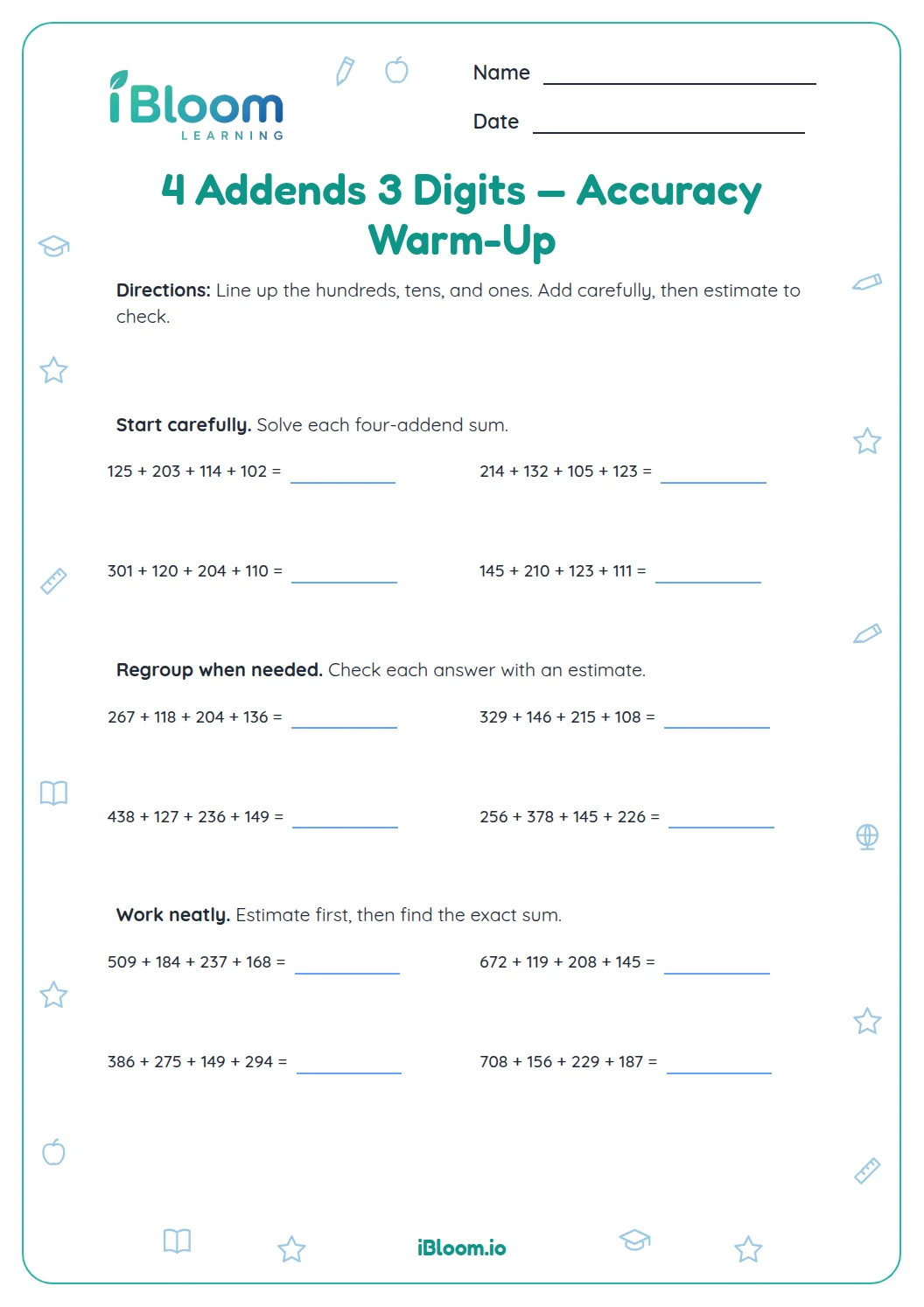
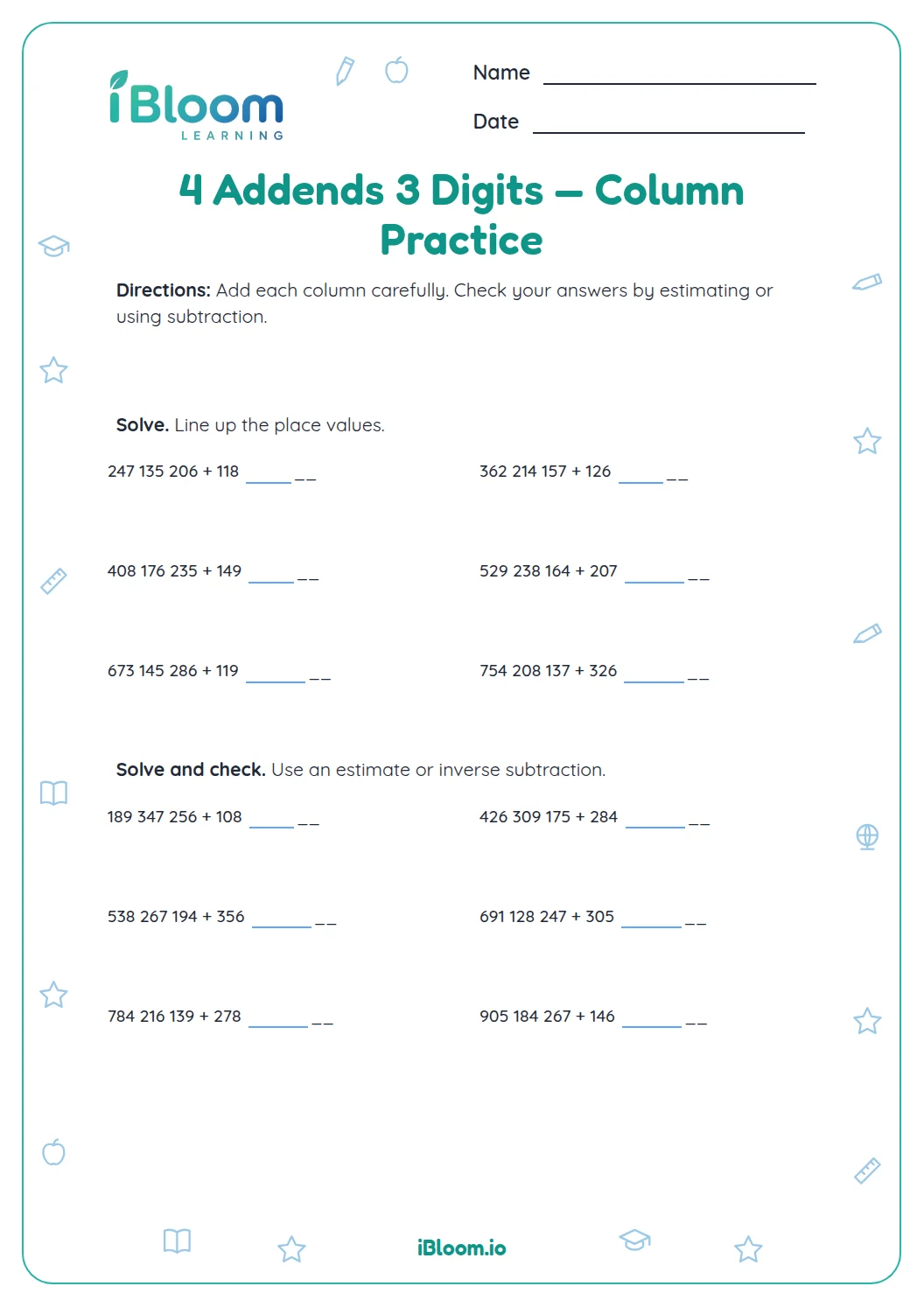
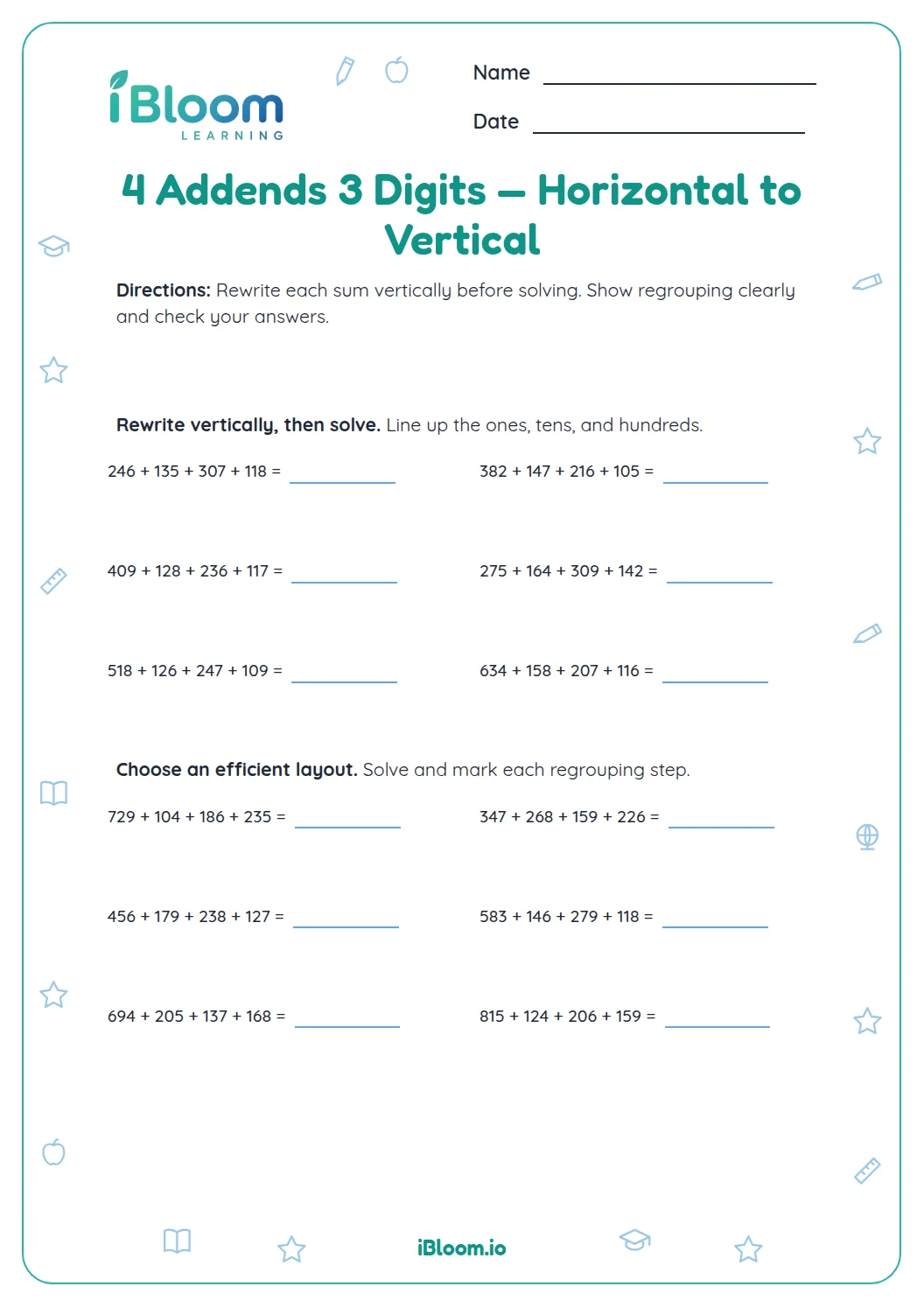
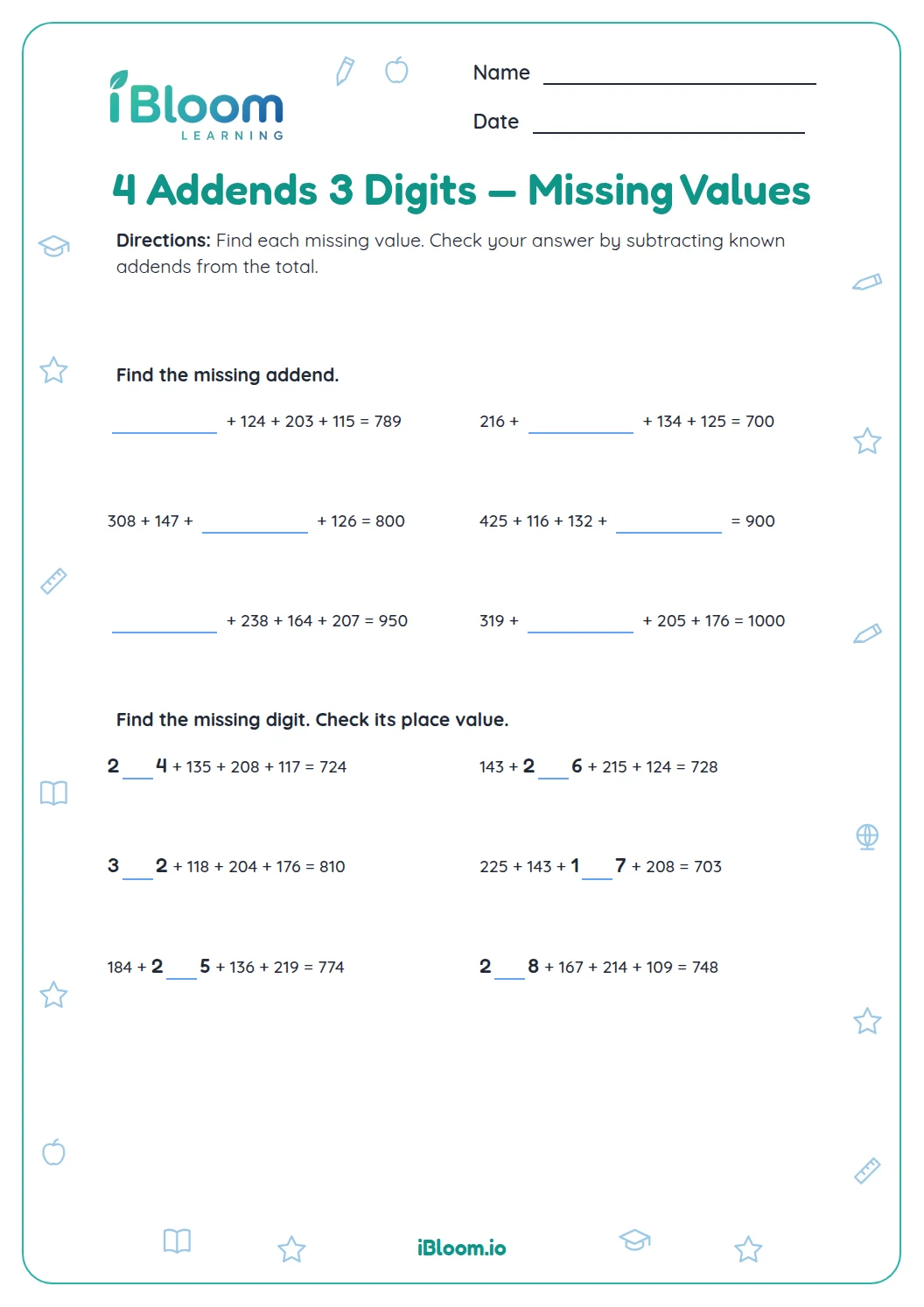
About this worksheet
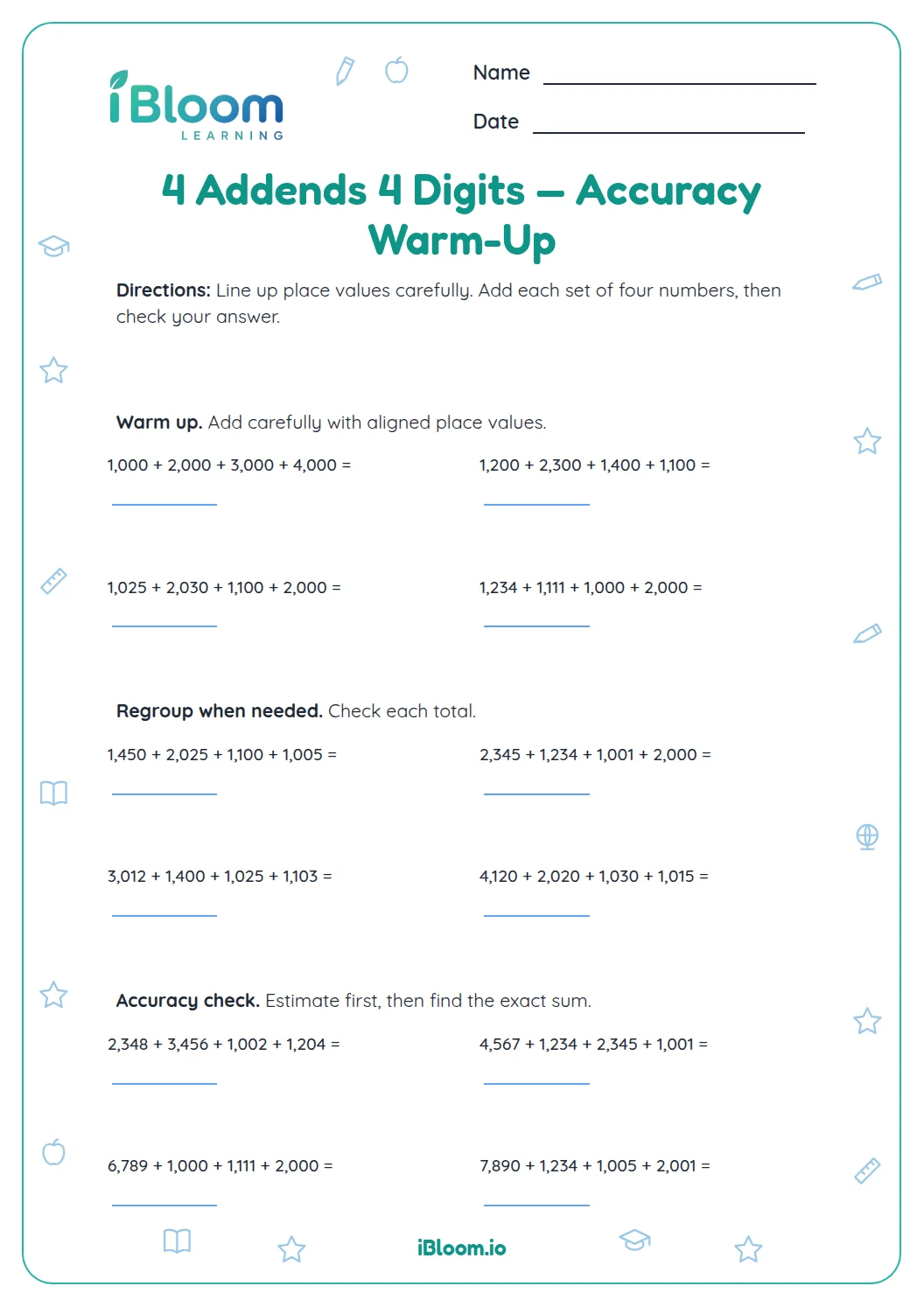
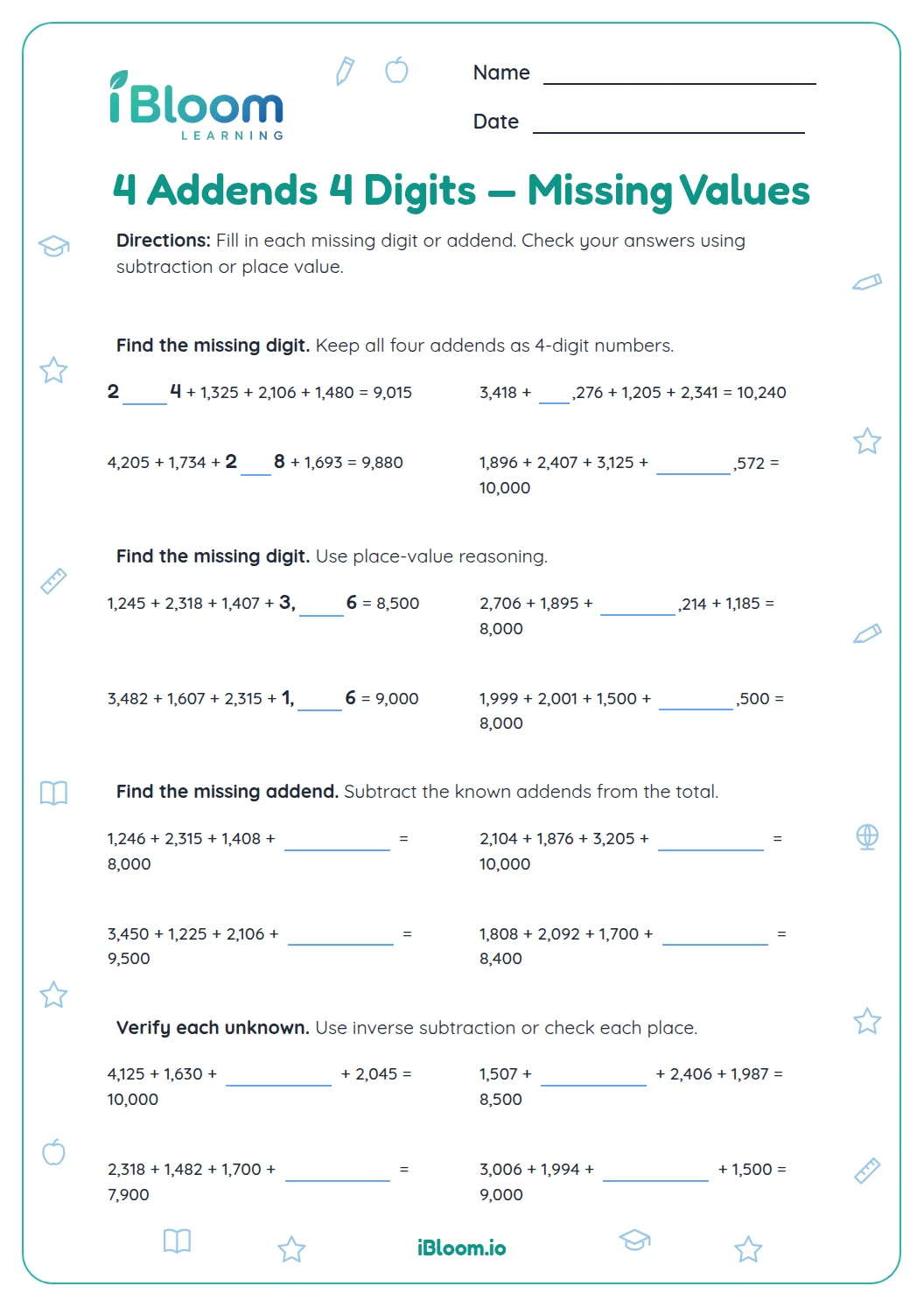
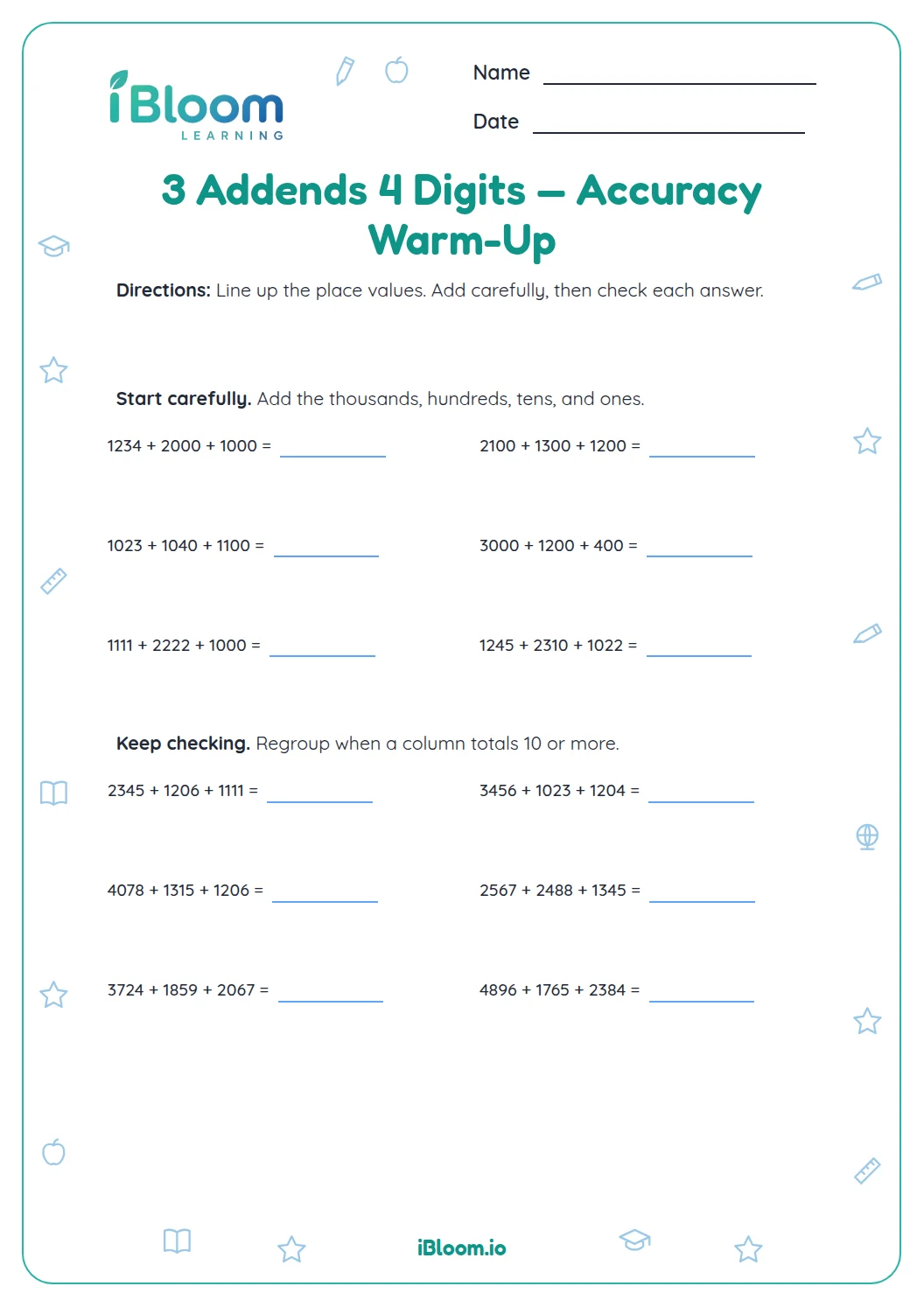
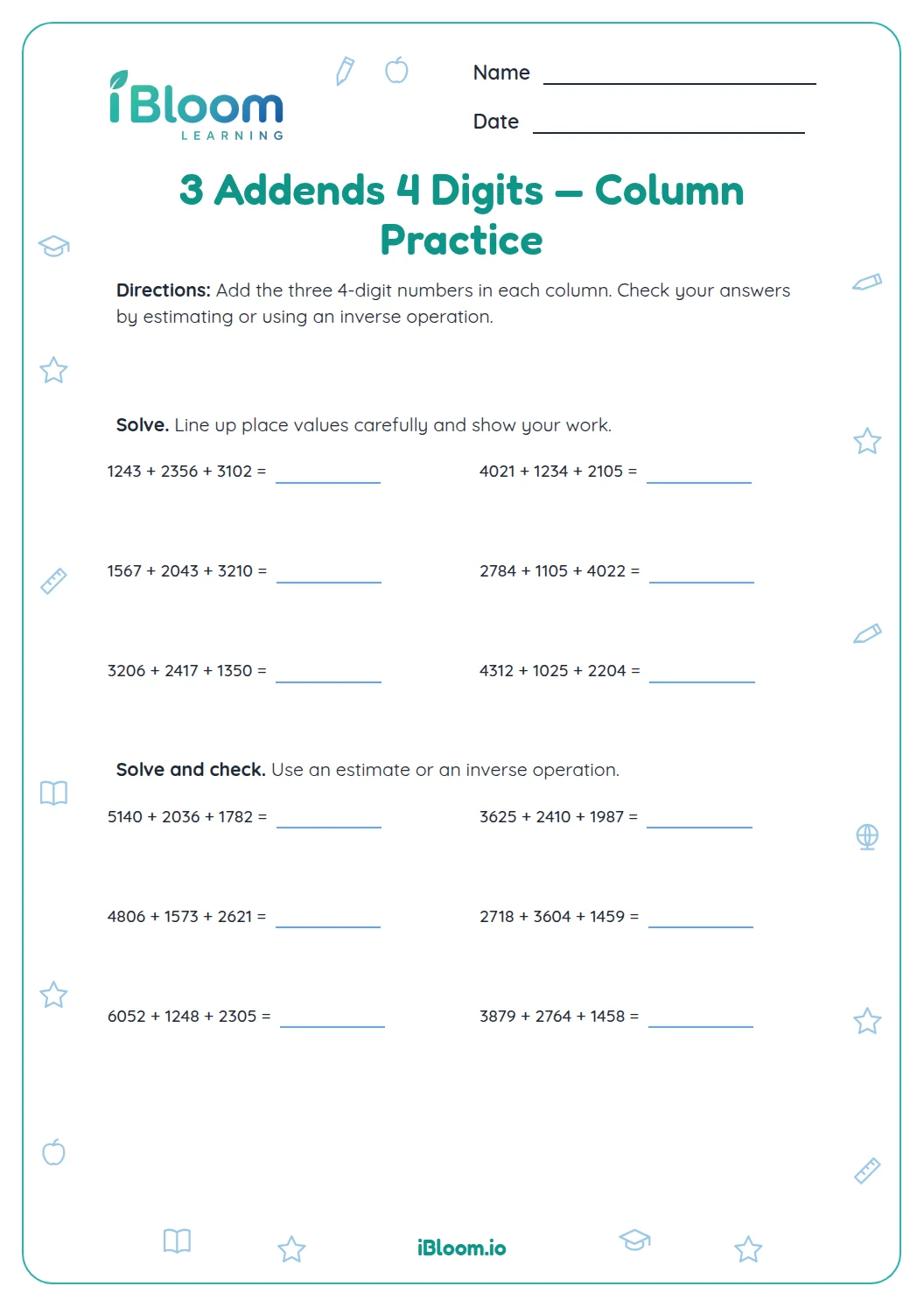
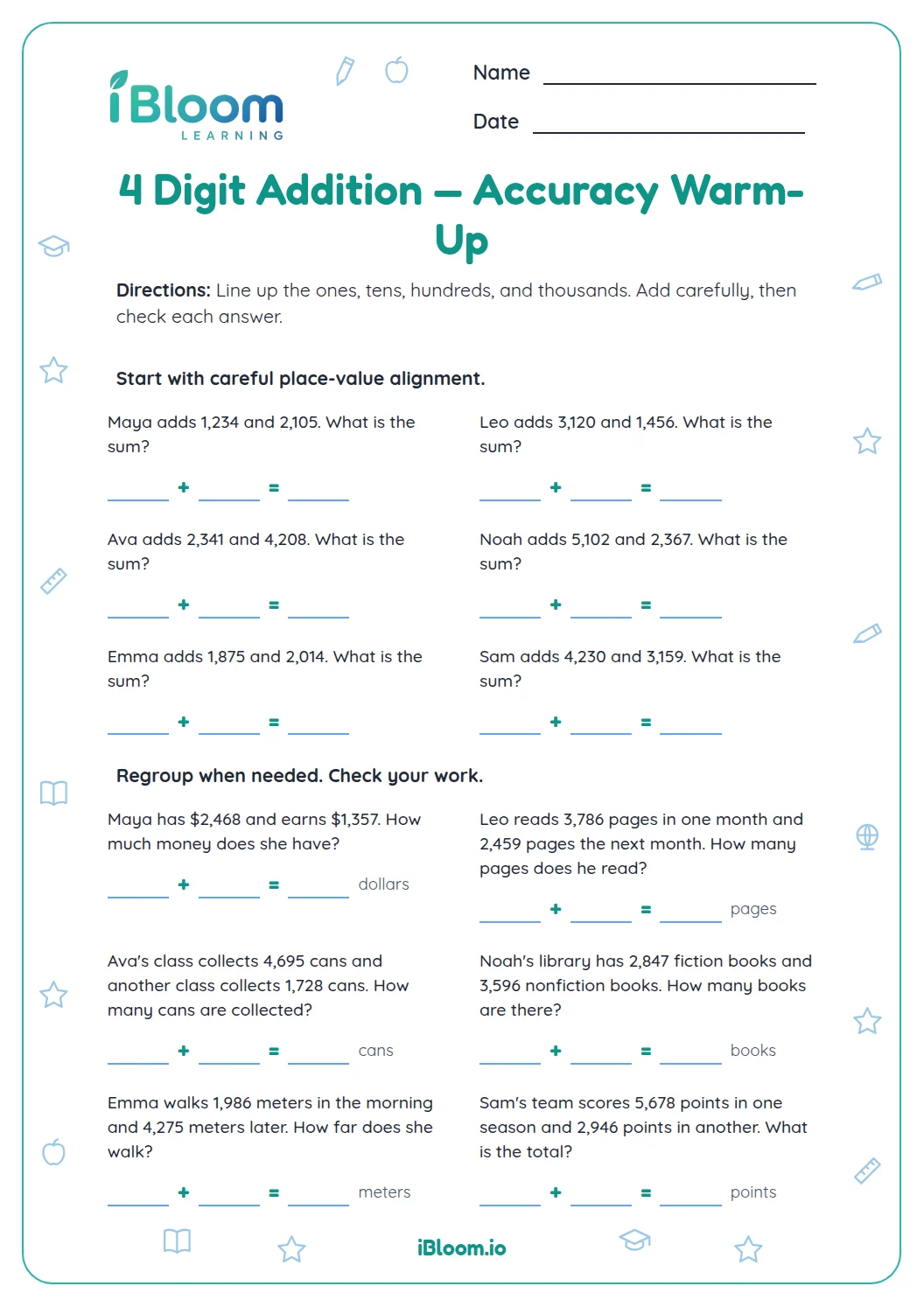
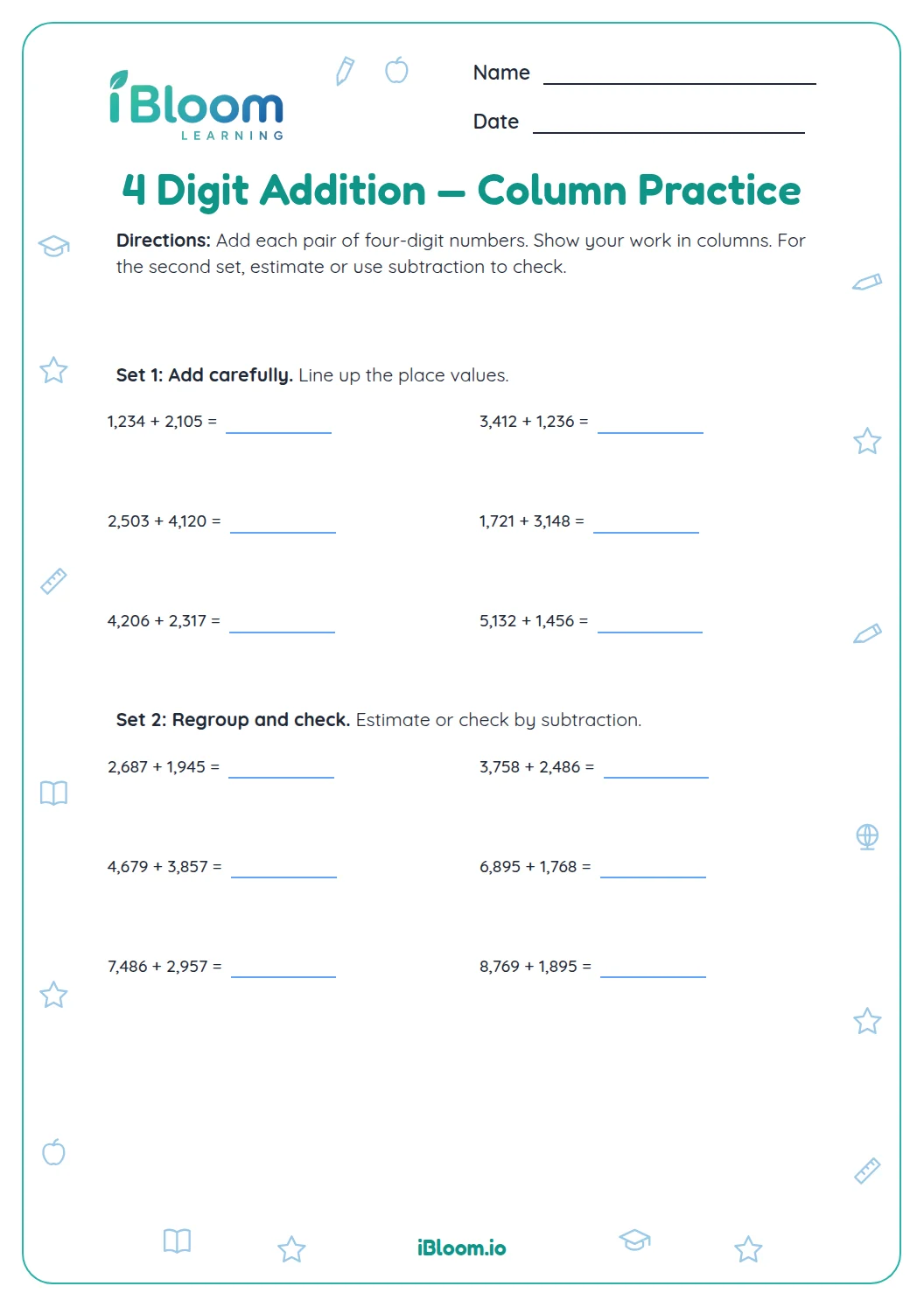
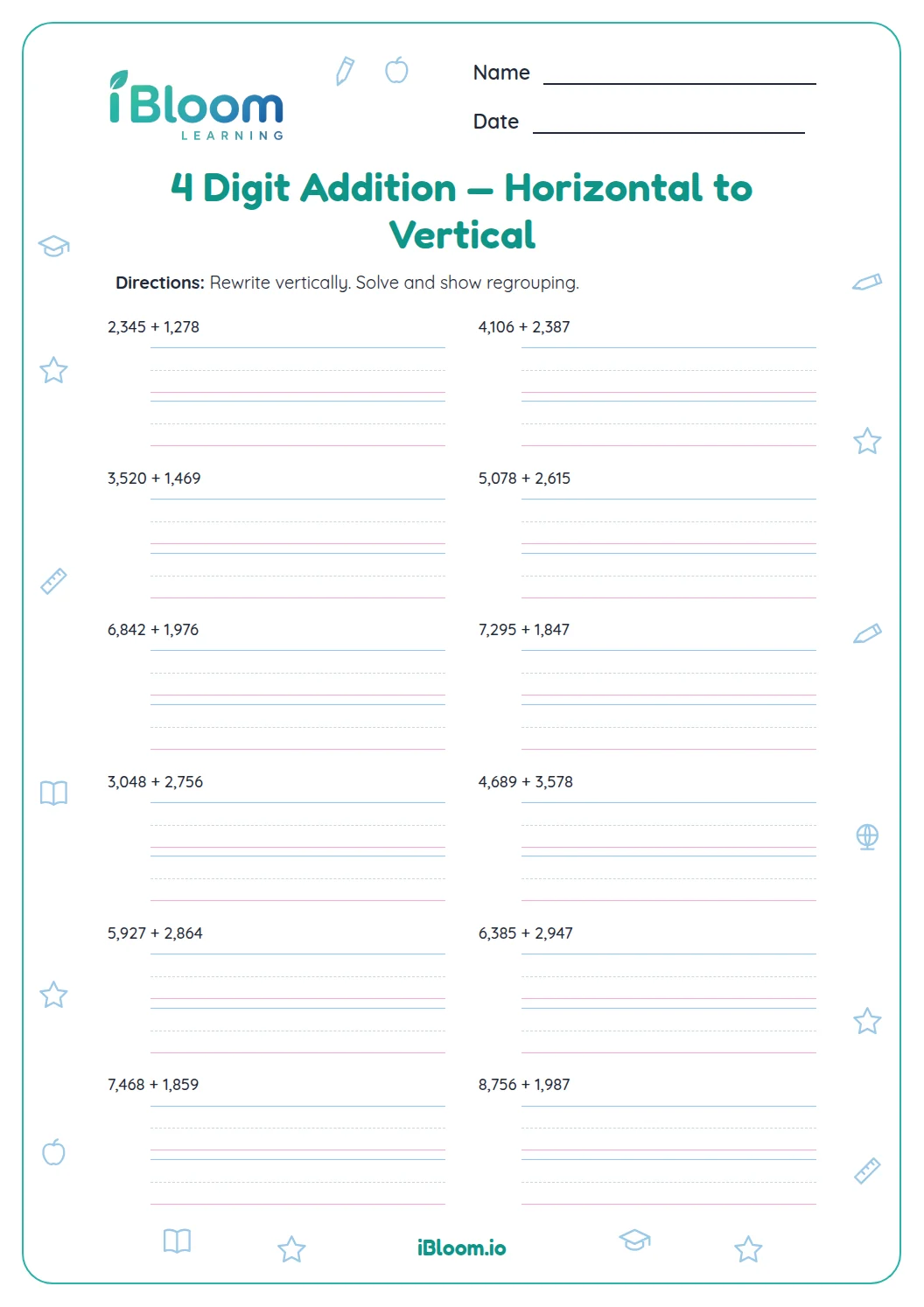
This free printable drill gives Grades 4–5 learners practice adding four four-digit whole numbers, estimating totals by rounding, and checking sums with subtraction. Sixteen problems mix the three tasks so children can choose a method that fits each question, line up place values, and check regrouping. A separate answer key provides the exact totals, estimates, and inverse-operation results. The sheet practices Common Core 4.NBT.B.4 through multi-digit addition using place-value strategies.
Aligned to 4.NBT.B.4
Why should the digits line up?
When adding multi-digit numbers, each digit belongs in a place-value column. Put ones under ones, tens under tens, hundreds under hundreds, and thousands under thousands. This keeps each regrouped amount in the correct place.
- 14,837 + 1,629 + 2,754 + 3,086
- 2Add the ones first: 7 + 9 + 4 + 6 = 26 ones.
- 3Write 6 ones and regroup 2 tens, then continue by columns.
When do you regroup?
Regroup whenever a column total is 10 or more. In question 1, the ones total 26, so 20 ones become 2 tens. Those tens join the tens digits in the next column. Repeat through thousands; the total can have five digits. Questions 7–11 round each addend before adding, and the final part checks sums by subtraction.
- Add all digits in a place-value column.
- Write the ones digit of that total.
- Carry the tens to the next column.
How can subtraction check an addition sum?
Subtract one addend from the total. The difference should equal the sum of the other three addends. This inverse operation offers a second way to check that every term was included and the place values were aligned.
- 112,306 − 3,086 = 9,220
- 2The result is the sum of the other three addends from question 1.
How to use this worksheet at home or in class
- 1For questions 1–6, line up all four addends by place value.
- 2Add each column from ones to thousands, regrouping when needed.
- 3For questions 7–11, round every addend to the nearest thousand before adding.
- 4For questions 12–16, subtract the named addend from the given total.
- 5Use the answer key to find a missed column, rounding choice, or subtraction step.
Common mistakes and quick fixes
The mistake
Leaving out one of the four addends.
The fix
Point to all four terms before adding each place-value column.
The mistake
Rounding only the final sum in an estimate problem.
The fix
Round each addend first, then add the rounded values.
The mistake
Subtracting the wrong addend in a check.
The fix
Match the number after the minus sign to the addend named in the question.
Common Core alignment
This drill practices the standard algorithm with multi-digit whole-number addition.
Add multi-digit whole numbers fluently with the standard algorithm.
On this sheet: All 16 problems ask learners to add multi-digit whole numbers using place-value regrouping.
Show the official wordingHide the official wording
Fluently add and subtract multi-digit whole numbers using the standard algorithm.
What to practice next
Make more practice
Further reading
Questions parents and teachers ask
How many numbers are in each problem?
The first six problems each have four four-digit addends. Children add all four numbers while keeping ones, tens, hundreds, and thousands aligned. The next five ask them to estimate, and the final five use subtraction to check a sum from the earlier section.
Do all problems require regrouping?
The first six sums mix regrouping patterns. Some columns total less than ten, while others require carrying into the next place. The estimation section rounds each addend before adding, and the final section checks a sum with subtraction, so learners switch strategies as the task changes.
Can the total have five digits?
Yes. Four four-digit addends can produce a five-digit sum. After adding the thousands column, write any remaining regrouped ten-thousand value in the answer. For example, 9,000 + 9,000 + 9,000 + 9,000 is 36,000. Check that each addend is included before writing the five-digit result.
What is a good way to check an answer?
Add the numbers in a different order or group them into two pairs. The sum should stay the same. Children can also estimate the total by rounding each addend to the nearest thousand and checking whether their exact answer is reasonable.
What is on the answer key?
The separate key lists exact sums for questions 1–6, rounded estimates for questions 7–11, and subtraction results for questions 12–16. Use a missed answer to spot whether the child needs to review regrouping, rounding, or the inverse operation, then retry the same skill.