



About this worksheet
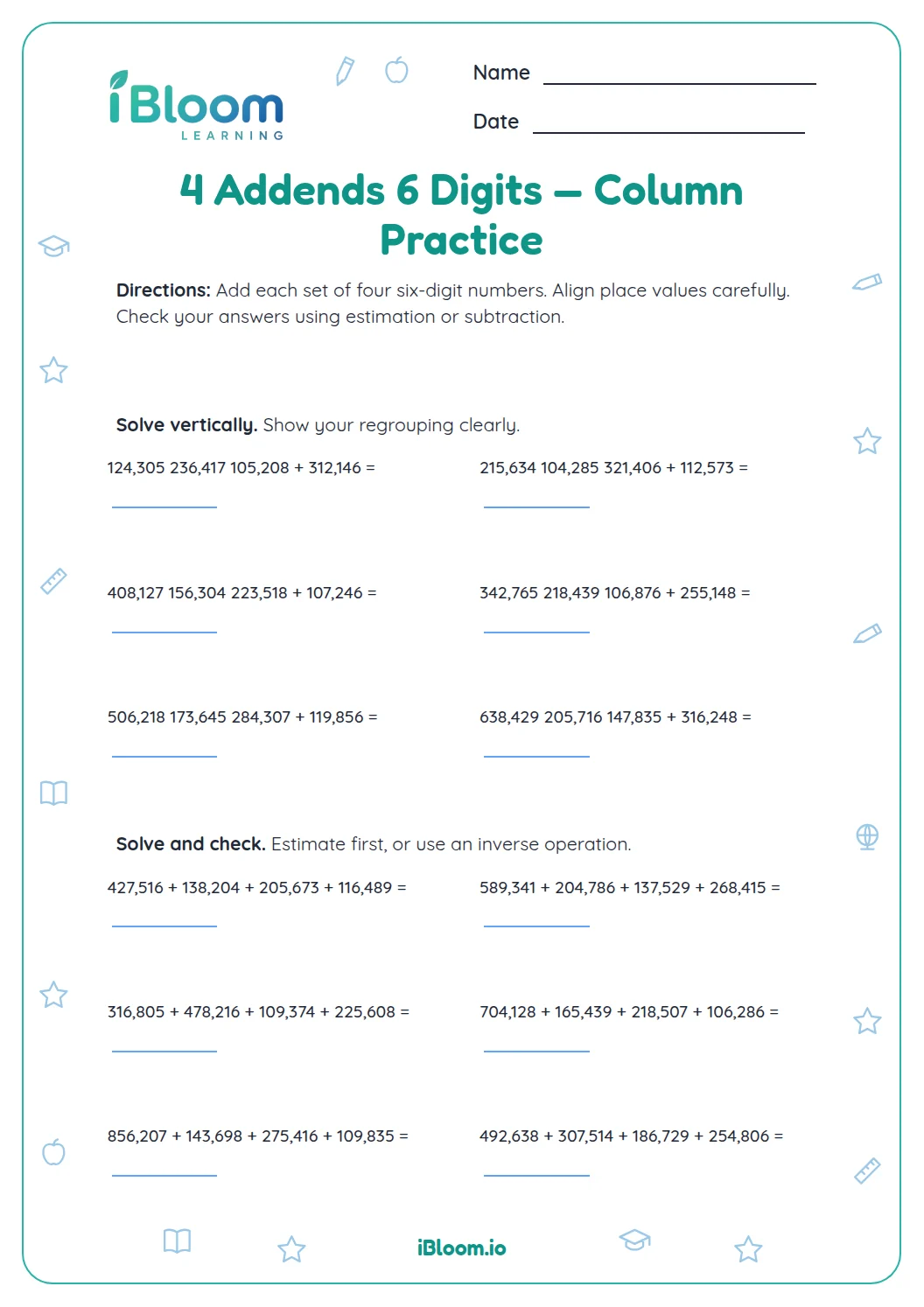
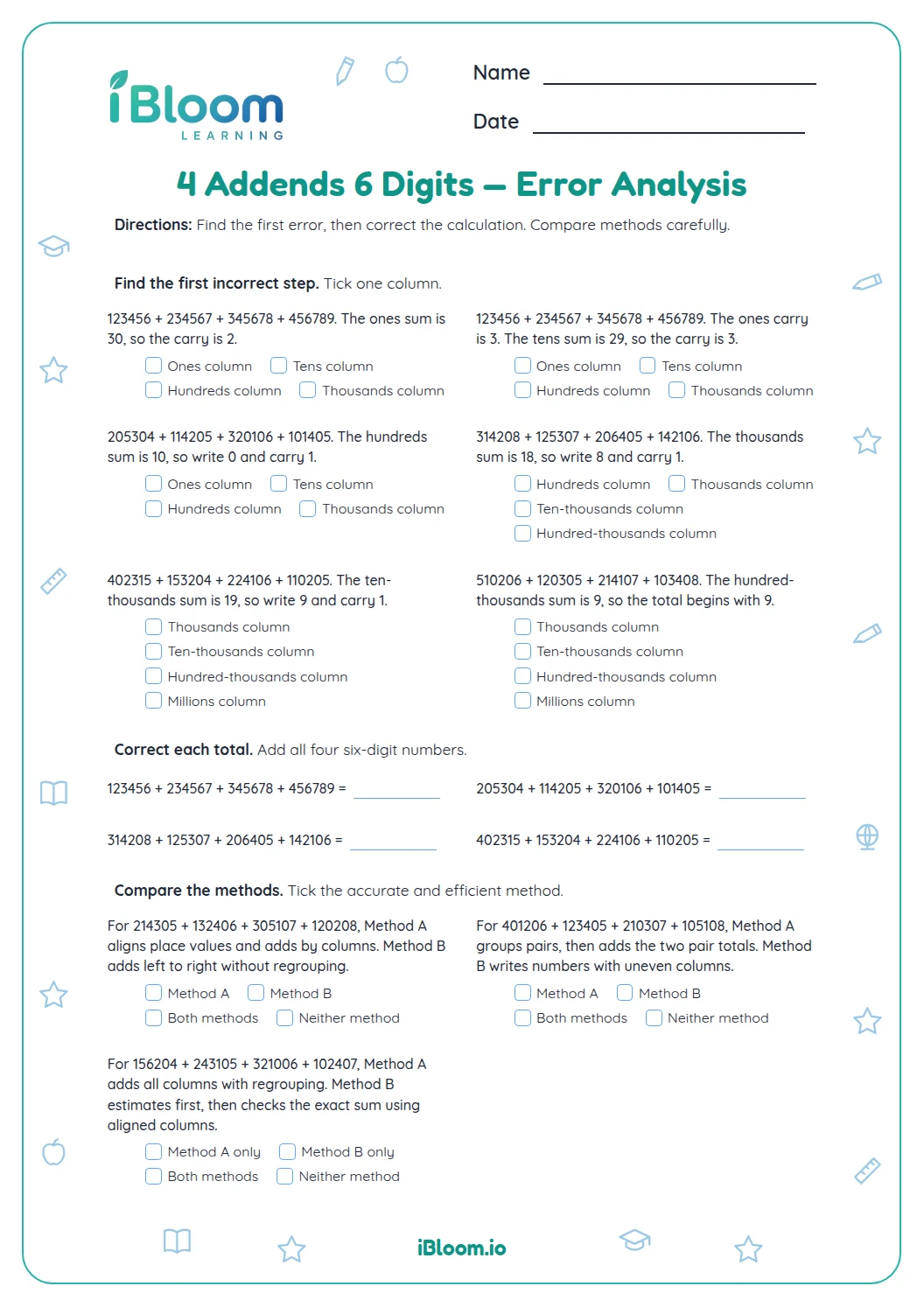
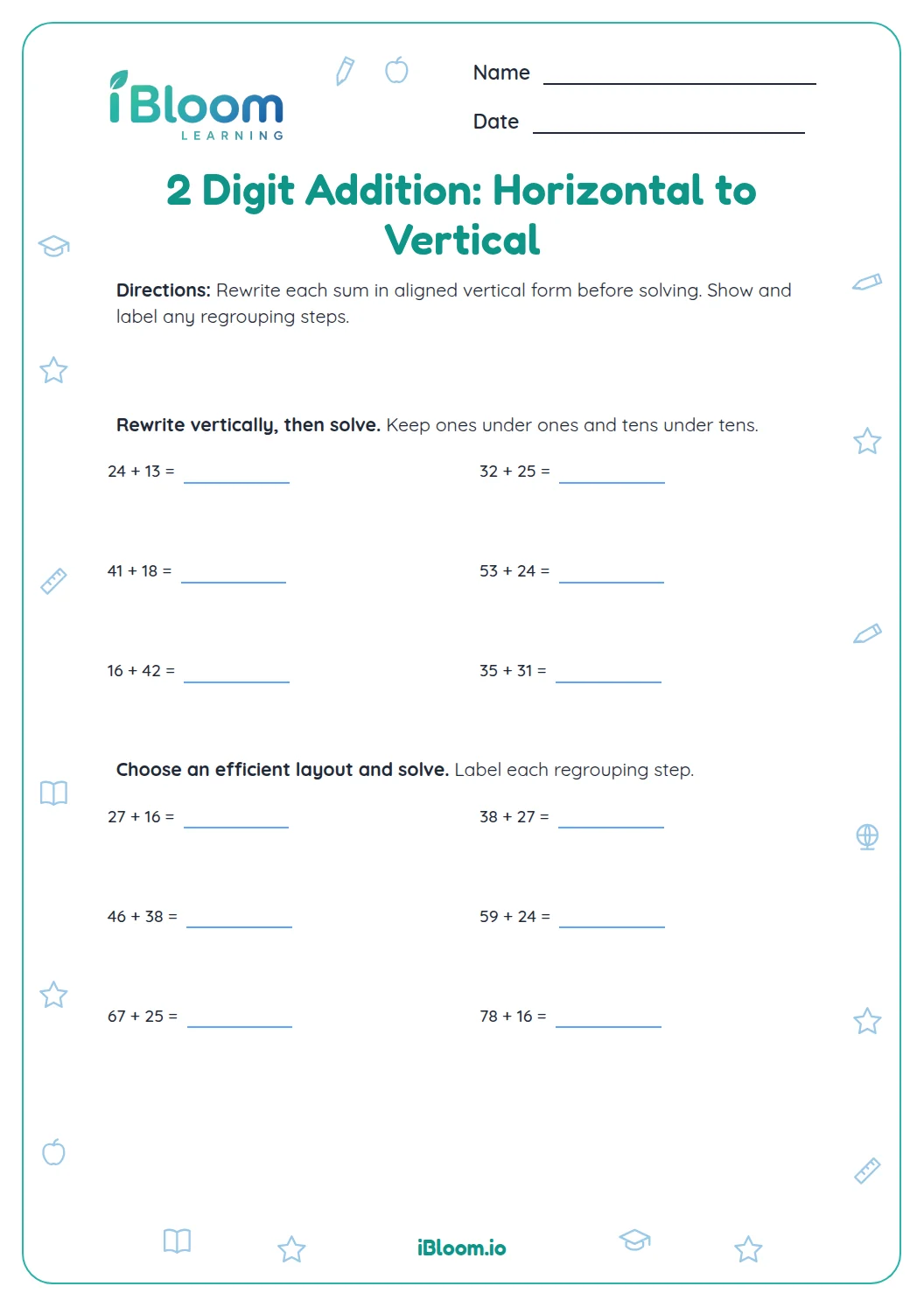
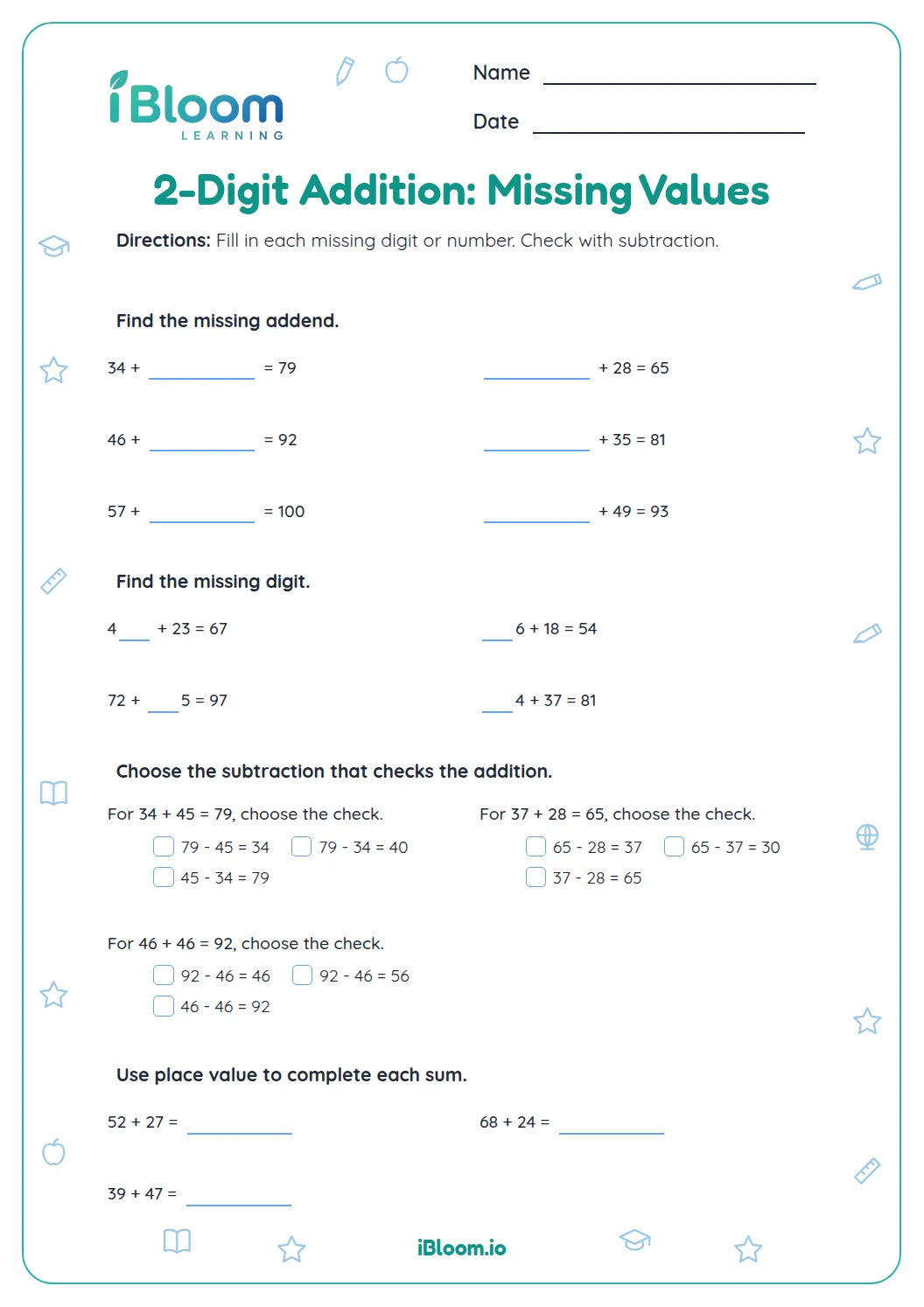
This addition drill asks students to find missing values in sums with four six-digit addends. Part A has eight missing-addend equations; Part B hides one digit in each of six equations. Students can use subtraction to find a missing term and place-value addition to identify a digit. The answer key lists each value so the complete sums can be checked.
Aligned to 4.NBT.B.4
How can you find a missing addend?
Subtract the known addends from the total. Keep track of place values as you subtract each term.
- 1150,000 + 250,000 + 350,000 + ___ = 1,010,000
- 21,010,000 − 750,000 = 260,000
How do you find one missing digit?
Compare the known addends and total by place value. Work from the ones place toward the left, regrouping when the known digits in a column exceed the total digit.
What is a reliable way to check?
Put the missing value back into the equation and add all four terms. The sum must match the printed total exactly.
How to use this worksheet
- 1Read the total and mark the unknown.
- 2For a missing addend, add the known terms and subtract their sum from the total.
- 3For a missing digit, compare one place-value column at a time.
- 4Replace the blank with your value and add all four terms.
- 5Use the key to check every result.
Common mistakes and quick fixes
The mistake
Subtracting the total from a known addend.
The fix
Start with the total, then subtract the sum of the known addends.
The mistake
Dropping a zero when regrouping a six-digit number.
The fix
Line up place values and check the full number after each subtraction.
The mistake
Reading the digit blank as a missing whole addend.
The fix
Keep every other digit in that addend fixed; only the underscored digit changes.
Common Core alignment
These standards describe the writing and math work practiced on this page.
Add multi-digit whole numbers accurately using place-value strategies and algorithms.
On this sheet: All questions use multi-digit whole-number addition and inverse subtraction to recover a missing value.
Show the official wordingHide the official wording
Fluently add and subtract multi-digit whole numbers using the standard algorithm.
What to practice next
Make more practice
Further reading
Questions parents and teachers ask
How many addends appear in each equation?
Every equation has four addends. In Part A, one complete addend is missing. In Part B, one digit inside an addend is hidden, while the total remains visible. The directions encourage checking by place value, which also helps catch a misplaced digit.
How can a student find a missing addend?
Add the three known addends, then subtract that sum from the total. For example, if the known terms add to 600,000 and the total is 1,000,000, the missing addend is 400,000. Add all four terms afterward to check. The digits are embedded in different positions, so students must attend to place value as they add.
How does place value help with the missing digits?
A digit’s position determines its value in the sum. Students can add by columns, keeping track of regrouping, and compare the result with the printed total to determine which digit belongs in the blank. The two parts move from finding a full number to finding a single digit within a number.
How many questions are on the worksheet?
There are 14 equations: eight ask for a missing addend and six ask for one missing digit. The two-page answer key lists the missing values; students can verify each by completing the full sum. Commas in the larger totals help students keep the six-digit places organized.
How can I check a completed equation?
Substitute the missing value and add all four terms. Check the columns from ones to hundred-thousands and carry regrouped values carefully. The final sum should match the total printed on the worksheet. This check works for both parts because it confirms the completed sum against its printed total.