



About this worksheet
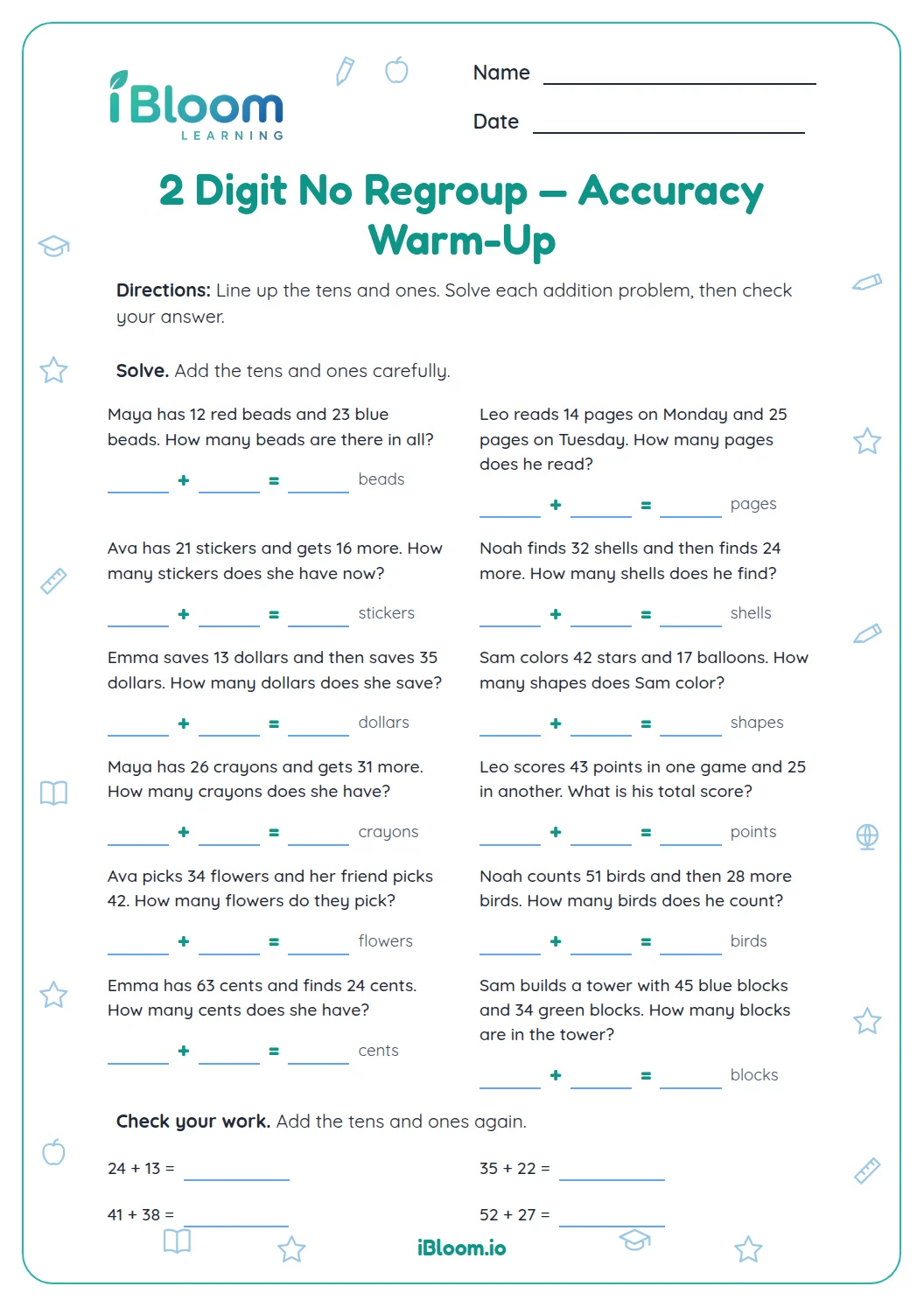
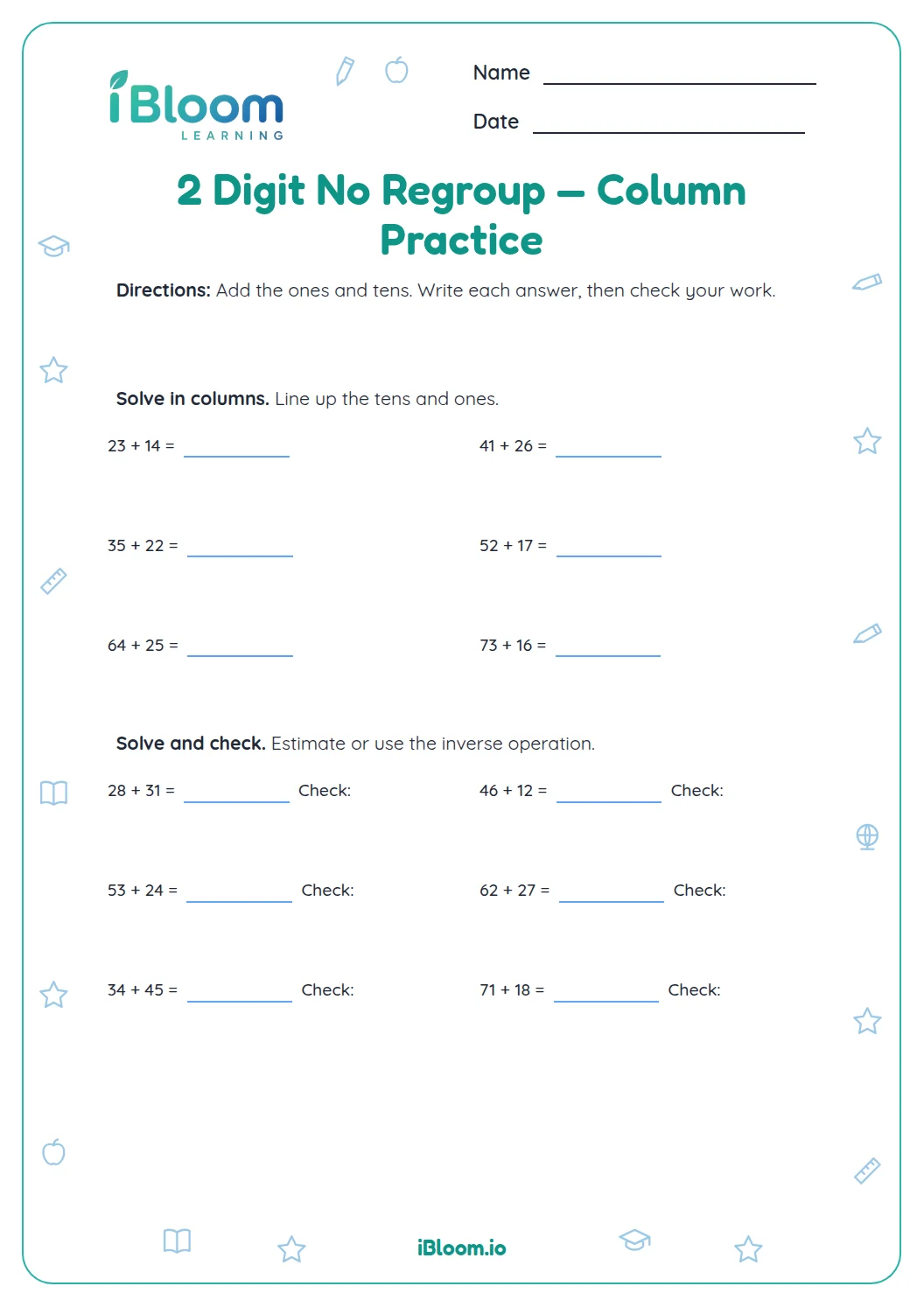
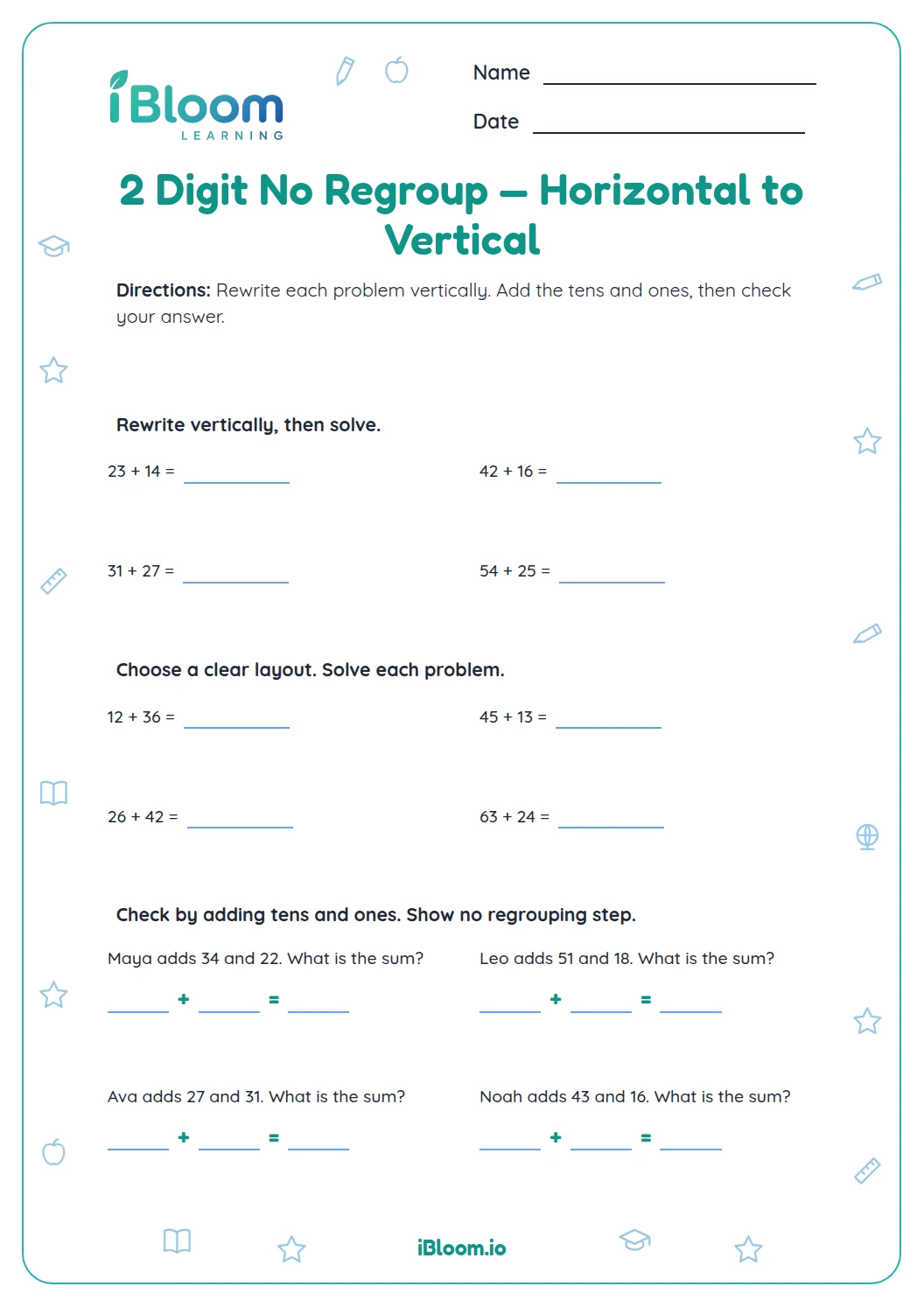
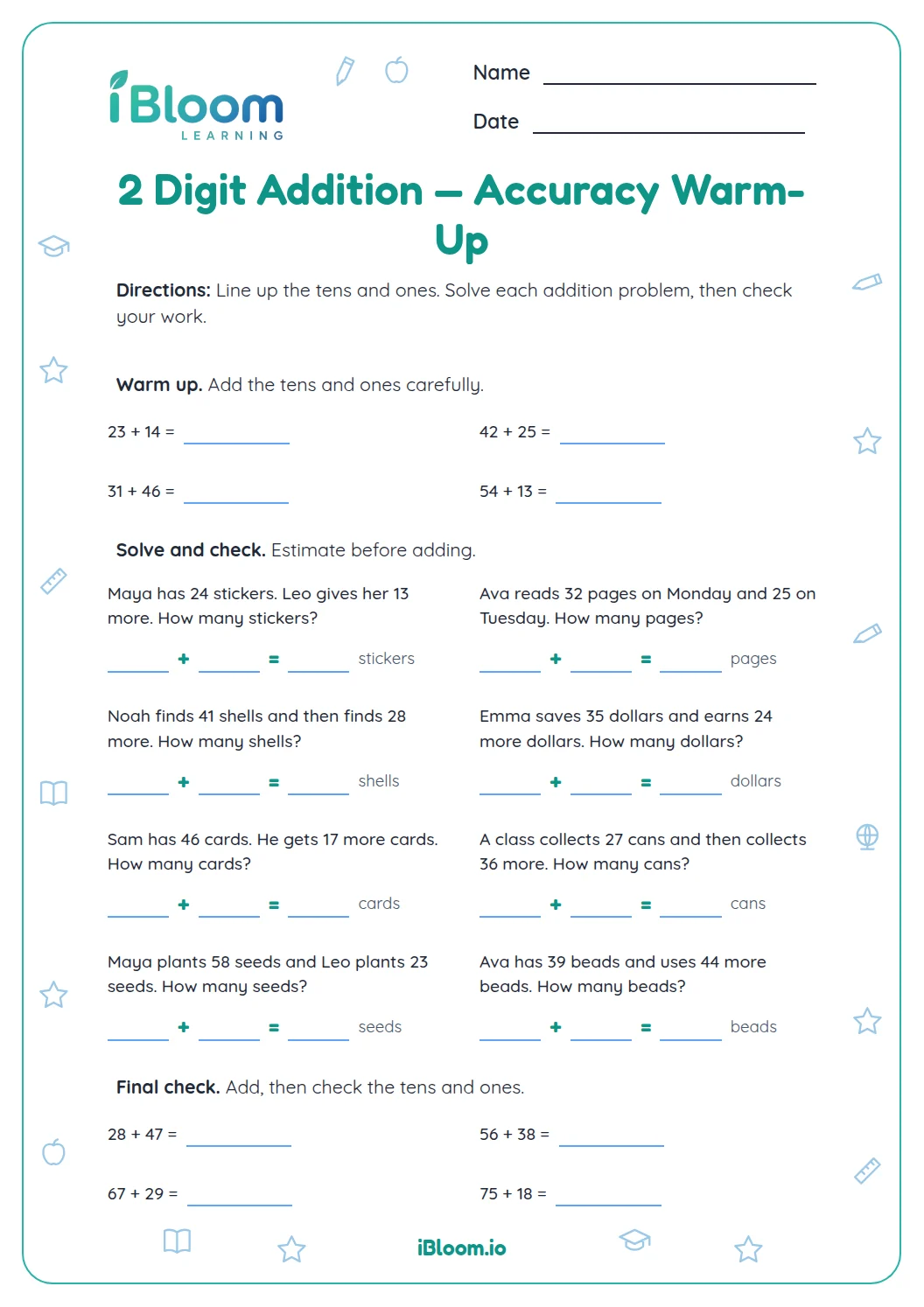
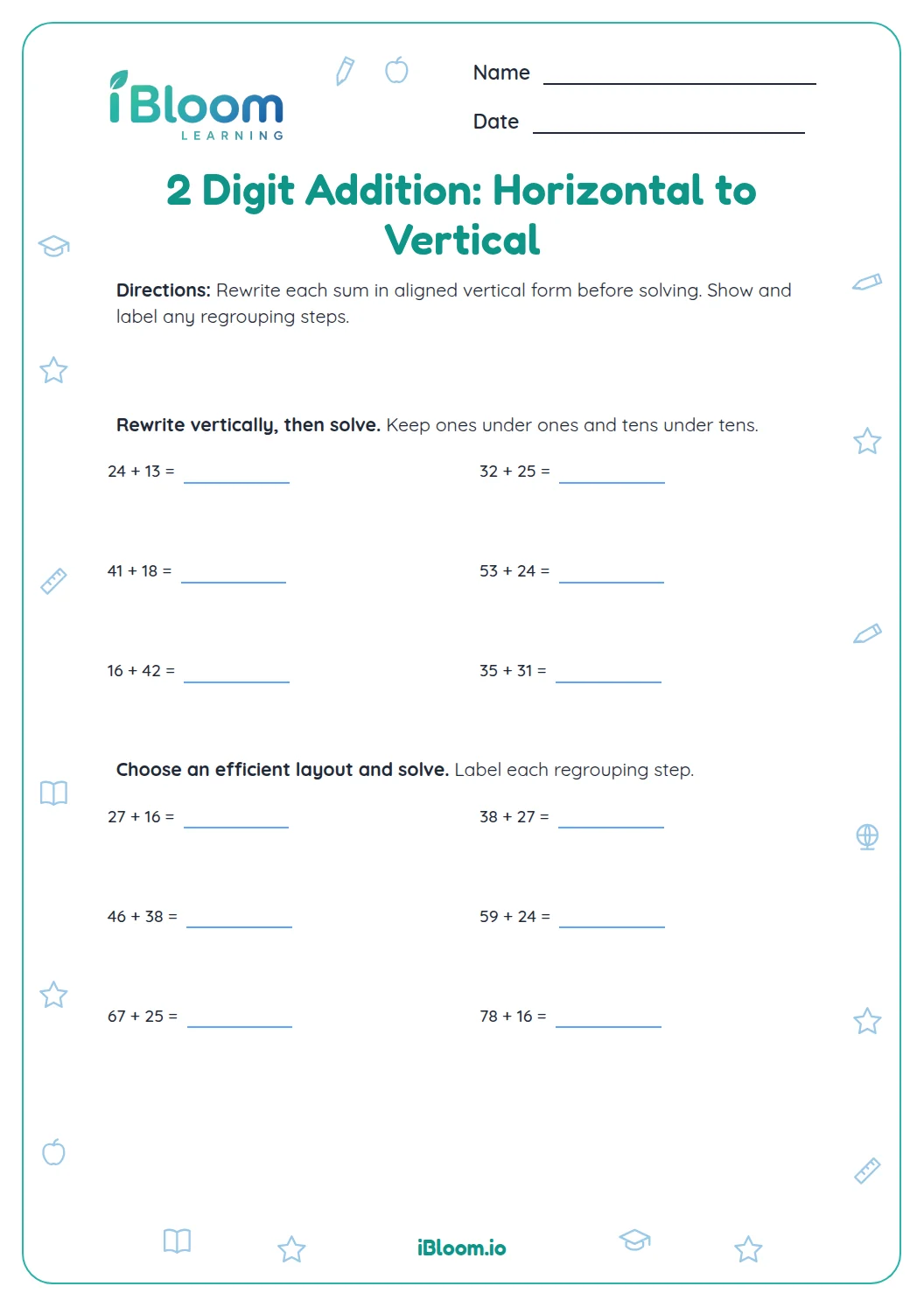
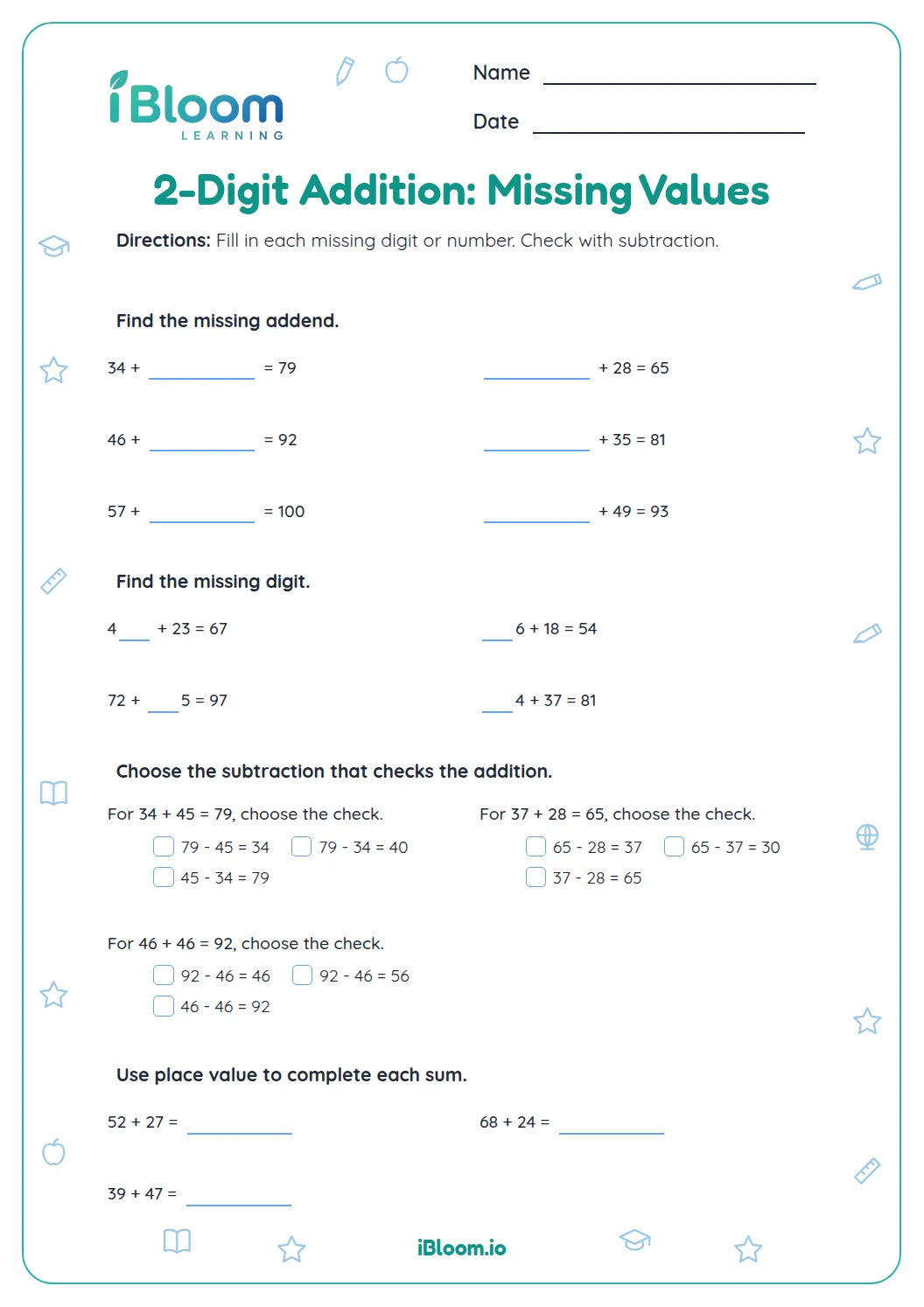
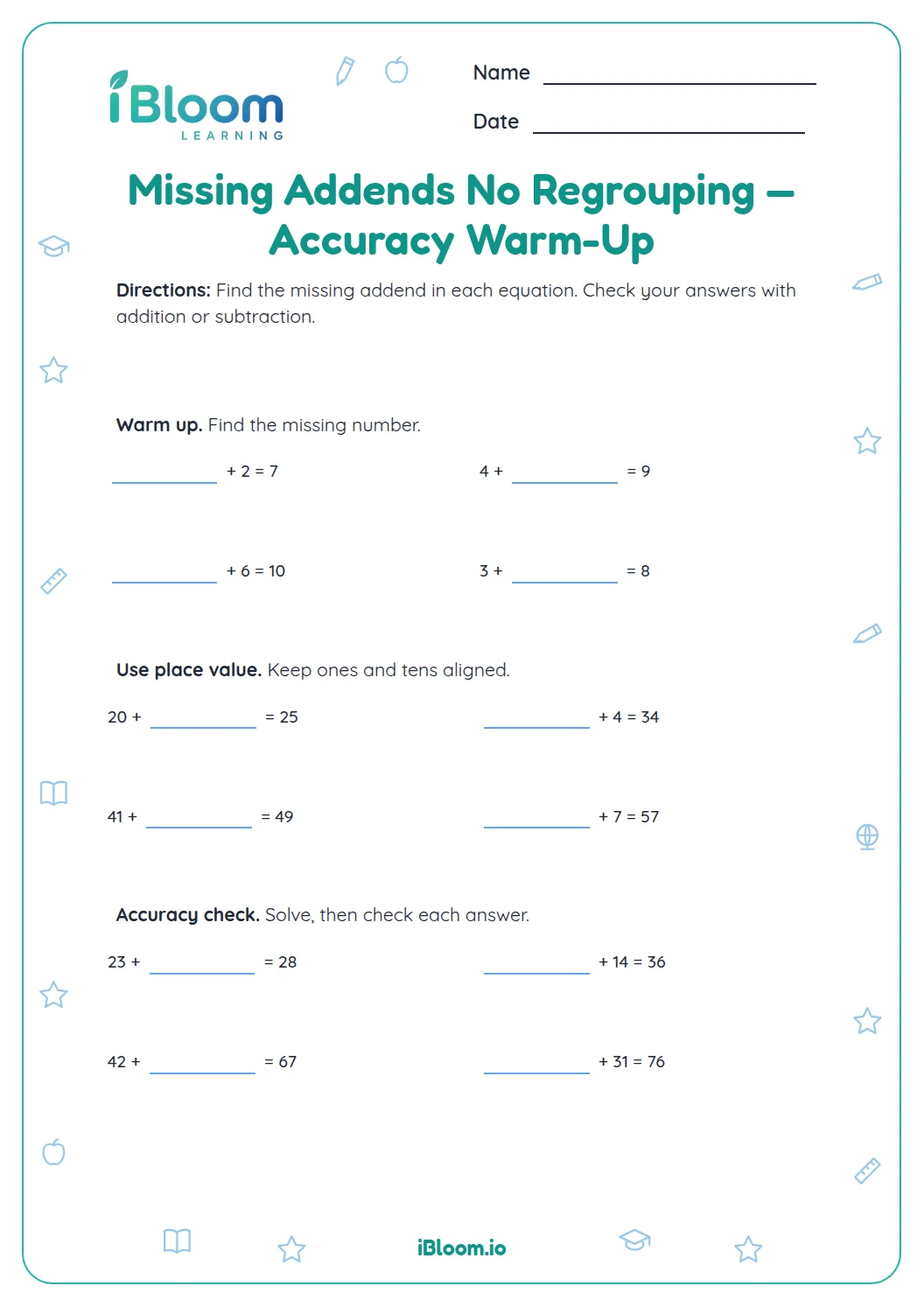
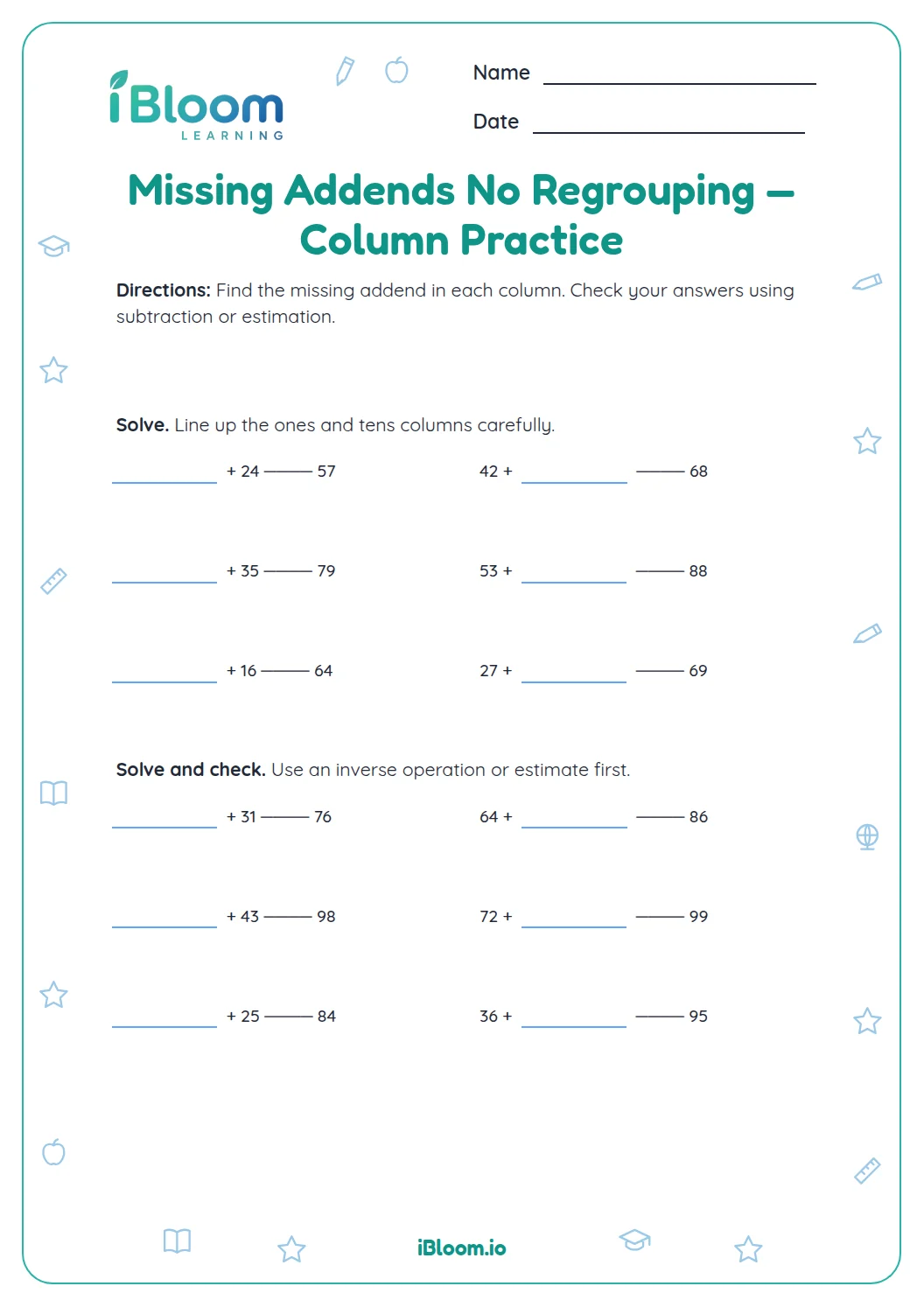
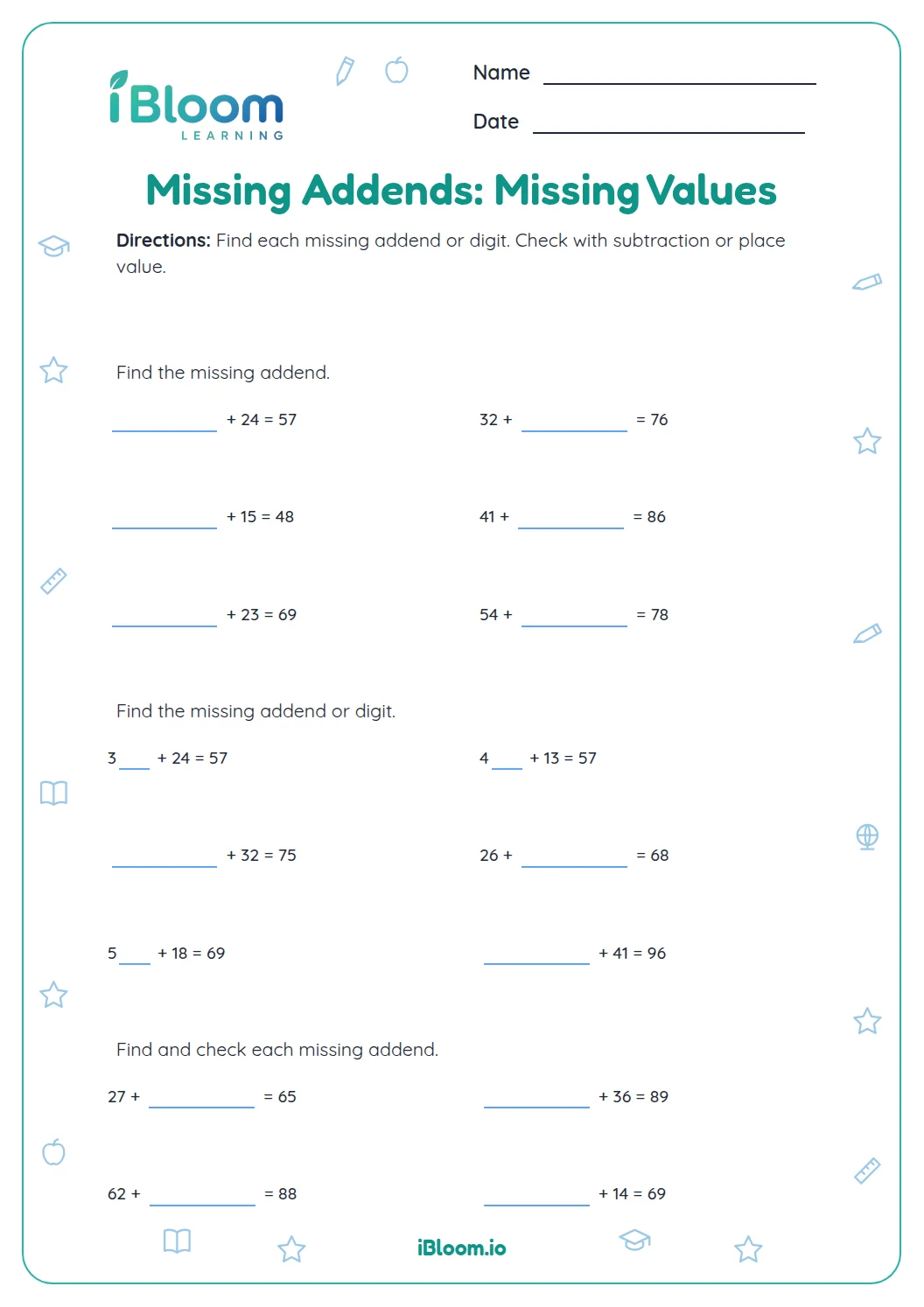
This printable Grade 2 addition page uses two-digit equations with no regrouping. Students find eight sums and eight missing addends, using tens and ones to solve each equation. Four short situations extend the same skill, including finding an unknown addend from a total. An answer key is included.
Aligned to 2.NBT.B.5
How do you add two-digit numbers without regrouping?
Add the tens and ones in their own places. For question 1, 3 tens + 2 tens = 5 tens, and 4 ones + 5 ones = 9 ones, so 34 + 25 = 59.
- 134 + 25
- 230 + 20 = 50; 4 + 5 = 9
- 350 + 9 = 59
How can subtraction uncover a missing addend?
A sum is the total, so subtract the addend you know. For question 9, 76 − 32 = 44. Check: 44 + 32 = 76.
What does “no regrouping” mean here?
In each addition equation, the ones add to 9 or less, so they stay in the ones place. The tens also stay in the tens place. Keep the place-value columns aligned as you work.
How to use this worksheet
- 1Start with the ones place and then add the tens.
- 2Write each digit in its own place-value column if needed.
- 3For a missing addend, subtract the known addend from the total.
- 4Check by adding the two addends together.
Common mistakes and quick fixes
The mistake
Adding the tens digit to the ones digit.
The fix
Line up tens with tens and ones with ones.
The mistake
Subtracting the total from the known addend.
The fix
Use total minus known addend to find the missing part.
The mistake
Writing 44 as the missing addend in question 2 without checking.
The fix
Substitute it: 44 + 32 must equal 76.
Common Core alignment
This page practices the following Common Core skill.
Fluently add two-digit numbers within 100 without regrouping.
On this sheet: The equations add two-digit numbers within 100 and use subtraction to find missing addends.
Show the official wordingHide the official wording
Fluently add and subtract within 100 using strategies based on place value, properties of operations, and/or the relationship between addition and subtraction.
What to practice next
Make more practice
Further reading
Questions parents and teachers ask
What is a missing addend?
A missing addend is the number that combines with a known addend to make the sum. In ___ + 32 = 76, subtract 32 from 76 to find 44. Add 44 and 32 to confirm that they make 76.
How can I check an addition answer?
Add the two numbers again, or use subtraction to check a missing addend. For question 14, 64 + 22 = 86. Keeping the tens and ones in their correct places makes the check easier. Put the difference back into the equation to confirm that the two addends make the stated total.
What does no regrouping mean?
The ones digits in these addition problems do not make 10 or more, so no ten needs to be traded from the ones place. Students can add tens and ones separately. For a missing addend, subtract the known addend from the sum, then add to check.
Are any answers greater than 100?
No. Every total in this set is less than 100. That lets students focus on two-digit place value and unknown addends without moving into hundreds. In each addition equation, the ones digits also stay below 10, so no regrouping is needed.
What should we practice next?
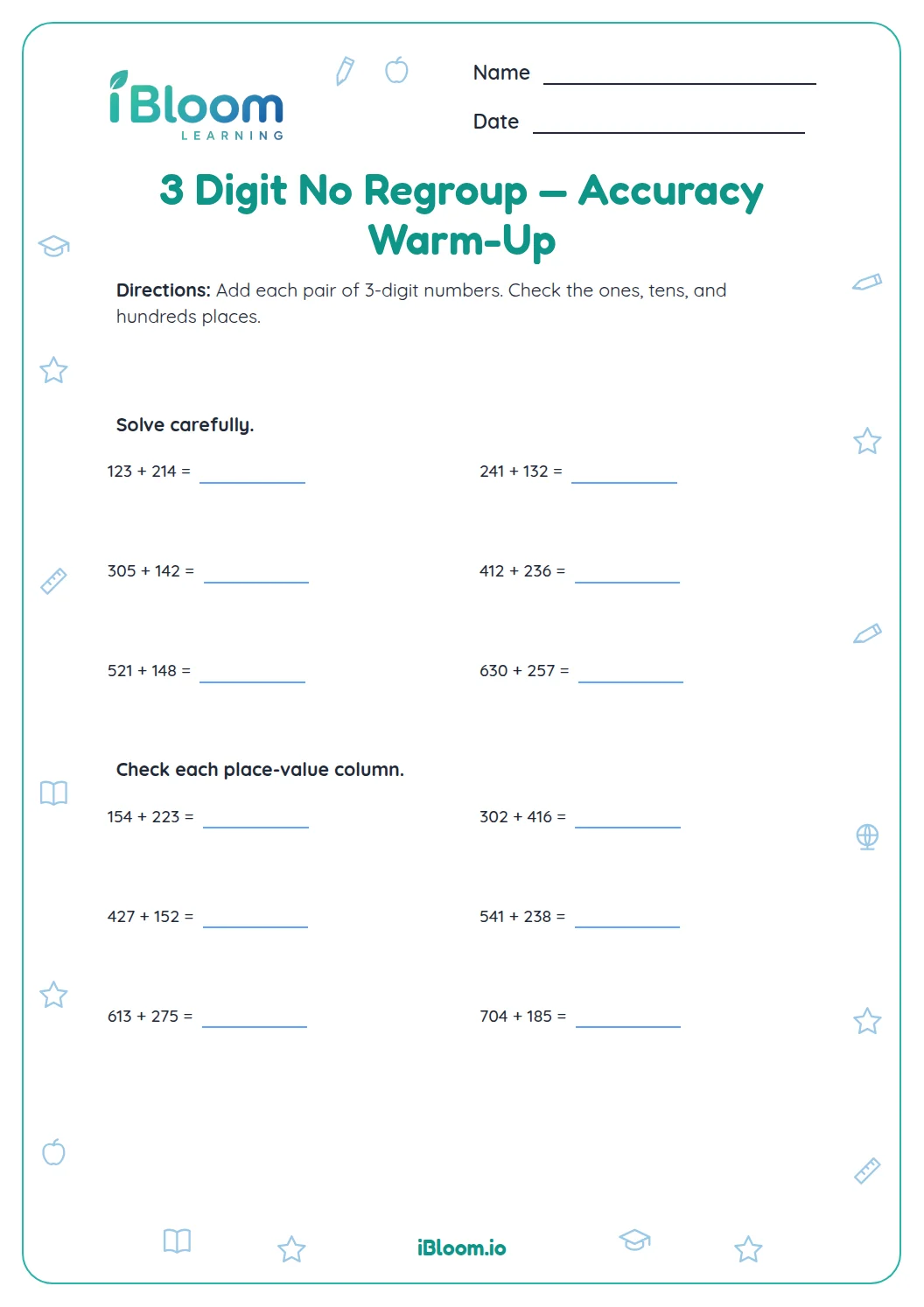
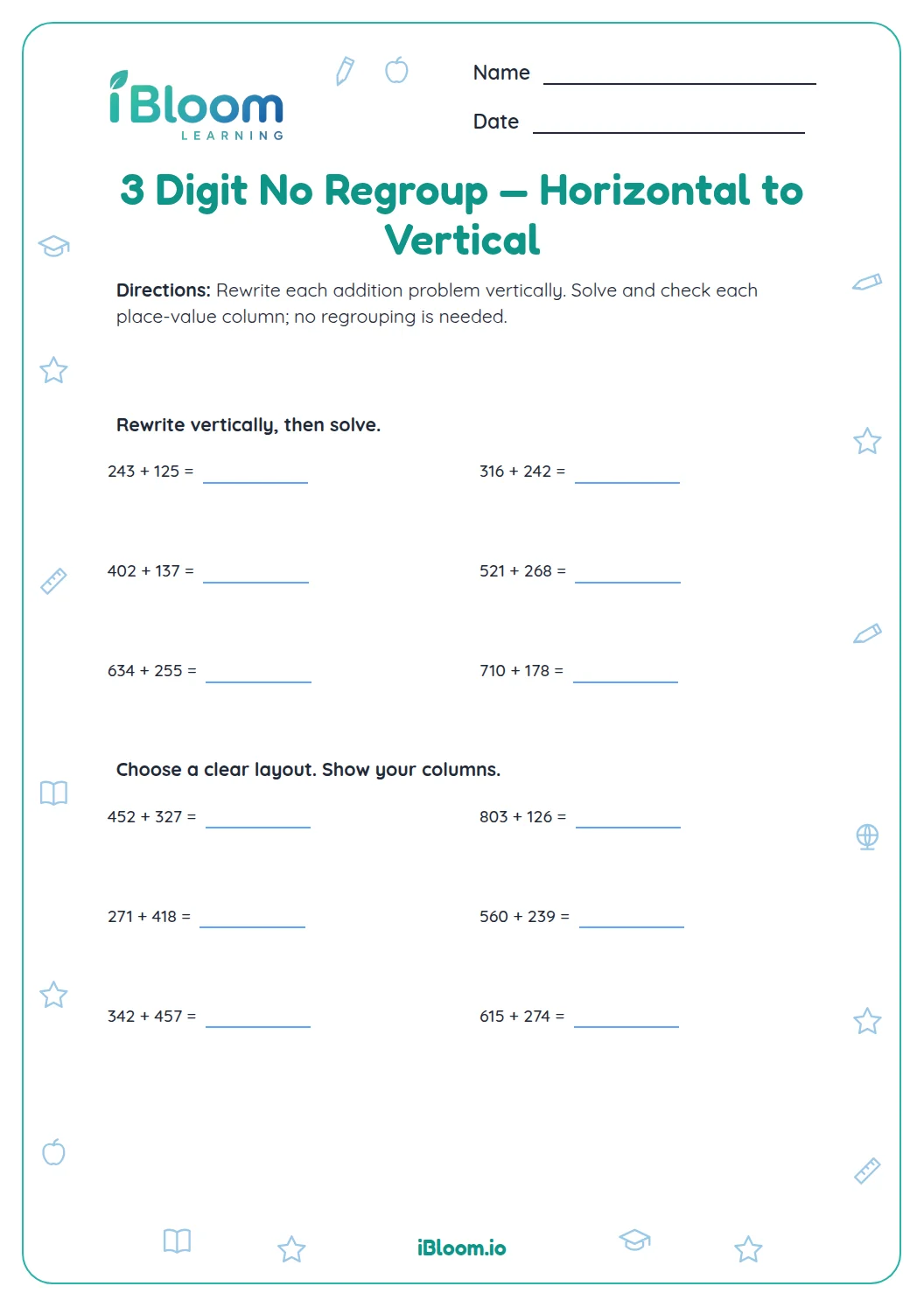
After these equations feel comfortable, try other two-digit addition problems and missing-addend practice. Moving to three-digit addition without regrouping extends the same tens-and-ones reasoning to hundreds. Try saying the tens and ones aloud while keeping each digit in its place. Move next to three-digit addition without regrouping when the place-value steps are secure.