




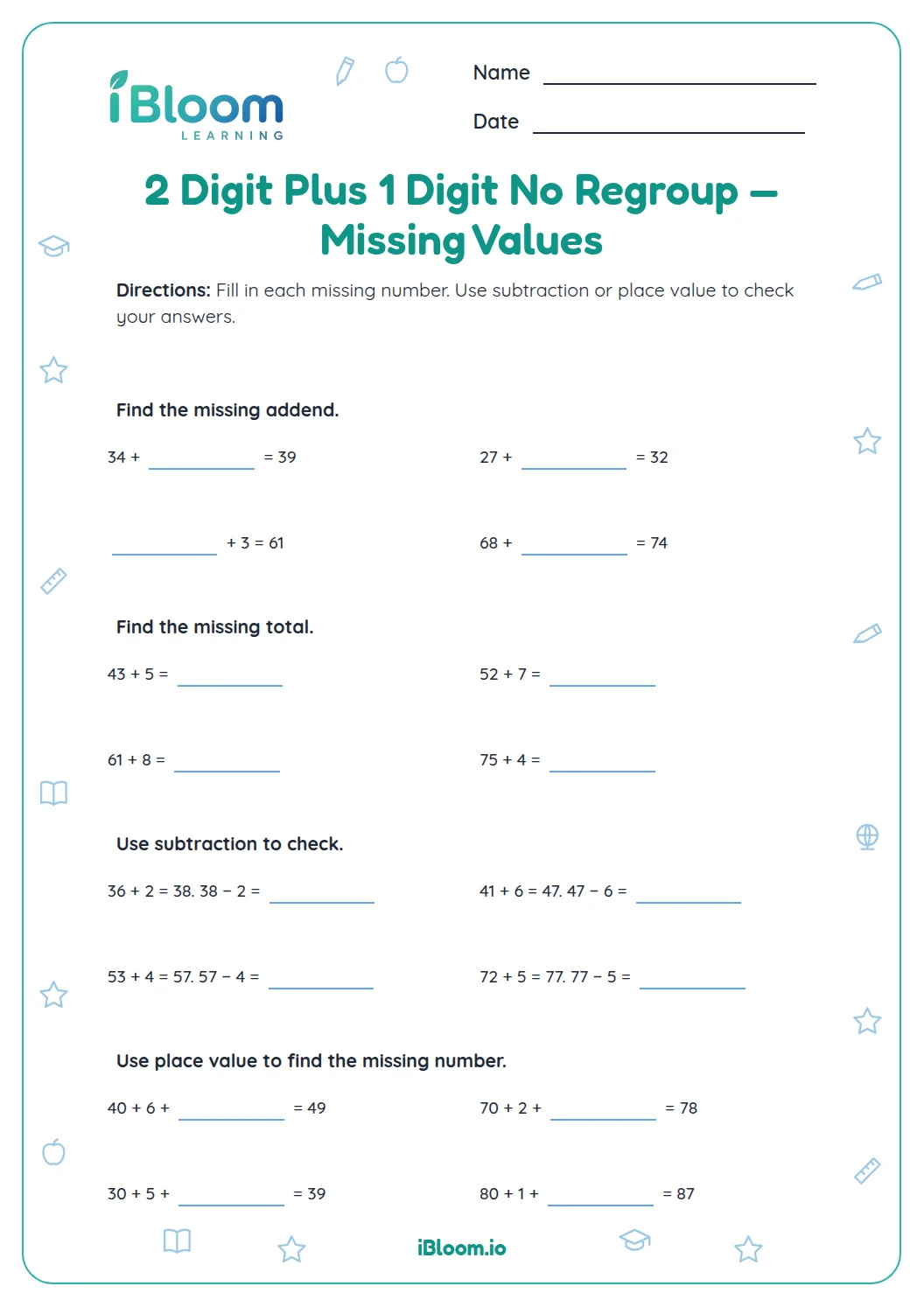
About this worksheet
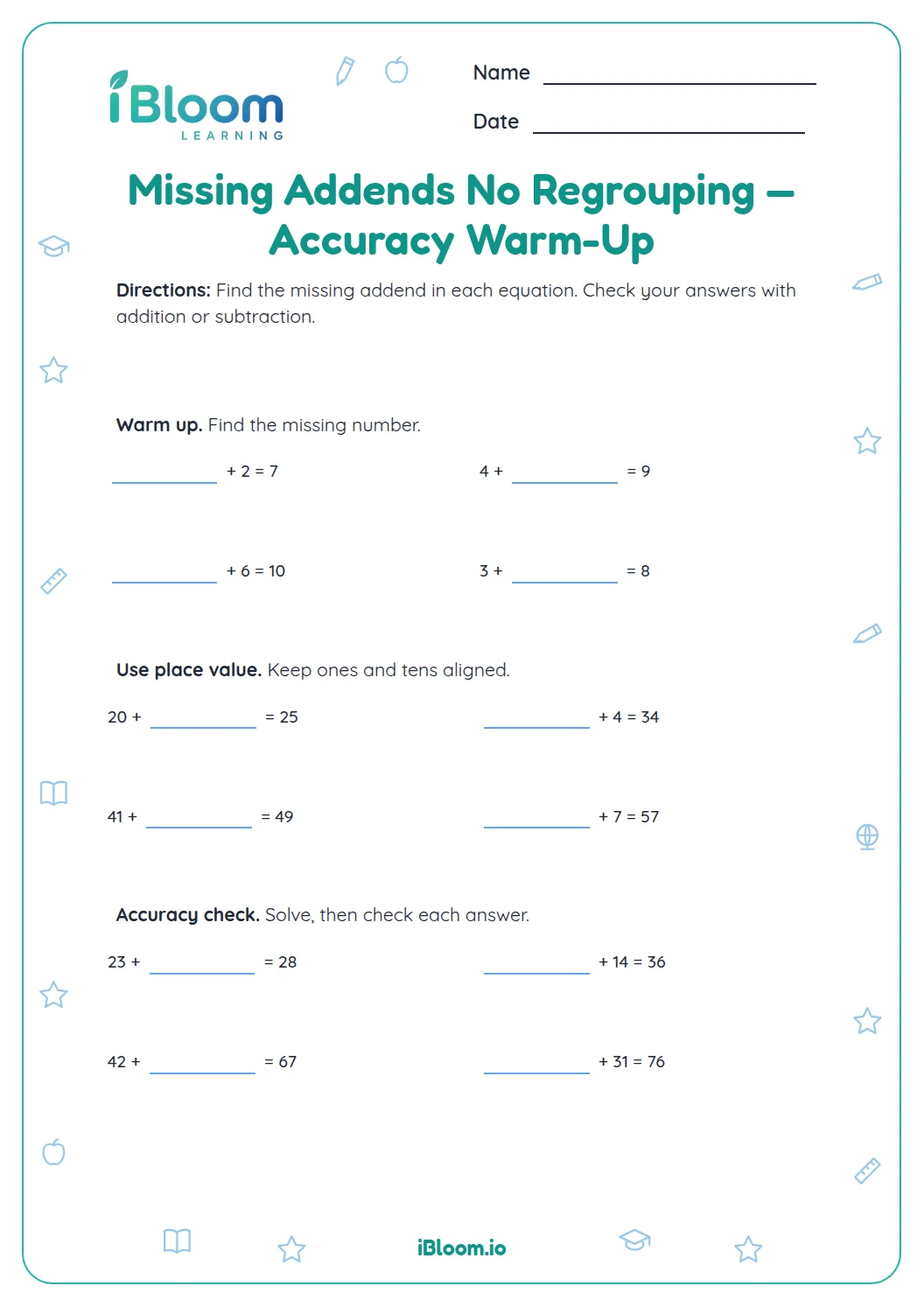
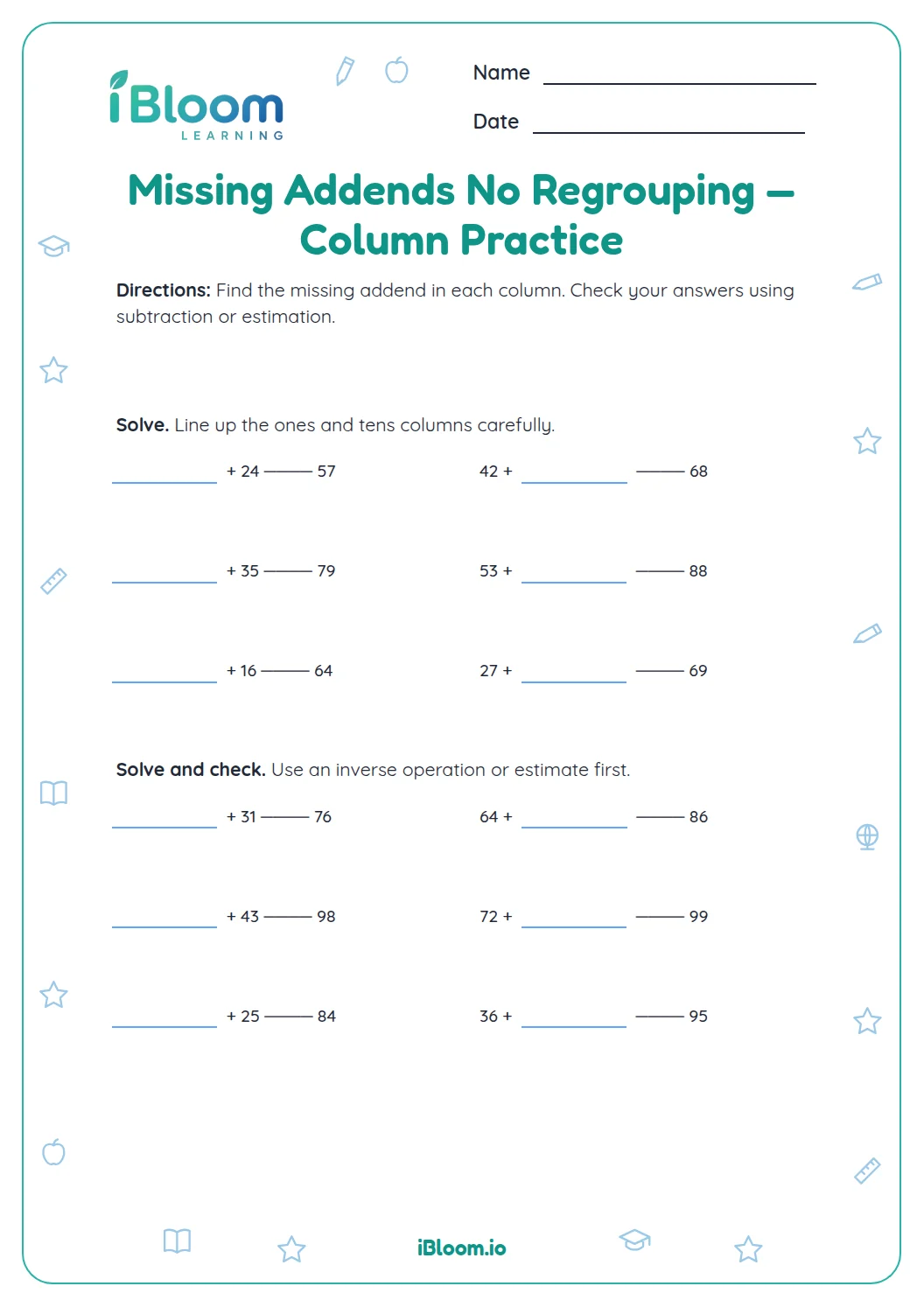
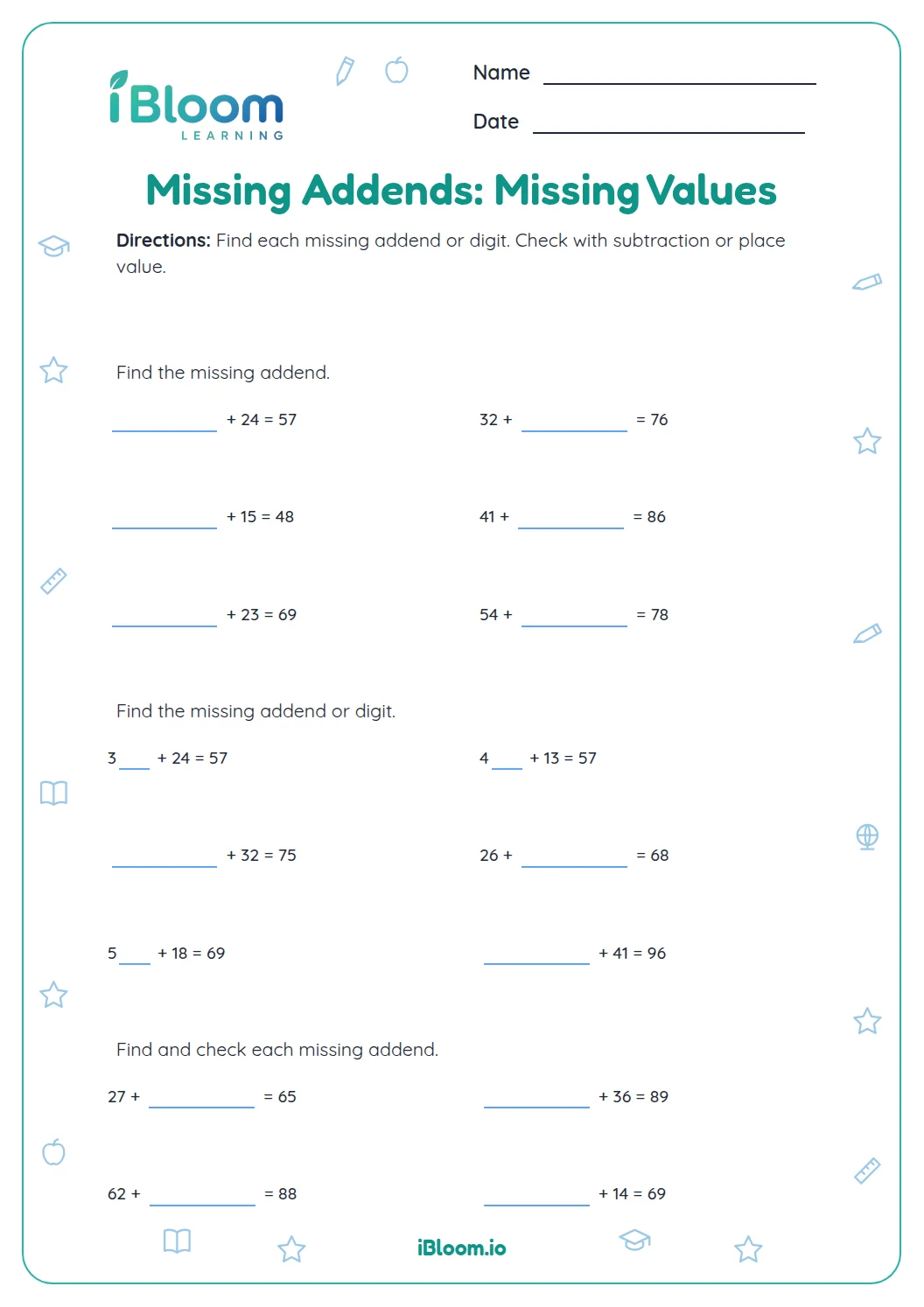
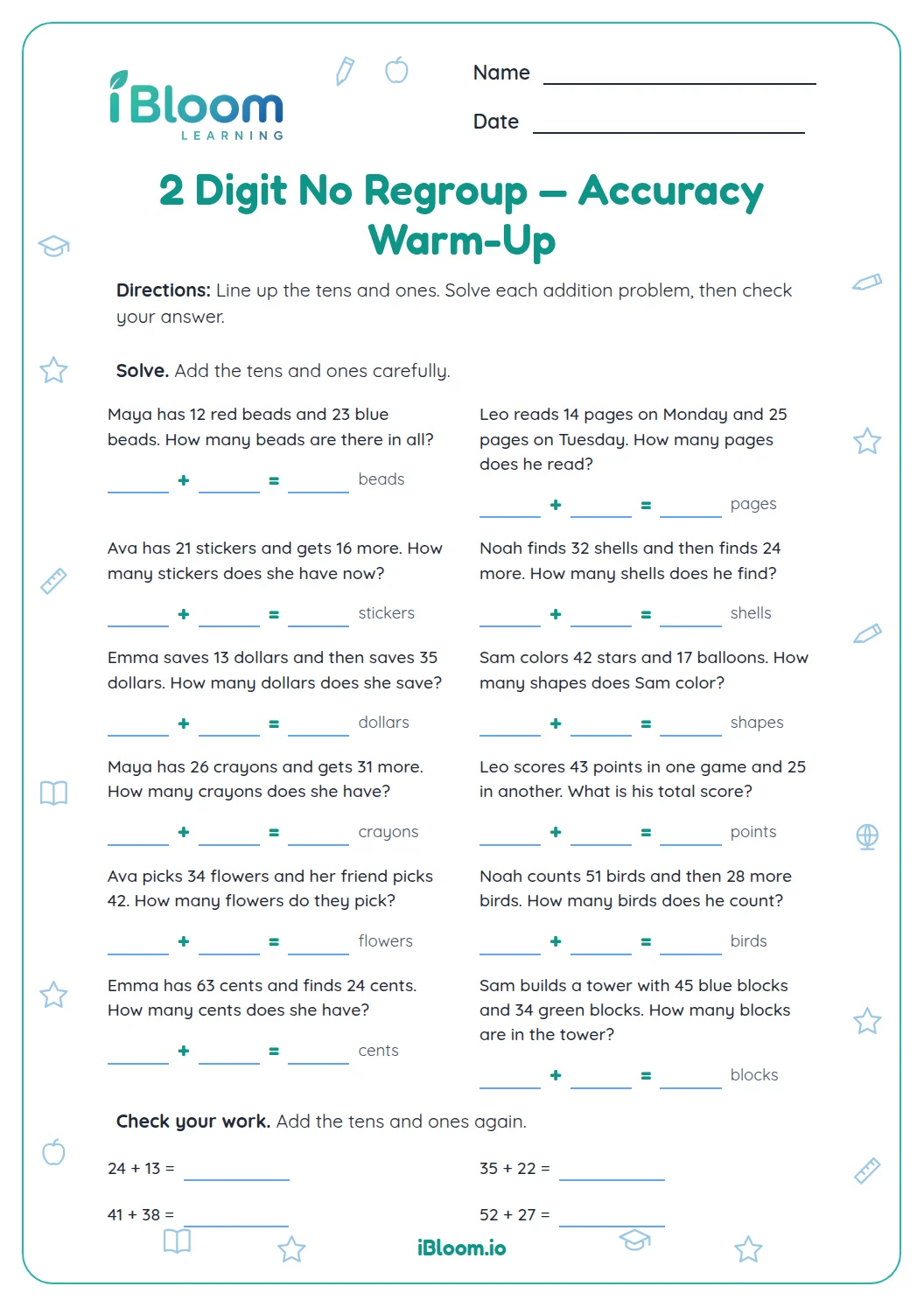
This Grade 3 addition worksheet helps children find an unknown addend and connect a horizontal equation to a vertical method. Part A has eight two-digit sums with no regrouping. In Part B, eight three-digit equations provide room to rewrite each sum in columns before solving. The page practices place-value addition within 1,000 (CCSS 3.NBT.A.2), and the answer key makes it easy to check each missing number.
Aligned to 3.NBT.A.2
How can you find an addend that is missing?
Use the total and the addend you already know. Subtracting the known addend from the total reveals the missing part. You can also build up by place value when the numbers are friendly.
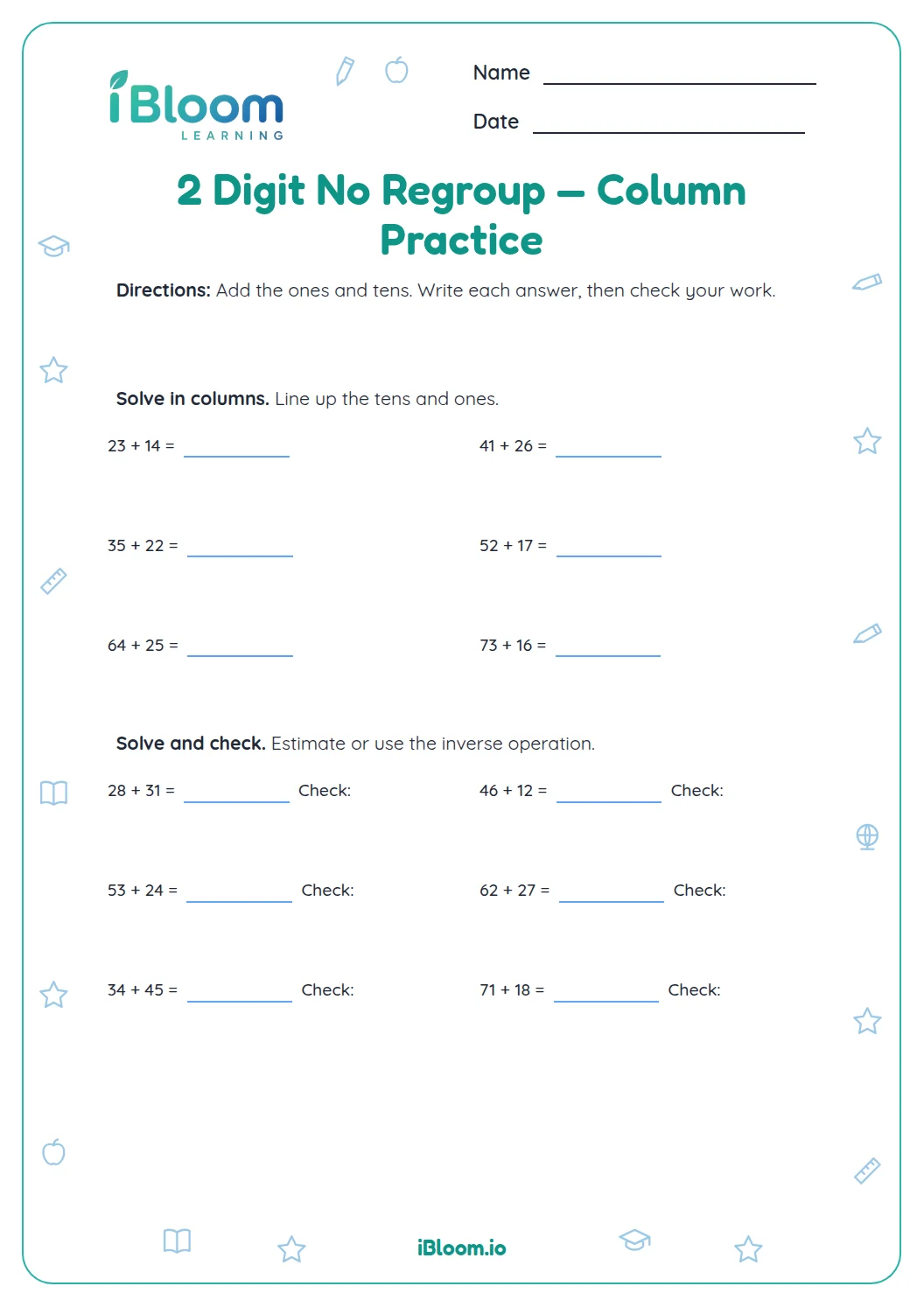
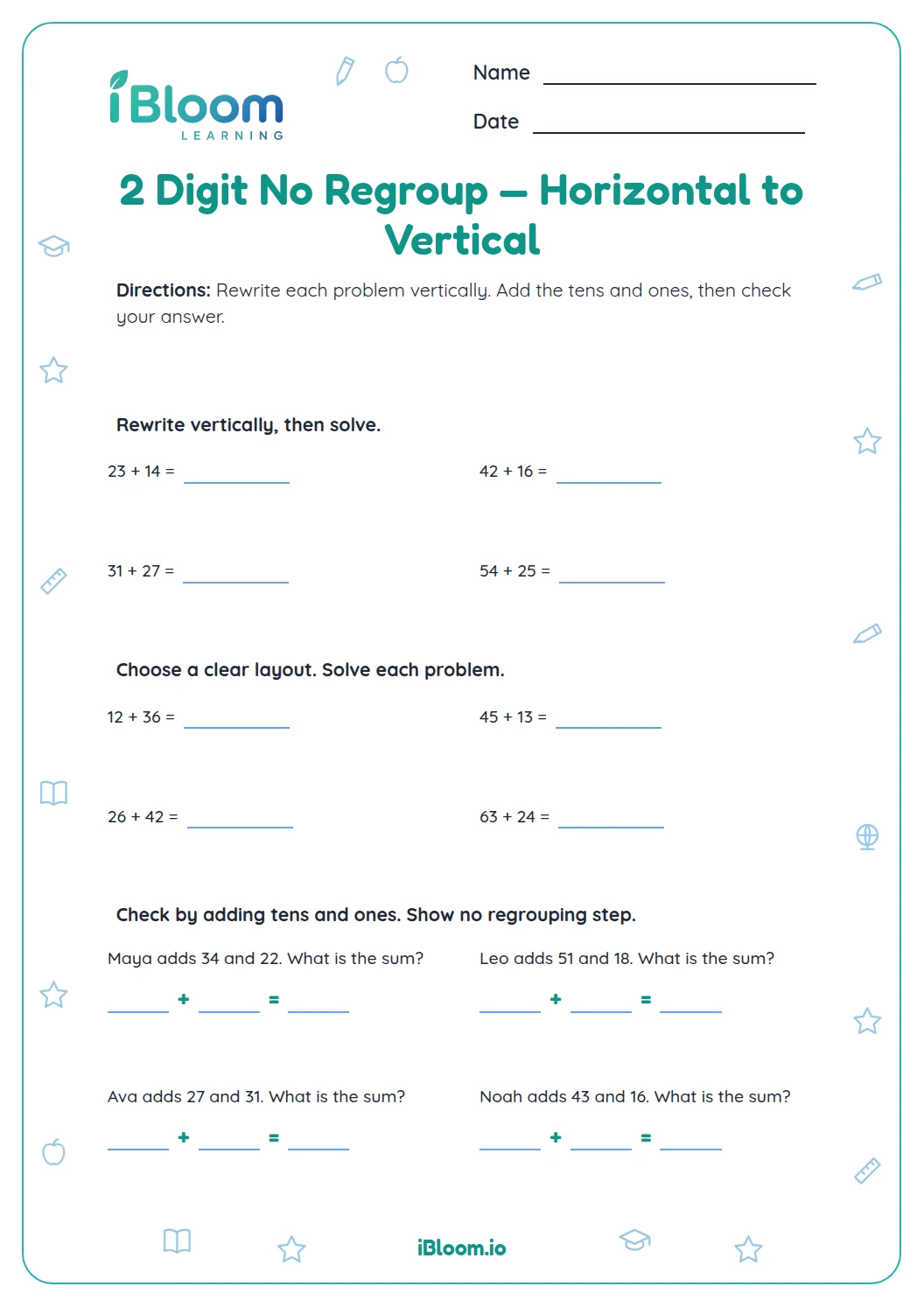
Part A starts with two-digit sums. Check each result by adding both addends together to see whether they make the printed total.
- 124 + ___ = 67
- 267 − 24 = 43, so the missing addend is 43.
- 3Check: 24 + 43 = 67.
How do columns help with three-digit sums?
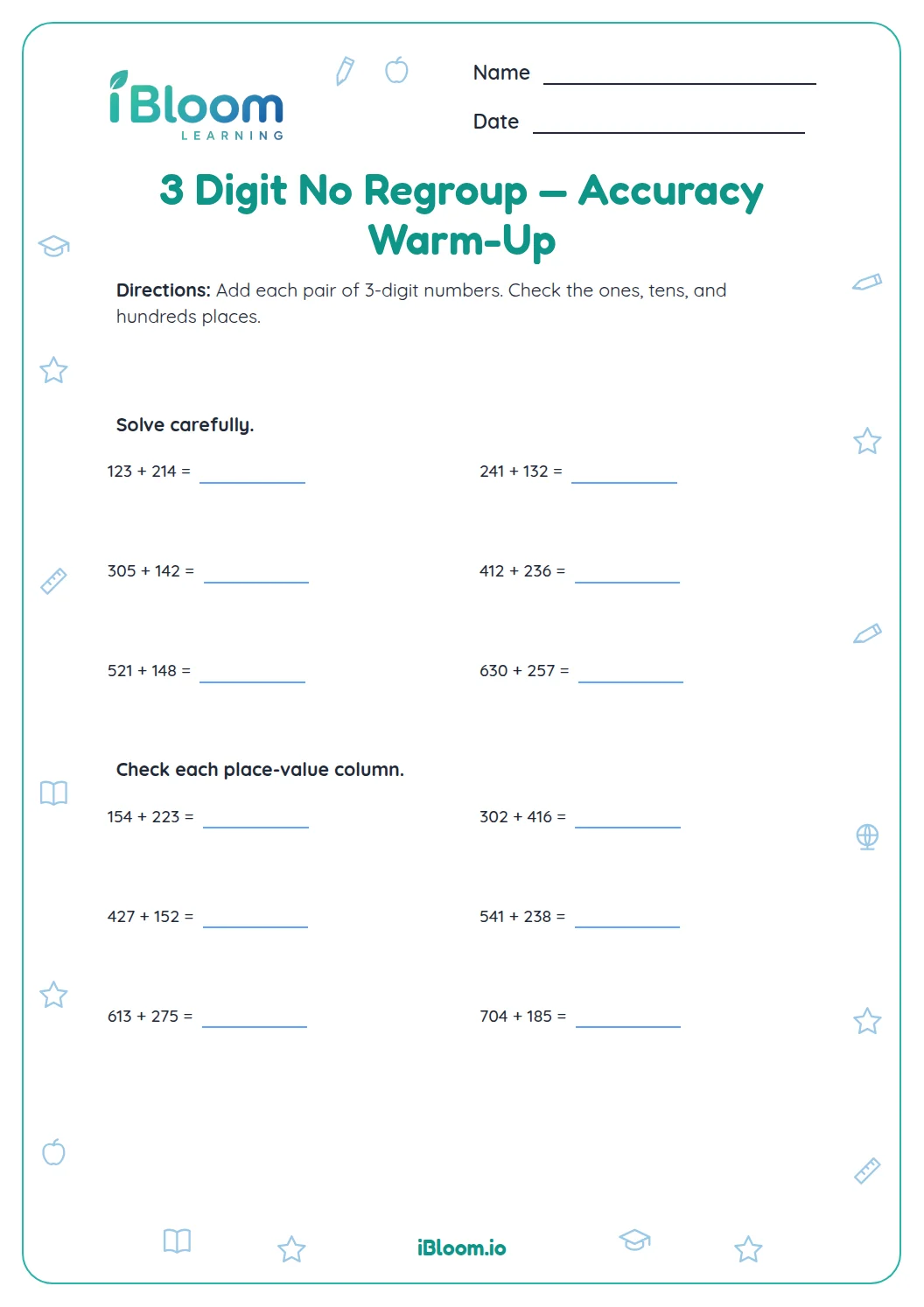
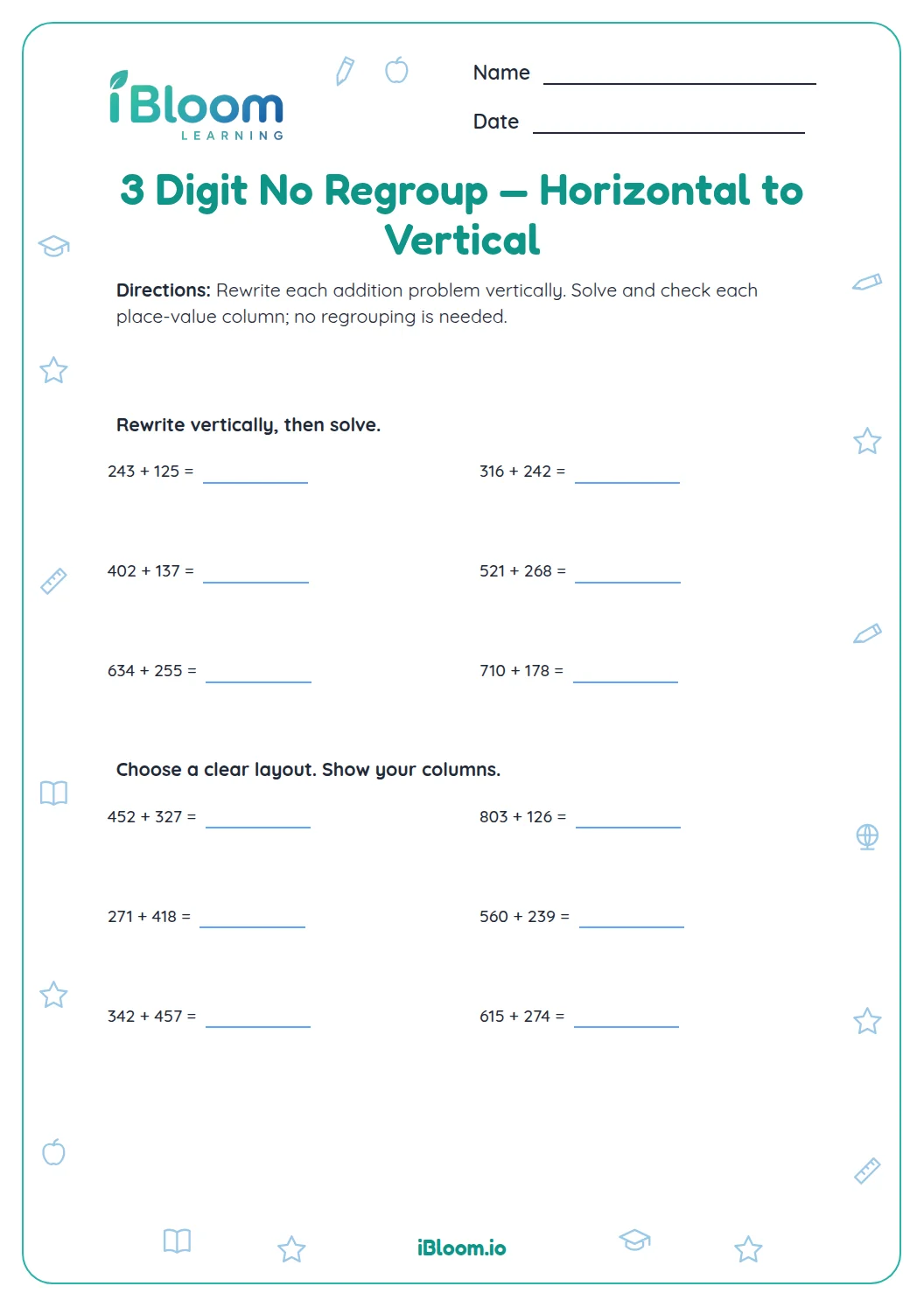
In Part B, rewrite each horizontal sum vertically. Put ones under ones, tens under tens and hundreds under hundreds. Add the number you know to the number you found to check the total.
Because these sums do not require regrouping, each place can be worked separately. Keeping the digits aligned helps prevent a tens digit from being added to a ones digit.
- 1234 + ___ = 678
- 2Write 234 and 444 in aligned columns.
- 3The sum is 678, so 444 is the missing addend.
How can a student check each answer?
Put the missing addend back into the original equation. If the sum matches the total, the answer is consistent. In column work, check each place and then read the complete sum.
How to use this worksheet
- 1Read the total and the addend already given.
- 2Find the missing part by subtracting or counting up.
- 3For Part B, rewrite the equation with ones, tens and hundreds aligned.
- 4Solve each place and record the missing addend.
- 5Add the two addends to check the total.
Common mistakes and quick fixes
The mistake
Subtracting the total from the known addend.
The fix
Start with the larger total, then subtract the addend you know.
The mistake
Putting a tens digit under the ones column.
The fix
Line up the ones digits at the right edge before adding.
The mistake
Writing the known addend as the answer.
The fix
Check by adding your missing number to the known addend.
Common Core alignment
The questions on this page practice the listed Common Core skill.
Use place-value strategies and algorithms to add within 1,000.
On this sheet: The column section practices adding three-digit numbers within 1,000 while locating an unknown addend.
Show the official wordingHide the official wording
Fluently add and subtract within 1000 using strategies and algorithms based on place value, properties of operations, and/or the relationship between addition and subtraction.
What to practice next
Make more practice
Further reading
Questions parents and teachers ask
What does “missing addend” mean?
An addend is a number being added. A missing addend is the number that completes a sum, such as 43 in 24 + ___ = 67. The worksheet has children find that unknown number, then check it by adding both addends to see whether they make the total.
How many questions are on the worksheet?
There are 16 problems across two parts. Part A contains eight horizontal two-digit equations, and Part B contains eight three-digit equations with space to rewrite them in columns. The separate answer key gives the missing addend for every problem on the page.
Why does Part B ask students to rewrite sums in columns?
Writing a horizontal equation vertically gives students practice lining up ones, tens and hundreds. That alignment makes place value visible and helps organize a larger sum. The equations on this page can be solved without regrouping, so attention can stay on the missing addend and column alignment.
How can I check a missing addend?
Add the number you found to the addend already printed in the equation. If that sum equals the total, the missing addend is correct. For example, 234 + 444 equals 678, so 444 completes that equation. This quick check works for both parts.
What should a student do if subtraction feels difficult?
Try counting up from the known addend to the total, keeping track of the amount added. For example, from 234 to 678, add hundreds, tens and ones in manageable steps. Then combine those steps and check the result with addition.