



About this worksheet
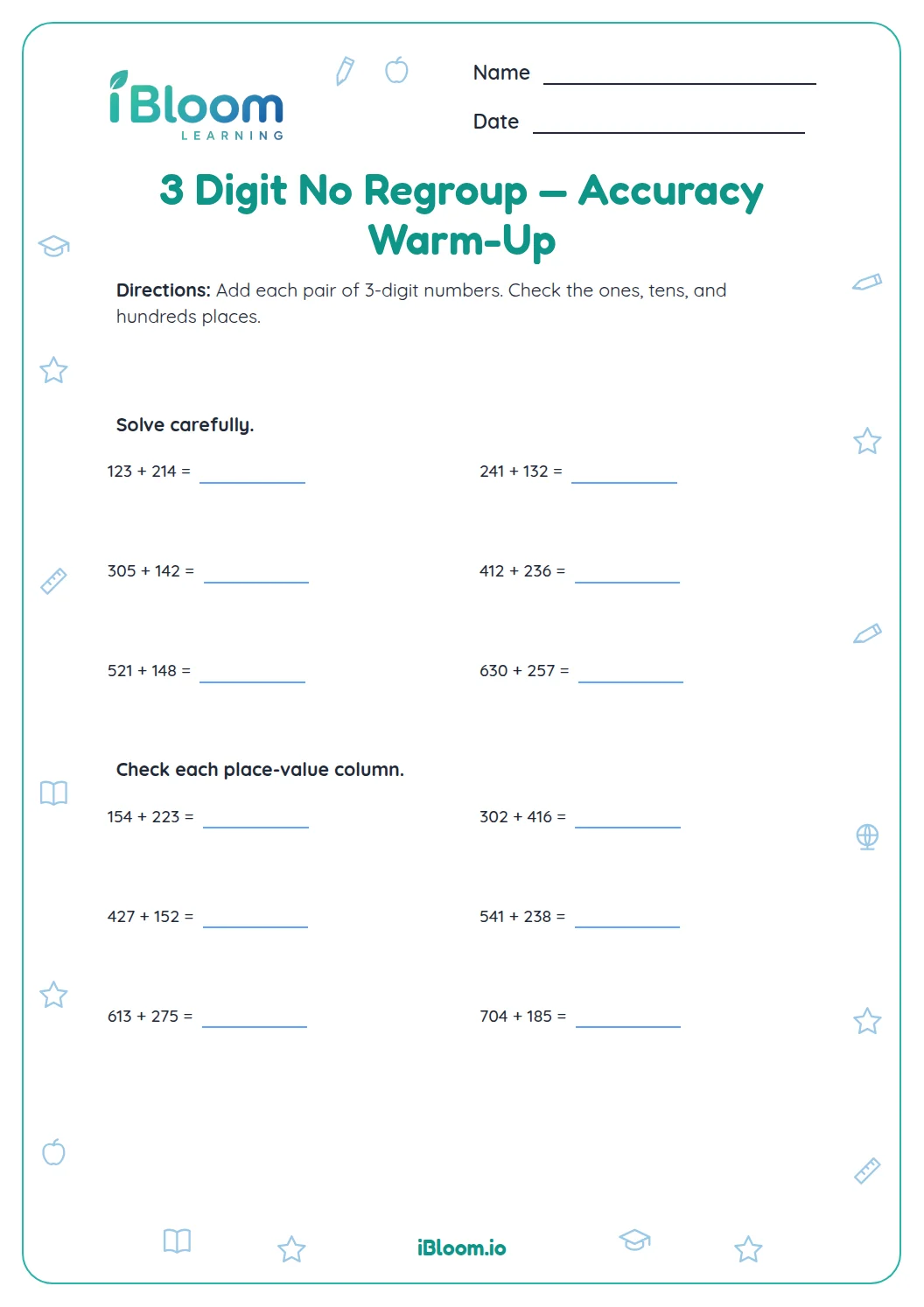
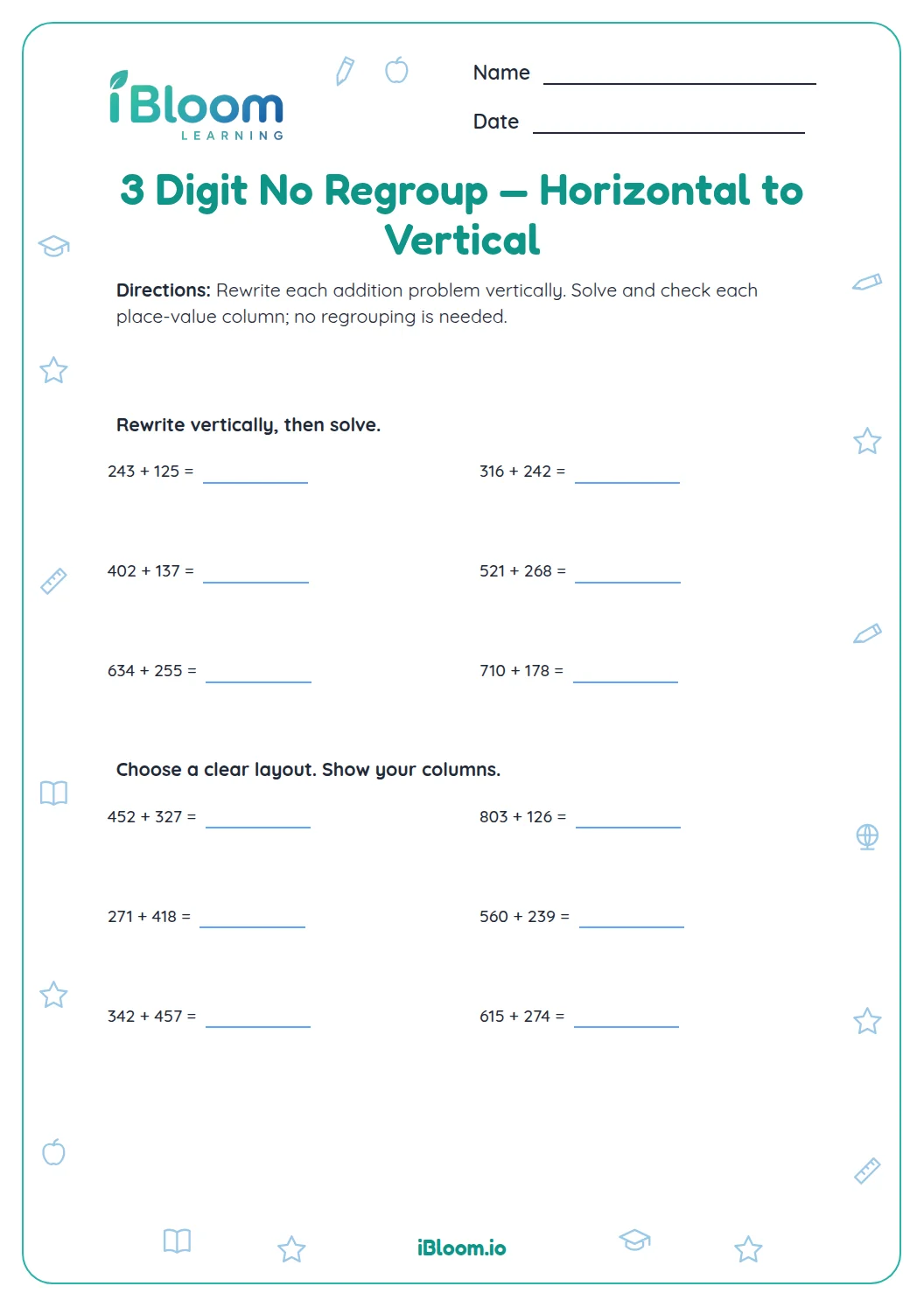
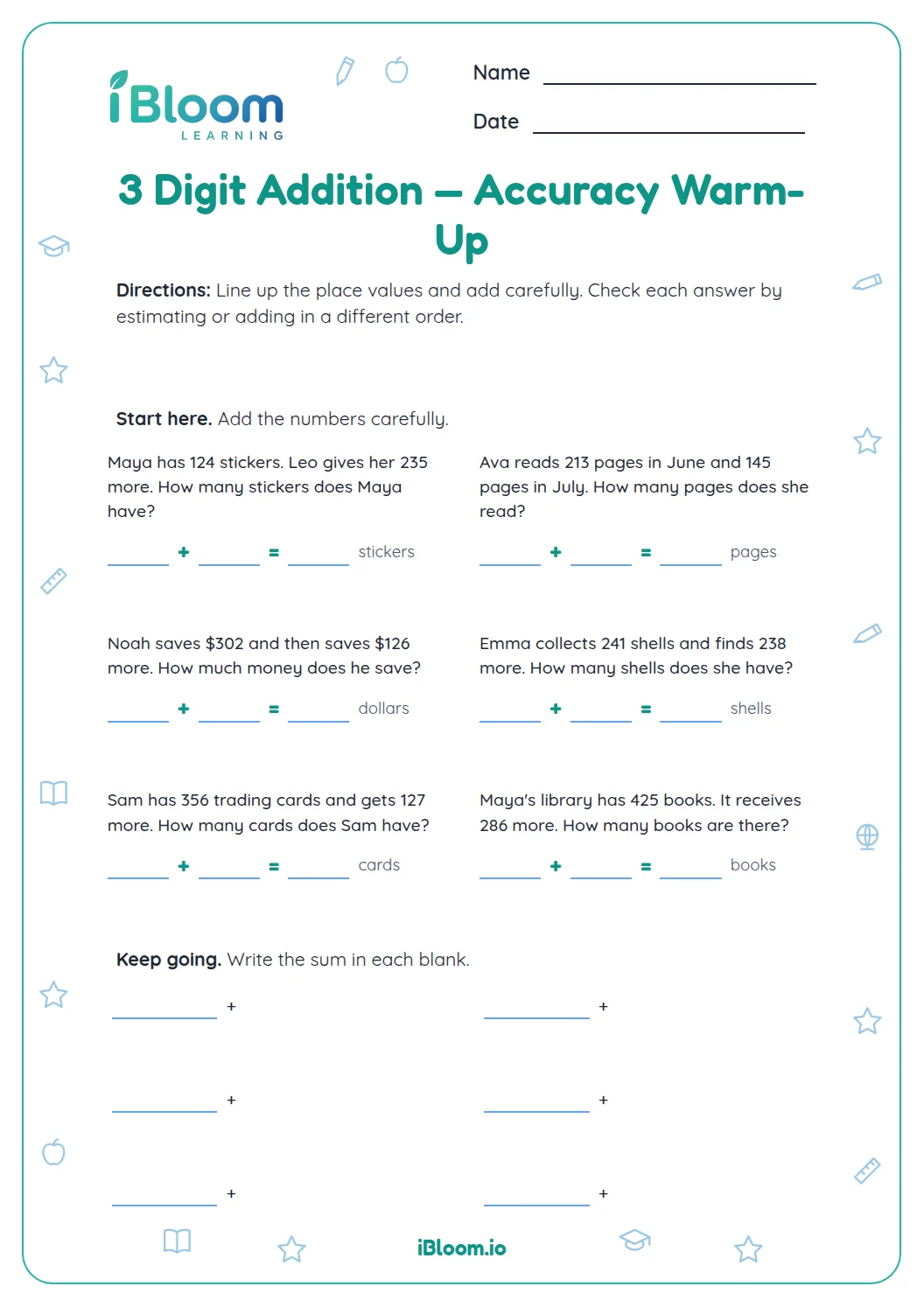
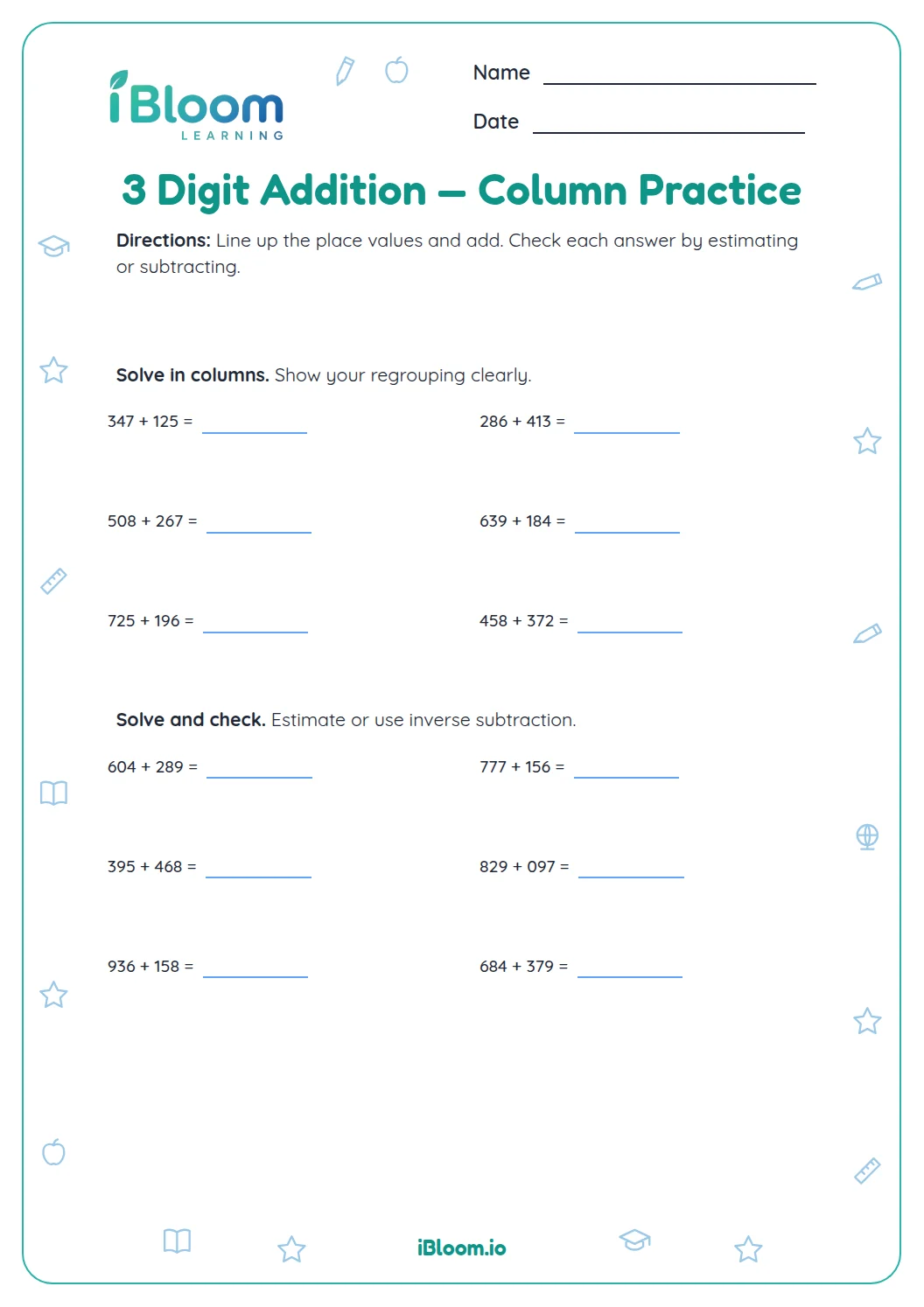
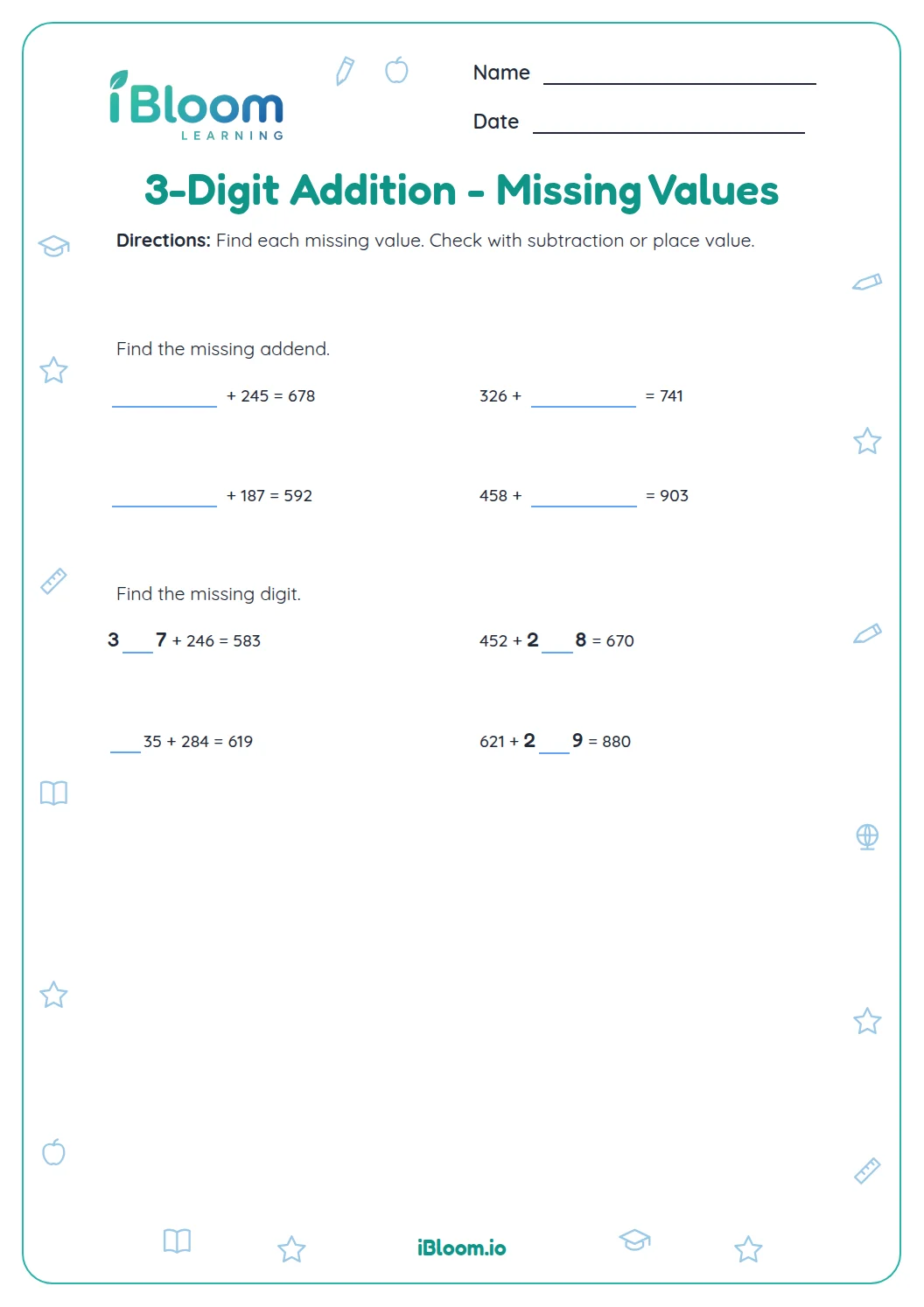
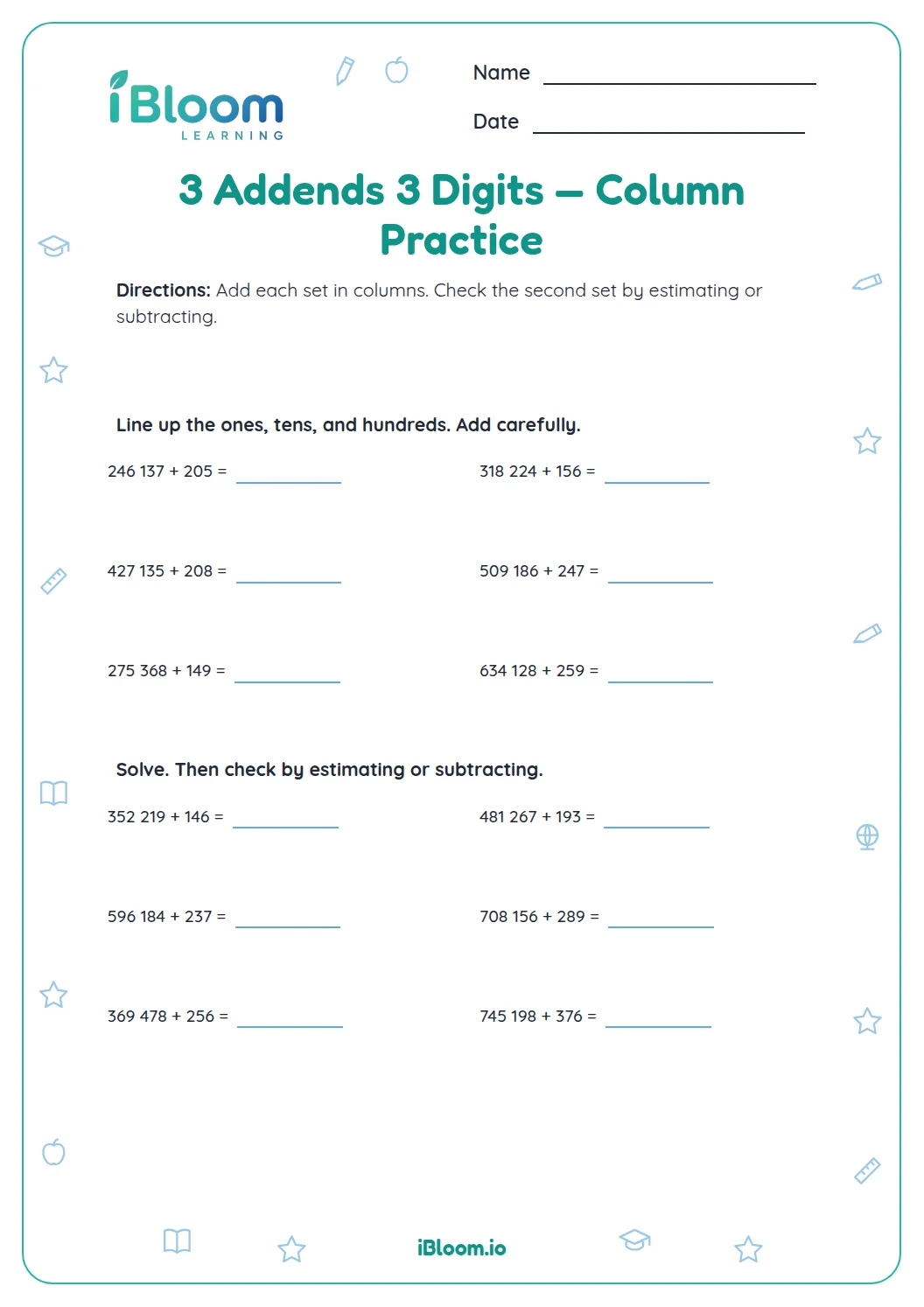
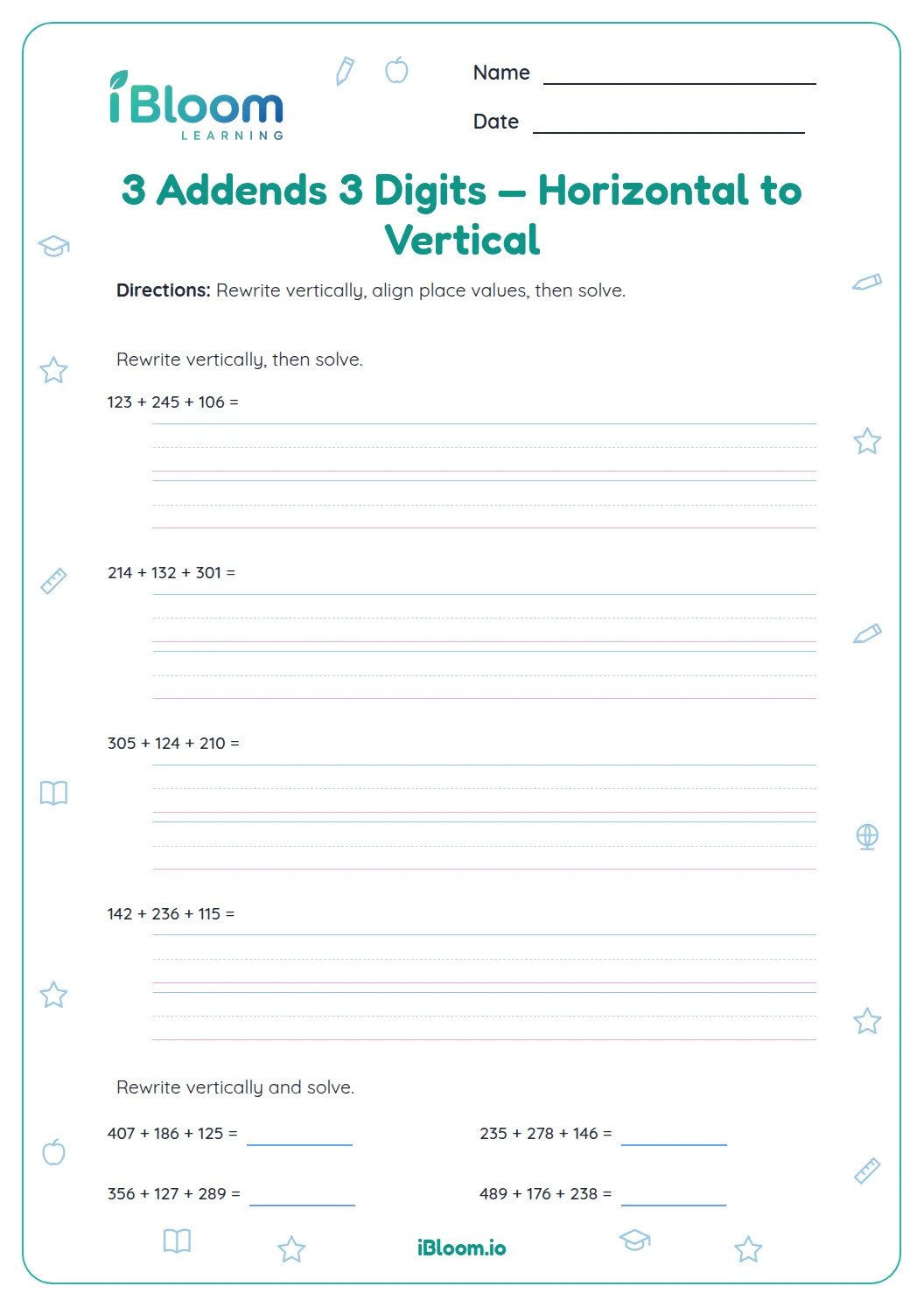
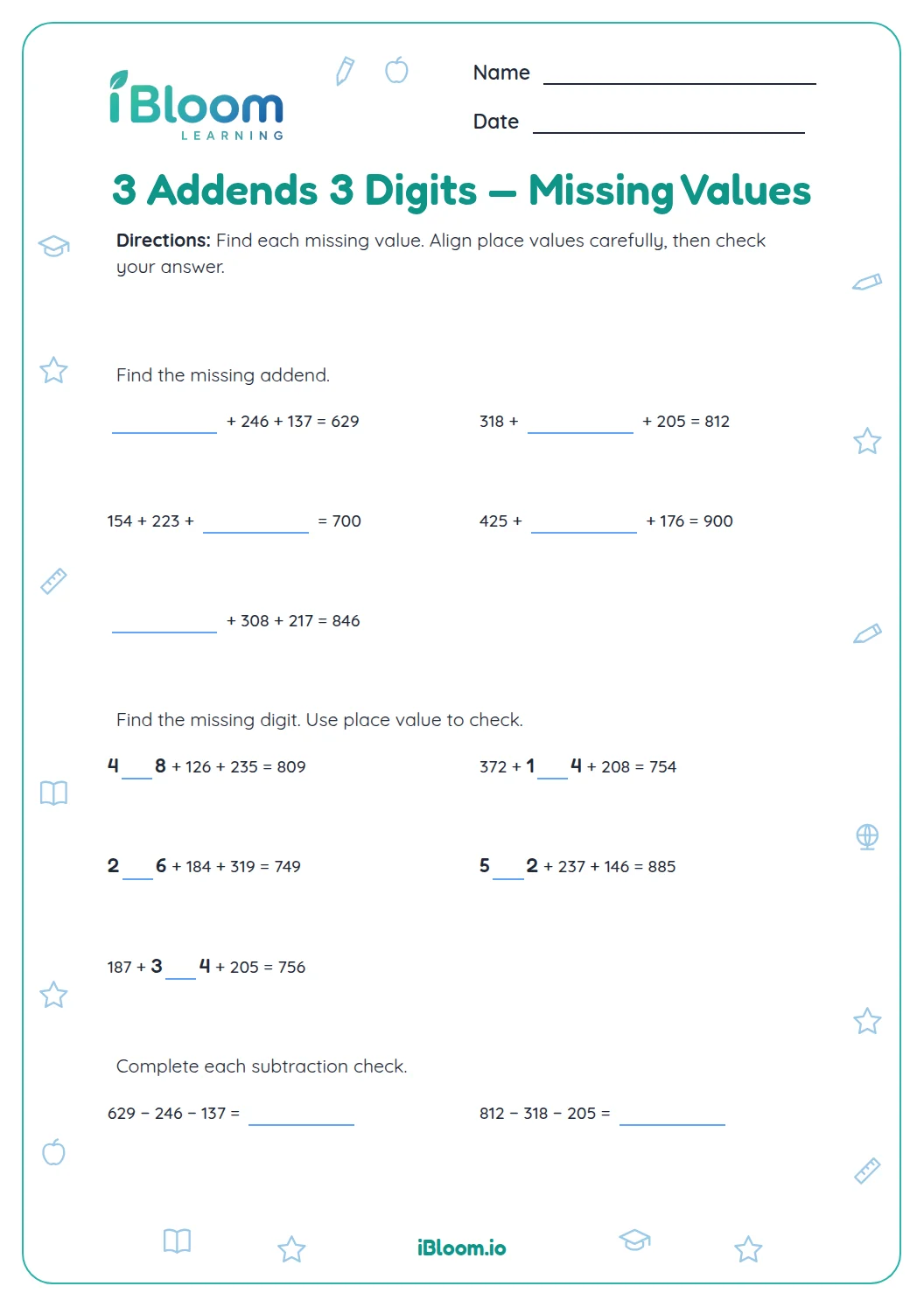
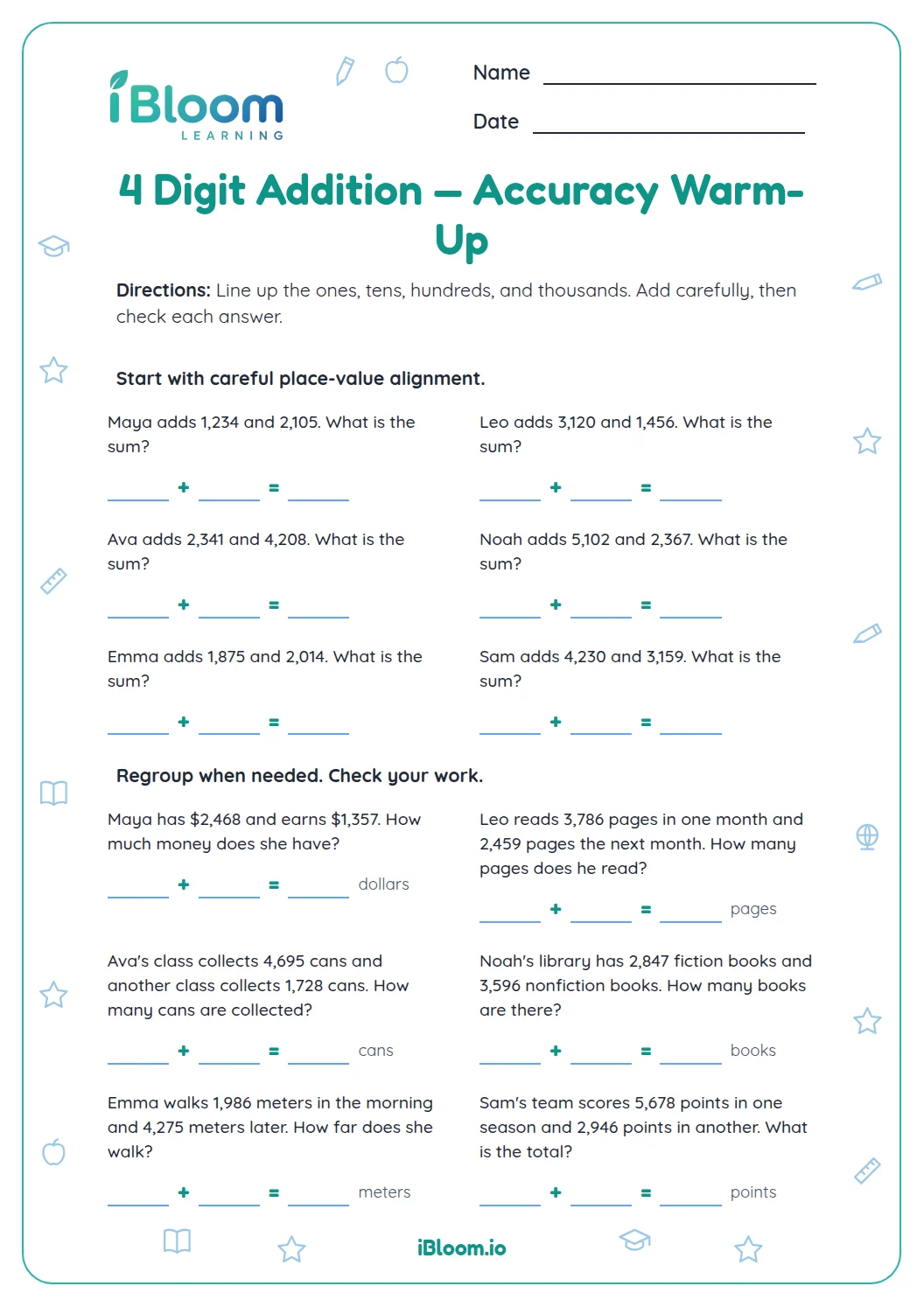
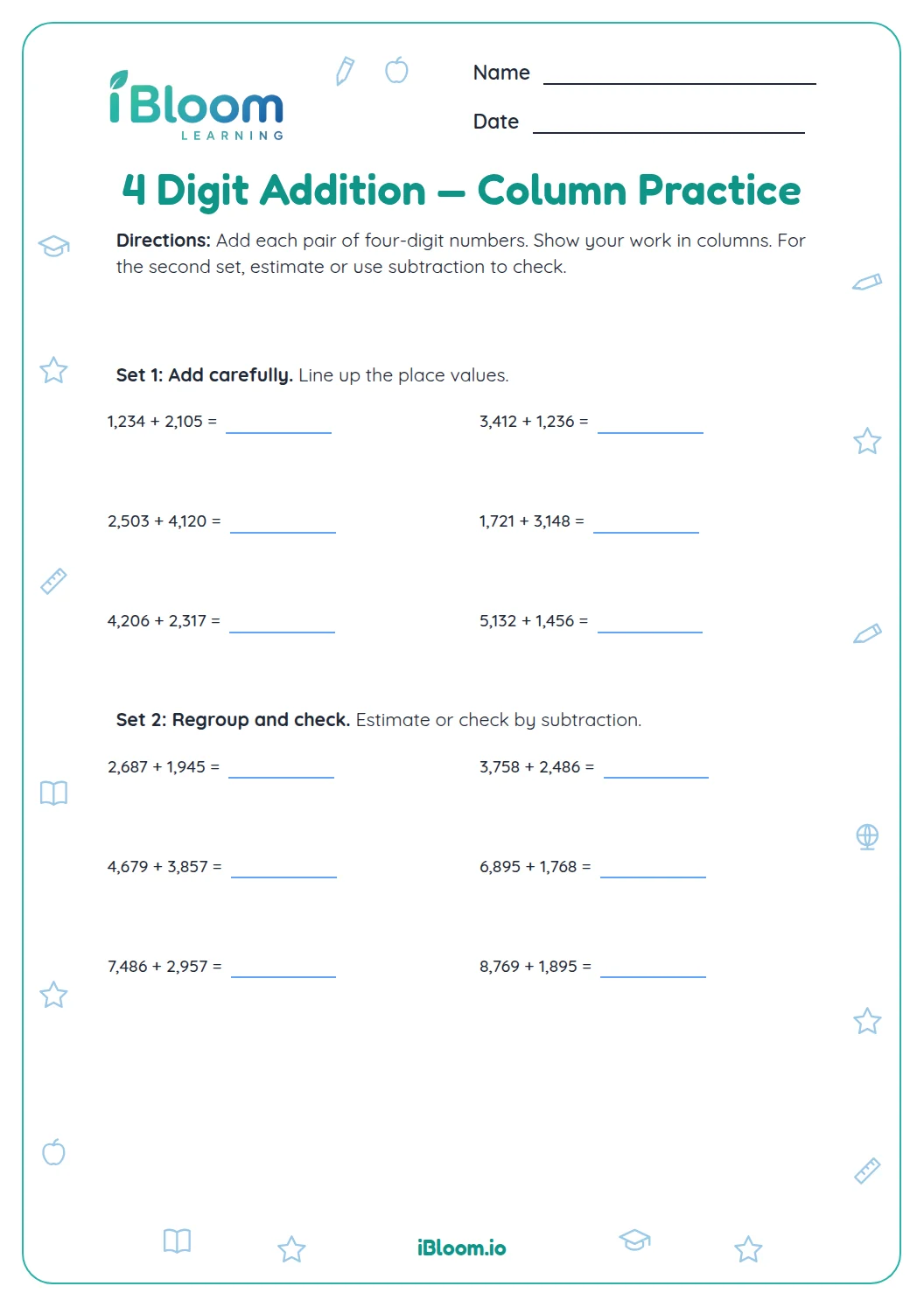
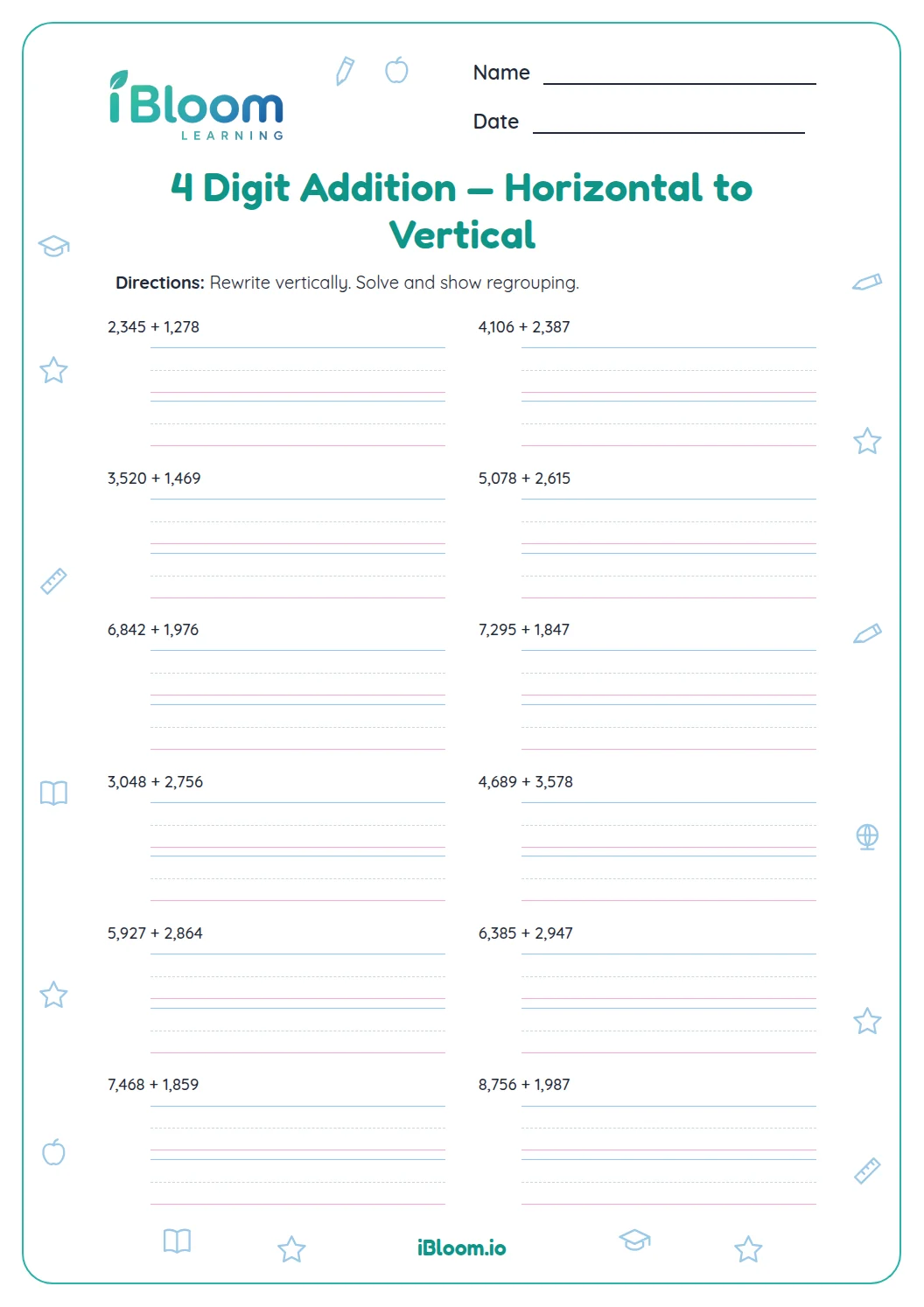
This printable gives Grade 3 and Grade 4 students practice adding two three-digit numbers. In Part A, solve eight horizontal number sentences using place-value strategies. In Part B, rewrite eight more problems vertically, line up ones, tens, and hundreds, and regroup where needed. The work connects Grade 3 fluency with addition within 1,000 to Grade 4 practice with the standard algorithm. A separate answer key is included.
Aligned to 3.NBT.A.2 and 4.NBT.B.4
How do you add a horizontal sum?
In Part A, solve 246 + 137 by place value. Add the ones, tens, and hundreds, regrouping when a column reaches ten. Record the total in the blank.
How do you rewrite a sum in columns?
For Part B, set up 284 + 359 vertically. Put the ones digits together, the tens digits together, and the hundreds digits together. Then add from right to left and regroup as needed.
How can you check a three-digit sum?
Check that every digit stayed in its place-value column. Re-add the columns, including any regrouped ten, and compare the result with the answer key.
How to use this worksheet
- 1Read the plus sign and copy both addends accurately.
- 2In Part A, add by place value and write the sum.
- 3In Part B, stack the addends with matching places aligned.
- 4Add the ones column first and regroup a ten when needed.
- 5Continue through tens and hundreds, then check the total.
Common mistakes and quick fixes
The mistake
Putting a tens digit under the ones digit.
The fix
Line up the rightmost digits before adding.
The mistake
Forgetting to add a regrouped ten in the next column.
The fix
Write the regrouped ten above the next place and include it.
The mistake
Writing a two-digit column total as one digit without regrouping.
The fix
Keep the ones digit in the current column and carry the ten to the next column.
The problems build place-value accuracy while adding three-digit whole numbers.
Use place-value strategies to add three-digit numbers within 1,000.
On this sheet:
Show the official wordingHide the official wording
Fluently add and subtract within 1000 using strategies and algorithms based on place value, properties of operations, and/or the relationship between addition and subtraction.
Practice aligning place values and regrouping in the standard algorithm.
On this sheet:
Show the official wordingHide the official wording
Fluently add and subtract multi-digit whole numbers using the standard algorithm.
What to practice next
Make more practice
Further reading
Questions parents and teachers ask
What does “horizontal to vertical” mean?
It means a child first sees each addition problem written across a line, then practices setting similar problems up in columns. The columns help keep ones, tens, and hundreds aligned so regrouping can be recorded in the correct place.
What skills does this worksheet practice?
The 16 problems practice adding two three-digit numbers, including sums that require regrouping. The first eight are printed horizontally; the second eight provide work space for rewriting each problem vertically and solving it. Each part uses a distinct layout to support both mental place-value work and written setup.
Is this worksheet for Grade 3 or Grade 4?
It is suitable for Grade 3 and Grade 4 learners practicing three-digit addition. Grade 3 students can use place-value strategies, while Grade 4 students can focus on accurate column setup and the standard algorithm. The problems stay within three-digit addends and totals below 1,000.
How should my child use the work space?
For the second part, copy each addend into a vertical setup with ones under ones, tens under tens, and hundreds under hundreds. Add from the ones column, regroup when needed, and check the total by adding the columns again.
Does the printable include an answer key?
Yes. Print the answer key separately to check the 16 sums after the worksheet is complete. If an answer differs, compare the vertical setup first; a misaligned digit can change the value even when the addition facts are correct.