
About this worksheet
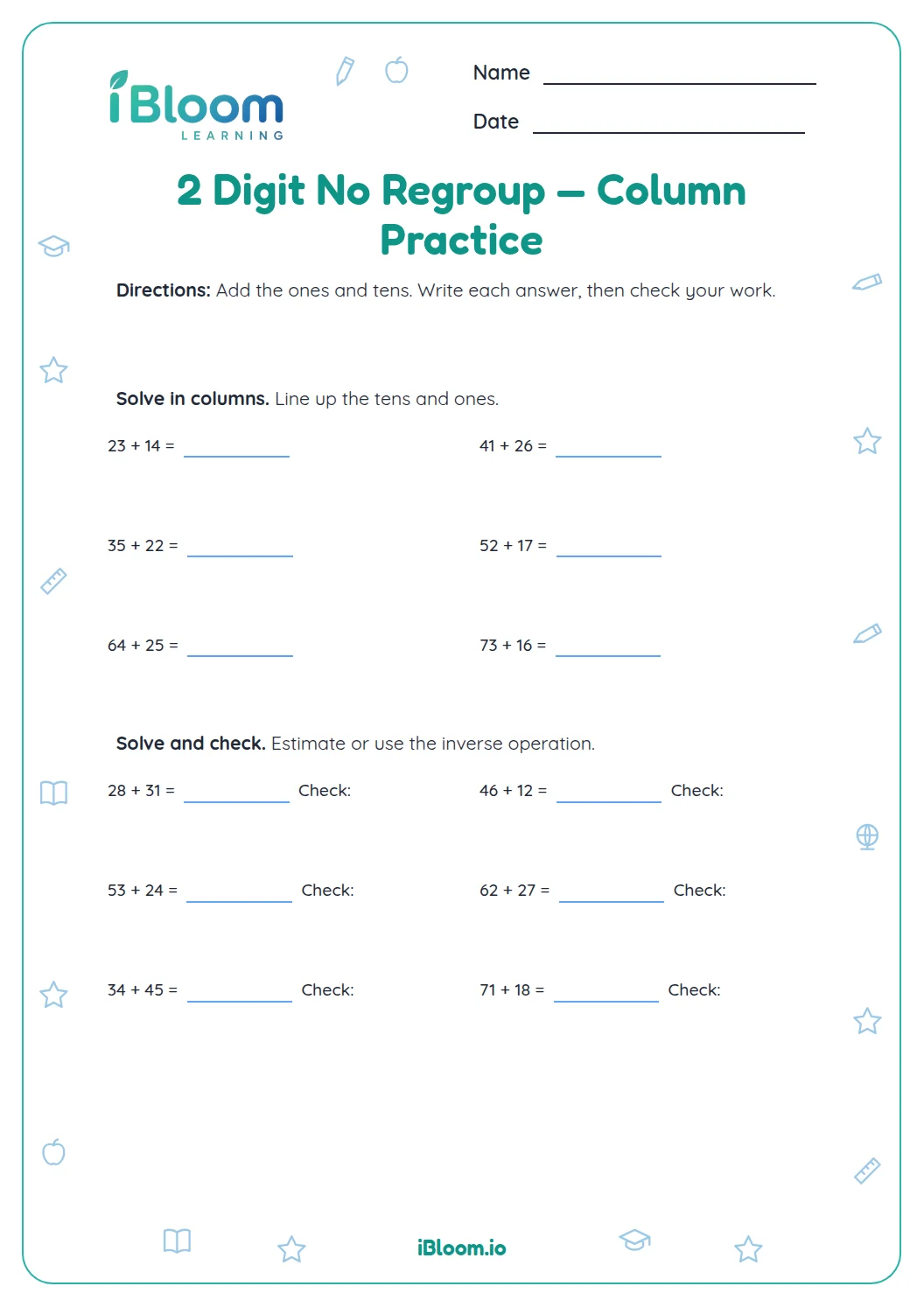
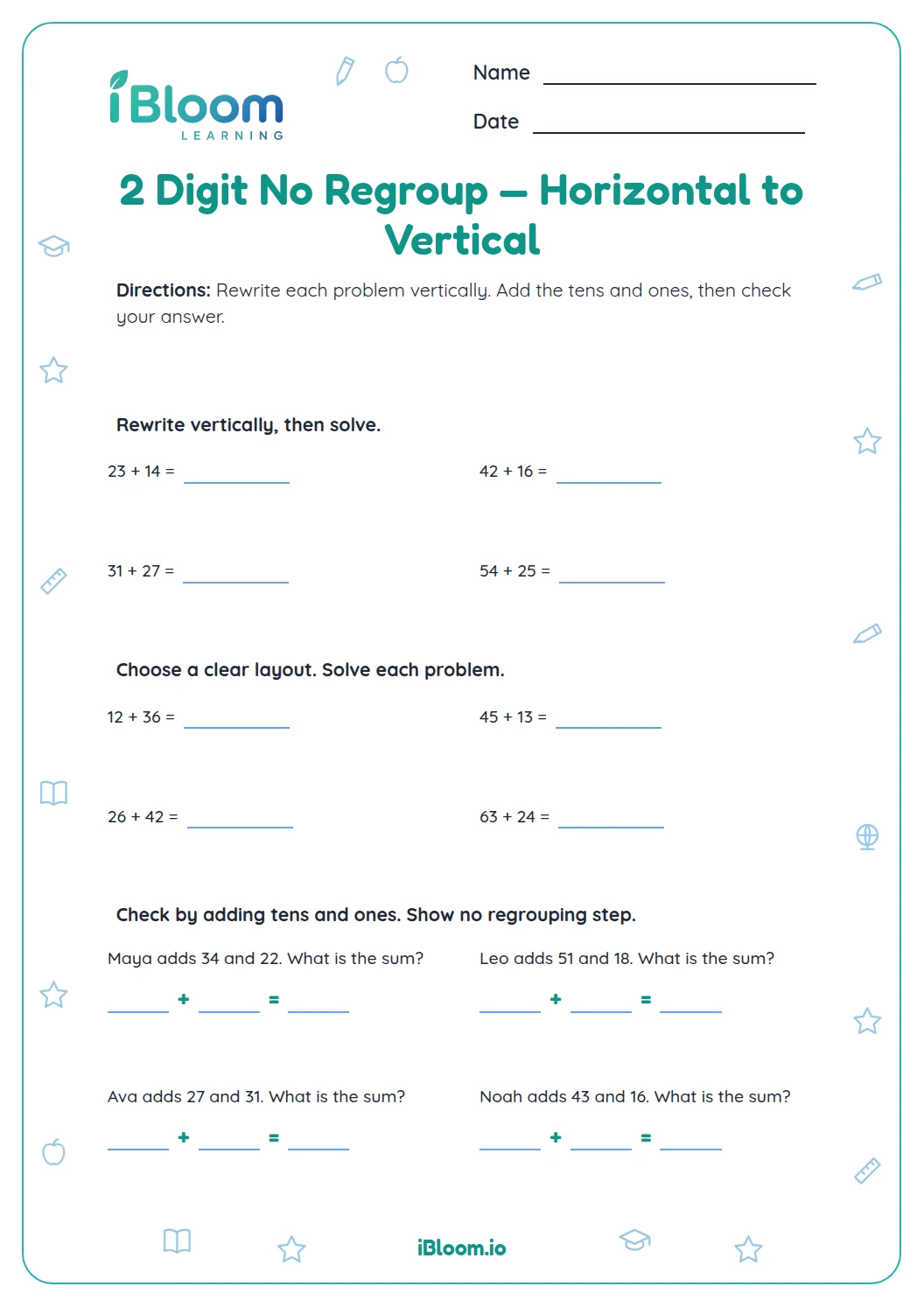
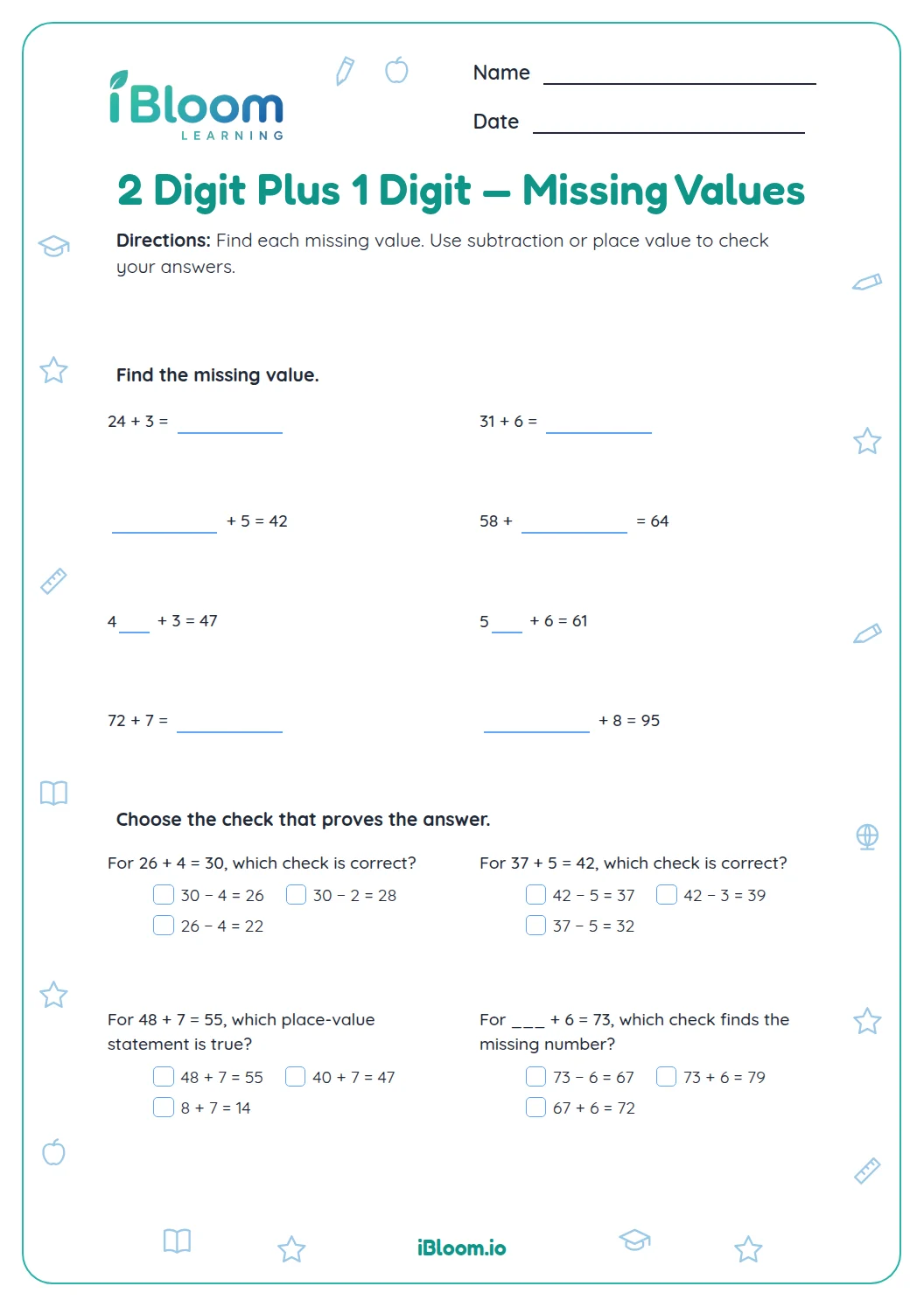
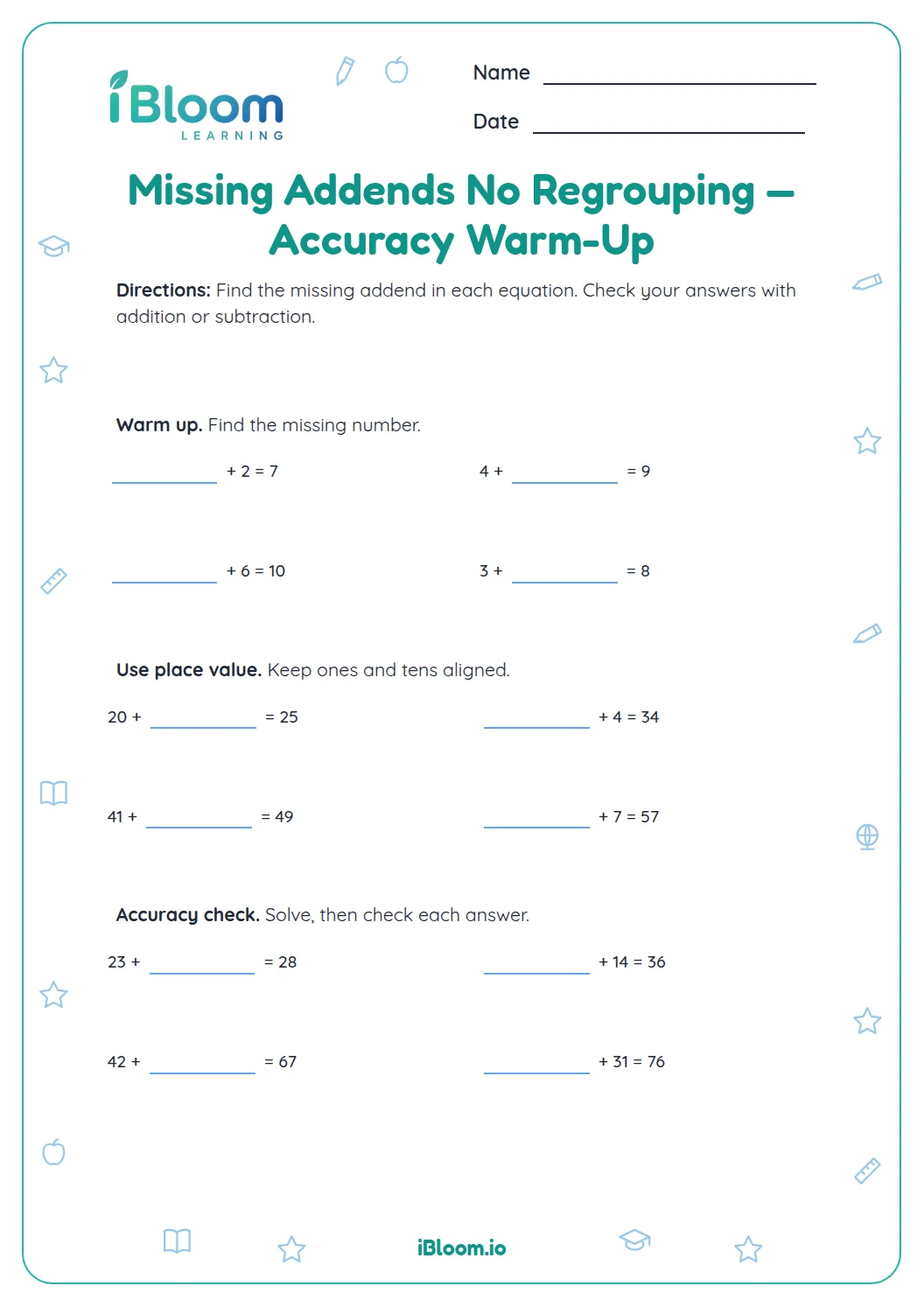
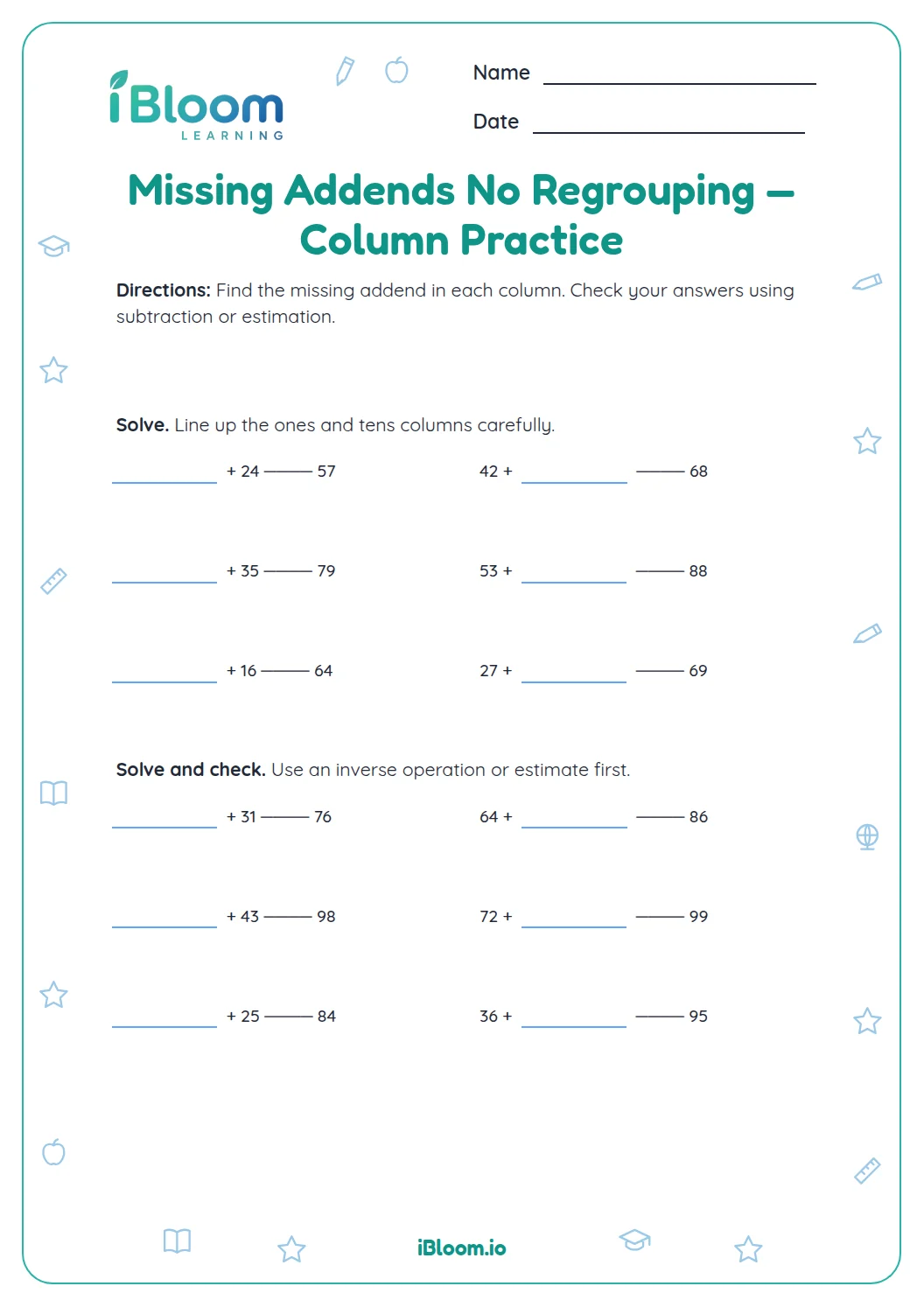
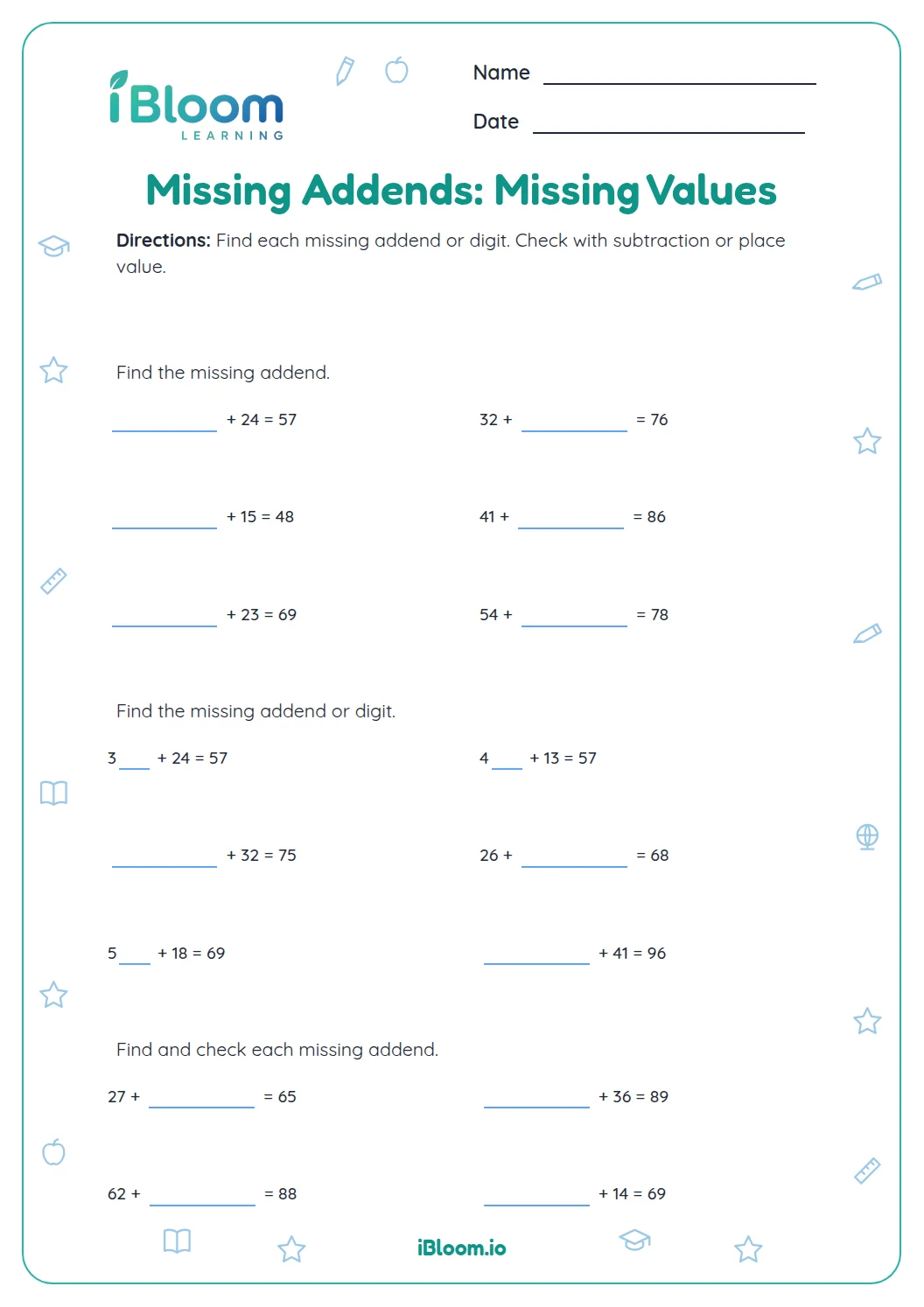
This free worksheet gives students in Grades 2–3 sixteen two-digit plus one-digit addition problems without regrouping. Students write each sum vertically in a working grid, placing the one-digit addend under the ones digit. Part A builds the alignment routine; Part B continues it and includes one zero addend. Every ones-column total is less than ten. The practice supports Common Core 2.NBT.B.5 by combining ones while preserving the tens, and a separate answer key gives all sixteen totals.
Aligned to 2.NBT.B.5
Where should the small addend be written?
The one-digit number represents ones, so it belongs in the ones column. In 32 + 5, write 5 under the 2, not under the 3. The grid gives space to arrange the sum and draw a line beneath the addends.
Ask students to say what each digit represents before calculating: 3 tens and 2 ones, plus 5 ones.
- 132 = 3 tens and 2 ones
- 2Place 5 under the 2 in the ones column.
- 32 ones + 5 ones = 7 ones
- 4Keep 3 tens: 32 + 5 = 37
Why do the tens stay the same?
Every ones-column total on this sheet is less than ten. There are no extra tens to add after combining the ones. For 35 + 4, the 5 ones and 4 ones make 9 ones, leaving the original 3 tens.
A total of 9 ones still stays in the ones place. Students can check a result by comparing its tens digit with the tens digit of the starting number.
What do the zero questions teach?
Question 6, 60 + 8, starts with zero ones. Adding eight ones gives 68, while the six tens remain. Question 15, 97 + 0, adds no new ones, so the number stays 97.
Part A and Part B each contain eight sums. Both use the same column routine; the second part includes another zero-ones number, 90, and the zero addend in 97 + 0.
How to use this worksheet
- 1Read the two addends and identify the tens and ones in the larger number.
- 2Write the larger number in the grid and put the smaller number under its ones digit.
- 3Draw a line under the addends and add the ones.
- 4Bring the unchanged tens into the total, then write the answer in the box.
- 5Subtract the one-digit addend from the total to check the original two-digit number.
Mistakes to check and how to fix them
The mistake
Placing 5 under the 3 in 32 + 5.
The fix
Name the place: 5 means five ones, so put it under the 2 ones.
The mistake
Changing the tens digit when the ones add to 9.
The fix
Nine ones fit in the ones place; the original tens stay unchanged.
The mistake
Changing 97 when adding zero.
The fix
Adding zero adds no quantity. Keep both digits of 97.
Common Core alignment
Add a one-digit number to a two-digit number by combining ones and keeping the tens.
On this sheet: Students align ones and tens in vertical addition and find sixteen sums within 100.
Show the official wordingHide the official wording
Fluently add and subtract within 100 using strategies based on place value, properties of operations, and/or the relationship between addition and subtraction.
What to practice next
Make more practice
Further reading
Questions parents and teachers ask
Are the problems already written vertically?
Students write the vertical setup themselves in the provided grids. Each prompt gives a two-digit number plus a one-digit number. The directions ask students to place the smaller addend under the ones digit, add in columns, and put the final total in the answer box.
Does any question require regrouping?
Every sum can be completed by combining the ones and keeping the original tens. The ones-column totals are all less than ten, including several that equal nine. Students can use that pattern to check their work: the tens digit in each answer should stay the same.
Why is 97 + 0 included?
It checks that adding zero leaves a number unchanged. After working with positive one-digit addends, students may expect every answer to grow. Ask what new quantity zero contributes, then check that the written column setup and final answer both keep the original tens and ones.
Can my child count on to find a total?
Yes, counting on can help a child check the total. For the main activity, also ask for the vertical setup so the child practices placing ones under ones. Connect the methods by showing that counting five more from 32 gives the same 37 as adding the ones.
How can I check column alignment as well as answers?
Look for the one-digit addend directly beneath the ones digit in every grid. Then compare the total with the key. A correct final answer alone does not show the setup, so ask the child to explain one example using tens and ones before moving on.