
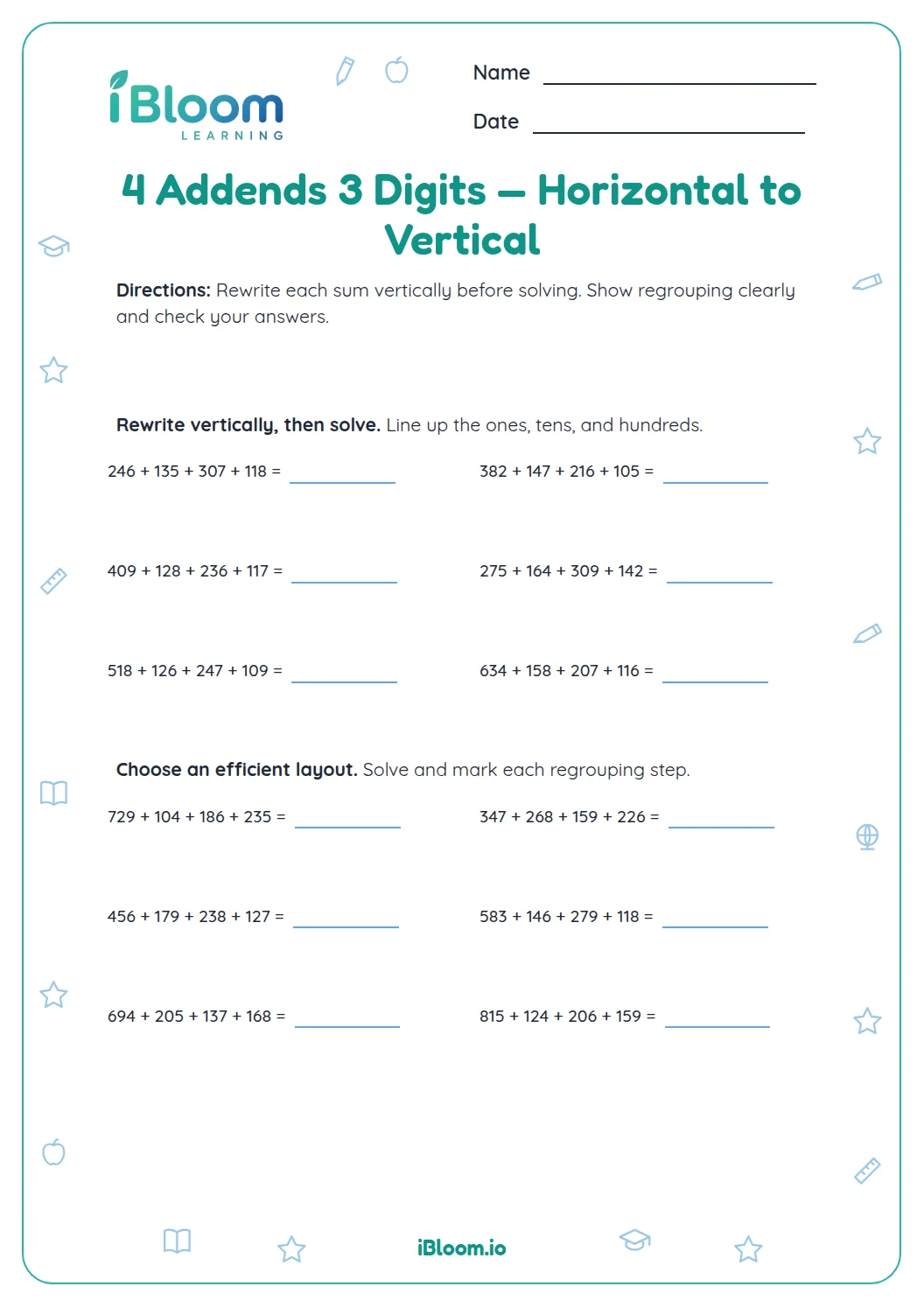
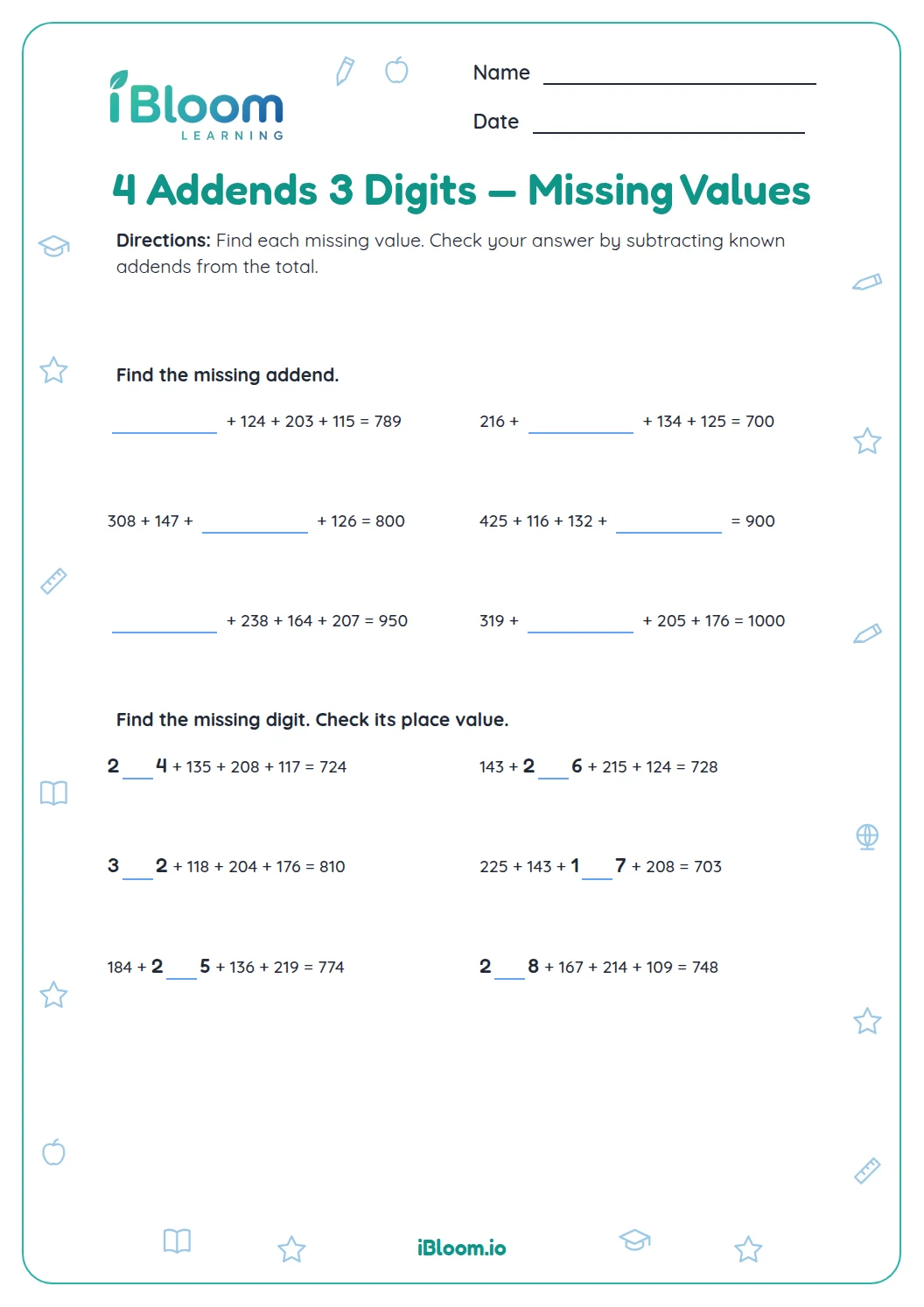
About this worksheet
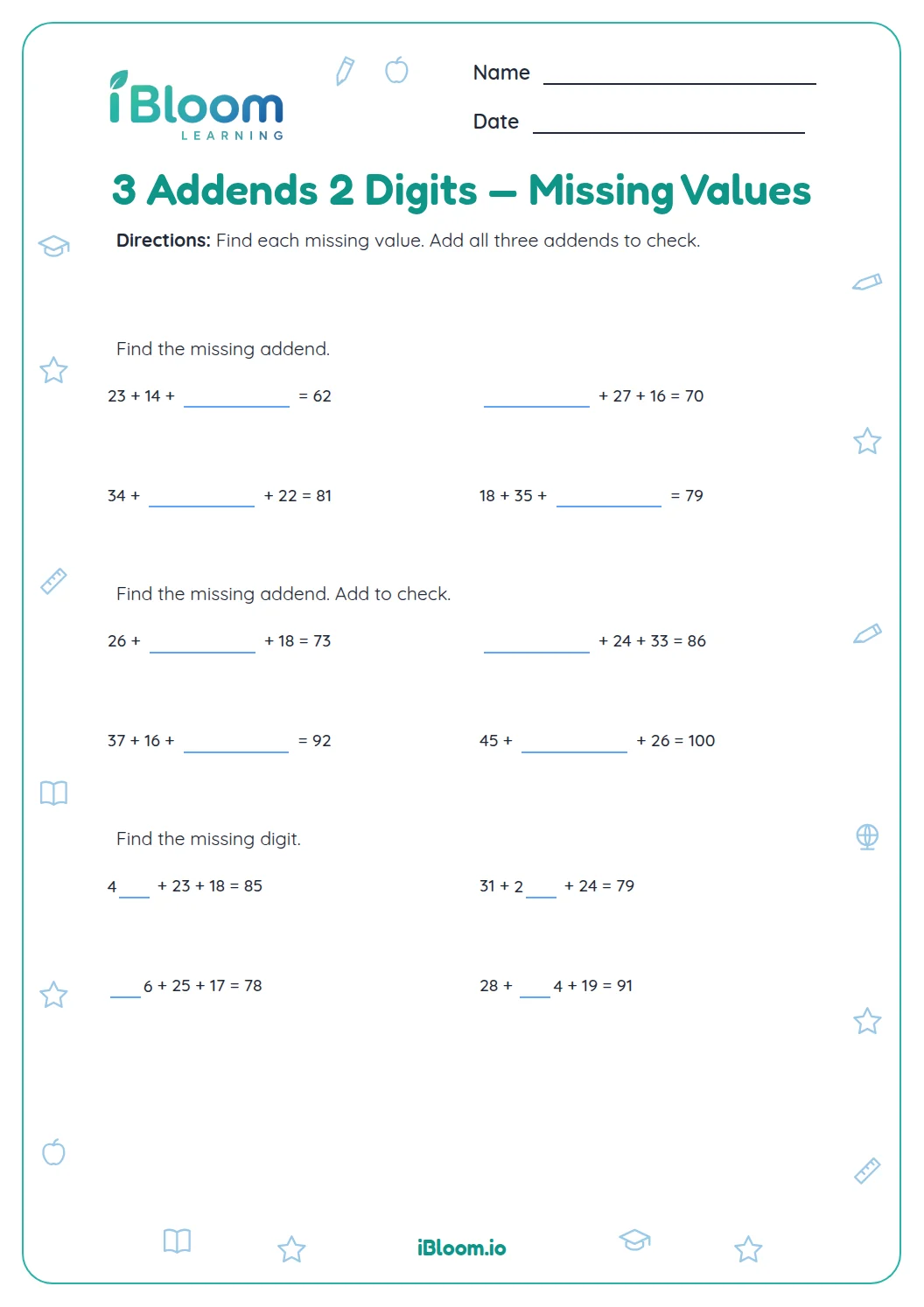
This Grade 2–3 printable mixes missing digits inside a two-digit addend with missing whole addends. Each problem has four two-digit addends, and students use the total to work backward, then check by adding all four values. The 16 questions move between a missing ones or tens digit and a missing addend. A separate answer key is included. The page practices adding up to four two-digit numbers.
Aligned to 2.NBT.B.6
How can you find a missing digit or addend?
If one digit is missing, first find the whole two-digit addend from the total. If a full addend is missing, add the other three values and subtract that subtotal from the total.
- 12___ + 14 + 23 + 11 = 72
- 214 + 23 + 11 = 48
- 372 − 48 = 24, so the missing digit is 4.
- 4Check: 24 + 14 + 23 + 11 = 72.
How does place value help with the digit?
In 2___, the 2 means two tens. Once the full addend is 24, the missing ones digit is 4. Keep tens and ones in their places while checking.
What is on the practice page?
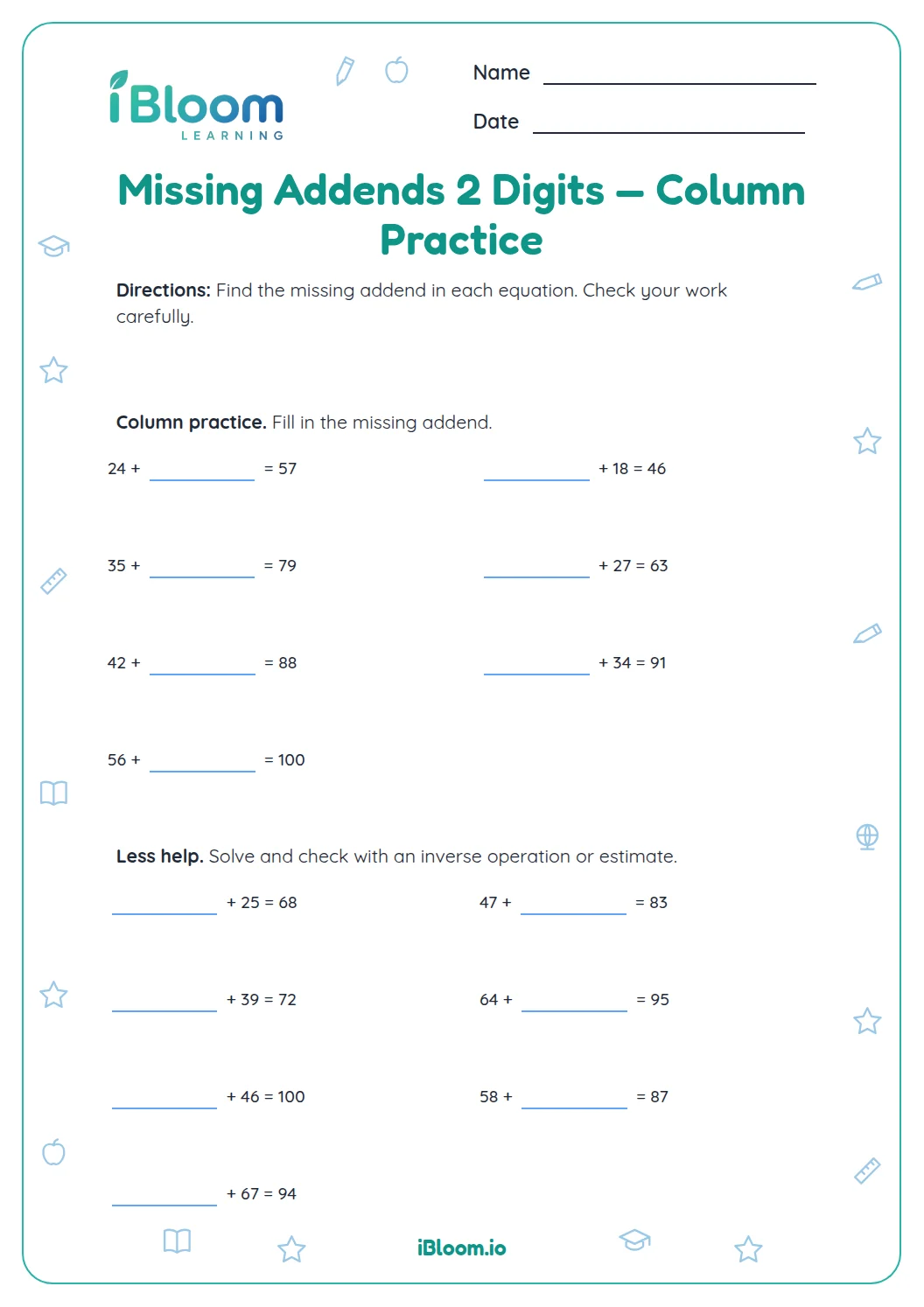
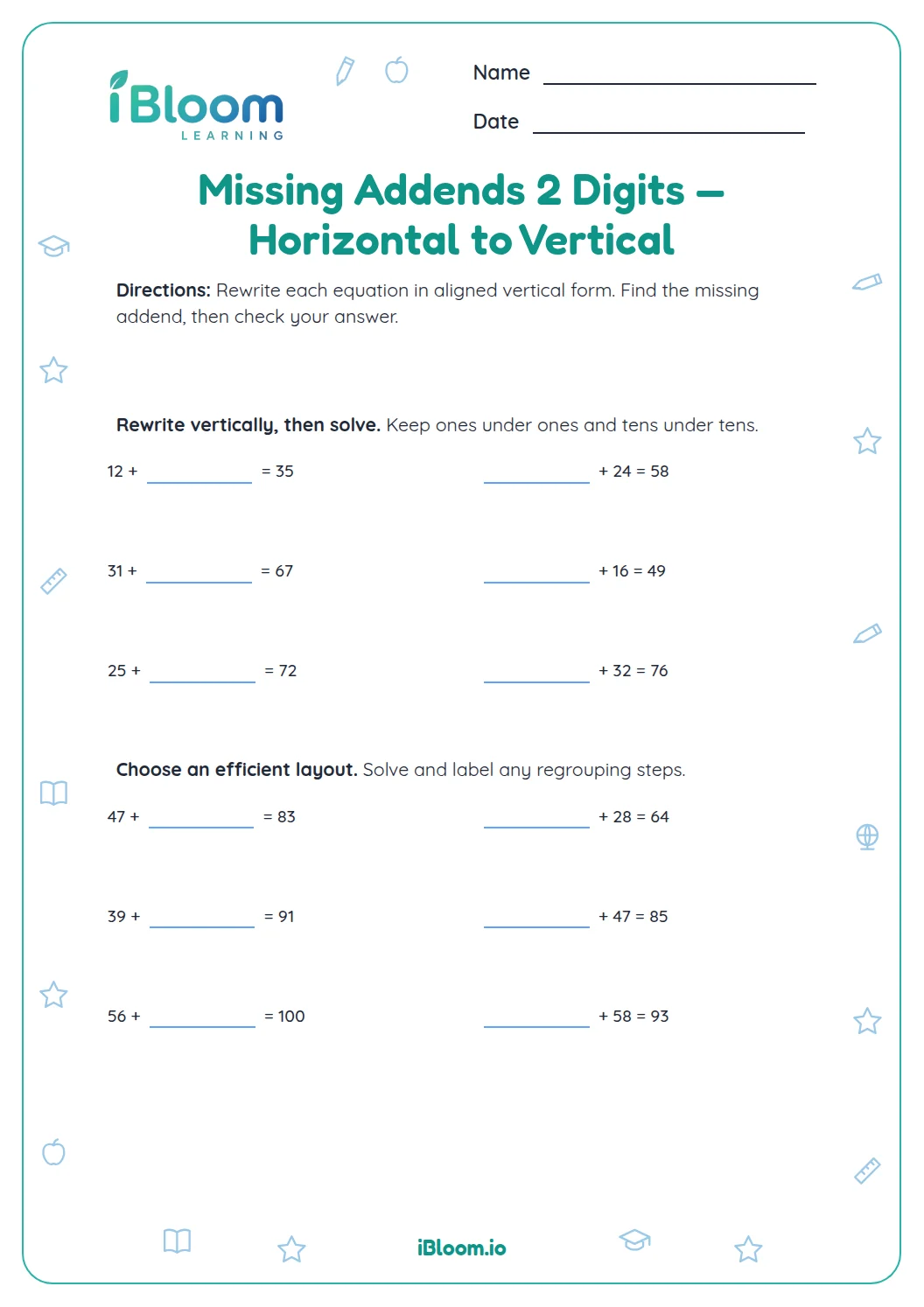
There are 16 sums: four hide one digit inside an addend, and 12 hide a full two-digit addend.
How can you use this worksheet?
- 1Notice whether the blank is one digit or a whole addend.
- 2Add the known addends and subtract their sum from the total.
- 3For a missing digit, identify the two-digit addend before writing the digit.
- 4Put the answer back into the original sum and check all four values.
Mistakes to watch for
The mistake
Writing the whole missing addend when only one digit is blank.
The fix
Solve for the two-digit addend first, then record only the missing tens or ones digit.
The mistake
Subtracting the total from the known subtotal.
The fix
Use total minus known subtotal to find the missing amount.
The mistake
Adding tens and ones without keeping their place.
The fix
Group tens with tens and ones with ones, then check the complete four-addend sum.
Common Core alignment
This page practices the standard listed below.
Add up to four two-digit numbers using place-value strategies.
On this sheet: Each question uses four two-digit addends; students use addition and subtraction to find the missing addend.
Show the official wordingHide the official wording
Add up to four two-digit numbers using strategies based on place value and properties of operations.
What to practice next
Make more practice
Further reading
Questions parents and teachers ask
How do you find a missing addend?
Add the three numbers that are already shown. Subtract that subtotal from the full sum to find the missing value, then put it back in the equation to check that all four addends make 100. The answer key shows the missing value for every equation.
Why does the blank move around?
The missing value appears in different positions so students focus on the total and known addends. The same strategy works whether the blank comes first, between numbers, or at the end. Students can use the same check for blanks in any position.
How many sums are included?
There are 16 questions in two parts: four missing-digit problems and 12 missing-addend problems. Each equation has four two-digit addends. Students can use place value or subtraction to find the unknown, then add all four values to verify the total.
Should students add the numbers mentally?
They may use mental math, written work, or a place-value strategy. The important check is to add the three known numbers accurately before subtracting their sum from 100. A written strategy is useful when the known addends are harder to combine mentally.
What is a useful next worksheet?
Students can move to four three-digit addends for larger numbers, or step back to three two-digit addends. The linked pages offer both options in the same addition practice collection. Both choices stay within multi-addend addition practice. The strategy remains useful even when the numbers are not easy to combine mentally.