




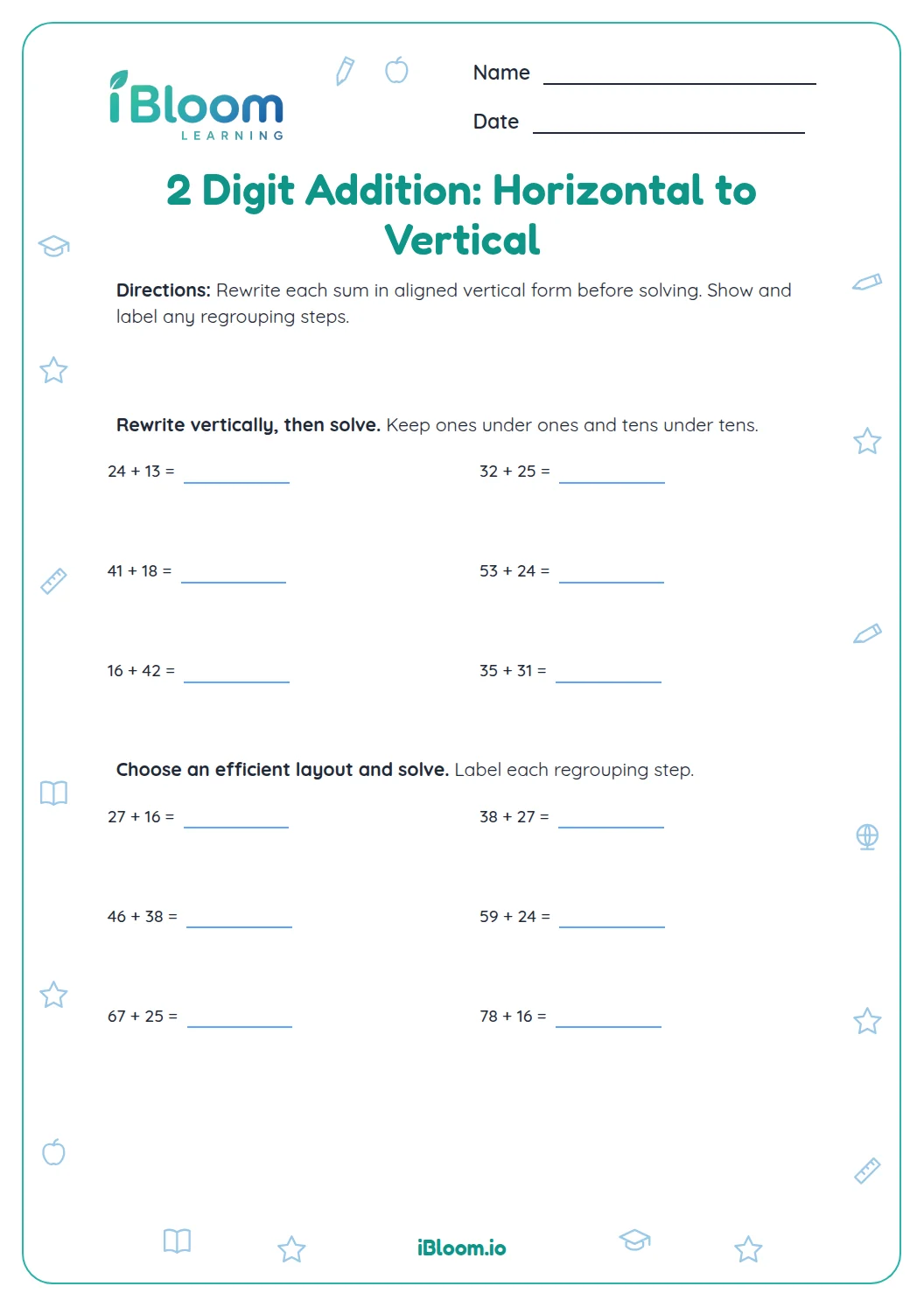
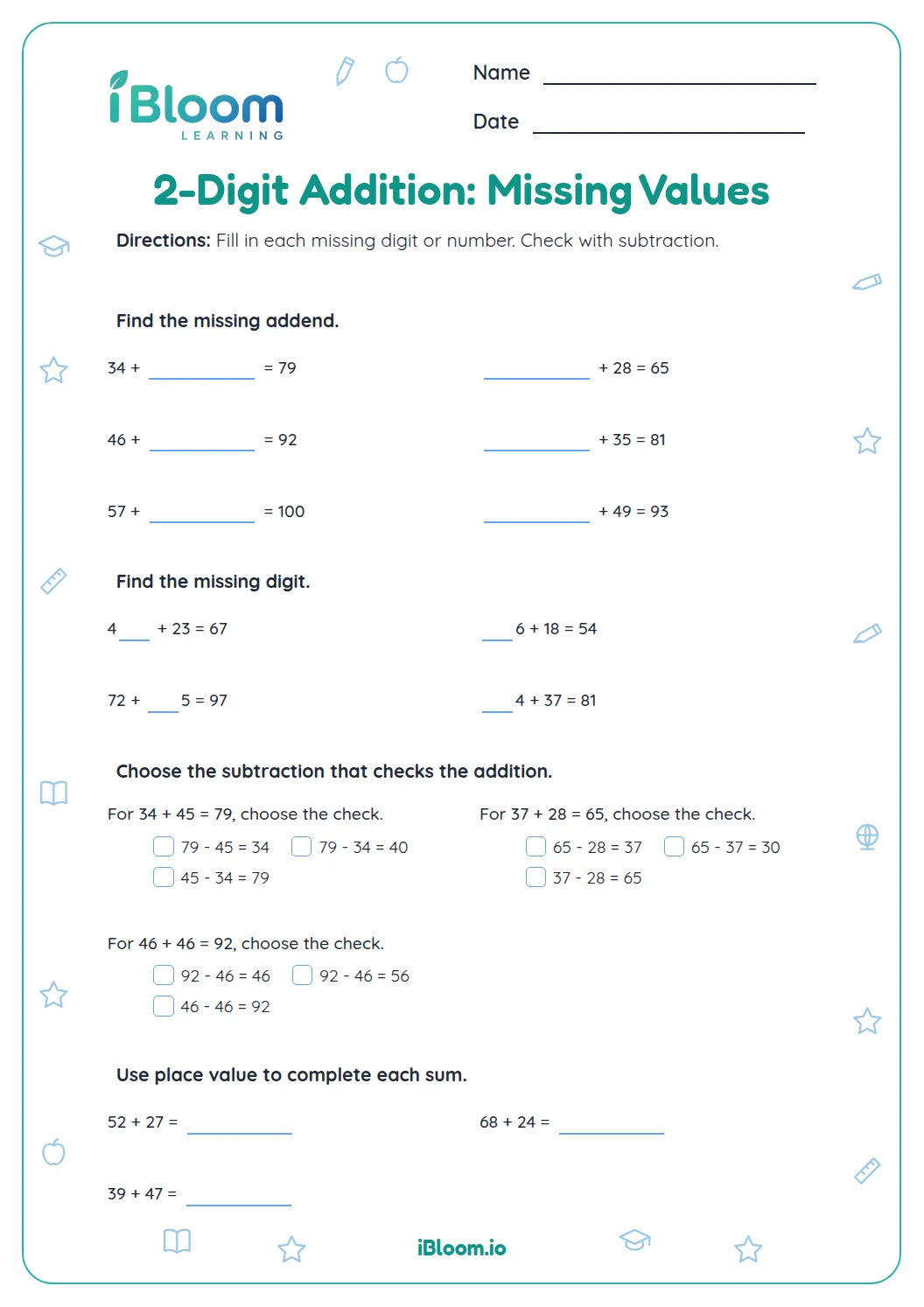
About this worksheet
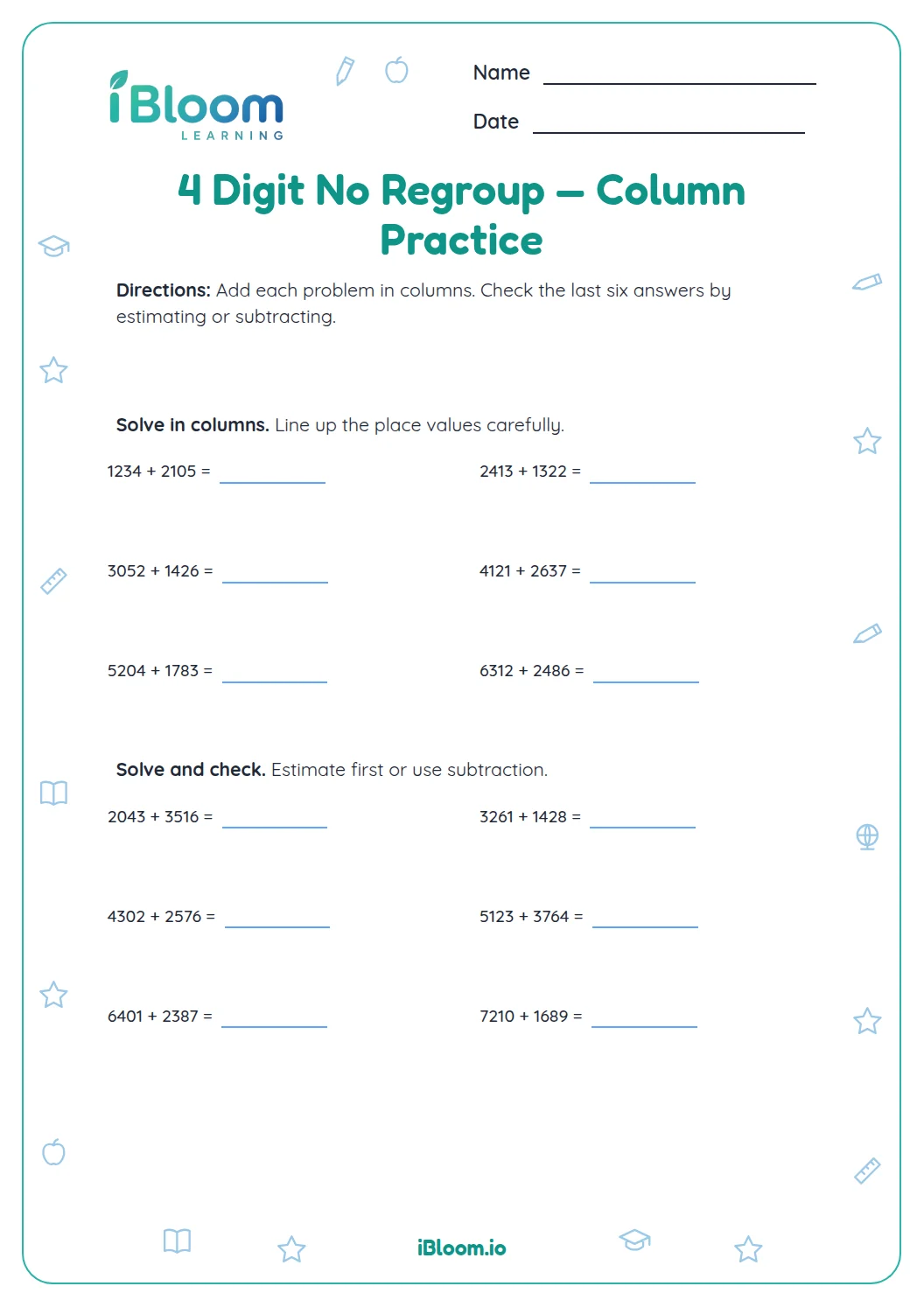
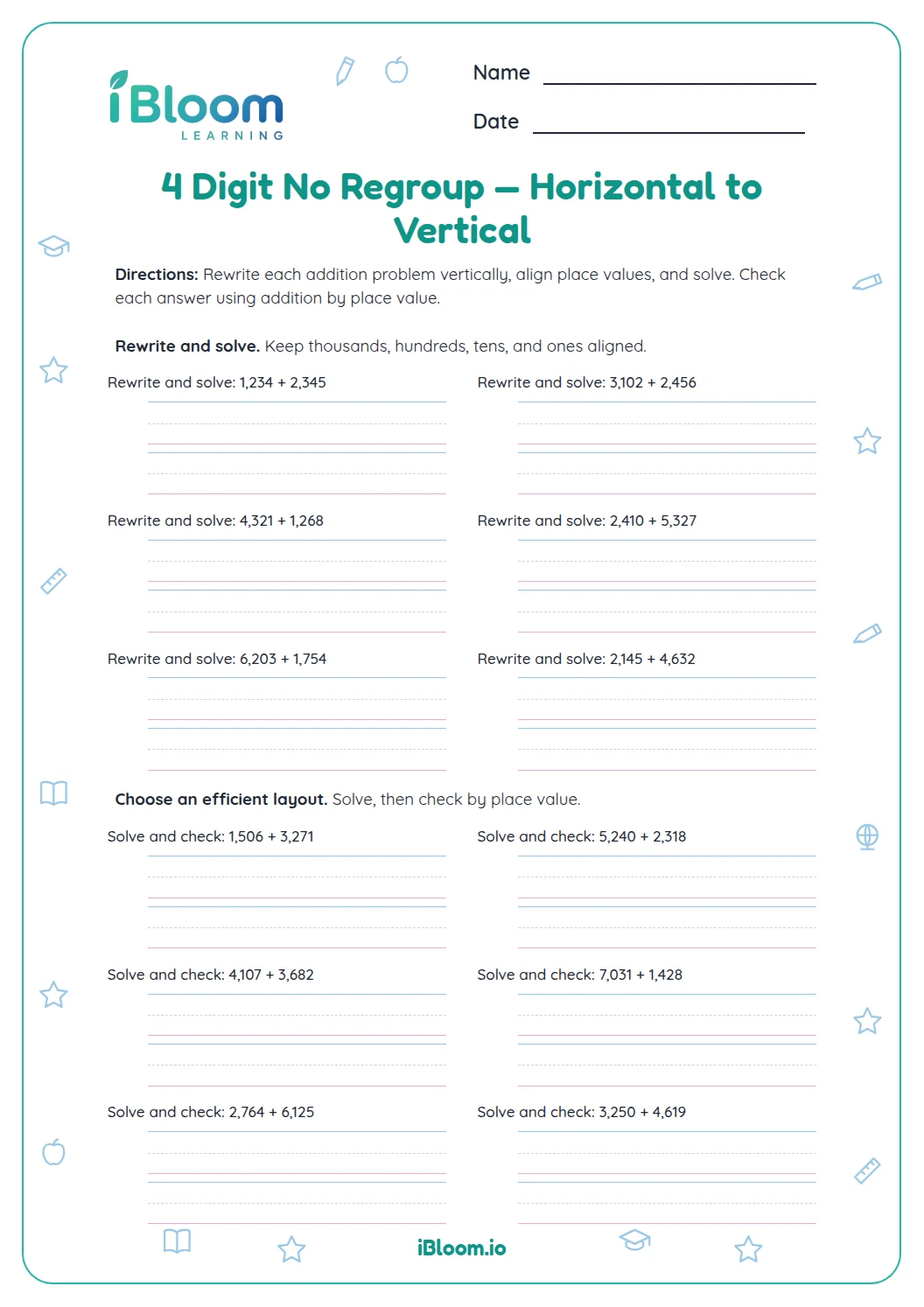
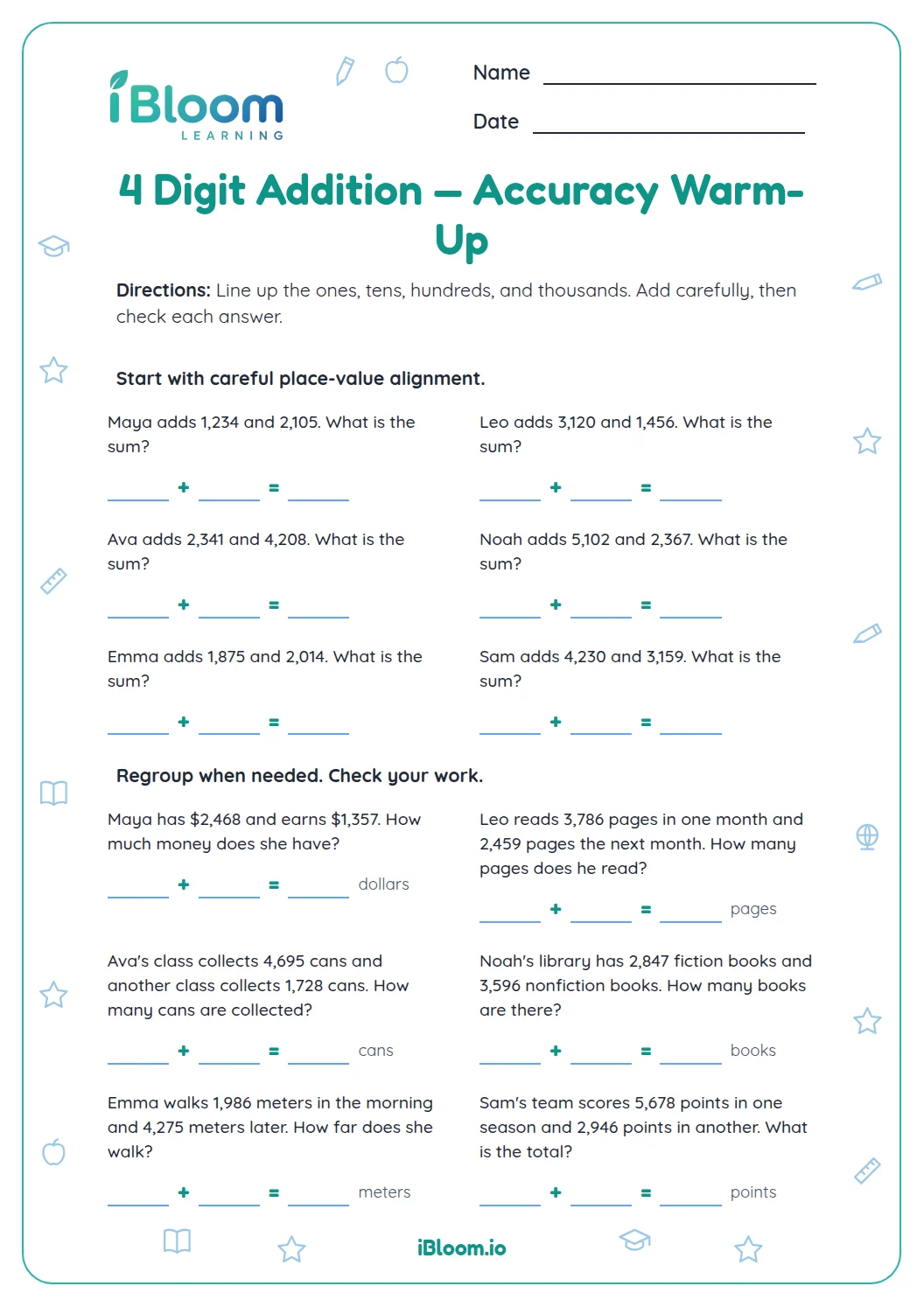
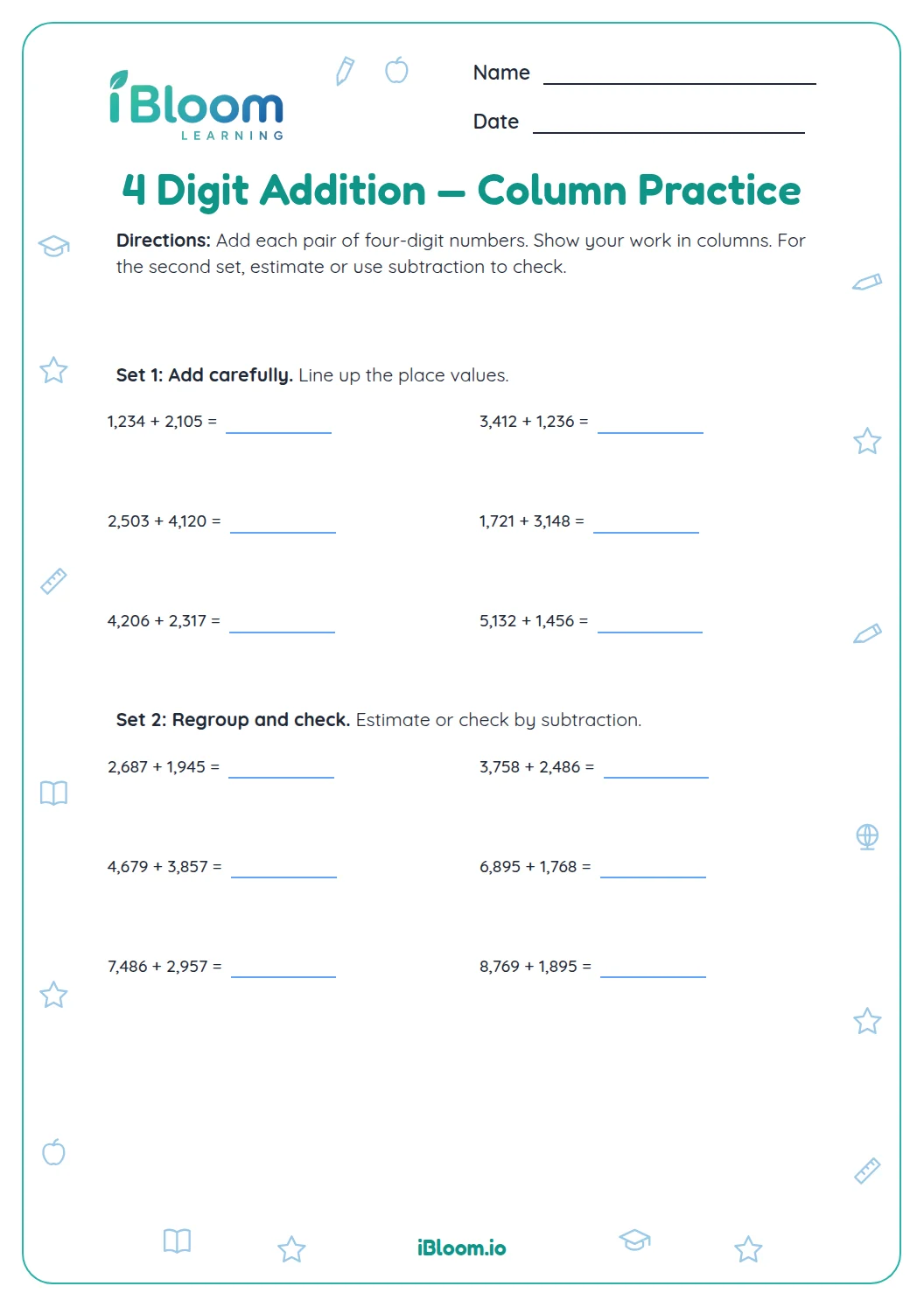
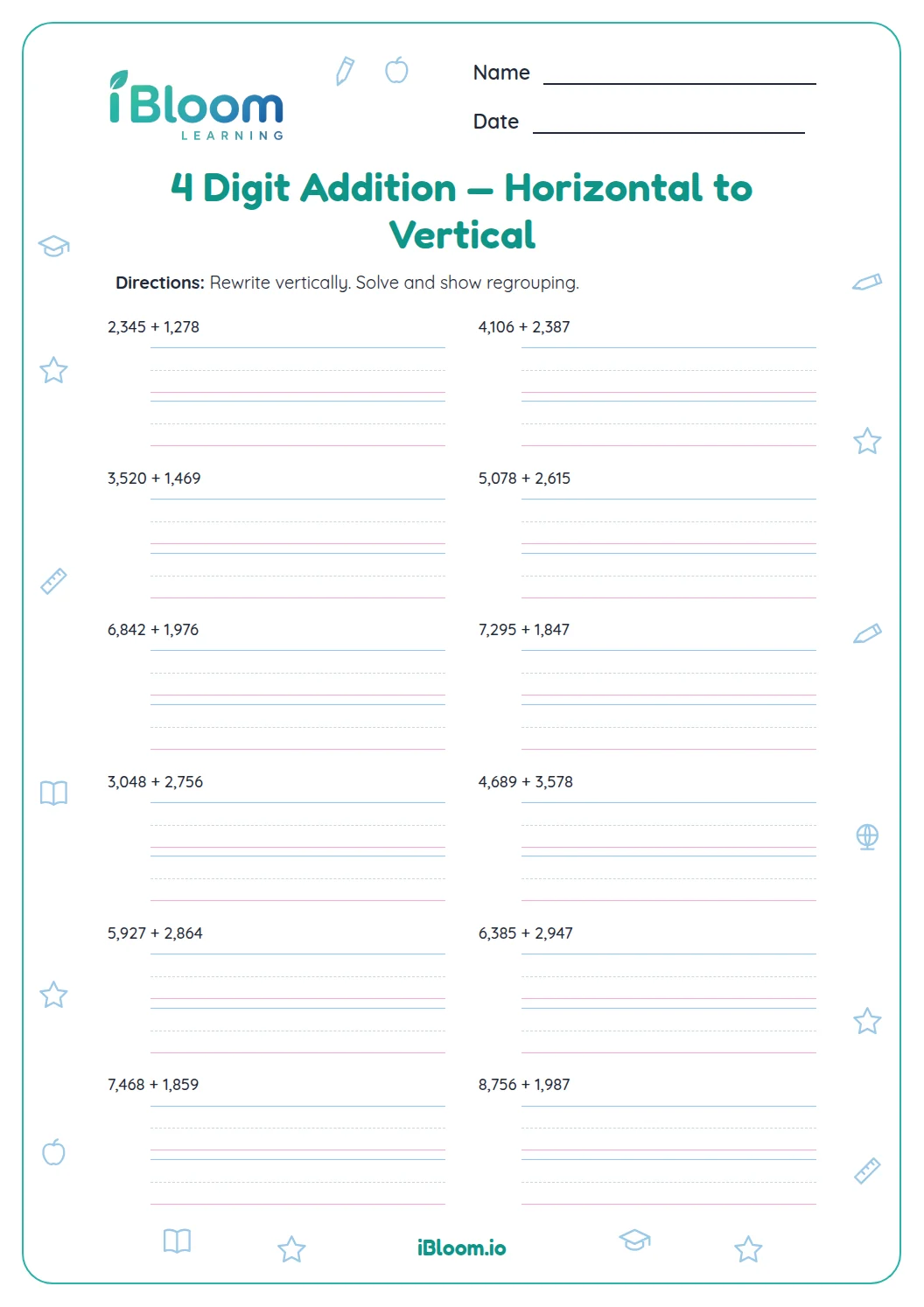
This Grade 4 printable provides 20 four-digit addition problems designed to avoid regrouping in every column. Line up ones, tens, hundreds, and thousands, then add from right to left. The sums align with CCSS 4.NBT.B.4, and a separate two-page key lists each total.
Aligned to 4.NBT.B.4
What is on the practice sheet?
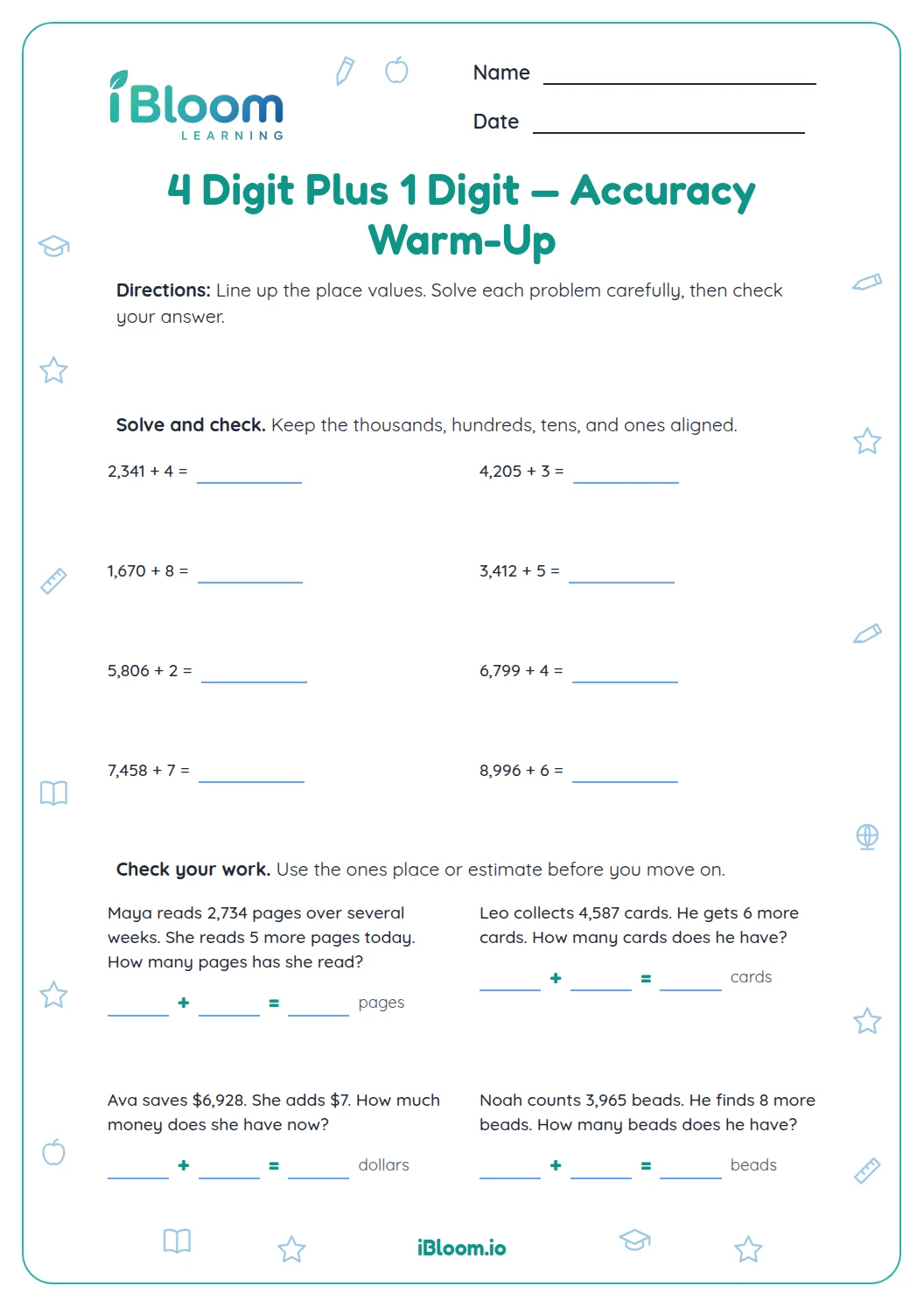
Part A warms up with four-digit sums. Part B asks learners to keep all four columns aligned, and Part C is a final accuracy drill. All sums avoid regrouping.
- Part A: six four-digit sums
- Part B: five sums for careful column alignment
- Part C: nine final accuracy problems
How do you add four-digit numbers?
Write ones under ones, tens under tens, hundreds under hundreds, and thousands under thousands. Add one column at a time from right to left.
- 1 1,234
- 2+ 2,453
- 3 3,687
- 4Ones: 4 + 3 = 7; tens: 3 + 5 = 8; hundreds: 2 + 4 = 6; thousands: 1 + 2 = 3.
How can you spot a place-value error?
Estimate the total’s size, then check each column. In this set, each column sum stays below 10, so a carried digit signals an addition or alignment mistake.
How to use this worksheet
- 1Line up the digits by place value.
- 2Start with the ones column and add from right to left.
- 3Write each column sum directly below that column.
- 4Check that the total is between 1,000 and 9,999 and re-add one column at a time.
Common mistakes and quick fixes
The mistake
Adding digits from different places together
The fix
Align ones, tens, hundreds, and thousands in separate columns.
The mistake
Writing a carry even when the column is below 10
The fix
Recheck the column sum; every one here is 9 or less.
The mistake
Dropping a zero in a number
The fix
Keep all four places aligned, including any zero digit.
Common Core alignment
The practice uses the standard algorithm to add multi-digit whole numbers.
Add multi-digit whole numbers accurately with the standard algorithm.
On this sheet: Each item asks for an accurate four-digit sum using aligned place values.
Show the official wordingHide the official wording
Fluently add and subtract multi-digit whole numbers using the standard algorithm.
What to practice next
Make more practice
Further reading
Questions parents and teachers ask
What does no regrouping mean?
In each column, the digits add to less than 10, so no ten is carried into the next place. For example, the ones digits in 1,234 + 2,453 add to 7. Check each column before moving left, then read the full total to confirm its place values.
How many problems are on the worksheet?
There are 20 four-digit addition problems across two worksheet pages, followed by two answer-key pages. Each sum is designed to be solved without regrouping. Learners can check a result by adding each place-value column again and comparing it with the key.
Which grades is this addition practice for?
The worksheet is labeled for Grades 4–5 and focuses on accurately adding multi-digit whole numbers. It asks learners to align the same place values and add each column. The problems keep regrouping out of the way so the column algorithm stays the focus.
How can I tell whether a problem needs regrouping?
Add the digits in each place separately. A column total of 10 or more would require regrouping. Every problem on this page has column totals below 10, so a carry in the written work signals a possible calculation or alignment error.
Does the printable include an answer key?
Yes. The key has two pages and gives the total for each of the 20 sums. To review a missed problem, compare the ones, tens, hundreds, and thousands columns separately, then recombine their values and check that the total is reasonable.