
About this worksheet
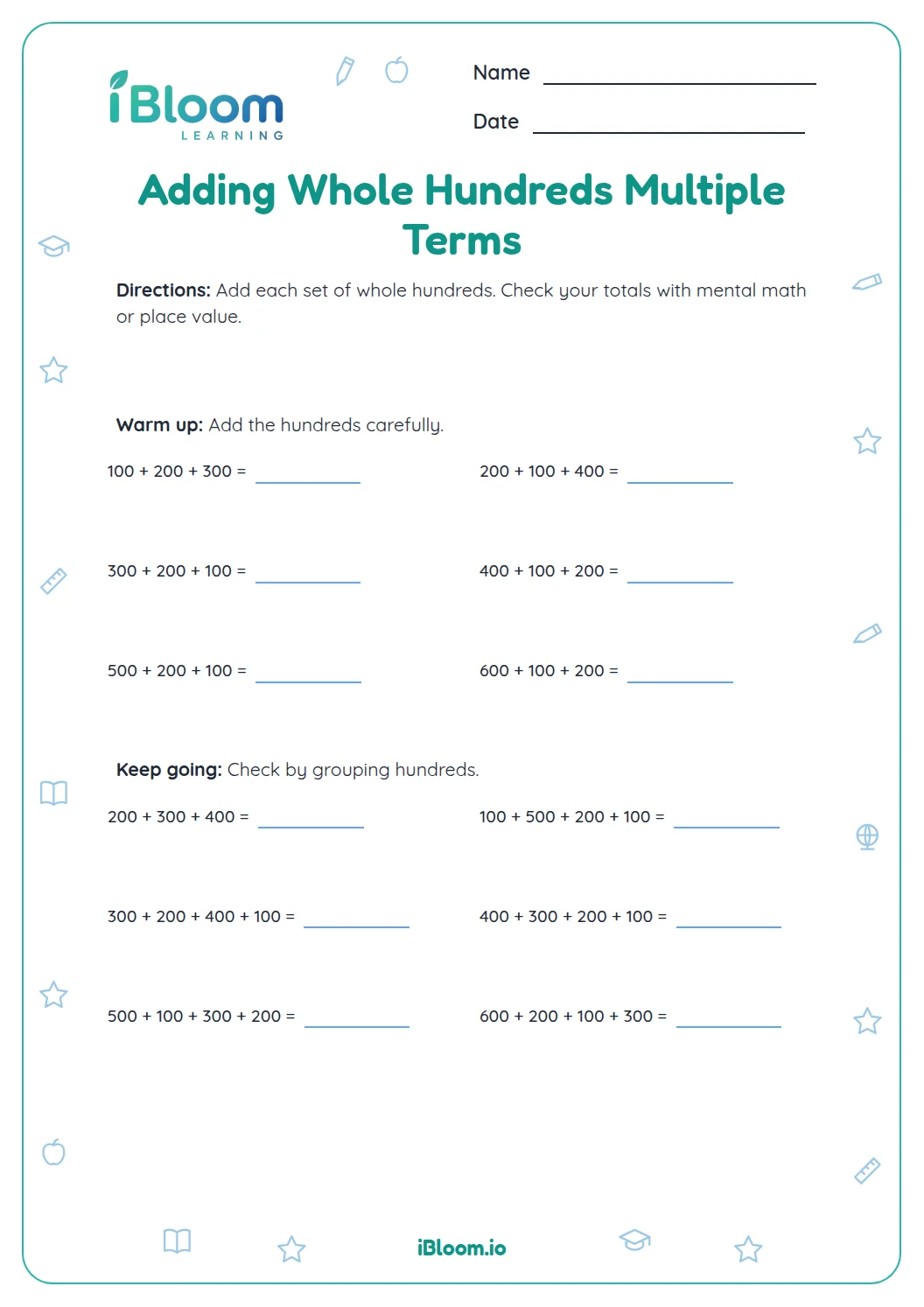
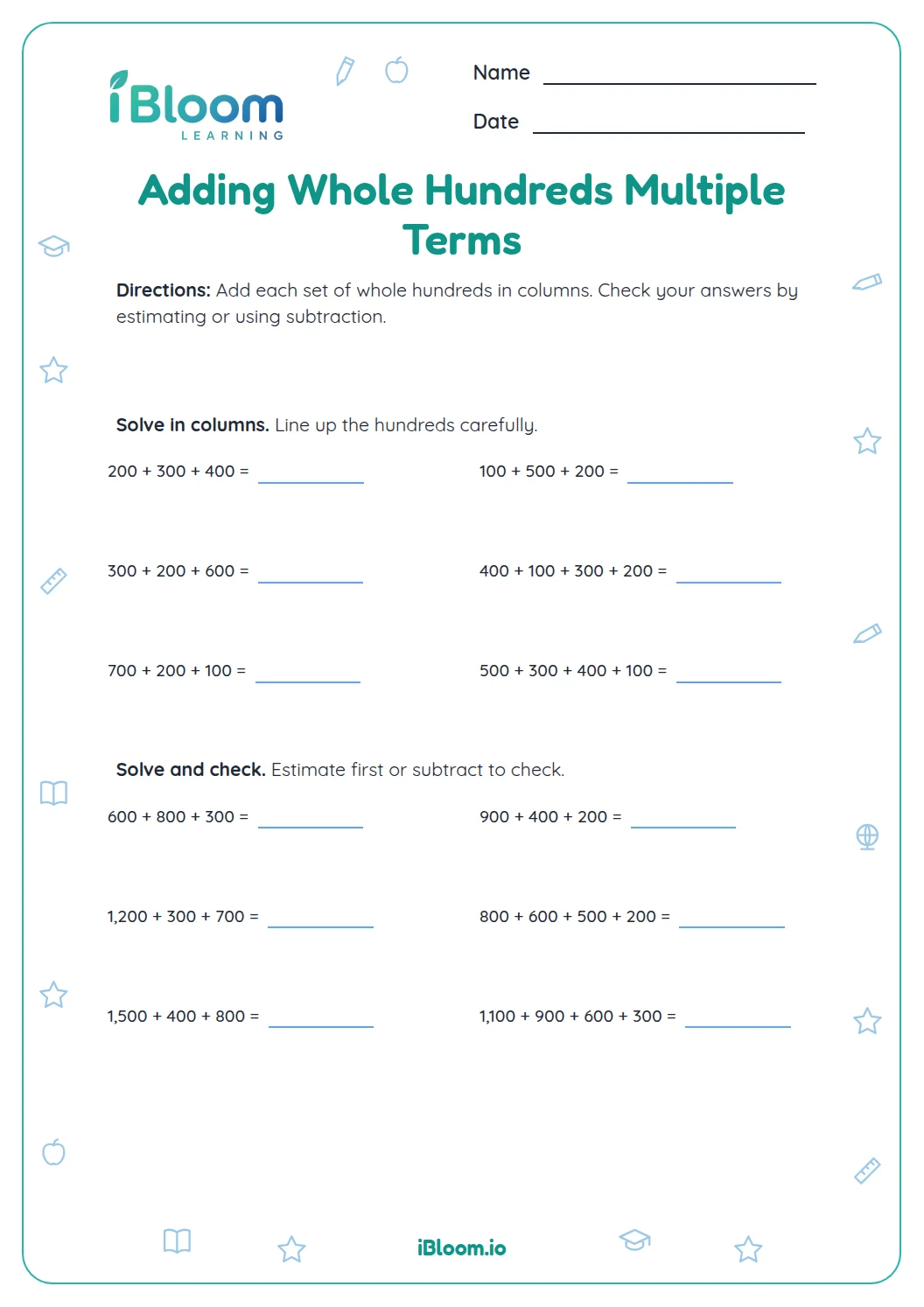
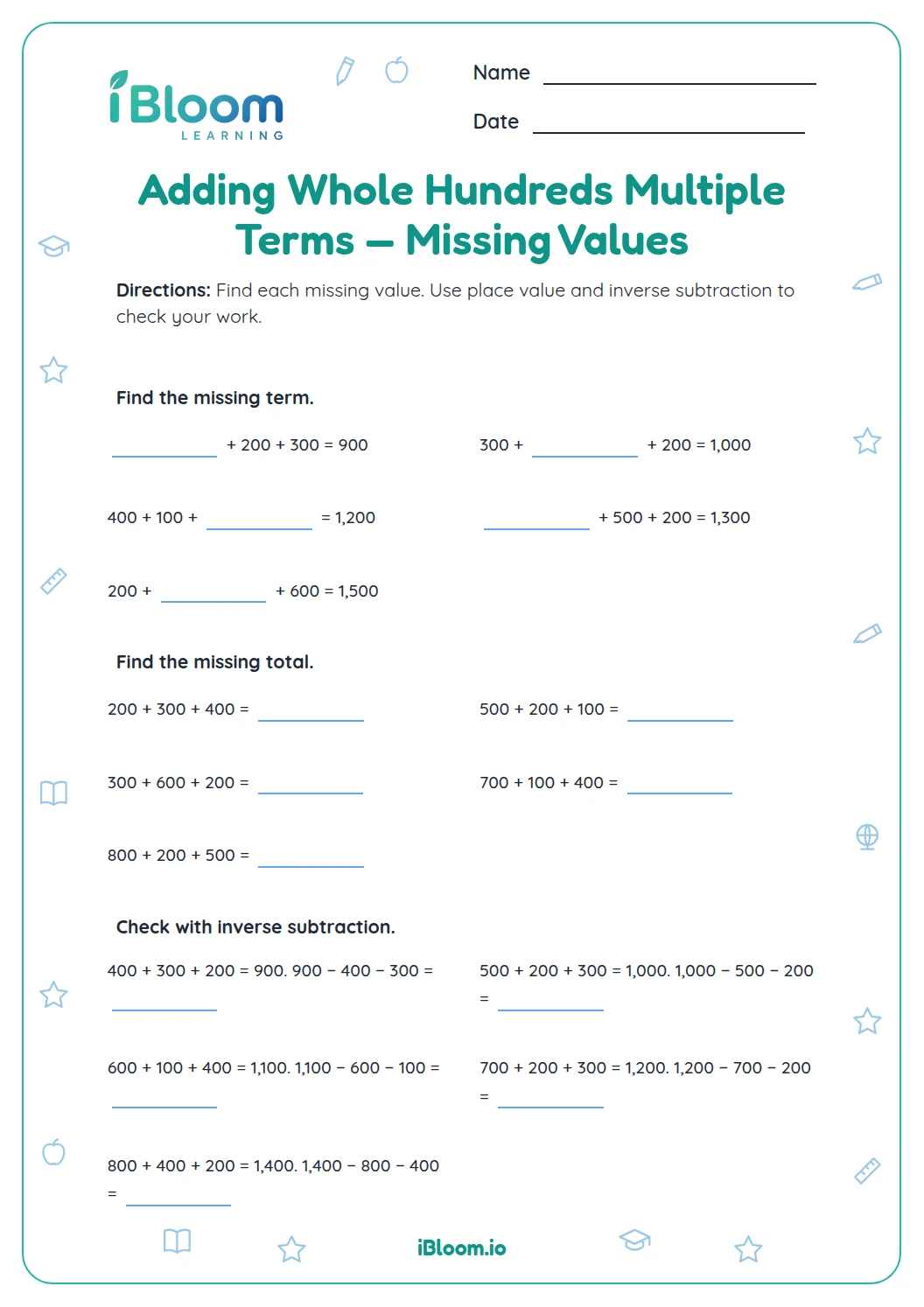
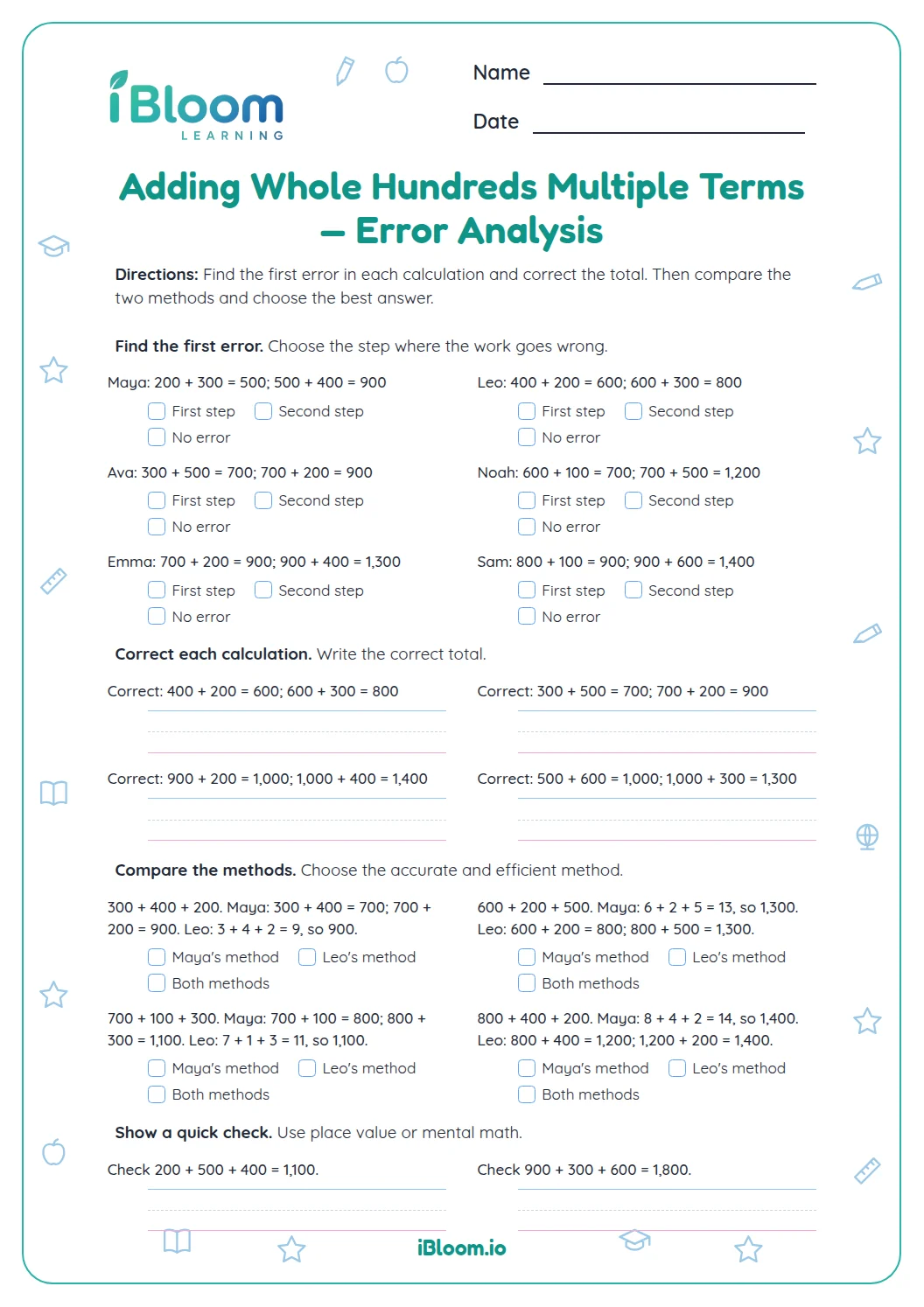
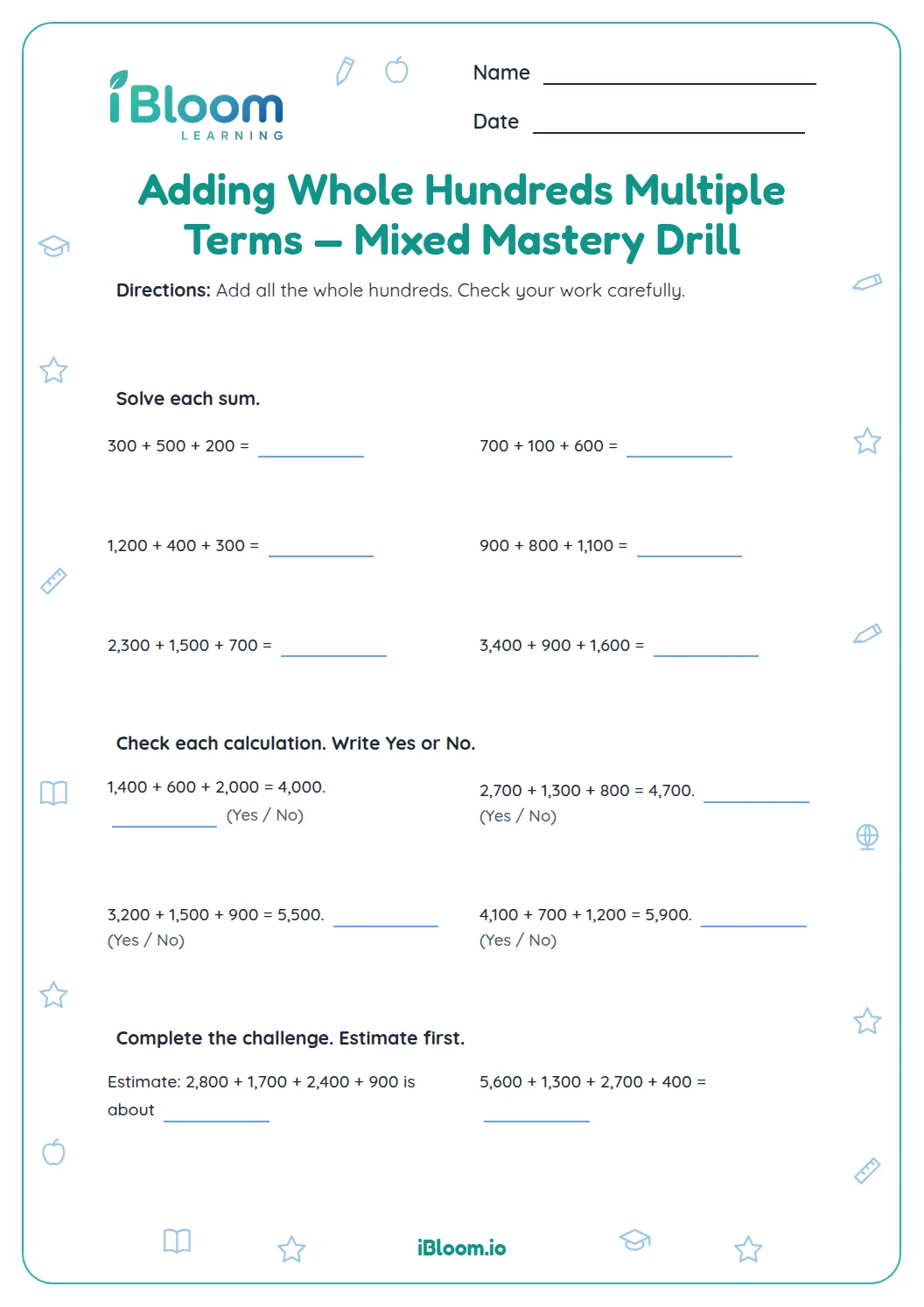
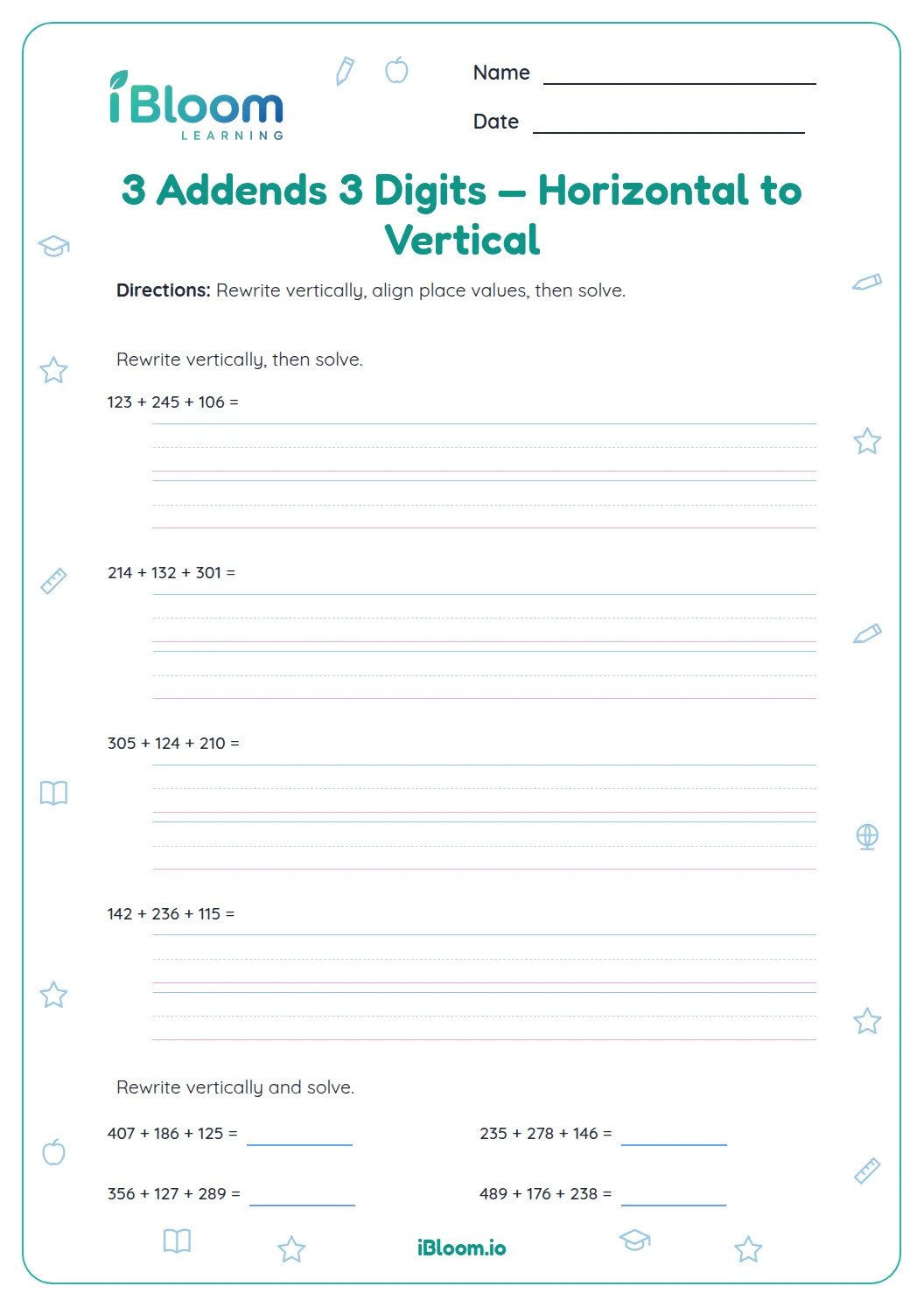
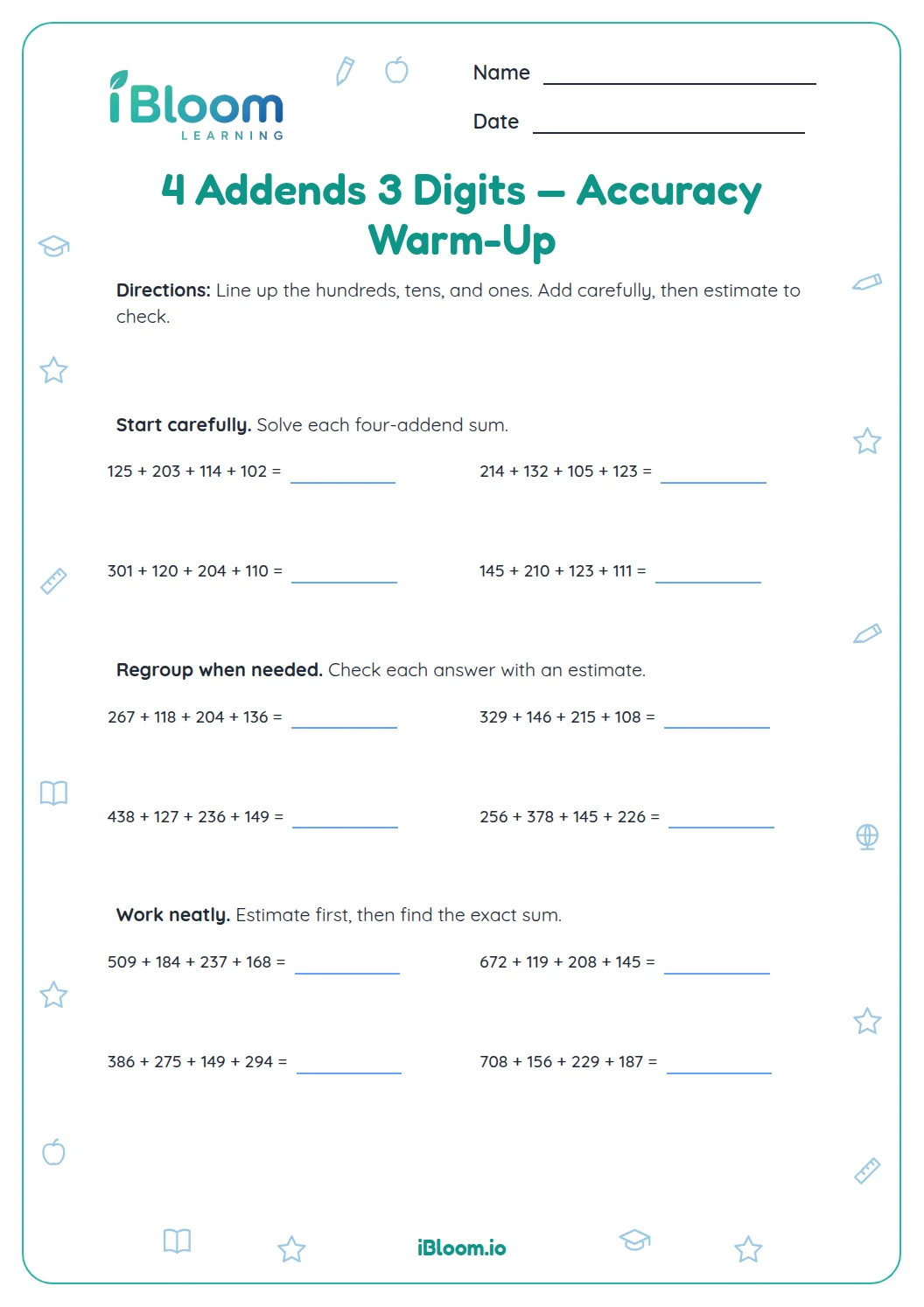
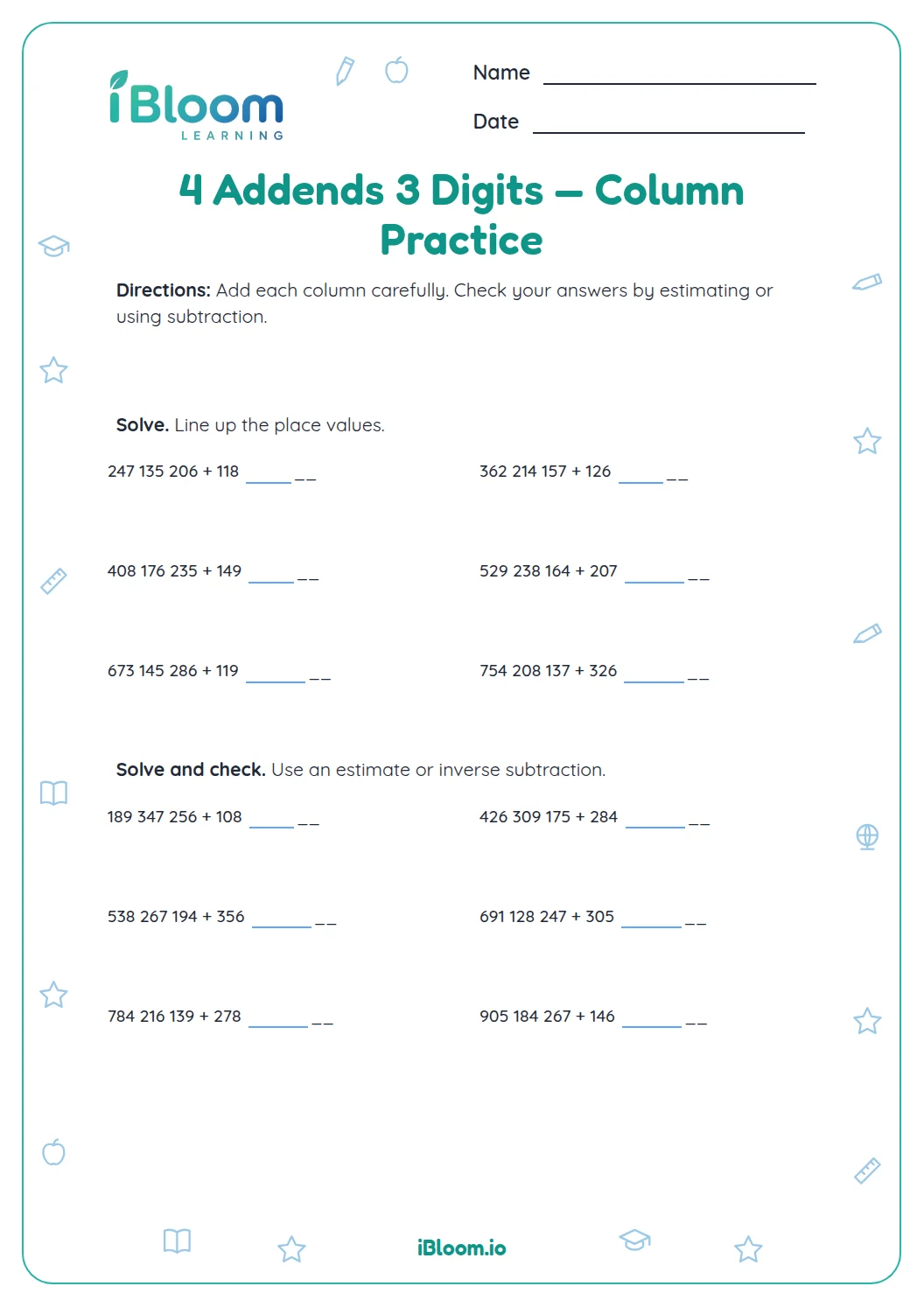
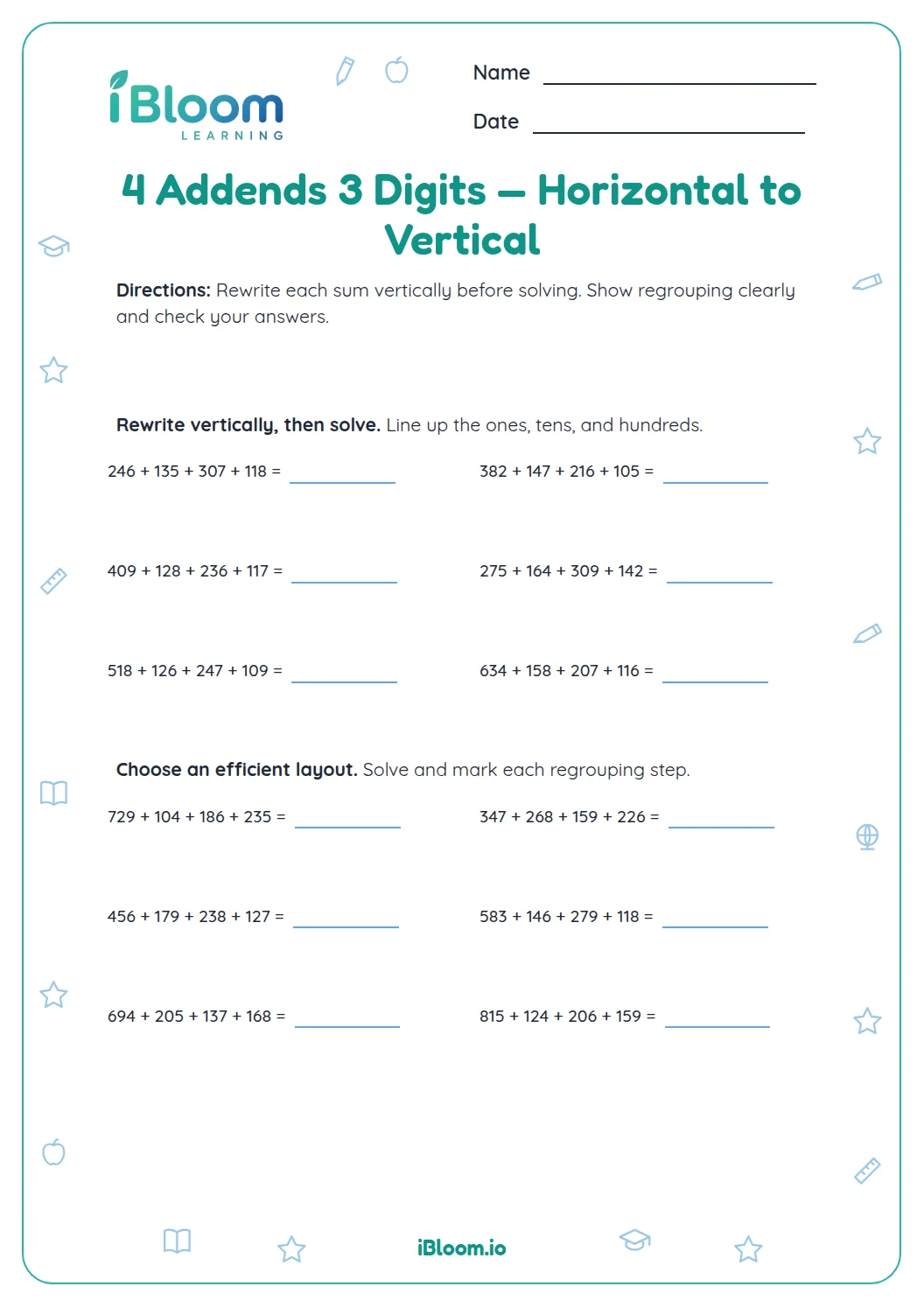
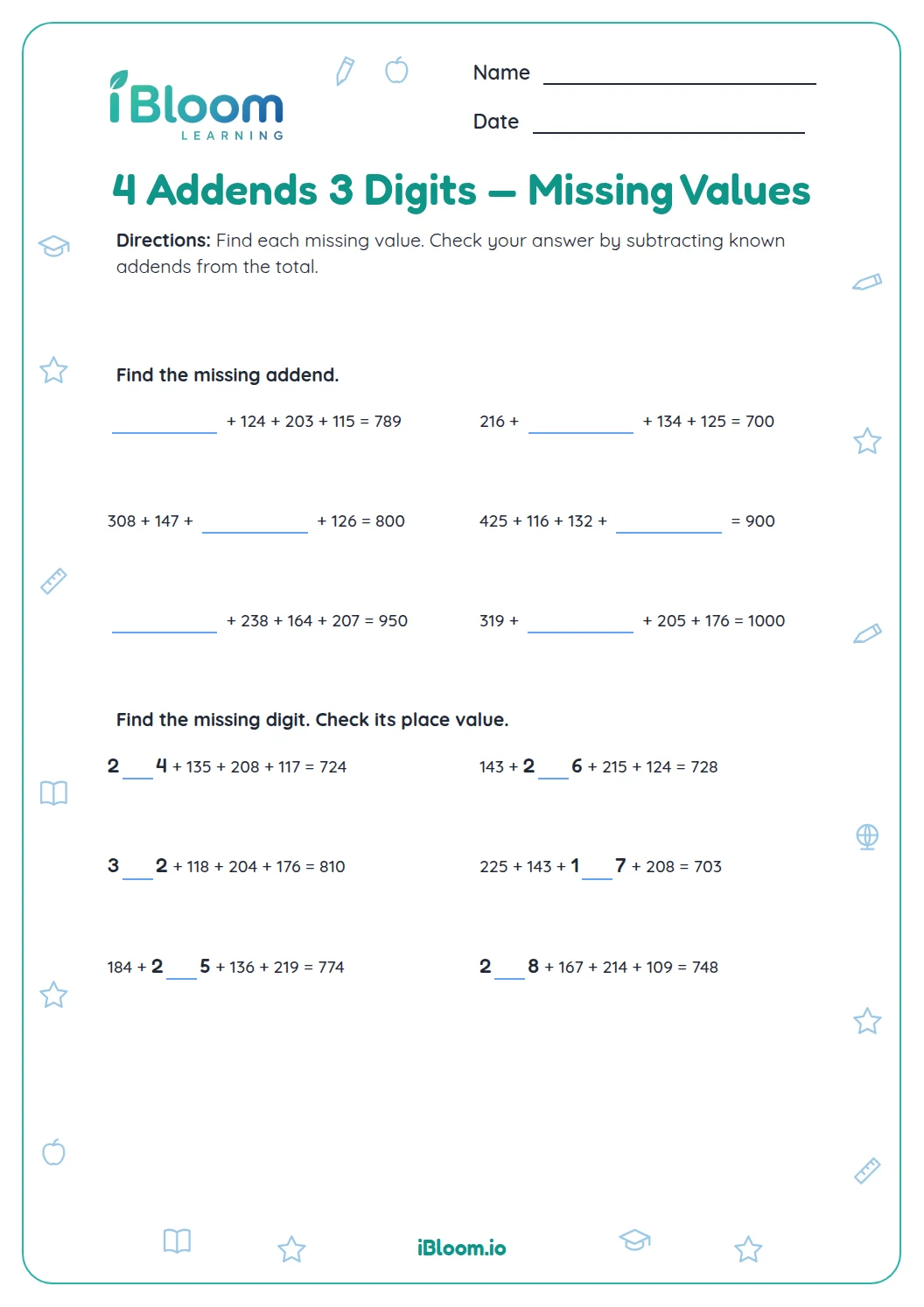
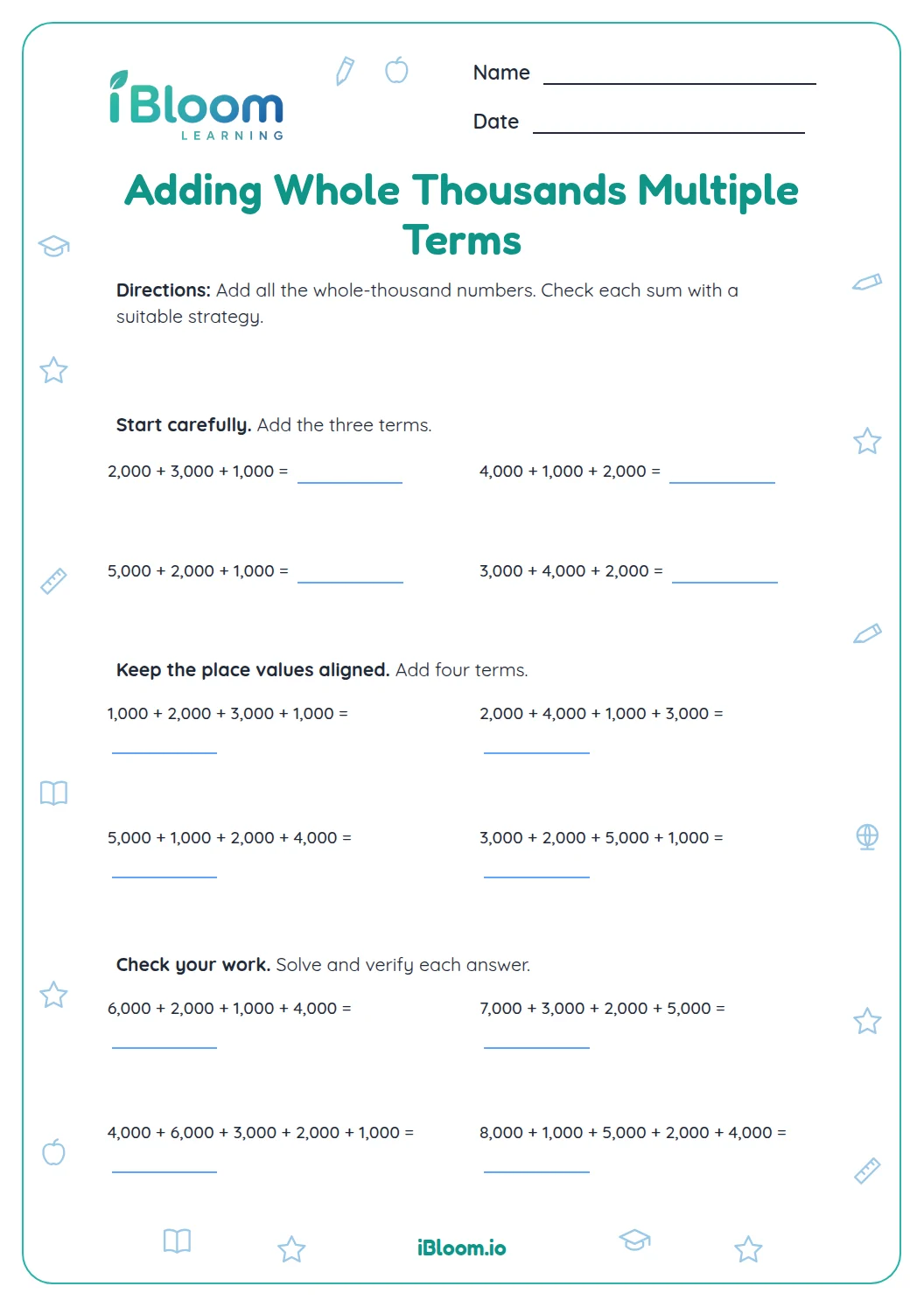
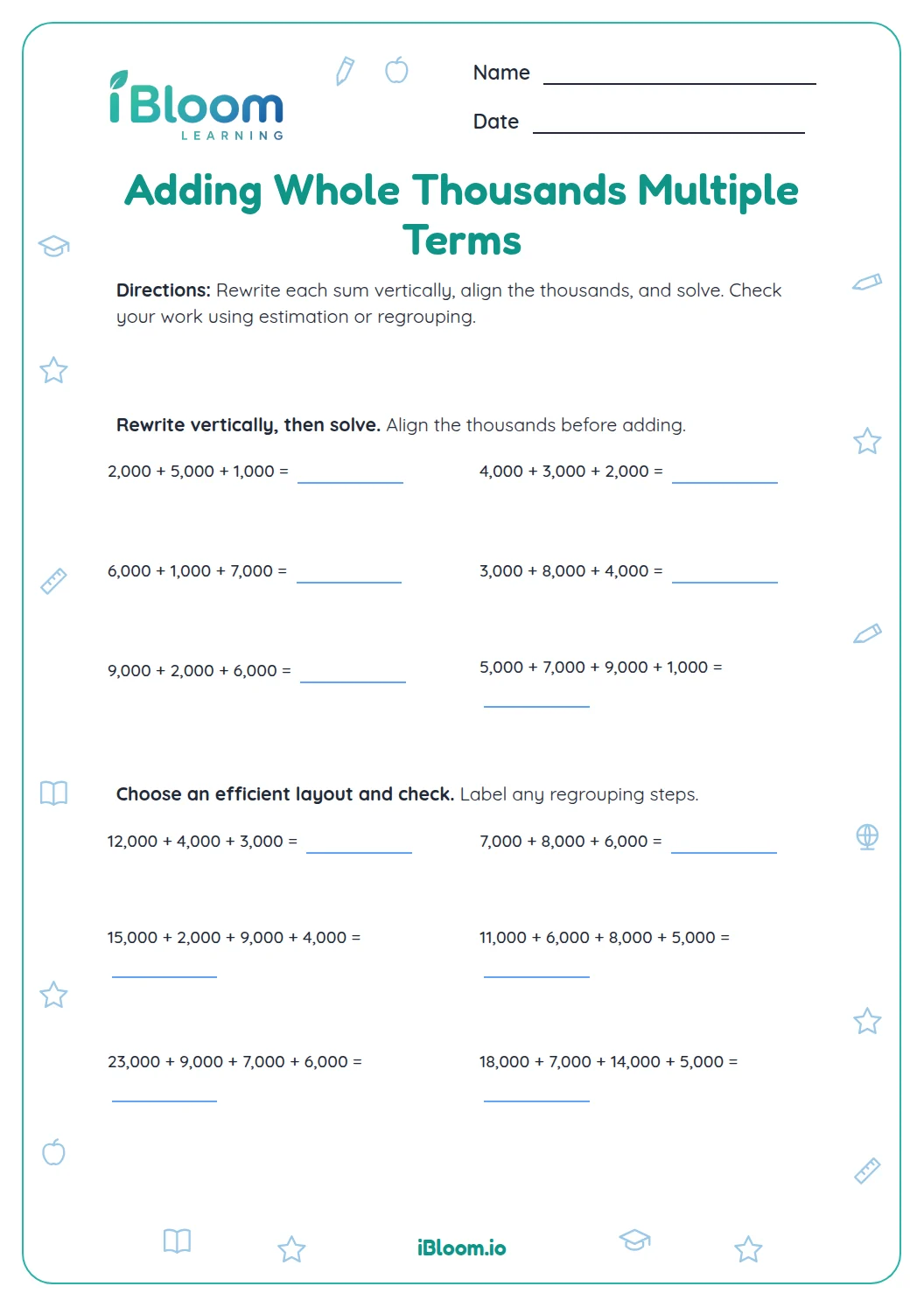
This drill starts with horizontal sums of three or four whole-hundred addends, then asks students to rewrite and solve in columns.
Aligned to 4.NBT.B.4
How do you rewrite a horizontal sum vertically?
Whole hundreds have zeros in the tens and ones places. When rewriting, place each hundreds digit in the hundreds column and keep the zeros aligned. Then add the hundreds and record the total.
For example, 300 + 500 + 200 can be read as 3 hundreds + 5 hundreds + 2 hundreds, or 10 hundreds: 1,000. Keeping each addend in the correct column makes the place-value structure visible.
What does the drill include?
The first set keeps each sum on one line so students can group the hundreds mentally. In the second set, each prompt asks them to rewrite the addends vertically before finding the total. The addends include three or four terms.
- Part A: add whole hundreds on a horizontal line
- Part B: convert the expression to a vertical arrangement, then add
How to use this worksheet
- 1For the horizontal sums, add the hundreds and then restore the two zeros.
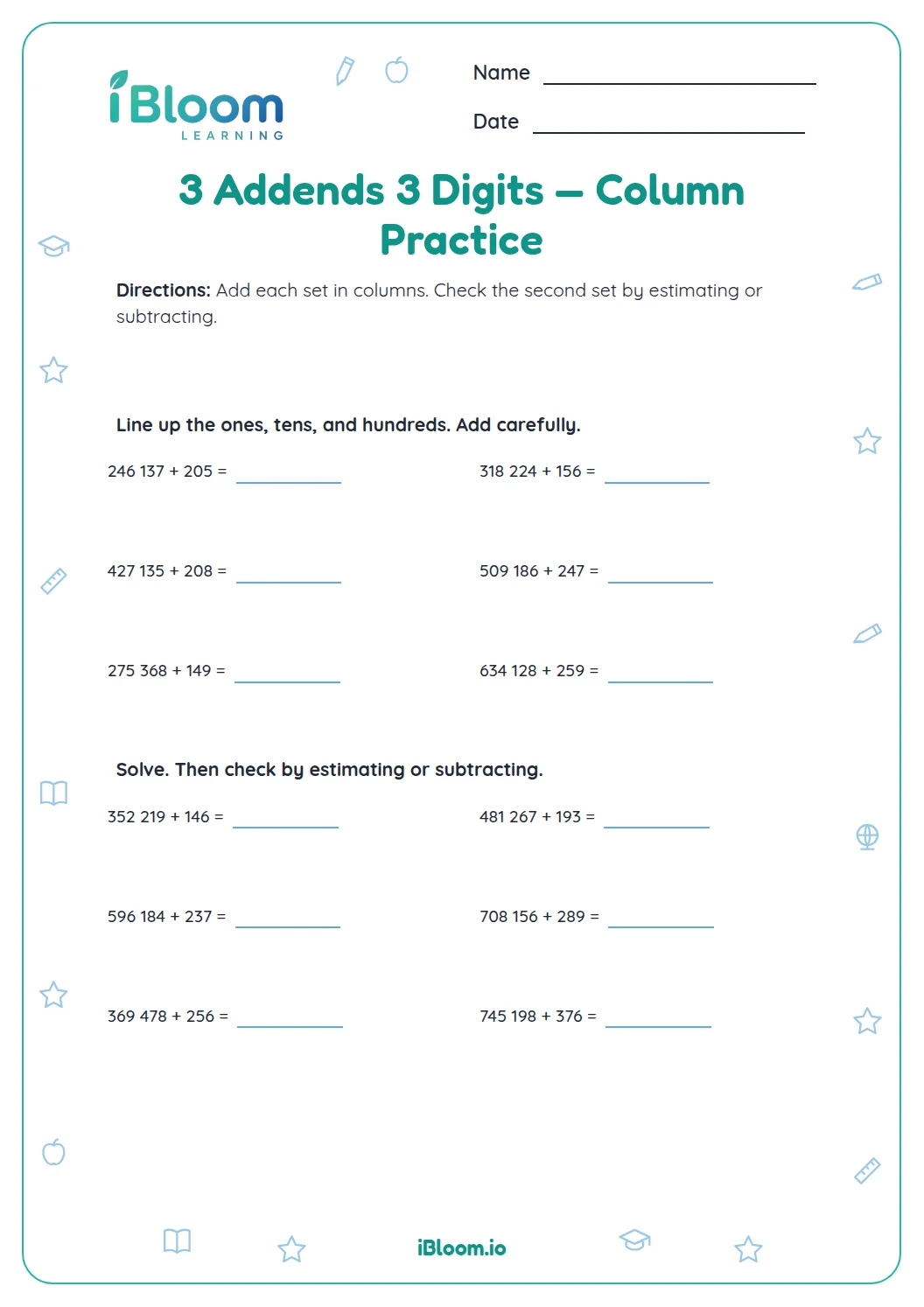
- 2For the column problems, rewrite each addend with the hundreds digits aligned before adding.
Common mistakes and quick fixes
The mistake
Adding only the leading digits and forgetting the place value.
The fix
Think “hundreds”: 3 + 5 + 2 hundreds equals 10 hundreds, or 1,000.
The mistake
Misaligning terms while rewriting vertically.
The fix
Keep every hundreds digit in the hundreds column; the tens and ones places are zeros.
Common Core alignment
This page gives focused practice with the skill named in its title.
Fluently add and subtract multi-digit whole numbers using the standard algorithm.
On this sheet: Students add multiple whole-hundred addends and practice arranging place values vertically.
Show the official wordingHide the official wording
Fluently add and subtract multi-digit whole numbers using the standard algorithm.
What to practice next
Make more practice
Further reading
Questions parents and teachers ask
Why should digits line up in a vertical addition problem?
Aligning place values keeps hundreds, tens, and ones in their correct columns. Checking the hundreds digit and the two zeros can catch a place-value error before the work is finished. This gives students a clear way to check their reasoning and make the next practice attempt more accurate.
How can whole hundreds be added mentally?
Add the number of hundreds, then write that many hundreds as a whole number. For example, 3 hundreds + 5 hundreds = 8 hundreds, or 800. Checking the hundreds digit and the two zeros can catch a place-value error before the work is finished.
Why do all the addends have two zeros?
Each addend is a whole hundred. The zeros show there are no tens or ones in that addend, so the leading digit counts hundreds. For example, 700 means seven hundreds, not just seven. Checking the hundreds digit and the two zeros can catch a place-value error before the work is finished.
What is a quick way to check a whole-hundreds sum?
Estimate by counting the hundreds, then compare your total with that estimate. For instance, 600 + 300 + 200 is 11 hundreds, or 1,100. A total with the wrong number of zeros is a clue to recheck. Checking the hundreds digit and the two zeros can catch a place-value error before the work is finished.
What changes when a sum is written vertically?
The value of each addend stays the same, but the layout places matching place values in columns. Lining up the hundreds helps organize the addition and makes it easier to see whether any regrouping is needed. Checking the hundreds digit and the two zeros can catch a place-value error before the work is finished.