


About this worksheet
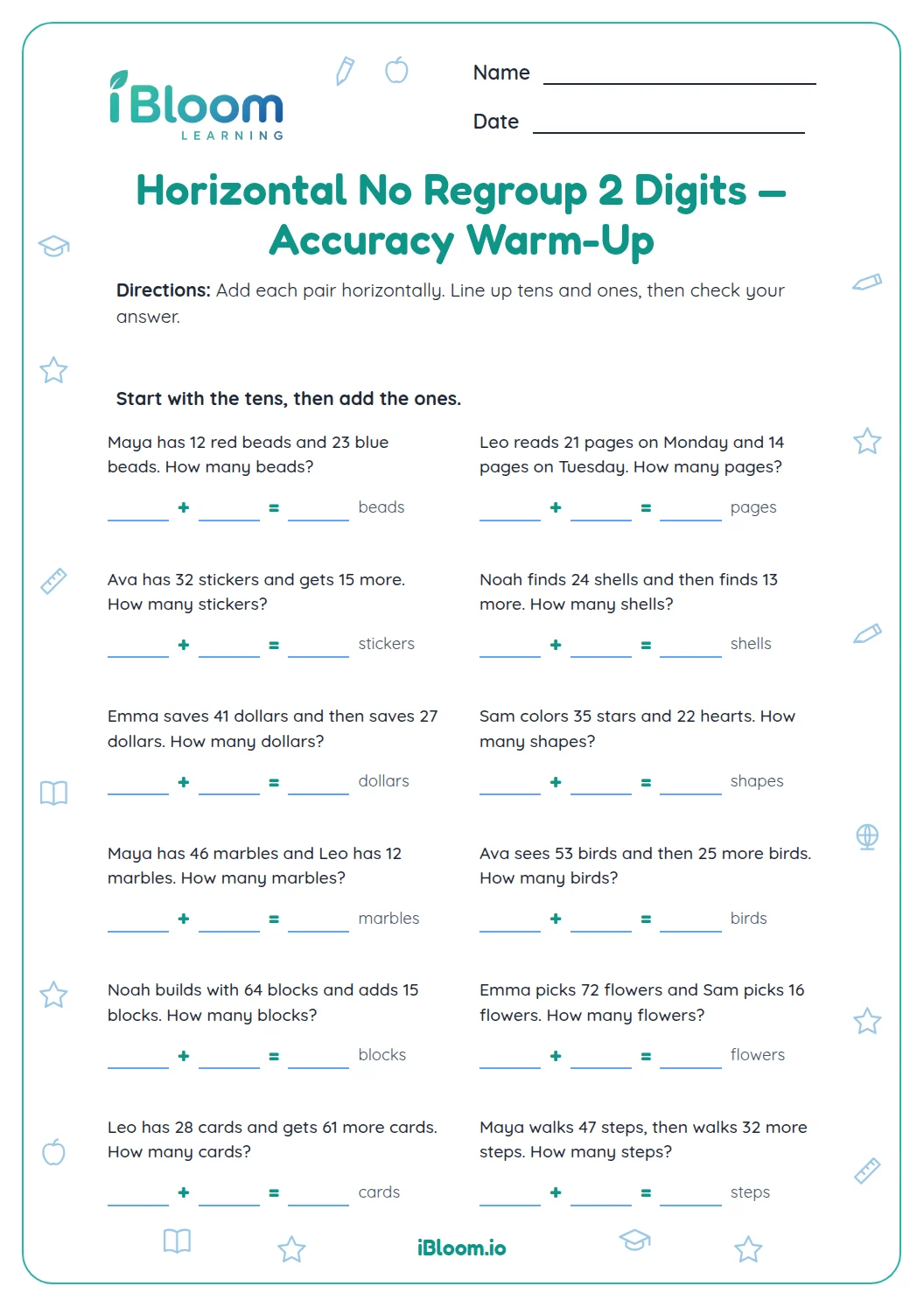
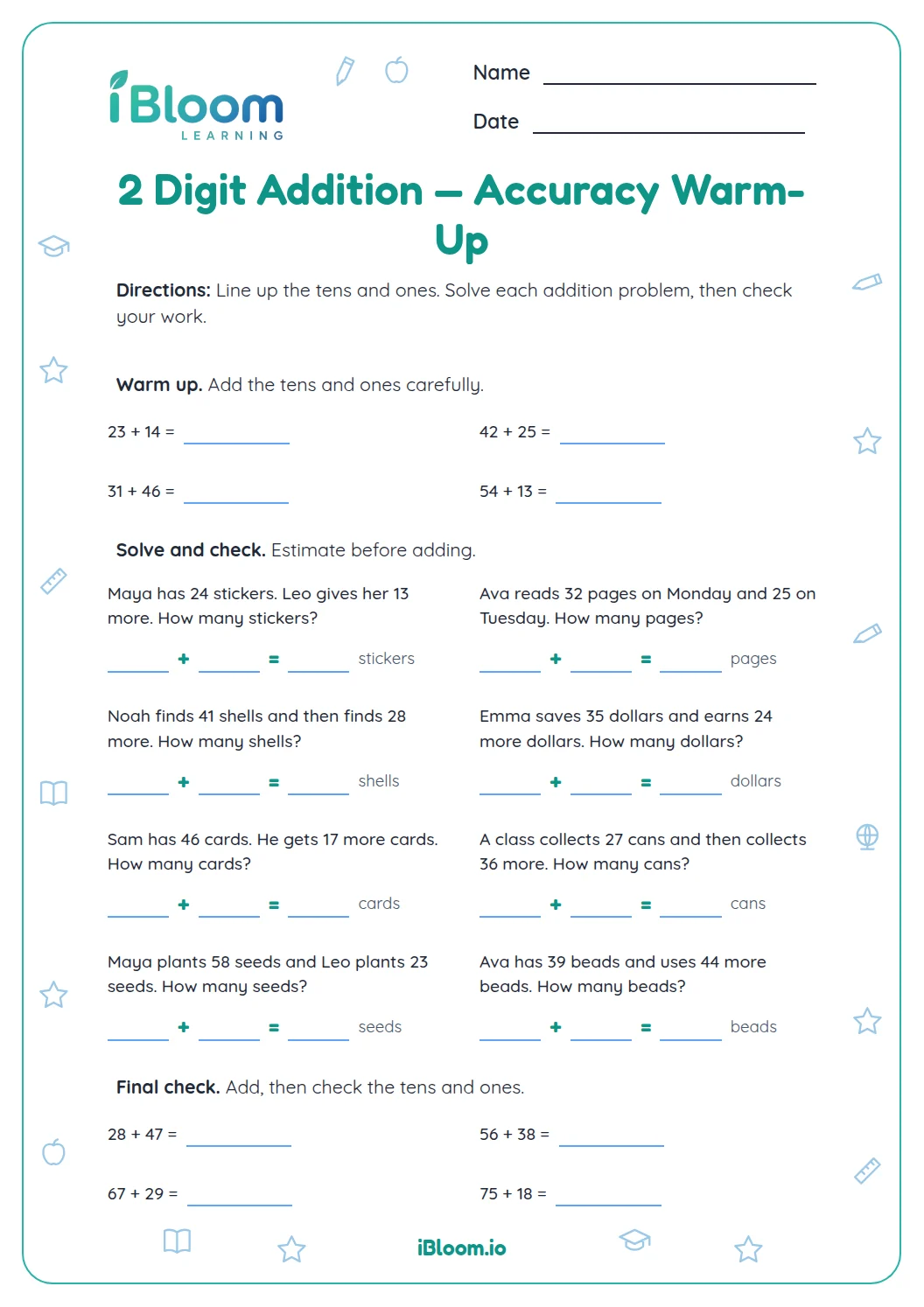
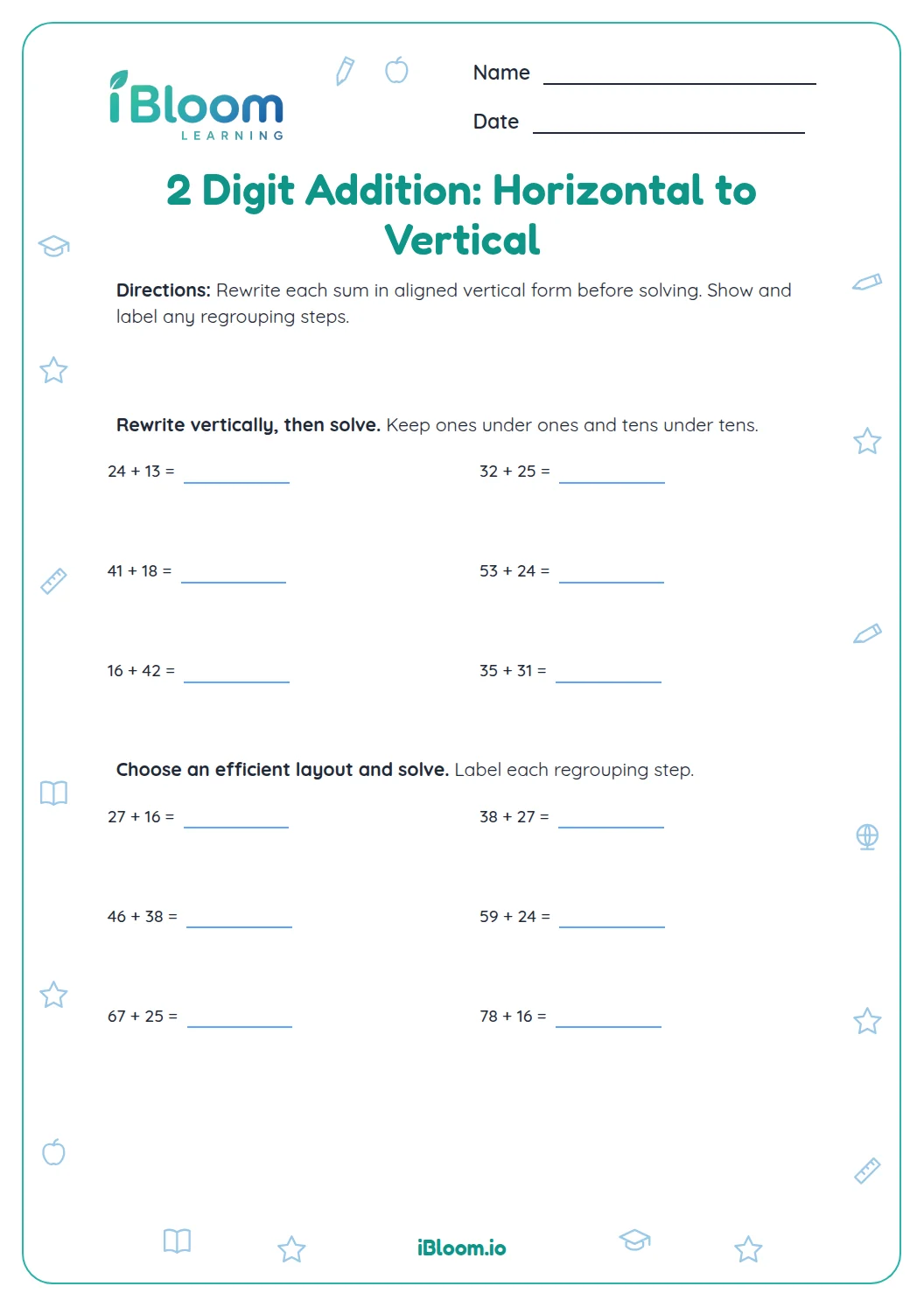
This Grade 2 drill practices horizontal addition of two-digit numbers without regrouping. Children add the tens and ones in each sum, then solve four short situations using addition.
Aligned to 2.NBT.B.5
How can I add two-digit numbers without regrouping?
Add the ones digits and the tens digits. In 24 + 35, add 4 + 5 = 9 ones and 2 tens + 3 tens = 5 tens. The sum is 59.
A quick estimate helps you notice a misplaced digit. For 24 + 35, 20 + 40 is about 60, so 59 is reasonable.
What is included?
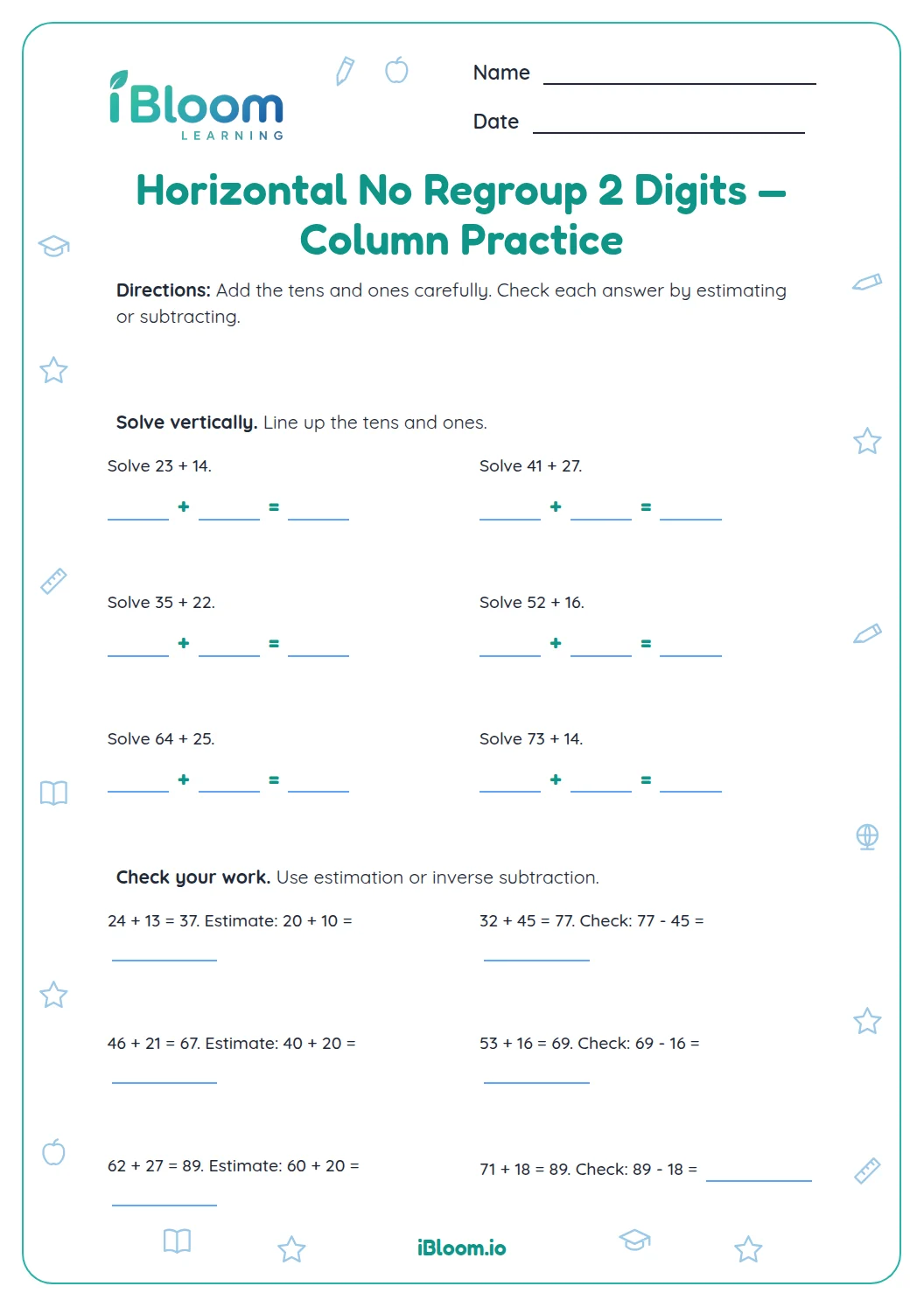
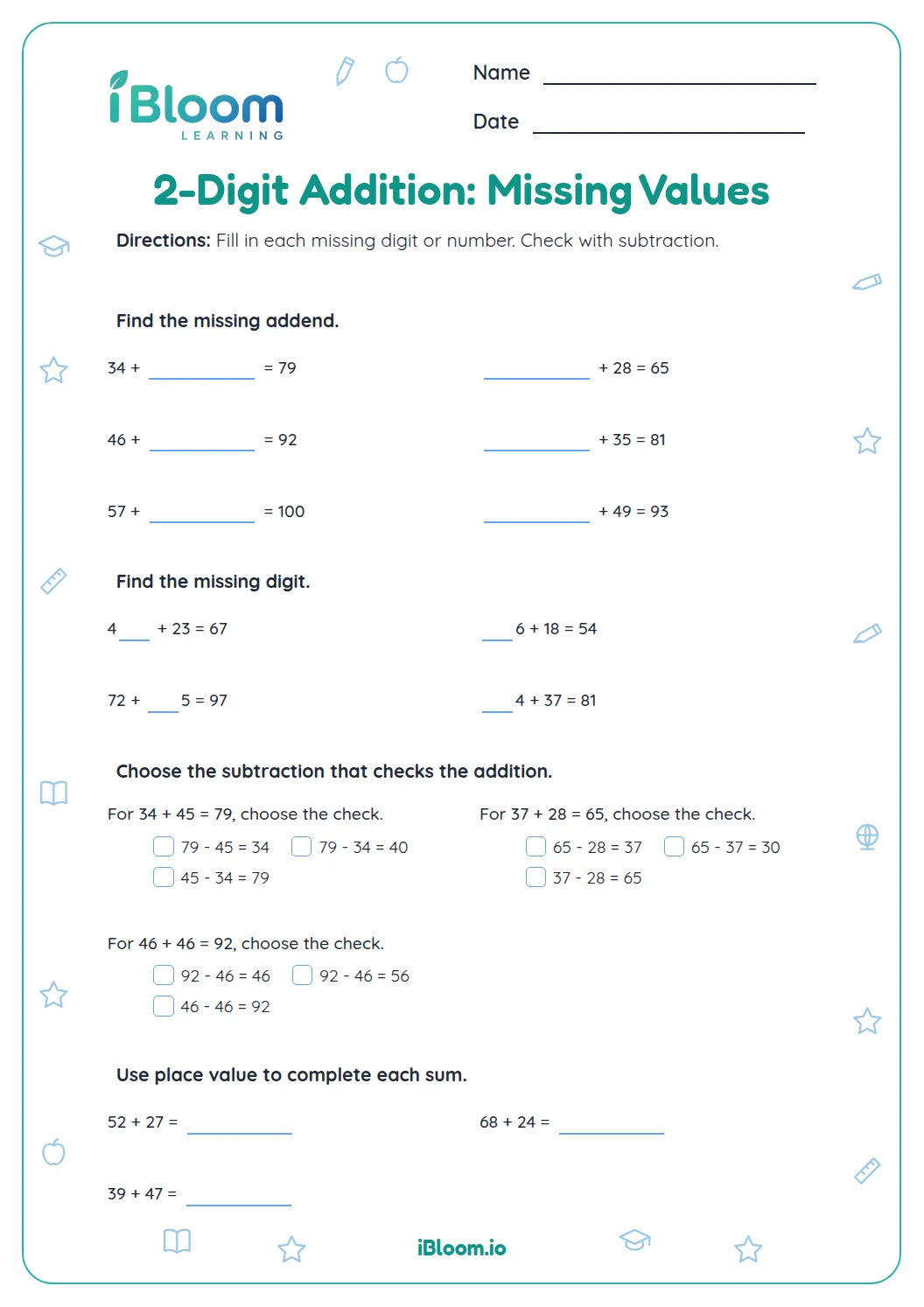
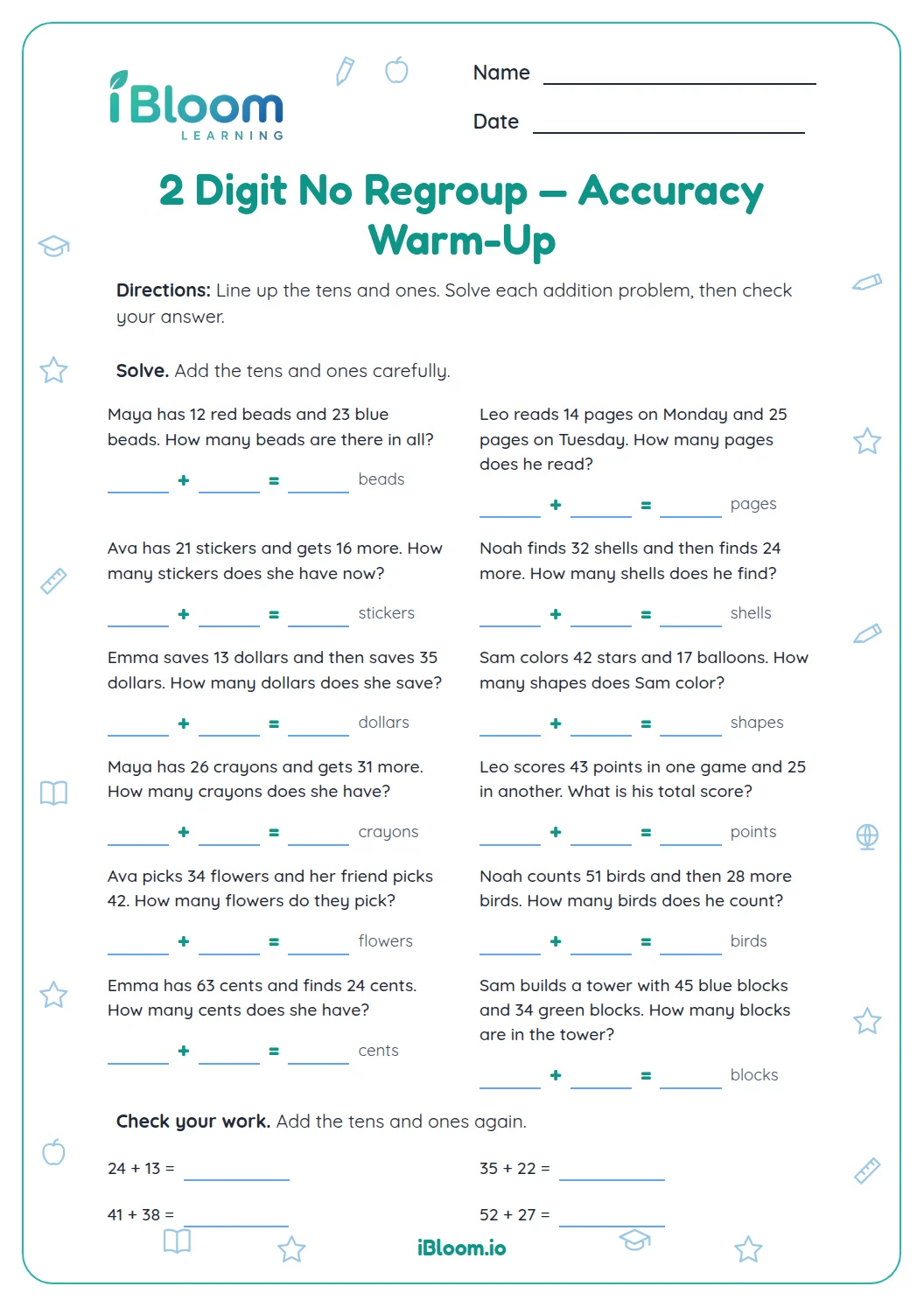
The 18 questions include direct sums, more sums, subtraction equations that check a sum, and four short story problems. Each pair of addends keeps the ones total and tens total below 10.
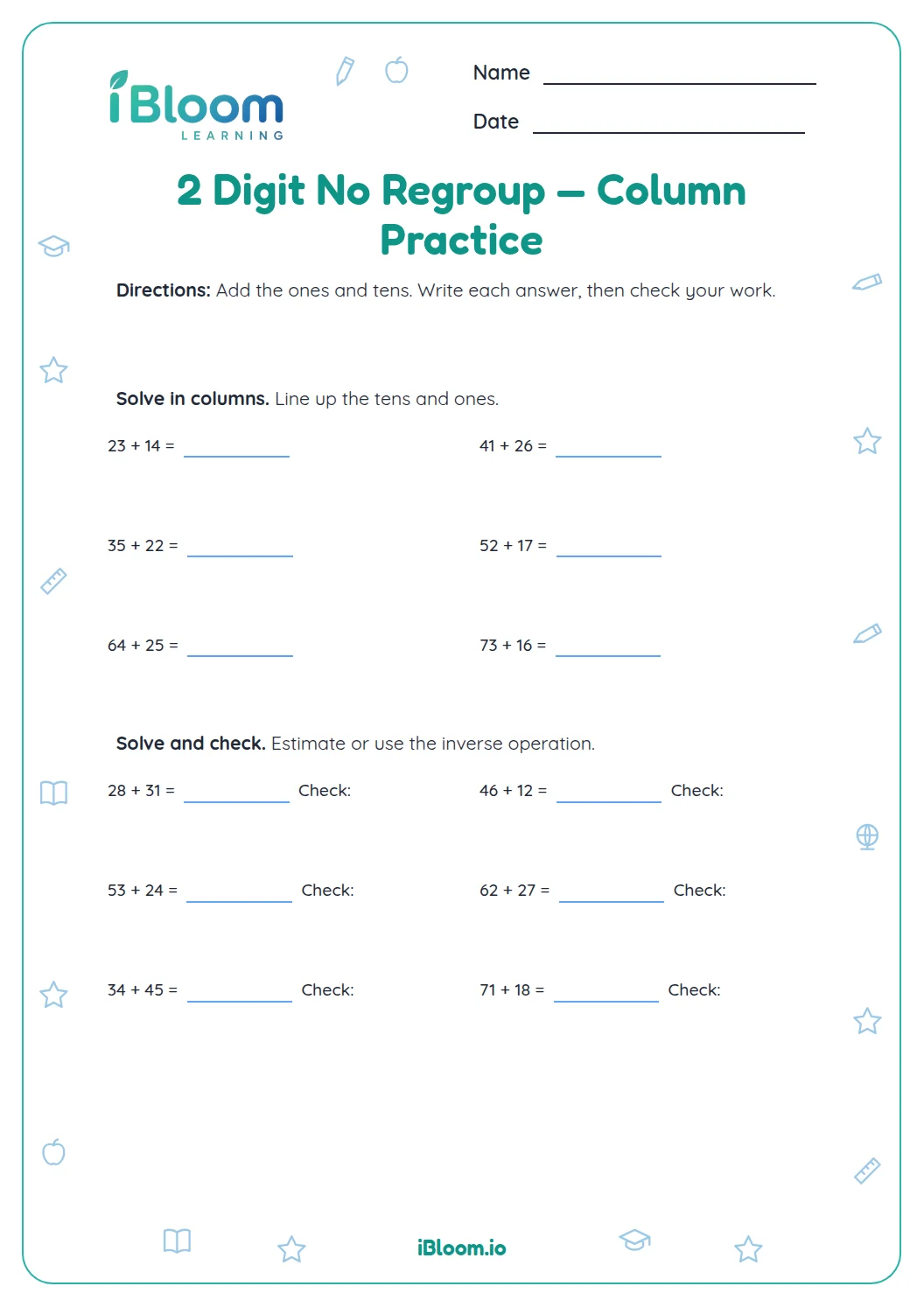
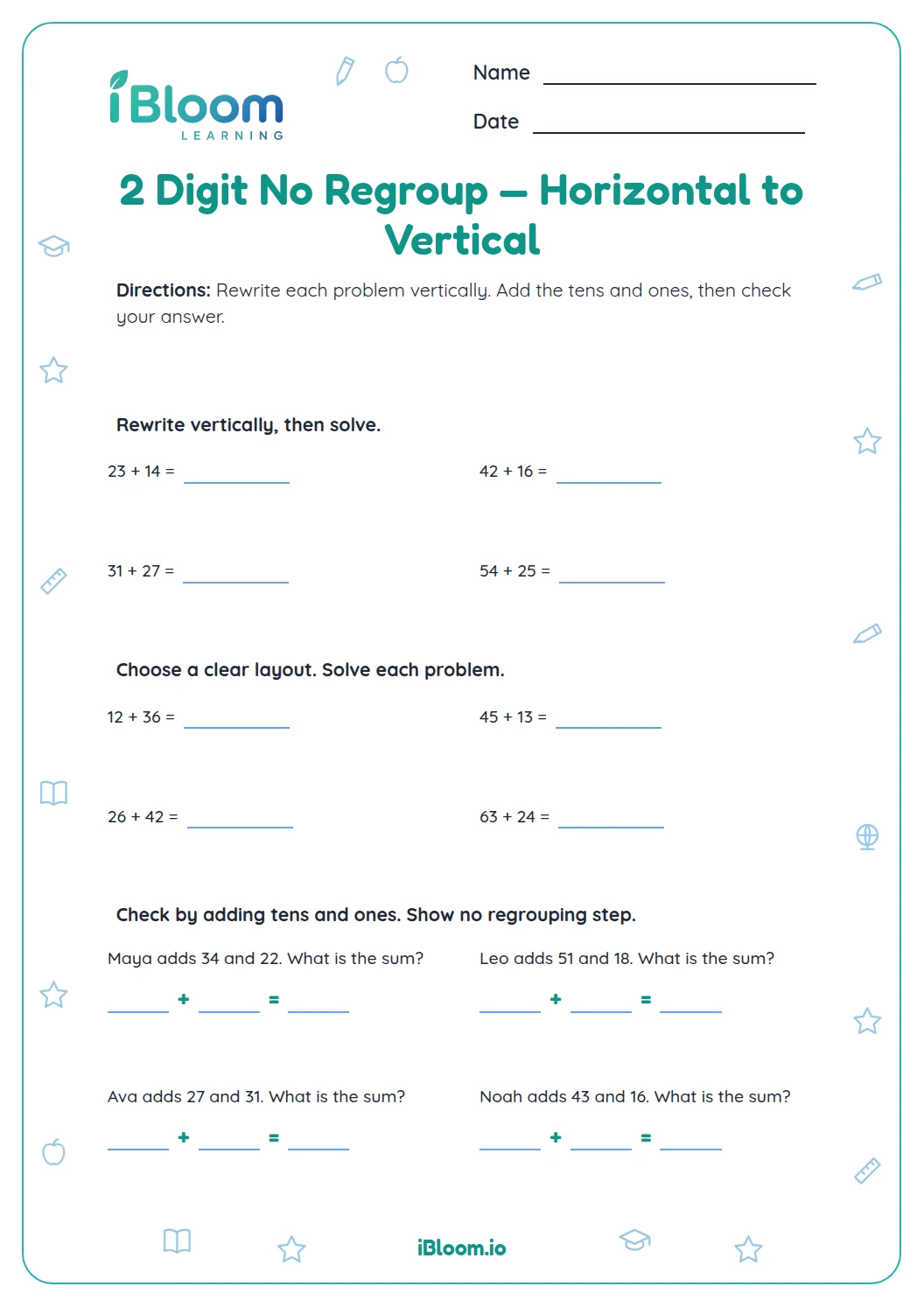
- Part A: eight horizontal sums
- Part B: four more sums and two subtraction checks
- Part C: two additional horizontal sums
- Part D: four short addition stories with working space
- Separate answer key
How do you add without regrouping?
For question 1, add the ones: 4 + 5 = 9. Then add the tens: 20 + 30 = 50. Put them together to get 59.
How to use this worksheet
- 1Read the two addends.
- 2Add the ones digits.
- 3Add the tens digits.
- 4Combine the tens and ones totals.
- 5For a story problem, check that the sum answers what the question asks.
Common mistakes and quick fixes
The mistake
Adding the digits in the wrong place.
The fix
Keep ones with ones and tens with tens.
The mistake
Writing the ones total in the tens place.
The fix
Use place value: 9 ones and 5 tens make 59.
The mistake
Adding only one part of a story problem.
The fix
Use both amounts named in the question.
Common Core alignment
This worksheet practices the listed Common Core skill at the stated grade.
Fluently add and subtract within 100 using strategies based on place value.
On this sheet: Students add two-digit numbers within 100 by combining tens and ones; examples do not require regrouping.
Show the official wordingHide the official wording
Fluently add and subtract within 100 using strategies based on place value, properties of operations, and/or the relationship between addition and subtraction.
What to practice next
Make more practice
Further reading
Questions parents and teachers ask
How can a child add two-digit numbers without regrouping?
Add the ones digits, then add the tens digits, and combine those totals. In 24 + 35, 4 + 5 makes 9 ones and 20 + 30 makes 50, for a total of 59. The problems on this sheet use addends that do not require trading.
How can an estimate help check an addition answer?
Round each addend to a nearby ten and add those tens. For 24 + 35, 20 + 40 is about 60, which is close to the exact sum of 59. An estimate can help a child notice if a digit was placed incorrectly.
Do any of the sums require regrouping?
No. Each written addition problem has ones digits that total less than 10 and tens digits that total less than 10. This lets students focus on adding by place value without making a new ten or hundred. The examples stay below 100, and the key shows the results for checking.
What does the answer key show?
The separate answer key gives the sum for each of the 18 questions. For the story problems, it shows the total amount or count asked for, so an adult can check the child’s answer after they solve it. after the child has completed all the questions.
What is an inverse check for addition?
Subtraction can check addition: subtract one addend from the sum and see whether the other addend remains. For 43 + 26 = 69, subtracting 43 from 69 leaves 26. Two questions practice writing a valid subtraction check. This reverses the addition and should return the other addend.