
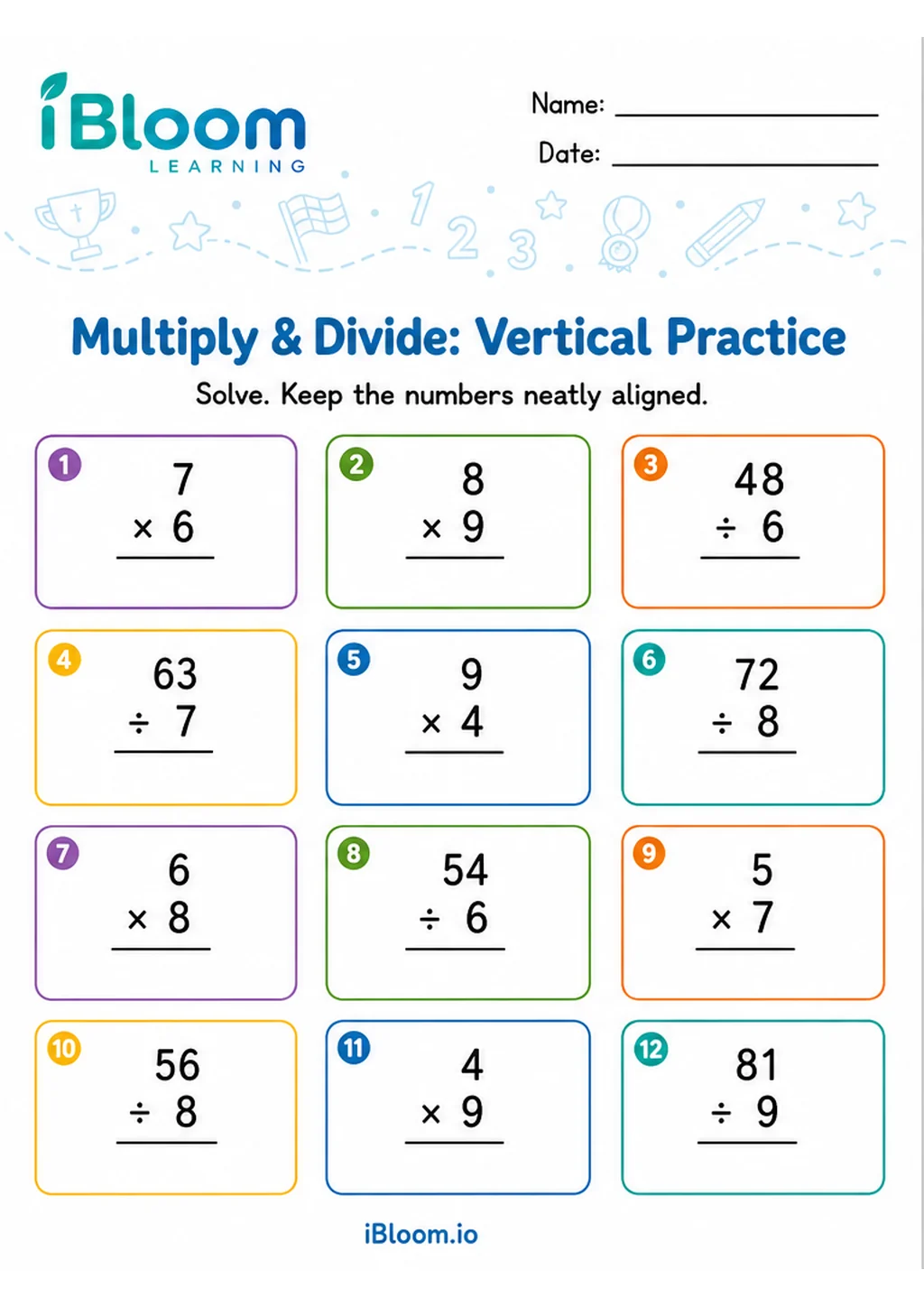
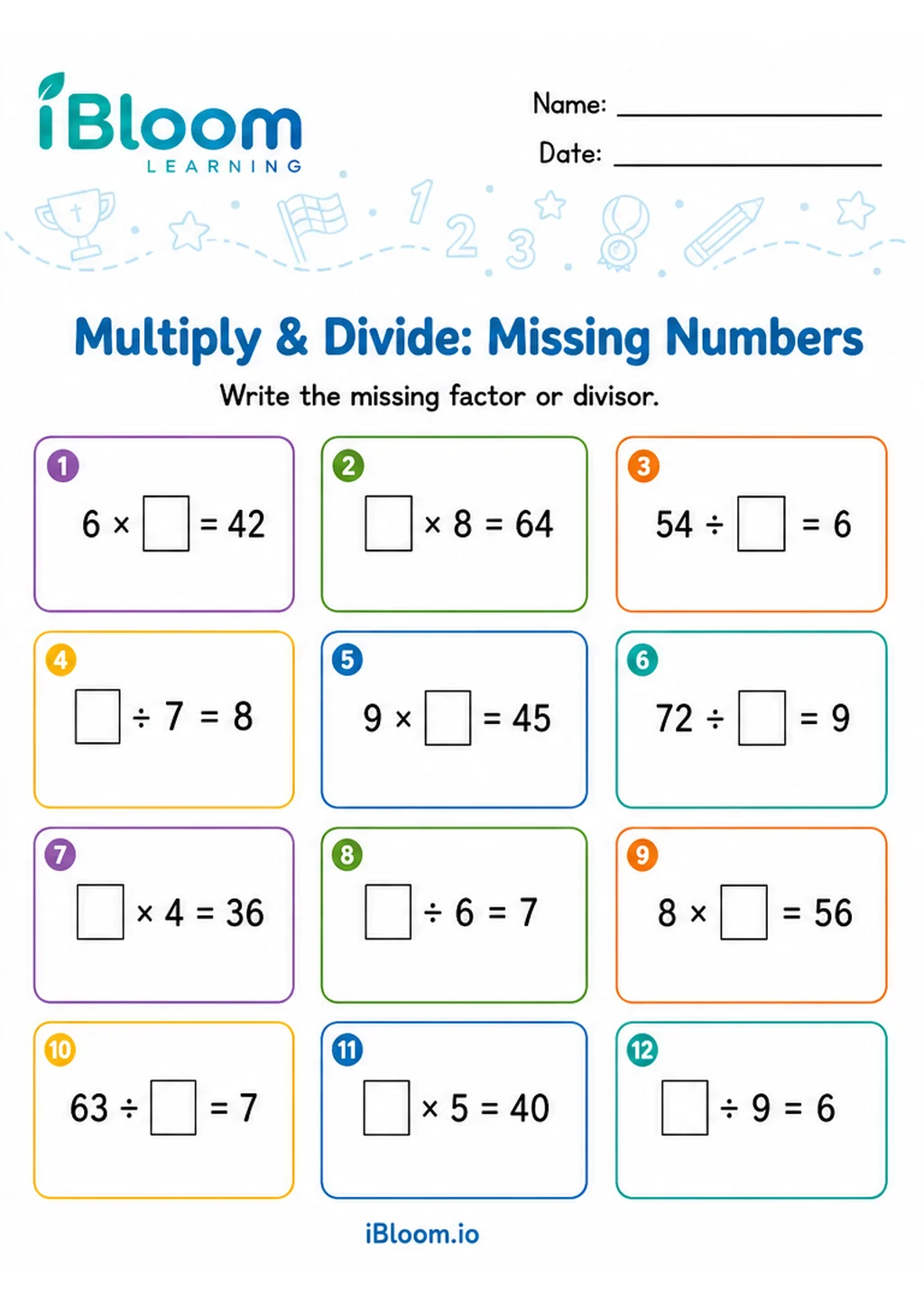
About this worksheet
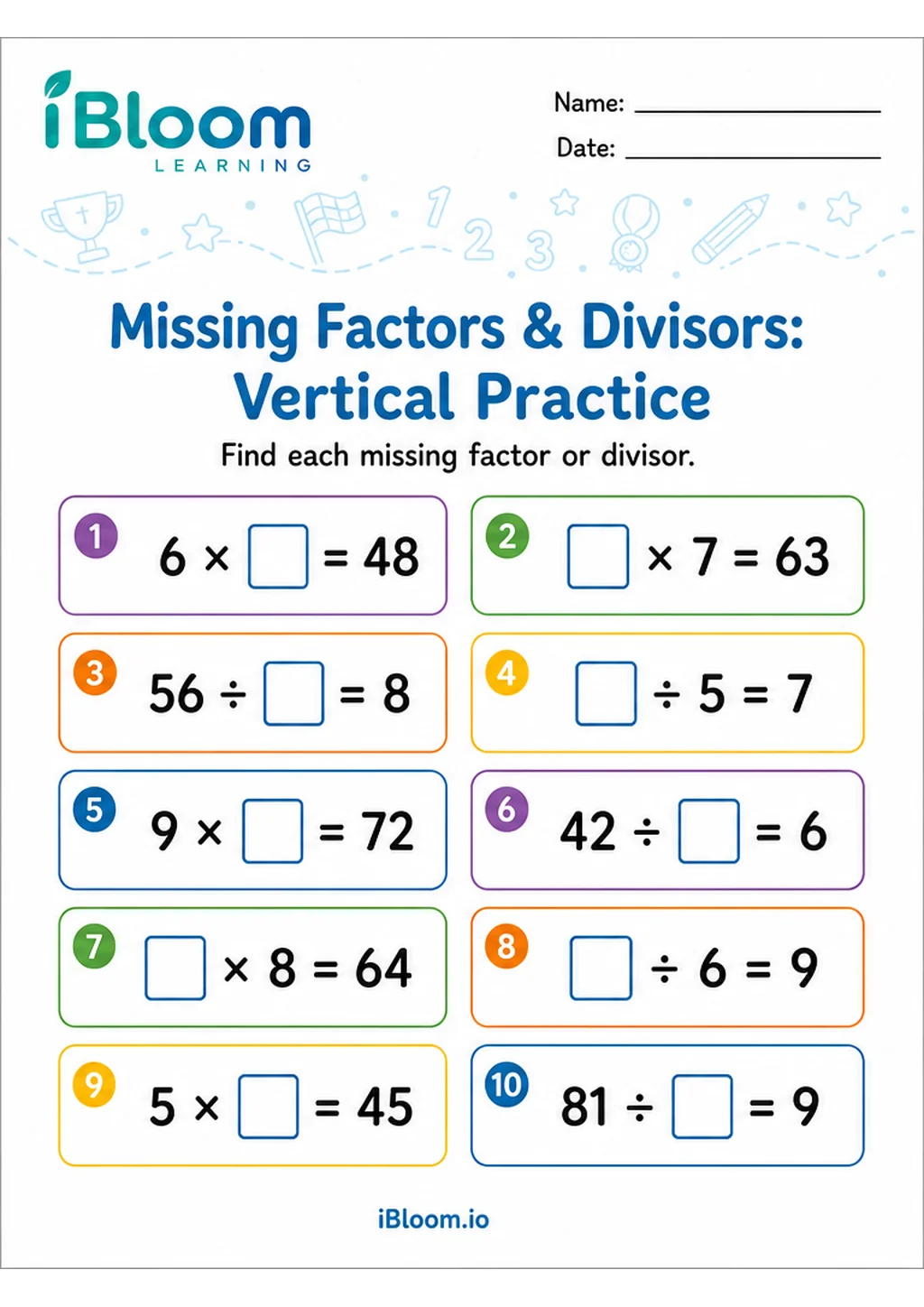
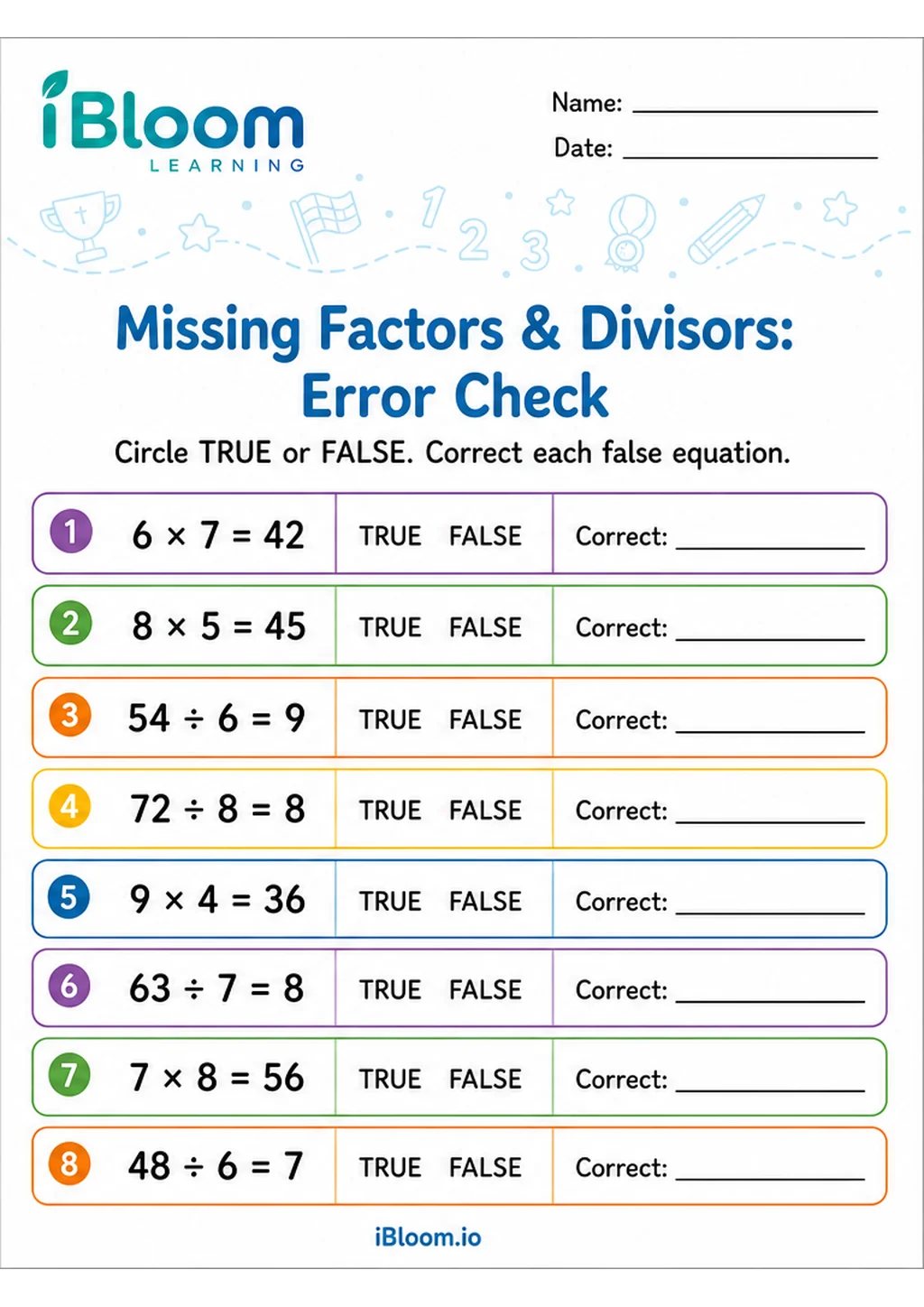
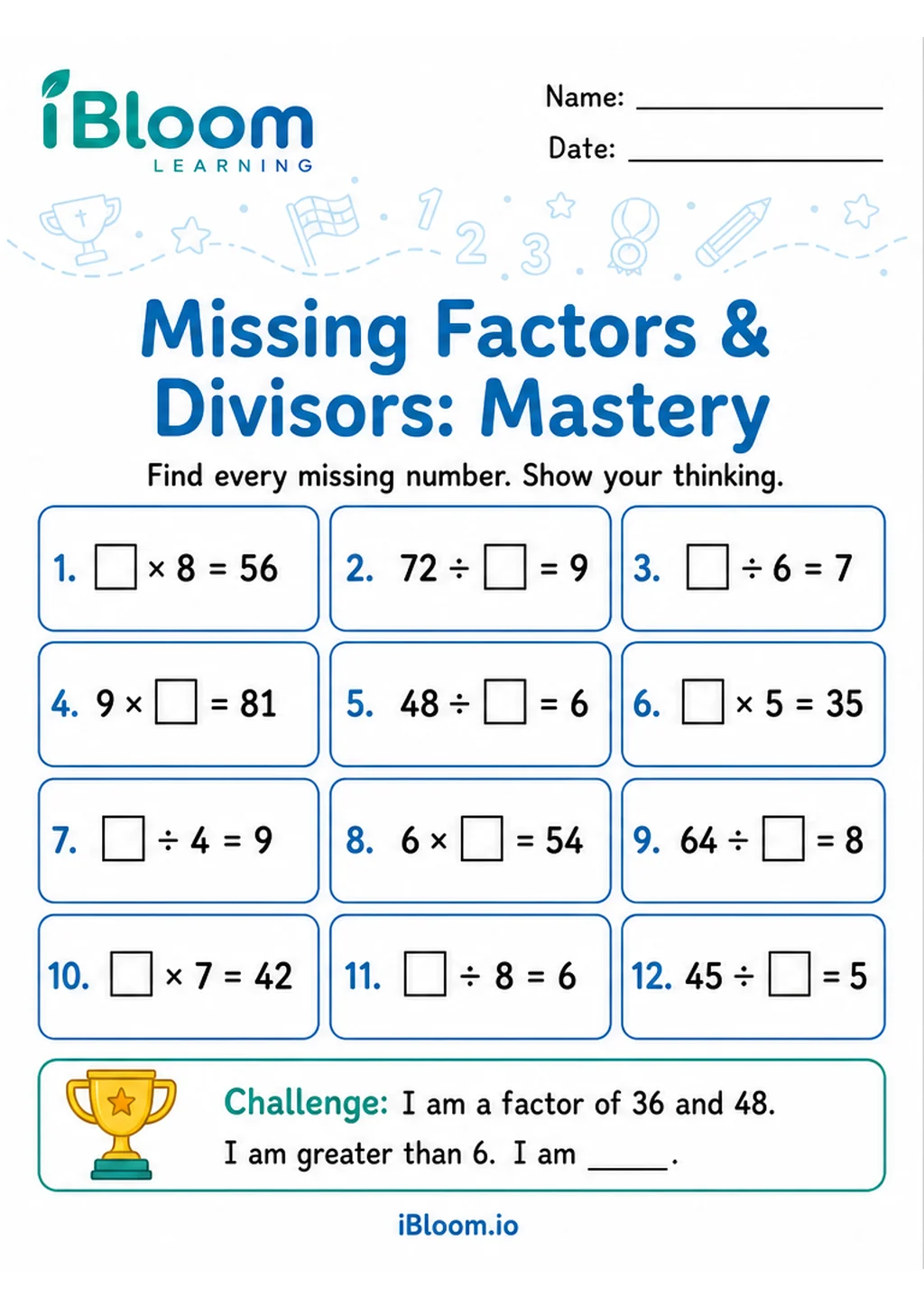
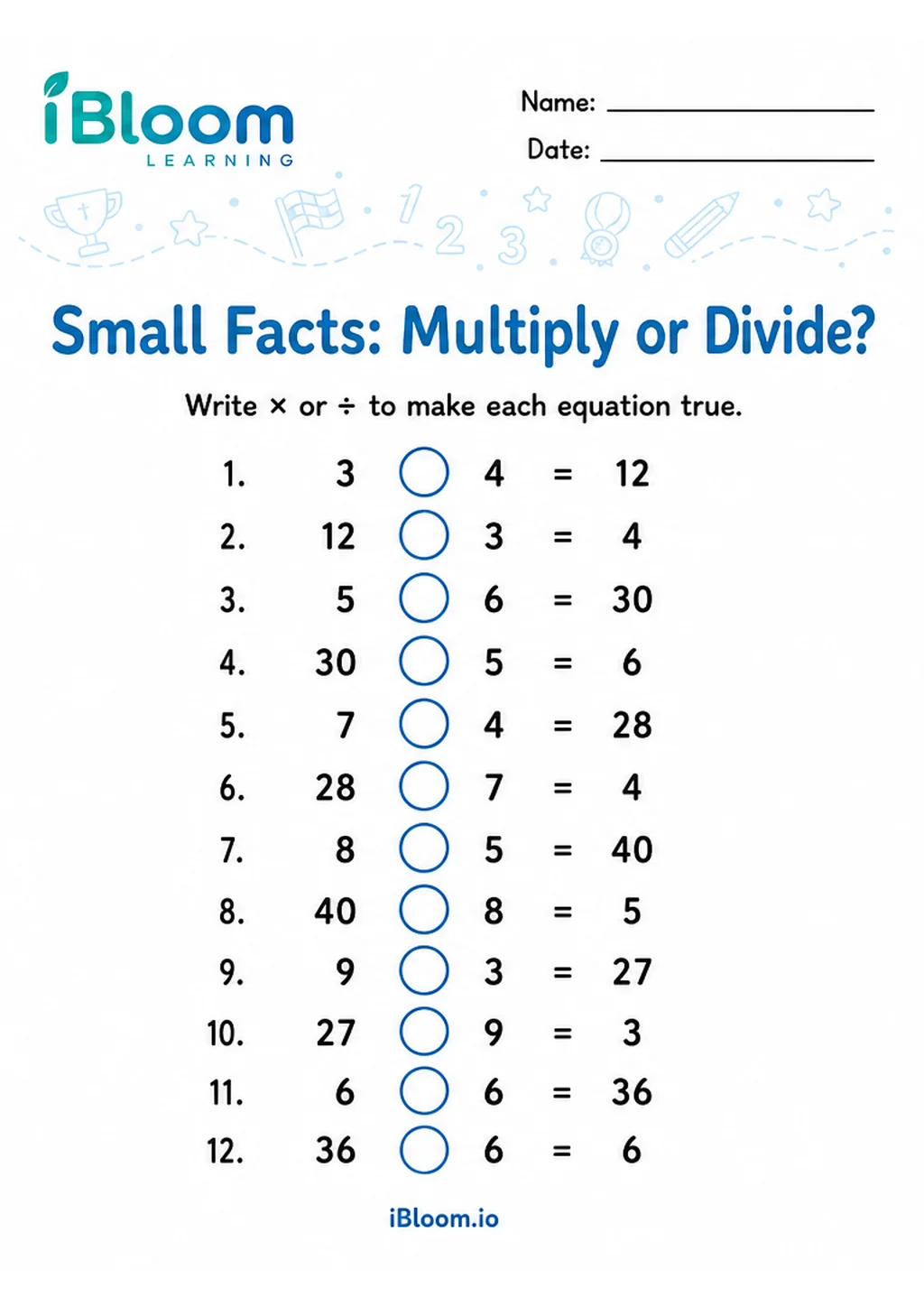
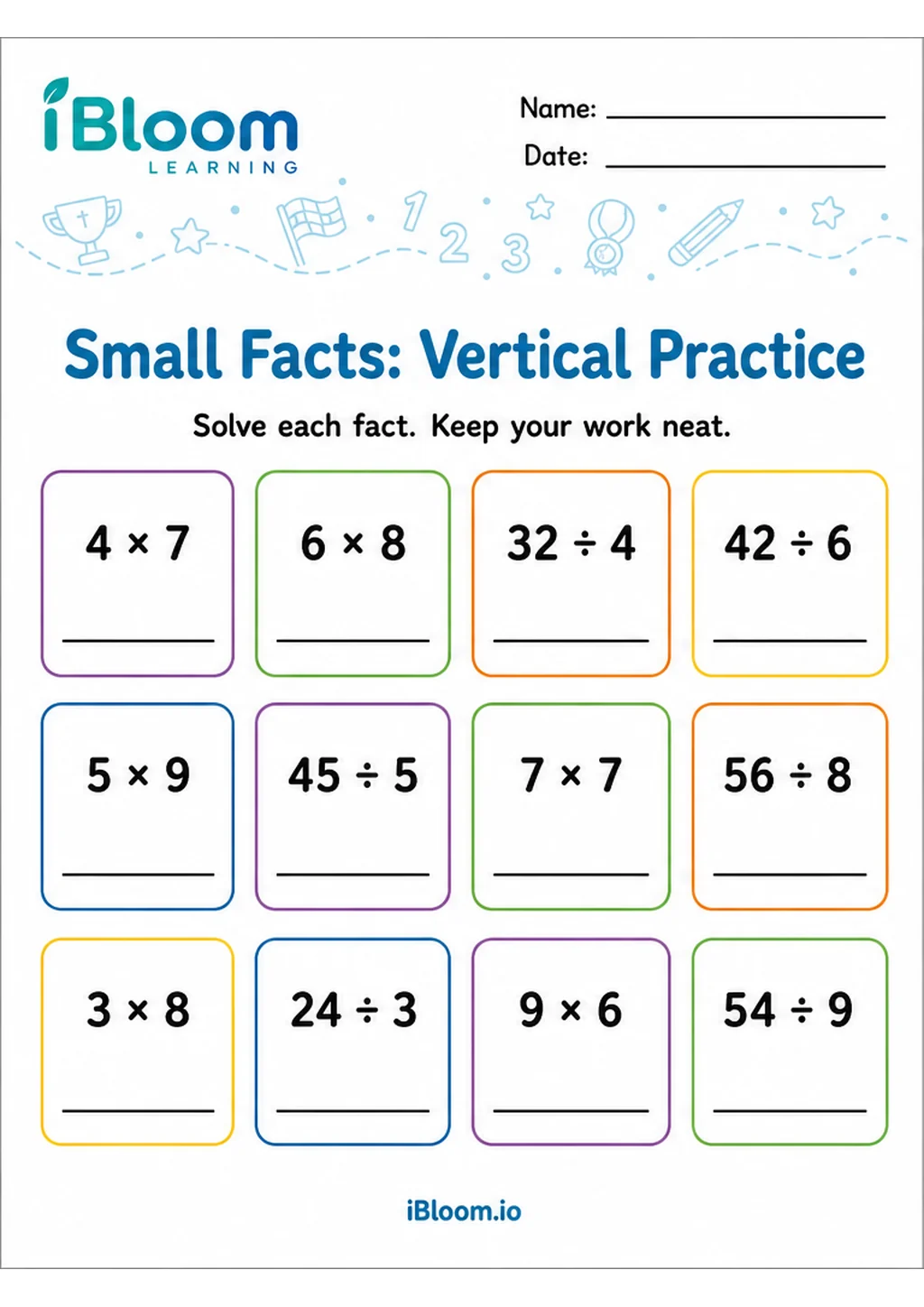
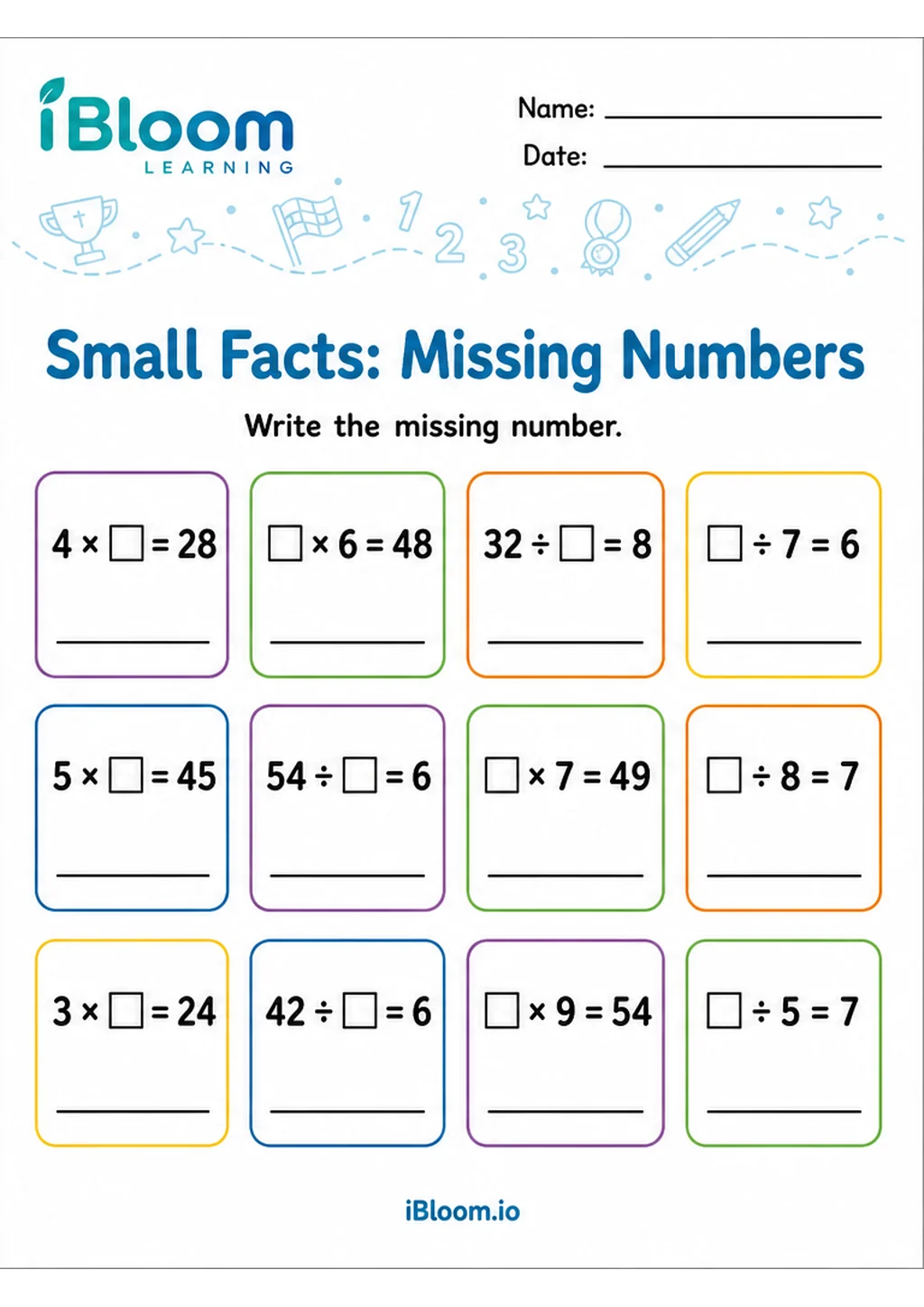
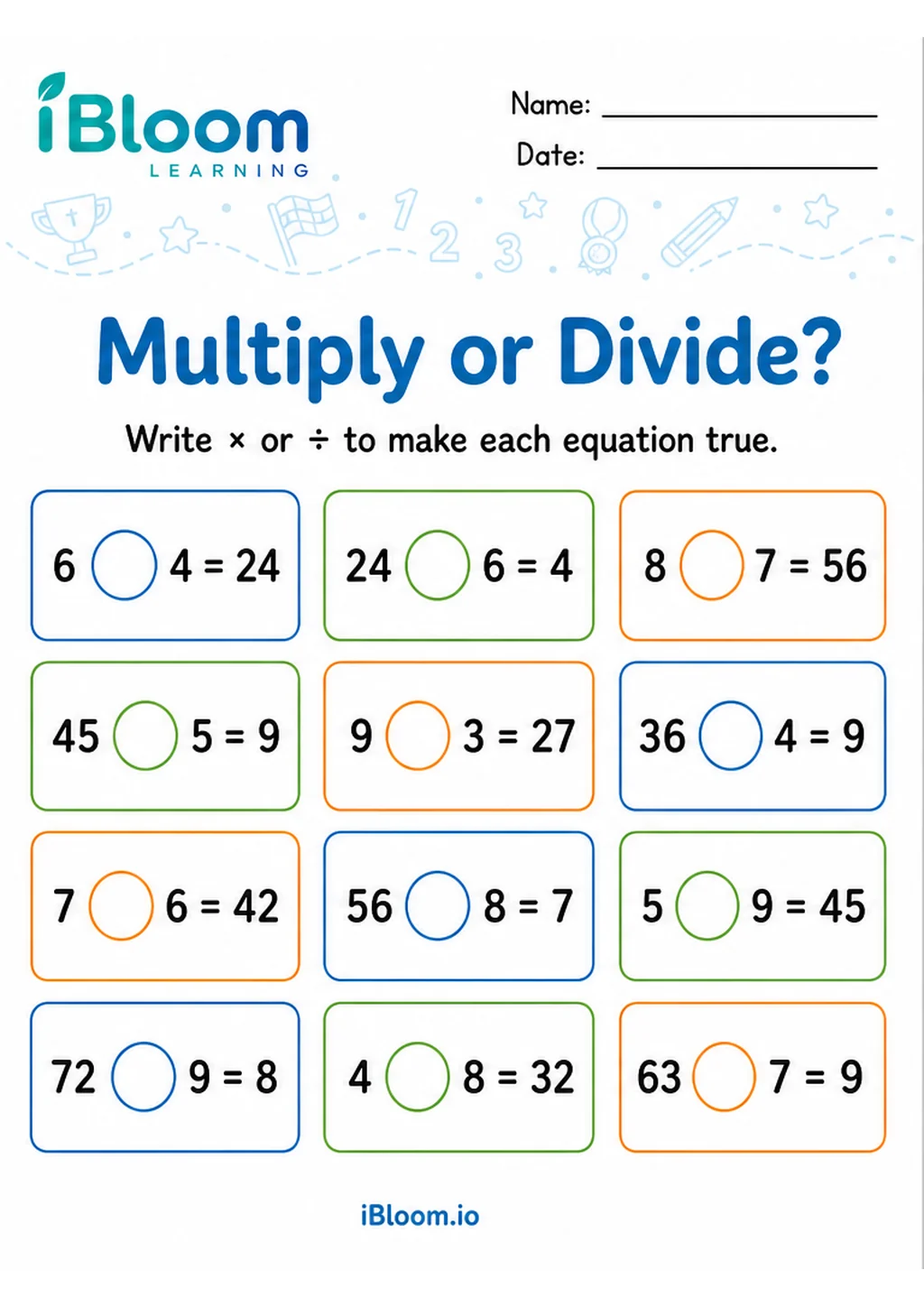
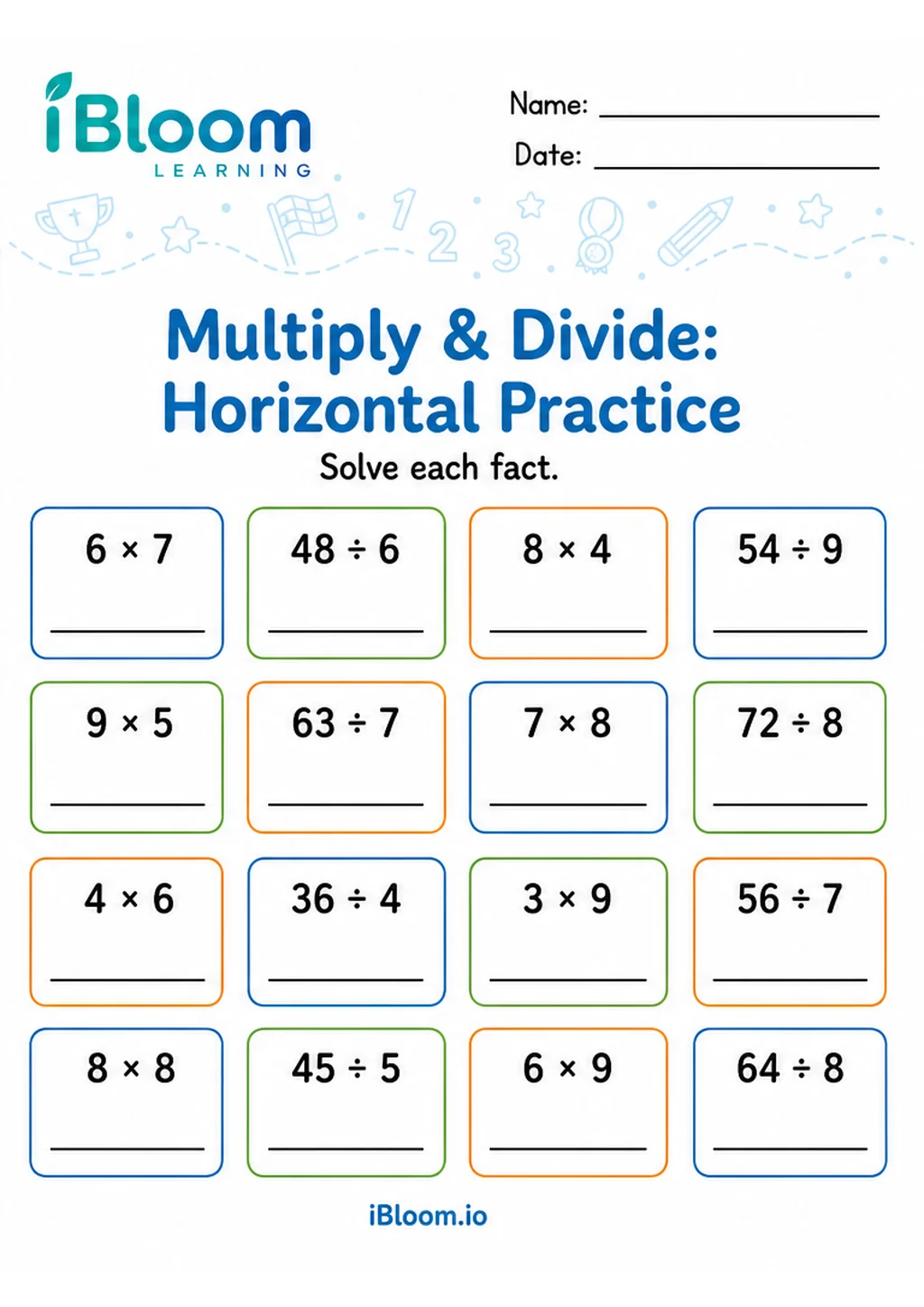
A multiplication fact can reveal a related division fact. For example, 6 × 7 = 42 tells you that 42 ÷ 6 = 7 and 42 ÷ 7 = 6. The worksheet is for Grades 3–6 students and has 16 questions: 6 operation-sign choices, 6 missing factors or quotients, and 4 related-fact items. It prints on two worksheet pages and includes a separate two-page answer key. It practices CCSS 3.OA.B.6 through these equations and checks.
Aligned to 3.OA.B.6
How do multiplication and division facts connect?
A multiplication fact can reveal a related division fact. For example, 6 × 7 = 42 tells you that 42 ÷ 6 = 7 and 42 ÷ 7 = 6.
The worksheet has three parts. Part A: Choose × or ÷: 6 questions, Part B: Find a missing number: 6 questions, and Part C: Use the fact family: 4 questions. The examples progress from direct calculations to using the same idea in a less familiar equation.
- 16 ___ 7 = 42
- 2The factors 6 and 7 make 42, so the missing sign is ×.
- 3Check: 6 × 7 = 42.
What practice is on each part?
16 questions: 6 operation-sign choices, 6 missing factors or quotients, and 4 related-fact items. Students can finish one part at a time and use the separate key to check their work.
- Part A: Choose × or ÷: 6 questions
- Part B: Find a missing number: 6 questions
- Part C: Use the fact family: 4 questions
How can an adult make the practice useful?
Ask the student to explain one step or check aloud. When an answer is off, return to the equation and locate the first step where the relationship changed. This keeps the correction tied to the skill on the page.
How to work through this worksheet
- 1Read the full equation, including the answer on the right.
- 2Ask whether the equation shows equal groups or sharing.
- 3Use a known multiplication fact to select × or ÷.
- 4For a missing number, identify the related fact family.
- 5Substitute your choice and check that both sides match.
Common mistakes and quick fixes
The mistake
Choosing × or ÷ by looking only at the first two numbers.
The fix
Use the whole equation: the result tells whether the numbers are being combined or divided.
The mistake
Mixing up a factor and a product.
The fix
Say the fact aloud: factor × factor = product, then find the missing place.
The mistake
Treating a quotient as a factor without checking.
The fix
Multiply the divisor by the quotient and see whether you get the dividend.
Common Core alignment
This worksheet practices the stated Common Core math skill through its equations and worked checks.
A multiplication fact can reveal a related division fact. For example, 6 × 7 = 42 tells you that 42 ÷ 6 =
On this sheet: A multiplication fact can reveal a related division fact. For example, 6 × 7 = 42 tells you that 42 ÷ 6 =
Show the official wordingHide the official wording
Understand division as an unknown-factor problem. For example, find 32 ÷ 8 by finding the number that makes 32 when multiplied by 8.
What to practice next
Make more practice
Further reading
Questions parents and teachers ask
How can a multiplication fact help with division?
The same three numbers make a fact family. If 6 × 7 = 42, then 42 ÷ 6 = 7 and 42 ÷ 7 = 6. The worksheet asks students to recognize these relationships in sign choices and equations with missing values.
What does “choose the operation” mean here?
In Part A, the blank is the operation sign, so students choose multiplication or division to make the entire equation true. For example, 6 ___ 7 = 42 needs ×. The answer key lists each sign and number for quick checking.
How many problems are included?
There are 16 questions in three parts: six operation-sign choices, six missing-number equations, and four fact-family items. The printable has two worksheet pages and a separate two-page answer key, so students can work in sections. The answer key lists each sign and number for quick checking, while the two worksheet pages give room to solve and review the facts.
How should students check a missing factor?
Use the product and known factor to find the other factor, then multiply to check. For example, if ___ × 6 = 48, ask what number times 6 equals 48; 8 works because 8 × 6 = 48. Students can use the printed equation to show the relationship clearly.
Which facts does this practice use?
The questions use multiplication and division facts with factors through 9, including products such as 8 × 8 and related quotients. Students should be comfortable reading multiplication and division equations and can use a known fact to reason through an unfamiliar blank.