
About this worksheet
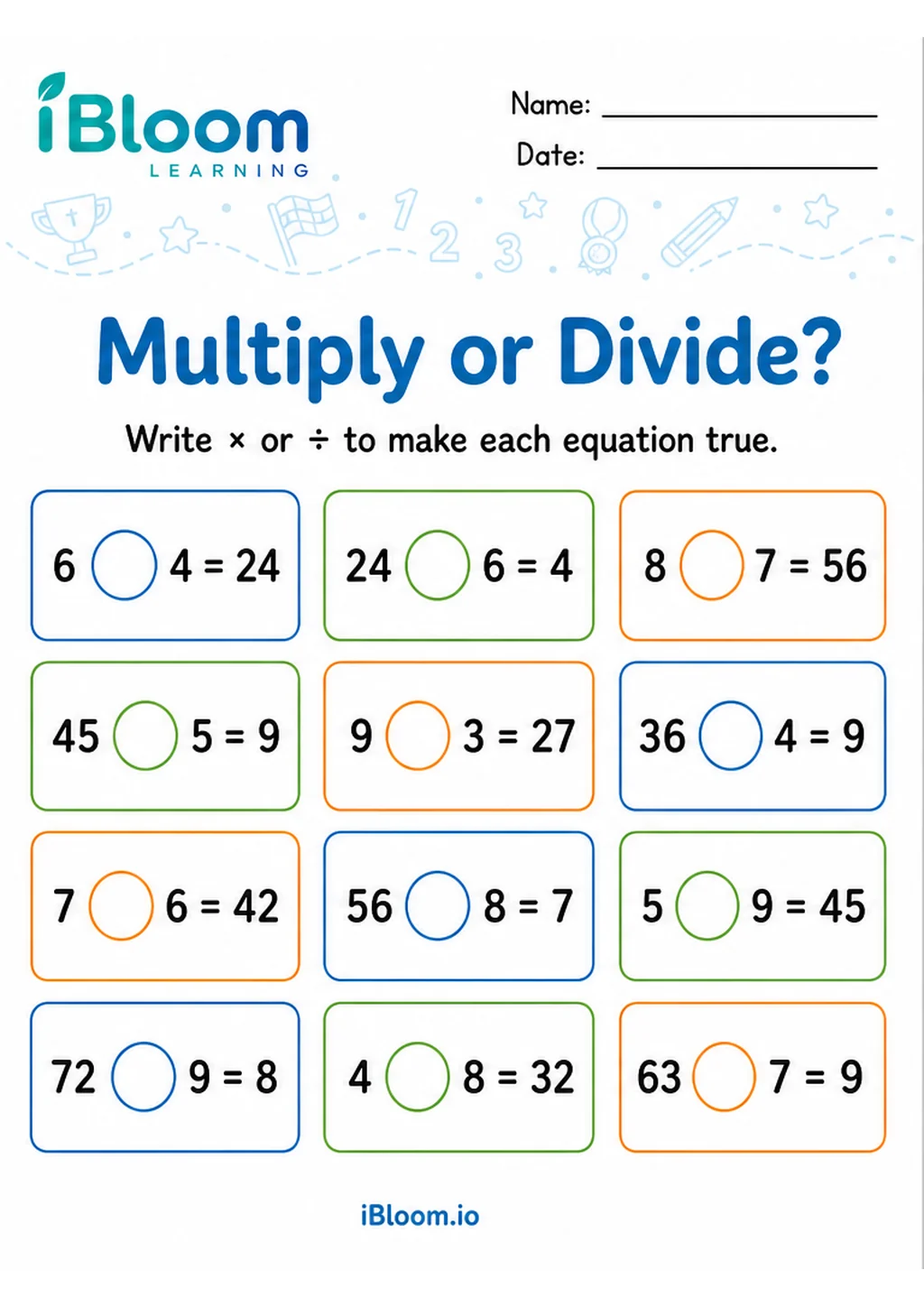
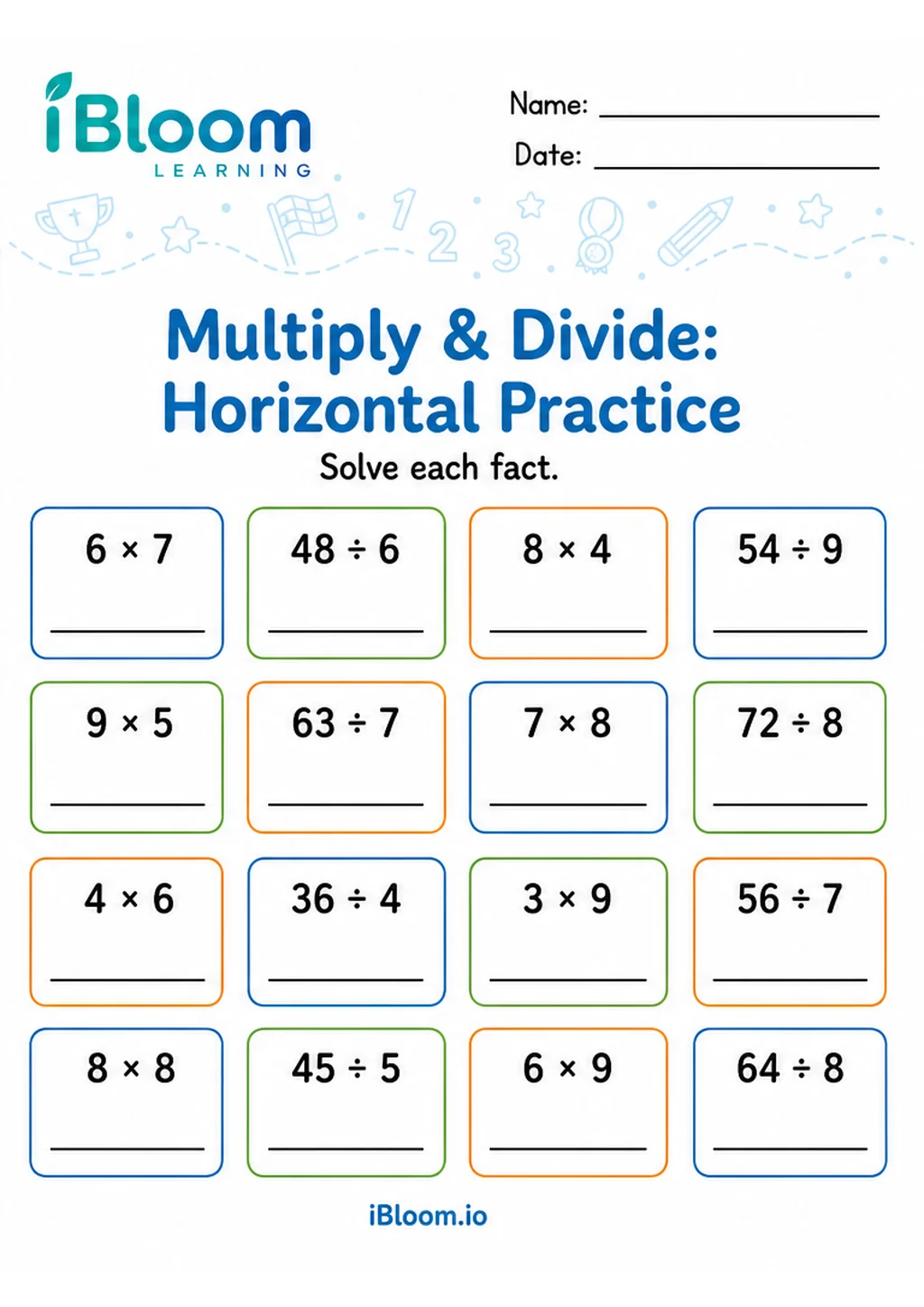
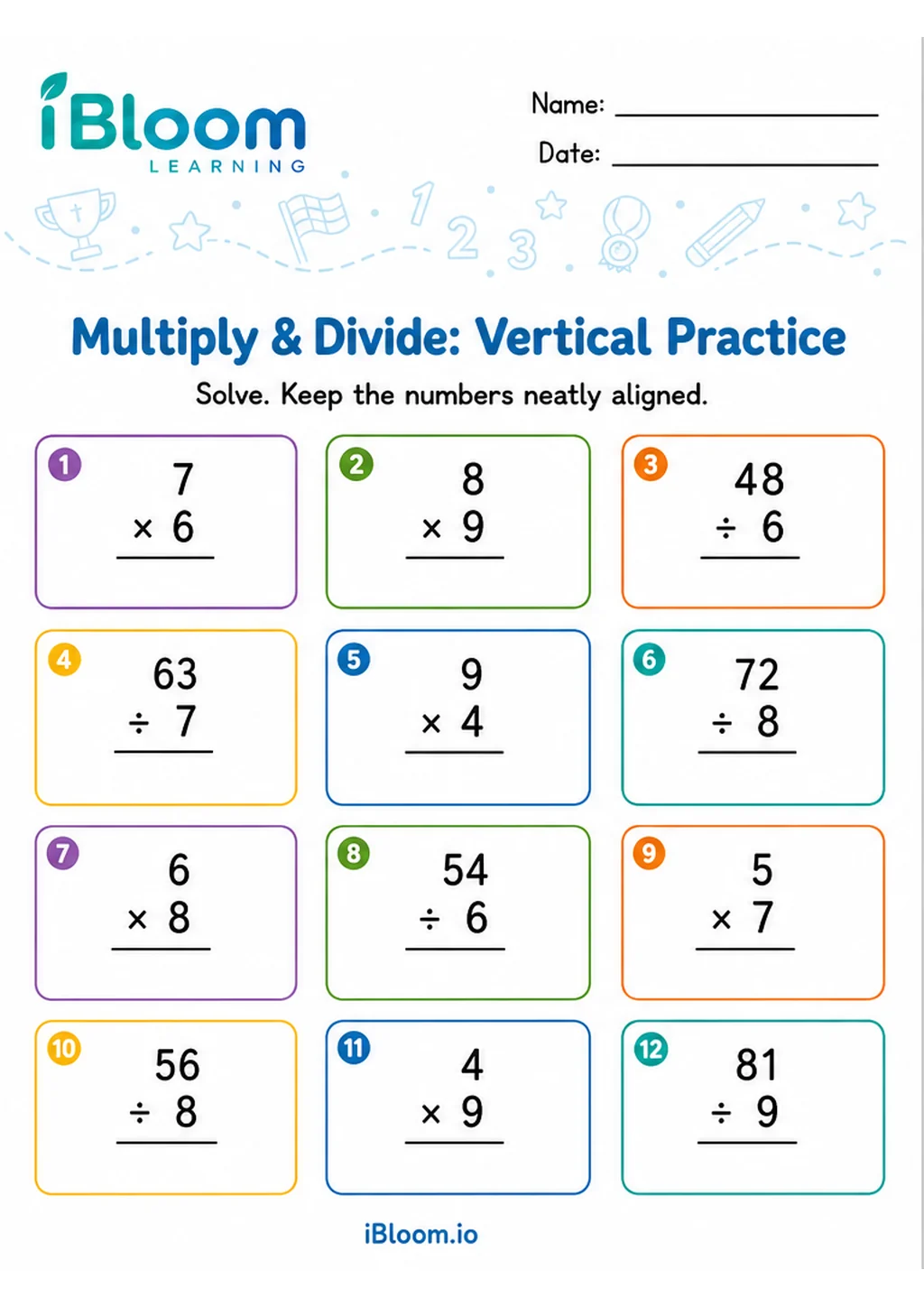
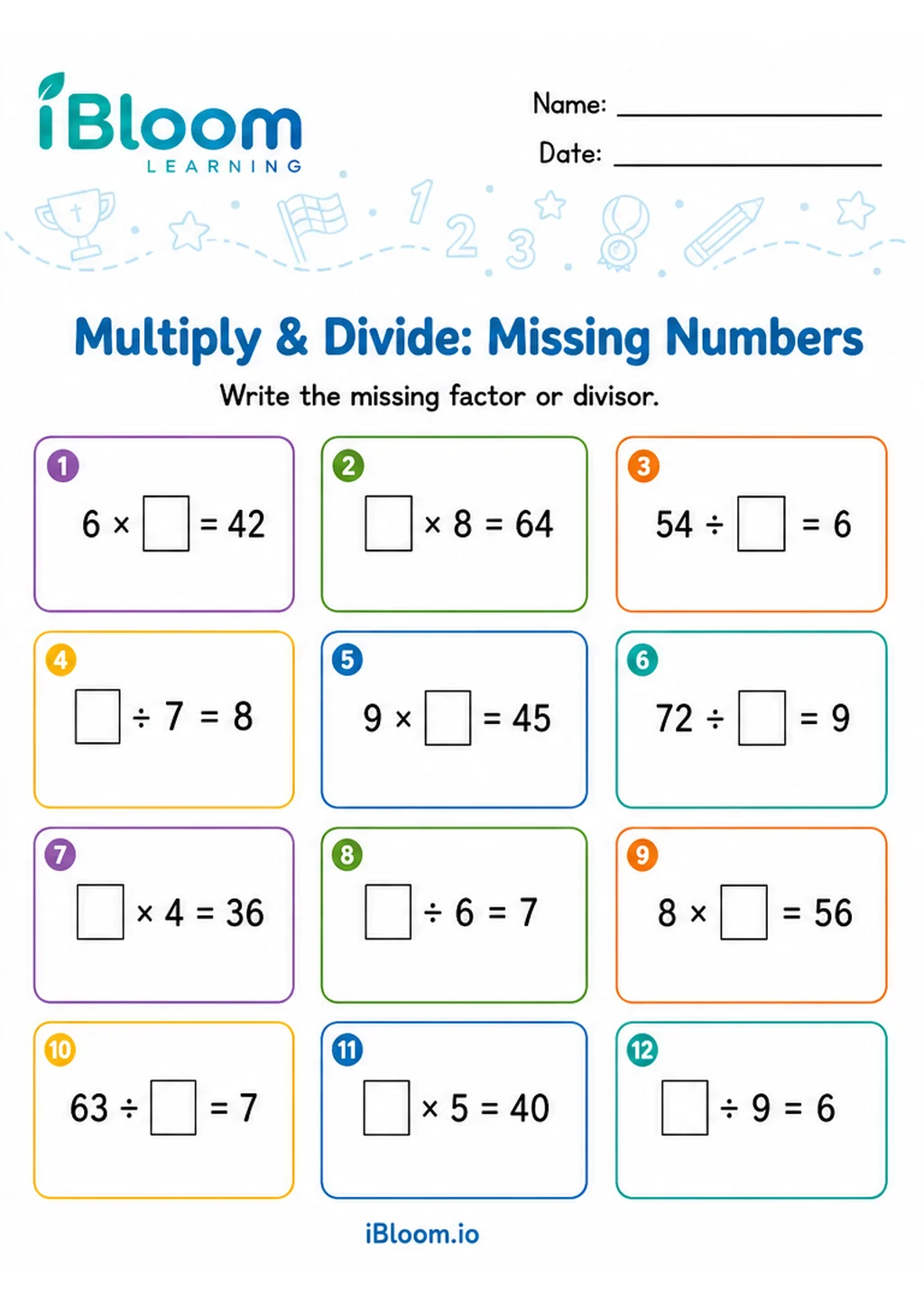
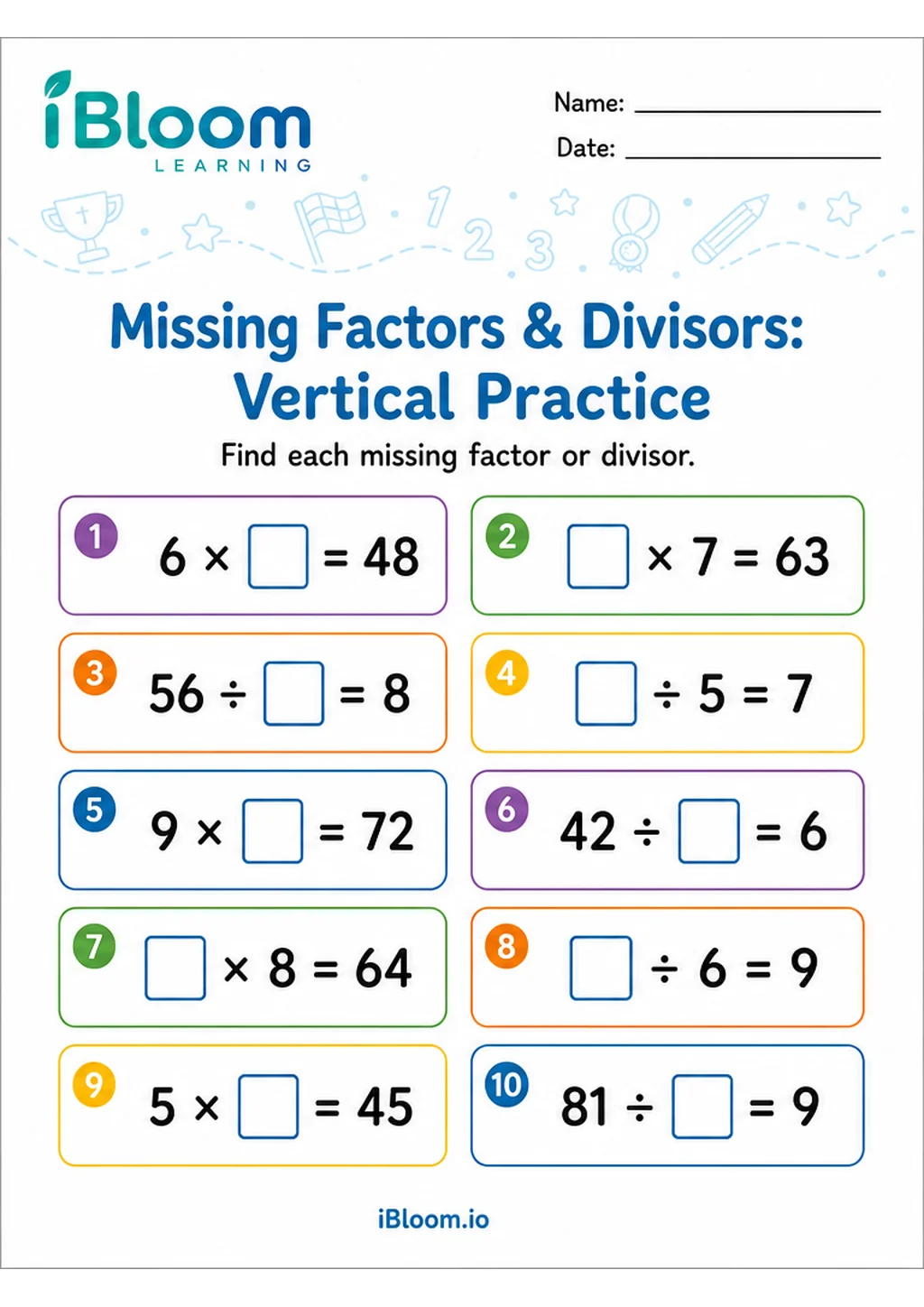
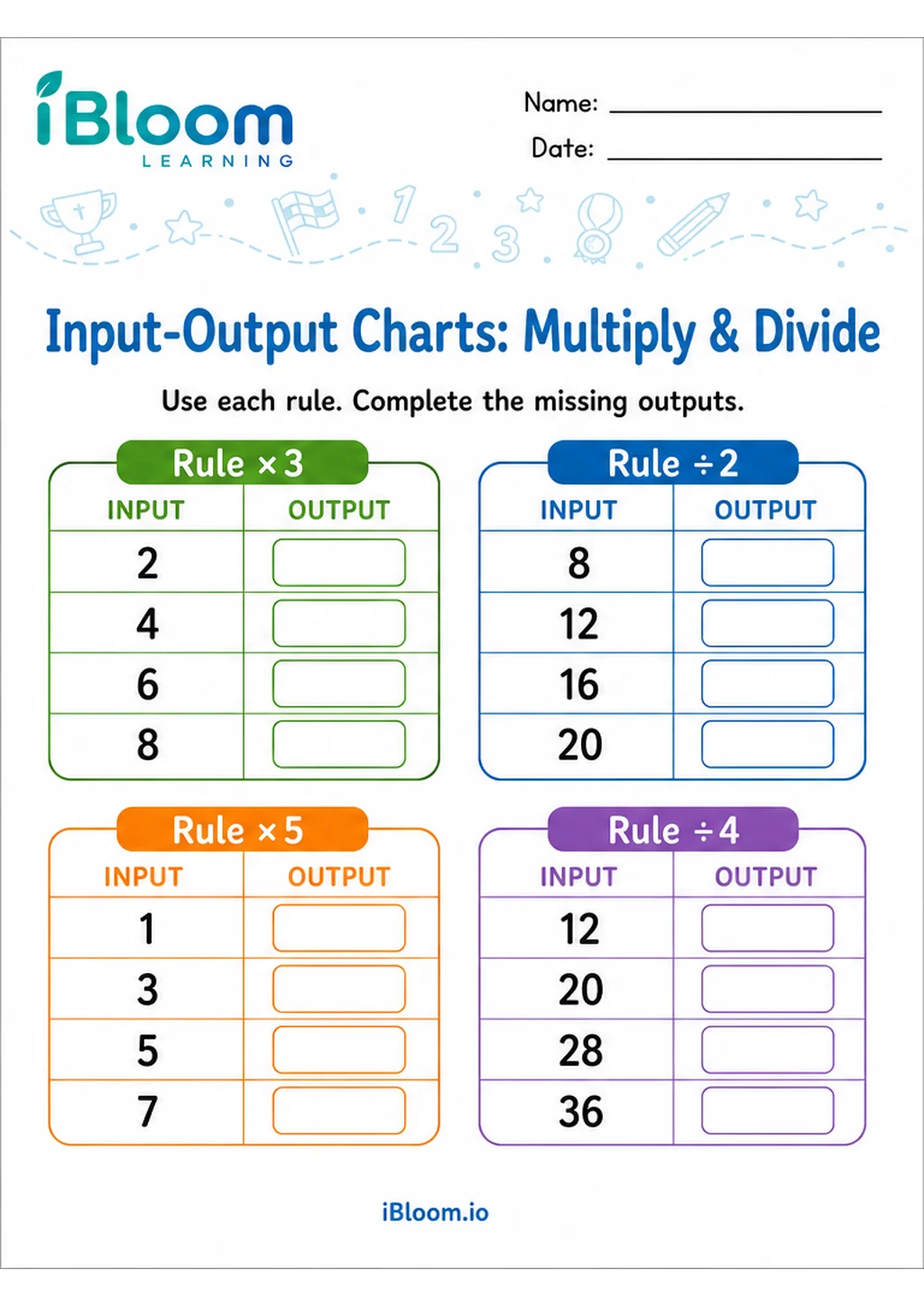
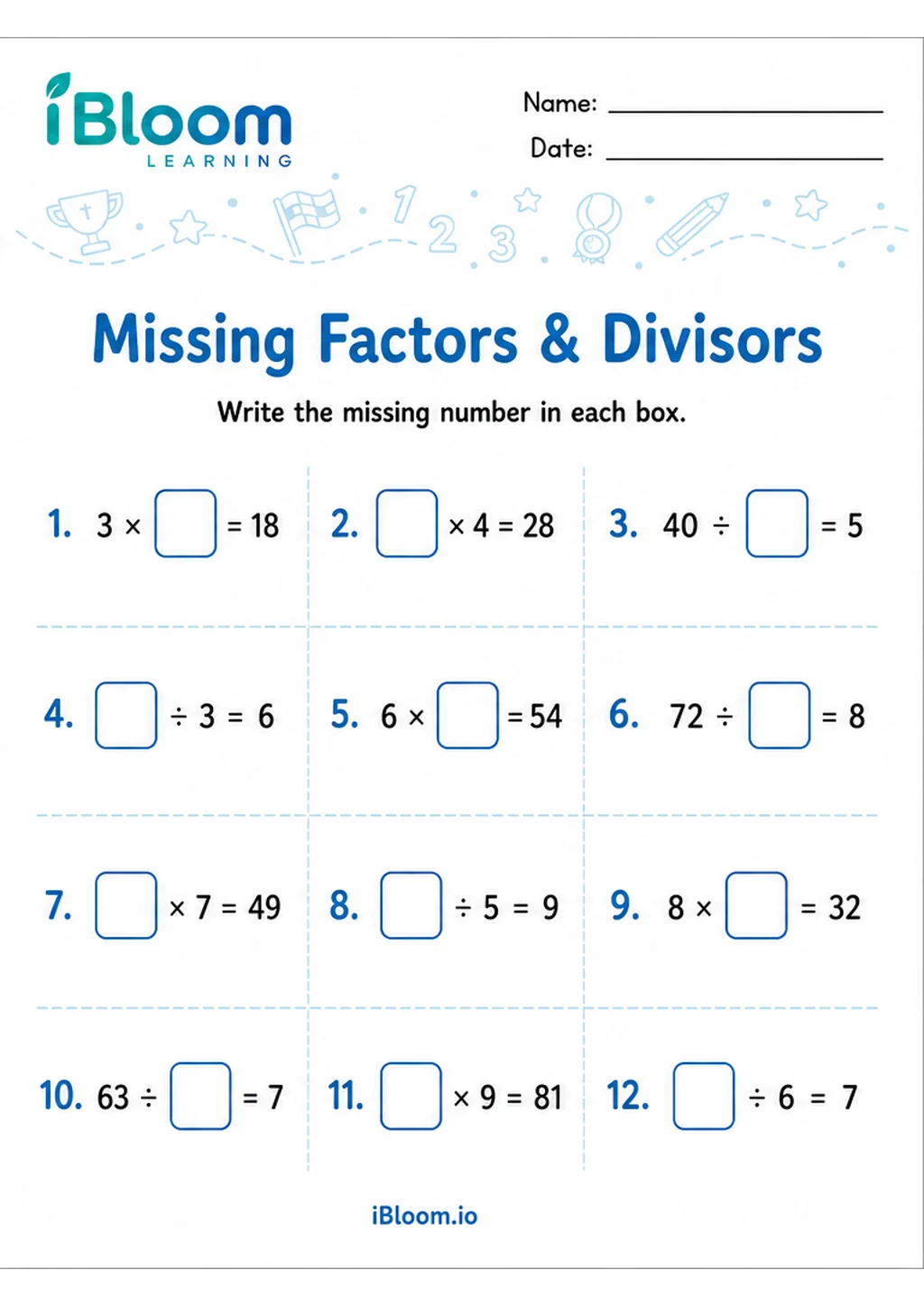
This printable Grade 3 worksheet gives learners 16 questions on multiplication and division fact families. The three parts move from a supported first step to independent practice, and a separate answer key makes it easy to check the work. Use the worked example to model the strategy before the learner begins. The practice supports Common Core 3.OA.C.7.
Aligned to 3.OA.B.5
What is a multiplication and division fact family?
A fact family uses the same three numbers in related multiplication and division equations. If 6 × 7 = 42, then 42 ÷ 6 = 7 and 42 ÷ 7 = 6.
- 16 × 7 = 42
- 2Use 42 and one factor to find the other: 42 ÷ 6 = 7.
How are the facts grouped?
Part A begins with multiplication and a related division fact. Part B completes related equations, and Part C applies the pattern to additional factor pairs. Each group keeps the product and factors connected.
How can learners check a division fact?
Multiply the quotient by the divisor. For example, 42 ÷ 6 = 7 checks because 7 × 6 = 42. Use the answer key after a group and check that all equations use the same three numbers.
How to use this worksheet
- 1Read the directions and name the skill being practiced.
- 2Work through the first part together, explaining the clue or step.
- 3Complete each question and keep the answers in order.
- 4Pause between parts to check the work with the key.
- 5For a missed item, redo the step and explain why the corrected answer fits.
Fact-family mistakes to catch
The mistake
Dividing the product by a number that is not one of its factors.
The fix
Check which two factors multiply to make the product.
The mistake
Changing the product when writing a related fact.
The fix
Keep the same three numbers throughout the family.
The mistake
Treating a division fact as factor ÷ product.
The fix
Start with the product, then divide by one factor.
Common Core alignment
Use multiplication and division relationships to solve facts within 100.
On this sheet: Learners use each product and its factors to complete related multiplication and division facts.
Show the official wordingHide the official wording
Fluently multiply and divide within 100, using strategies such as the relationship between multiplication and division (e.g., knowing that 8 × 5 = 40, one knows 40 ÷ 5 = 8) or properties of operations. By the end of Grade 3, know from memory all products of two one-digit numbers.
What to practice next
Make more practice
Further reading
Questions parents and teachers ask
What is a multiplication and division fact family?
It is a set of related equations made from the same two factors and their product. For 6, 7, and 42, the family includes 6 × 7 = 42, 42 ÷ 6 = 7, and 42 ÷ 7 = 6. The worksheet practices these relationships.
How many fact-family questions are included?
The printable has 16 questions arranged in three parts, covering four multiplication and division fact families. Learners fill in related facts, and a separate answer key shows the completed equations for checking. Ask the learner to explain one answer aloud, then use the printed key to check the result and the clue that supports it.
How can multiplication help with division?
Known multiplication facts help solve related division facts. For example, 6 × 7 = 42 shows that 42 ÷ 6 = 7. Use the same product and factors to find a missing value. This relationship appears across the four families in the practice.
What should learners do when a division answer is uncertain?
Use the related multiplication fact to check it. Multiply the proposed quotient by the divisor and see whether the product matches the starting number. For example, 8 × 5 = 40 checks 40 ÷ 8 = 5. Ask the learner to explain one answer aloud, then use the printed key to check the result and the clue that supports it.
Does the worksheet teach vertical computation?
The original page asked learners to rewrite single-digit facts vertically. The template’s answer spaces work better for short equations, so this replacement presents related equations horizontally and keeps the focus on multiplication and division fact families. Ask the learner to explain one answer aloud, then use the printed key to check the result and the clue that supports it.