
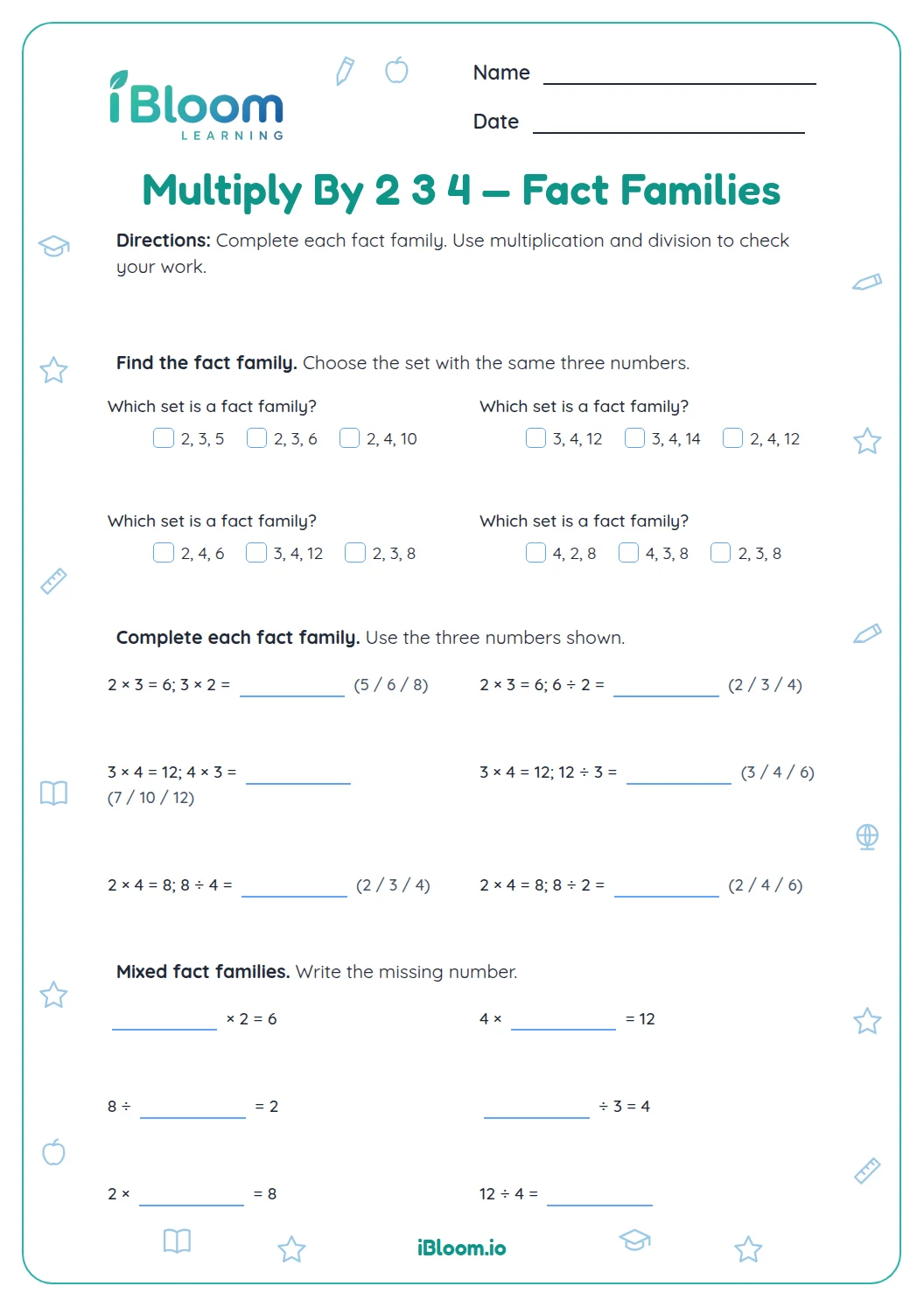



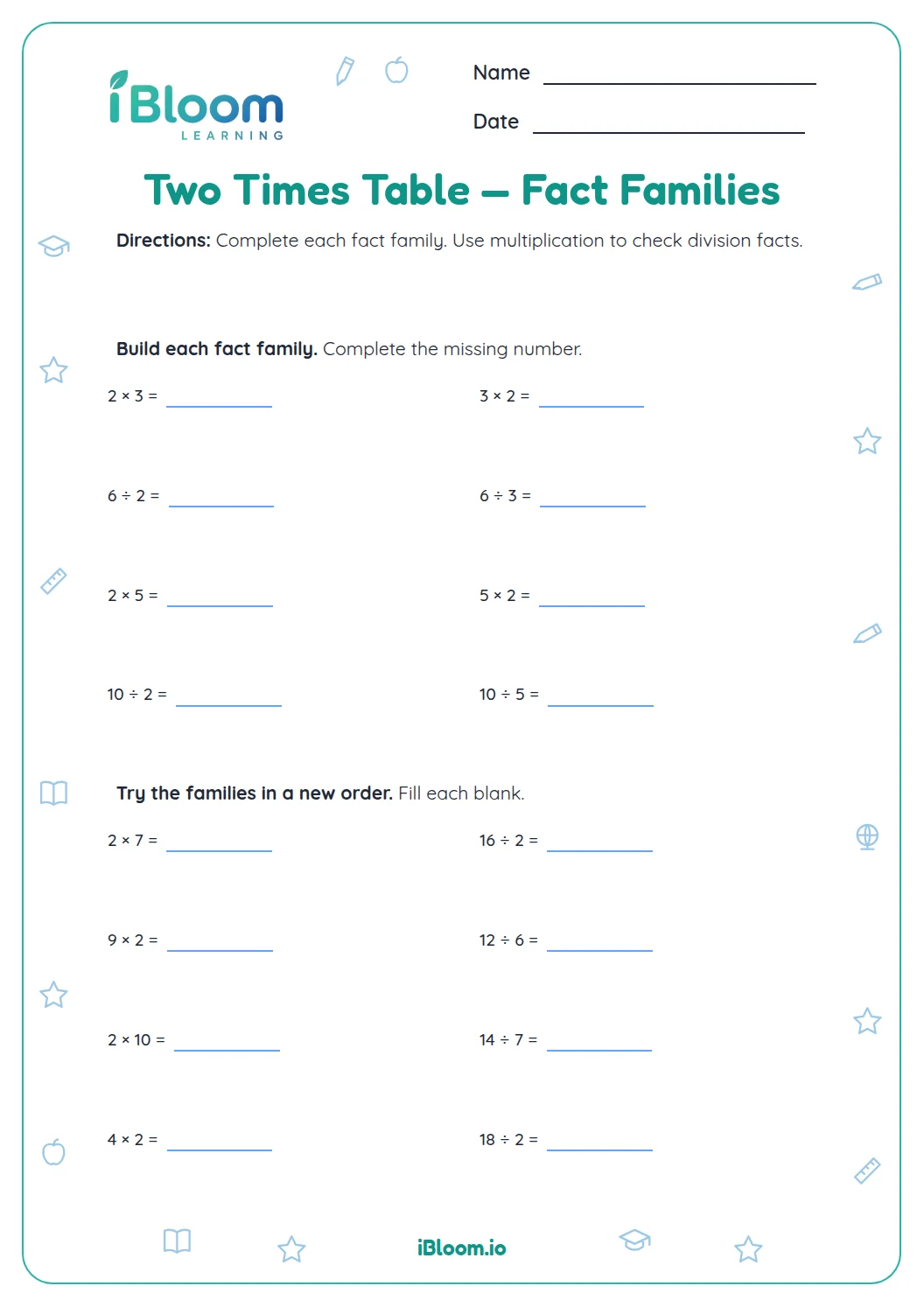
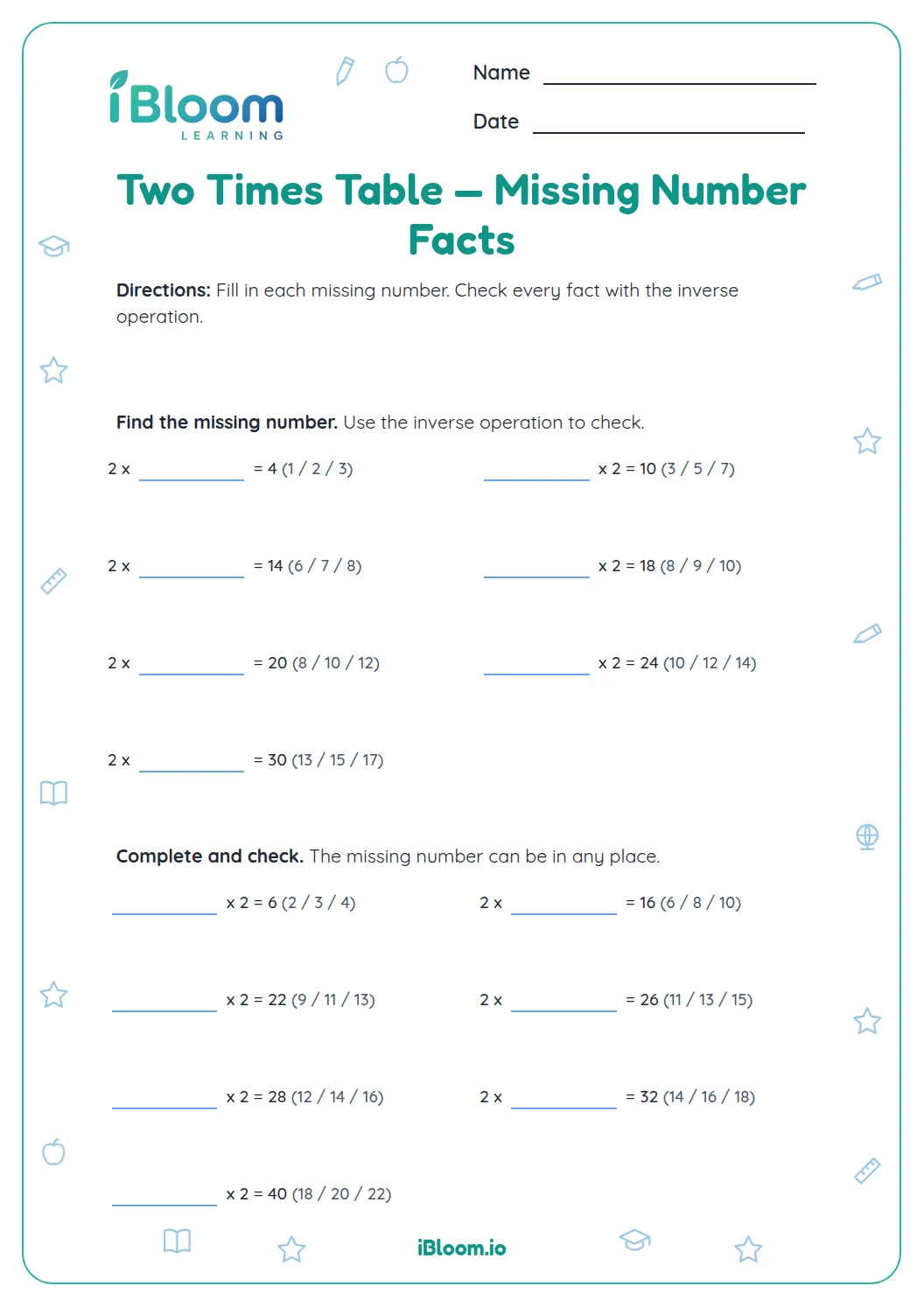



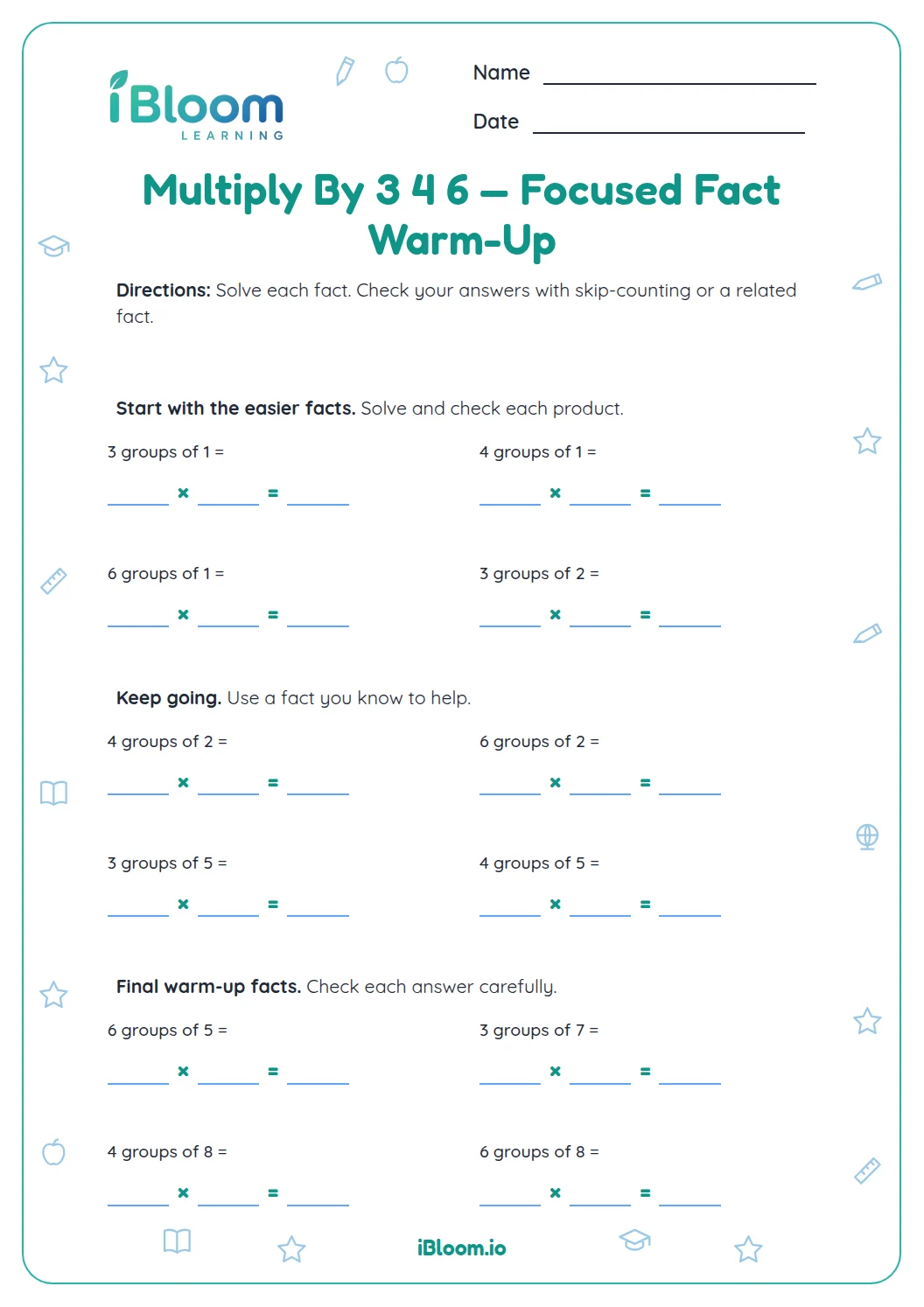


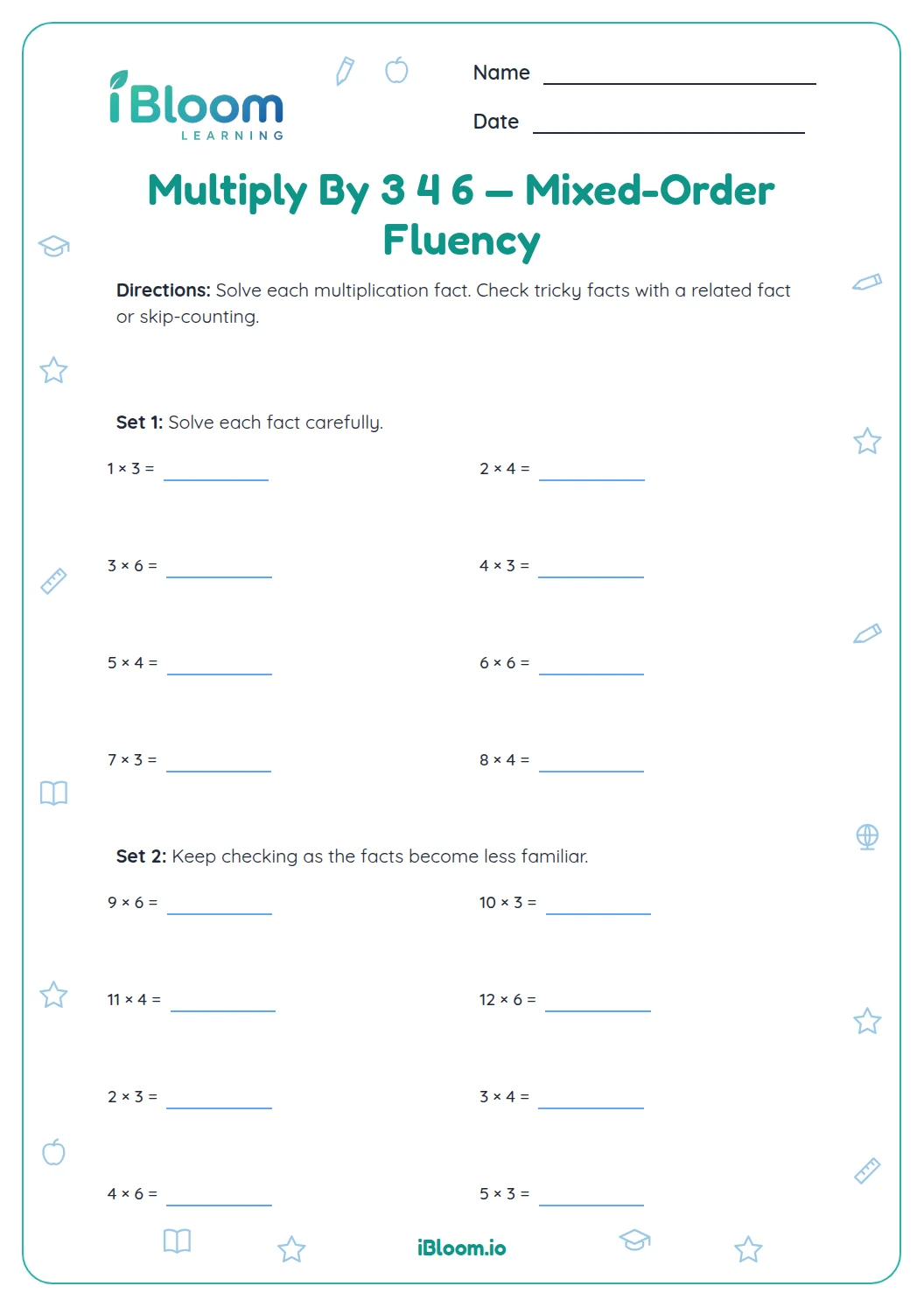
About this worksheet
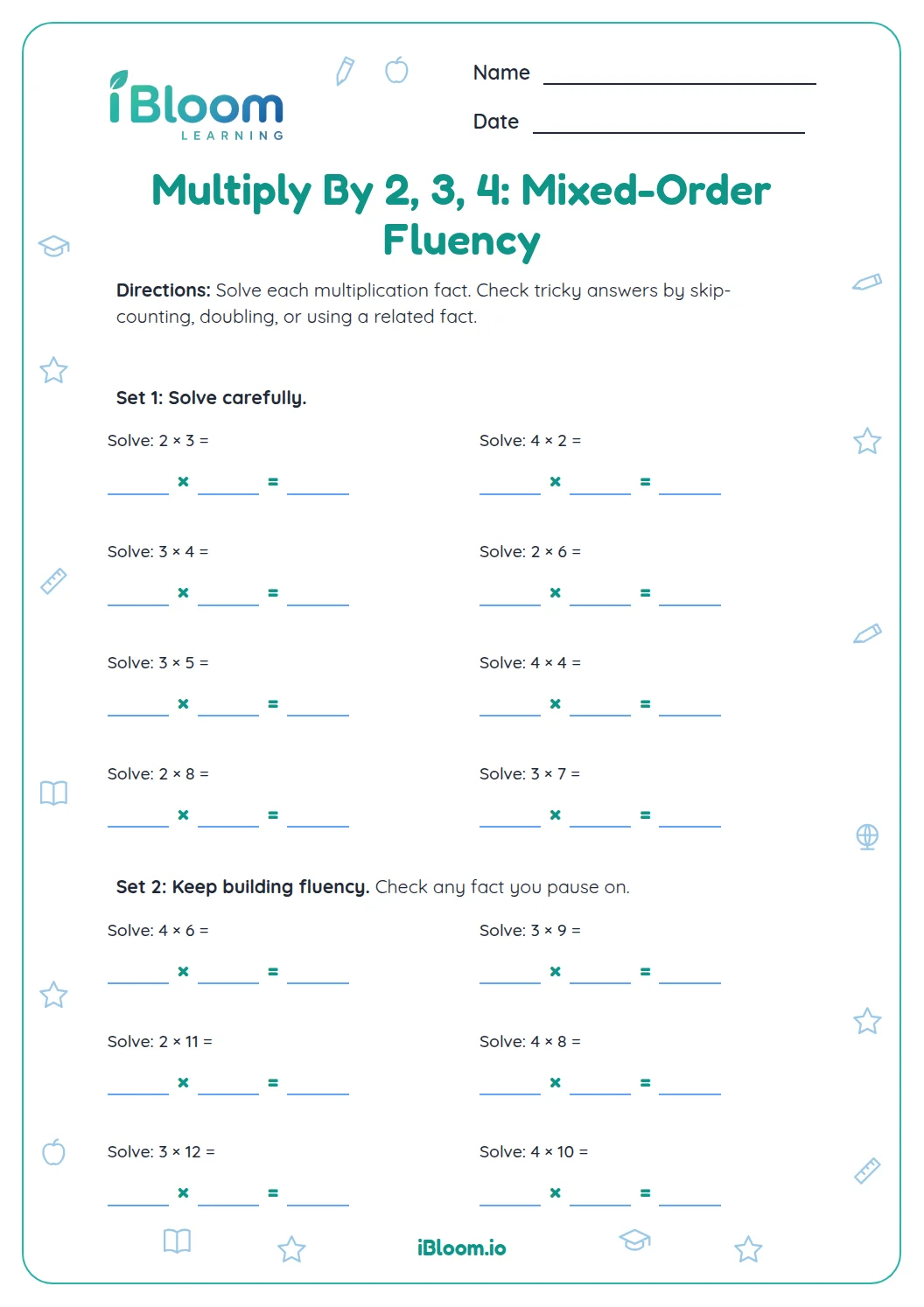
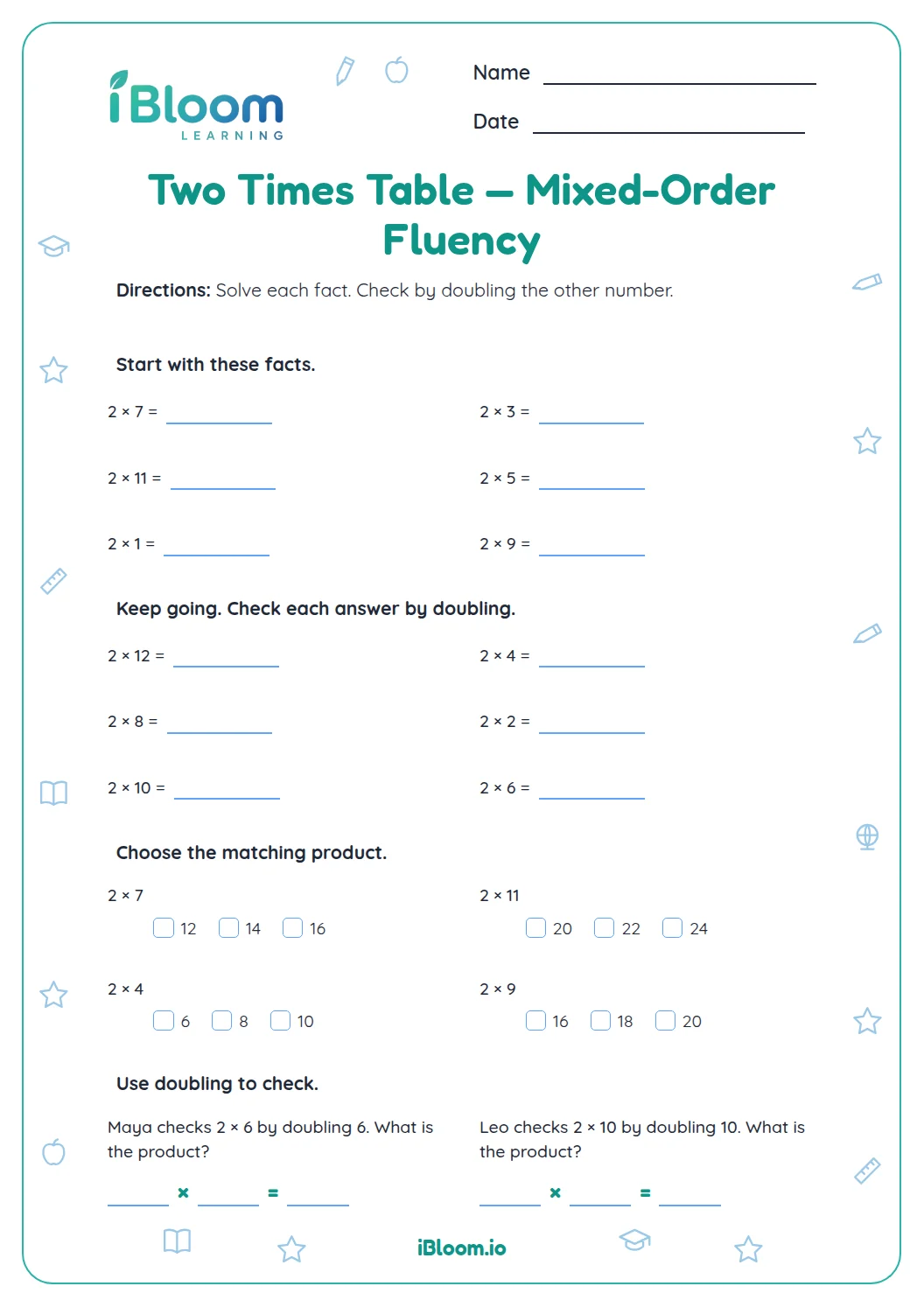
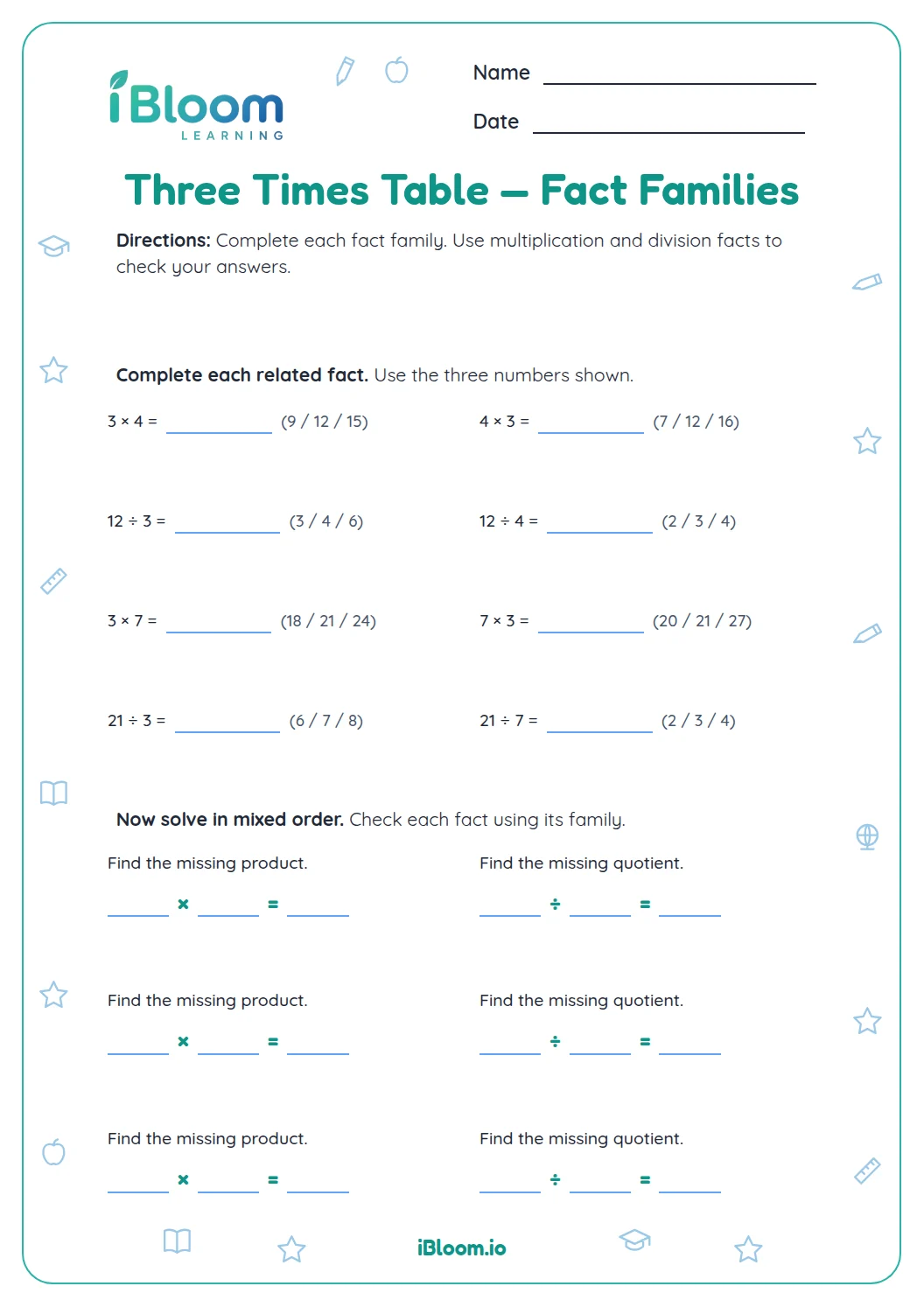
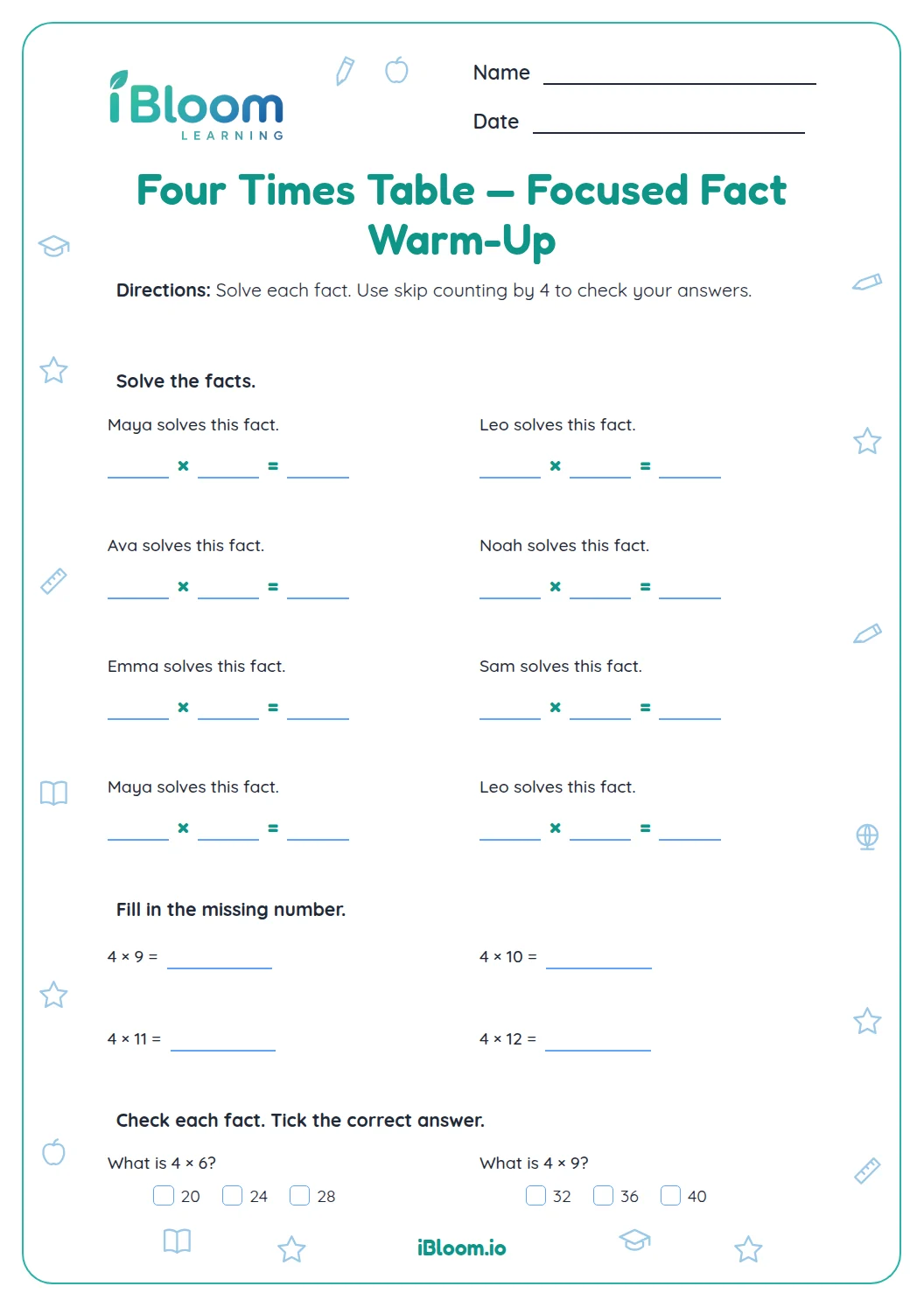
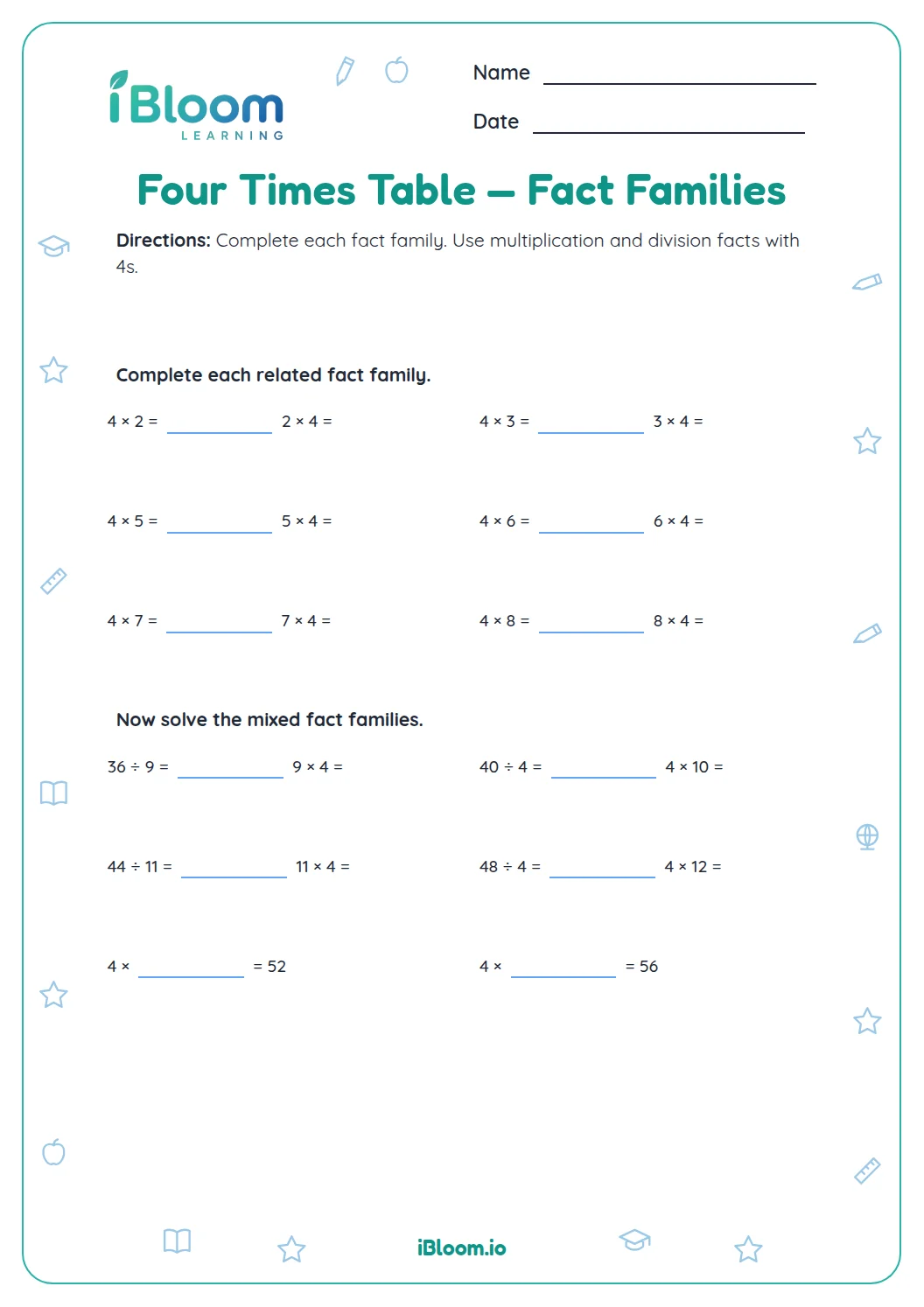
This free printable multiplication drill gives Grade 3 students and Grade 4 reviewers 30 facts using 2, 3 and 4. Part A groups twelve facts by multiplier; Part B mixes eighteen more facts so students must check each multiplication sign and factor. The practice supports Common Core 3.OA.C.7, building fluent multiplication within 100. Children can complete both rounds without timing, or time Part B after working through Part A carefully. A separate answer key gives every product. Use the results to select a few facts for another short practice session.
Aligned to 3.OA.C.7
What is in each practice round?
Part A gives four facts each for multiplying by 2, 3 and 4. Part B switches among the same three multipliers in mixed order. Together, the two rounds include every fact from 2 × 0 through 2 × 9, 3 × 0 through 3 × 9, and 4 × 0 through 4 × 9.
Every answer is a product. There are no missing factors or division problems, so a timed attempt measures one consistent task. The optional timing instruction applies to Part B.
How can a known fact help with 4 × 7?
Multiplying by 4 can be done by doubling twice. For question 11, first double seven to get fourteen, then double fourteen to get twenty-eight. Once the product feels familiar, children can recall it directly.
- 14 × 7 = ___
- 22 × 7 = 14
- 3Double 14: 14 + 14 = 28
- 4Answer: 28
How should we use the optional timer?
Let the child choose whether to time Part B. Start when the child begins question 13 and stop after question 30; an adult can note the elapsed time on the back. Leave the timer off while explaining facts or correcting errors.
Compare a later attempt with the child’s own earlier work. Record the number correct alongside any time, and look for accurate answers before faster ones. A repeated sheet measures familiarity with these particular facts.
How to use this worksheet
- 1Review doubling with a small example such as 2 × 5 = 10.
- 2Complete Part A and check its twelve products.
- 3Choose whether to use a timer for Part B before starting question 13.
- 4Finish the mixed round, then check all eighteen answers with the key.
- 5Rebuild two missed facts with equal groups or doubling and say each complete equation.
Mistakes to notice and how to help
The mistake
Adding the factors, so 3 × 6 becomes 9.
The fix
Say “three groups of six” and total 6 + 6 + 6 = 18.
The mistake
Writing 4 for 4 × 0.
The fix
Four groups with nothing in them still contain zero items.
The mistake
Confusing 4 × 7 with 4 × 6.
The fix
Start with 4 × 6 = 24 and add one more group of four to get 28.
Common Core alignment
Recall products with 2, 3 and 4 using multiplication strategies.
On this sheet: Both rounds practice products of one-digit factors with 2, 3 and 4.
Show the official wordingHide the official wording
Fluently multiply and divide within 100, using strategies such as the relationship between multiplication and division (e.g., knowing that 8 × 5 = 40, one knows 40 ÷ 5 = 8) or properties of operations. By the end of Grade 3, know from memory all products of two one-digit numbers.
What to practice next
Make more practice
Further reading
Questions parents and teachers ask
Which facts are on this drill?
The sheet has 30 multiplication facts using 2, 3 and 4 as the first factor. Each table includes every second factor from zero through nine. Part A groups twelve facts by table, while Part B mixes eighteen facts, requiring students to pay attention to each new equation.
Does my child have to use a timer?
No, both rounds can be completed without a timer. If your child wants a timed round, use Part B after checking Part A. Keep the time as a personal record, alongside the number correct, and use untimed practice to work on facts that still need a strategy.
Why are zero and one included?
Zero and one help children check the meaning of multiplication. In 3 × 0, each of three groups contains nothing, so the product is zero. In 4 × 1, four groups of one make four. These facts reward reading the equation carefully instead of guessing a pattern.
What can I do when my child forgets a four fact?
Try doubling twice, as the worked example does for 4 × 7. Double seven to make fourteen, then double fourteen to make twenty-eight. Say the full equation afterward. On another attempt, ask whether the product can be remembered before rebuilding it with the same strategy.
How do I check and reuse the worksheet?
Use the separate answer key to check each product after the round is finished. Pick two or three missed facts for brief oral practice, then return to a clean copy later. Compare correct answers first; record a time only when the child chooses to use a timer.