


About this worksheet
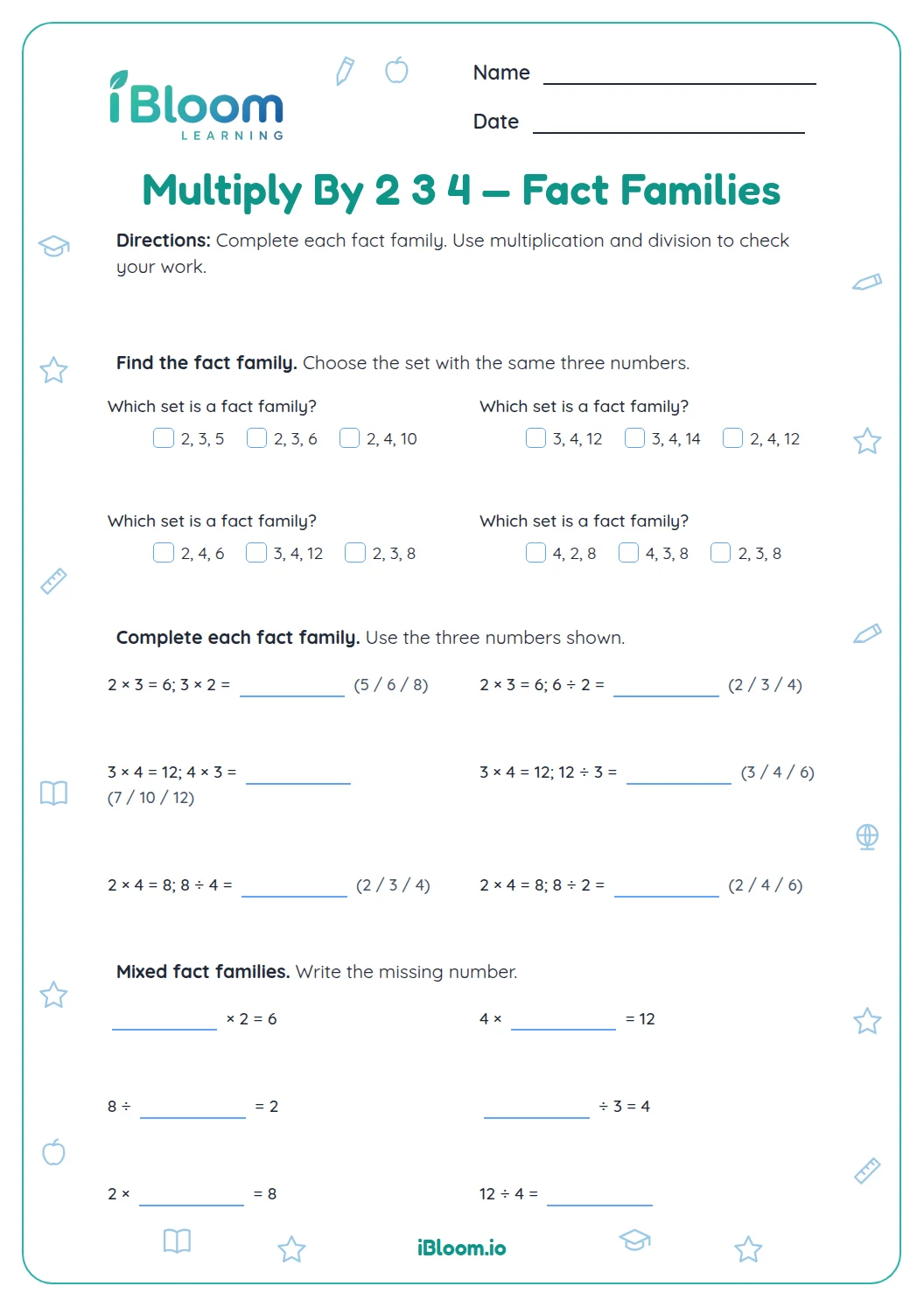
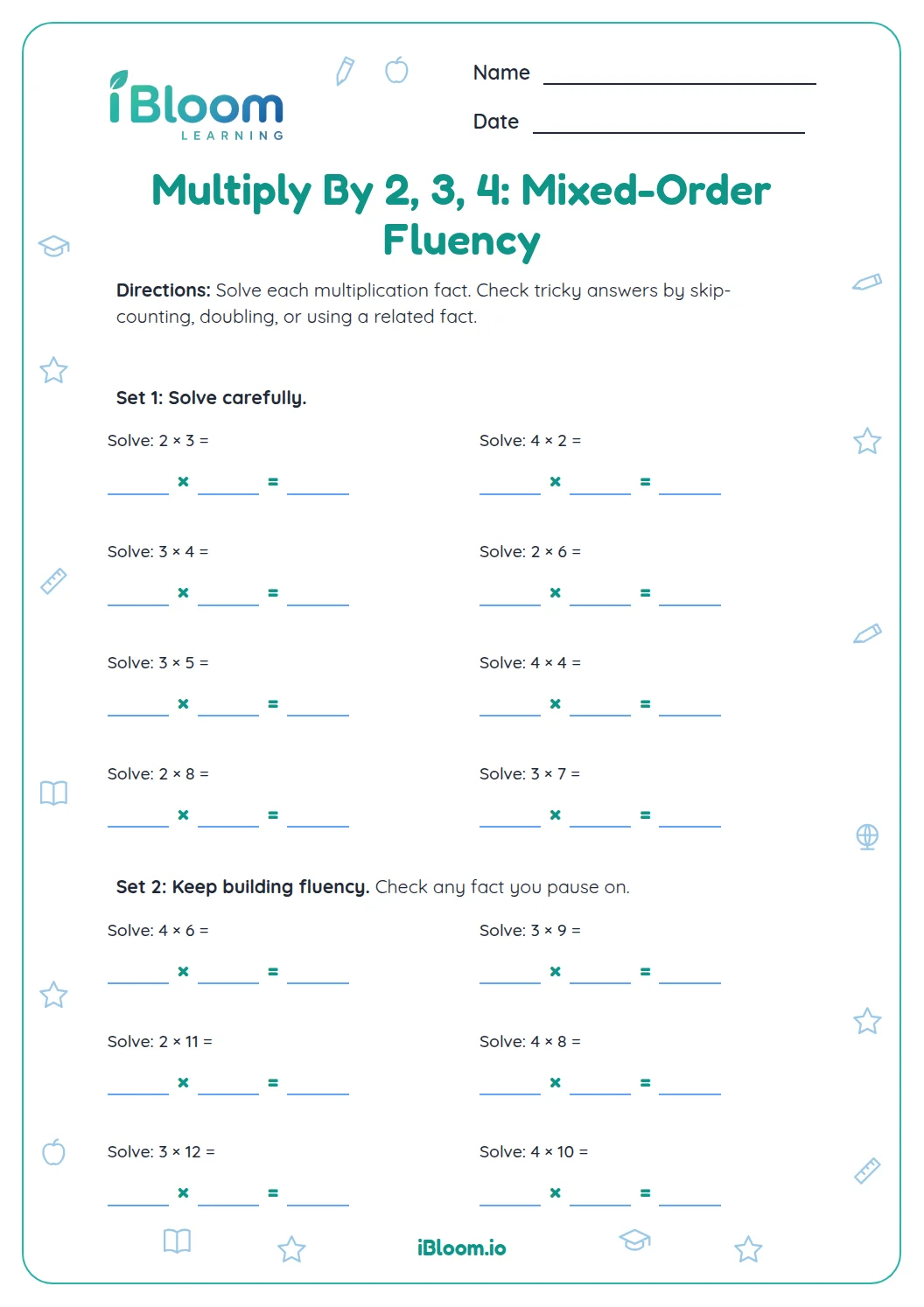
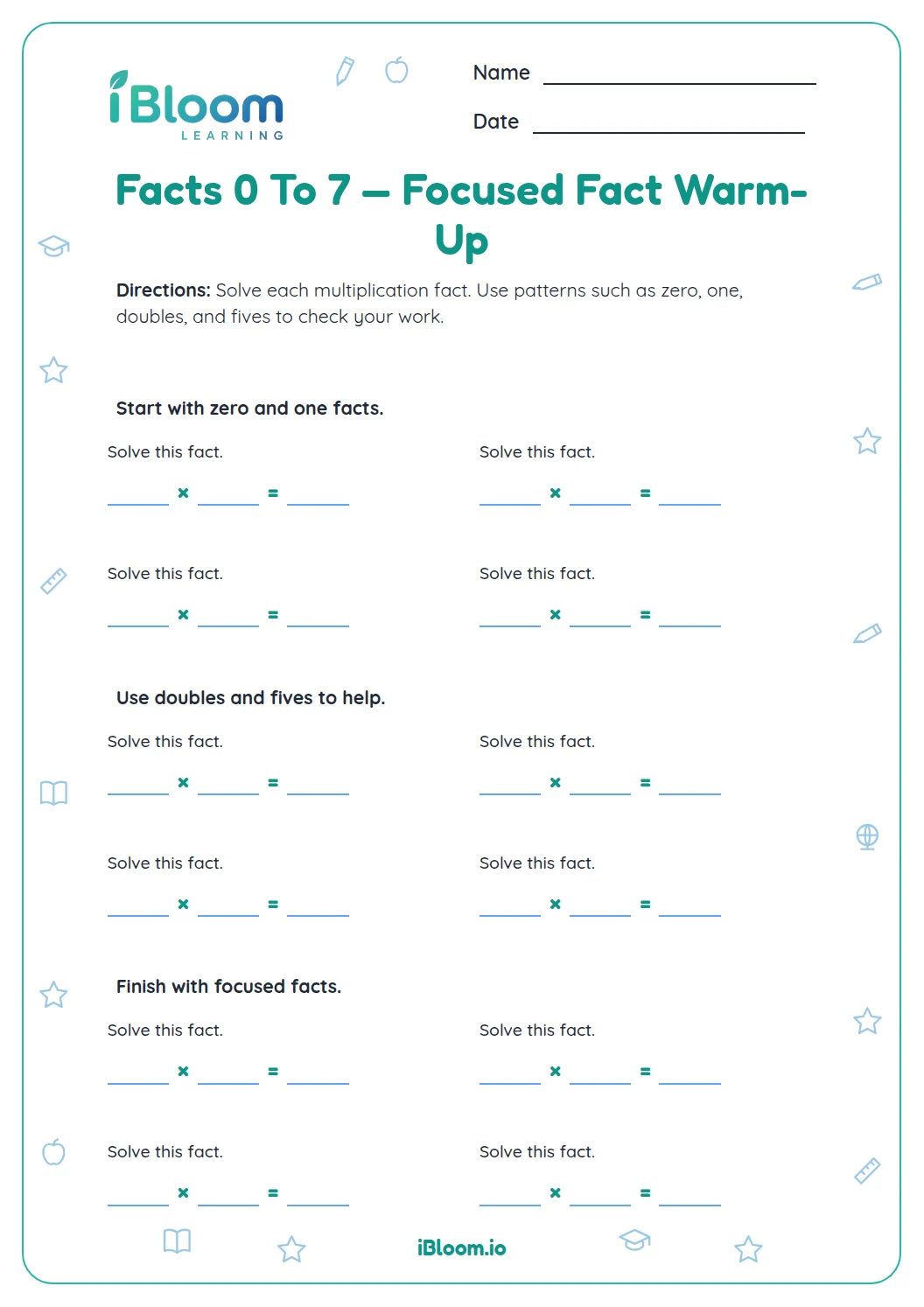
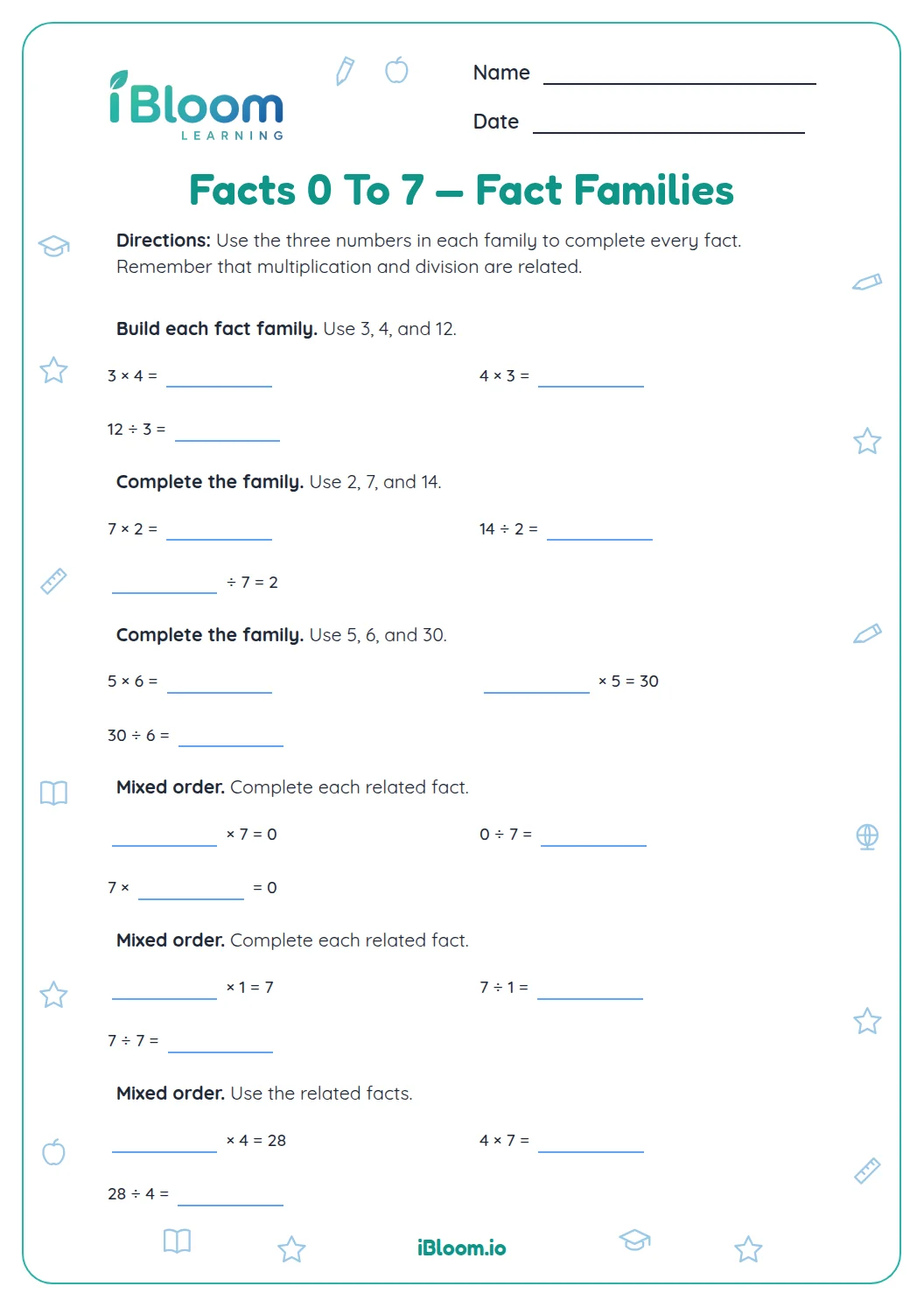
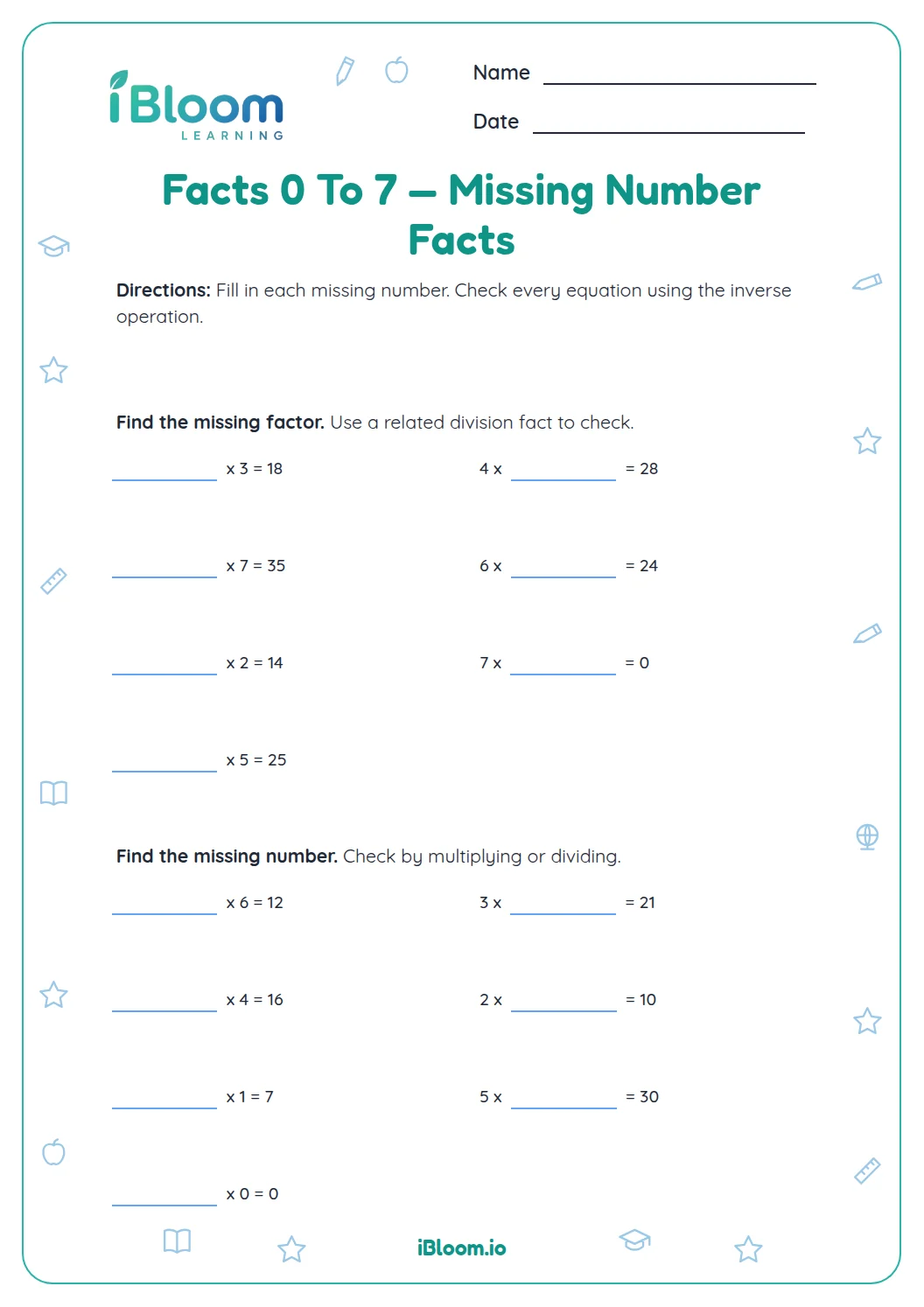
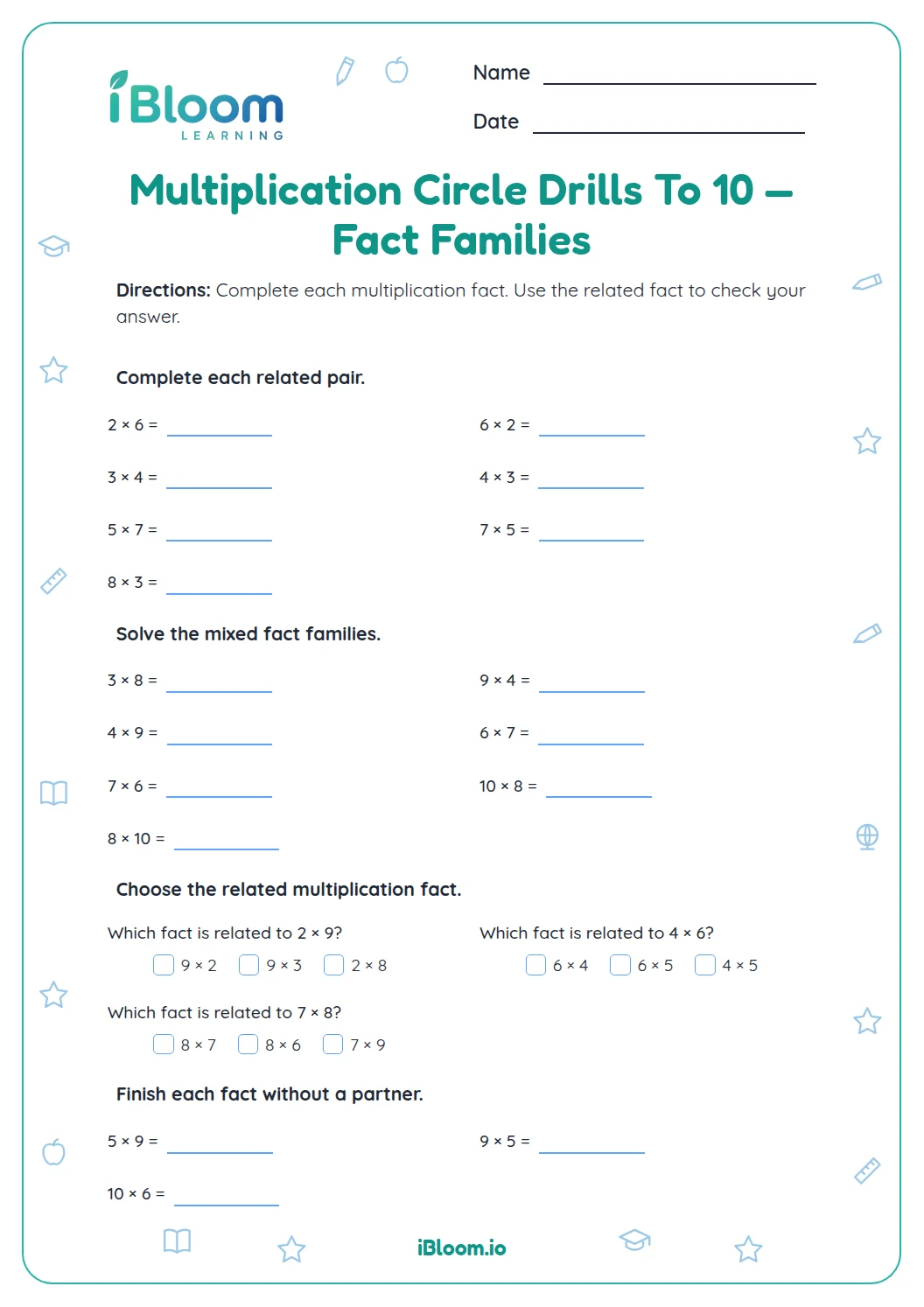
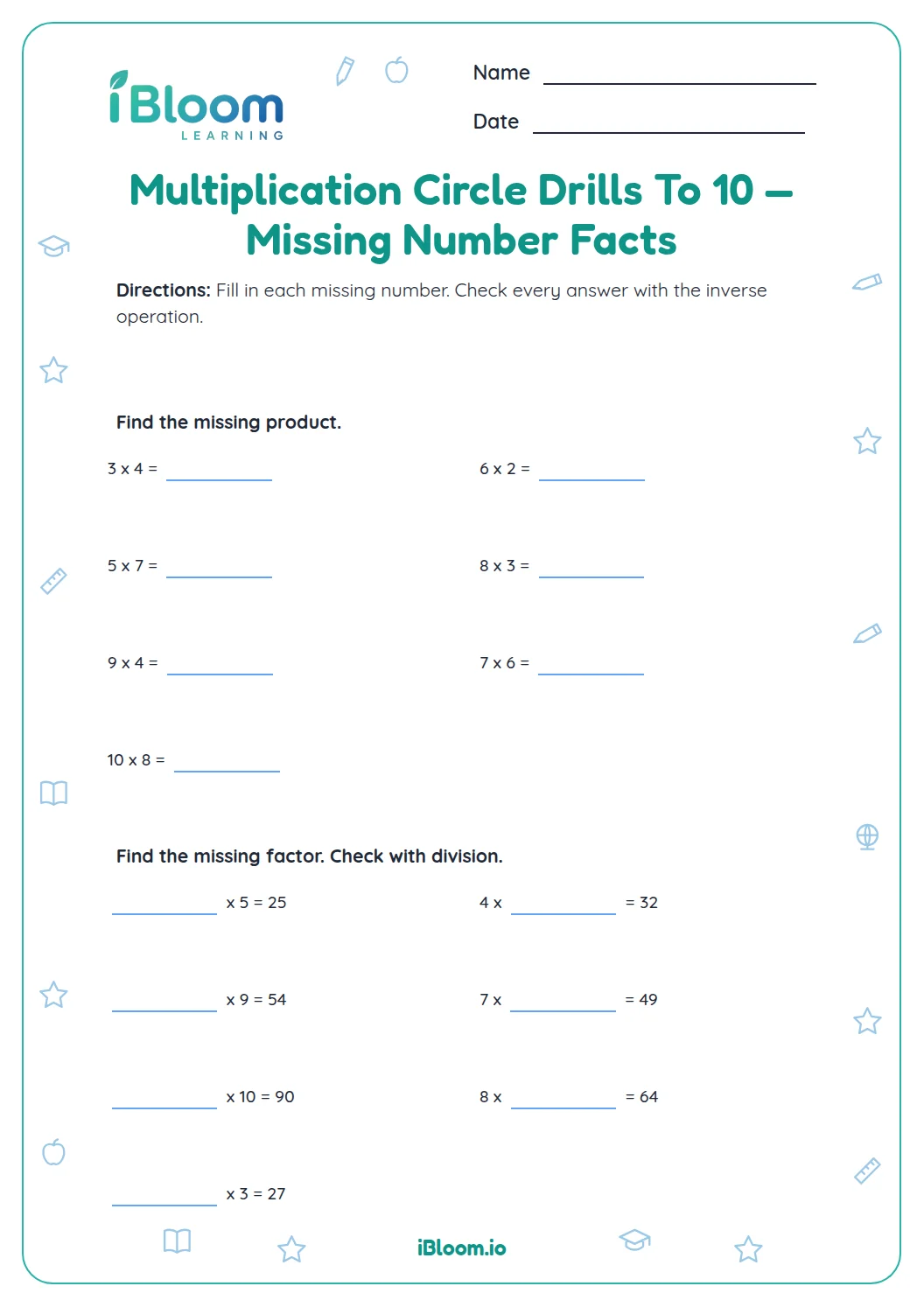
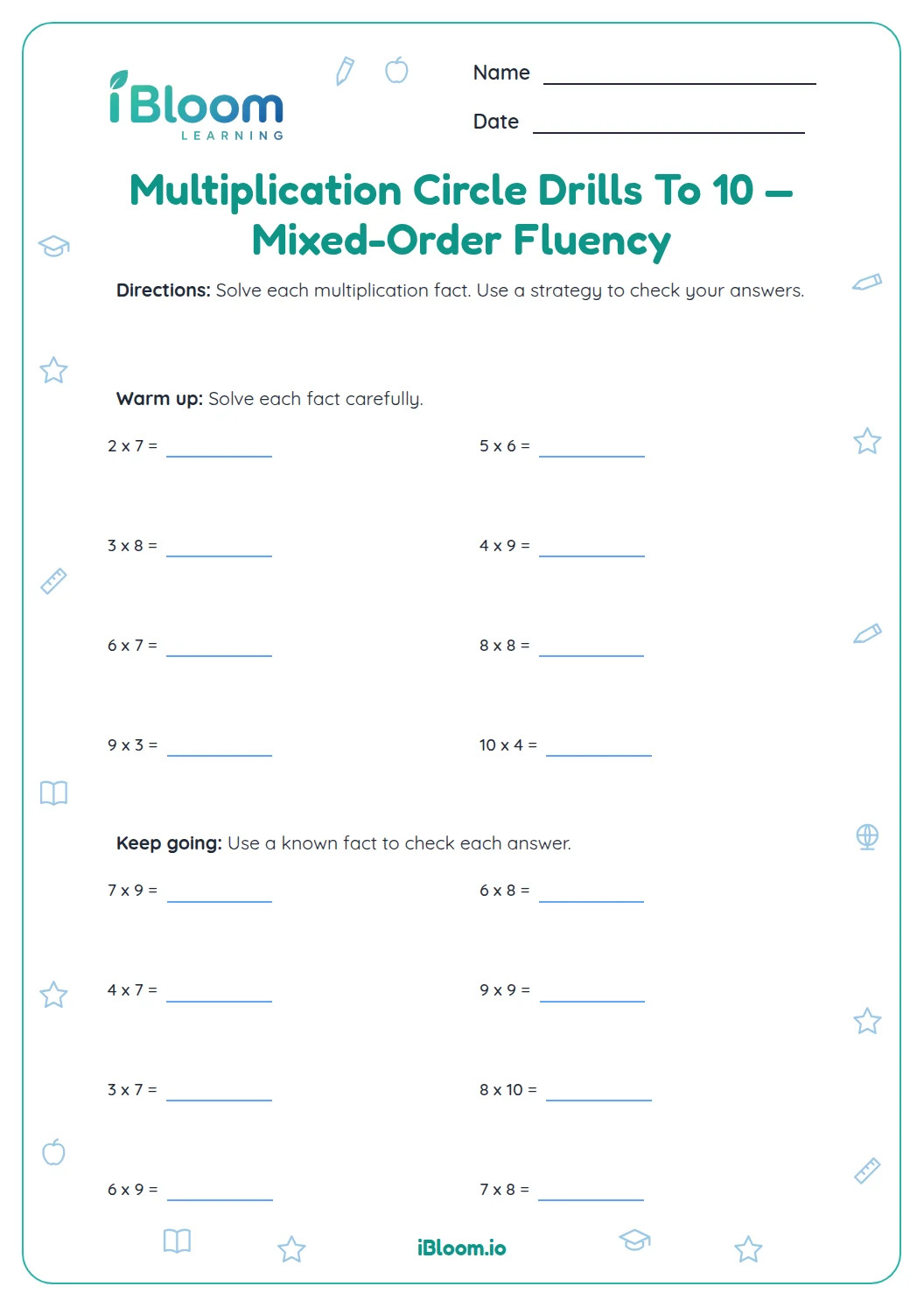
This printable warm-up practices the multiplication facts shown on the source sheet: factors of 2, 3, and 4. Students begin with six facts for each factor, using doubles for 2, equal groups for 3, and doubling twice for 4. The 18 products use one-digit factors and fit Grade 3 fluency practice, with a short Grade 4 review option. A separate answer key is included. The work aligns with CCSS 3.OA.C.7.
Aligned to 3.OA.C.7
What strategies help with these facts?
For a fact with 2, double the other factor. For a fact with 3, count equal groups of three or skip-count. For a fact with 4, double the other factor and double the result again.
For example, 4 × 6 can be found as 2 × 6 = 12, then 12 doubled is 24.
How is the practice organized?
Part A practices six facts with 2. Part B has six facts with 3, and Part C has six facts with 4. Each question asks for one product, and no timer is needed.
How can students build accurate recall?
Use a strategy when a product is not immediate, then say the fact and product together. Revisit facts that needed counting. The goal is accurate recall supported by understanding equal groups and doubles.
How to use this worksheet
- 1Work through the six facts in each part.
- 2For a 2 fact, double the other factor.
- 3For a 3 fact, use equal groups or skip-counting.
- 4For a 4 fact, double twice.
- 5Check products with the separate answer key.
Check the work
The mistake
Adding the factors instead of multiplying.
The fix
Picture equal groups and count the total in all groups.
The mistake
Stopping after one double for a 4 fact.
The fix
Double the other factor, then double that result once more.
The mistake
Losing the count when skip-counting by threes.
The fix
Say each multiple clearly and stop after the number of groups in the fact.
Common Core alignment
This sheet gives focused practice with the listed skill.
Build fluency with products of one-digit factors.
On this sheet: The 18 items practice products with 2, 3, and 4 as one factor.
Show the official wordingHide the official wording
Fluently multiply and divide within 100, using strategies such as the relationship between multiplication and division (e.g., knowing that 8 × 5 = 40, one knows 40 ÷ 5 = 8) or properties of operations. By the end of Grade 3, know from memory all products of two one-digit numbers.
What to practice next
Make more practice
Further reading
Questions parents and teachers ask
Which multiplication facts does the worksheet include?
The worksheet has six products with 2, six with 3, and six with 4. The other factor ranges from 1 through 7, so students practice a set of one-digit facts without moving beyond the focused tables named in the title.
How can doubling help with the 4s?
A group of four is two groups of two, so double the other factor and then double again. For 4 × 6, first find 2 × 6 = 12, then double 12 to get 24. This connects the fact to a strategy.
How can I solve a 3s fact I have not memorized?
Think of equal groups or skip-count by threes. For 3 × 5, say 3, 6, 9, 12, 15, or think of five groups containing three objects each. Then connect the strategy to the multiplication sentence. A skip-counting line or groups drawn on scrap paper can make the pattern easier to track.
Is the worksheet timed?
No. The sheet has no timer and asks students to solve each fact at a comfortable pace. Accuracy and a useful strategy come first; students can work toward quicker recall after they can explain or check a product. Students can complete the two parts in order and use the key afterward.
How many questions are on the warm-up?
There are 18 questions across three parts: six facts with 2, six with 3, and six with 4. The answer key is separate, so students can complete the three groups before checking their products. Students can solve the facts in order and then check all 18 products against the key.