




About this worksheet
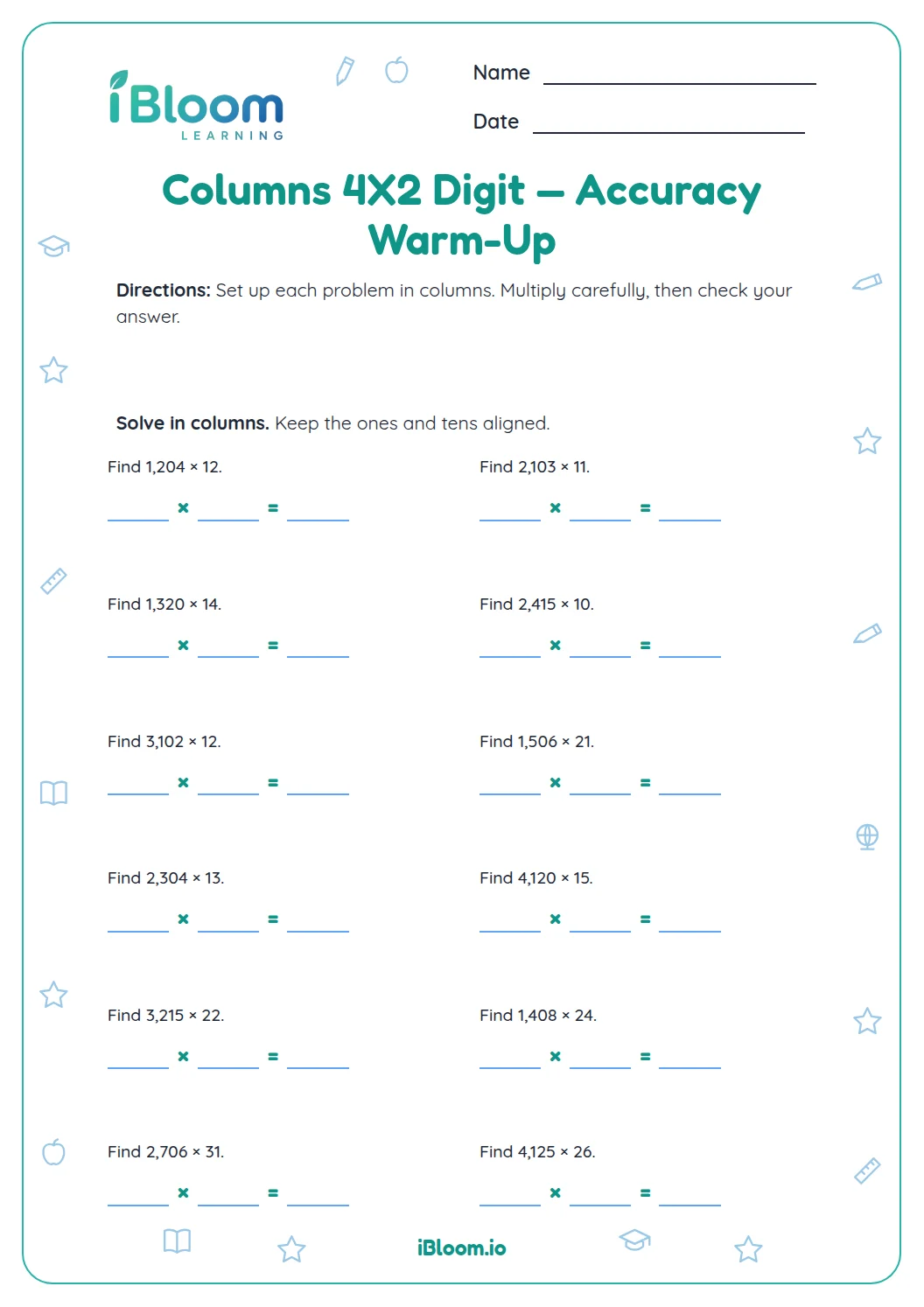
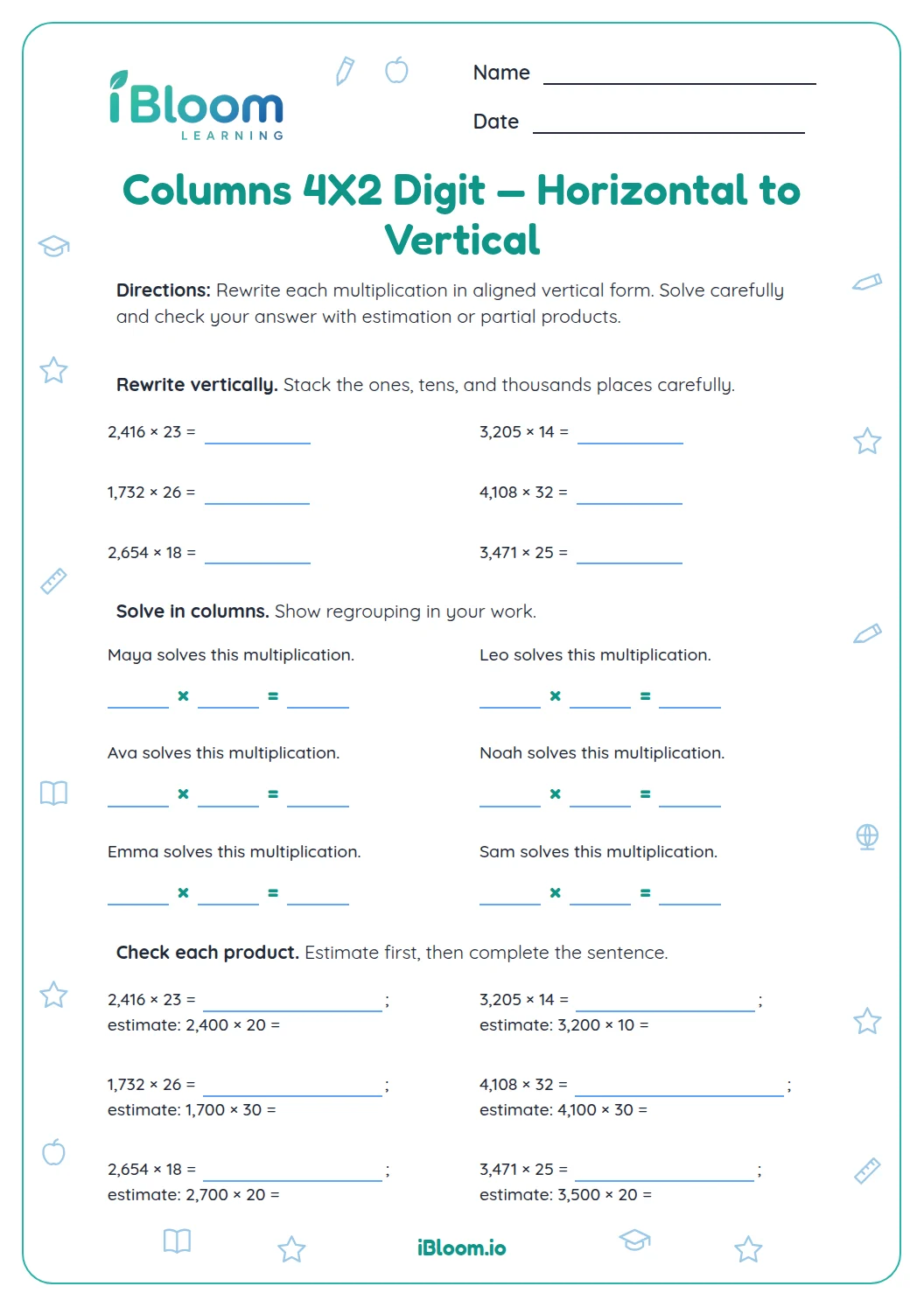
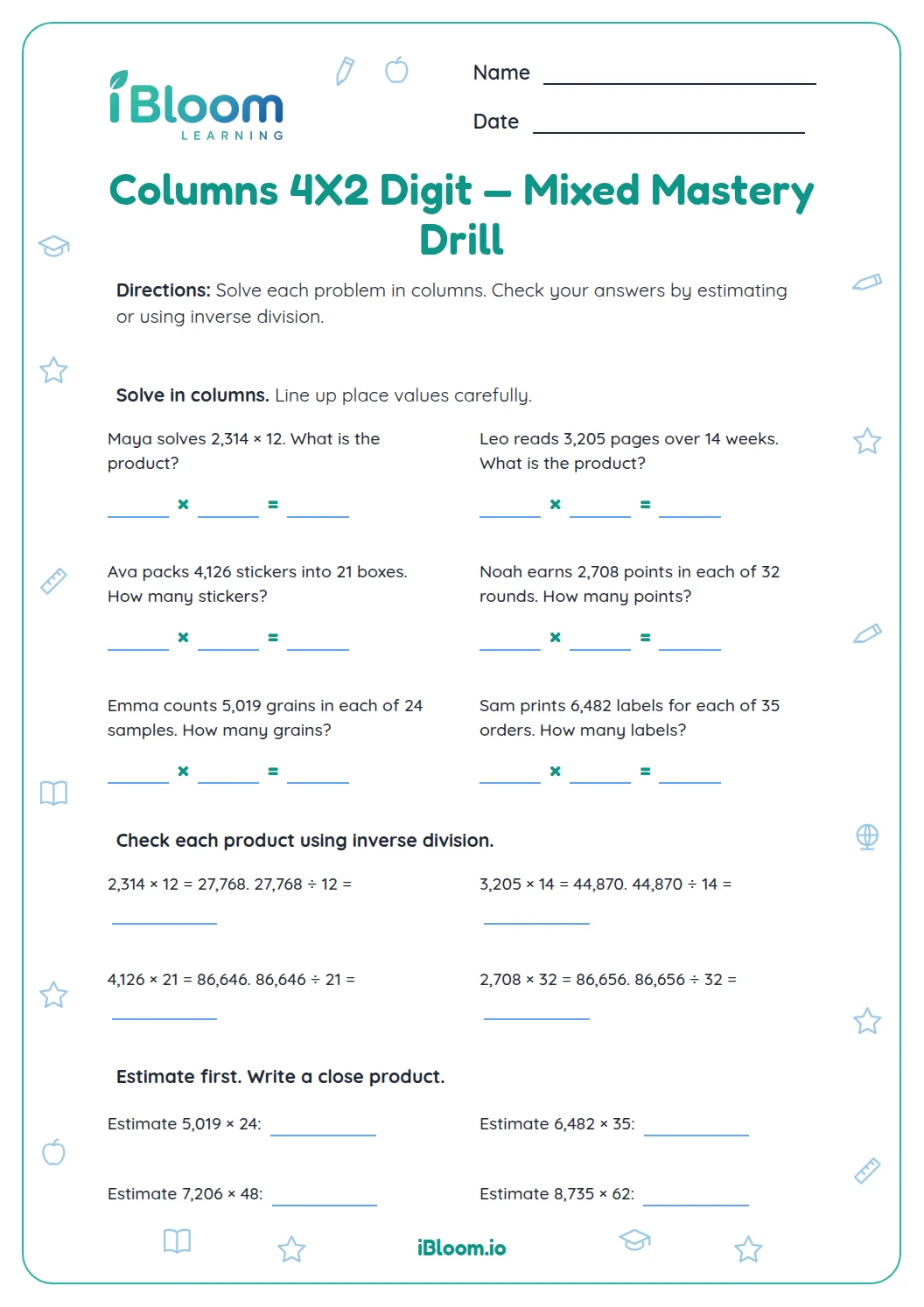
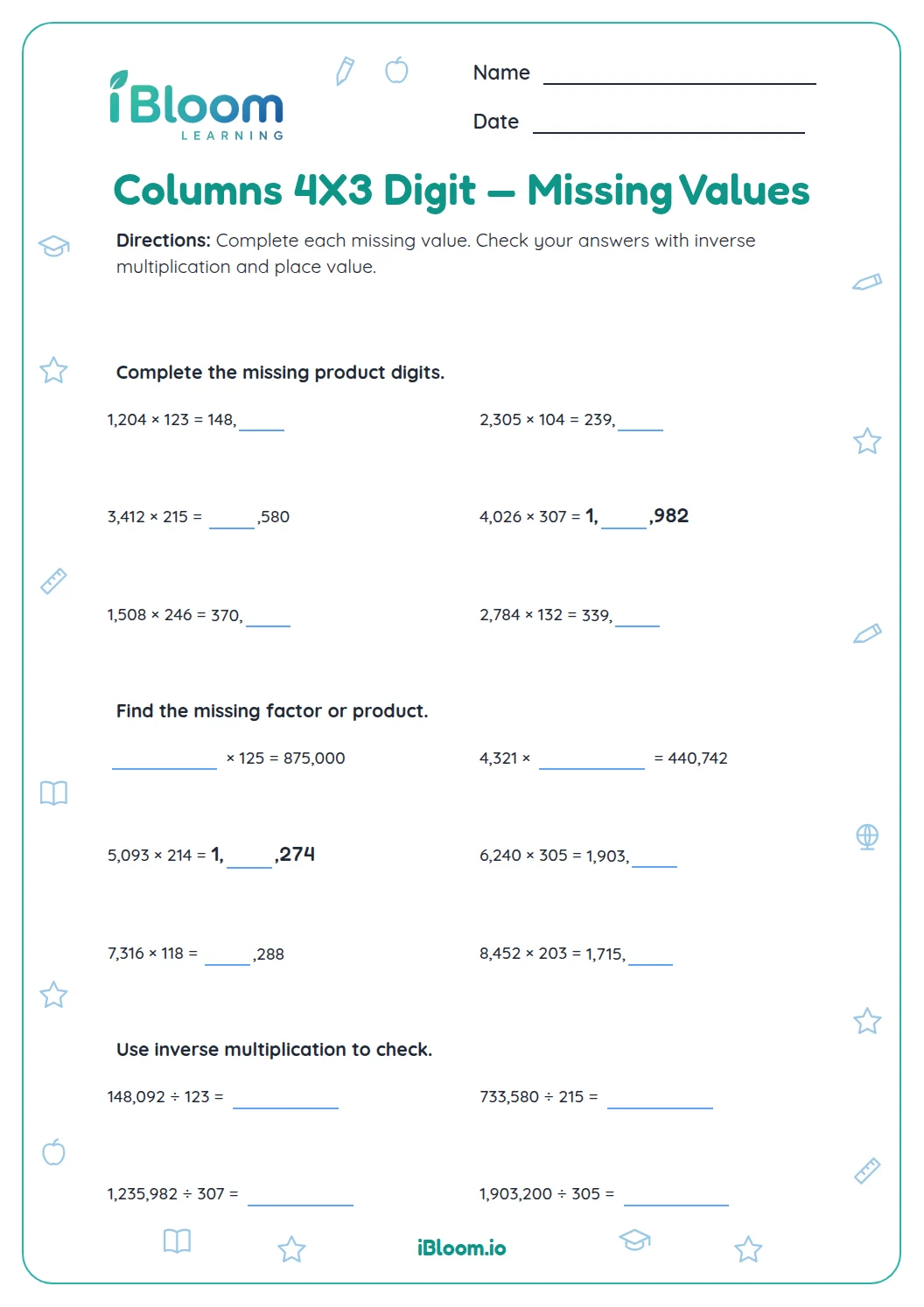
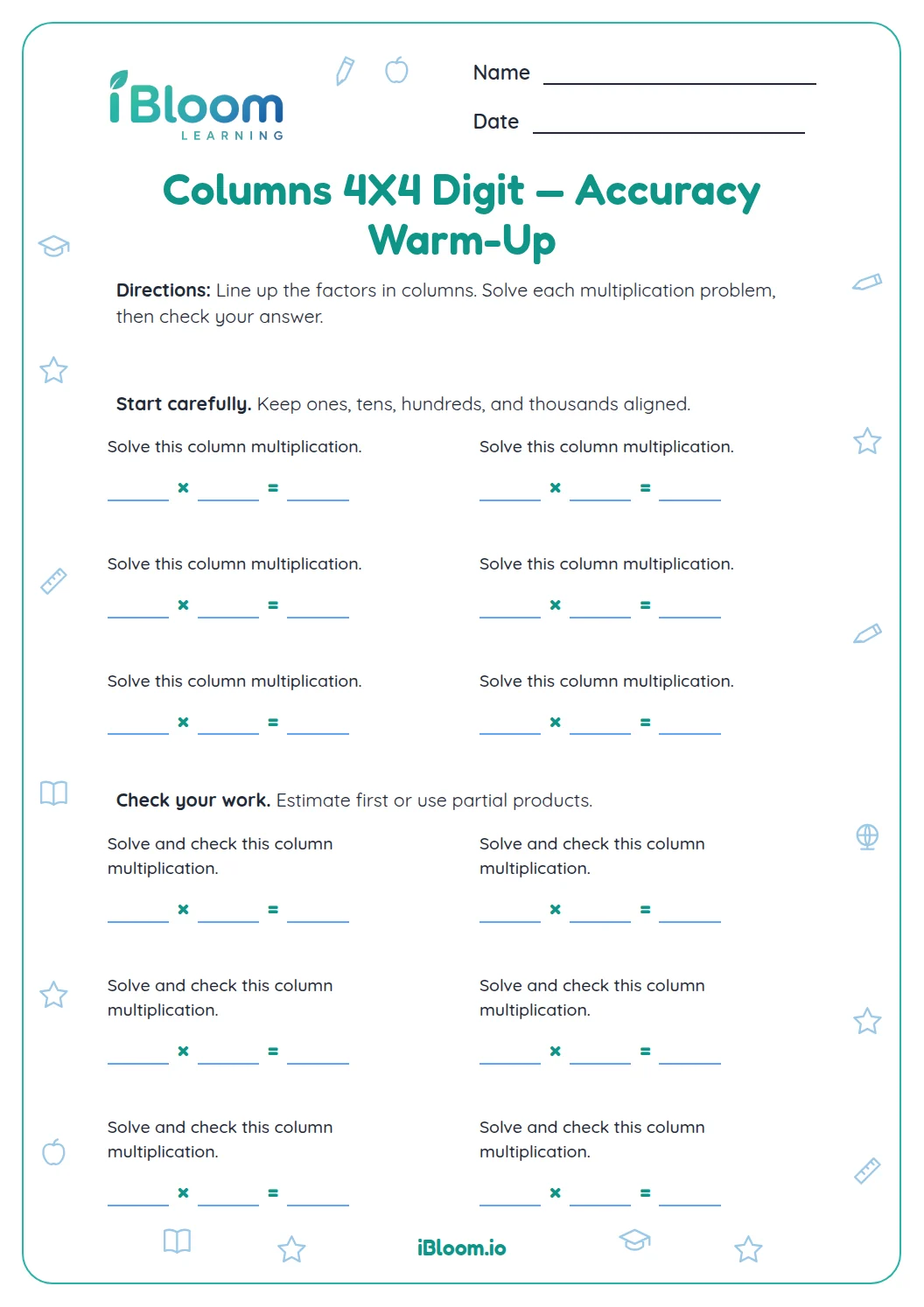
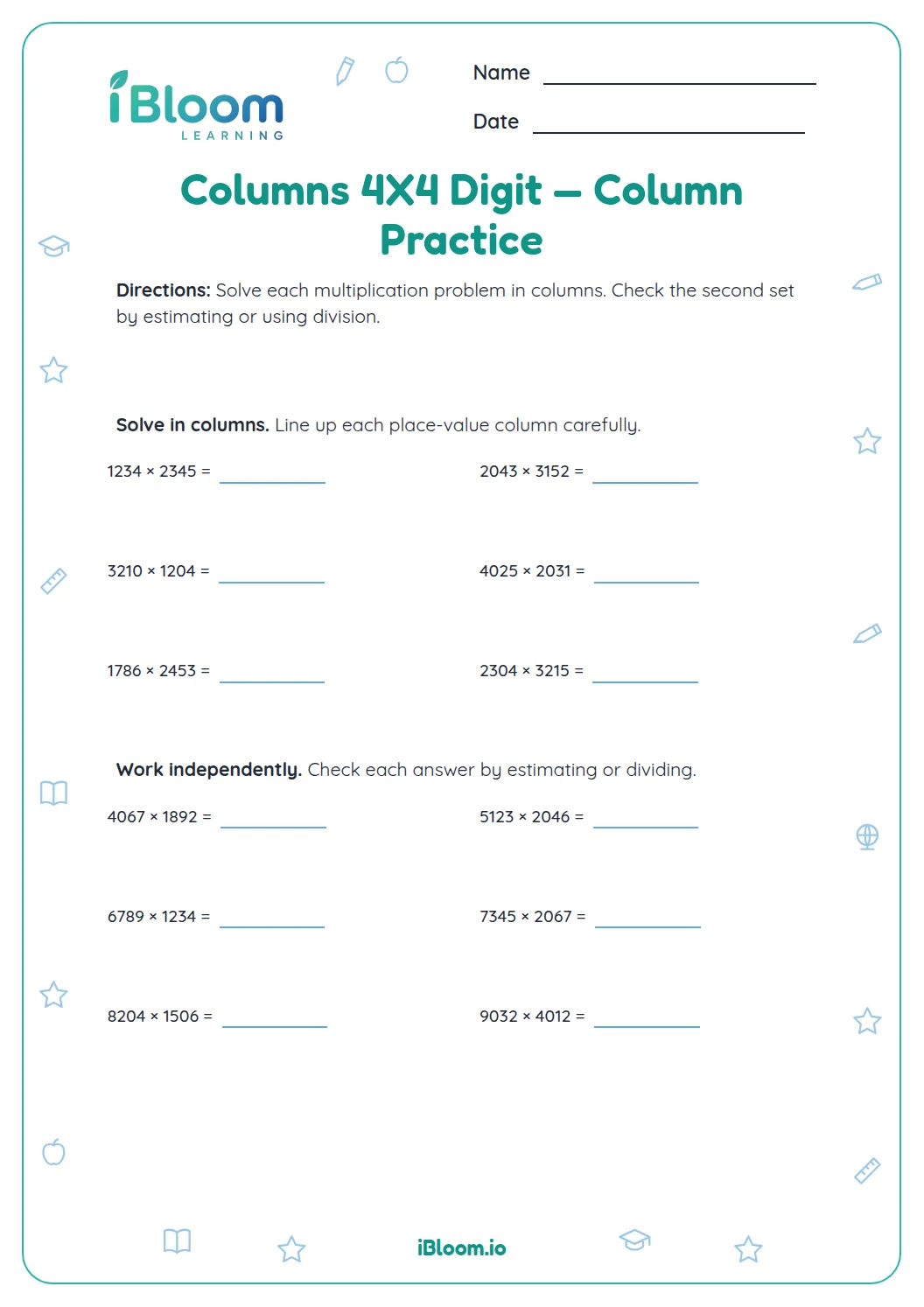
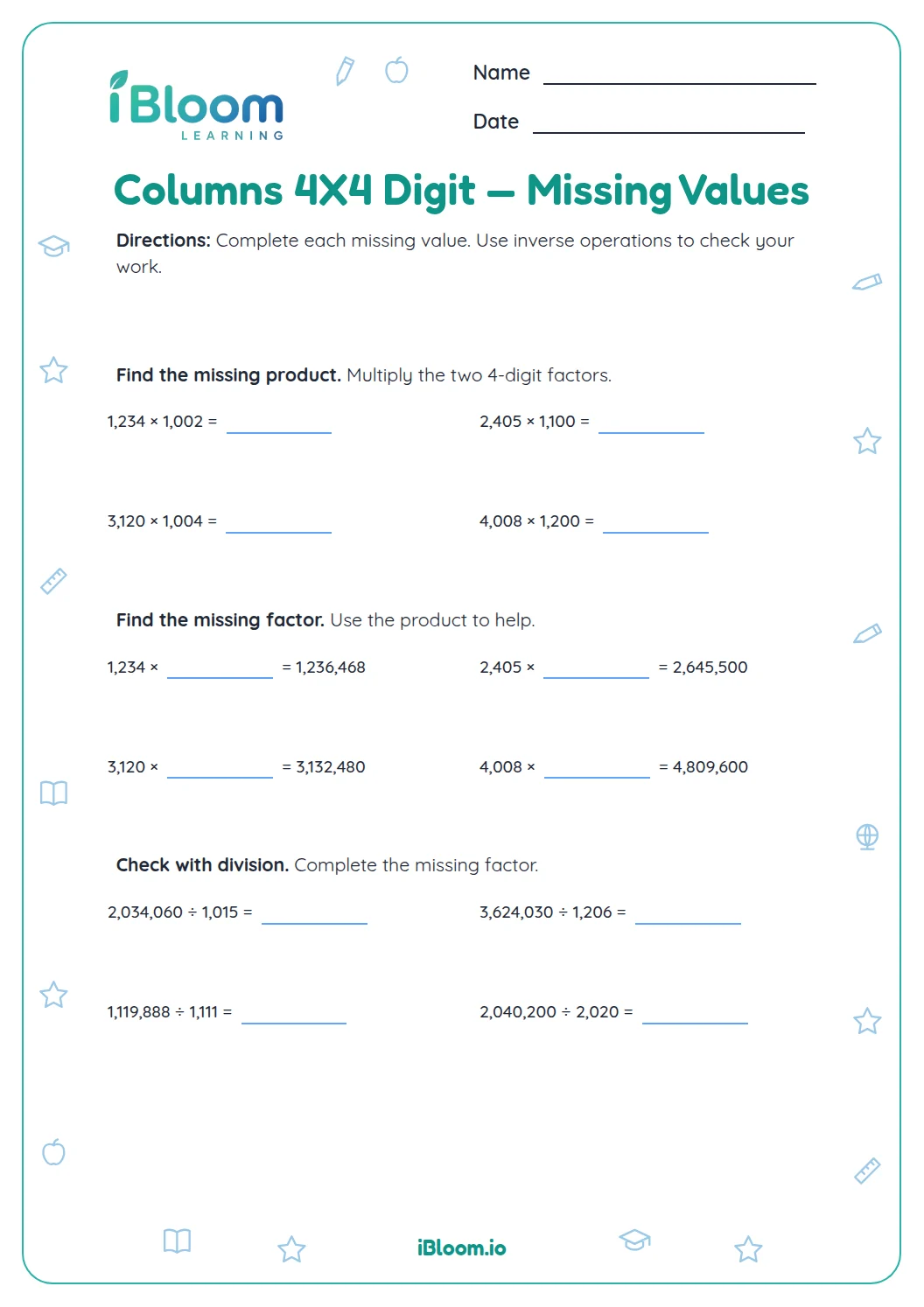
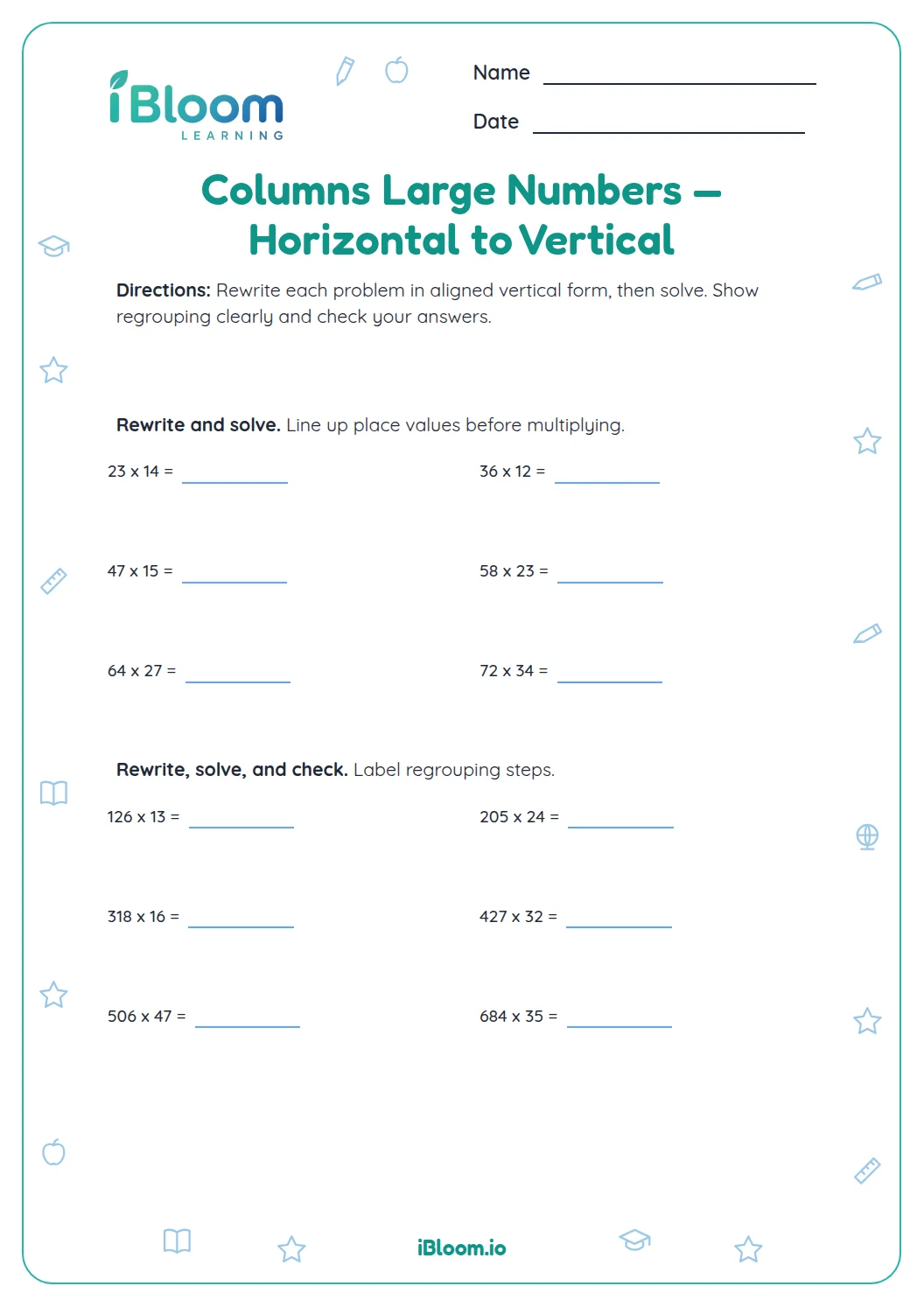
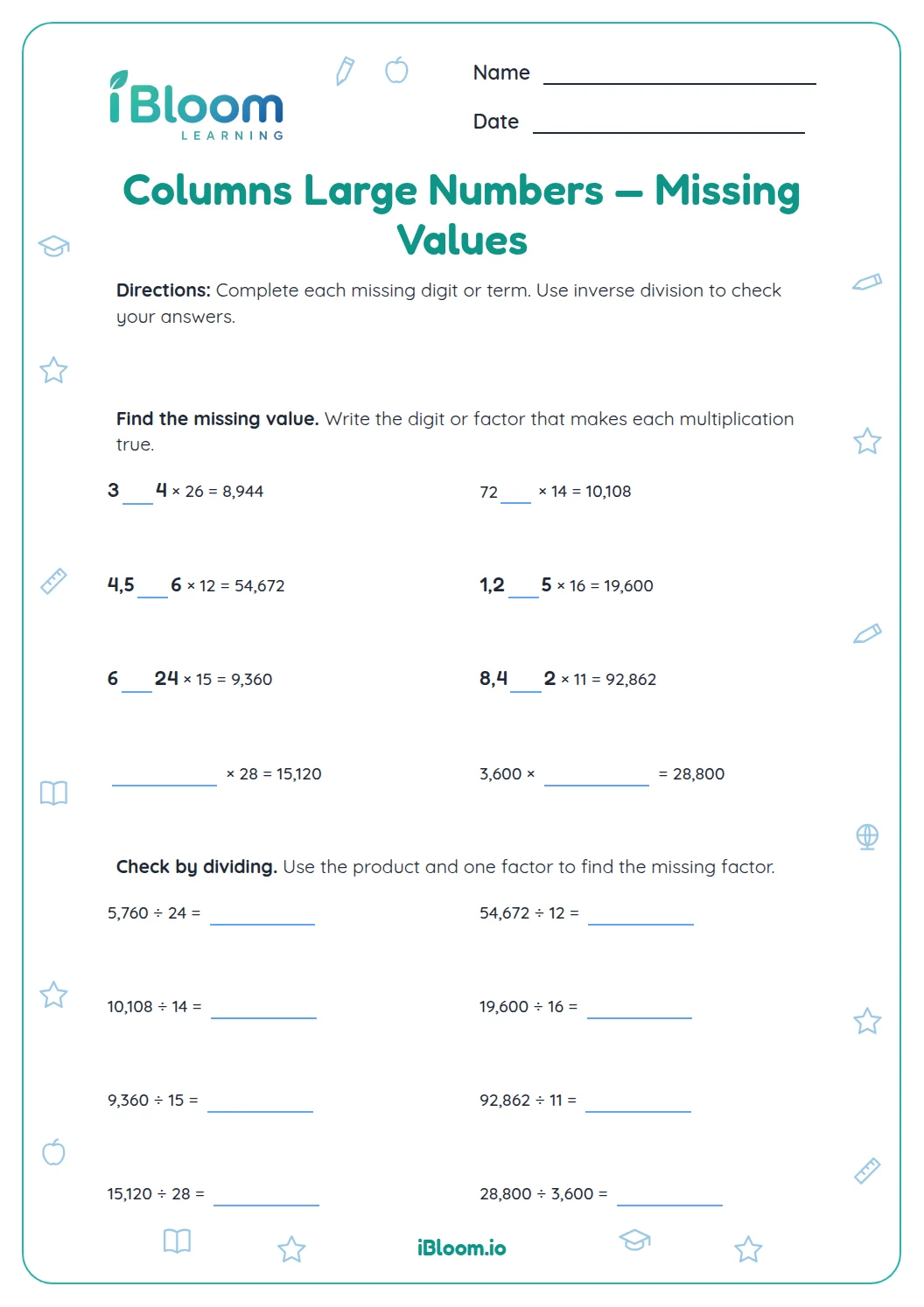
This free printable Grade 5 worksheet gives students 14 four-digit by two-digit multiplication questions. Students find products, inspect partial products for place-value errors, and use estimates to check whether an answer is reasonable. A separate answer key gives the expected products and choices. It practices Common Core 5.NBT.B.5, fluently multiplying multi-digit whole numbers with the standard algorithm.
Aligned to 5.NBT.B.5
Why does the tens row shift?
In question 1, the 1 in 12 means one ten, so its partial product is 1,234 × 10 = 12,340. Add that to 1,234 × 2 = 2,468.
- 11,234 × 2 = 2,468
- 21,234 × 10 = 12,340
- 32,468 + 12,340 = 14,808
How can you spot a multiplication error?
Check whether each partial product matches the place of the multiplier digit. Then estimate the size of the final product before accepting a calculation.
How do you check the full product?
Multiply each row carefully, regroup within each product, and add the partial products. A rounded estimate can reveal a misplaced zero or missed carry.
How to use this worksheet
- 1Read the part heading and directions before starting.
- 2Work through Part A slowly, naming the place or operation involved.
- 3Use Part B to explain or check a strategy before writing an answer.
- 4Finish Part C independently and show calculations where space is provided.
- 5Compare each result with the answer key and correct the first step that changed the answer.
Common mistakes and quick fixes
The mistake
Writing the tens-row product without its place-value shift.
The fix
Multiply by the value of the digit, such as 10, then align the product.
The mistake
Forgetting to add one of the partial products.
The fix
Count the rows and check that each multiplier digit has a product.
The mistake
Carrying digits incorrectly while multiplying a row.
The fix
Check each row with a quick estimate or reverse operation.
Common Core alignment
This practice connects each question to a concrete grade-level math skill.
Multiply multi-digit whole numbers using the standard algorithm.
On this sheet: Use place-value strategies and partial products to multiply whole numbers.
Show the official wordingHide the official wording
Fluently multiply multi-digit whole numbers using the standard algorithm.
What to practice next
Make more practice
Further reading
Questions parents and teachers ask
How do you multiply a four-digit number by a two-digit number?
Multiply by the ones digit, then by the tens digit, keeping each partial product in its place-value column. For question 1, 1,234 × 2 = 2,468 and 1,234 × 10 = 12,340; their sum is 14,808. Matching question numbers make checking each response straightforward.
How many questions are on this worksheet?
There are 14 questions in three parts: five products to solve, four partial-product or estimate checks, and five more products. The problems use four-digit factors multiplied by two-digit factors, with a separate answer key. Matching question numbers make checking each response straightforward.
Why is the tens-row partial product shifted?
A digit in the tens place represents groups of ten. In question 1, the 1 in 12 means 10, so that row is 1,234 × 10 = 12,340, not 1,234. Its place value changes the product. Matching question numbers make checking each response straightforward.
How can estimation help catch a multiplication error?
Round each factor to estimate the product, then compare the estimate with the exact result. For question 9, 4,032 is near 4,000 and 15 stays 15, so a product near 60,000 is reasonable; 6,000 is far too small. Matching question numbers make checking each response straightforward.
Is an answer key included?
Yes. The separate key shows each product and the correct partial-product or estimate choice. Students can compare the rows as well as the final total to locate whether an error came from multiplying or aligning place value. Matching question numbers make checking each response straightforward.