



About this worksheet
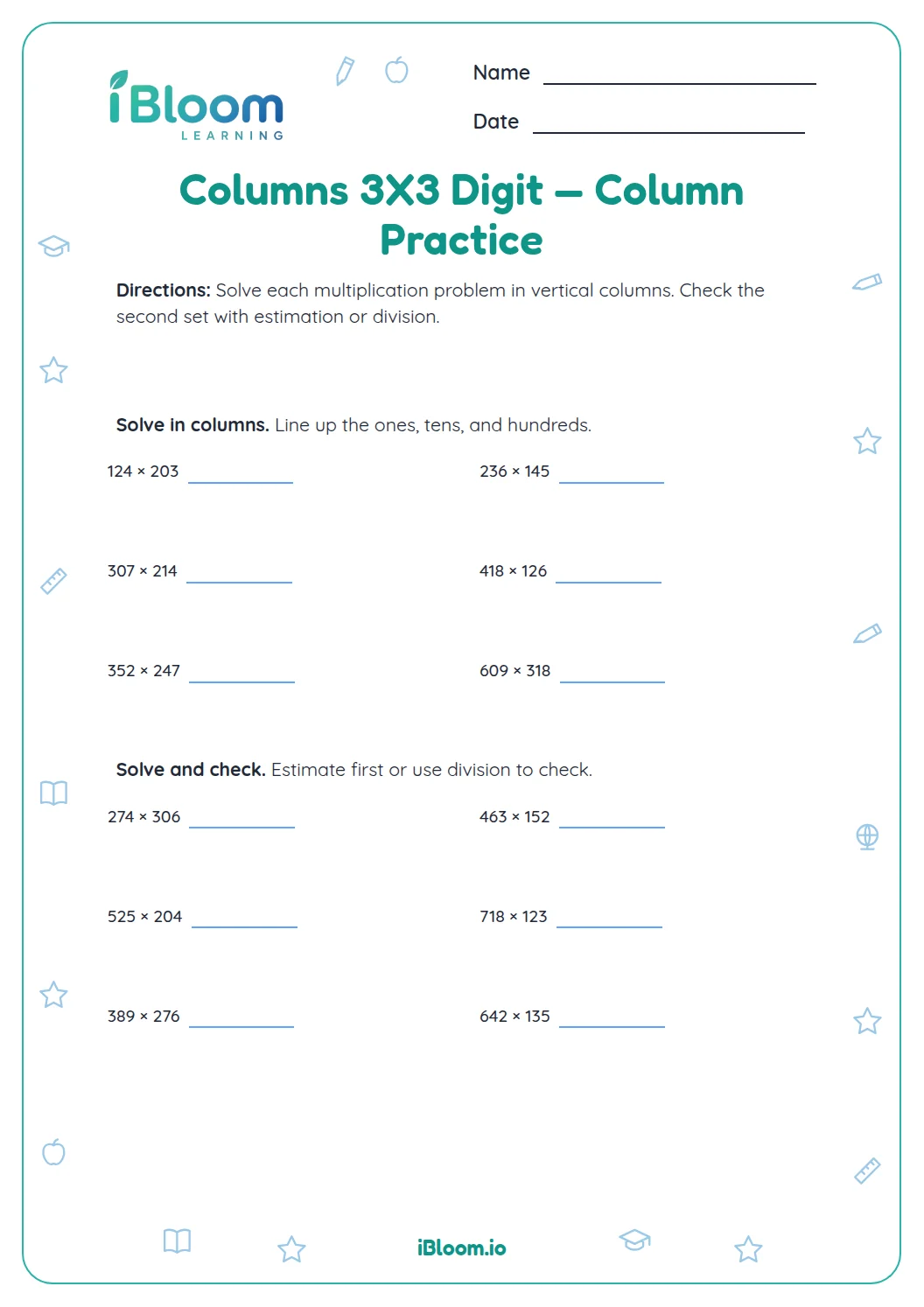
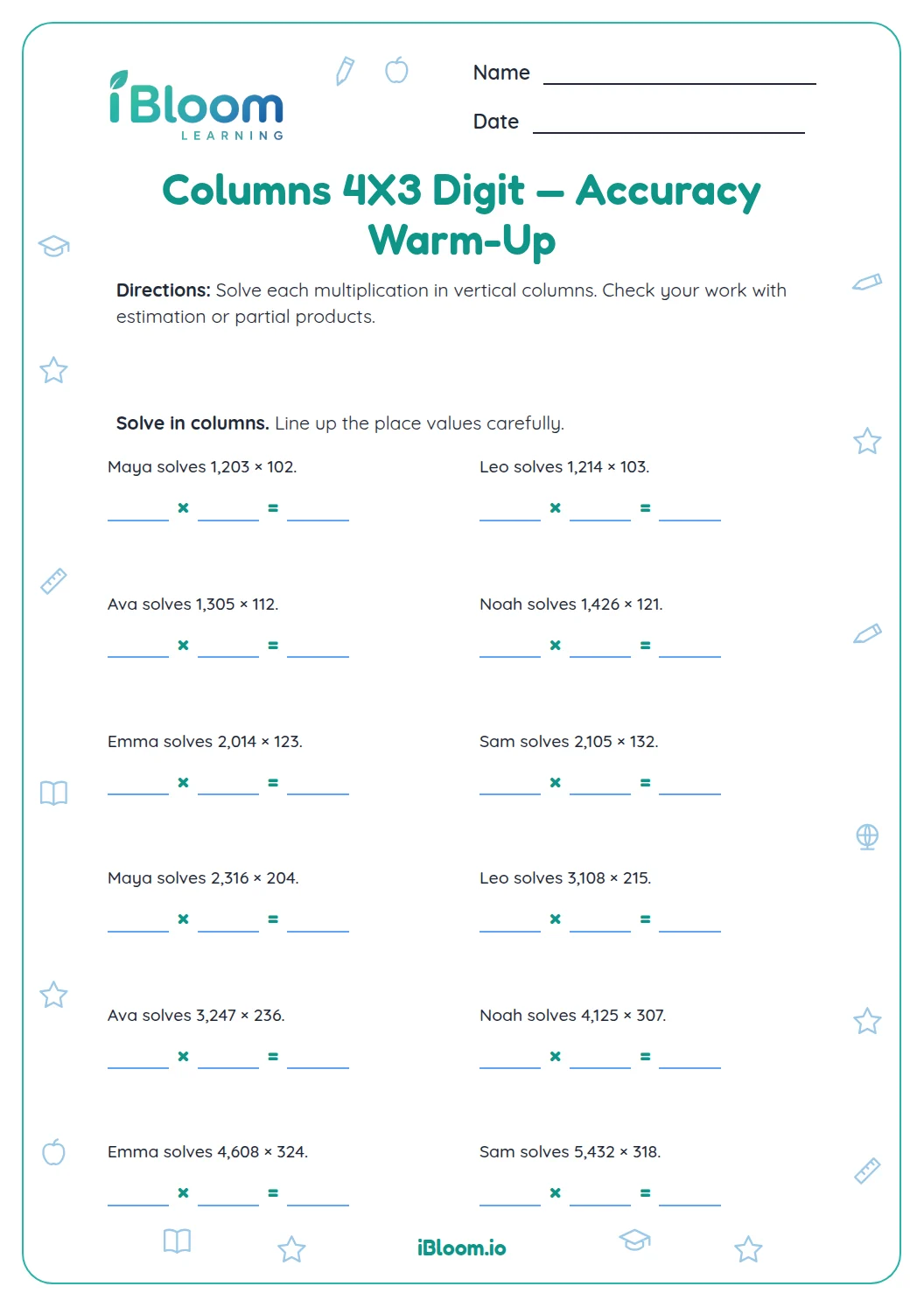
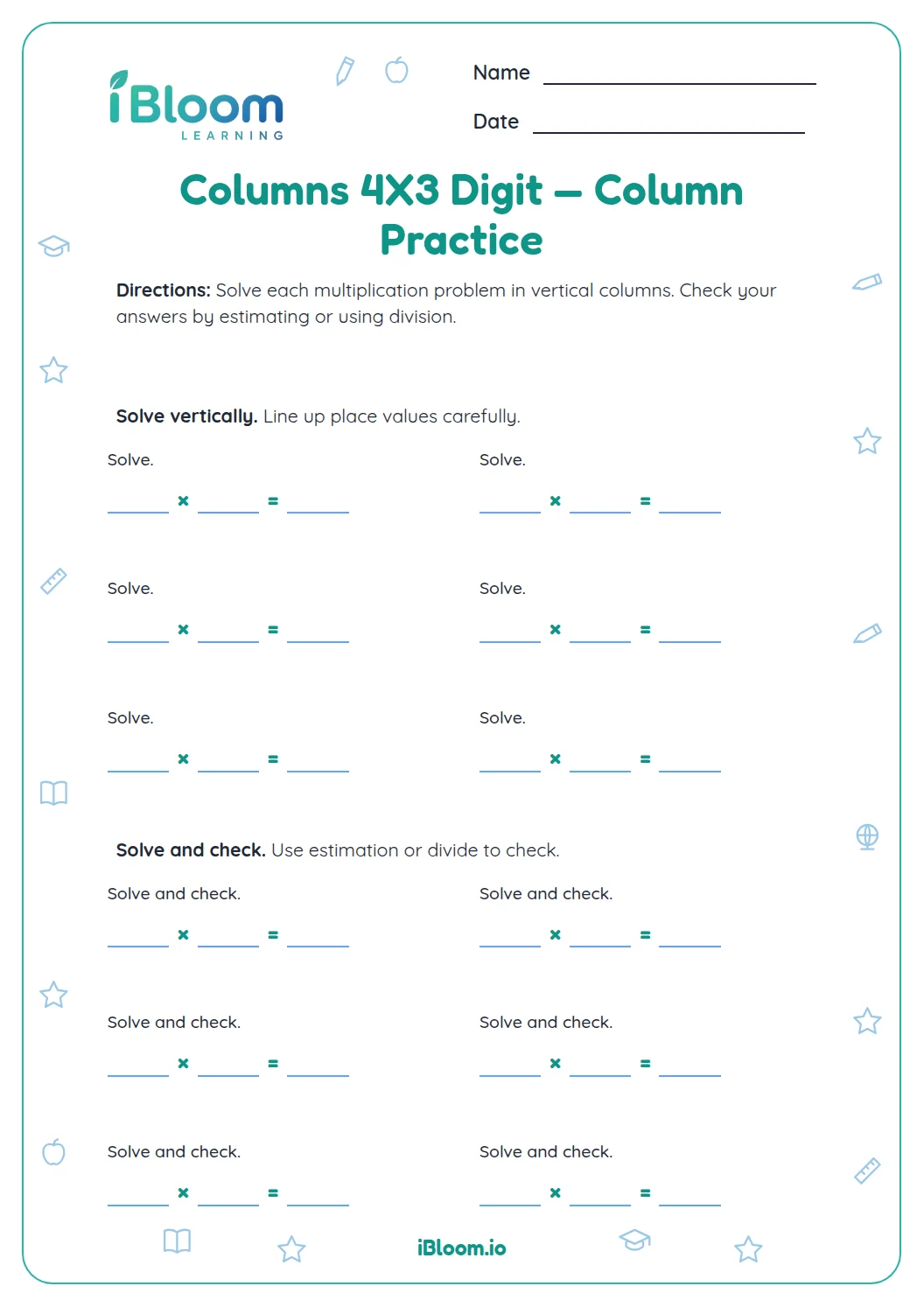
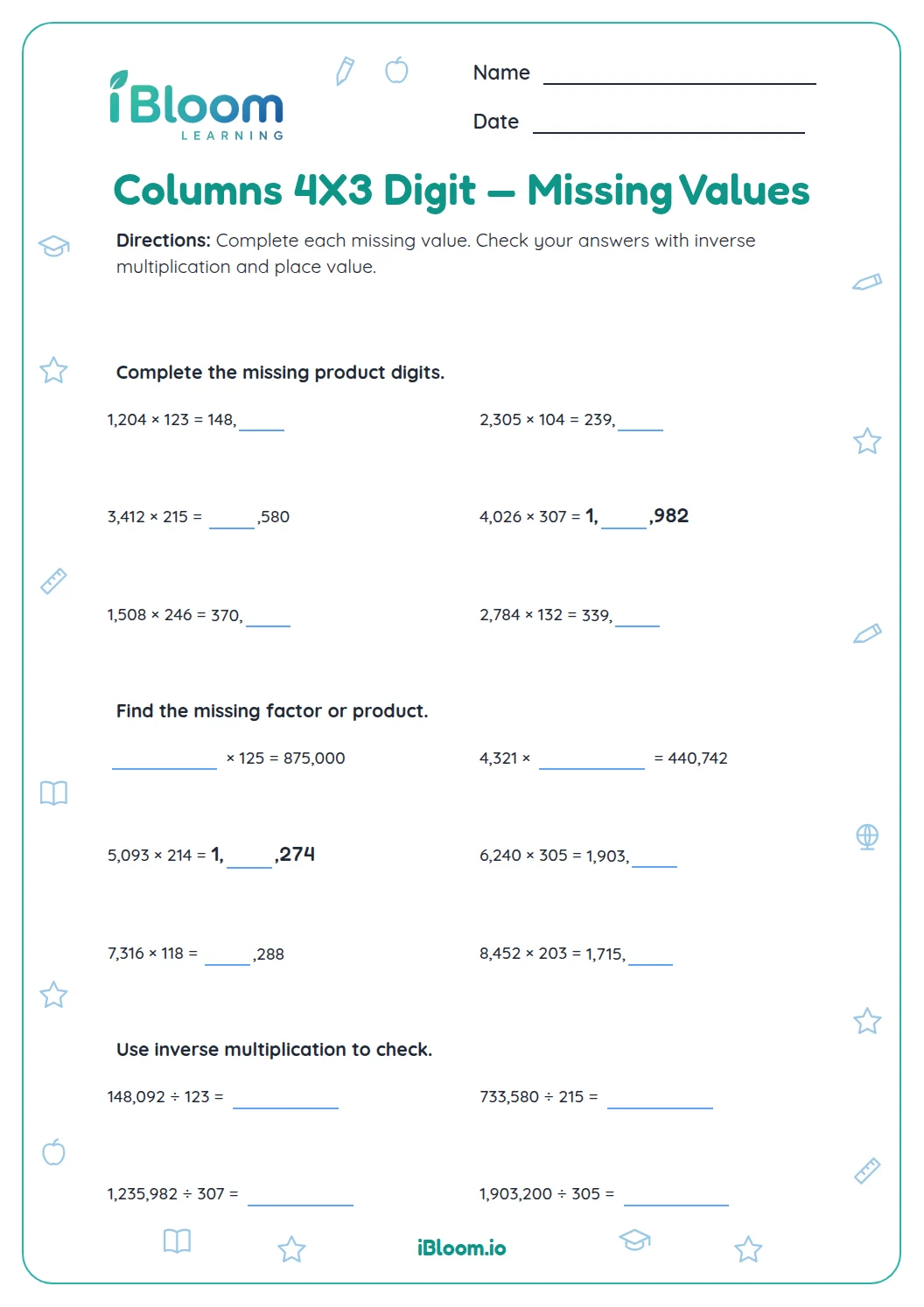
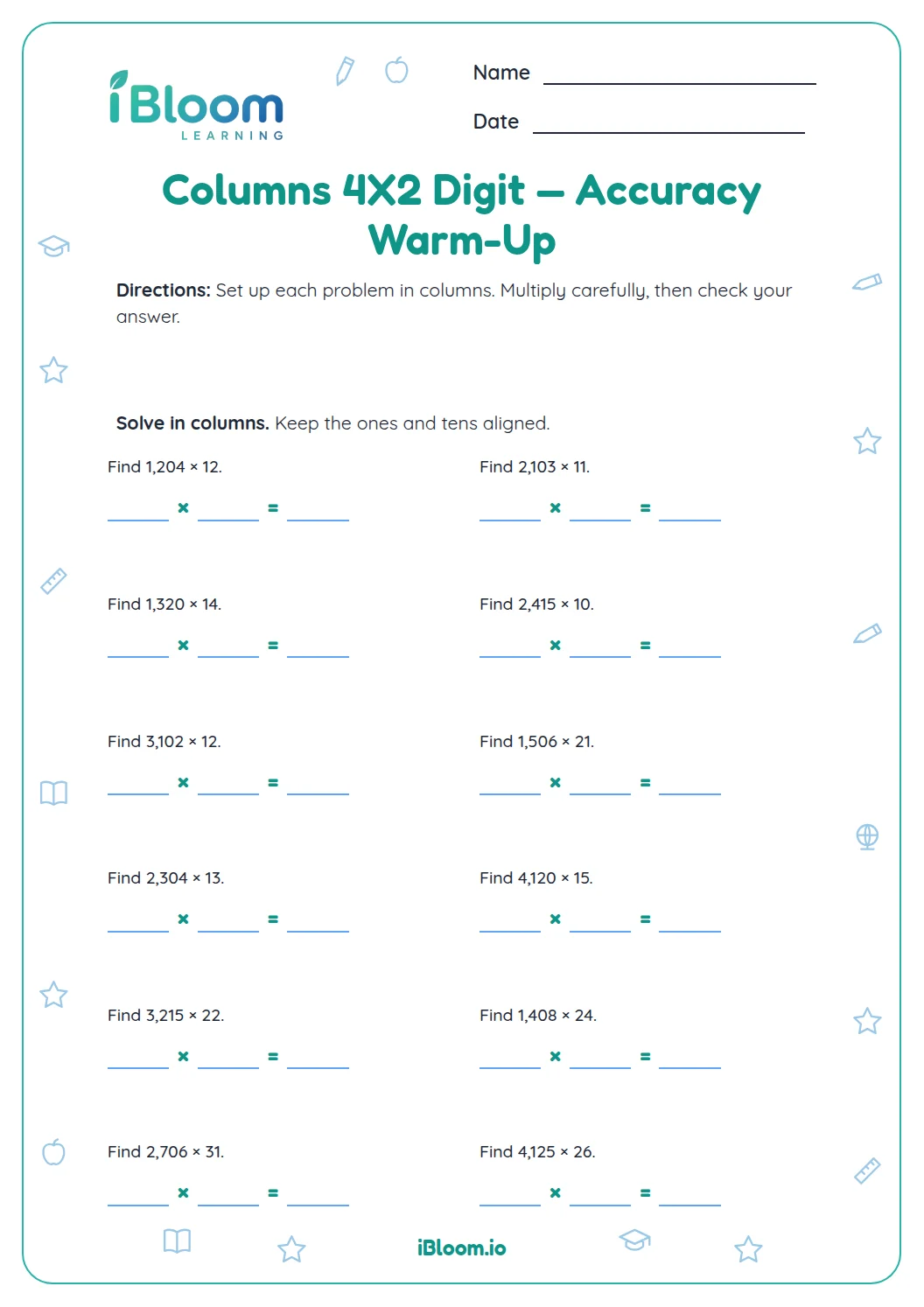
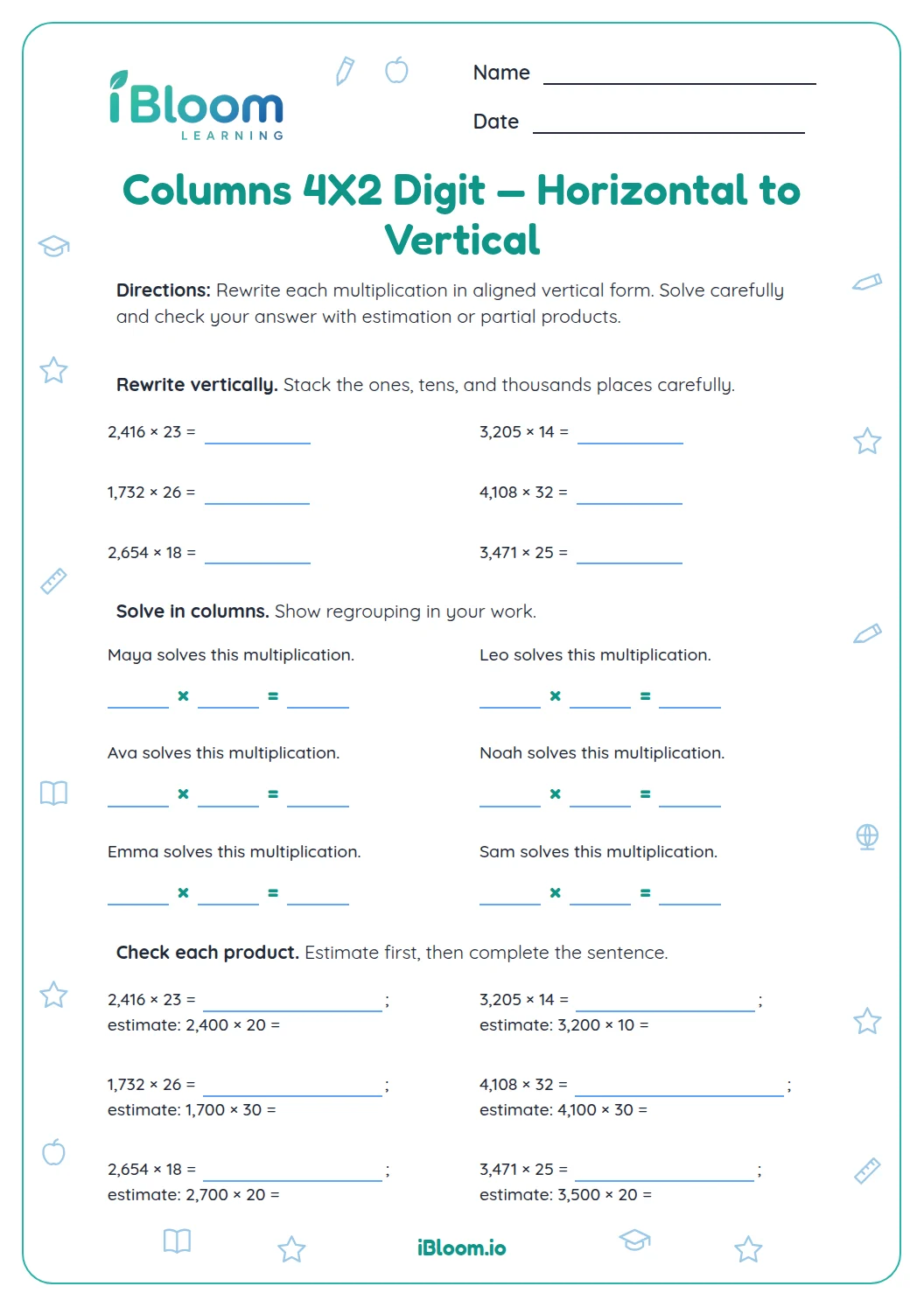
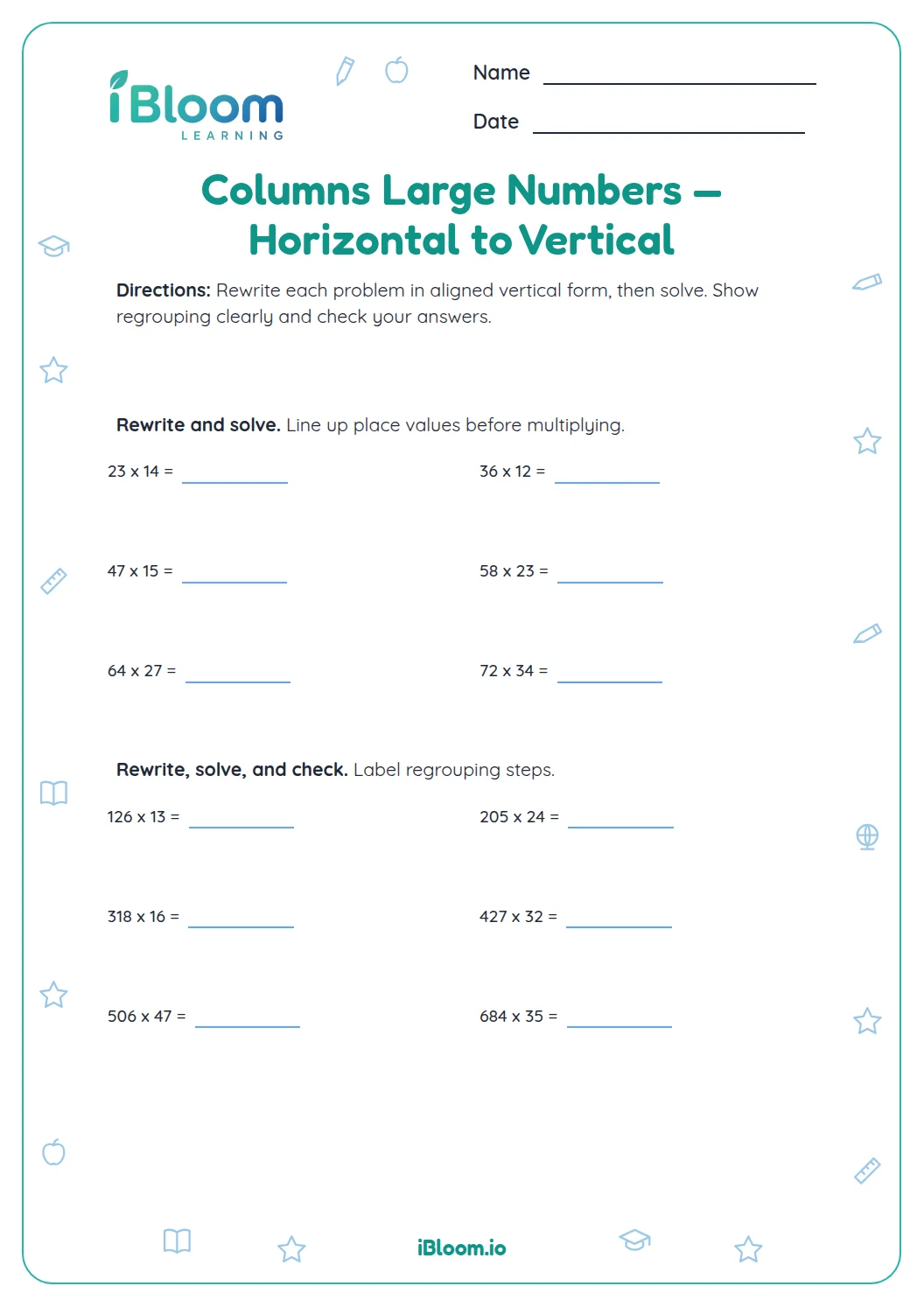
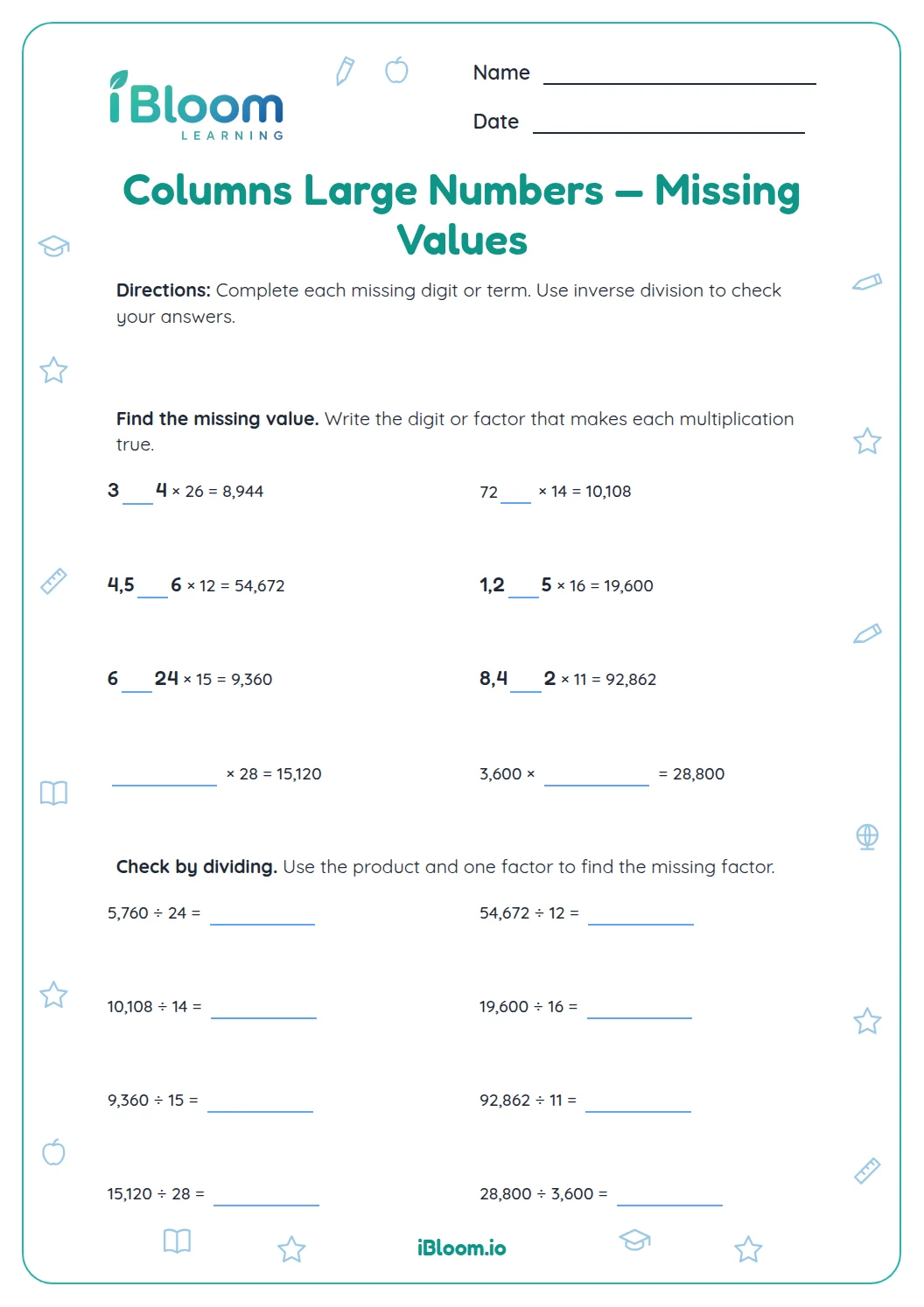
This Grade 5 worksheet gives students 14 ways to check four-digit multiplication. Students estimate, solve six multi-digit products, and diagnose incorrect answers; a separate key supports review.
Aligned to 5.NBT.B.5
How can an estimate catch a multiplication error?
Each partial product must match the place value of its multiplier digit. In 2,345 × 1,023, the 2 means 20, so that row must be 46,900.
Part A asks students to identify the first incorrect step in four worked examples. Parts B and C ask for eight products and two corrections.
- 12,345 × 20 should equal 46,900
- 2Step B shows 4,690
- 3So Step B is the first error
What should each partial product represent?
Multiply the first factor by each place-value part of the second factor, then add the partial products. A zero placeholder keeps tens, hundreds, and thousands in their correct columns.
How can students repair a wrong product?
Check multiplication facts, then check where each partial product belongs. A student may multiply the digits correctly but forget that a digit stands for tens or thousands.
How to use this worksheet
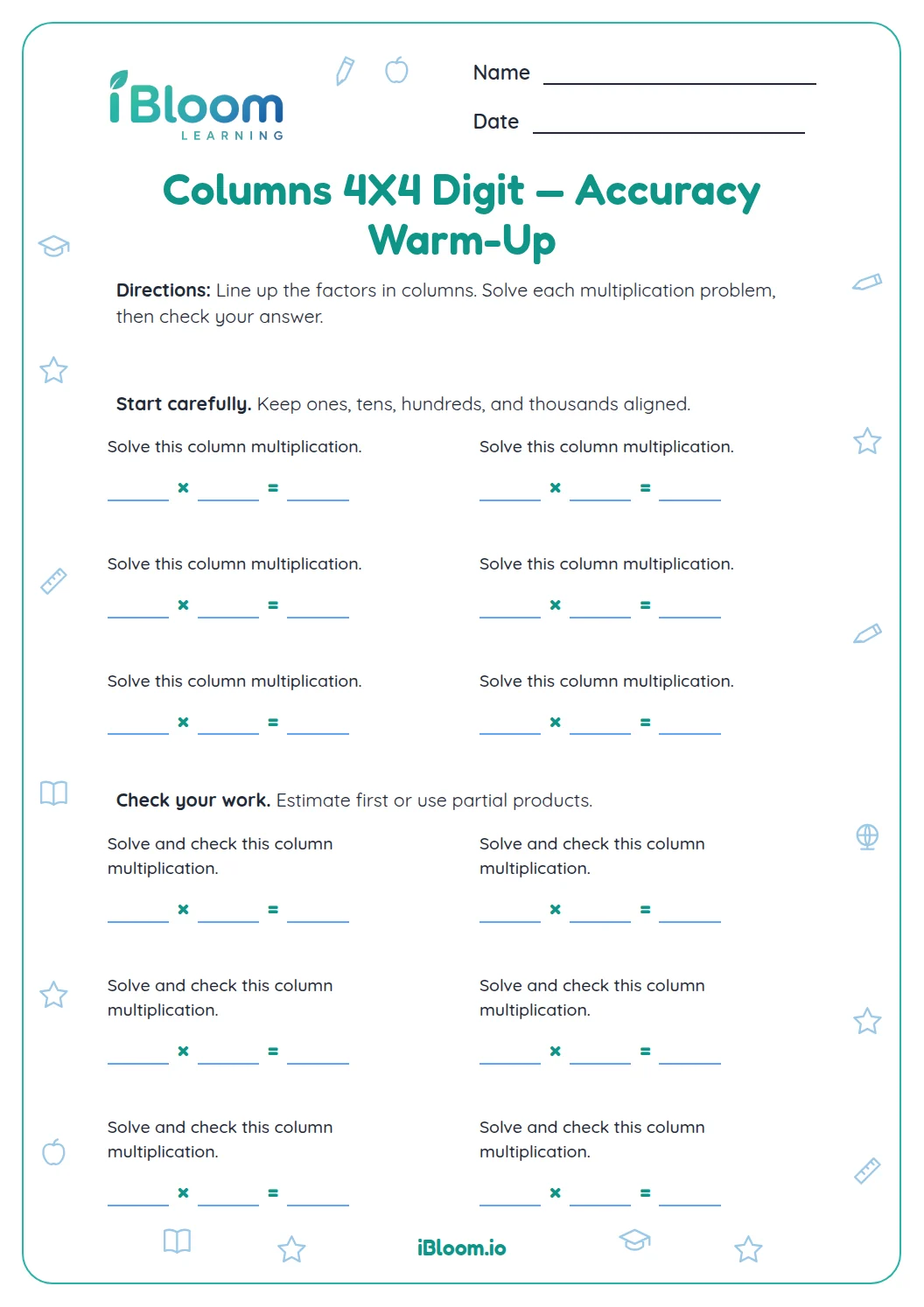
- 1Round each factor to estimate before multiplying.
- 2Write each partial product in its correct place-value row.
- 3Add the partial products carefully.
- 4Compare the exact product with your estimate.
Common mistakes and quick fixes
The mistake
Dropping place-value zeros in a partial product.
The fix
Label the multiplier digit by ones, tens, hundreds, or thousands before writing its row.
The mistake
Adding partial products before aligning their place values.
The fix
Keep each partial product in a separate row, then add by columns.
The mistake
Accepting a product that is far from the estimate.
The fix
Round both factors and use the estimate as a final reasonableness check.
Common Core alignment
This worksheet gives focused practice with the following Common Core skills.
Use the standard algorithm to multiply multi-digit whole numbers.
On this sheet: Use the standard algorithm to multiply multi-digit whole numbers.
Show the official wordingHide the official wording
Fluently multiply multi-digit whole numbers using the standard algorithm.
What to practice next
Make more practice
Further reading
Questions parents and teachers ask
What does “first incorrect step” mean?
Read the multiplication work from Step A onward and choose the earliest line that is mathematically wrong. Later lines may also be wrong, but the question asks where the error begins. The key identifies the first error for all six examples.
How do I check a partial product?
Use the value of the multiplier digit, not just the digit by itself. For example, a 2 in the tens place means multiply by 20. Compare each printed row with that place value before adding the partial products. This helps when checking the examples and answers on the page.
Does the worksheet include full products?
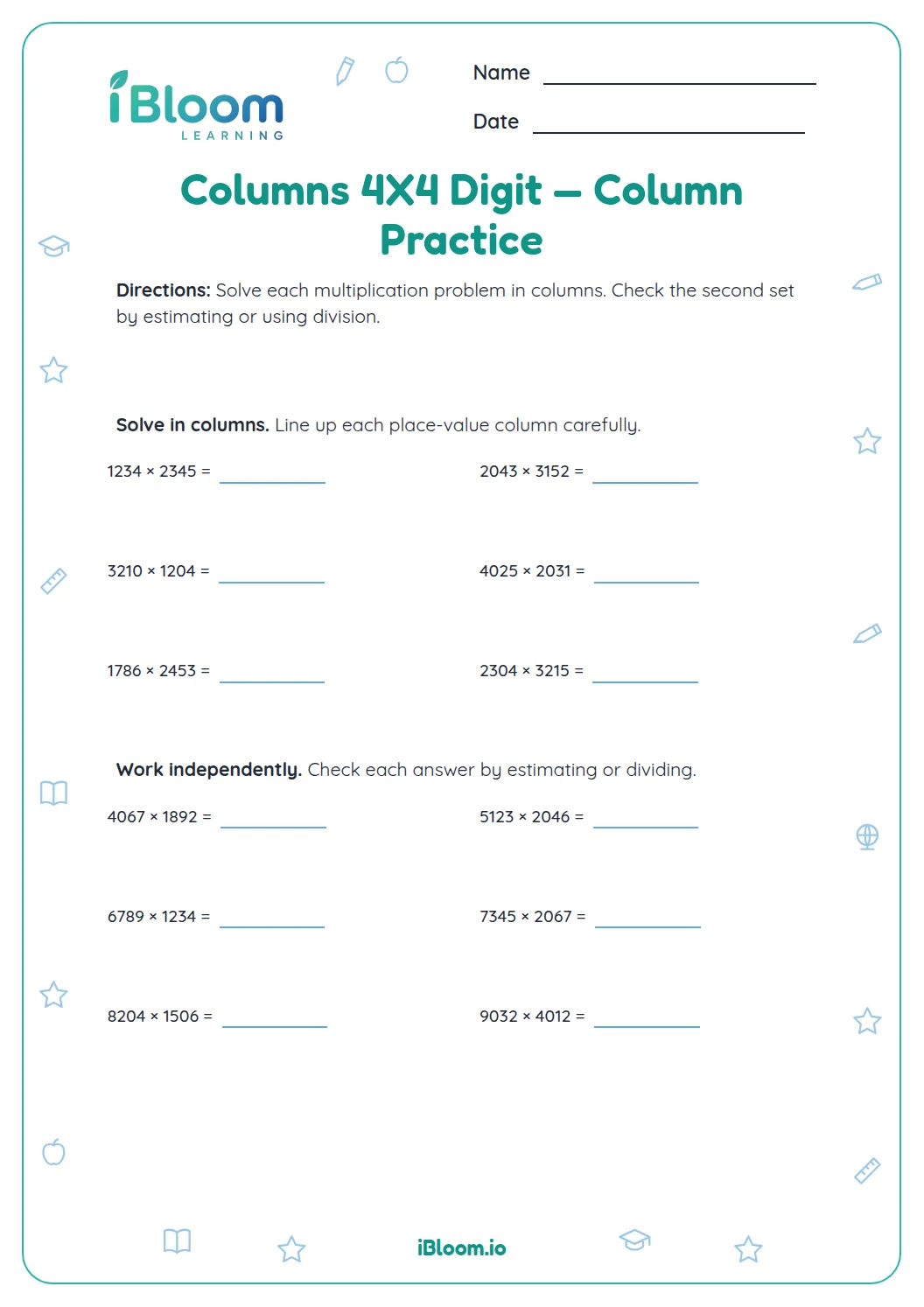
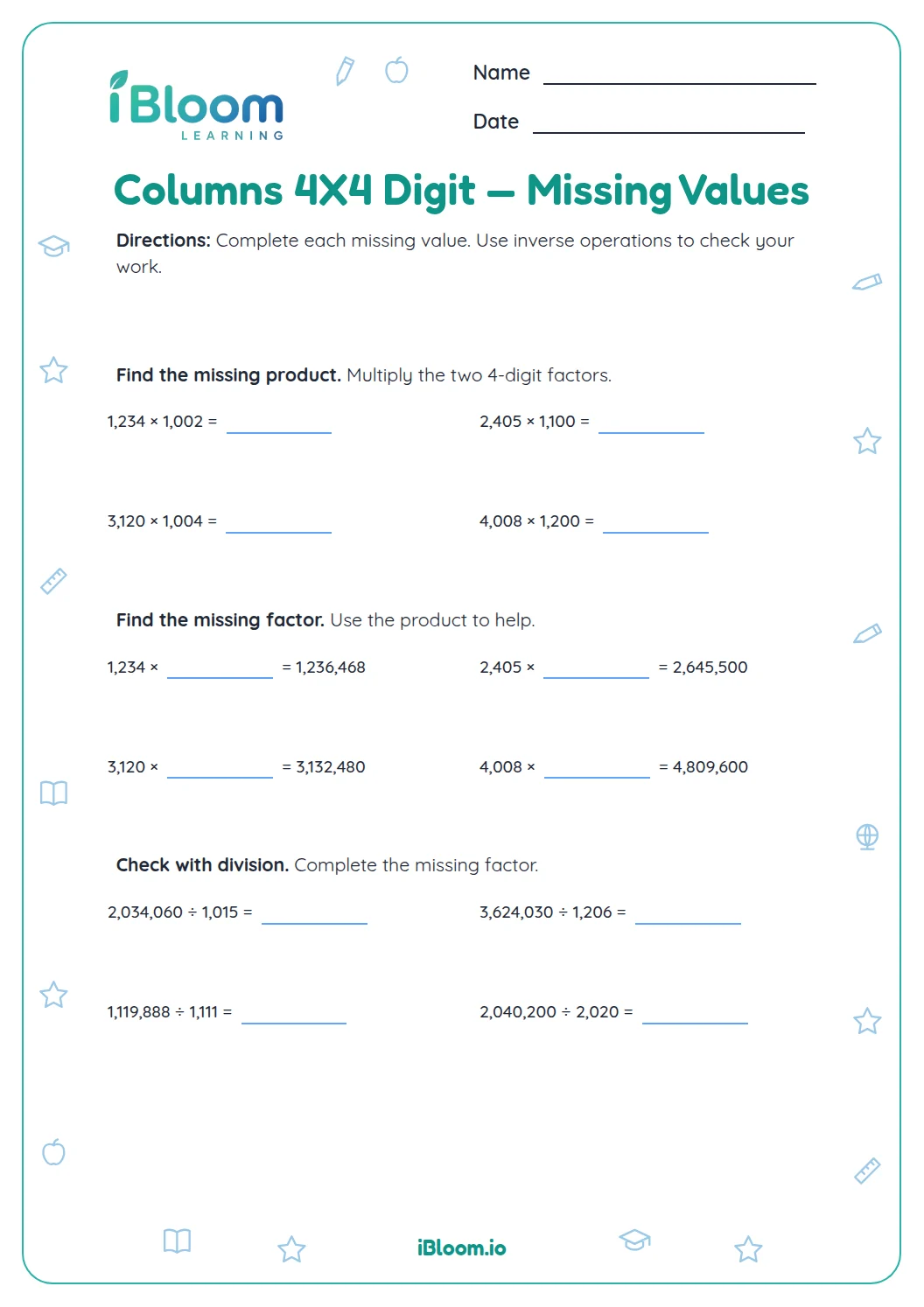
Yes. Eight problems ask students to calculate complete four-digit multiplication products. Two more show incorrect reported products and ask students to correct them. The answer key lists exact products, making it possible to review both the multiplication and the error check.
How many questions and pages are there?
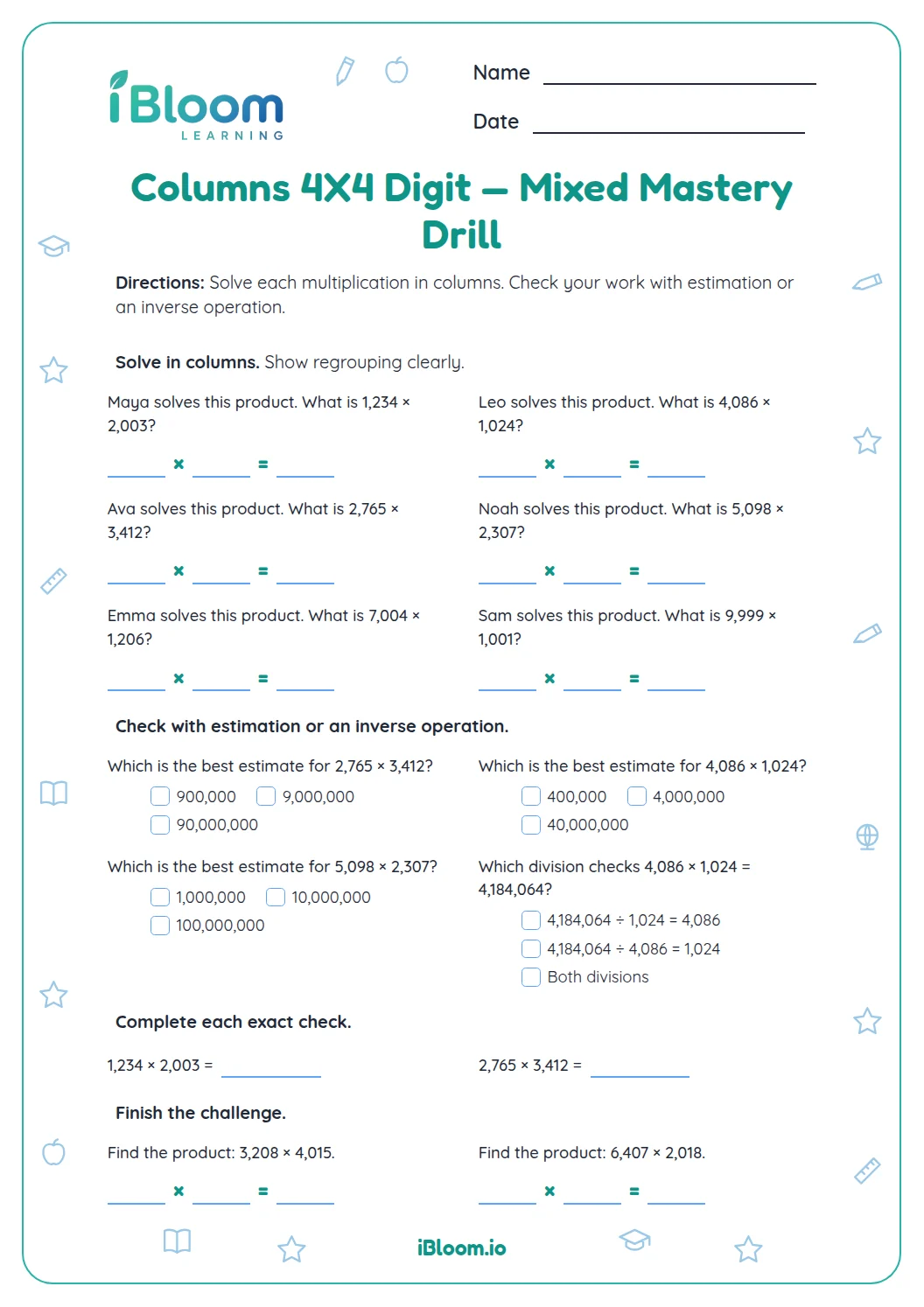
The sheet has 14 questions in three parts: four error checks, eight products, and two product corrections. It is laid out as two worksheet pages with a separate answer key. The key provides the step choices and exact products. This helps when checking the examples and answers on the page.
What multiplication method should students use?
The questions focus on the standard algorithm and place value. Students can write partial products in separate rows, align them by place, and add. Estimation can help catch an unreasonable total, while the answer key checks the exact result. This helps when checking the examples and answers on the page.