

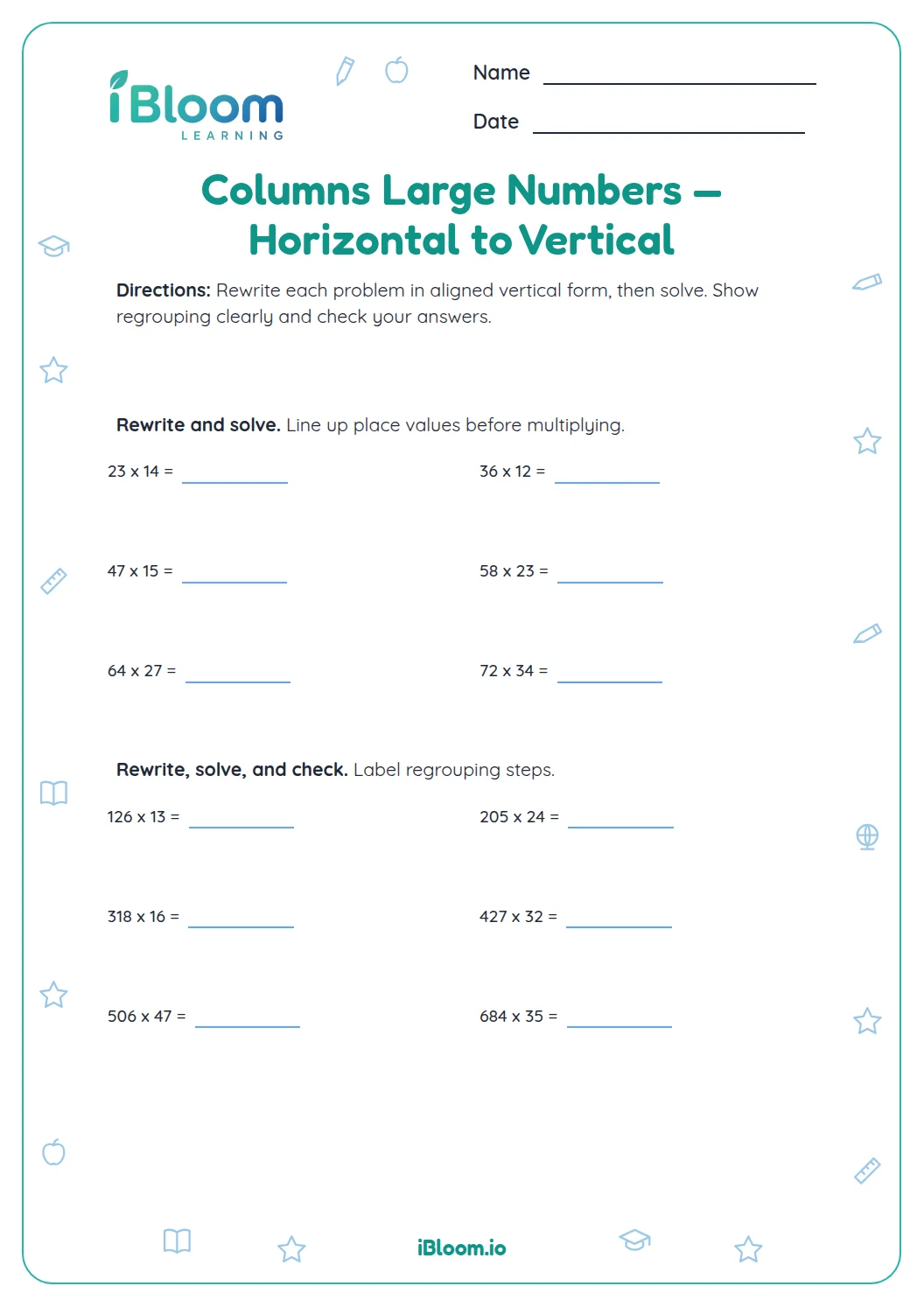
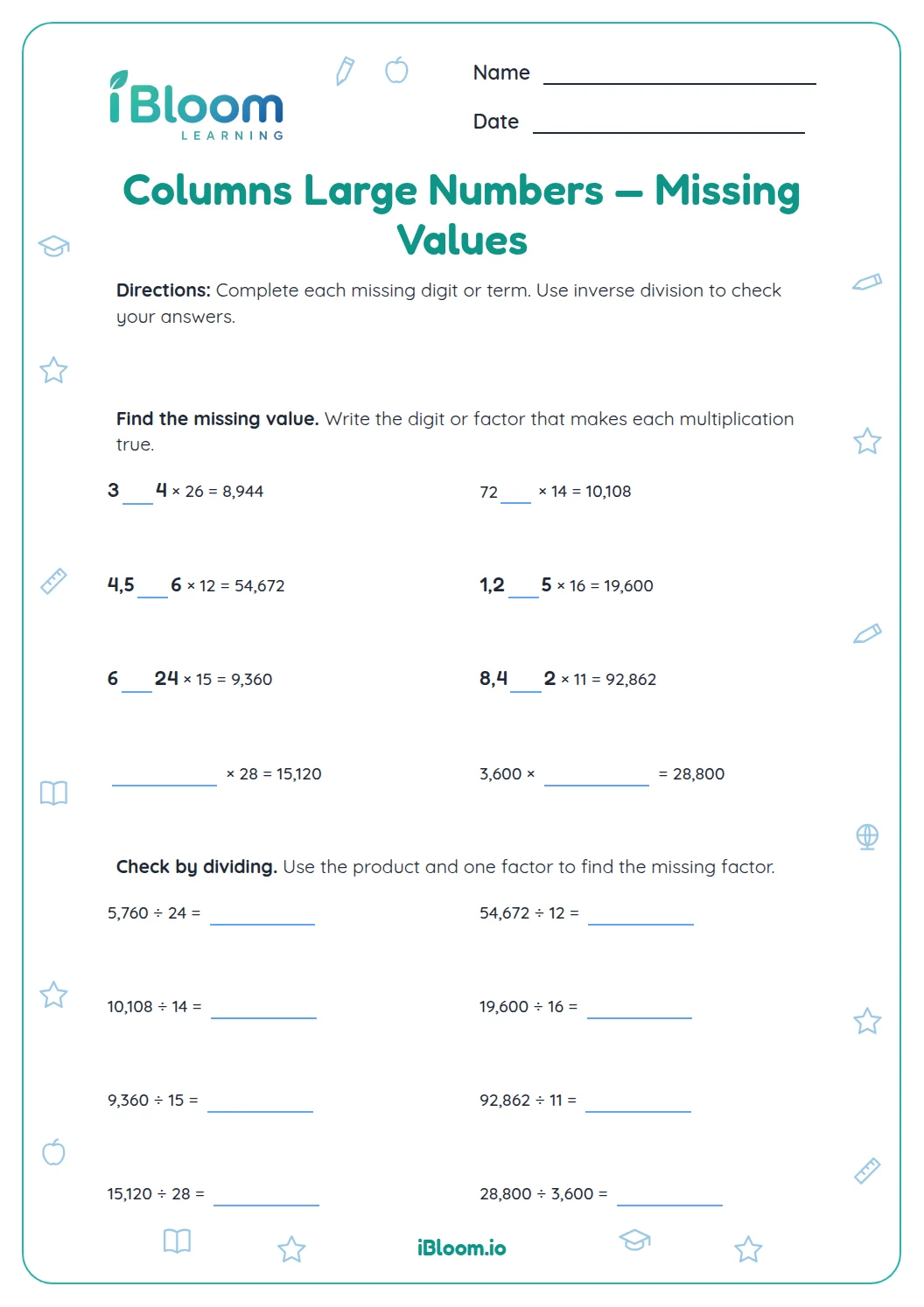
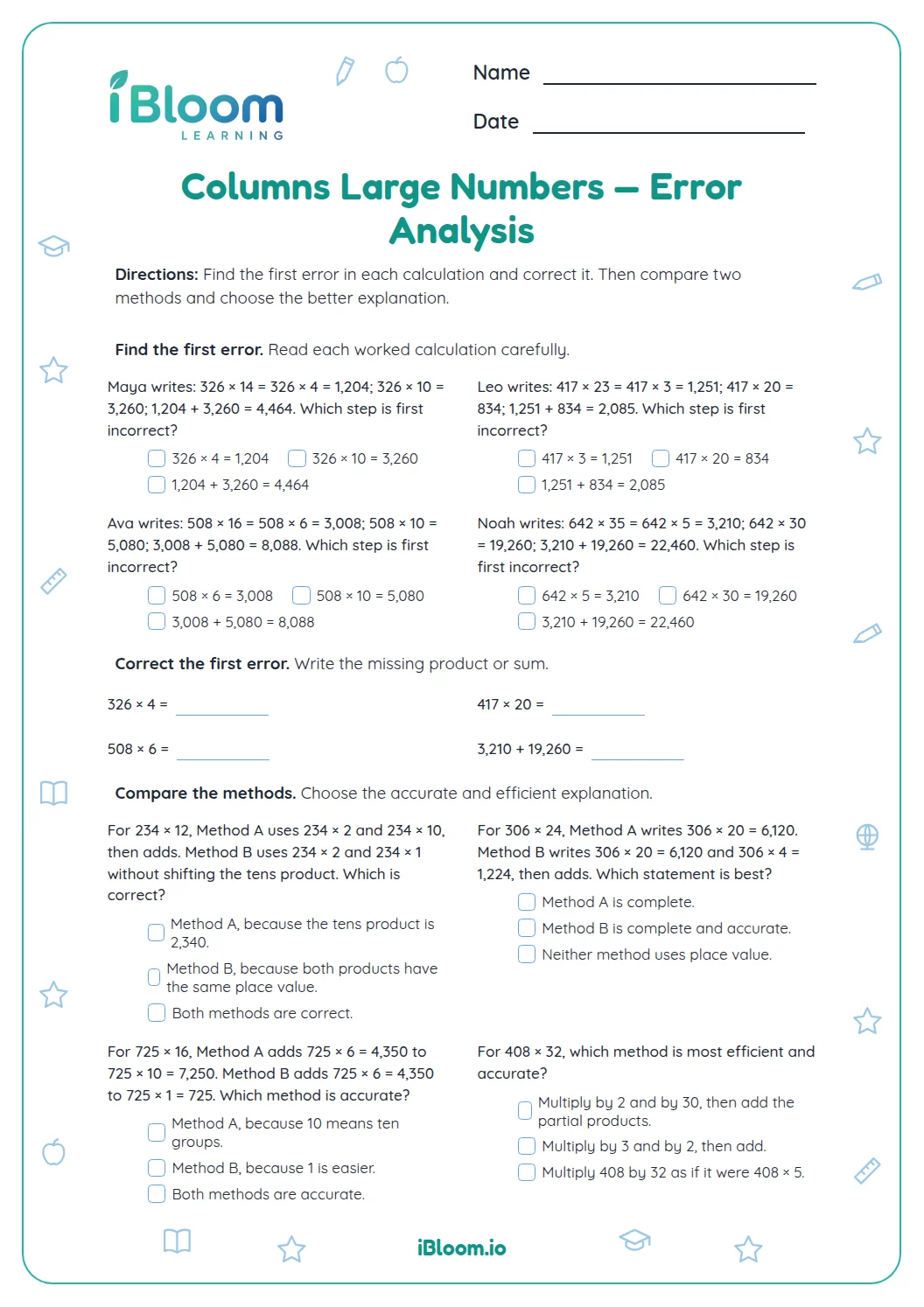
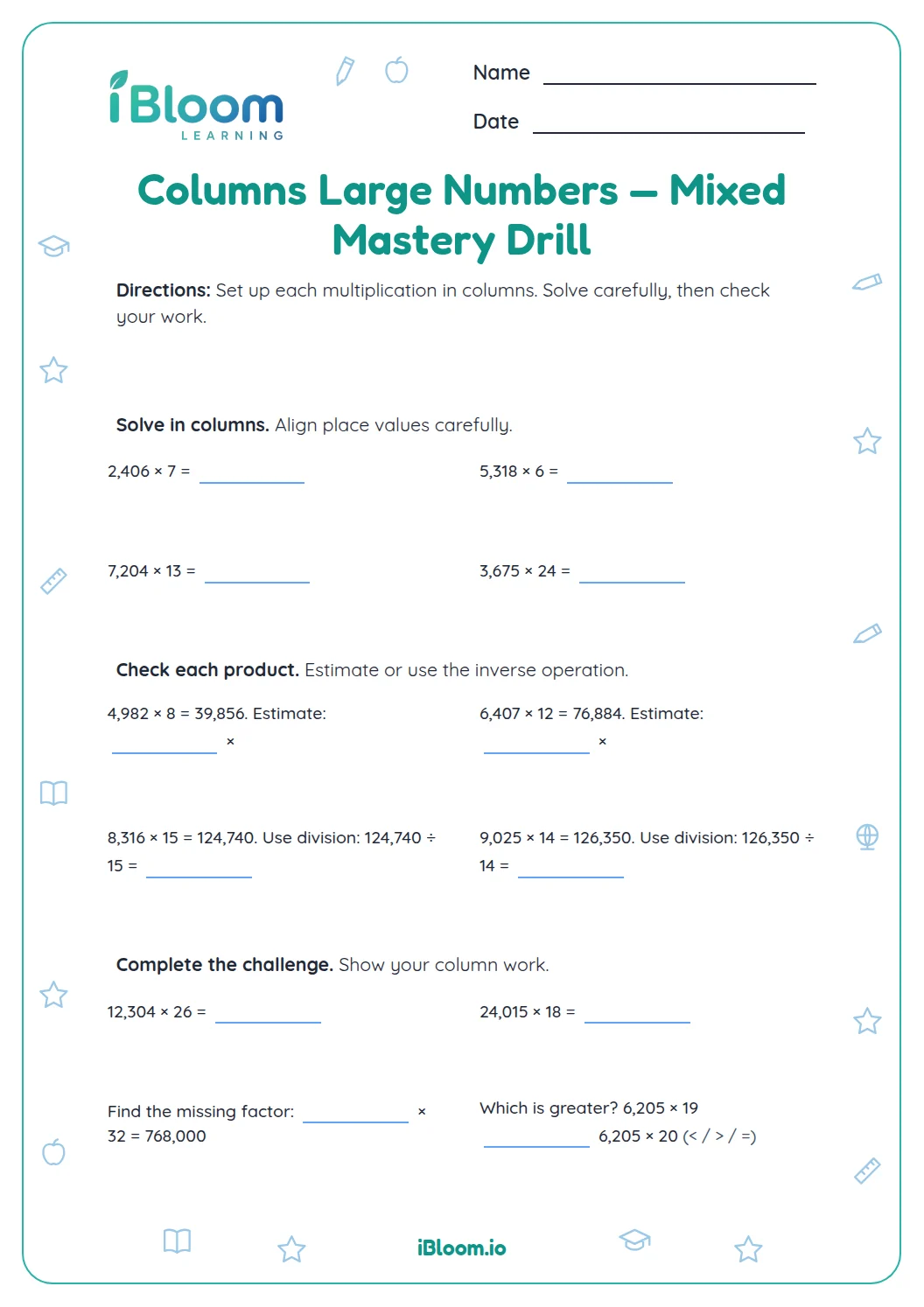



About this worksheet
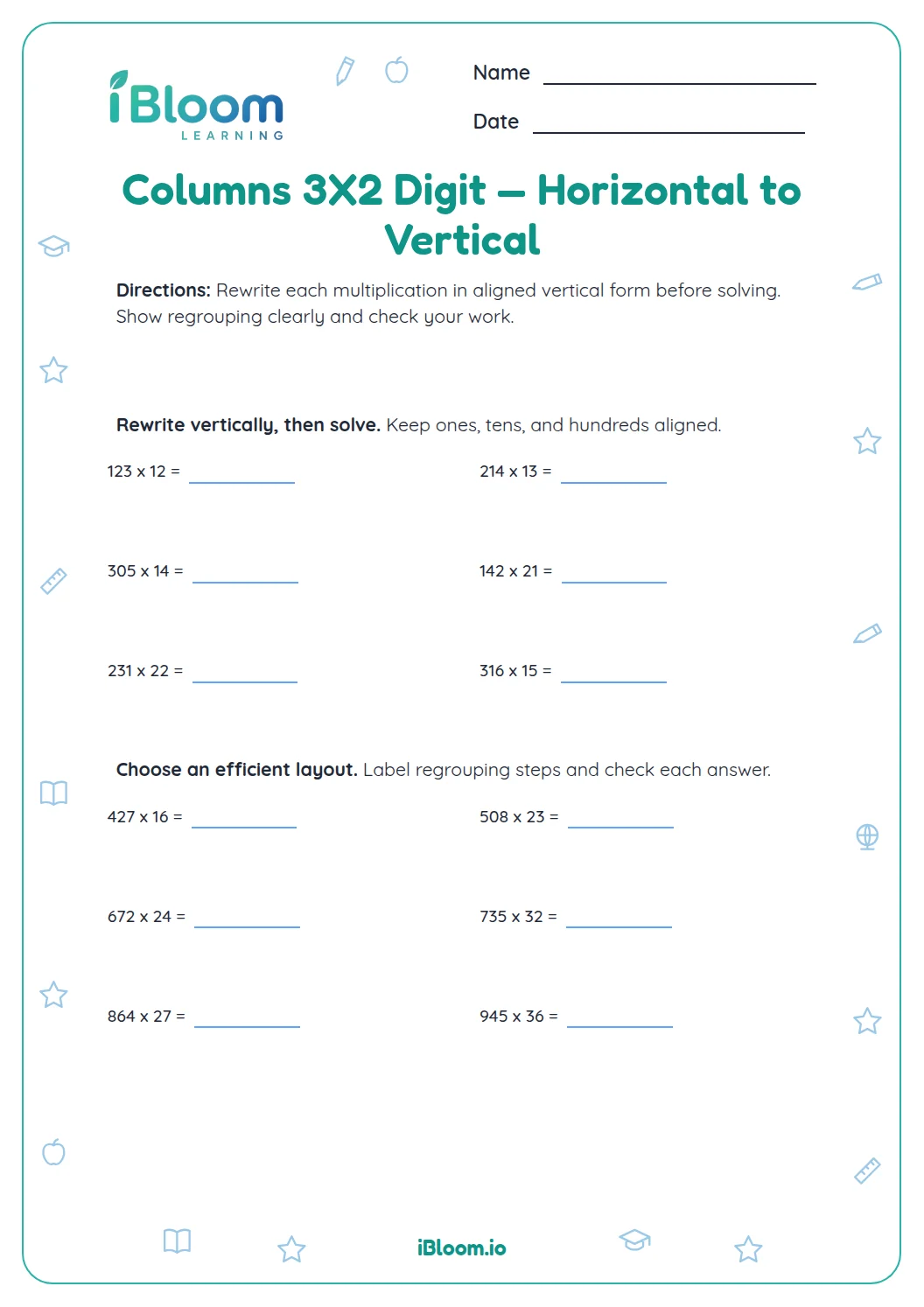
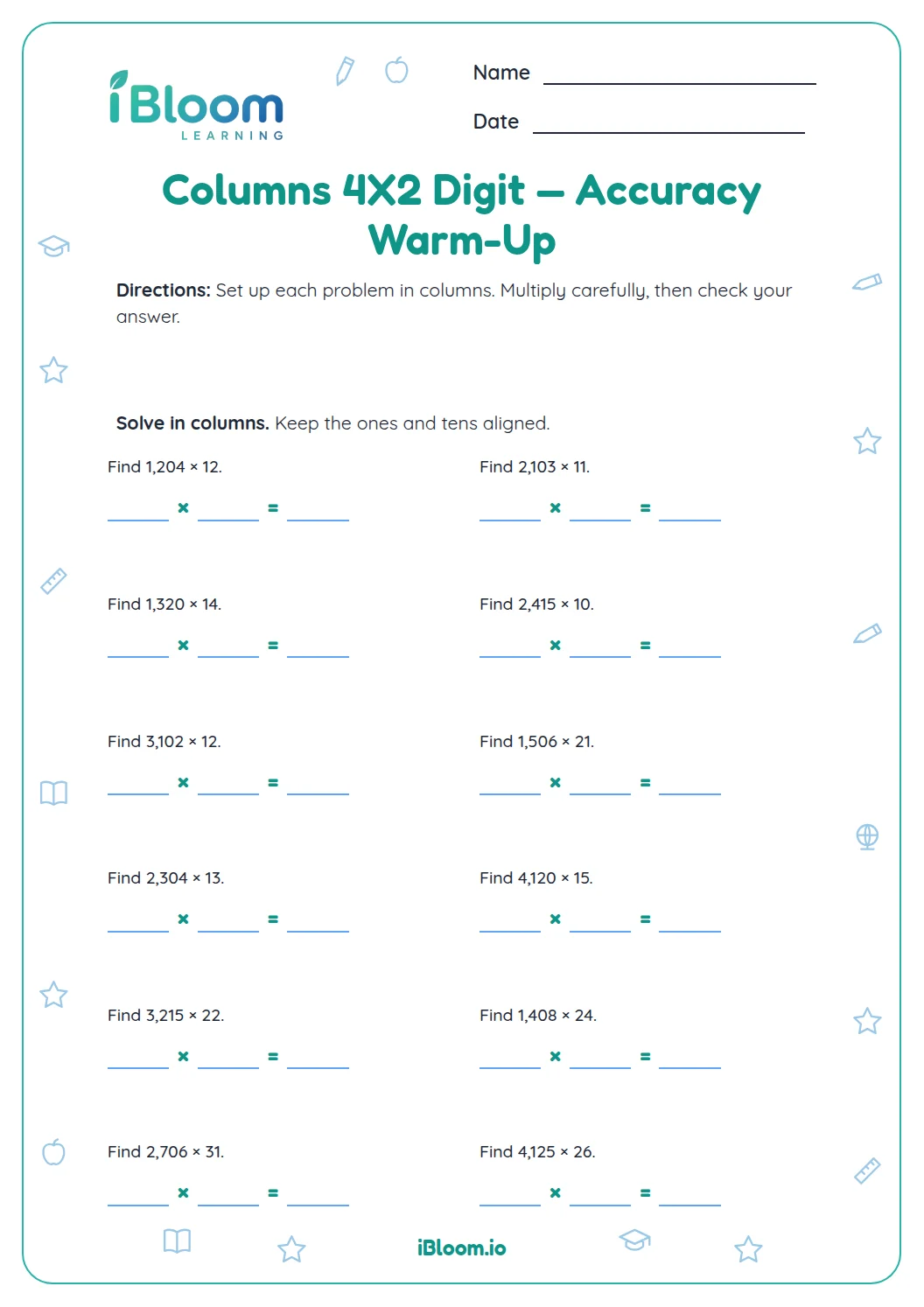
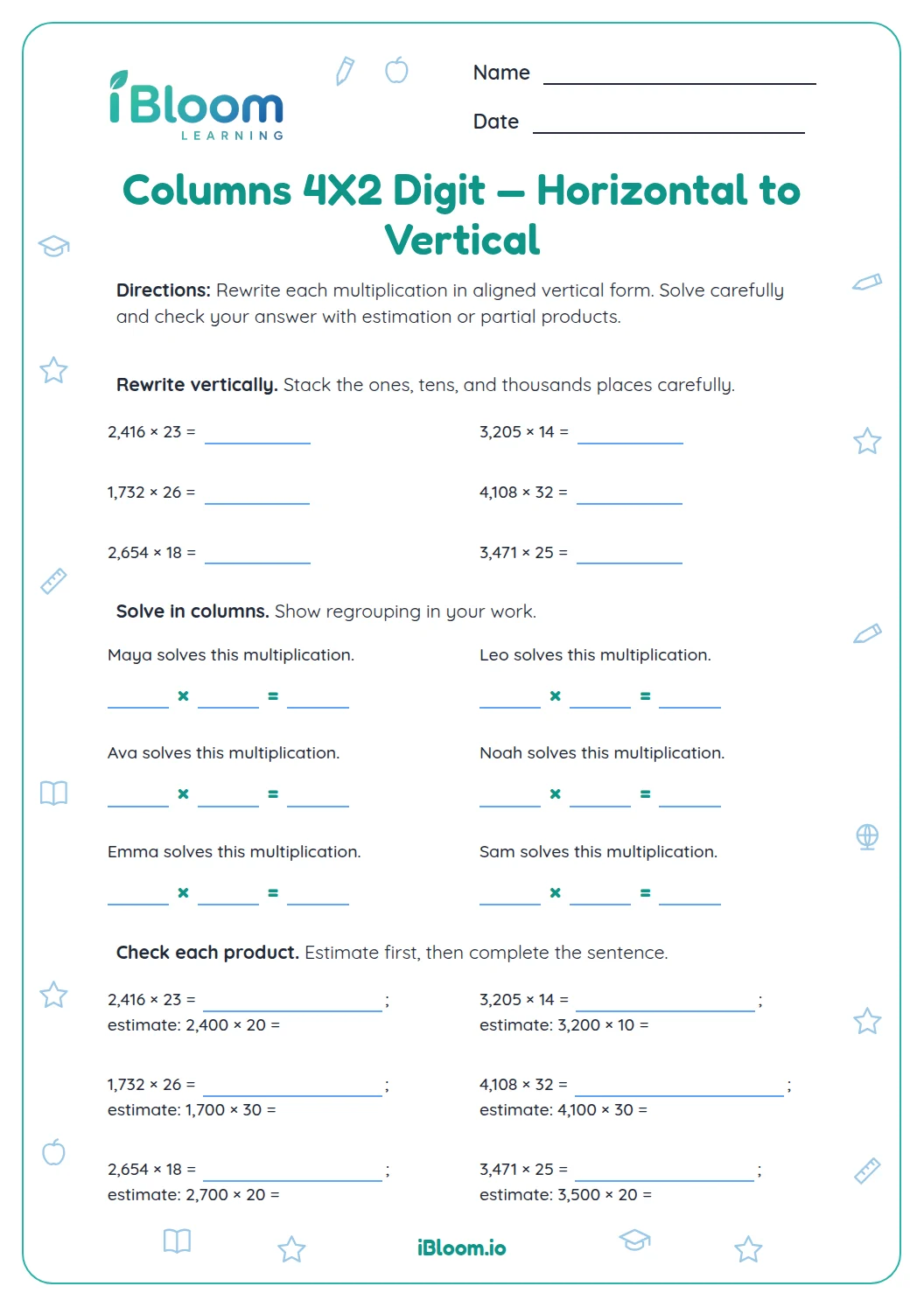
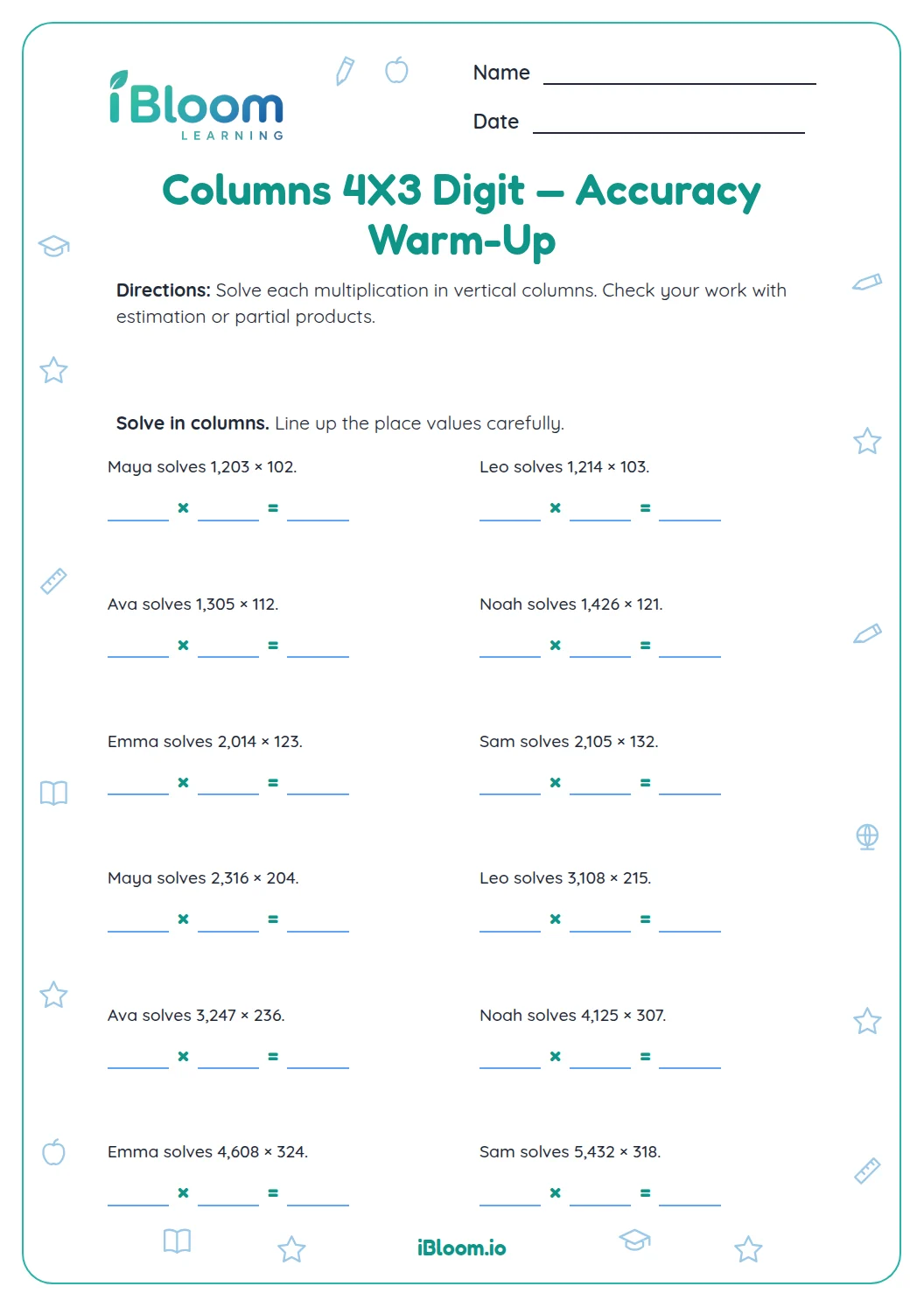
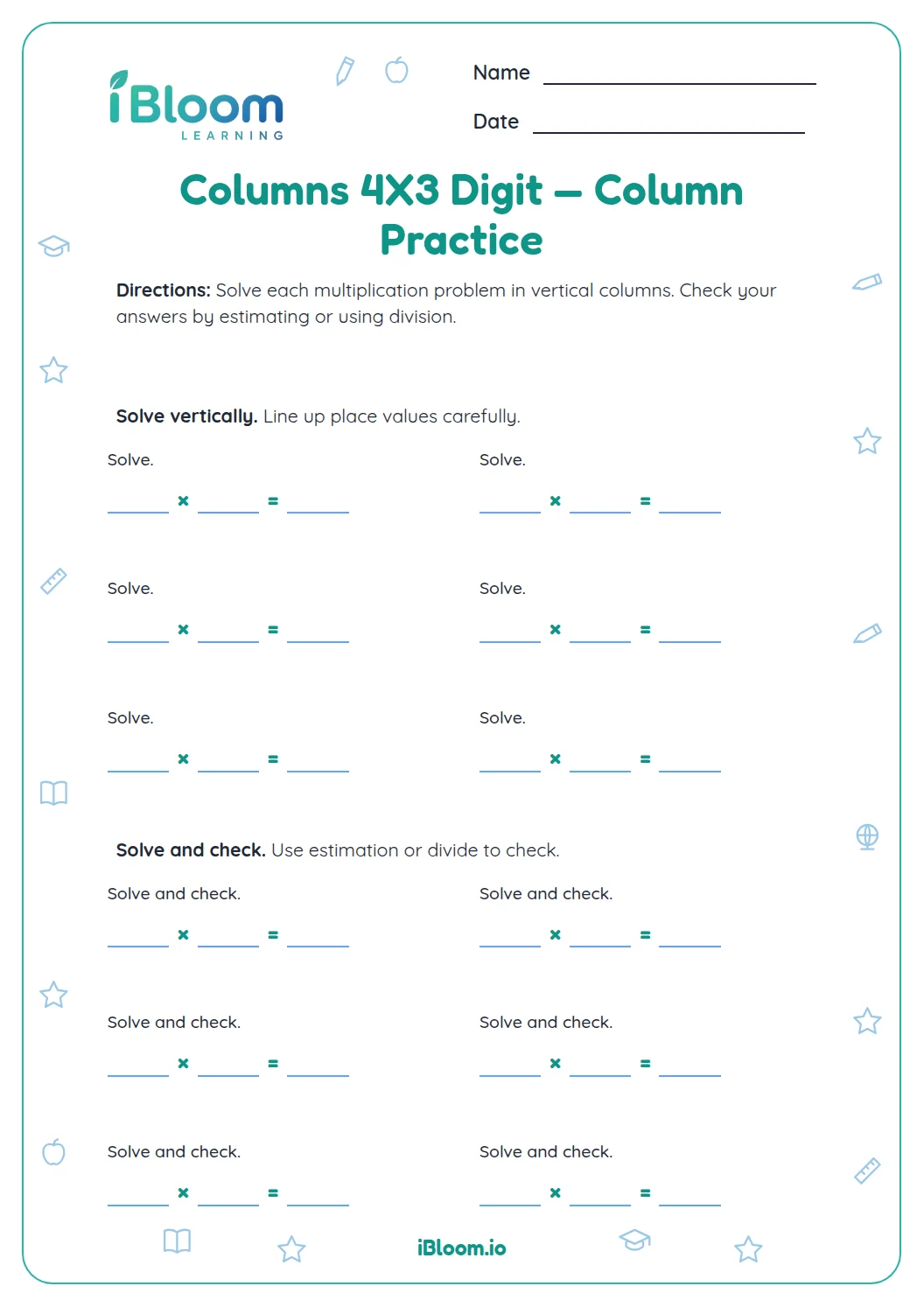
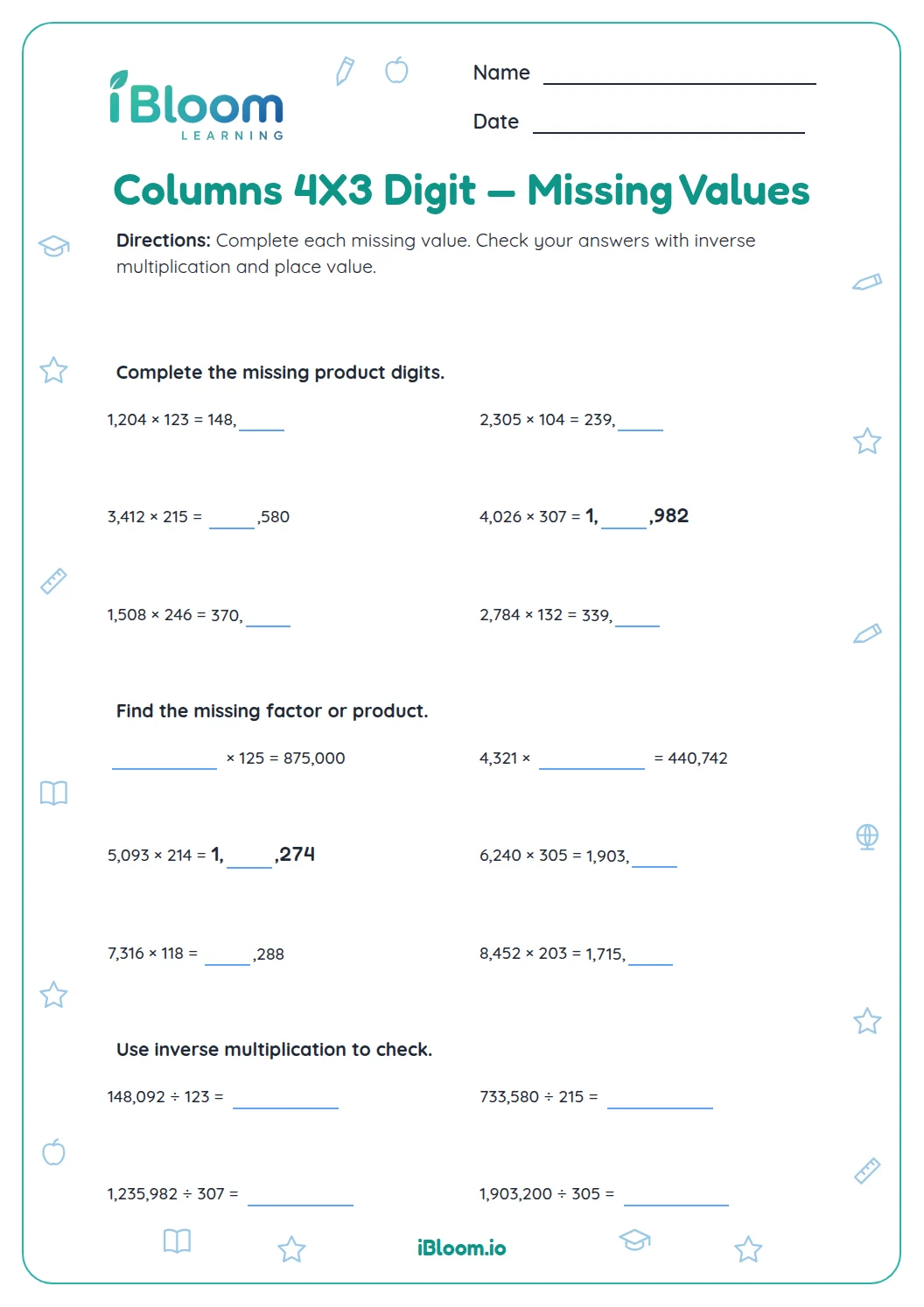
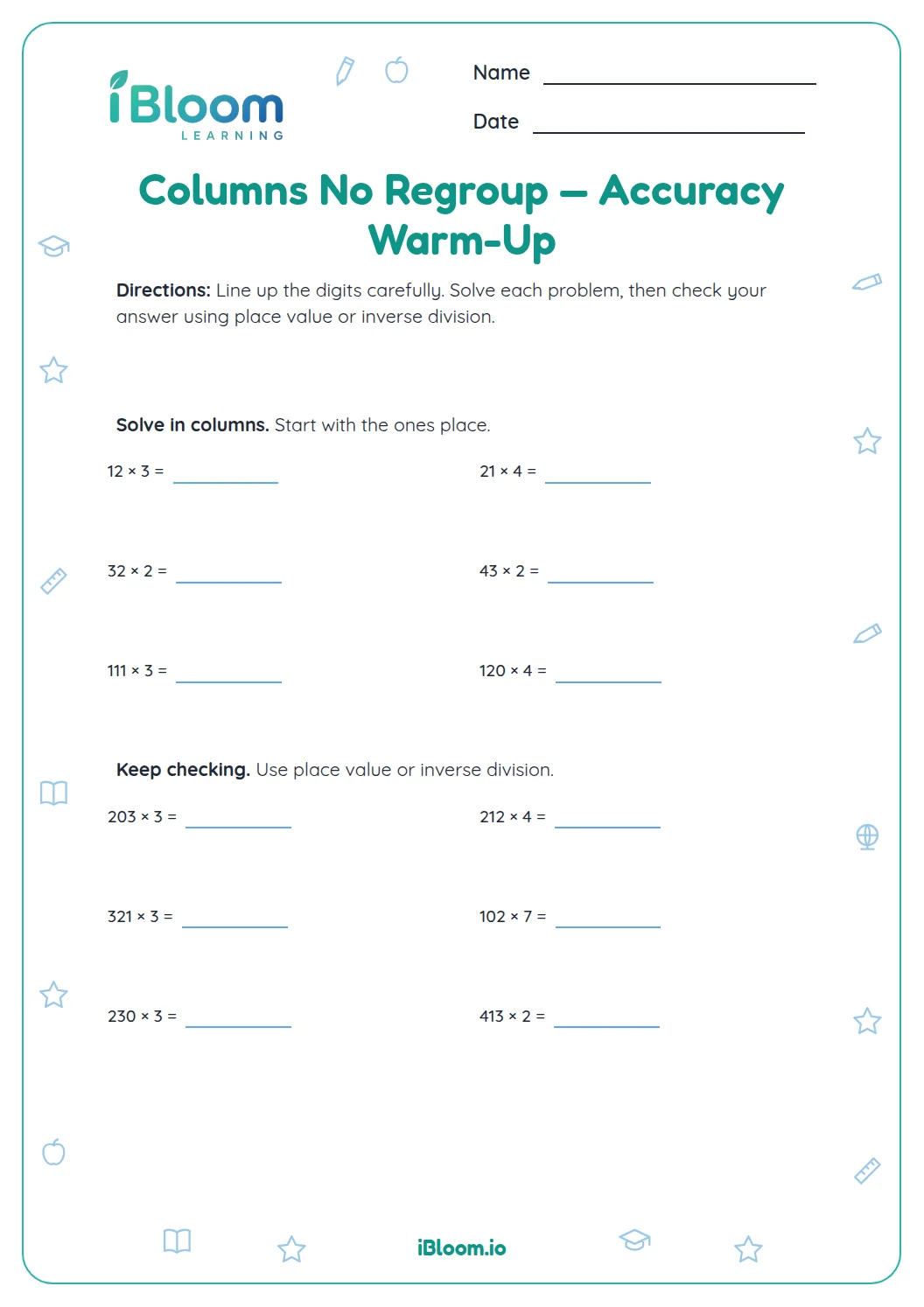
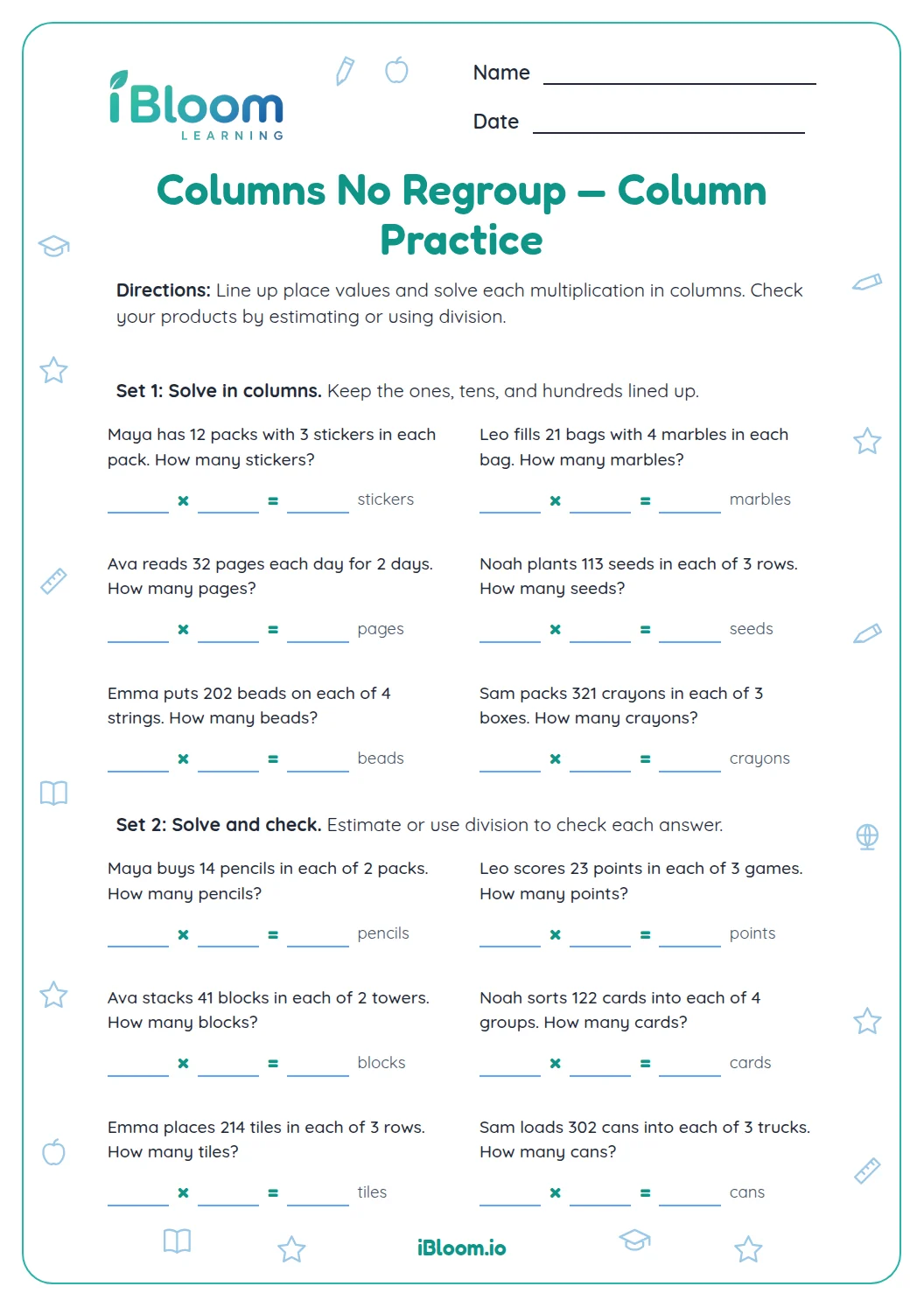
This Grade 5 printable gives students 16 multi-digit multiplication problems to solve in columns. Factors range from three-digit by two-digit to four-digit by two-digit, so students can align place values, record partial products, and check their results. The separate answer key lists each product. The worksheet practices CCSS 5.NBT.B.5.
Aligned to 5.NBT.B.5
How do columns help with larger products?
A column layout keeps ones, tens, hundreds, and thousands lined up. Multiply by each digit of the second factor, record each partial product in the correct place, and add the rows.
For 234 × 12, the tens digit makes 2,340 and the ones digit makes 234. Adding those partial products gives 2,808.
- 1234 × 10 = 2,340
- 2234 × 2 = 468
- 32,340 + 468 = 2,808
What is included in the drill?
All 16 questions are products for column work, ranging from three-digit by two-digit to four-digit by two-digit factors. The revised page expands the old eight-product set to give more practice with the same method.
How to use this worksheet
- 1Write the factors vertically with matching place values.
- 2Multiply by the ones digit and record that partial product.
- 3Multiply by the tens digit in the tens place.
- 4Add partial products and estimate to check the size.
Mistakes to watch for
The mistake
Misaligning a partial product
The fix
Shift the tens-digit row one place left.
The mistake
Forgetting a regrouped amount
The fix
Write each carried digit above the next column.
The mistake
Adding the partial products incorrectly
The fix
Estimate first, then check the sum of the rows.
Curriculum alignment
This worksheet practices the standard below through its questions.
Multiply multi-digit whole numbers using the standard algorithm.
On this sheet: The worksheet practices multi-digit whole-number multiplication with place-value columns and regrouping.
Show the official wordingHide the official wording
Fluently multiply multi-digit whole numbers using the standard algorithm.
What to practice next
Make more practice
Further reading
Questions parents and teachers ask
How do you multiply 234 by 12 in columns?
Multiply 234 by 2 to get 468, then multiply 234 by 10 to get 2,340. Add the partial products: 468 + 2,340 = 2,808. The tens row begins one place left because the 1 in 12 represents one ten.
How many questions are on the worksheet?
There are 16 column products, all set up for students to work through partial products. The factors range from three-digit by two-digit to four-digit by two-digit, giving practice across increasing place values. A separate answer key lists each exact product so students can check their work after completing the page.
What does a partial product mean?
A partial product is the product from one place-value digit of a factor. For 234 × 12, the partial products are 234 × 2 and 234 × 10. Placing the tens product correctly makes it easier to combine both parts.
How can children check a large product?
First estimate by rounding each factor to a nearby friendly number. Then compare the estimate with the exact answer. An inverse check can also divide the product by one factor to see whether it returns the other factor.
What grade is this multiplication worksheet for?
The worksheet is labeled Grade 5 and practices multi-digit whole-number multiplication with the standard algorithm. Students can work a shorter selection during a lesson or complete all 16 products for extended practice. The answer key provides exact products for checking each calculation.