






About this worksheet
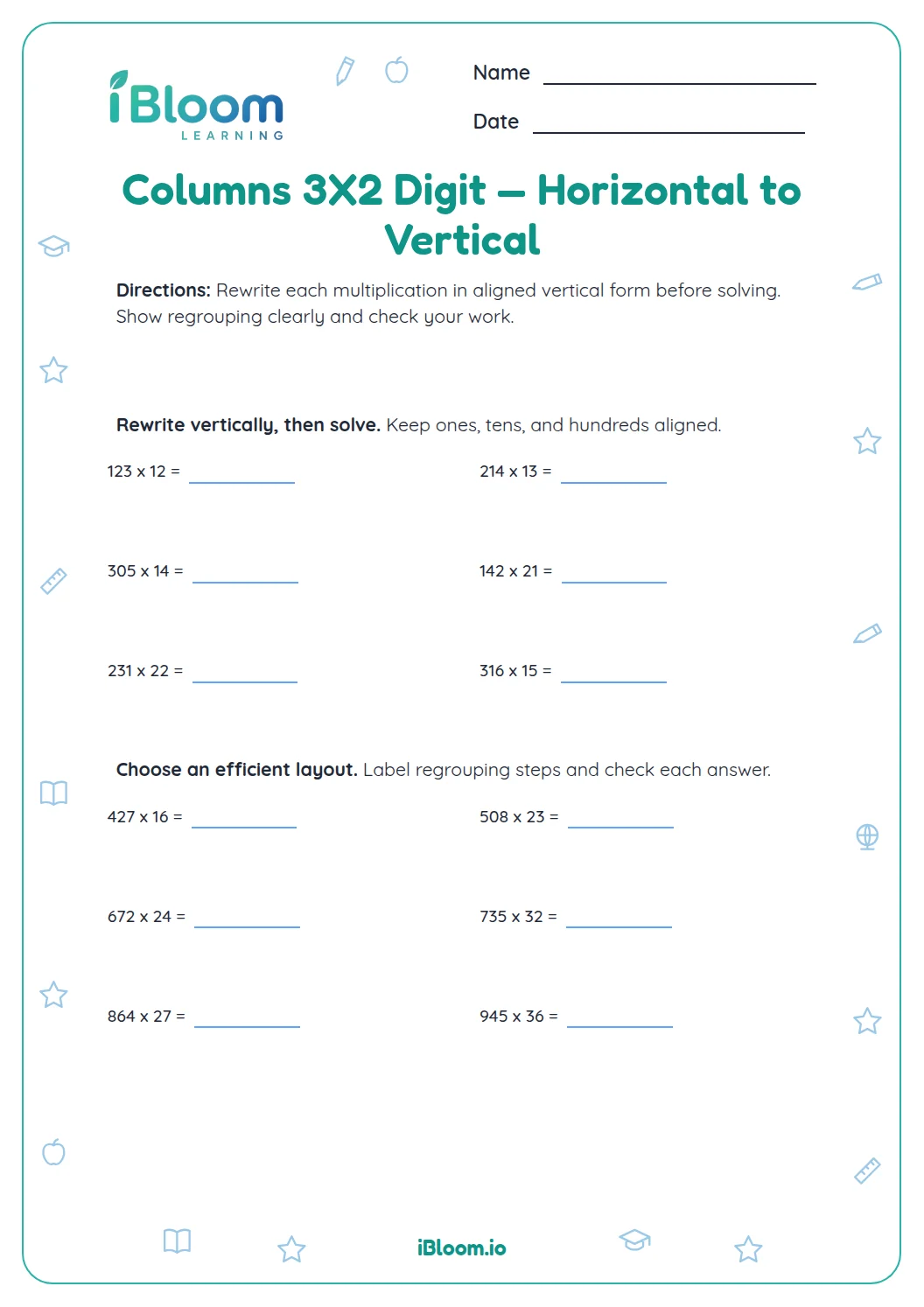
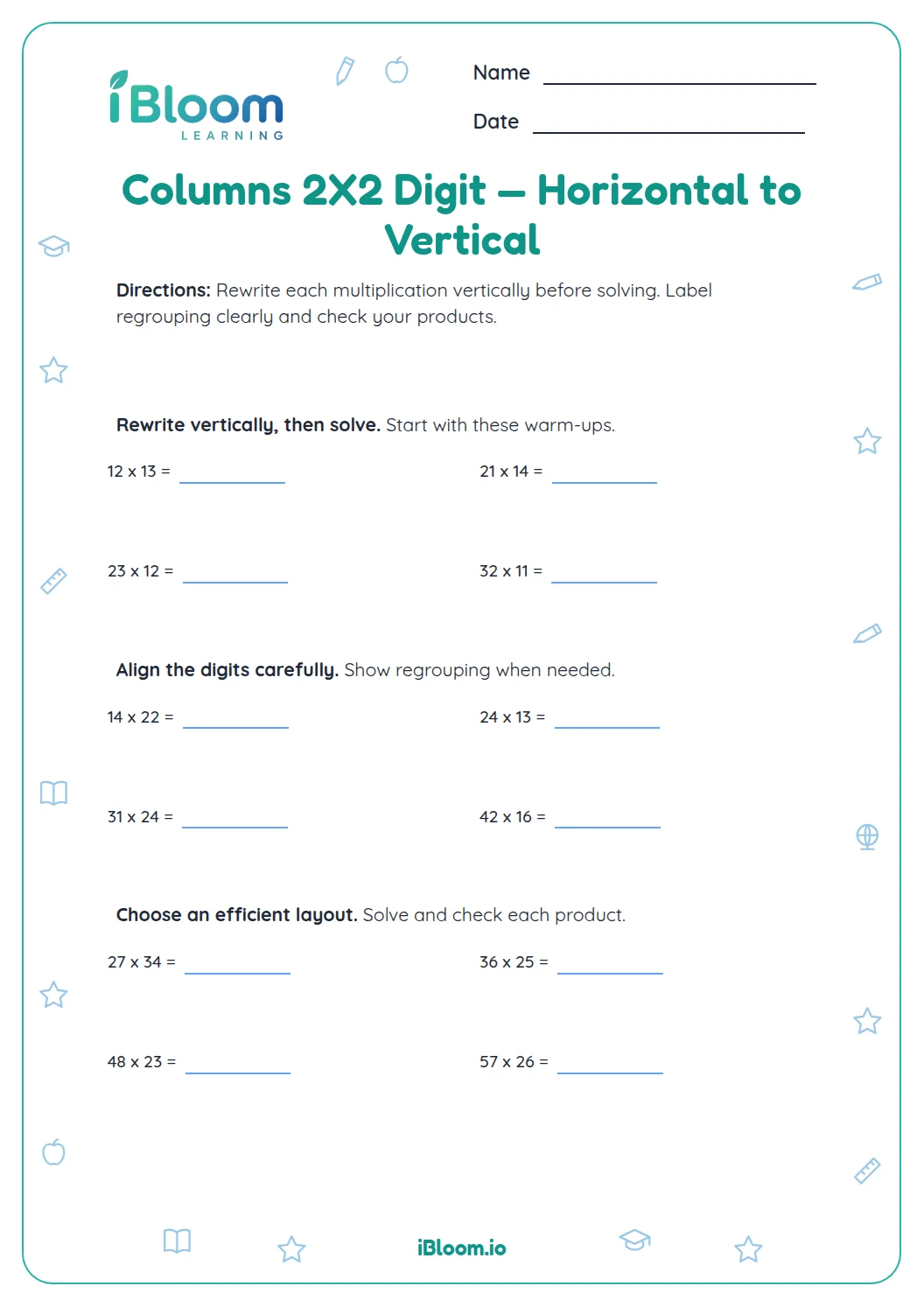
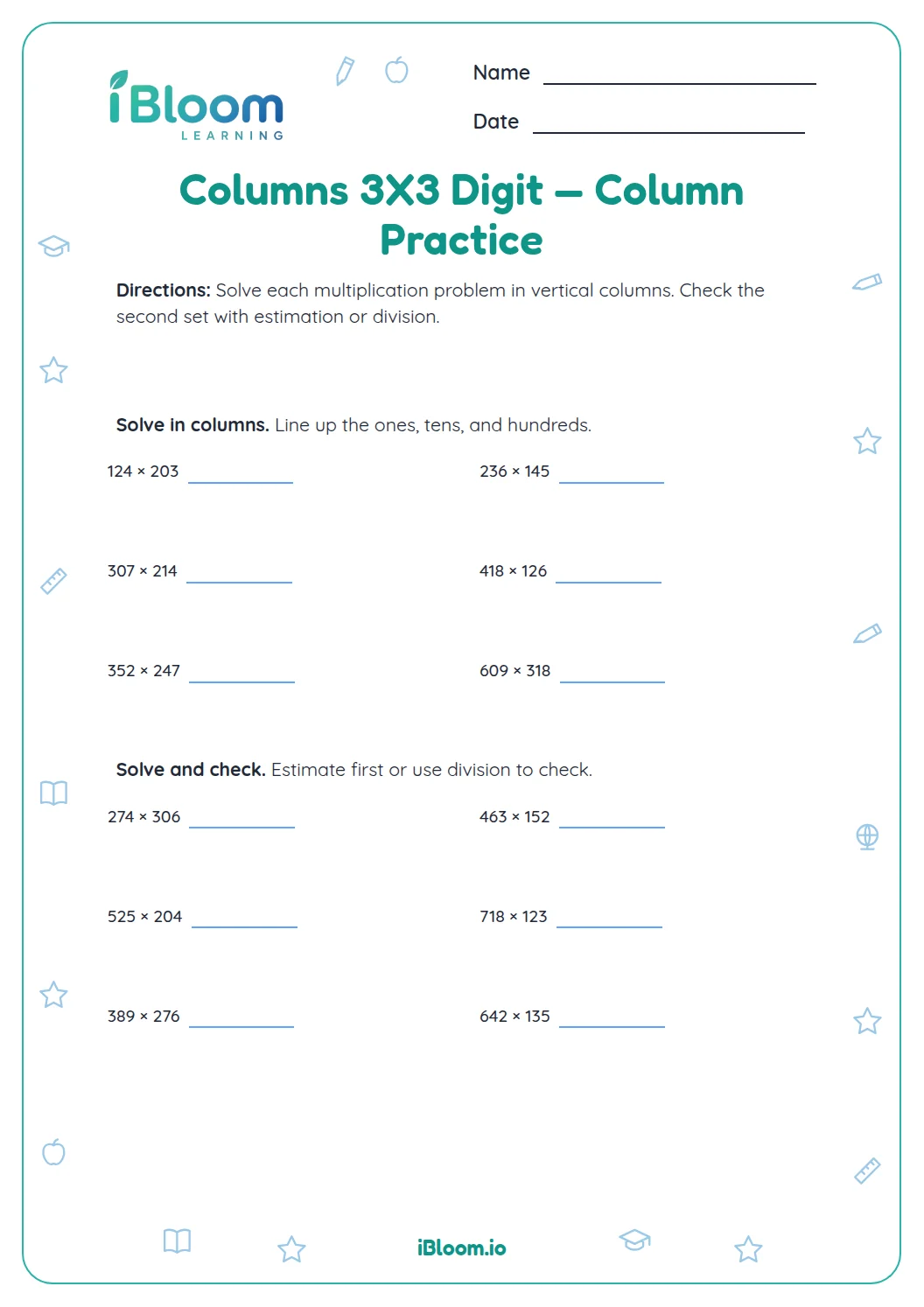
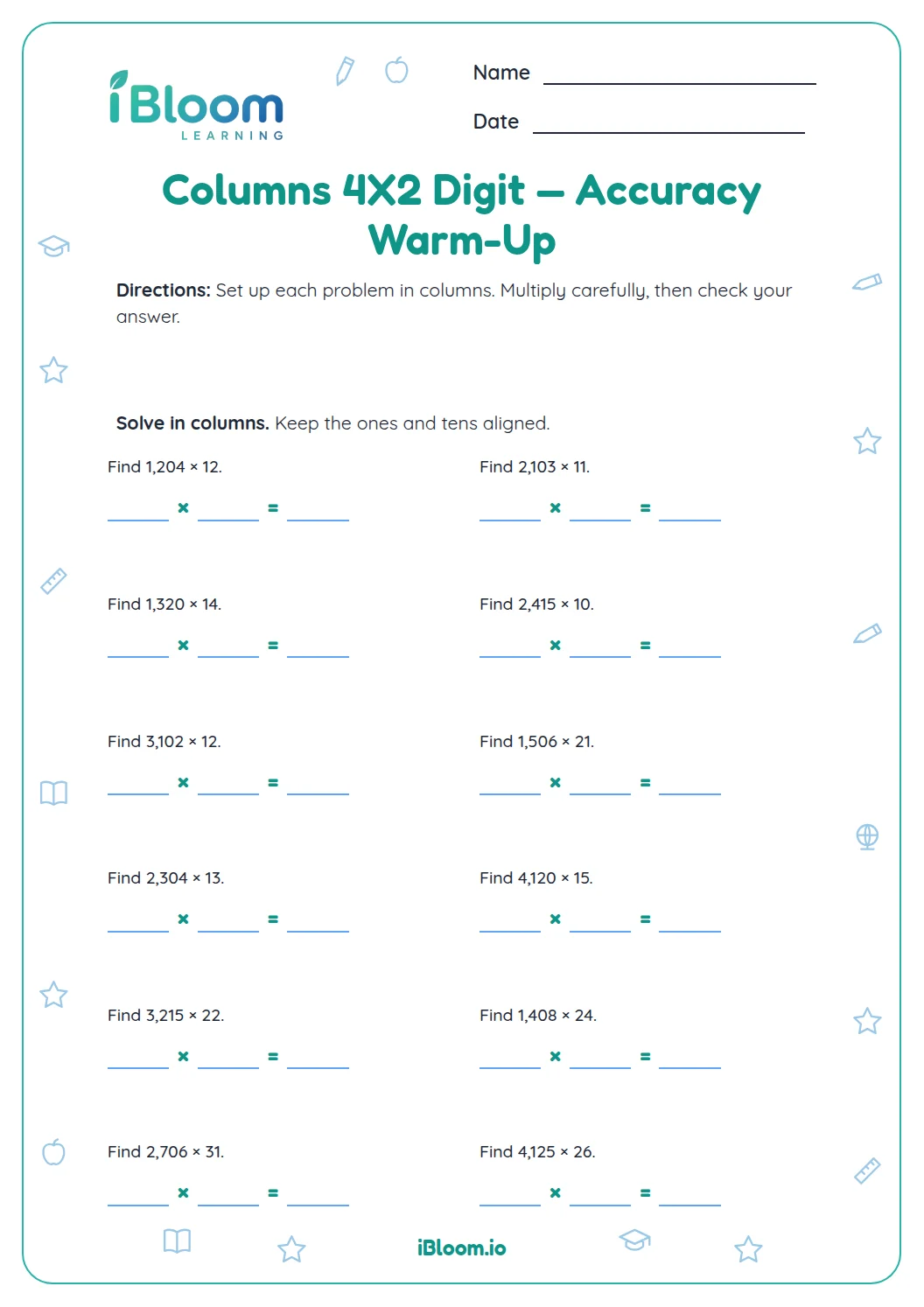
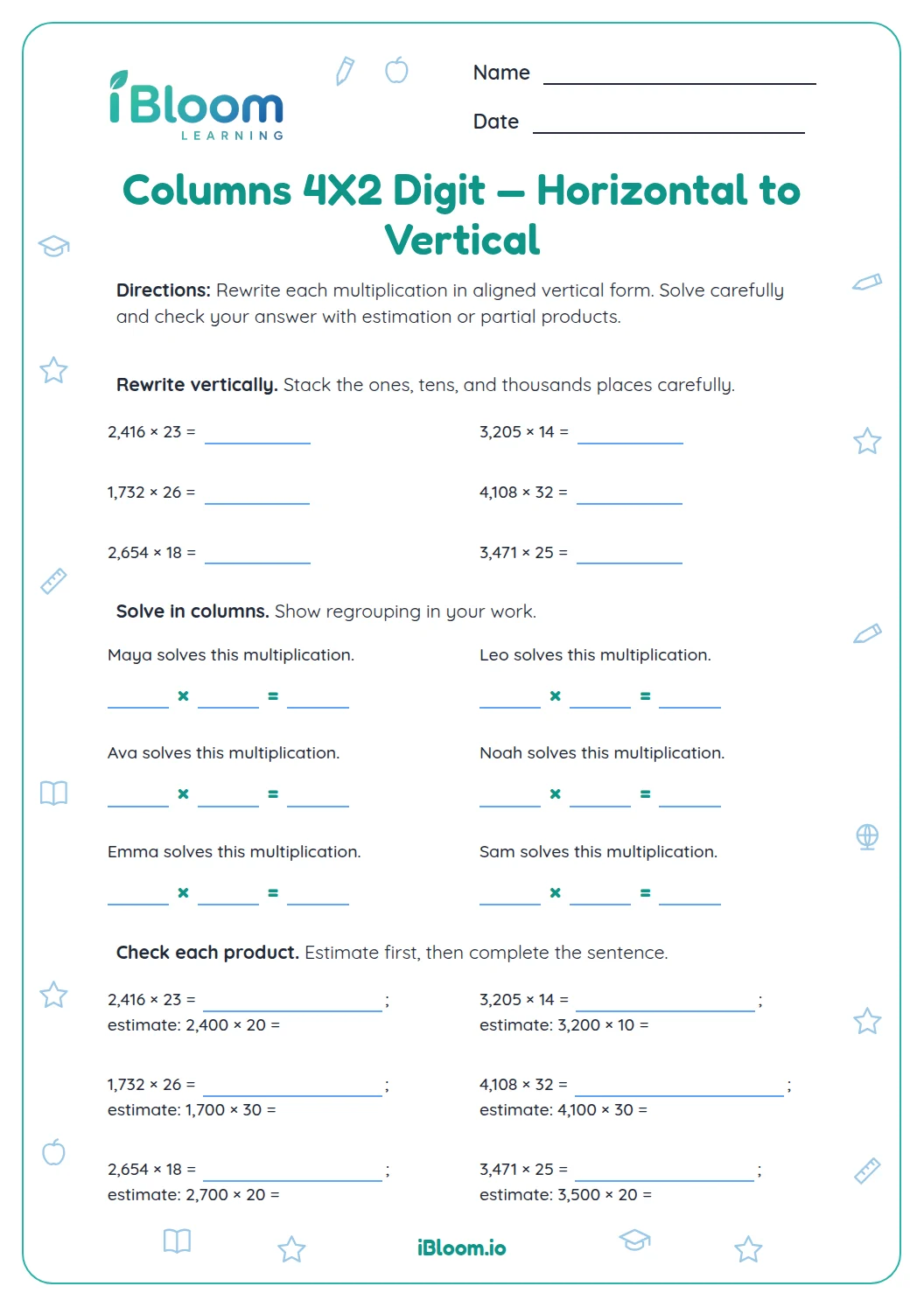
This Grade 5 multiplication worksheet gives 16 problems with three-digit by two-digit numbers. Learners multiply in columns, use partial products, find missing factors, and solve two equal-groups stories. The answer key includes the numerical answers for checking.
Aligned to 5.NBT.B.5
How do you multiply in columns?
The first six items ask learners to set up three-digit by two-digit multiplication in columns. For 124 × 12, multiply 124 by 2 and by 10, then add the partial products. The work boxes give space to align the steps.
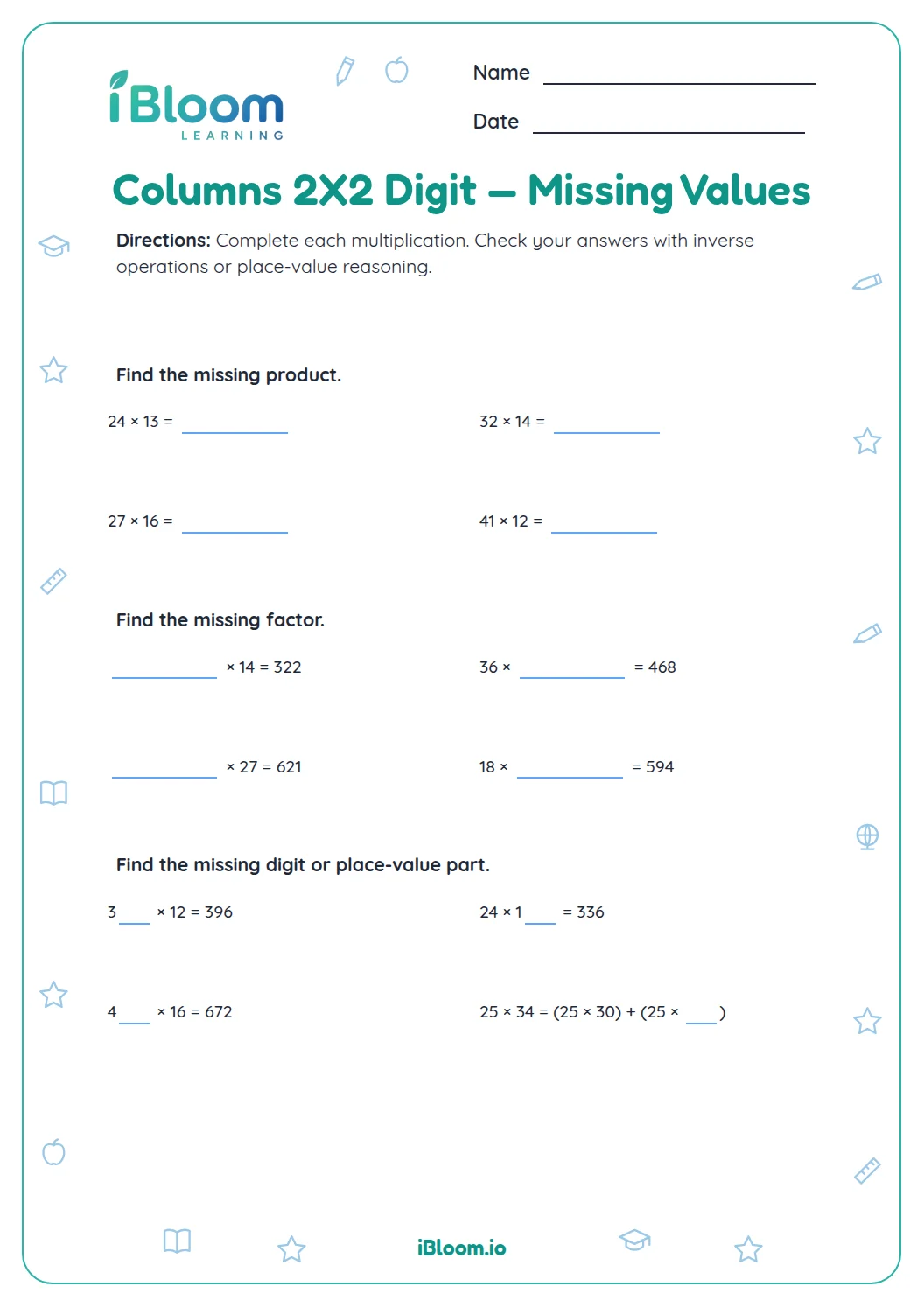
What is missing in each problem?
Some questions hide a product or a partial product. Others hide a factor. Use multiplication and division as inverse operations to find the missing factor, then multiply to check it.
- Part A: calculate products and missing factors
- Part B: identify a partial product from its place value
- Part C: apply multiplication to equal groups
How to use this worksheet
- 1Line up the numbers by place value before multiplying.
- 2Find the ones partial product first.
- 3Multiply by the tens digit, remembering it represents tens.
- 4Add the two partial products to get the full product.
- 5For missing factors, divide the product by the known factor and check by multiplying.
Common multiplication slips
The mistake
Treating the tens digit as ones, such as multiplying by 1 instead of 10 in 236 × 14.
The fix
Read the 1 in 14 as one ten and multiply 236 by 10.
The mistake
Starting the tens partial product in the ones column.
The fix
Shift that row one place left because it represents tens.
The mistake
Adding before finding both partial products.
The fix
Multiply by each place value first, then add the two results.
Common Core alignment
The central skill is multi-digit multiplication with the standard algorithm, matching the Grade 5 standard.
Fluently multiply multi-digit whole numbers using the standard algorithm.
On this sheet: The worksheet asks learners to multiply three-digit numbers by two-digit numbers in columns, using the standard algorithm and place-value partial products.
Show the official wordingHide the official wording
Fluently multiply multi-digit whole numbers using the standard algorithm.
What to practice next
Make more practice
Further reading
Questions parents and teachers ask
Why does the tens partial product have a zero?
The tens digit in the multiplier represents groups of ten. Multiplying by it shifts the product one place left, so the ones column is empty. A zero placeholder keeps the place values aligned when adding partial products. This gives the learner another clear chance to practice the skill on this printable page.
How can I find a missing factor?
Use the product and the known factor to divide. For example, if ___ × 12 = 2,184, divide 2,184 by 12 to find 182. Multiply 182 by 12 afterward to check that it gives the original product. This gives the learner another clear chance to practice the skill on this printable page.
What does 3-digit by 2-digit mean?
One factor has three digits and the other has two digits, such as 315 × 23. The worksheet breaks that multiplication into place-value parts, then asks learners to find missing products, partial products, or factors. This gives the learner another clear chance to practice the skill on this printable page.
Which grade is this skill usually taught?
The source page is tagged for Grades 3 through 5. The multi-digit strategy aligns most closely with Grade 5 standard 5.NBT.B.5, although this worksheet extends its examples to a three-digit factor and a two-digit factor. This gives the learner another clear chance to practice the skill on this printable page.
Is an answer key included?
Yes. A separate answer key lists all missing values. Students can also check their work by multiplying the factors or adding their partial products to see whether they reach the given total. This gives the learner another clear chance to practice the skill on this printable page.