





About this worksheet
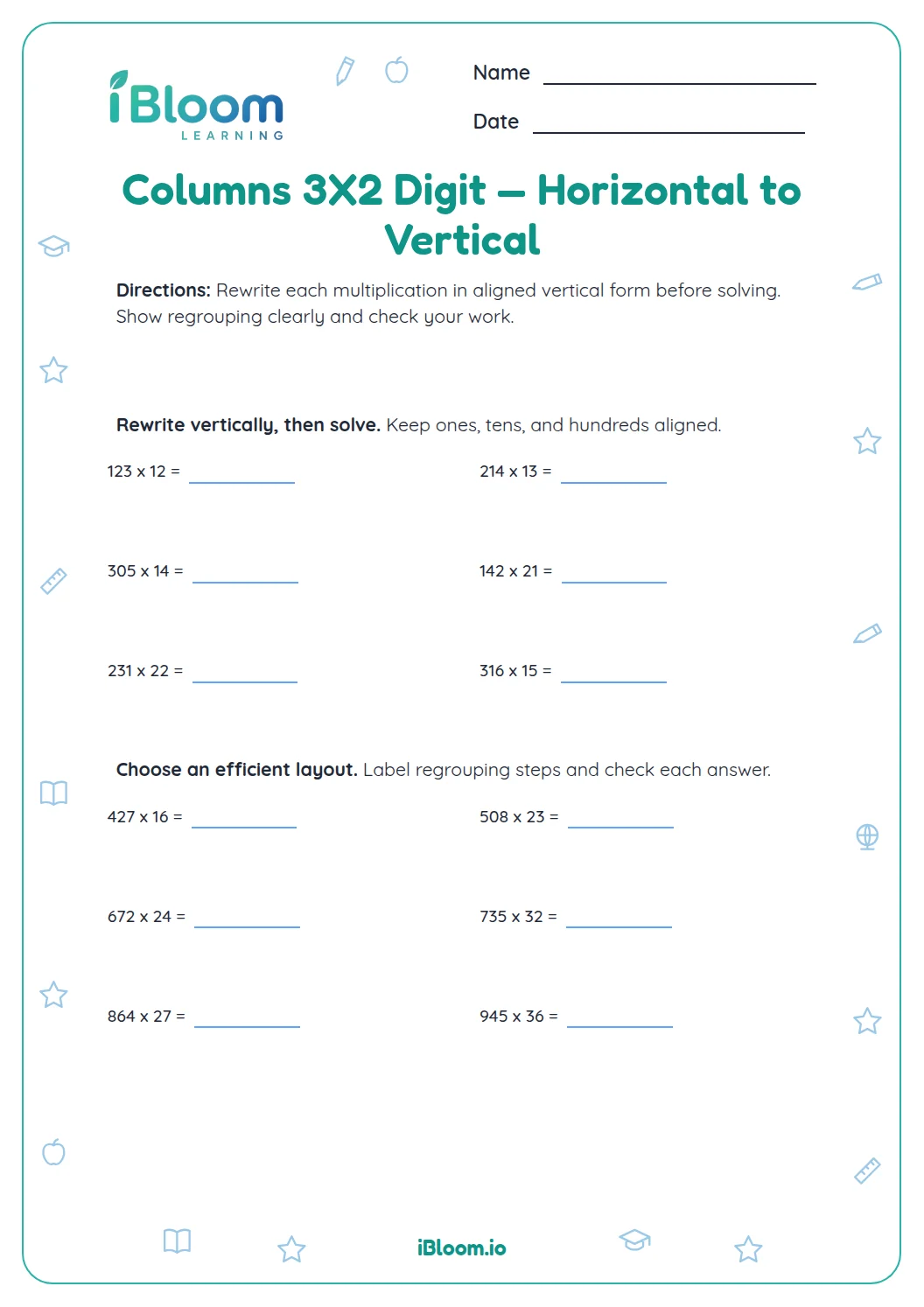
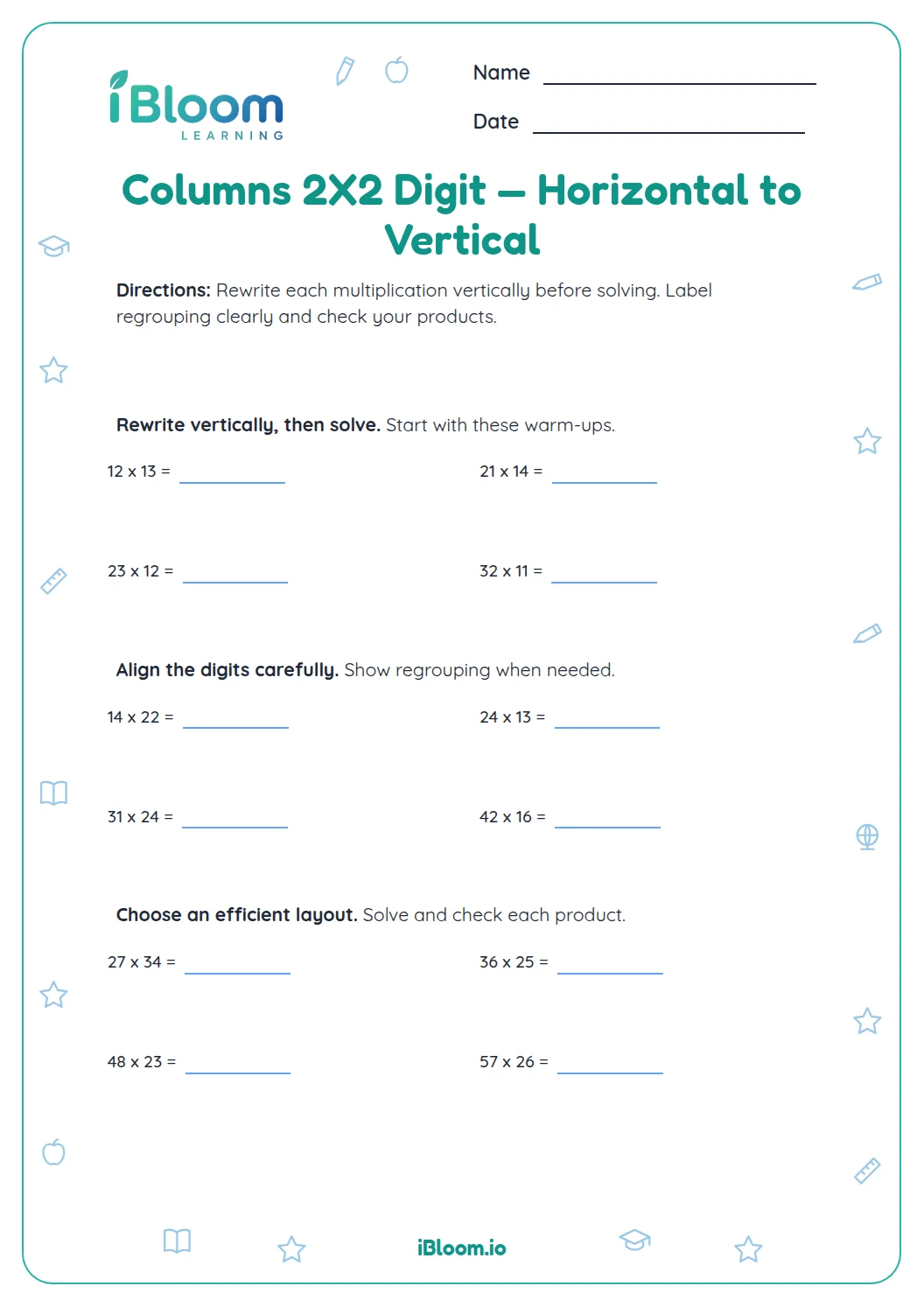
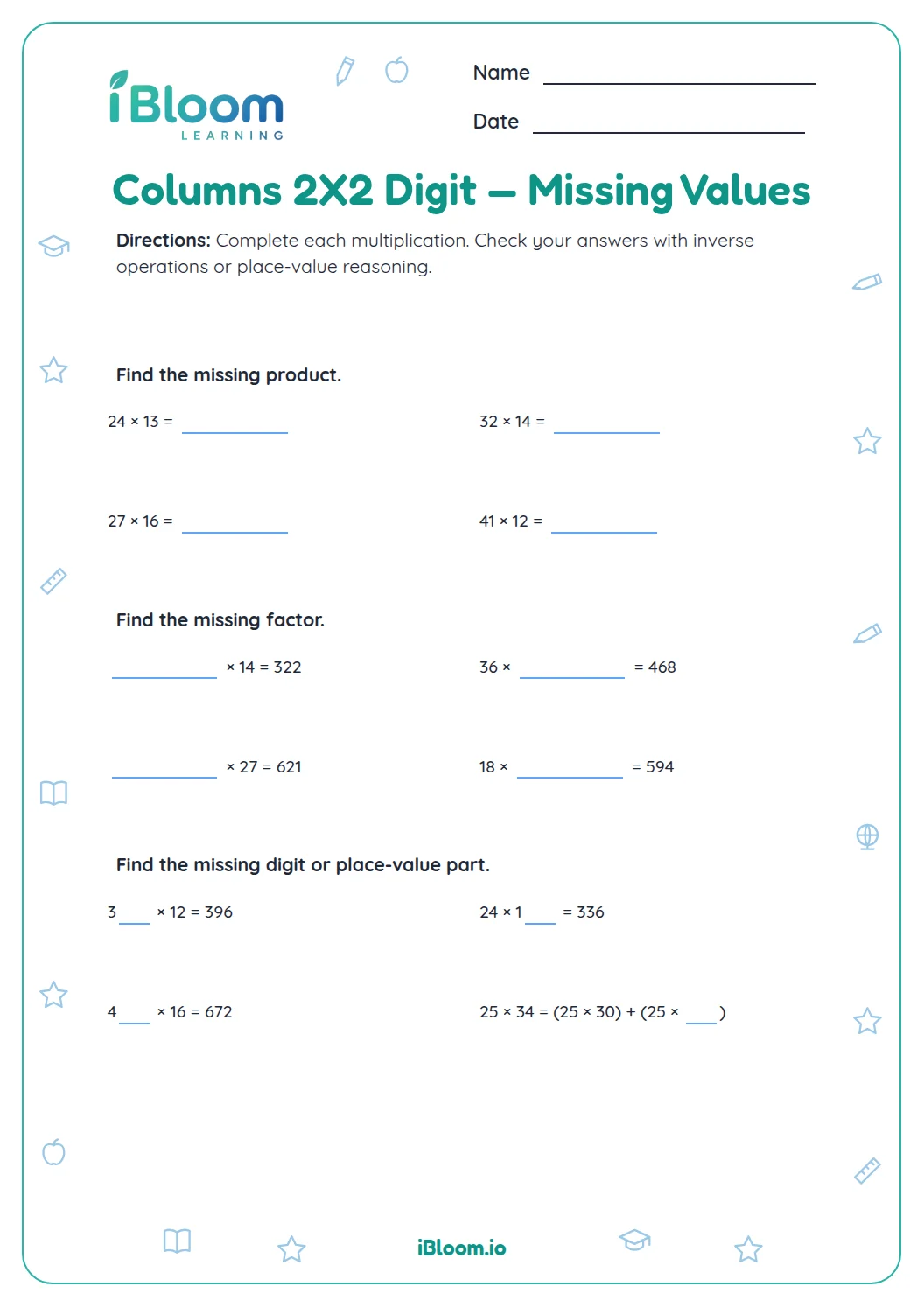
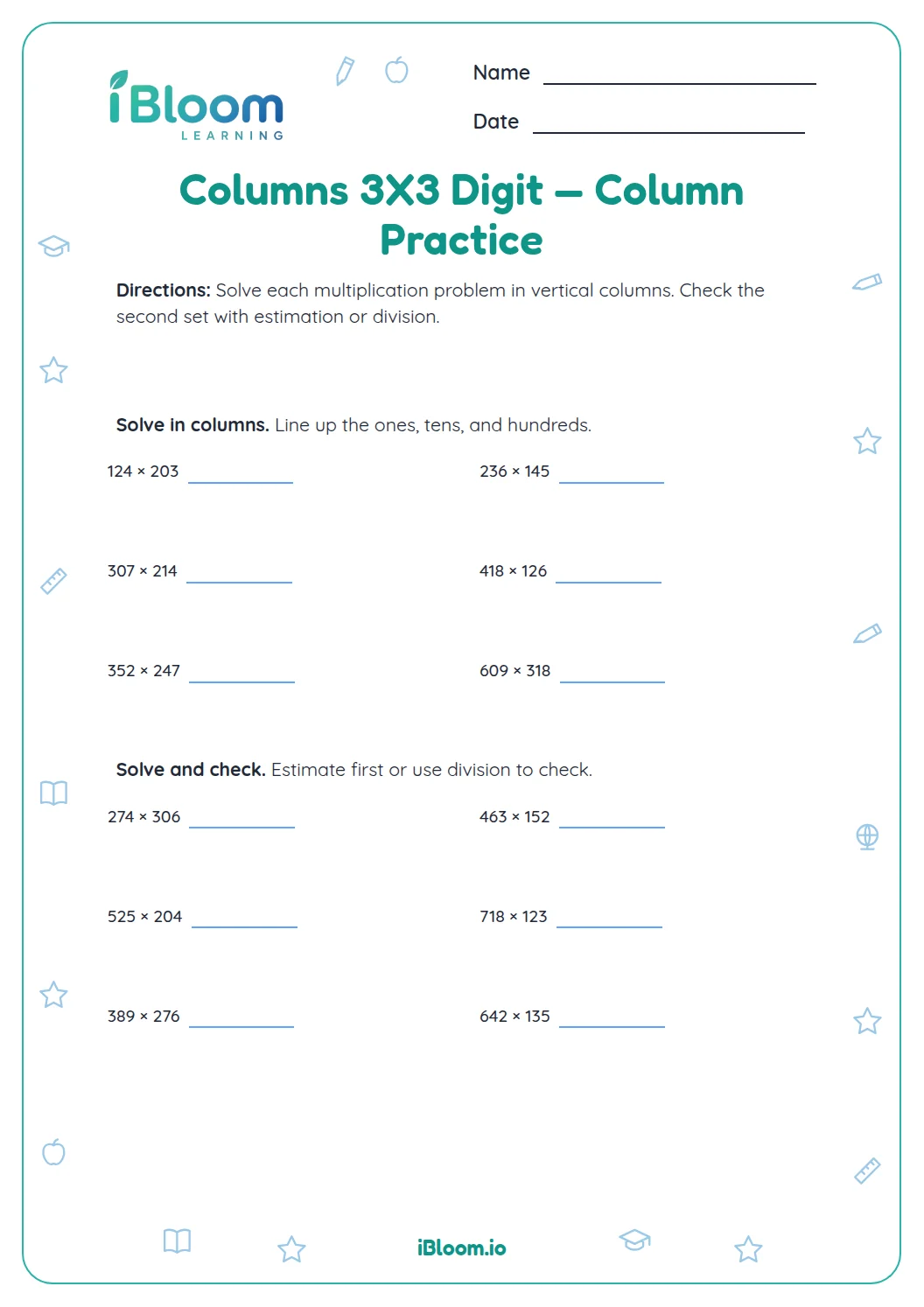
This printable multiplication worksheet gives learners 20 problems with three-digit and two-digit factors. Seven items ask learners to correct a tens-row place-value error, and 13 ask for full products. It includes a separate answer key and practices the standard algorithm and place-value reasoning in Common Core 5.NBT.B.5.
Aligned to 5.NBT.B.5
Why does the tens row shift?
A digit in the tens place is worth ten times its face value. A tens partial product must therefore be ten times the result from multiplying by the digit alone.
Question 1 shows a learner using 124 × 2 = 248 for the tens row. The corrected row is 124 × 20 = 2,480.
- 1124 × 23
- 2124 × 3 = 372
- 3124 × 20 = 2,480
- 4372 + 2,480 = 2,852
How should I check a product?
Estimate first, multiply by the ones digit, then multiply by the tens digit as a tens value. Add the partial products and compare with the estimate.
What is on the practice pages?
Part A begins with tens-place checks and products. Part B continues with more three-digit by two-digit products and place-value checks. Learners use the tens digit as a multiple of ten in the second partial product.
How to use this worksheet
- 1Estimate each product before calculating.
- 2Multiply by the ones digit and regroup carefully.
- 3Multiply by the tens digit as tens, shifting the row.
- 4Add the partial products.
- 5Compare your answer with the estimate.
Common mistakes and quick fixes
The mistake
Using the tens digit as ones in the second partial product.
The fix
Multiply by the digit, then shift the product one place left because it represents tens.
The mistake
Adding partial products before correcting the tens row.
The fix
Check both partial products separately, then add them to get the full product.
The mistake
Losing a zero in a tens-row correction.
The fix
Compare the row with the product of the factor and the full tens value, such as 20 or 40.
Common Core alignment
This worksheet practices the listed Common Core mathematics skill.
Multiply multi-digit whole numbers with the standard algorithm.
On this sheet: Learners inspect and solve three-digit by two-digit multiplication with place-value partial products.
Show the official wordingHide the official wording
Fluently multiply multi-digit whole numbers using the standard algorithm.
What to practice next
Make more practice
Further reading
Questions parents and teachers ask
What does the worksheet mean by a tens-row error?
The tens digit names groups of ten, so the second partial product must use the full tens value. In question 1, 124 × 2 = 248 is only the ones-sized result; the corrected tens row is 124 × 20 = 2,480. The page gives seven such corrections before and among the full products.
How many questions are included?
There are 20 questions: seven ask learners to correct the tens partial product, and 13 ask for a three-digit by two-digit product. The answer key lists all 20 results. Learners can use partial products or the standard algorithm, checking that both methods preserve place value.
What is the corrected tens row in question 1?
The corrected row is 2,480. In 124 × 23, the 2 in 23 represents 20, so multiply 124 by 20 rather than by 2. Then combine 2,480 with 124 × 3 = 372 to get the complete product, 2,852.
How can a learner check a product?
Estimate by rounding each factor to a nearby friendly number, then compare the estimate with the exact result. For 124 × 23, 120 × 20 is about 2,400, so 2,852 is a sensible product. Checking the tens row separately also helps catch a misplaced zero.
Is this only a timed drill?
No. The directions focus on correcting place value and solving accurately, so learners can take time to show the multiplication steps. A teacher or family member can discuss why the tens row shifts before using the remaining questions for independent practice.