





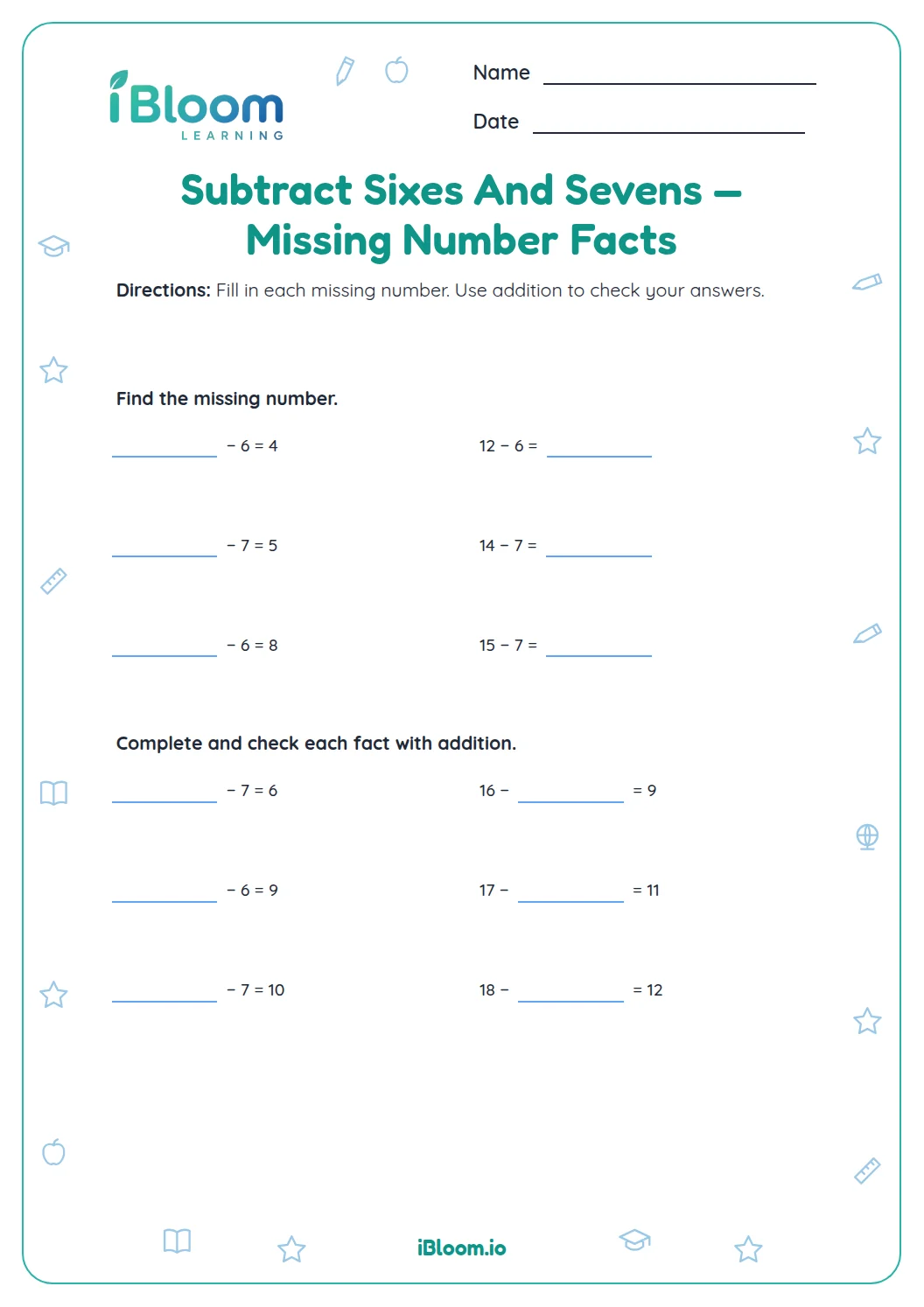

About this worksheet
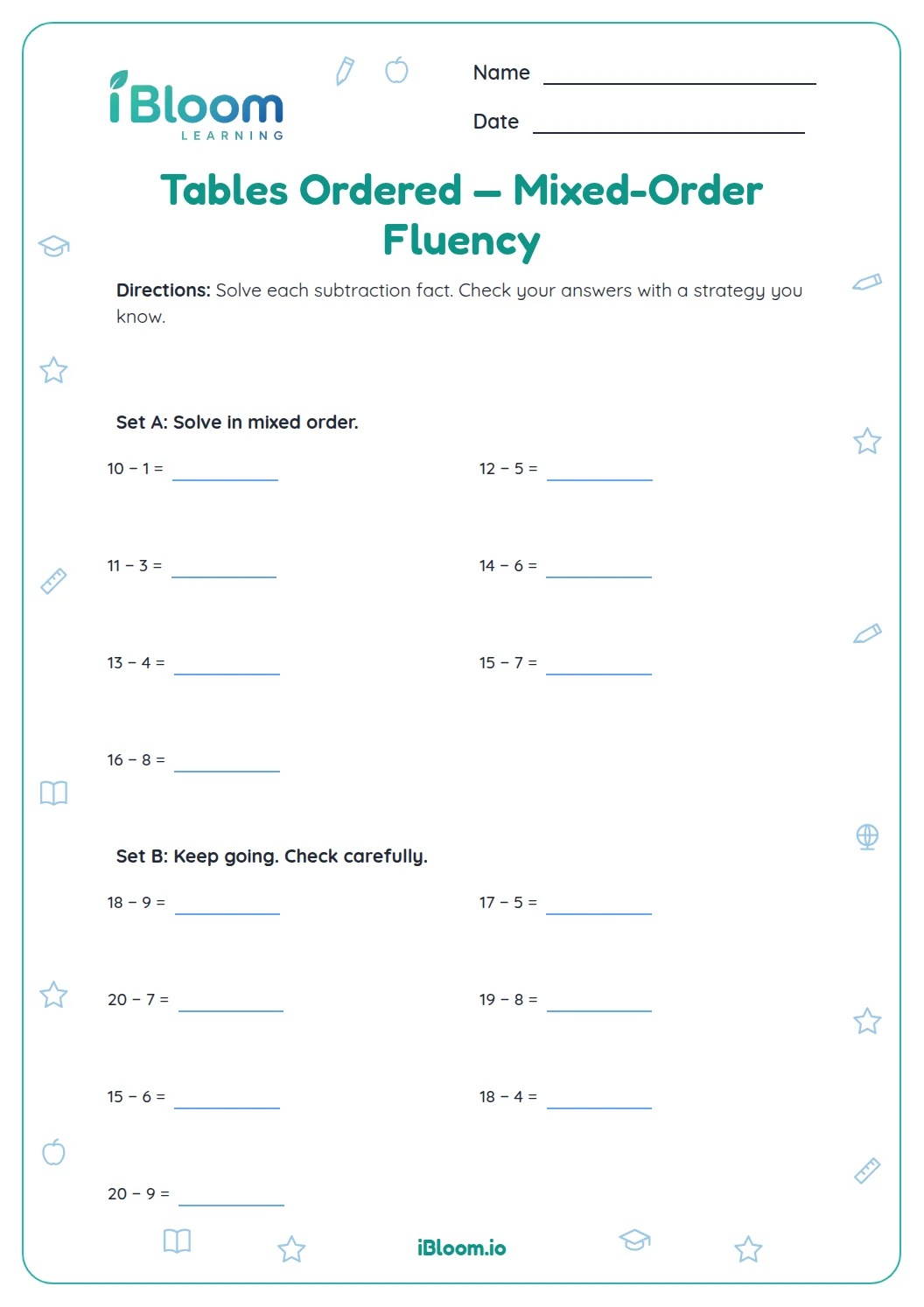
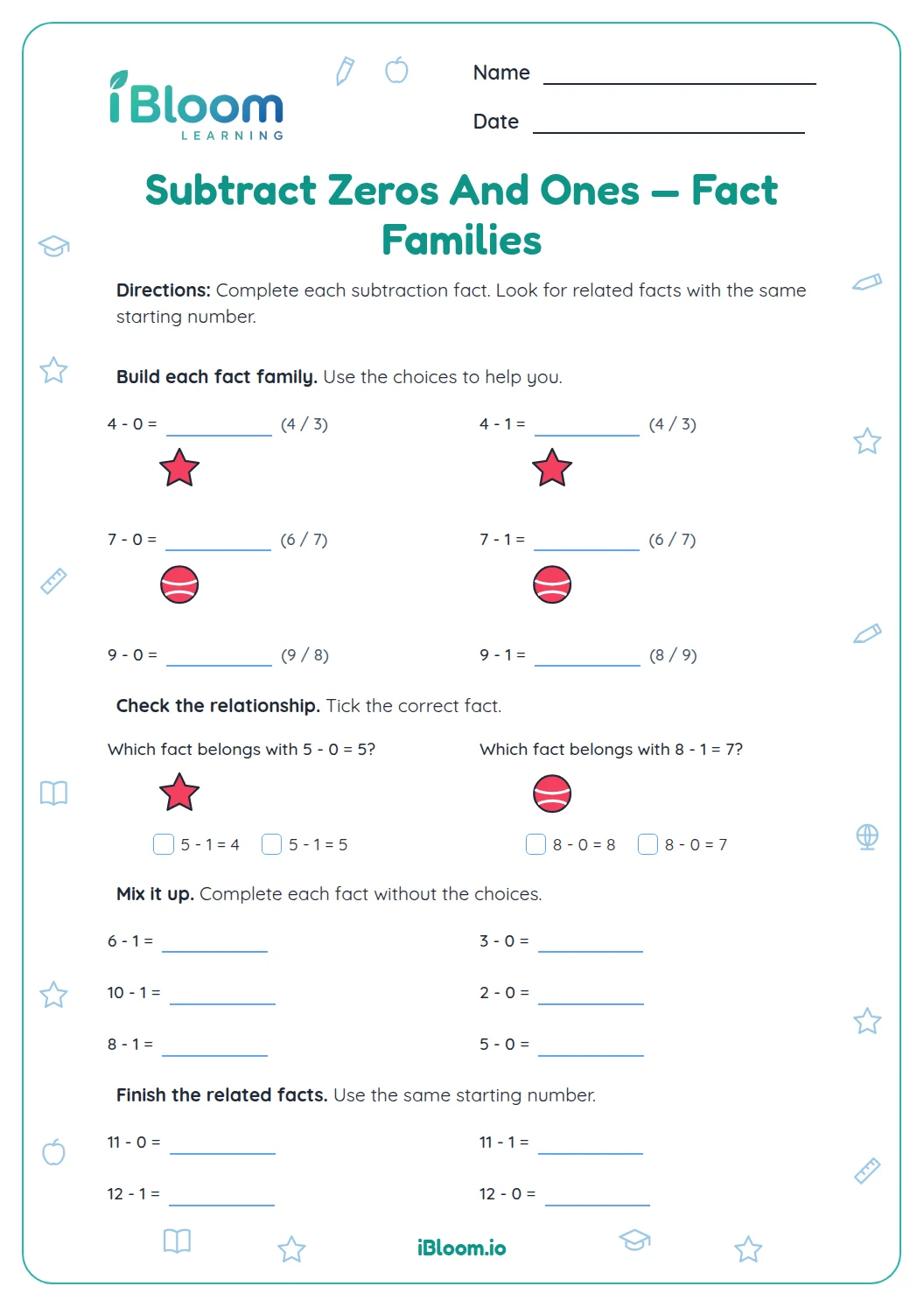
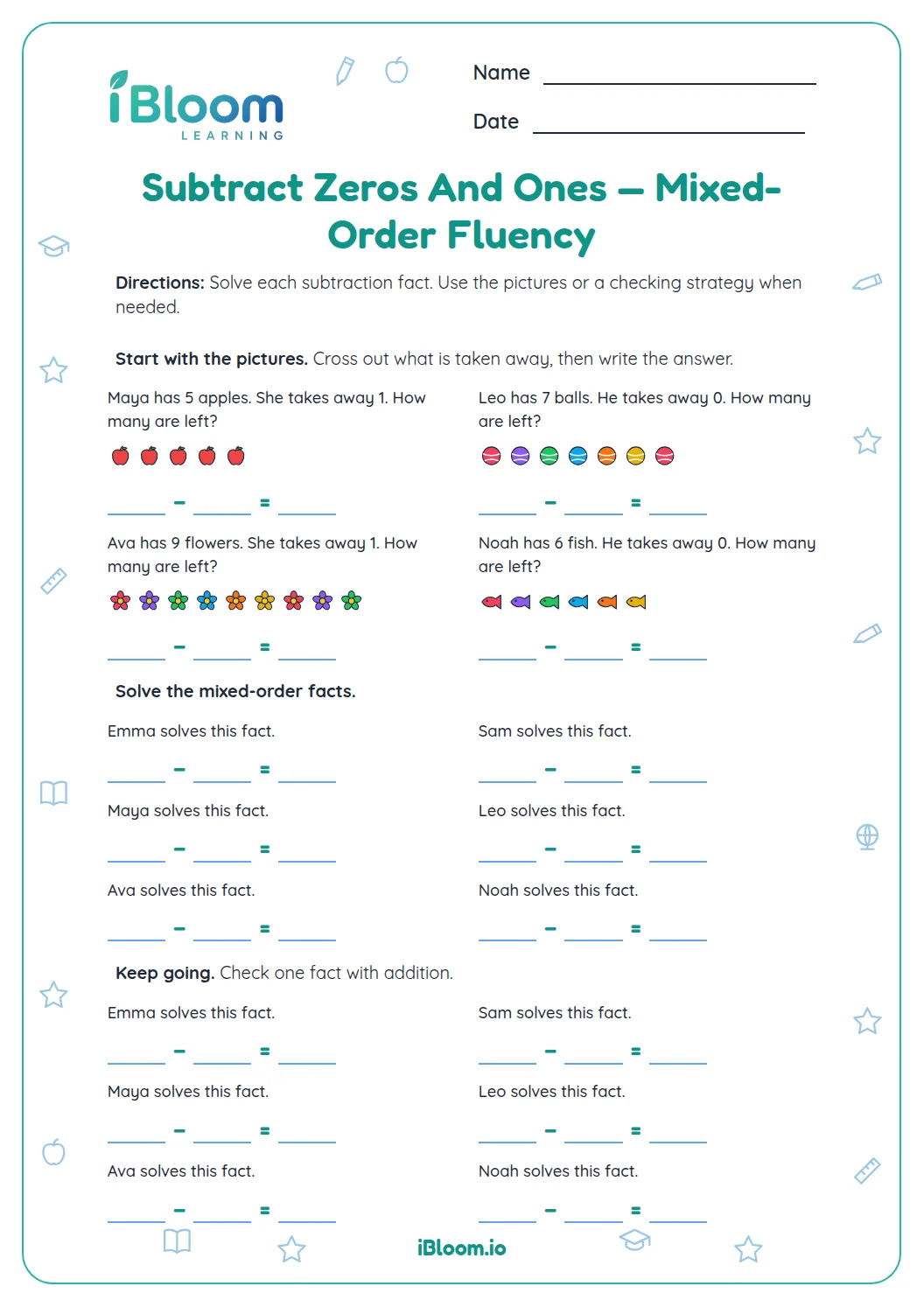
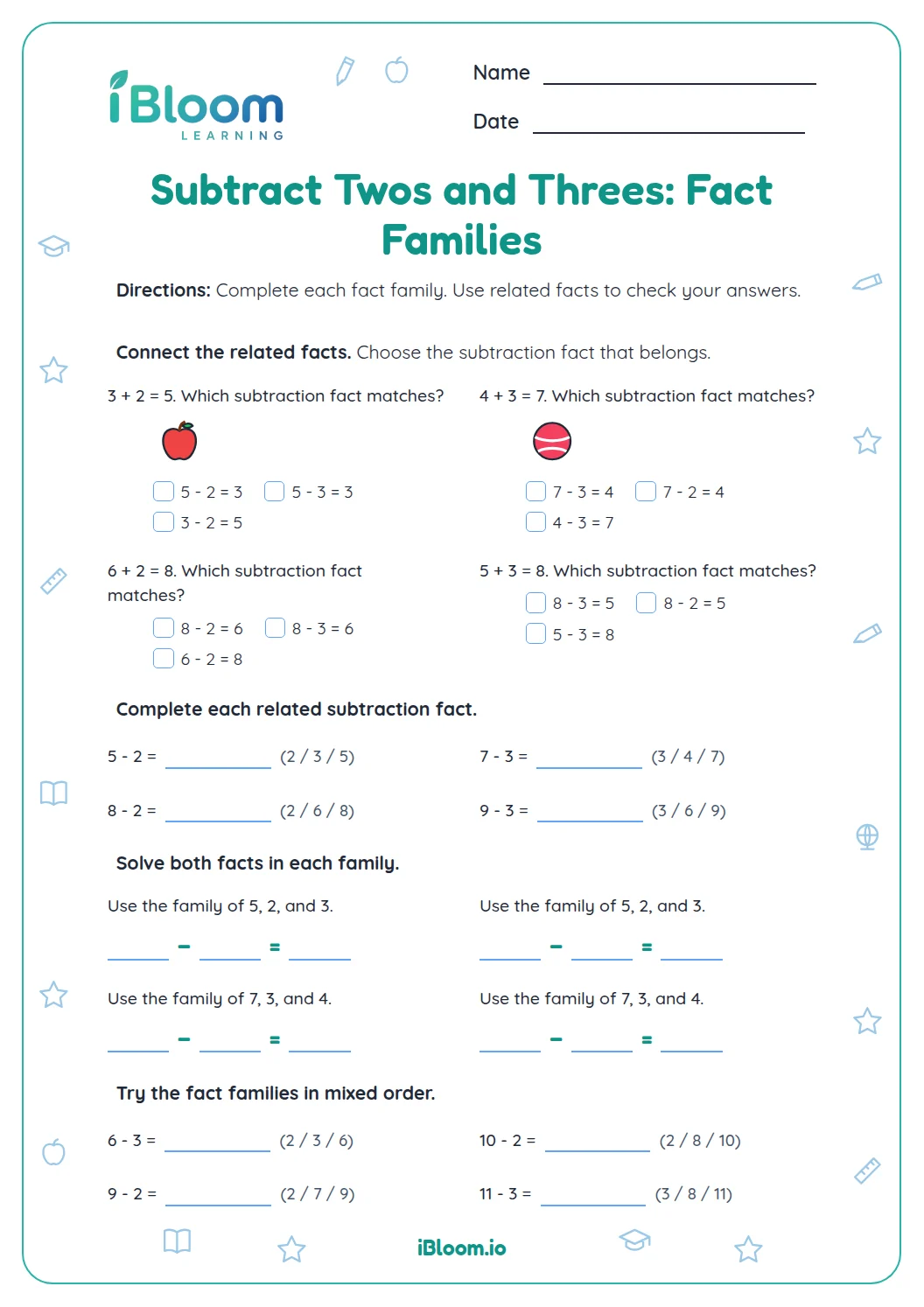
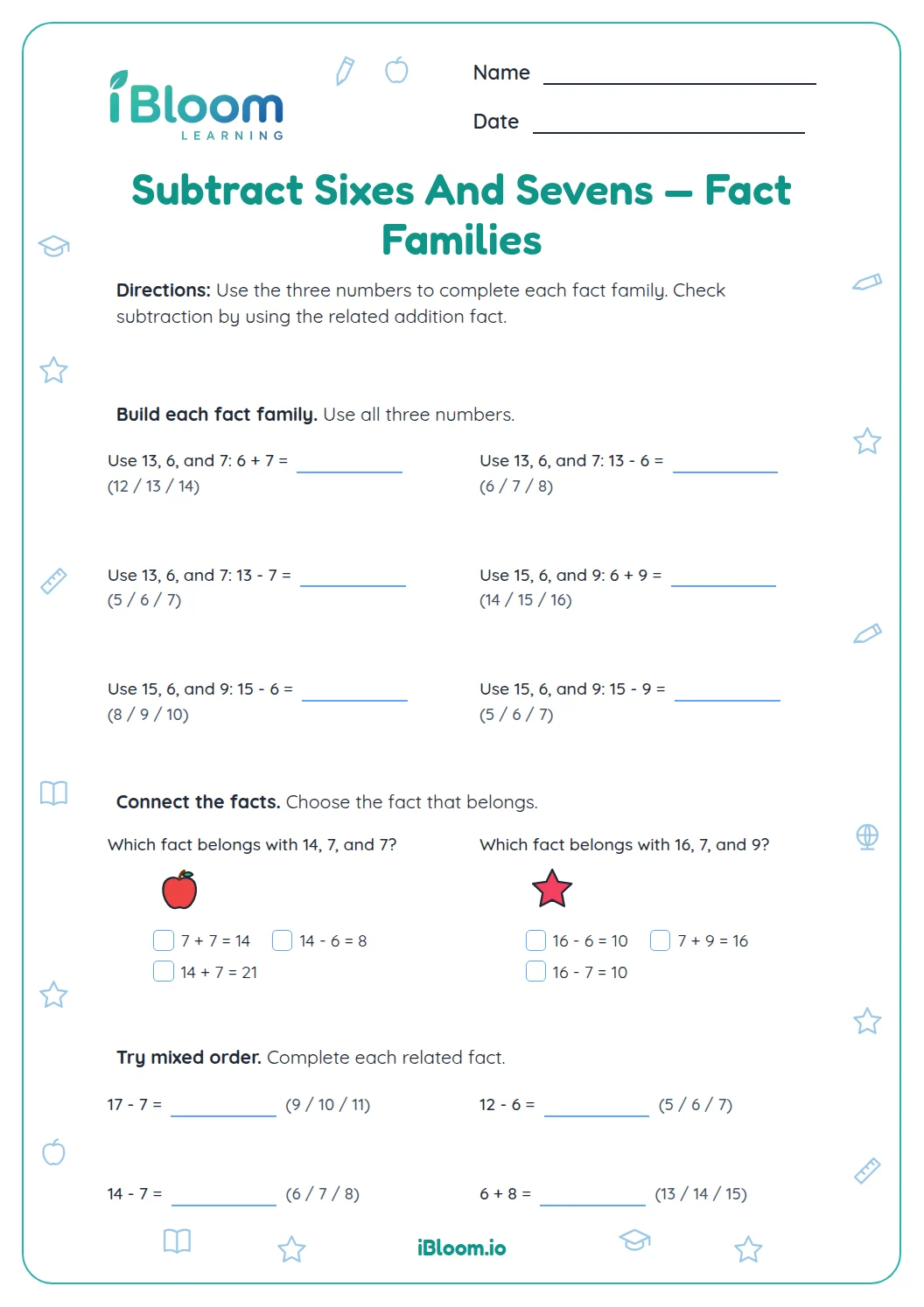
This two-page drill keeps every difference within 20 and groups practice by the number being subtracted. Students build fluency with related facts and can check a difference by adding it back to the subtrahend.
Aligned to 2.OA.B.2
Use related subtraction facts
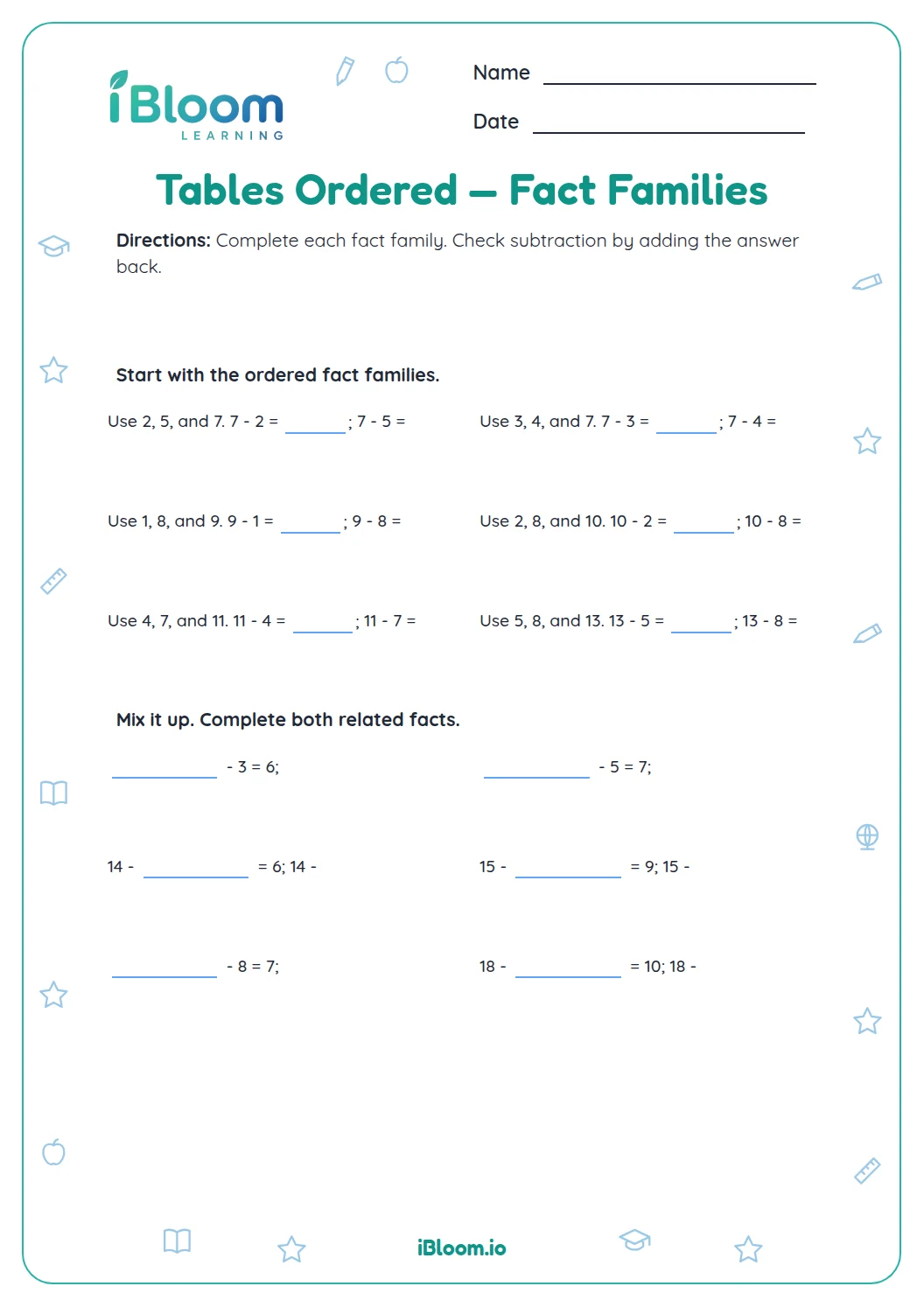
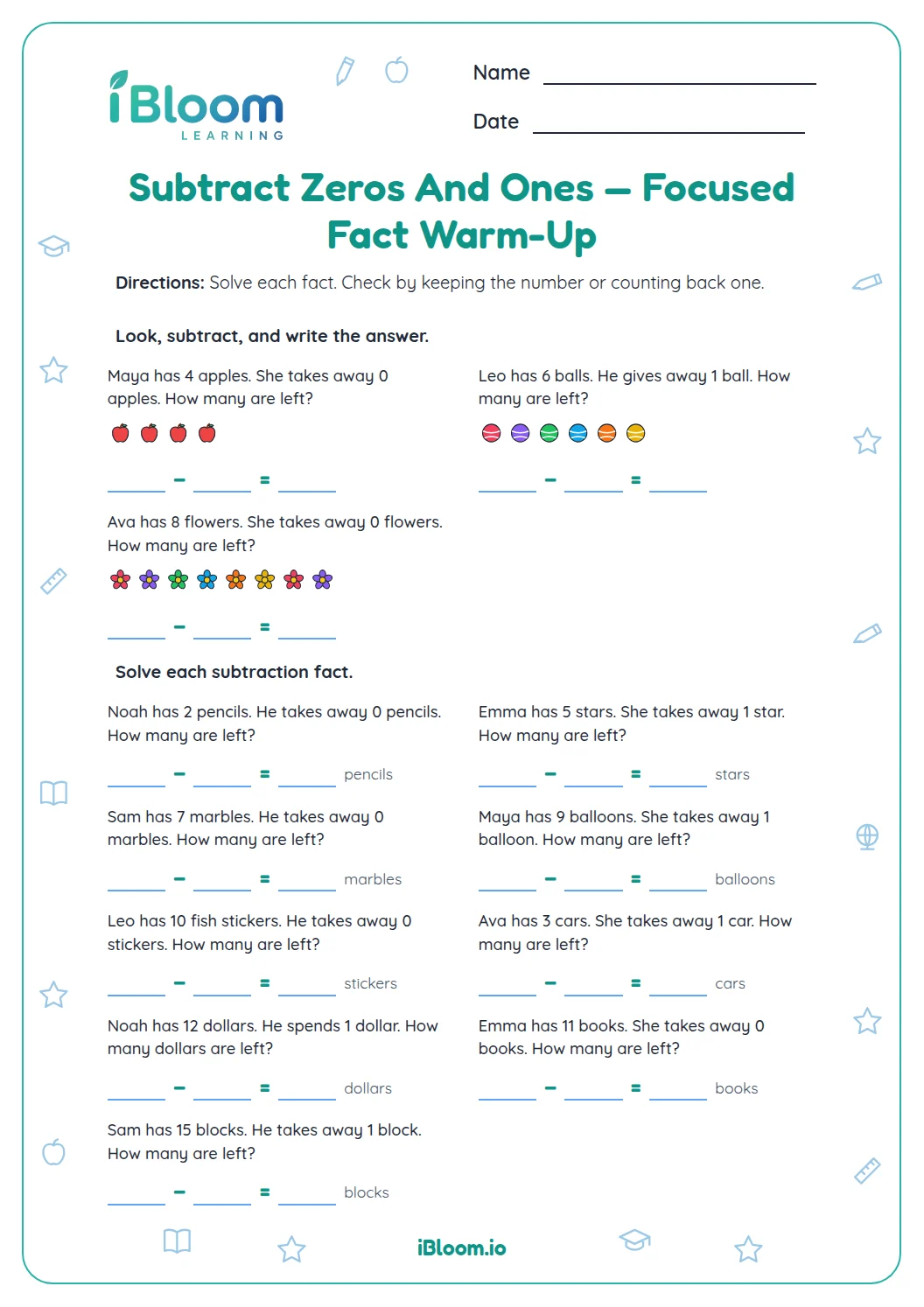
Subtracting zero leaves the number unchanged. For other facts, count back or think of the related addition fact: if 14 − 6 = 8, then 8 + 6 = 14.
The worksheet moves through five short groups so learners can focus on one pair of subtrahends at a time, then check each result.
Keep accuracy ahead of speed
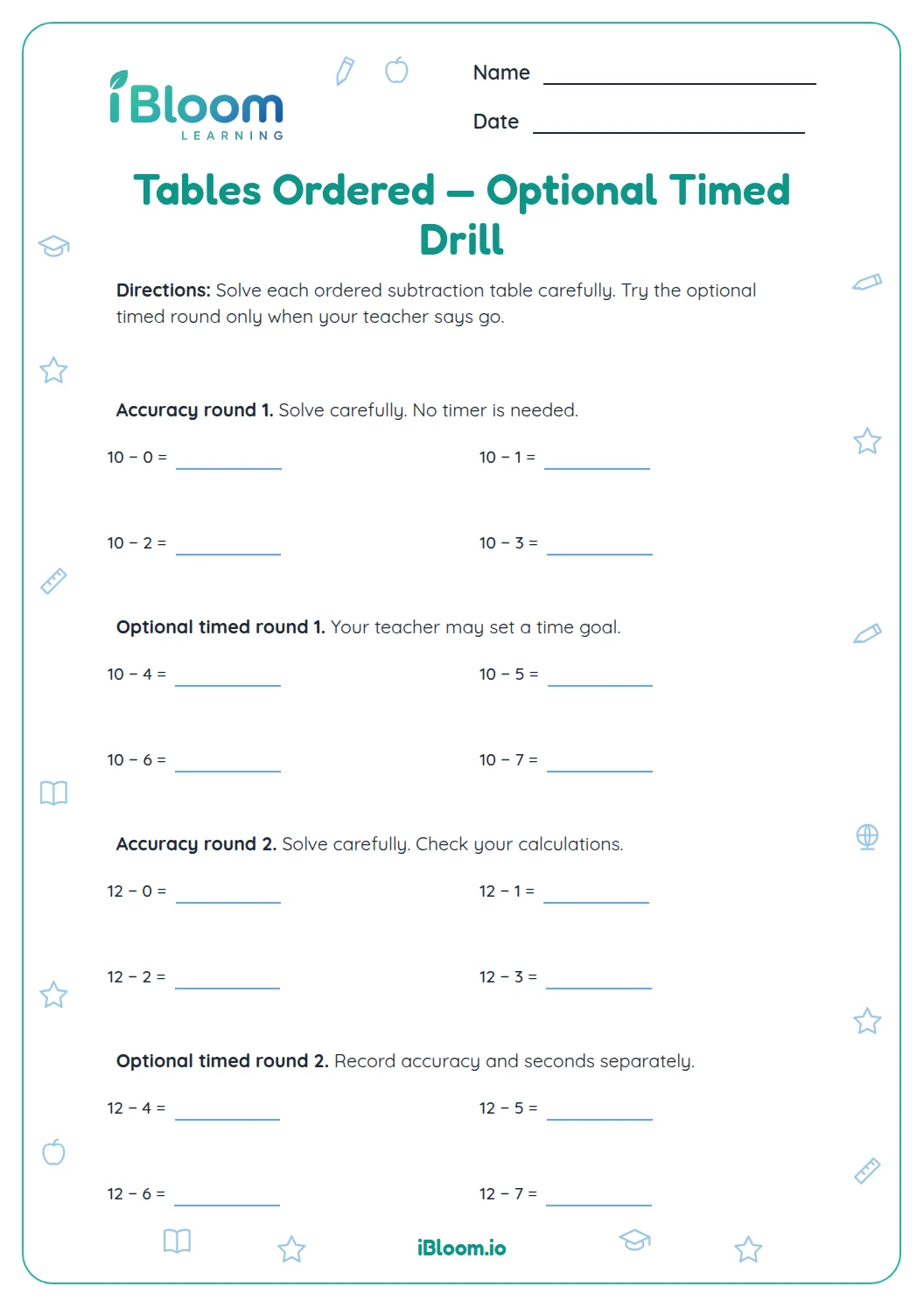
Students may complete one group at a time and pause to review. A timing goal is not needed; accurate recall and a clear check are the goals.
How to use this worksheet
- 1Read each prompt carefully.
- 2Show a step when the question asks you to explain or solve.
- 3Use the answer key to check your work.
Common mistakes and quick fixes
The mistake
Rushing past a prompt detail or symbol can lead to a mismatched response.
The fix
Reread the complete question and check that the response answers exactly what it asks.
The mistake
A computation or sentence may look finished before it has been checked.
The fix
Use the answer key to verify each result and revise any response that needs it.
Common Core alignment
This worksheet practices the standards listed below through focused grade-level work.
Solve subtraction facts within 20 fluently, using mental strategies.
On this sheet: Practice supports fluency with facts within 20.
Show the official wordingHide the official wording
Fluently add and subtract within 20 using mental strategies. By end of Grade 2, know from memory all sums of two one-digit numbers.
What to practice next
Make more practice
Further reading
Questions parents and teachers ask
What does focused fact practice mean?
Each group practices nearby subtraction facts so a learner can notice useful patterns. The drill starts with subtracting zero and one, then moves through larger subtrahends. Every result stays within 20, keeping attention on the subtraction fact and its related addition check.
How can students check a subtraction answer?
Use the related addition fact. If 15 minus 6 is 9, check that 9 plus 6 equals 15. Students can also count back or use a known fact to find an unfamiliar difference. Explaining the check helps connect subtraction with addition.
Should the worksheet be timed?
No timer is required. Accuracy and a sensible strategy matter more than speed, especially while a student is learning related facts. Once answers are consistently correct, an adult may choose to repeat the page for fluency or use one group for a short warm-up.
Which grades can use this page?
The page is labeled for Grades 1–2 and uses subtraction facts within 20. The numbers are appropriate for practicing fluency in this range; an adult can choose the groups that fit the learner. No regrouping or computation beyond 20 is needed.
Which subtraction facts are grouped on the page?
The facts appear in five ordered groups: subtract 0 and 1, 2 and 3, 4 and 5, 6 and 7, then 8 and 9. The last group has six facts, and each earlier group has four. This layout lets a student focus on a pair of subtrahends before moving to the next pair.