






About this worksheet
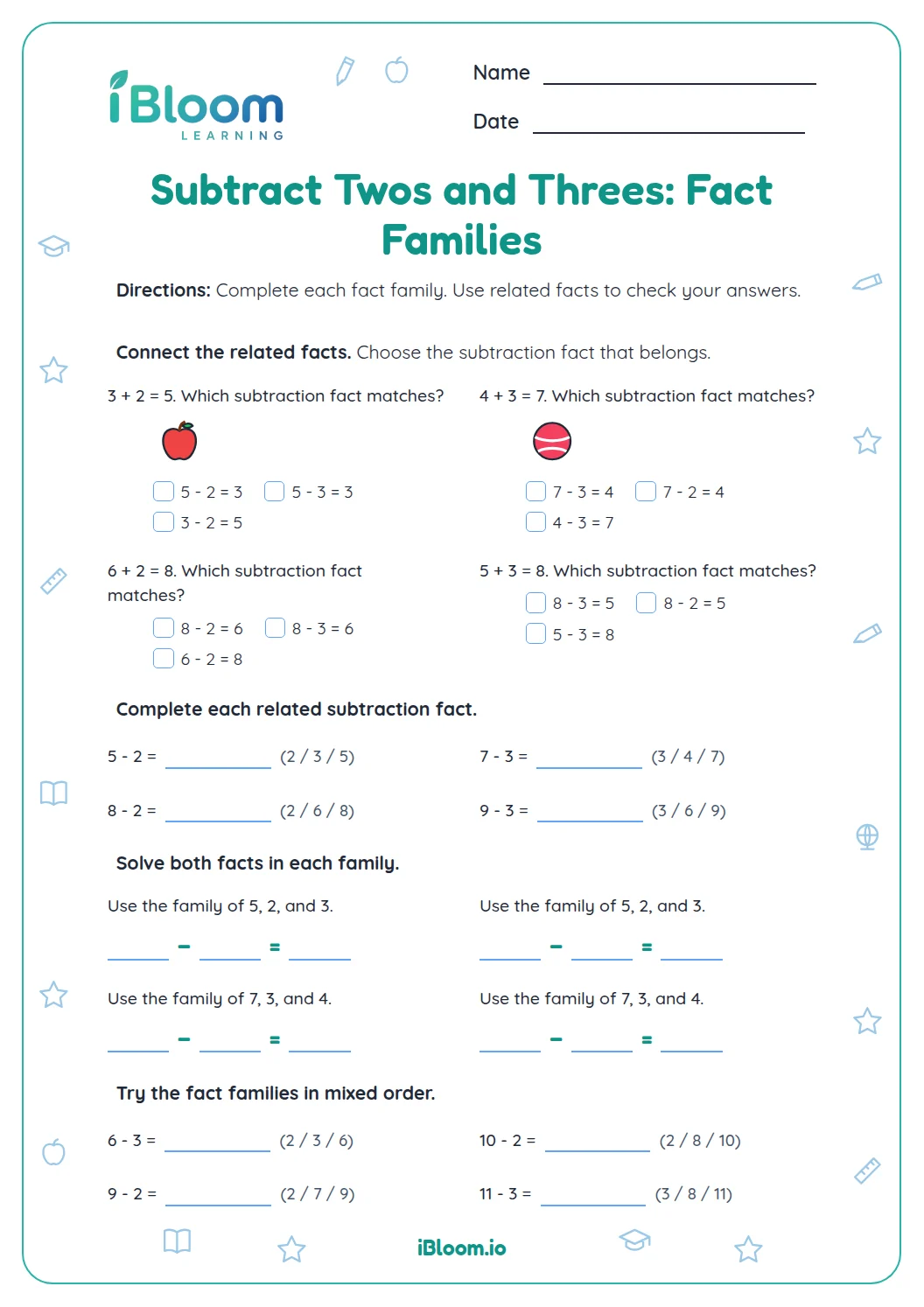
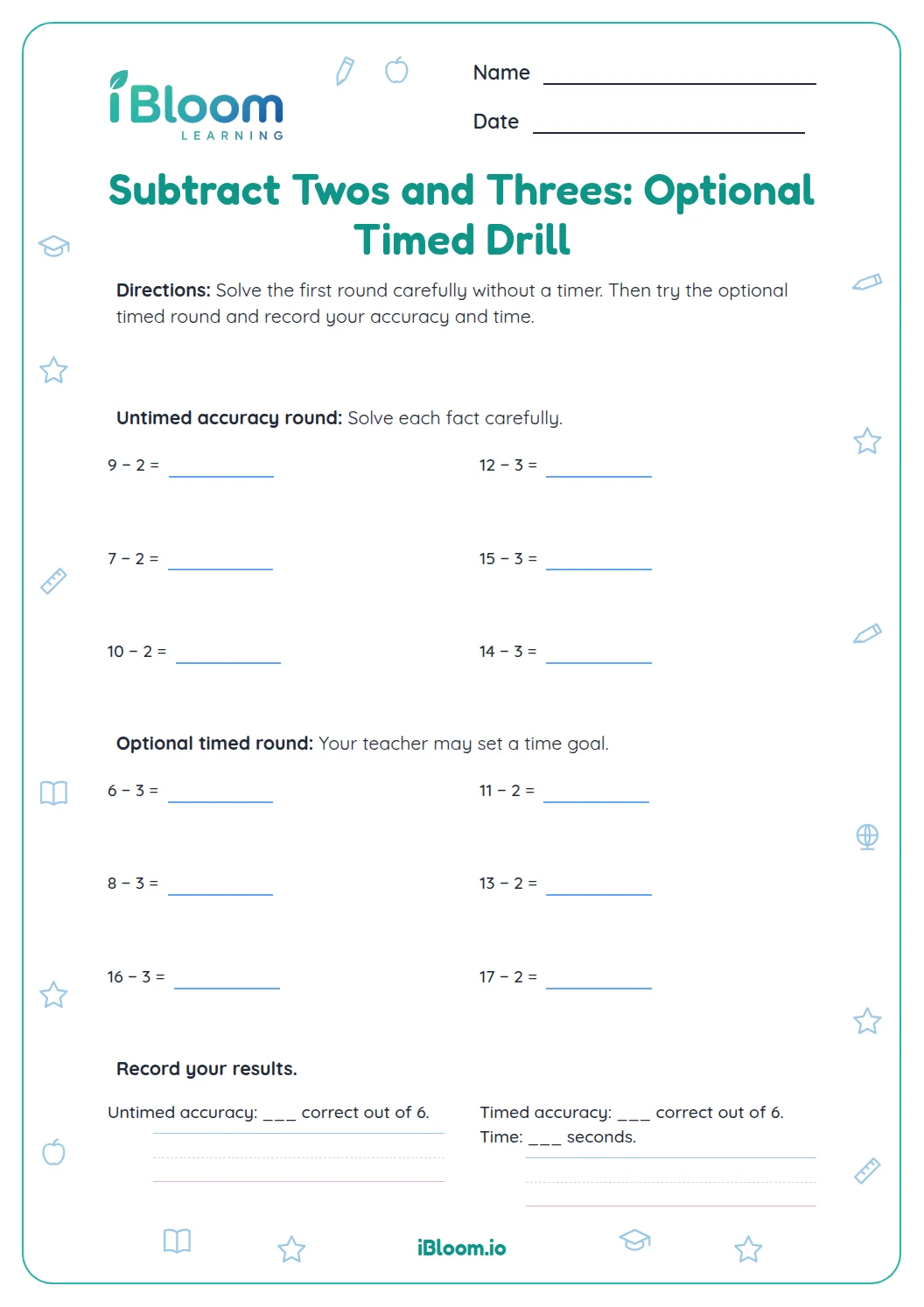
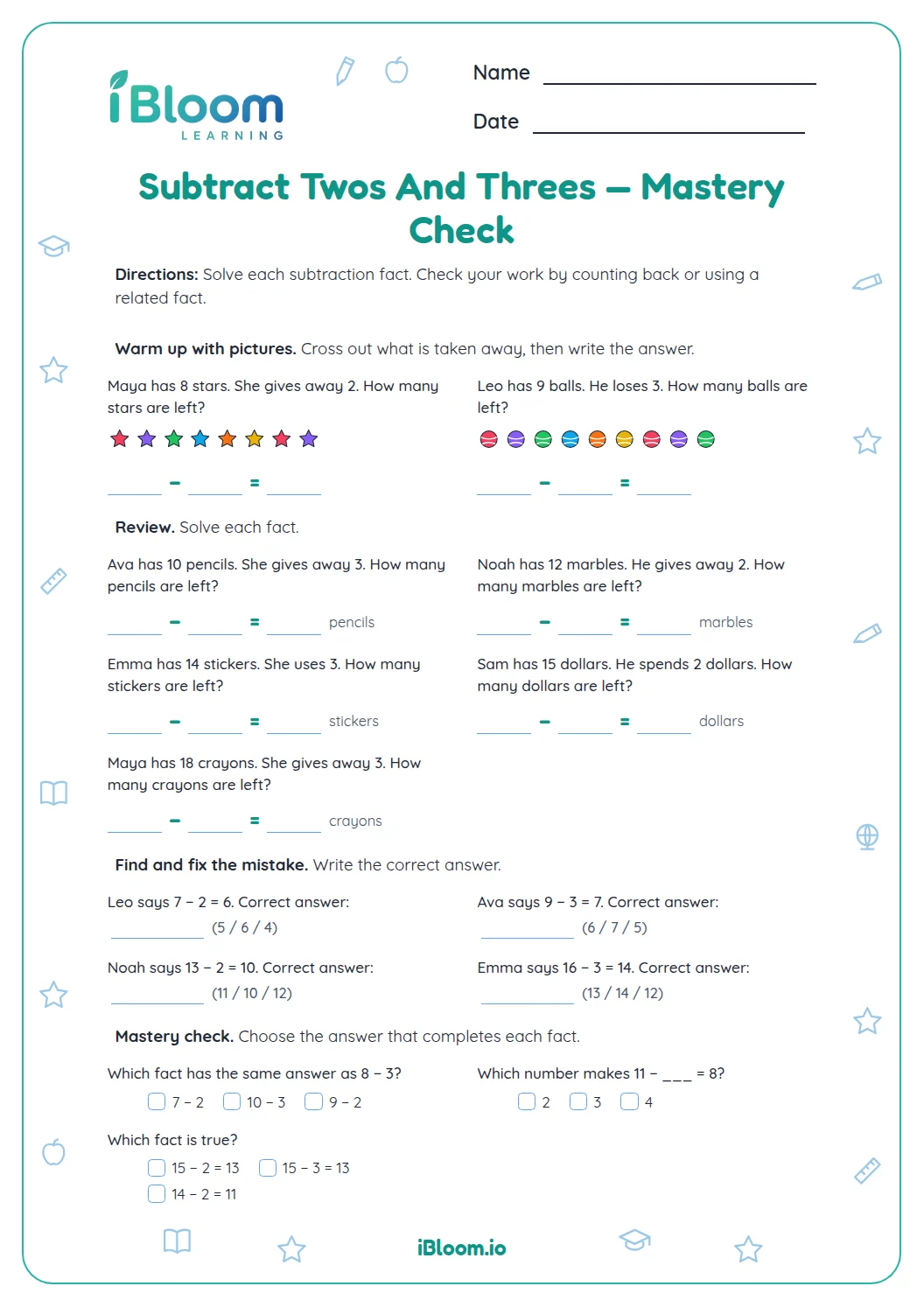
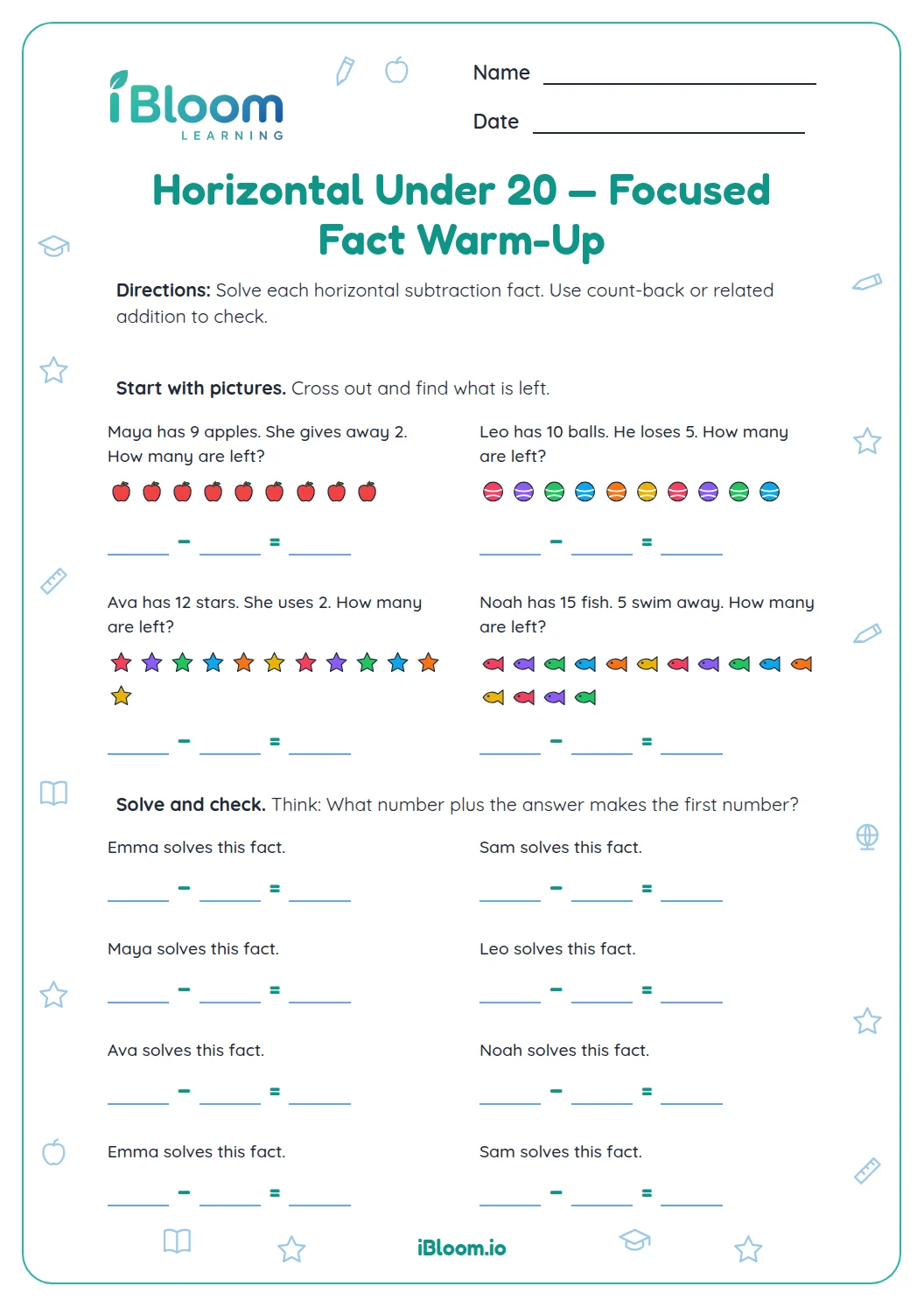
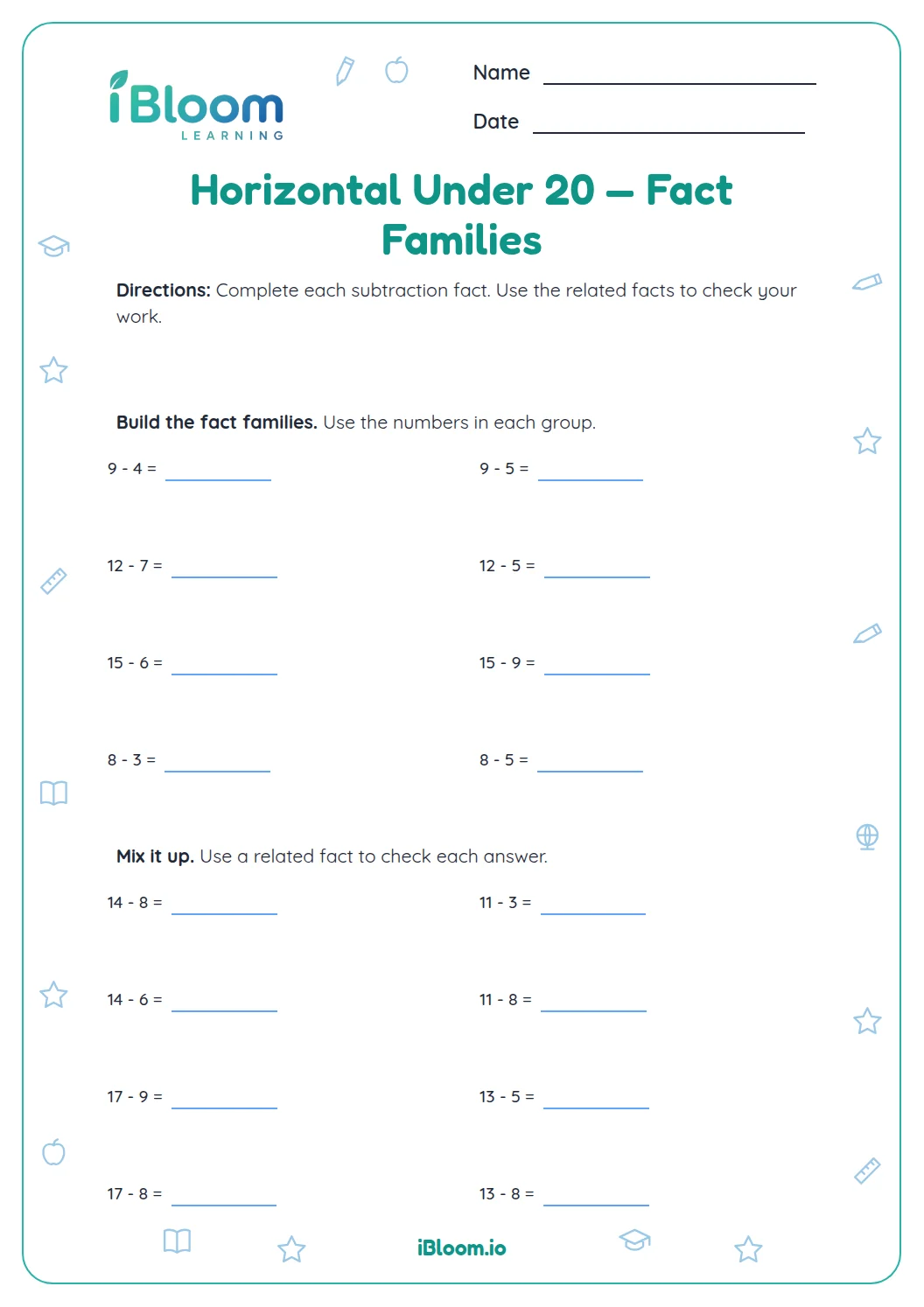
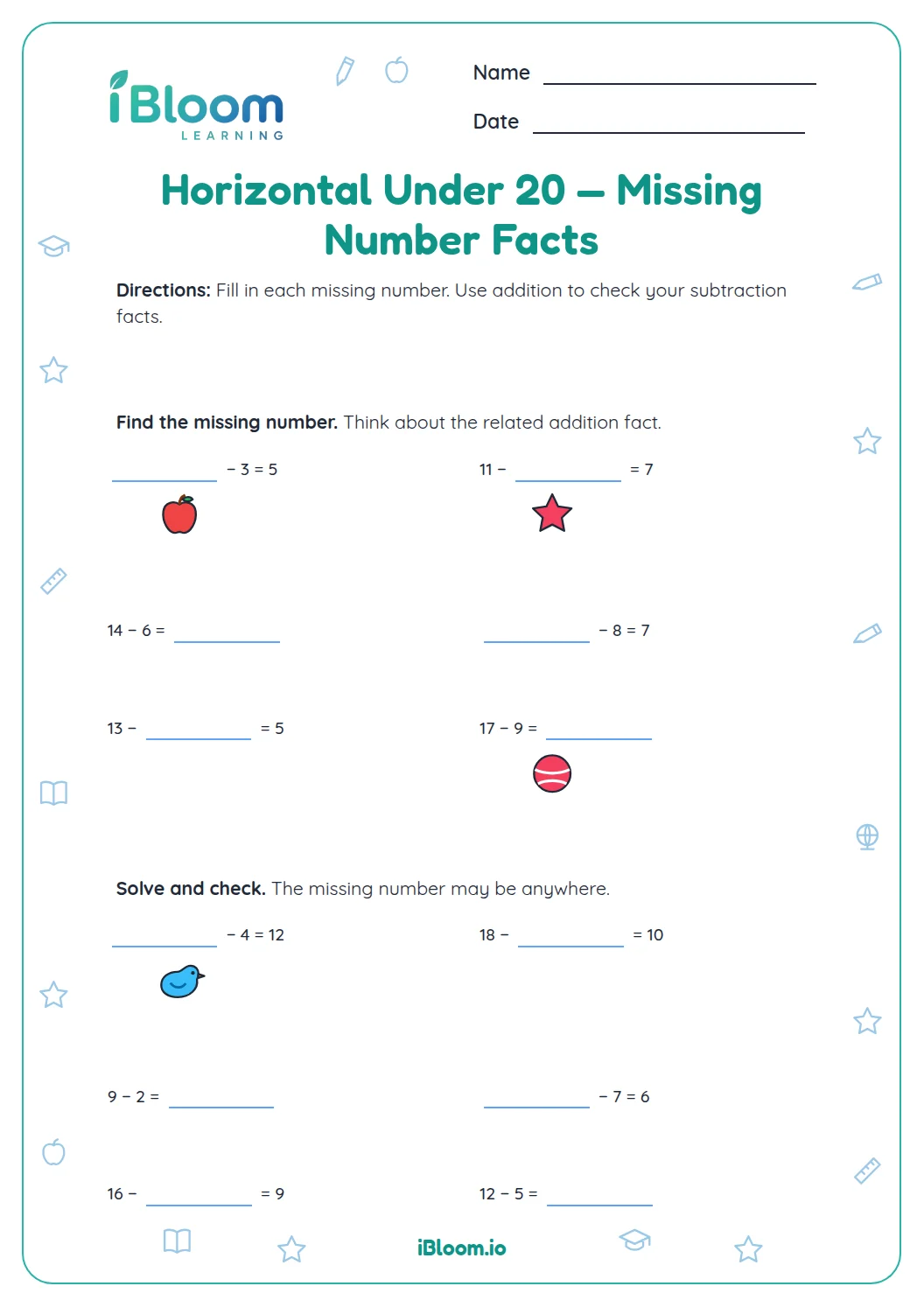
This Grade 1 worksheet keeps the focus on subtraction facts that take away two or three. Across 20 questions, the missing number appears as the difference, the amount taken away, or the starting number; the final four items use short stories. Each fact stays within 20, and the directions encourage checking with addition.
Where can the missing number appear?
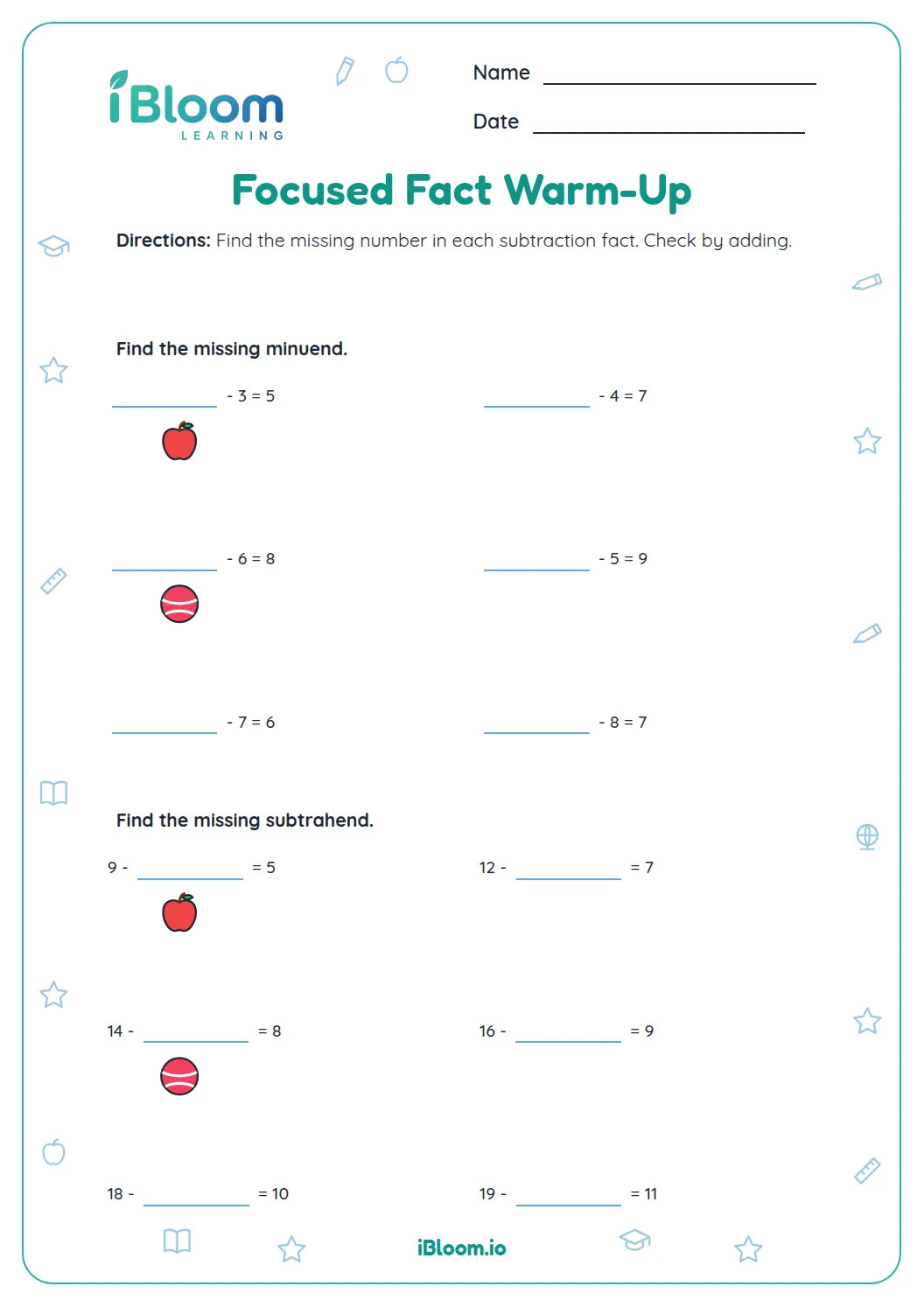
The first eight items ask for a difference. The next four leave out the number taken away, and the following four leave out the starting number. In the last part, students apply a subtraction fact to a short situation.
Every fact subtracts 2 or 3, including the missing-number forms.
- Questions 1–8: find the difference.
- Questions 9–12: find the subtrahend.
- Questions 13–16: find the starting number.
- Questions 17–20: solve a story problem.
How can a student find a missing subtrahend?
Think about what number must be removed to reach the result. Then add that number to the result to check that the starting number is recovered.
- 113 − ___ = 10, so the missing number is 3. Check: 10 + 3 = 13.
What should students notice in the story problems?
Find the starting amount and the number taken away. The question asks for what remains, so subtract and include the named object in the answer.
How can addition check the answer?
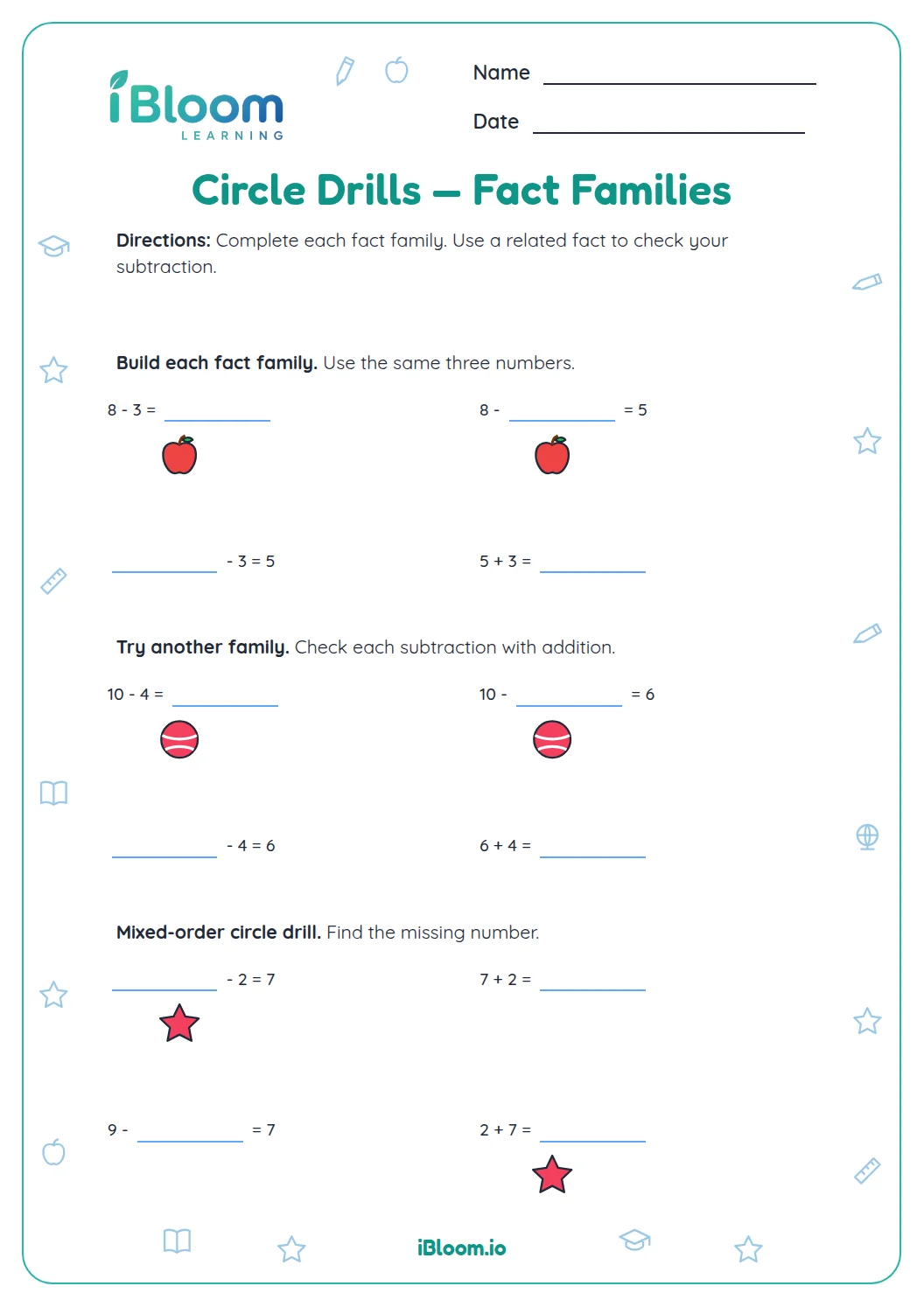
For a fact such as 9 − 2 = 7, add the difference and the number taken away: 7 + 2 = 9. The same check works when a number is missing from another position.
How to use this worksheet
- 1Read the whole number sentence and locate the blank.
- 2Decide whether the blank is the difference, the amount taken away, or the start.
- 3Use a subtraction fact or count back to find the unknown.
- 4For story problems, identify what remains and include its unit.
- 5Check by adding the difference to the number taken away.
Common mistakes and fixes
The mistake
Subtracting the visible numbers in the wrong direction.
The fix
Read the equation from its starting number and check by addition.
The mistake
Forgetting that the blank may be the starting number.
The fix
Ask which number minus the amount taken away gives the result.
The mistake
Leaving off the object in a story answer.
The fix
Include the matching unit, such as books, beads, apples, or cones.
What to practice next
Make more practice
Further reading
Questions parents and teachers ask
How many problems are included?
The worksheet has 20 questions: 16 missing-number facts and four short story problems. The number being subtracted is always 2 or 3. The questions vary which number is missing so students practice more than one arrangement of a subtraction fact.
What does “missing number” mean here?
A number sentence has one blank where a number belongs. On this page, the blank may be the answer, the number taken away, or the starting number. Students use the other numbers to find the unknown and can check it with addition.
Are the facts within 20?
Yes. Each subtraction fact uses numbers within 20, including the four stories. The story items name beads, books, apples, and cones, and ask how many remain or stay out after 2 or 3 are taken away. Use the completed equation as a final check.
How can a student check a subtraction answer?
Add the difference to the number taken away. For example, if 9 − 2 = 7, then 7 + 2 should equal 9. If the sum does not return to the starting number, revisit the subtraction fact and find the error.
Does this page include word problems?
Yes. The last four questions describe everyday situations involving beads, books, apples, and cones. Students identify the starting amount, subtract the 2 or 3 that are taken away, and give the remaining amount with its object. A clear subtraction step helps make the remaining amount easy to verify.
Is there an answer key?
Yes. A separate answer key gives answers to all 20 questions. Students can complete a part first, check their work afterward, and redo any fact that does not agree with the key. The separate key includes the number and its matching object.