





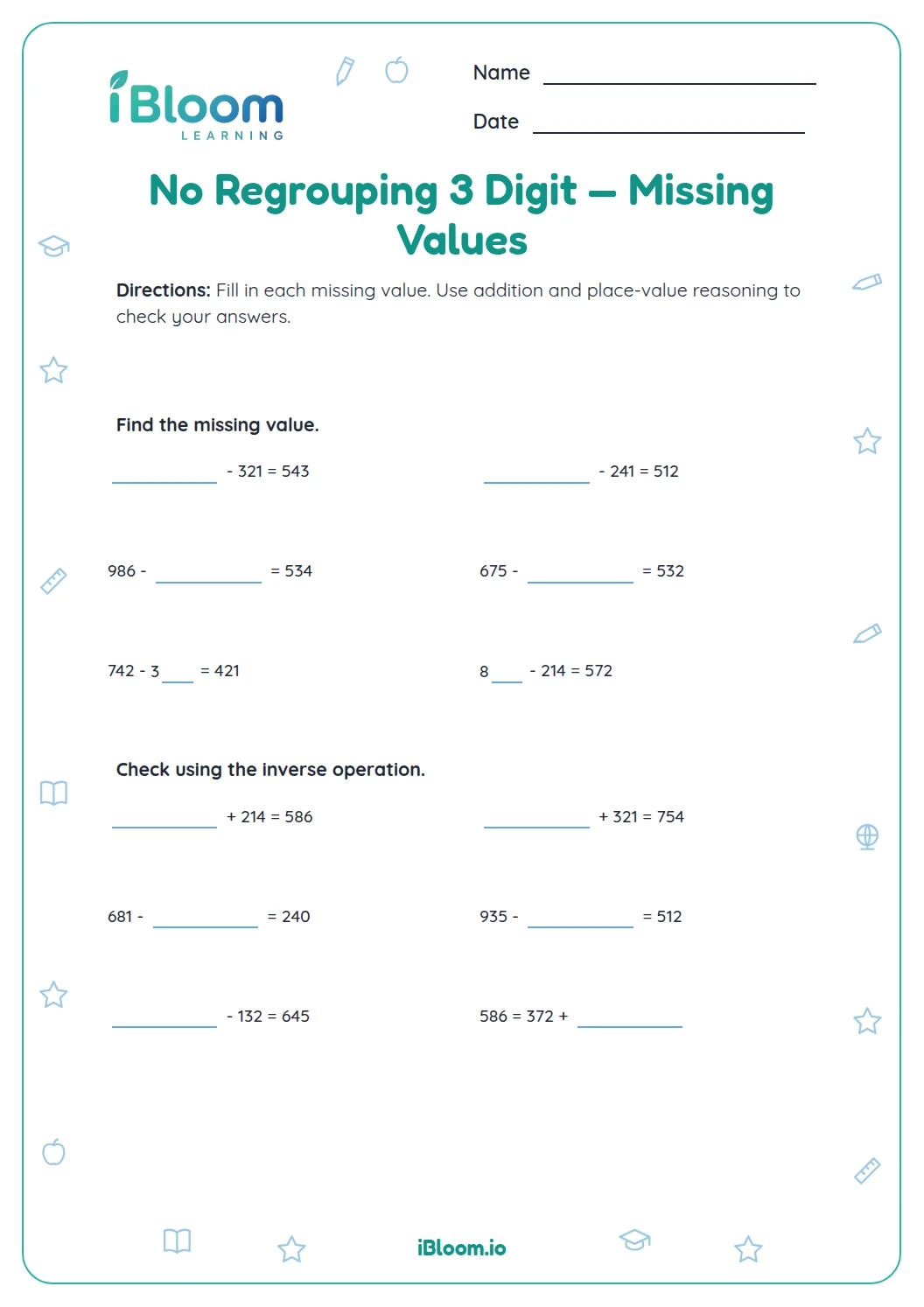
About this worksheet
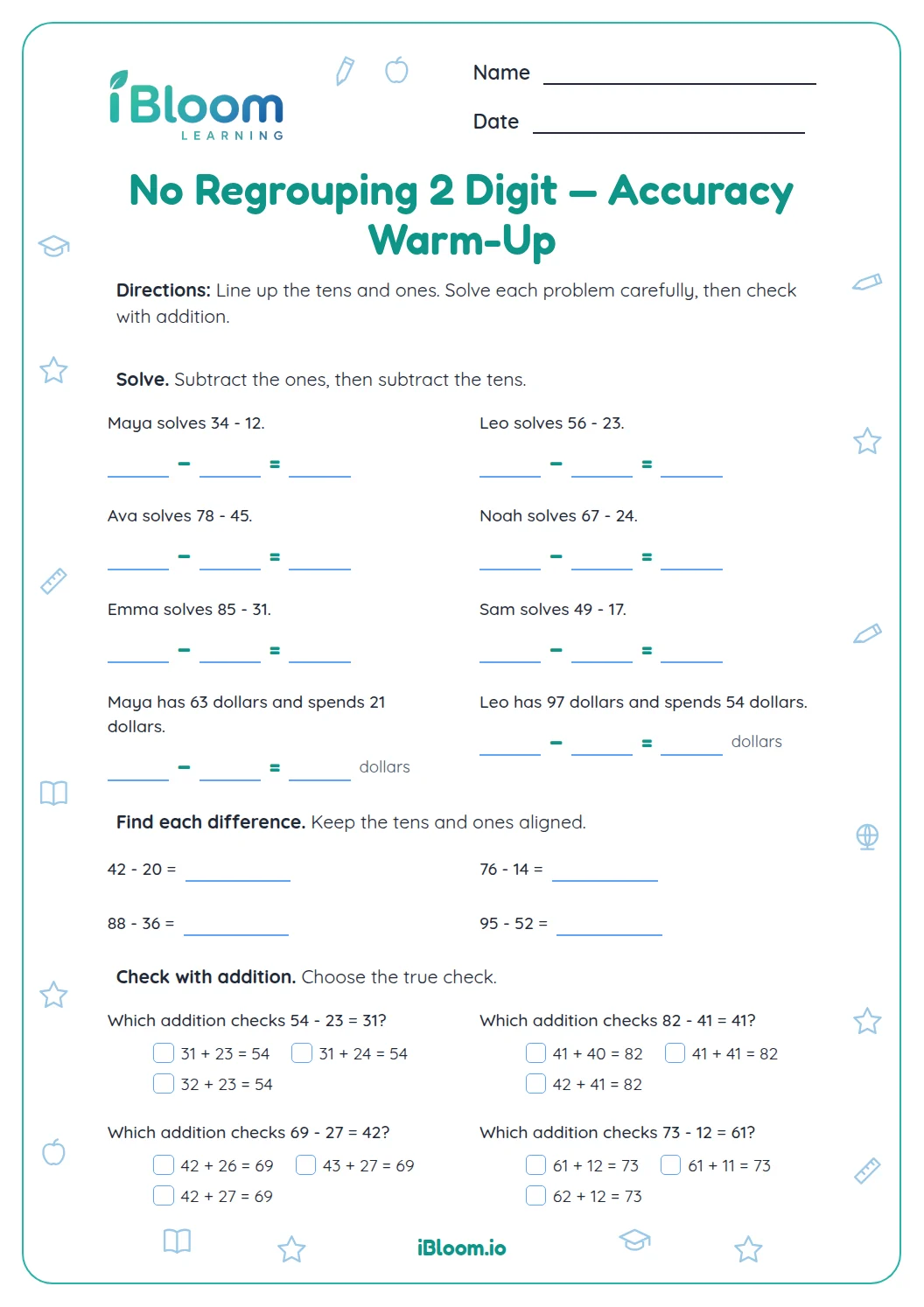
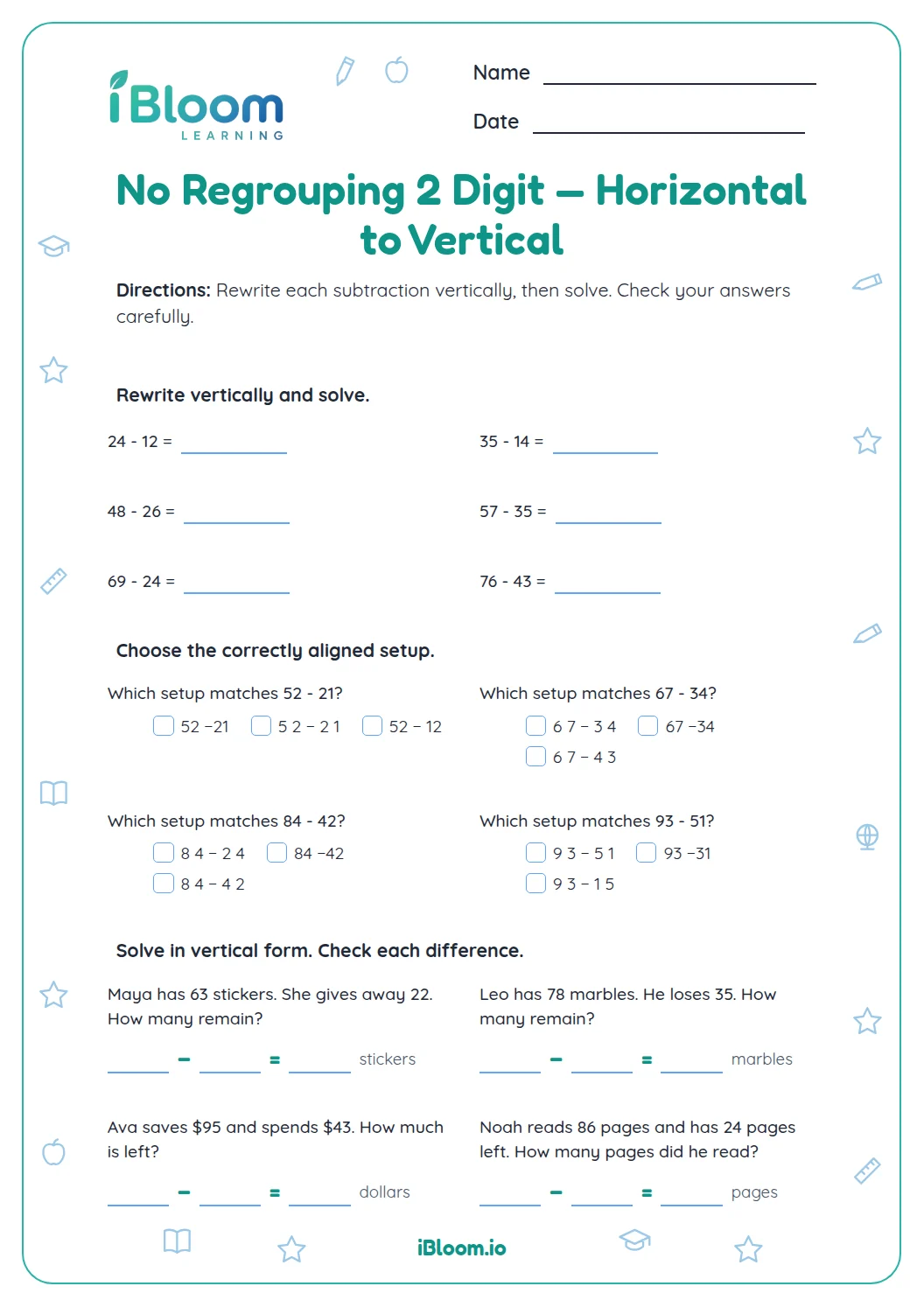
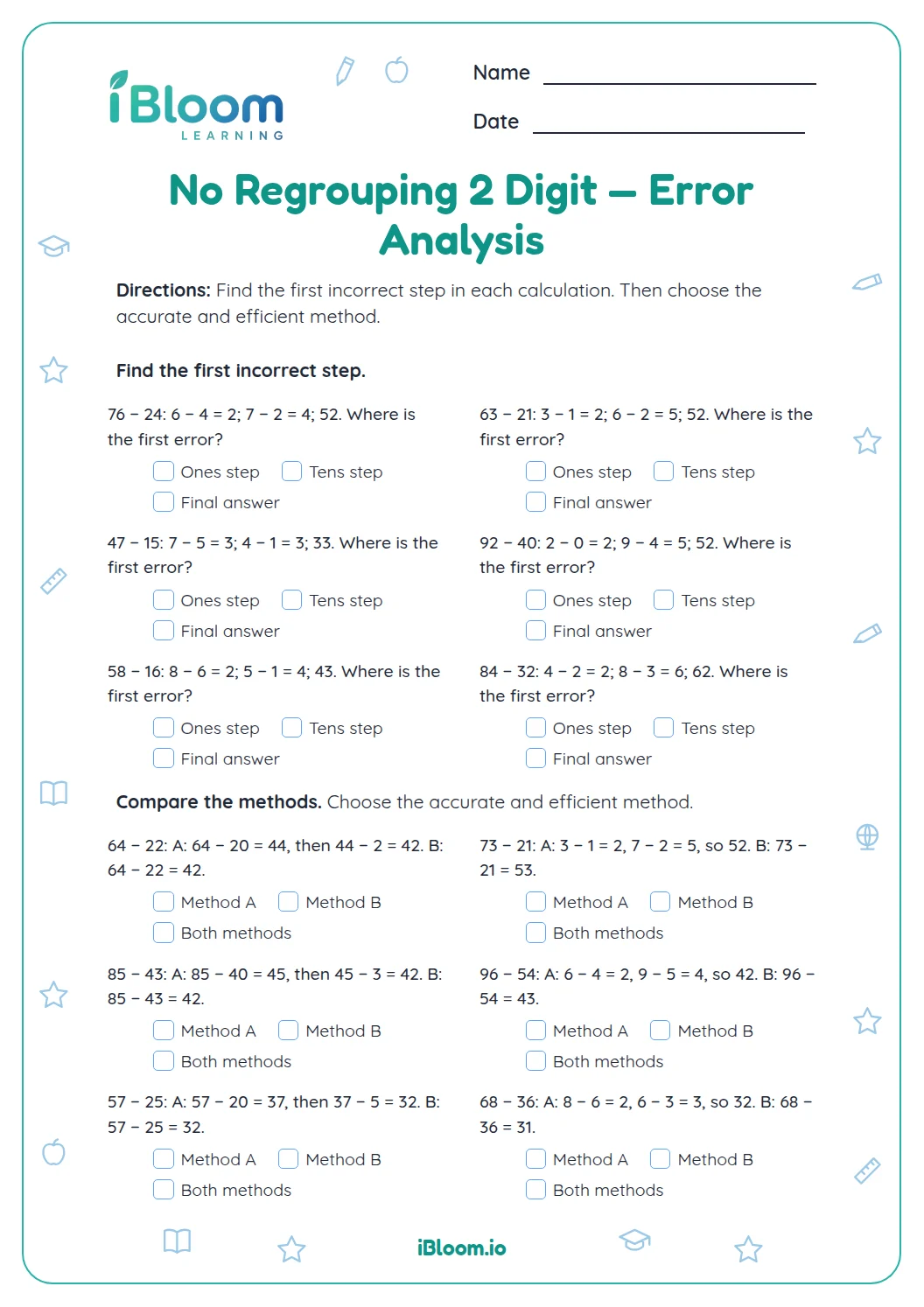
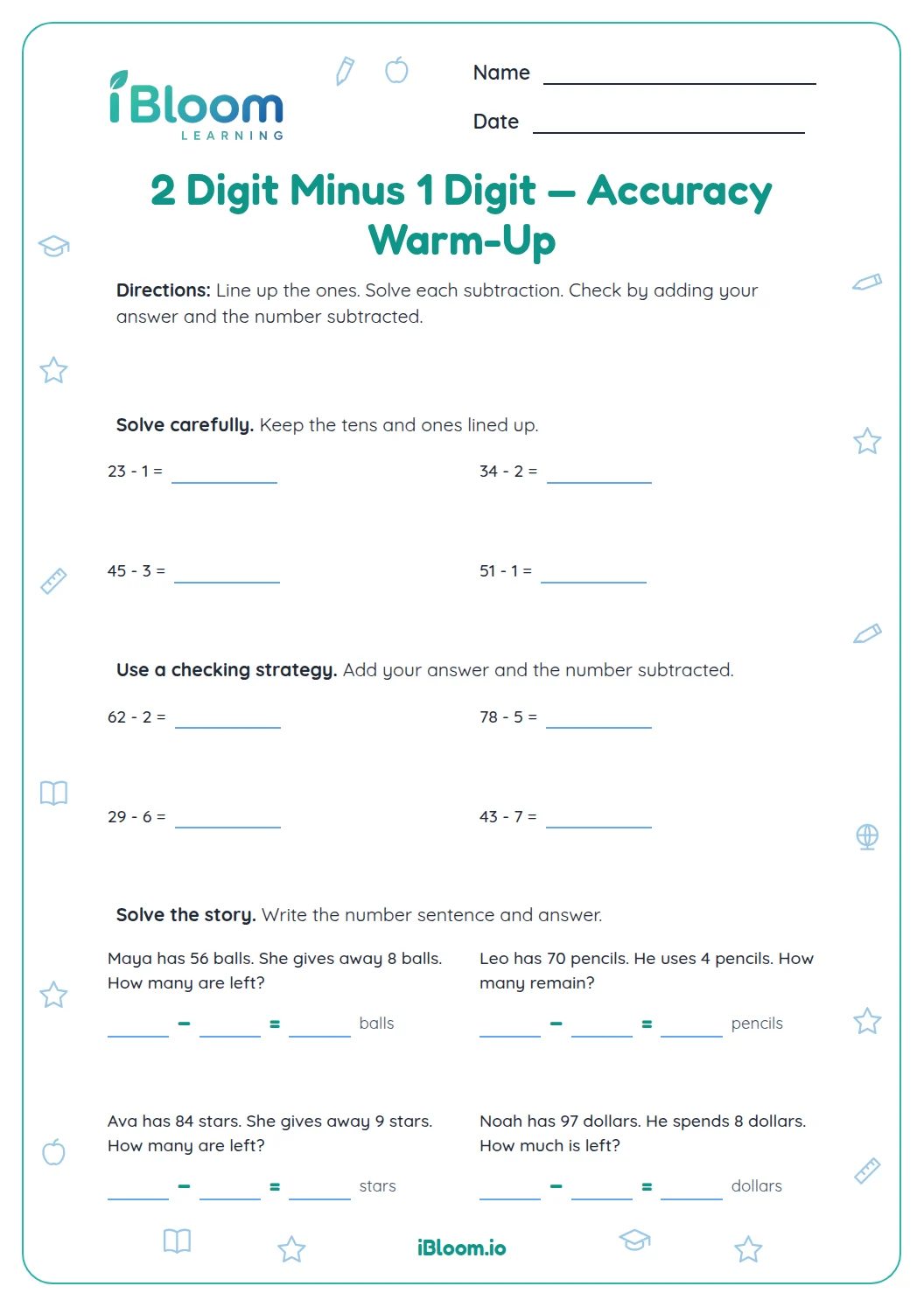
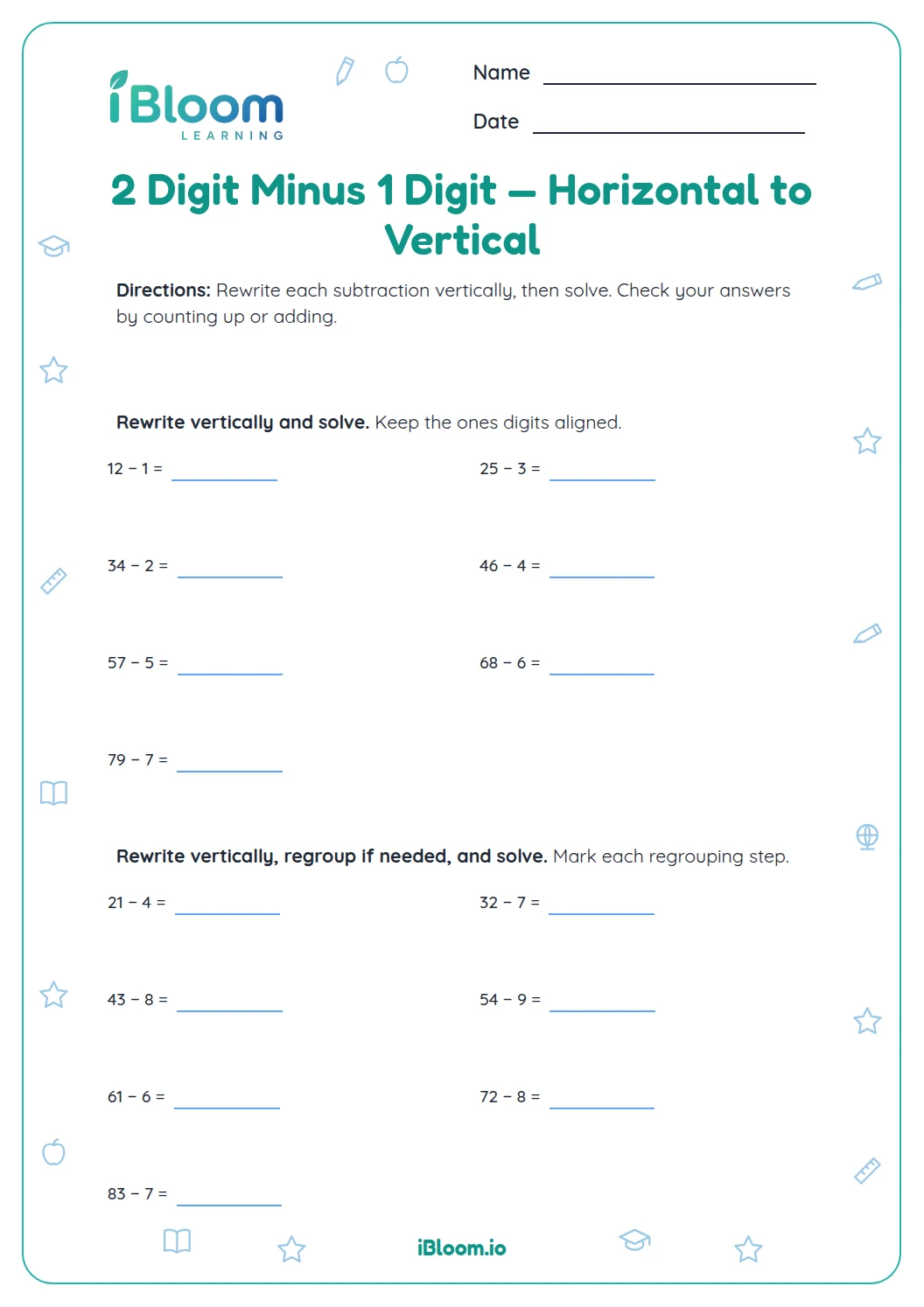
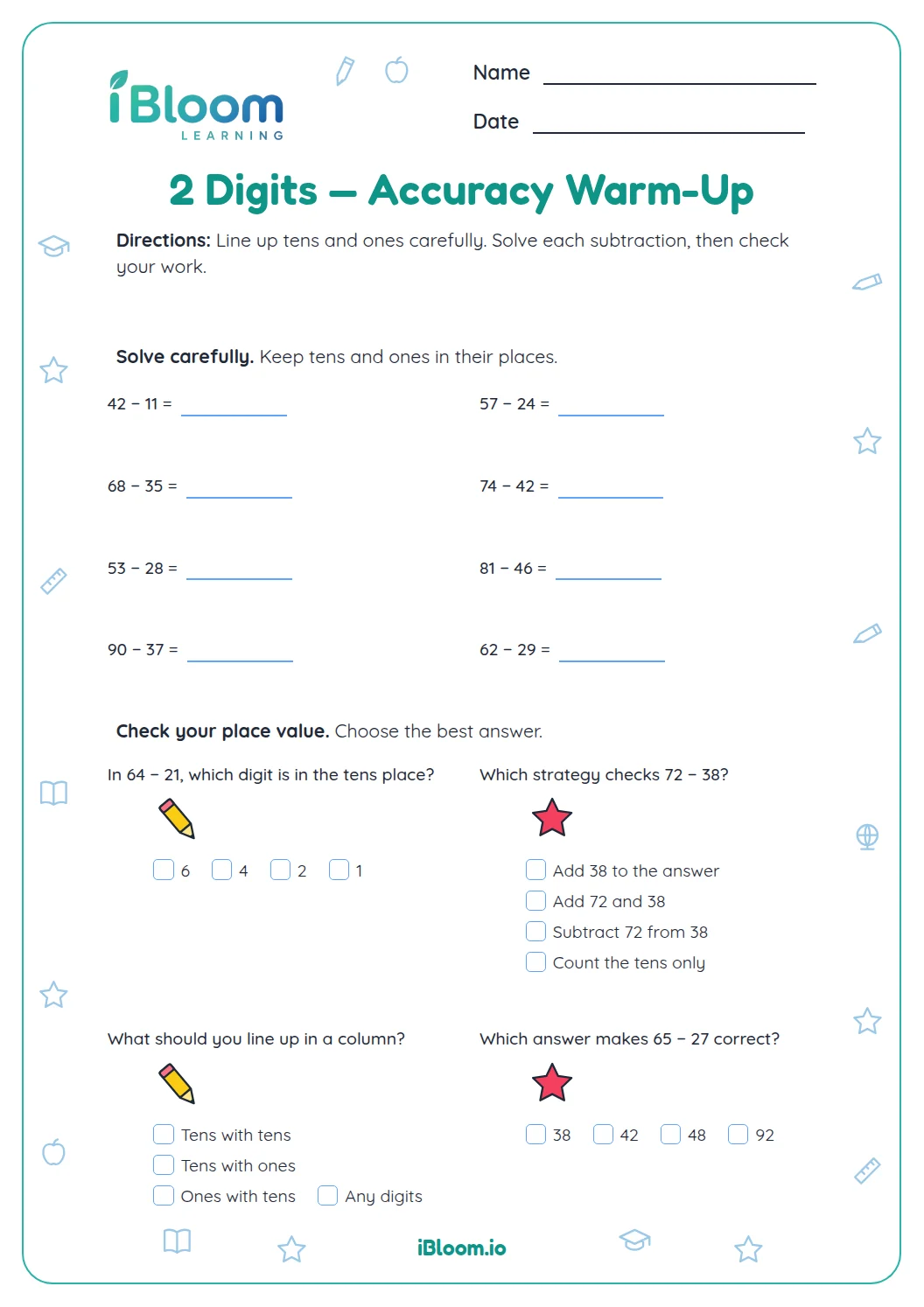
This printable gives Grade 2 learners 20 two-digit subtraction problems without regrouping. Children line up tens and ones, subtract each place, and use addition to check several answers. Every ones digit in the top number is at least as large as the bottom ones digit, so no trade is needed. A separate answer key is included.
Aligned to 2.NBT.B.5
How do you subtract in columns?
Line up the tens digits and the ones digits. Subtract the ones, then subtract the tens. In this practice, each top digit is large enough, so you can subtract without regrouping.
Question 1 is 76 − 24. Subtract 6 − 4 in the ones place, then 7 tens − 2 tens. The difference is 52.
- 1 76
- 2− 24
- 3 52
- 4Ones: 6 − 4 = 2; tens: 7 − 2 = 5
How does addition check subtraction?
Addition undoes subtraction. Add the difference to the number taken away; the sum should match the starting number. The final four questions ask learners to complete this inverse check.
What should I look for while checking?
Make sure each subtraction stays in its place-value column. A ones answer belongs under the ones digits, and a tens answer belongs under the tens digits. Then compare the key and correct any missed item.
How to use this worksheet
- 1Write the top and bottom numbers in matching tens and ones columns.
- 2Subtract the ones digits.
- 3Subtract the tens digits.
- 4Read the two-digit difference from left to right.
- 5For the check items, add the difference to the number taken away.
Common mistakes and quick fixes
The mistake
Subtracting the tens digit from the ones digit.
The fix
Line up each place and work within the same column.
The mistake
Writing the ones result in the tens place.
The fix
Keep the ones answer below the ones digits.
The mistake
Adding the two numbers in the subtraction problem.
The fix
Subtract first; use addition only afterward to check.
Curriculum alignment
Practice two-digit subtraction by place value and use addition to check differences.
Subtract within 100 using place value and addition to check.
On this sheet: All 20 problems subtract within 100; the last four connect subtraction to addition.
Show the official wordingHide the official wording
Fluently add and subtract within 100 using strategies based on place value, properties of operations, and/or the relationship between addition and subtraction.
What to practice next
Make more practice
Further reading
Questions parents and teachers ask
How does a child subtract without regrouping?
Line up the tens and ones, then subtract each place separately. For 76 − 24, subtract 4 from 6 ones and 2 tens from 7 tens. The result is 52. The problems on this sheet are chosen so each top digit is large enough.
How can addition check a subtraction answer?
Addition undoes subtraction. Add the difference to the amount taken away. For 76 − 24 = 52, check 52 + 24 = 76. The last four items on the sheet practice this inverse relationship, and the answer key shows the missing addends for each problem.
Why is lining up the digits important?
The tens digits represent groups of ten, while the ones digits represent single units. Subtracting matching places keeps the value organized. A child can draw a vertical line between the columns before solving if the digits are hard to track.
How many problems are on this worksheet?
There are 20 questions across two worksheet pages. The first 16 ask for two-digit differences, and the last four ask for an addition sentence that checks a subtraction result. A separate two-page answer key is included for checking the completed practice.
What should we do if a difference does not check?
Look at the ones column first, then the tens column. Check that the digits were aligned and that the difference plus the subtracted number returns to the starting number. Correct the work and try the addition check again.