



About this worksheet
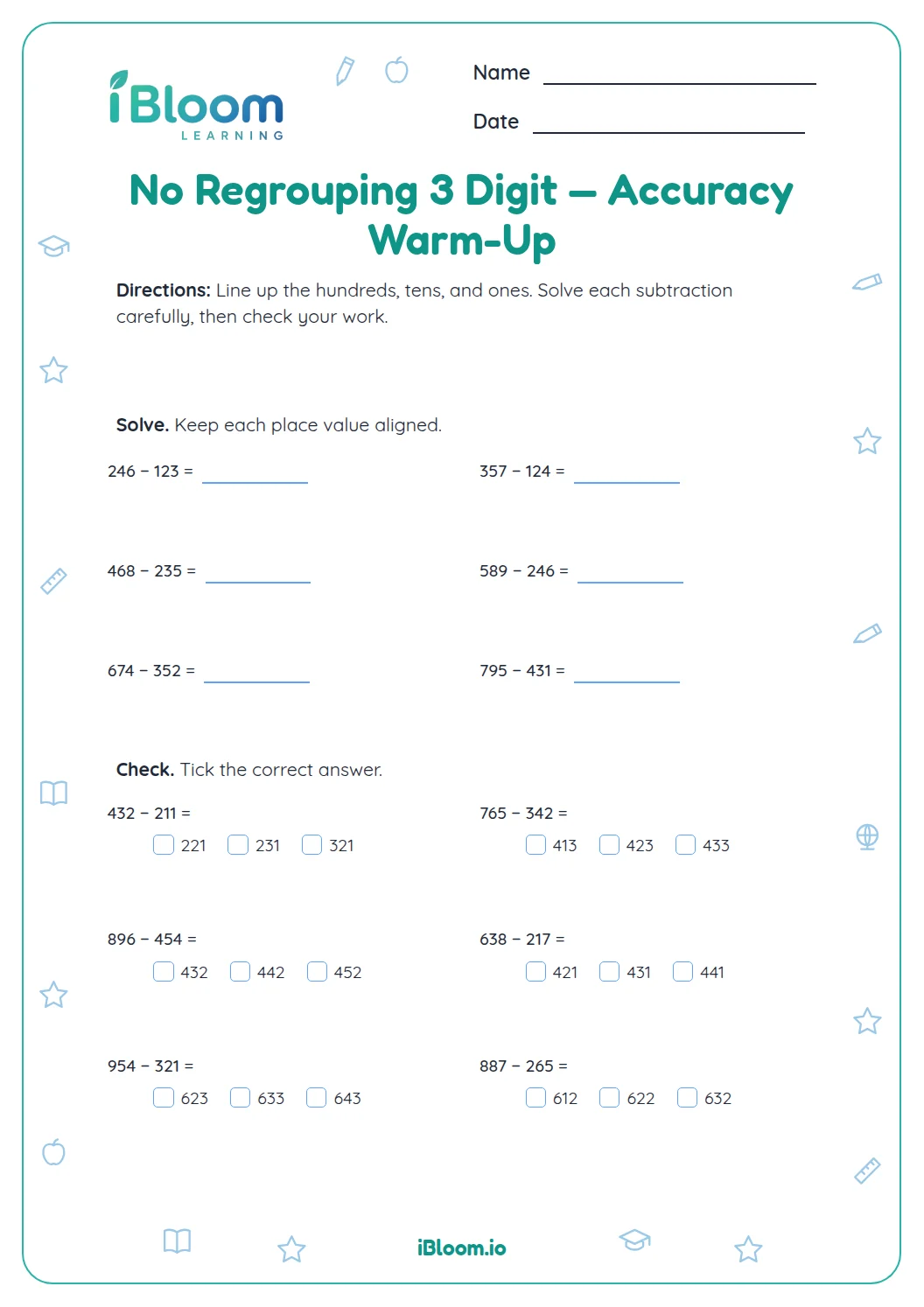
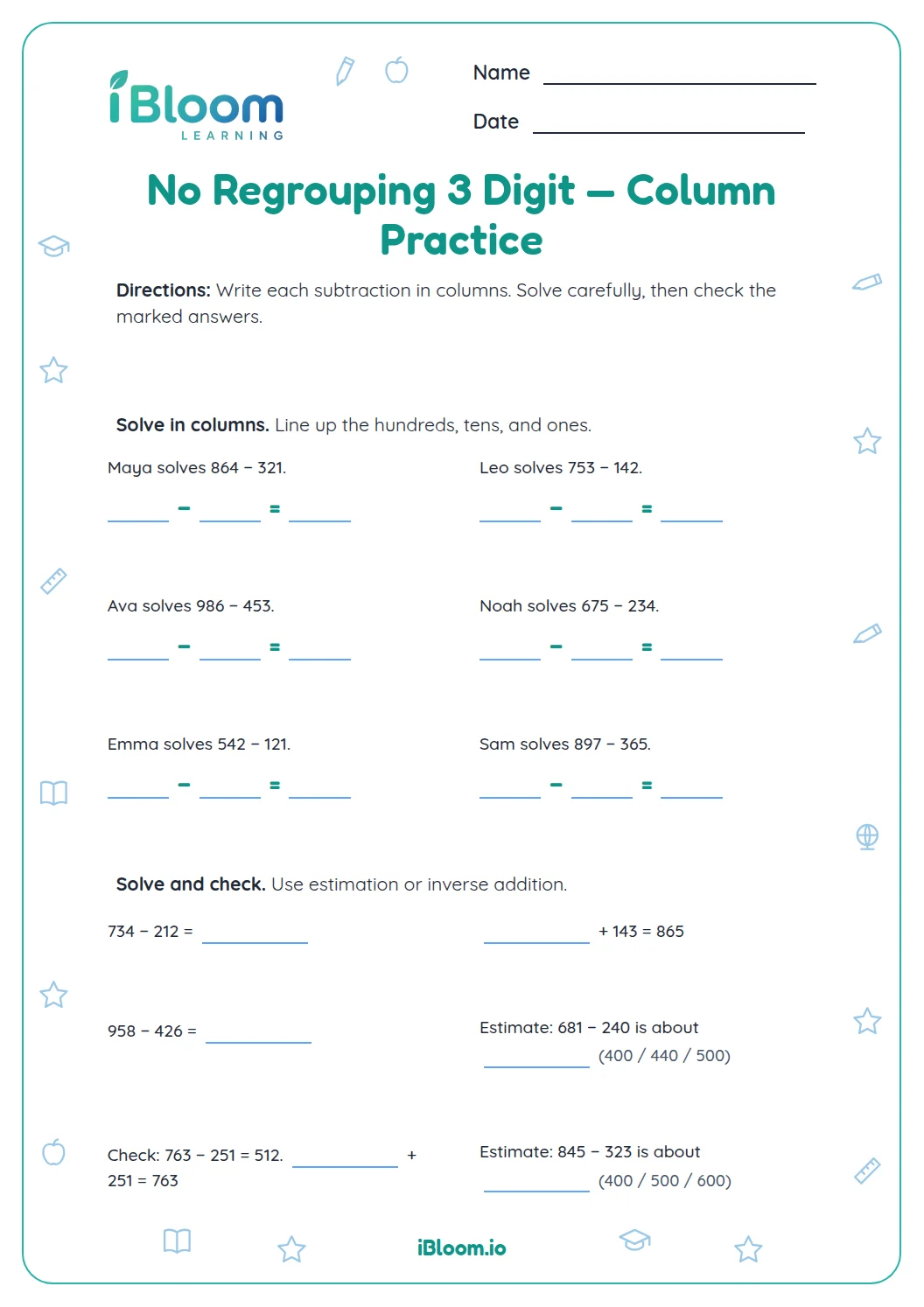
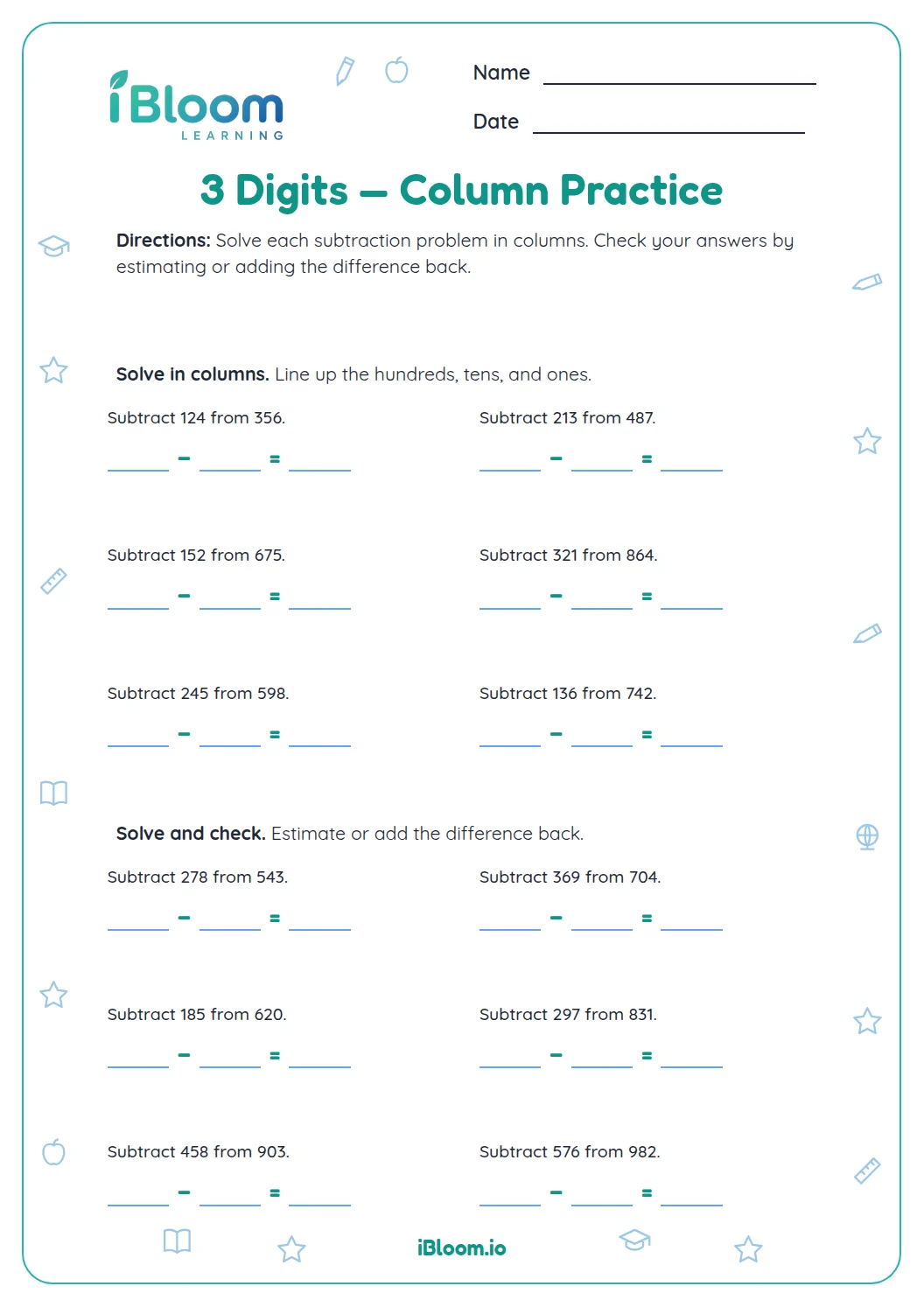
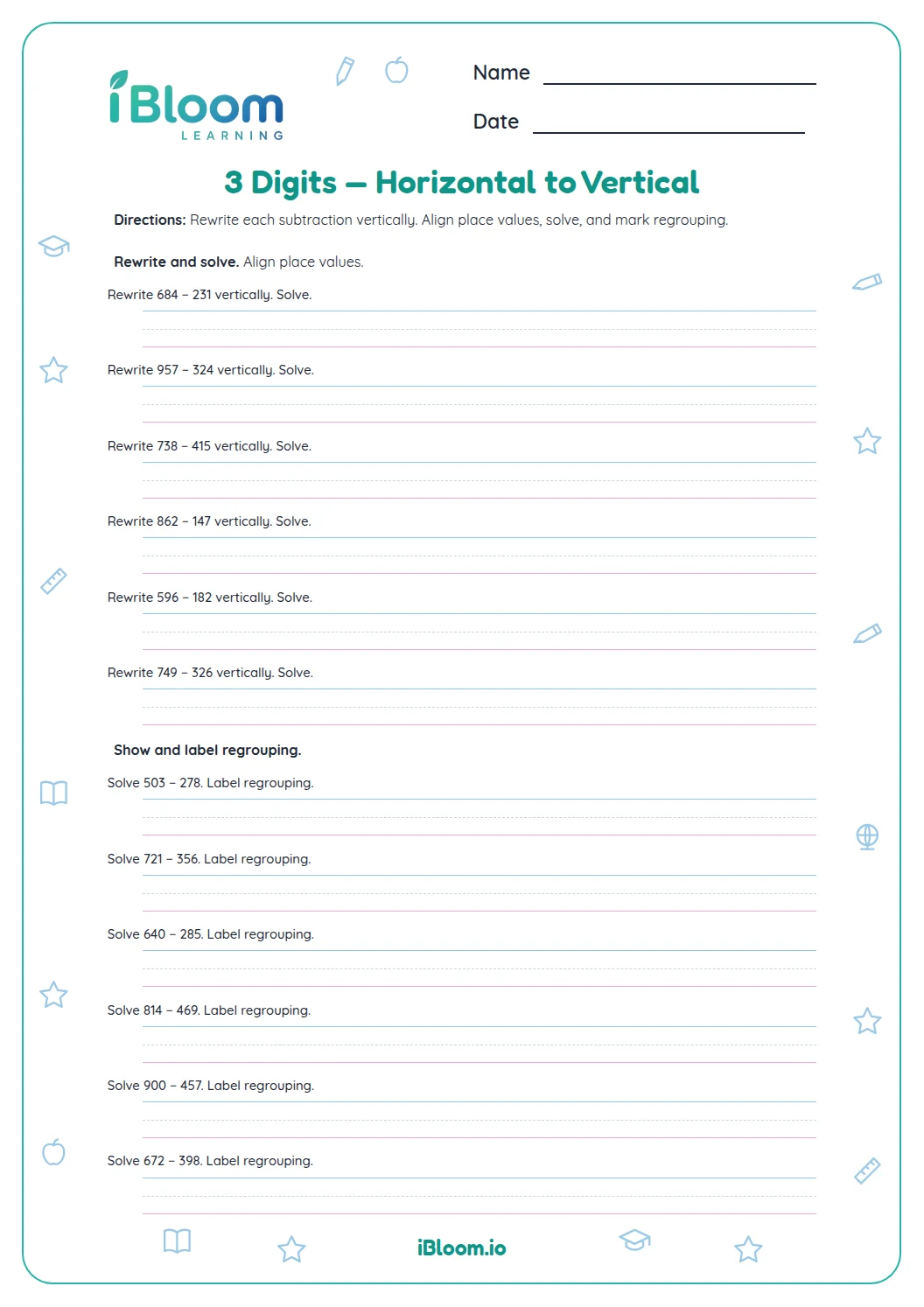
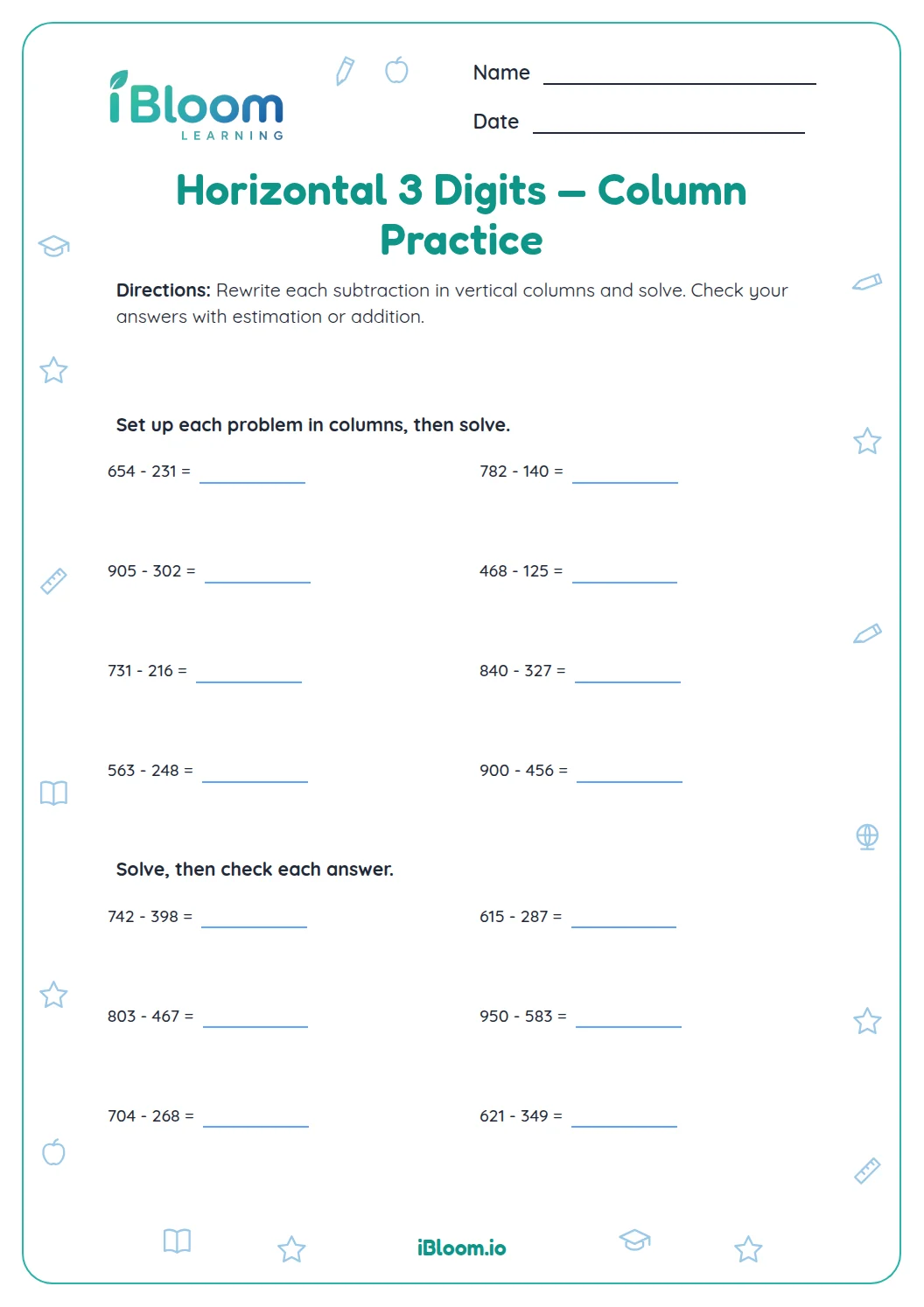
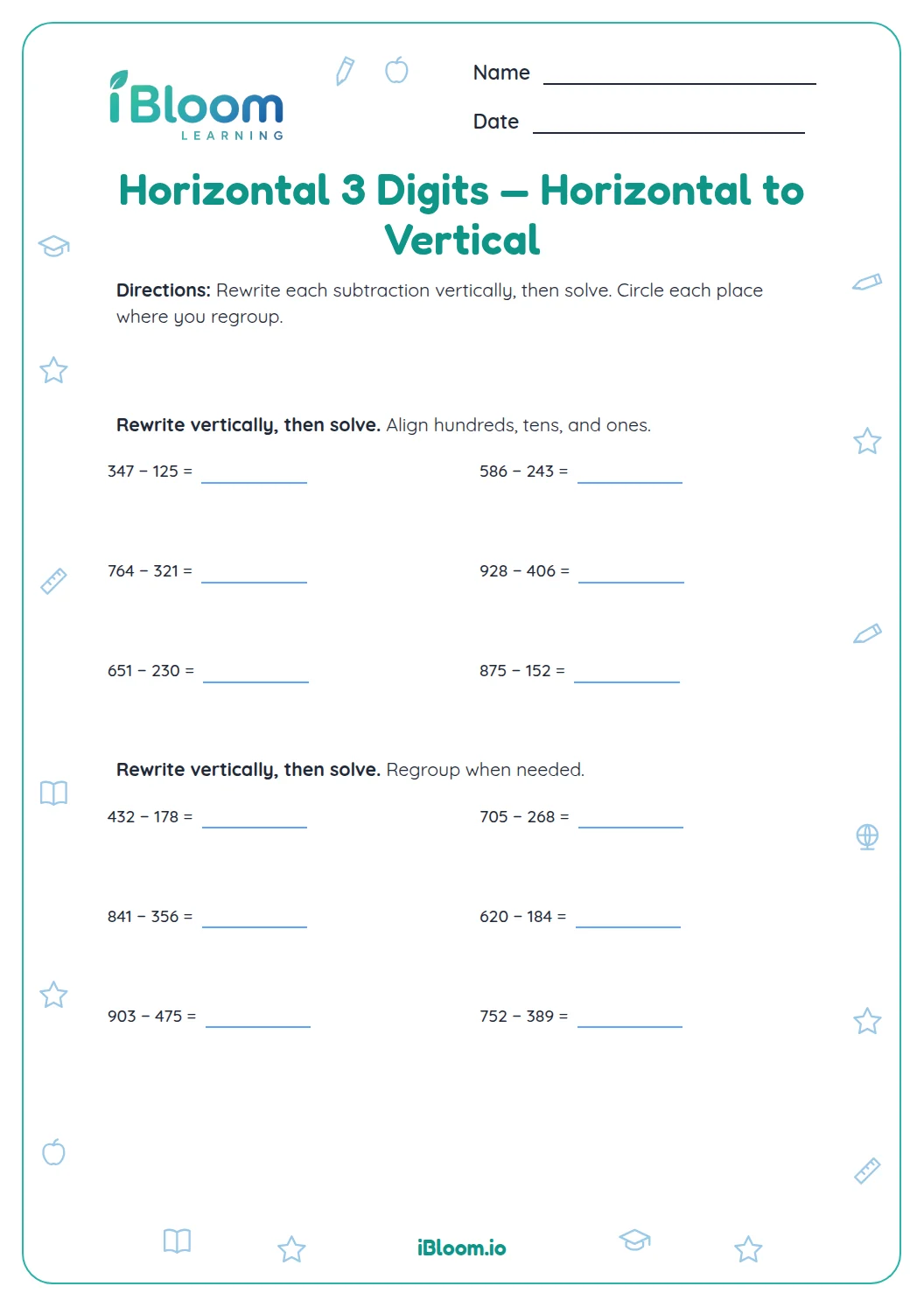
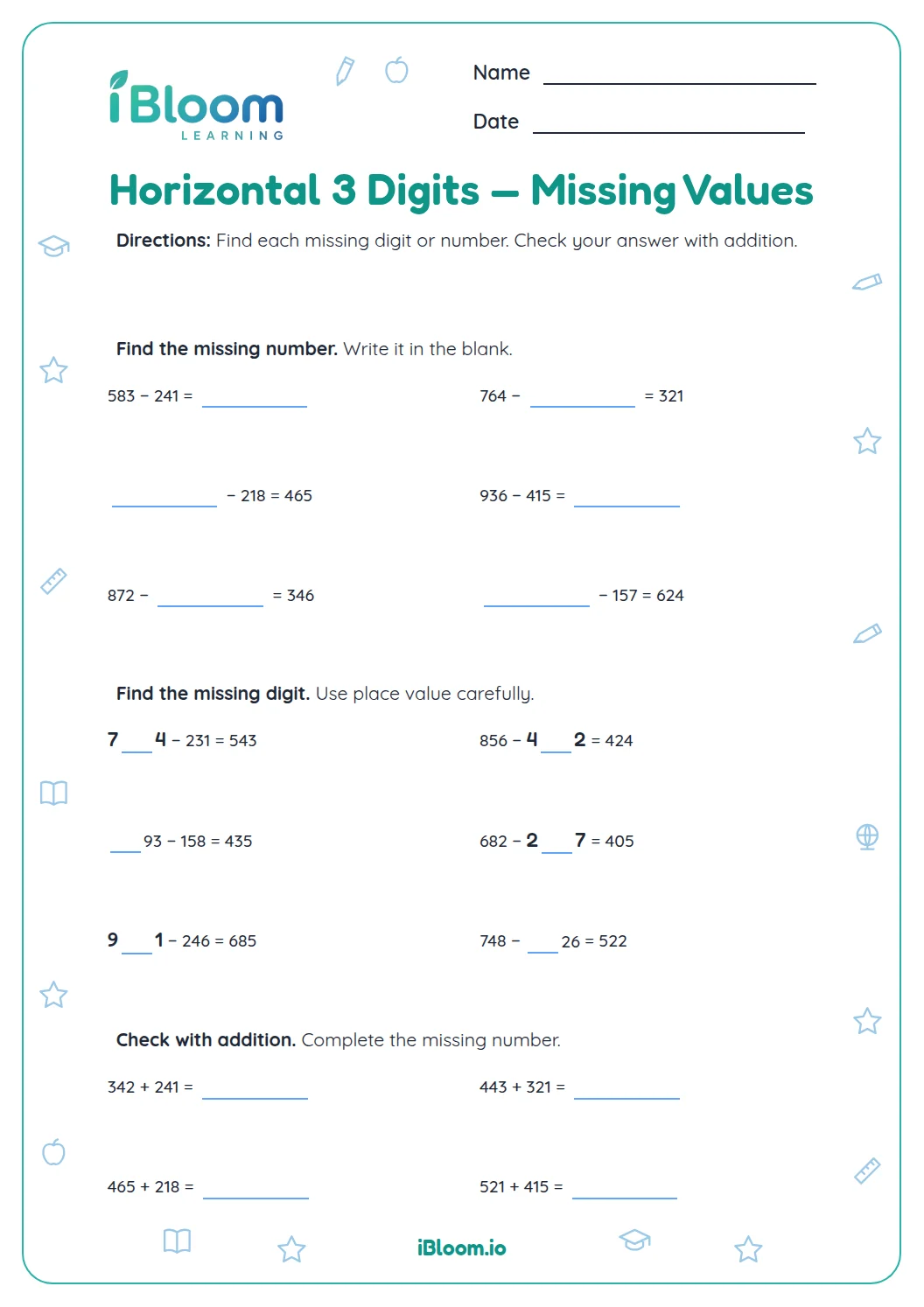
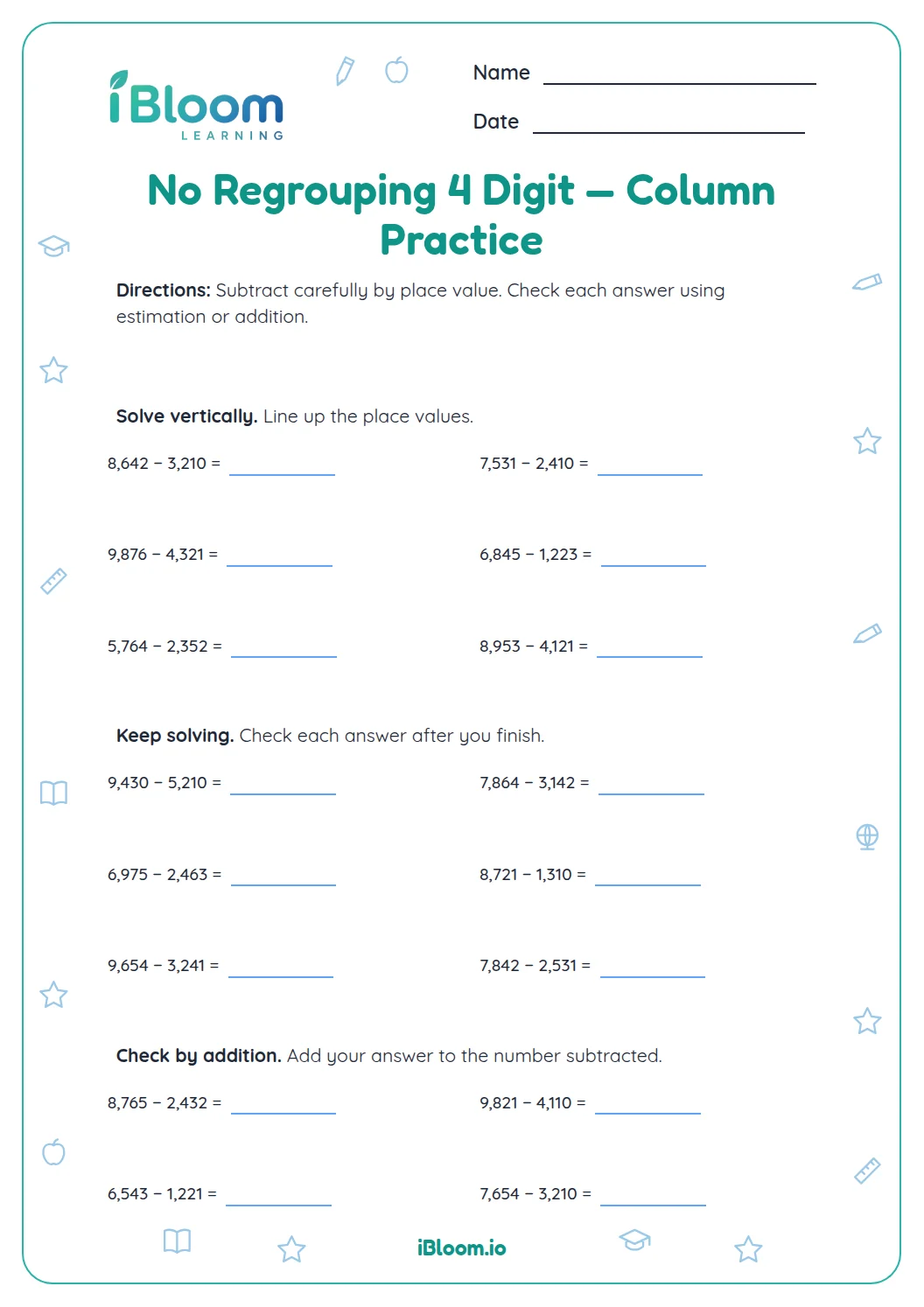
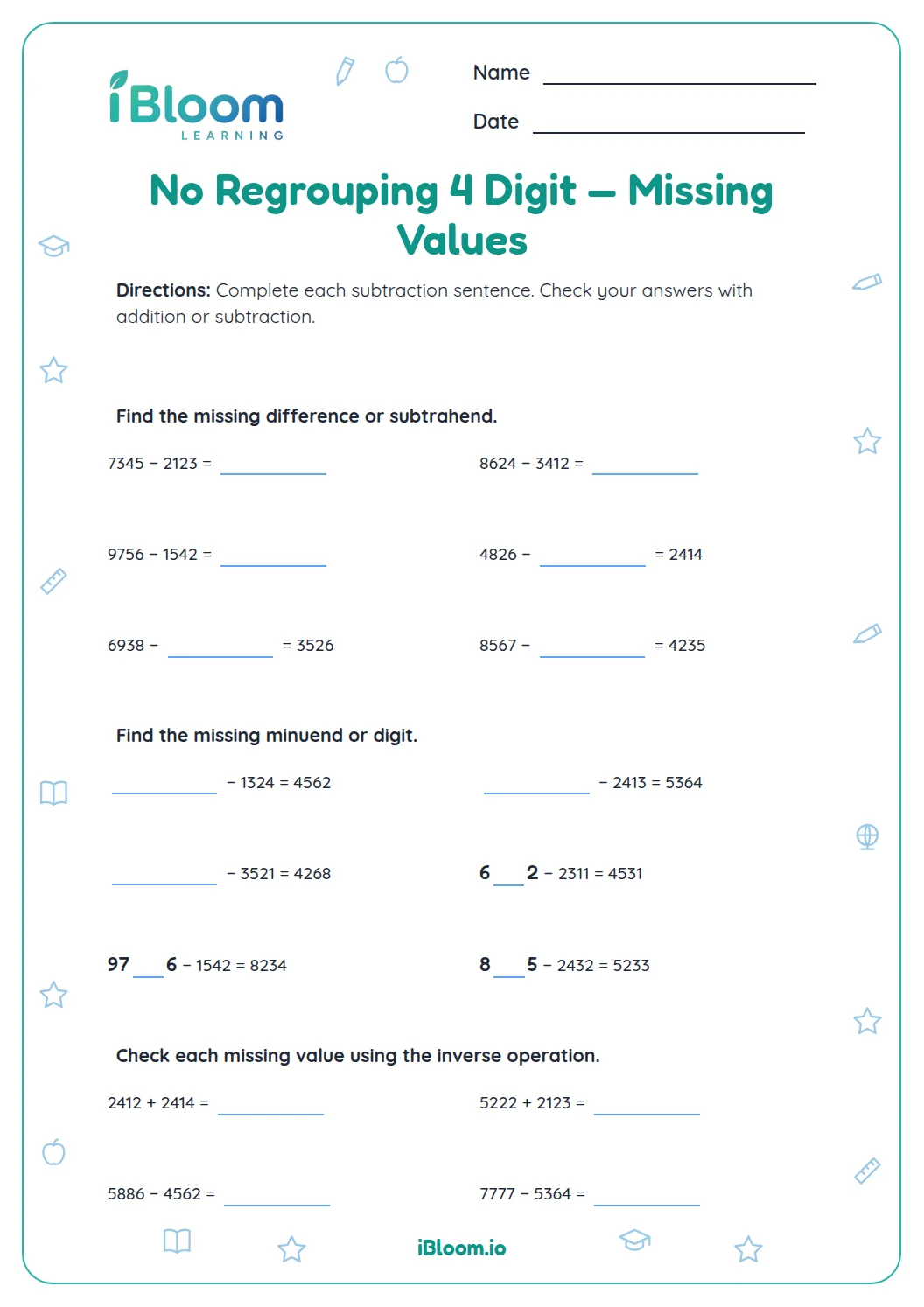
This printable drill gives Grade 3 students 16 three-digit subtraction problems with no regrouping. Children rewrite horizontal expressions in columns, align hundreds, tens, and ones, and check differences with addition. It practices CCSS 3.NBT.A.2 and includes a separate answer key.
Aligned to 3.NBT.A.2
Why should the digits line up?
Each column must represent the same place value. Ones go under ones, tens under tens, and hundreds under hundreds.
- 1 864
- 2− 321
- 3 543
- 4Check: 543 + 321 = 864
How do you subtract without regrouping?
No regrouping is needed when each top digit is at least as large as the digit below it. In 864 − 321, the ones, tens, and hundreds can each be subtracted directly.
How can addition check your work?
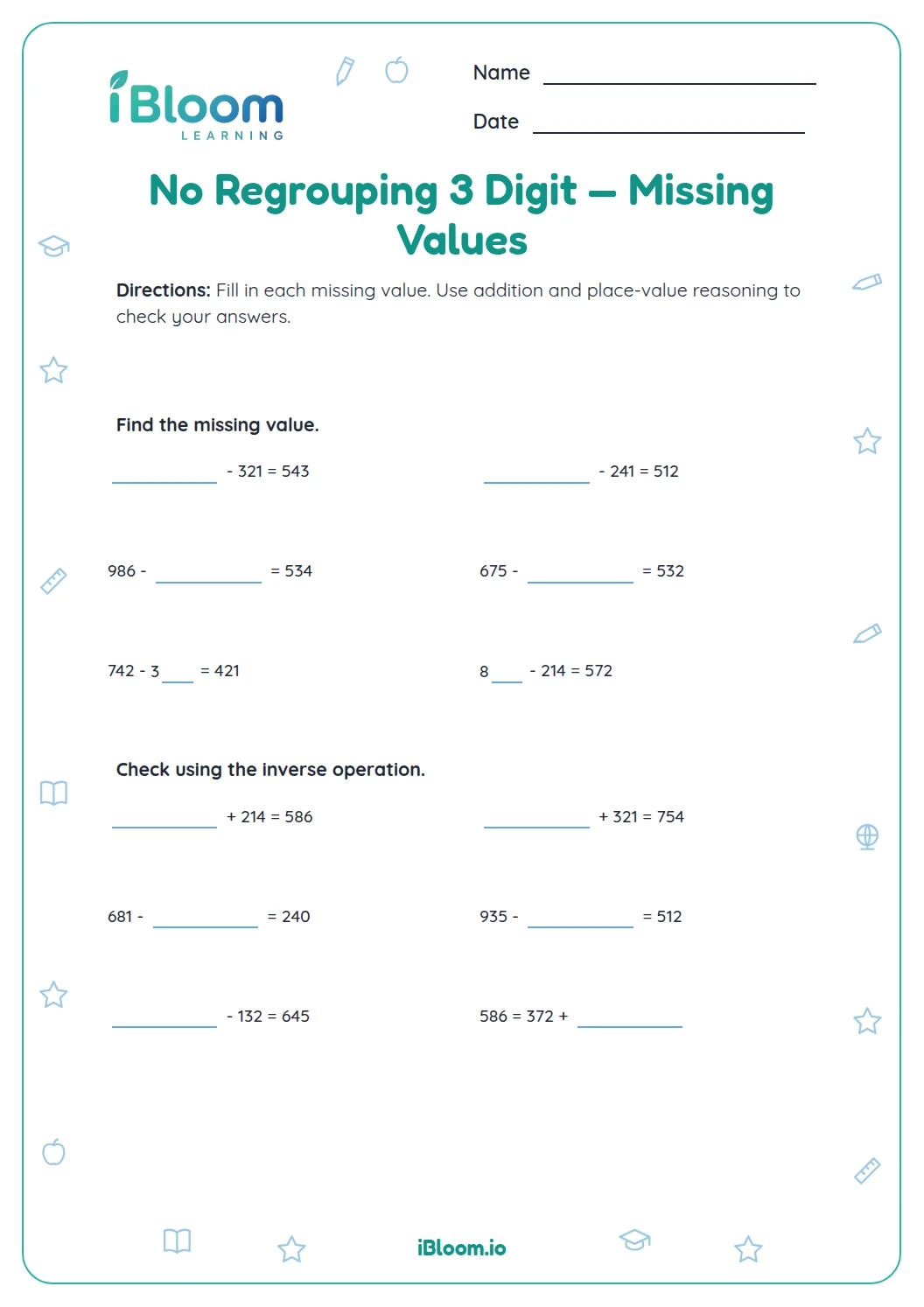
Add the difference to the subtrahend. If the total matches the minuend, the subtraction is correct.
How to use this worksheet
- 1Copy the minuend above the subtrahend.
- 2Line up ones, tens, and hundreds in questions 1–8.
- 3Subtract ones, tens, and hundreds in order.
- 4Record each difference in the answer space.
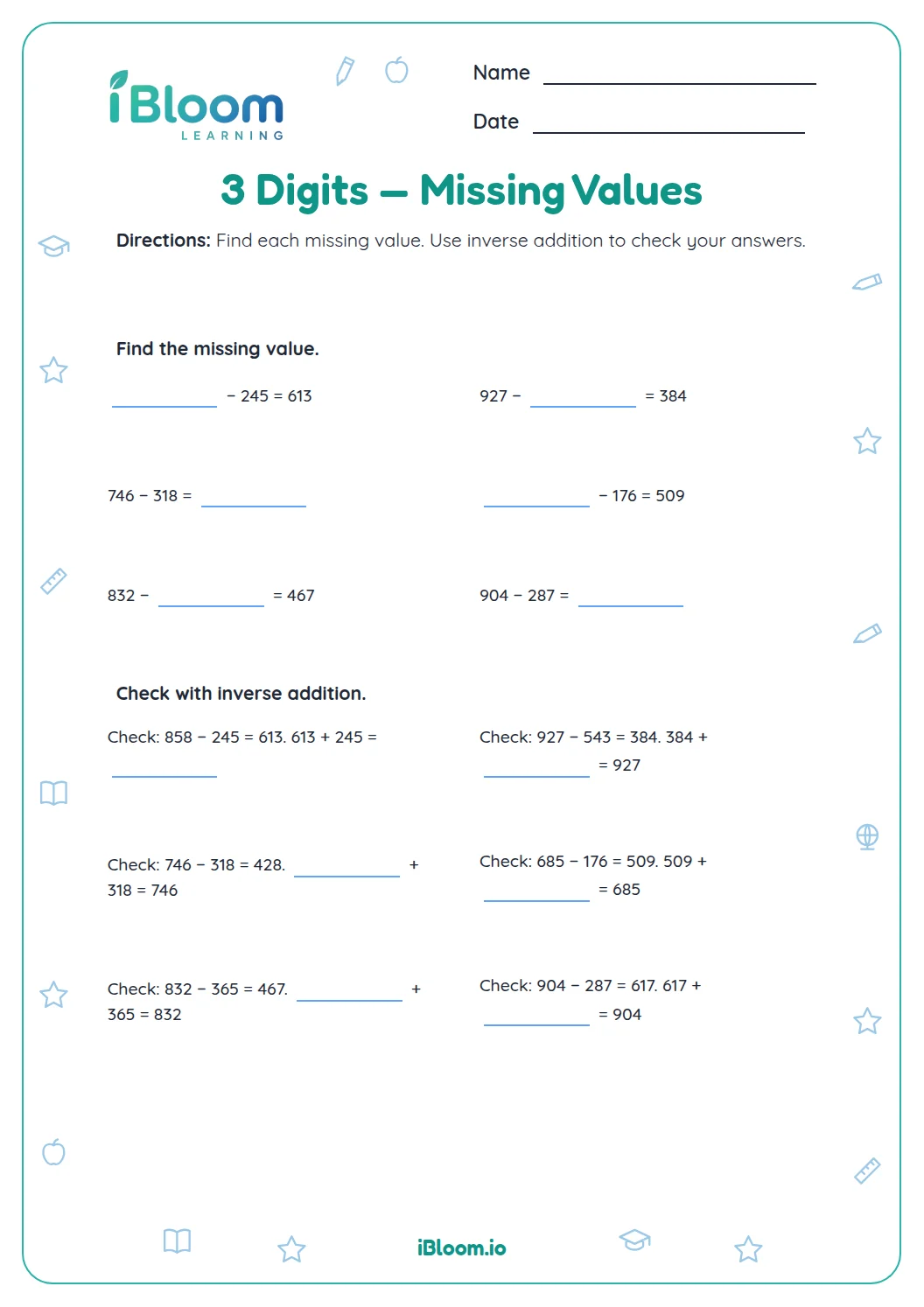
- 5For questions 13–16, add the difference to the subtrahend to check the minuend.
Common mistakes and quick fixes
The mistake
Misaligning a tens digit under the ones
The fix
Use place-value headings or write one digit per column.
The mistake
Subtracting the larger digit from the smaller digit
The fix
Check that the top digit is at least the bottom digit in each place.
The mistake
Forgetting a zero in the answer
The fix
Keep each result in its place, including a zero when needed.
Common Core alignment
Fluently add and subtract within 1,000 using place value strategies.
On this sheet: The three-digit subtraction problems keep each top digit greater than its subtrahend digit.
Show the official wordingHide the official wording
Fluently add and subtract within 1000 using strategies and algorithms based on place value, properties of operations, and/or the relationship between addition and subtraction.
What to practice next
Make more practice
Further reading
Questions parents and teachers ask
What does horizontal to vertical mean?
A horizontal subtraction sentence is rewritten with one number above the other. Place ones under ones, tens under tens, and hundreds under hundreds, then subtract each column. The first questions give room to work in columns. The same place-value alignment is used throughout the sheet.
How do I know a problem needs no regrouping?
In every place, the top digit is at least as large as the digit below it. In 864 − 321, subtract 1 from 4 ones, 2 from 6 tens, and 3 from 8 hundreds without trading between places.
How many questions and parts are included?
There are 16 questions in four parts: four horizontal equations, four worded column setups, four subtraction drills, and four solve-and-check items. All use three-digit numbers with no regrouping, and the separate key lists each difference. The questions move from setup practice to independent calculation.
Why should the digits line up by place value?
Each vertical column stands for ones, tens, or hundreds. If a tens digit is placed under the ones, the subtraction changes the value of the number. Align the rightmost digits first, then check the tens and hundreds columns.
How can addition check the difference?
Add the subtrahend to the difference. For example, 864 − 321 = 543 is checked by 543 + 321 = 864. The last four problems remind students to use this inverse-operation check after subtracting. Use the key after the child has completed each check.