




About this worksheet
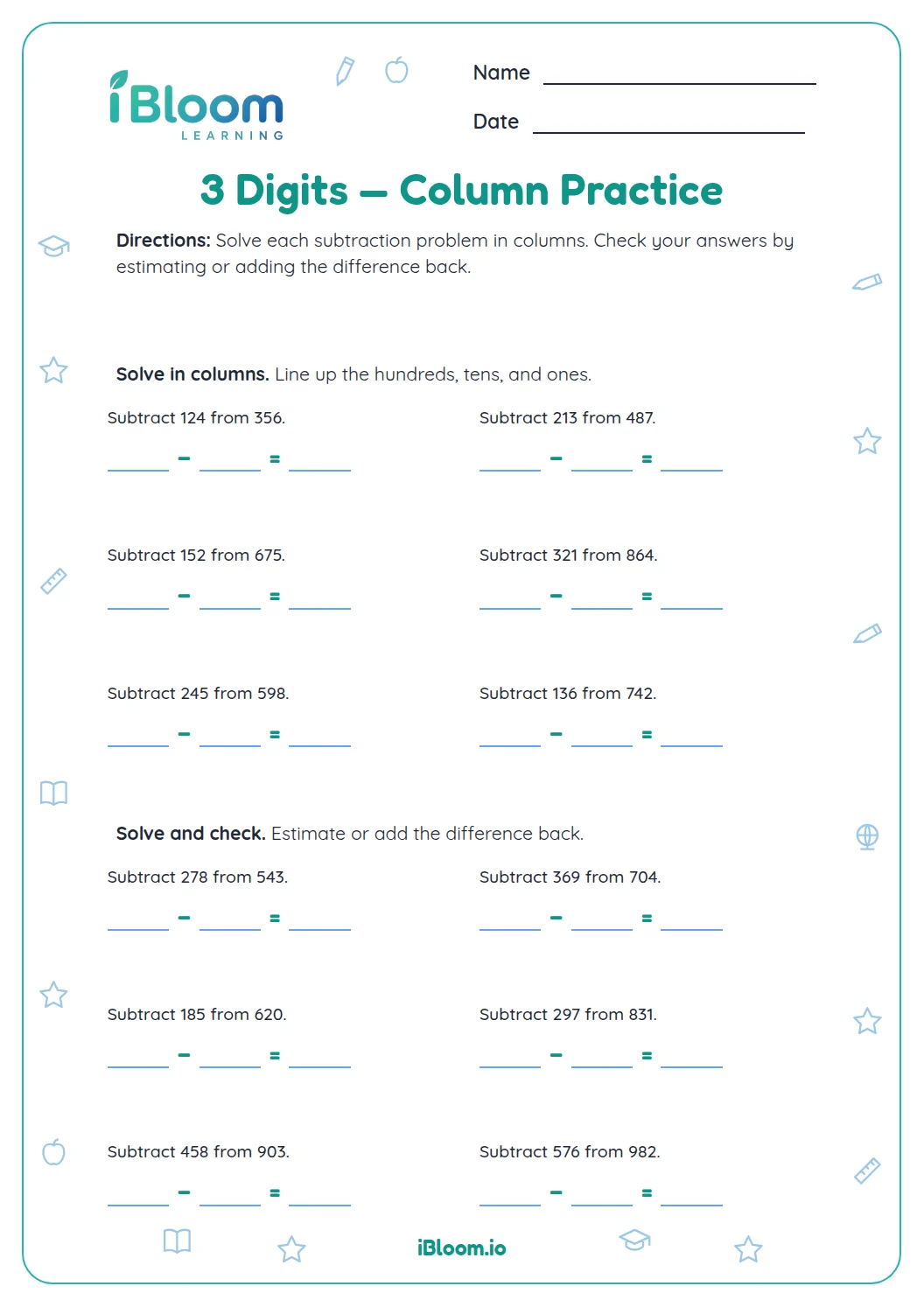
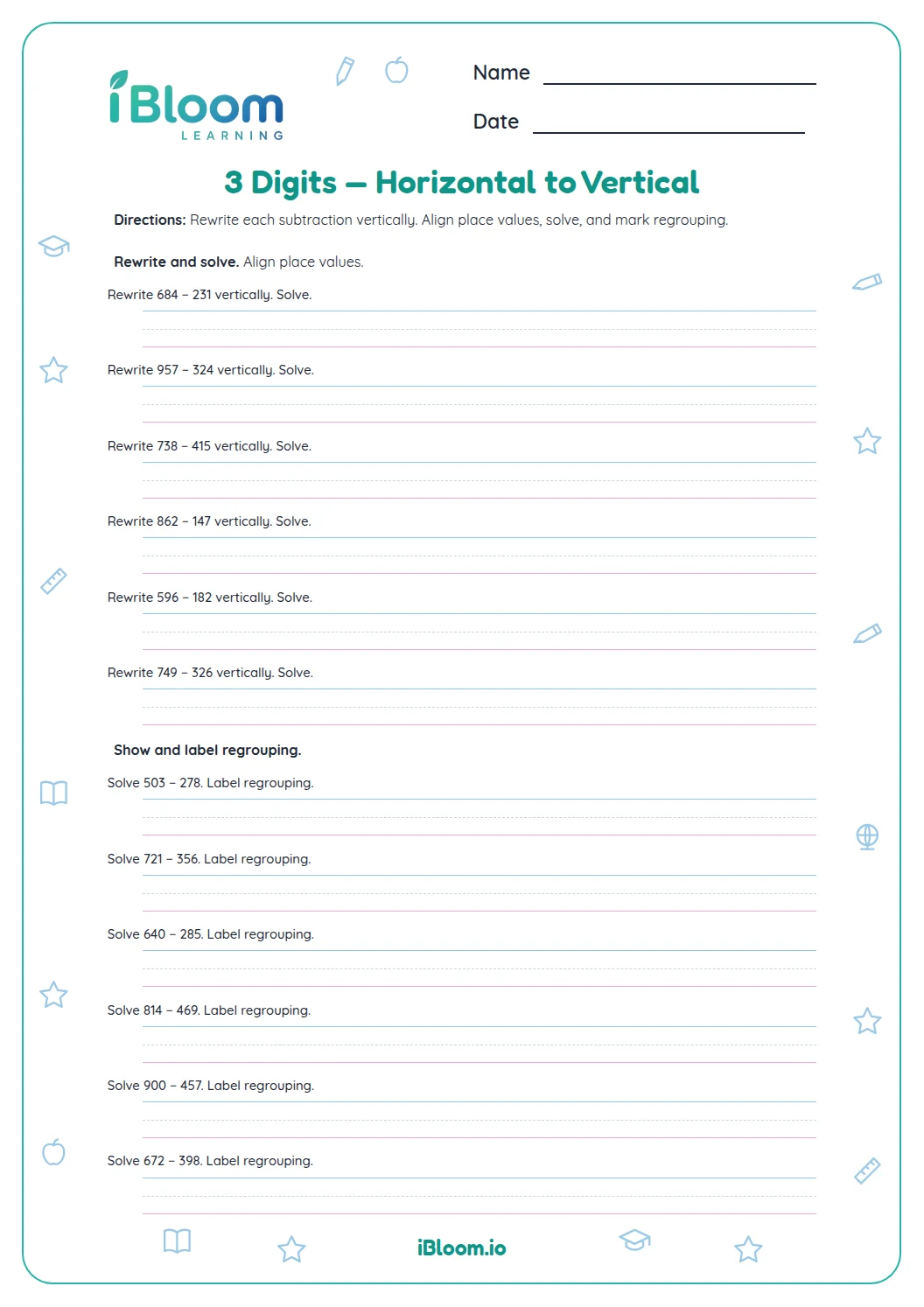
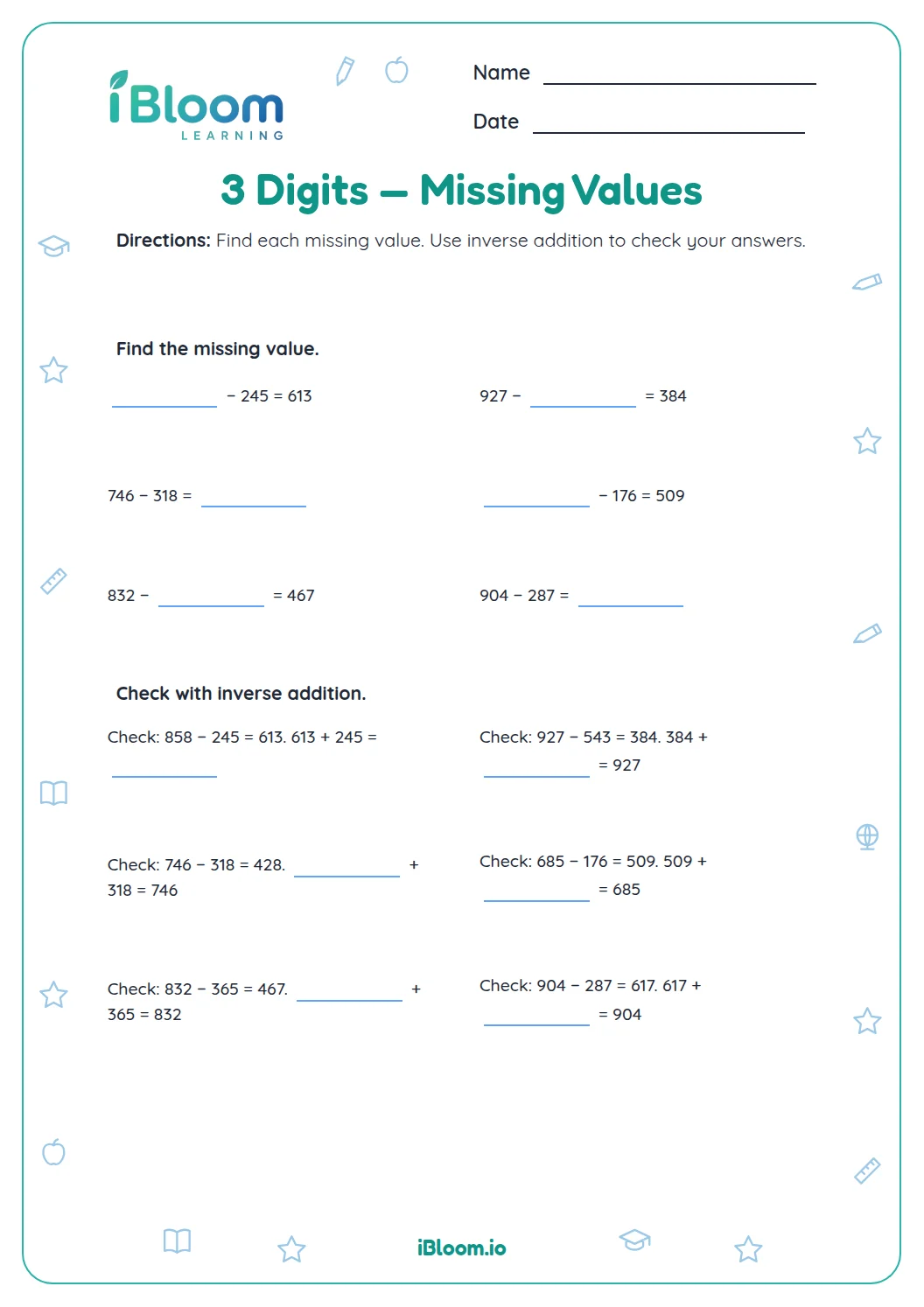
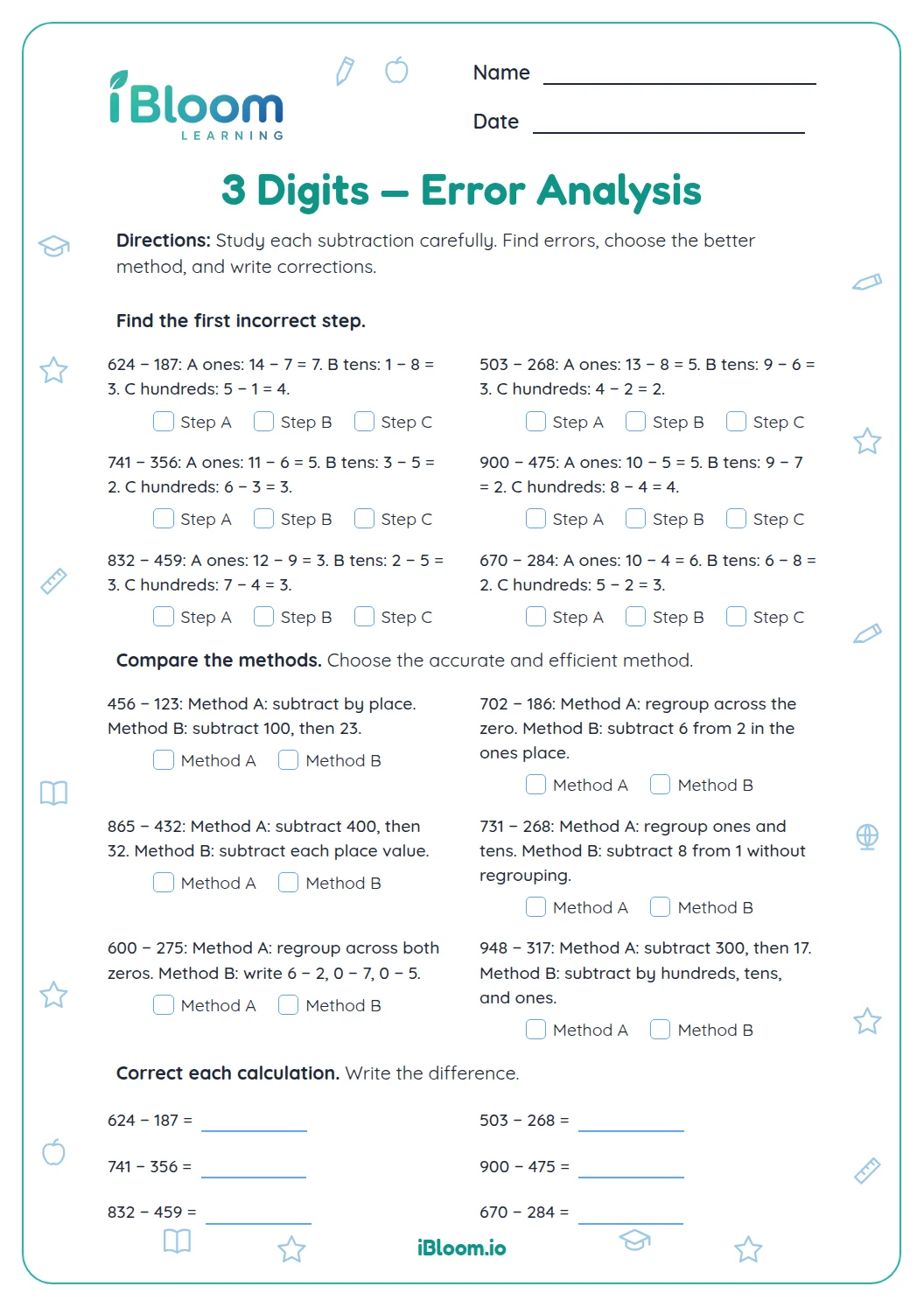
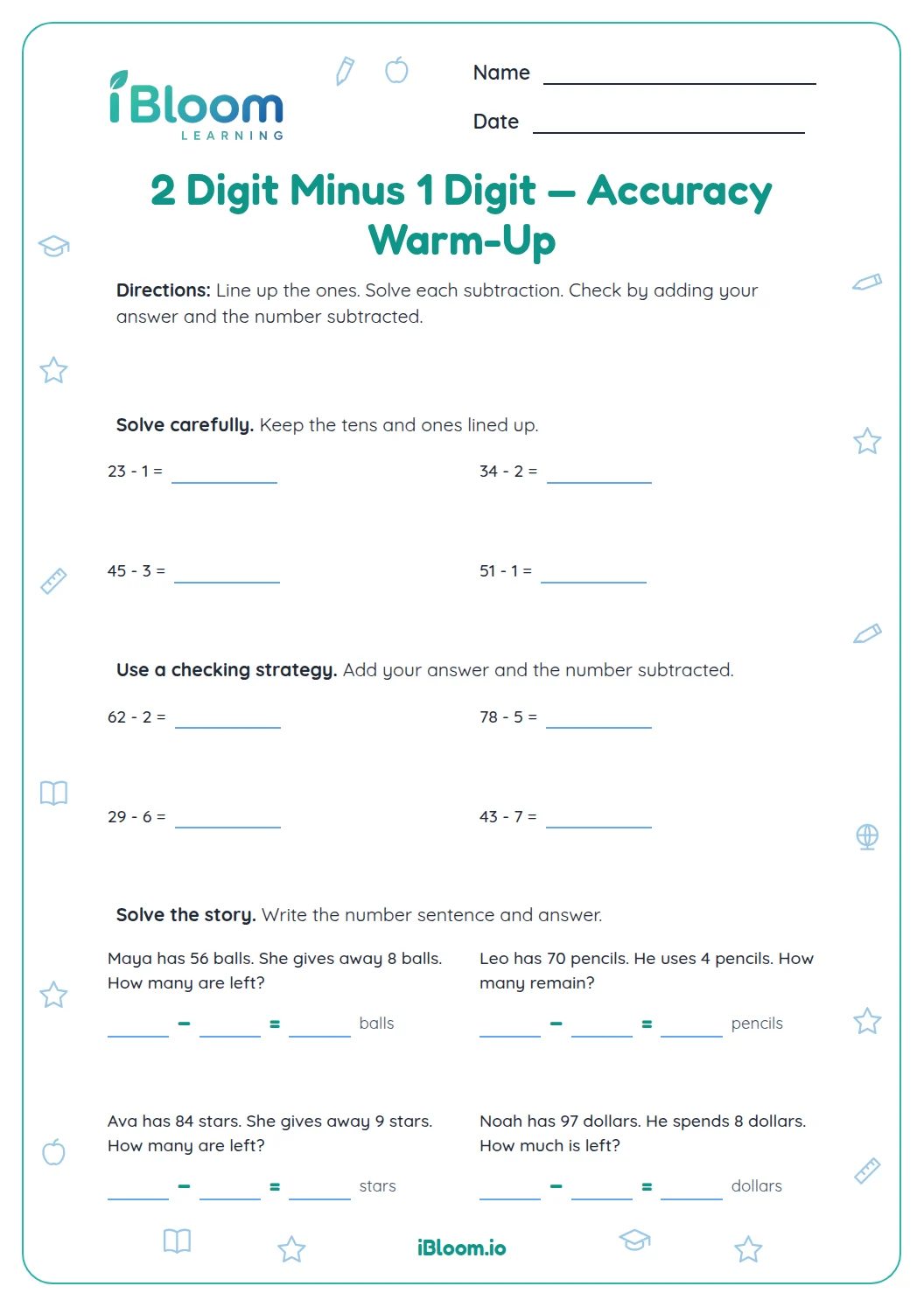
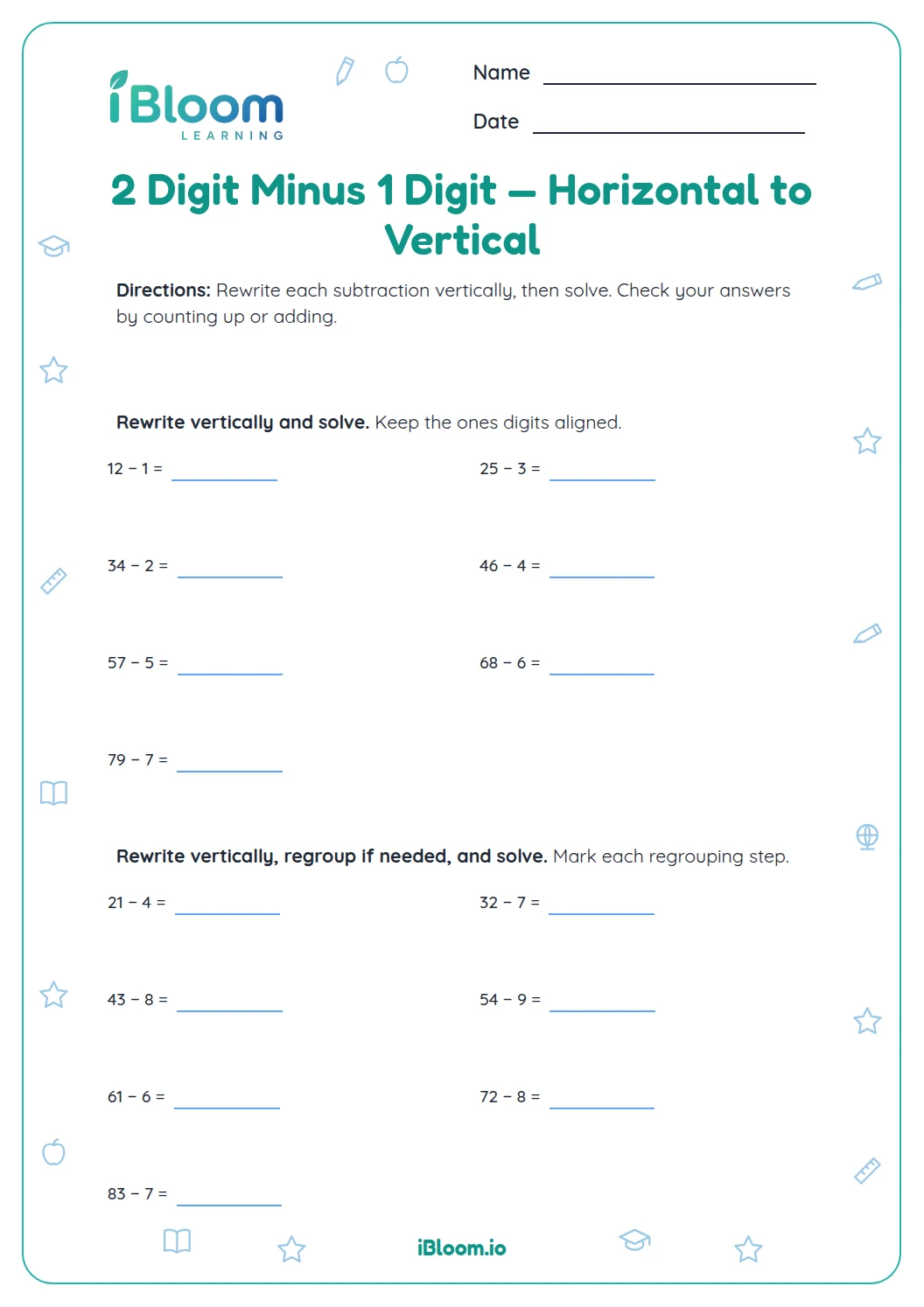
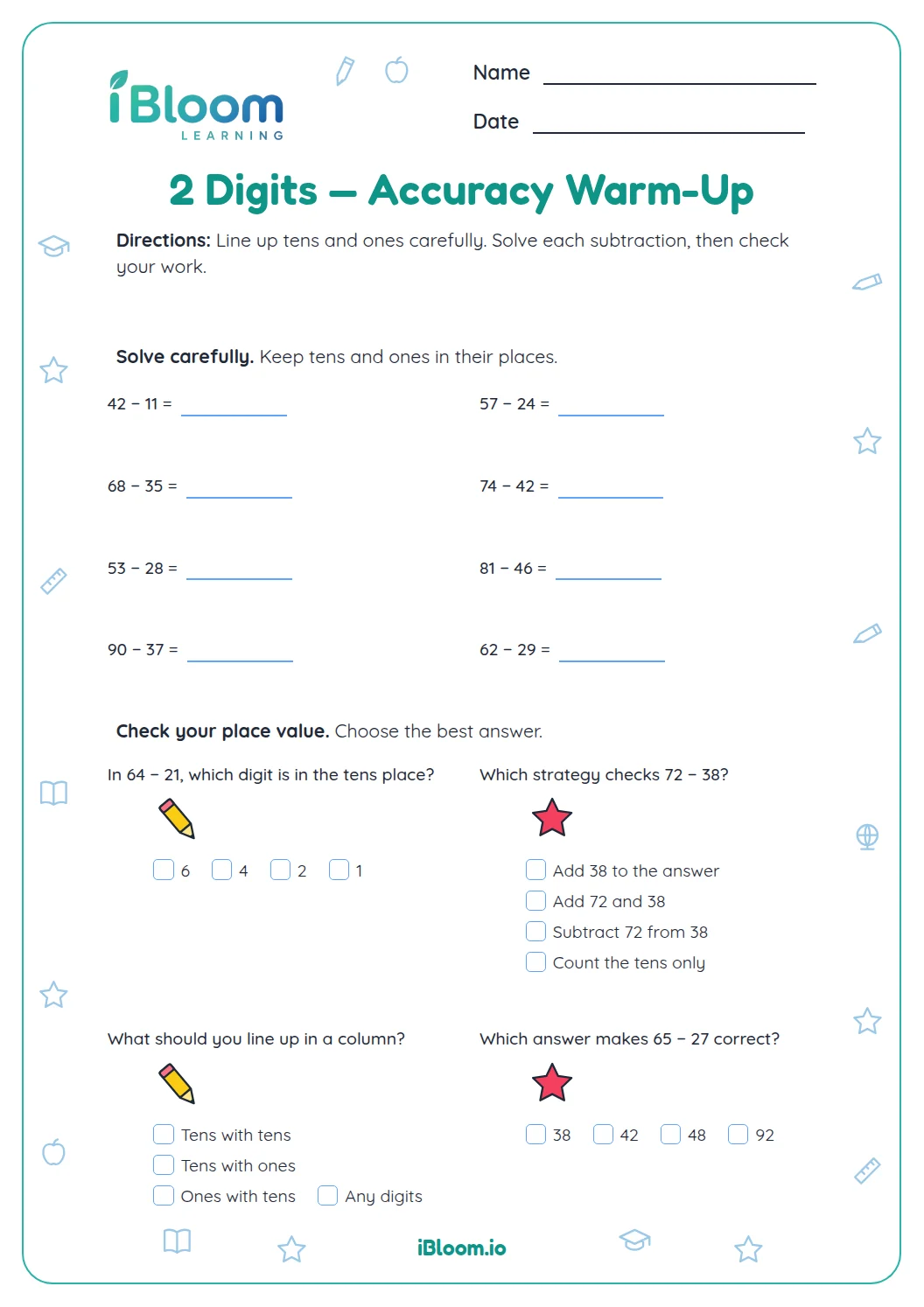
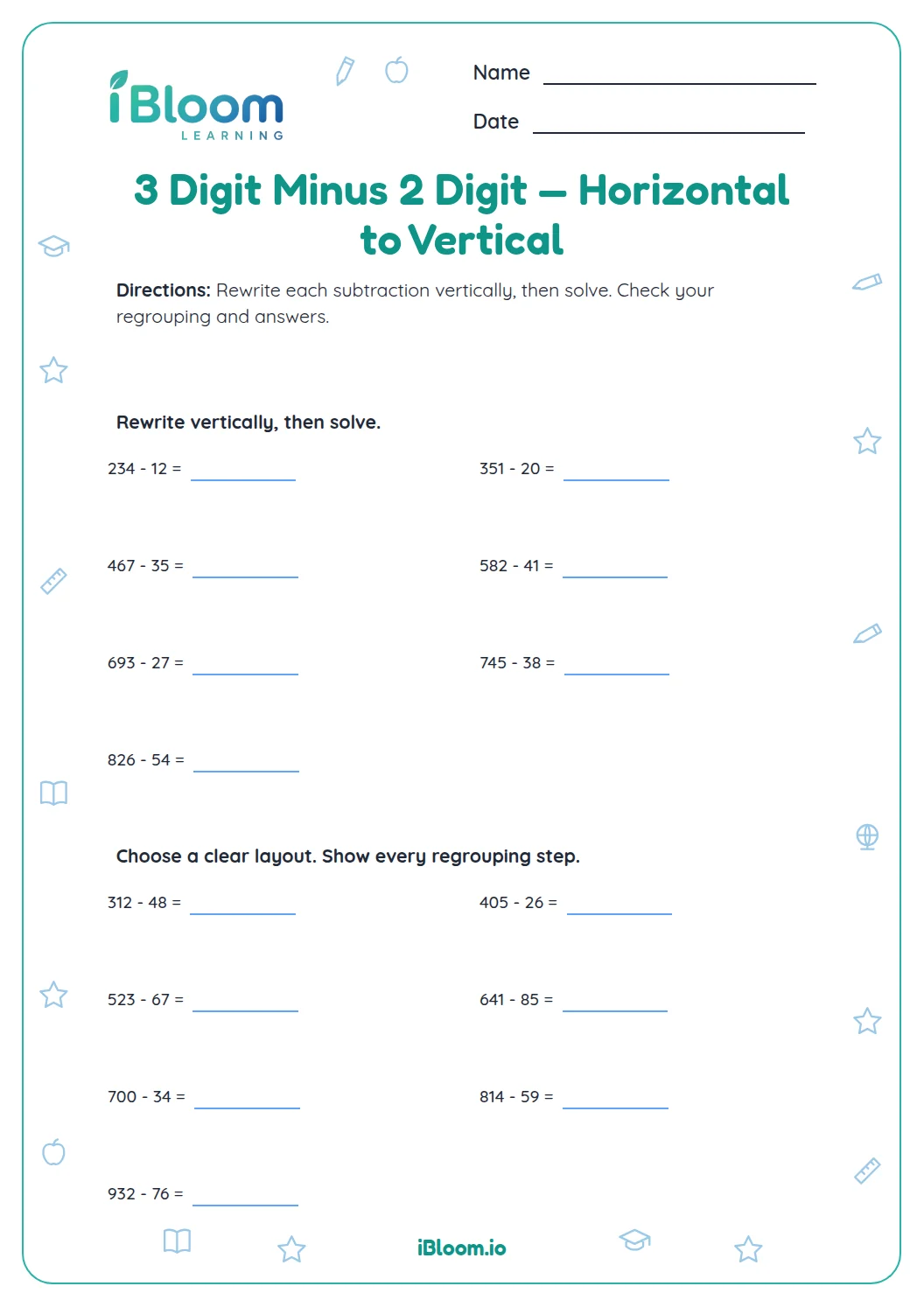
This Grade 3 printable gives students 20 three-digit subtraction problems, first without regrouping and then with regrouping. The later problems ask students to add the difference to the subtrahend as a check, matching the inverse-addition method on the original sheet. A separate answer key is included.
Aligned to 3.NBT.A.2
How can addition check a difference?
Subtract in each place-value column, regroup when needed, and then add the difference to the number subtracted. The sum should equal the starting number.
- 1234 − 112 = 122
- 2Check: 122 + 112 = 234
How does the practice build?
Part A starts with three-digit subtraction that needs no regrouping. Part B continues with regrouping. The page directions ask students to check differences by addition.
What should the answer key confirm?
Compare each difference with the key. For a regrouping problem, check a second way by adding the subtrahend to the difference and seeing whether the starting number returns.
How to use this worksheet
- 1Read the minuend and subtrahend carefully.
- 2Subtract ones, tens, and hundreds; regroup when needed.
- 3Write the difference in the blank.
- 4For the check items, add the difference and subtrahend.
- 5Compare the result with the minuend, then use the key.
Common slips and quick fixes
The mistake
Subtracting the smaller digit from the larger digit in every column.
The fix
Regroup from the next place when the top digit is too small.
The mistake
Forgetting that a regroup changes the digit to the left.
The fix
Reduce that digit by one after trading a ten or hundred.
The mistake
Adding the difference to the wrong number during a check.
The fix
Add the difference and subtrahend; the sum should be the minuend.
Curriculum alignment
This worksheet practices the named skill through short, concrete examples.
Subtract within 1,000 with place-value strategies, then verify selected differences by addition.
On this sheet: The three-digit differences use place-value subtraction within 1,000.
Show the official wordingHide the official wording
Fluently add and subtract within 1,000 using strategies and algorithms based on place value, properties of operations, and/or the relationship between addition and subtraction.
What to practice next
Make more practice
Further reading
Questions parents and teachers ask
Does the worksheet include regrouping?
Yes. The first eight problems do not require regrouping; the remaining problems include regrouping across ones or tens. Students can use the written space on the later items to track each trade before checking selected differences with addition. This extra check can help locate a place-value error.
How does addition check subtraction?
Add the difference to the number that was subtracted. For example, 122 + 112 returns 234, the starting number in 234 − 112 = 122. If the sum is different, revisit the subtraction or addition steps. This extra check can help locate a place-value error.
How many problems are included?
There are 20 three-digit subtraction problems across three parts. They move from subtraction without regrouping to regrouping practice, and selected later items explicitly ask students to check the difference by addition. This extra check can help locate a place-value error.
What grade is this worksheet for?
It is written for Grade 3 students practicing three-digit subtraction within 1,000. An adult can read the instructions, but students should do the subtraction and addition check themselves before consulting the key. This extra check can help locate a place-value error.
What comes with the printable?
The printable includes two worksheet pages and a separate two-page answer key. The key gives the expected difference for each problem; students can also verify a check item by adding its difference and subtrahend. This extra check can help locate a place-value error.