




About this worksheet
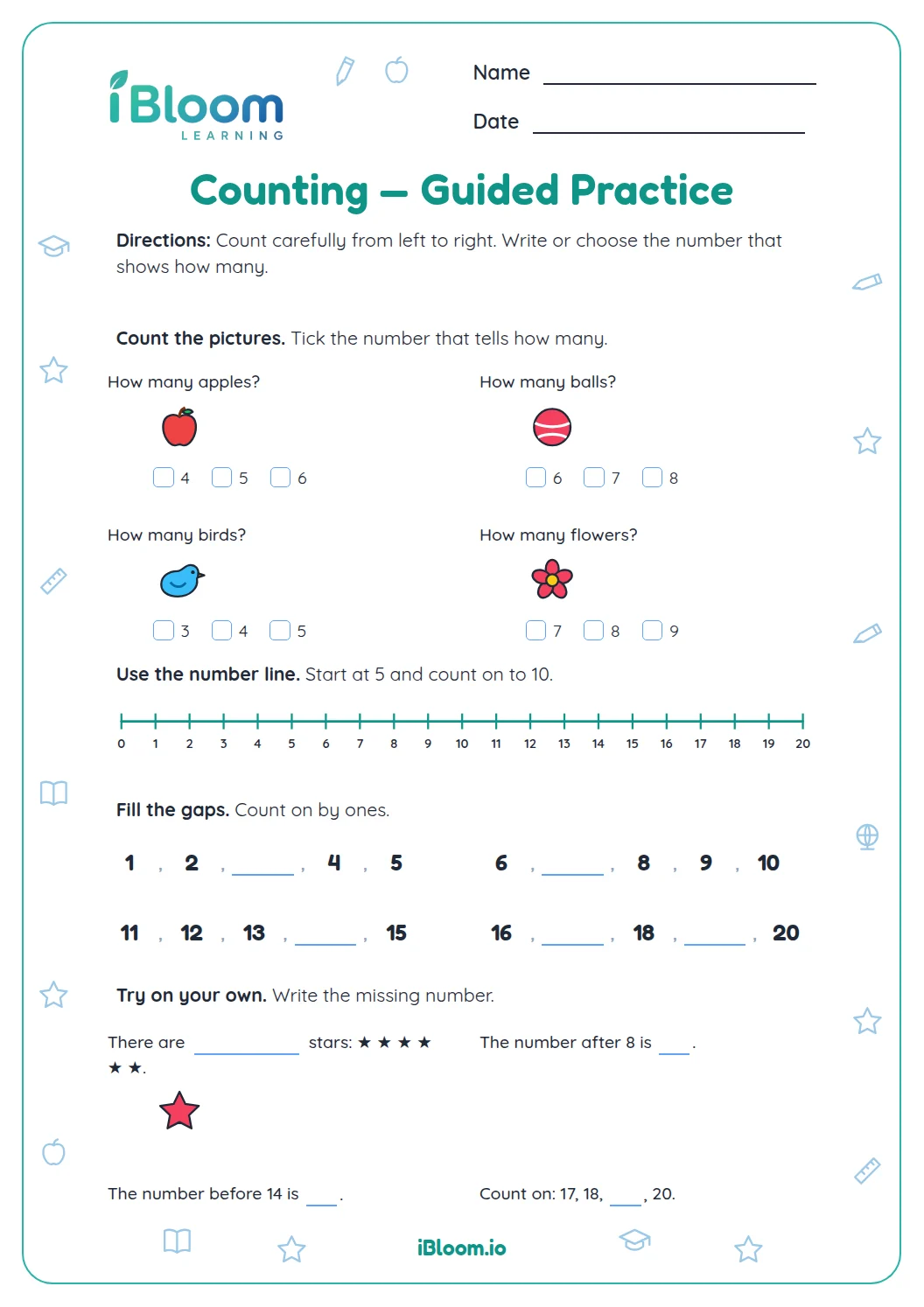
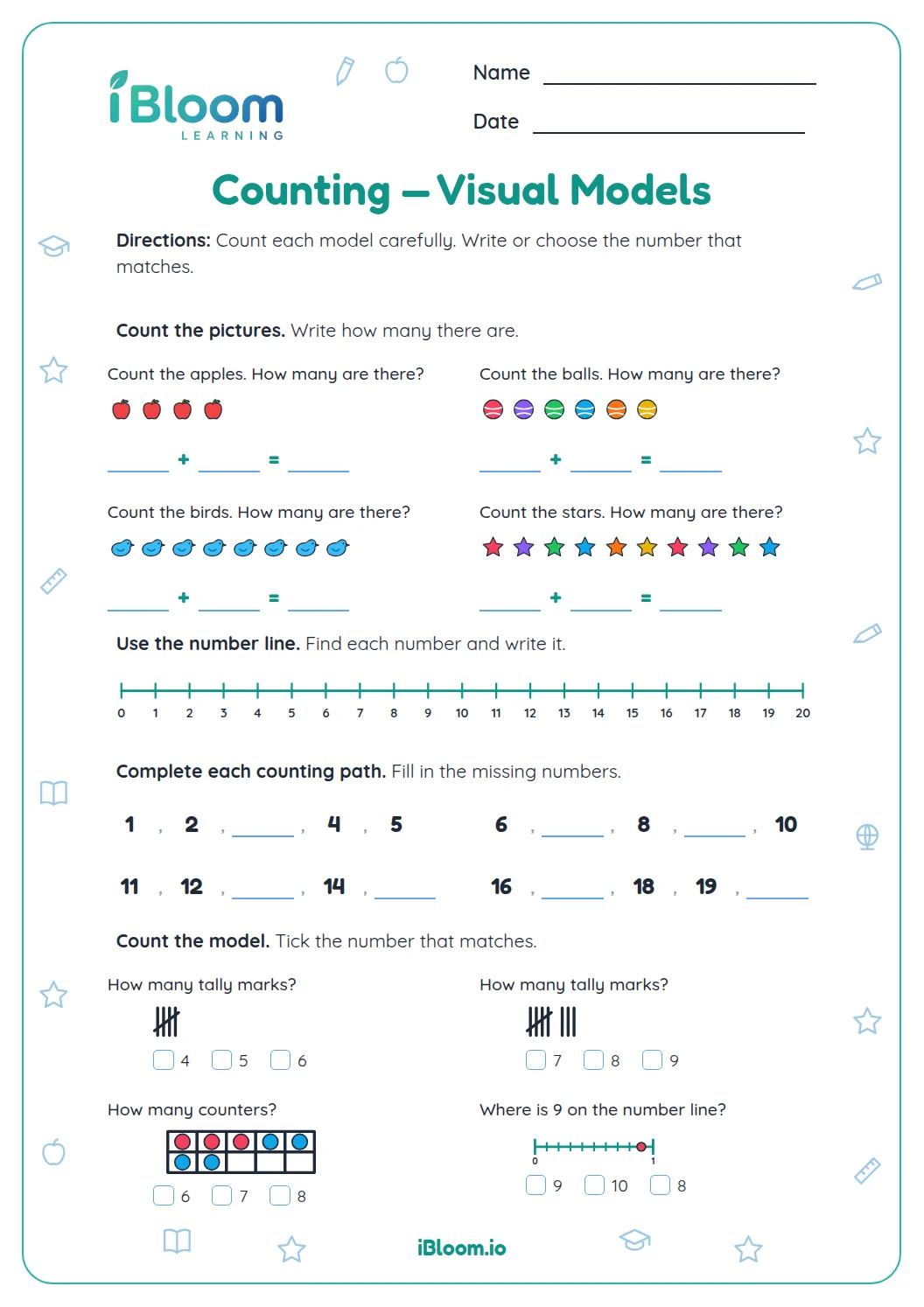
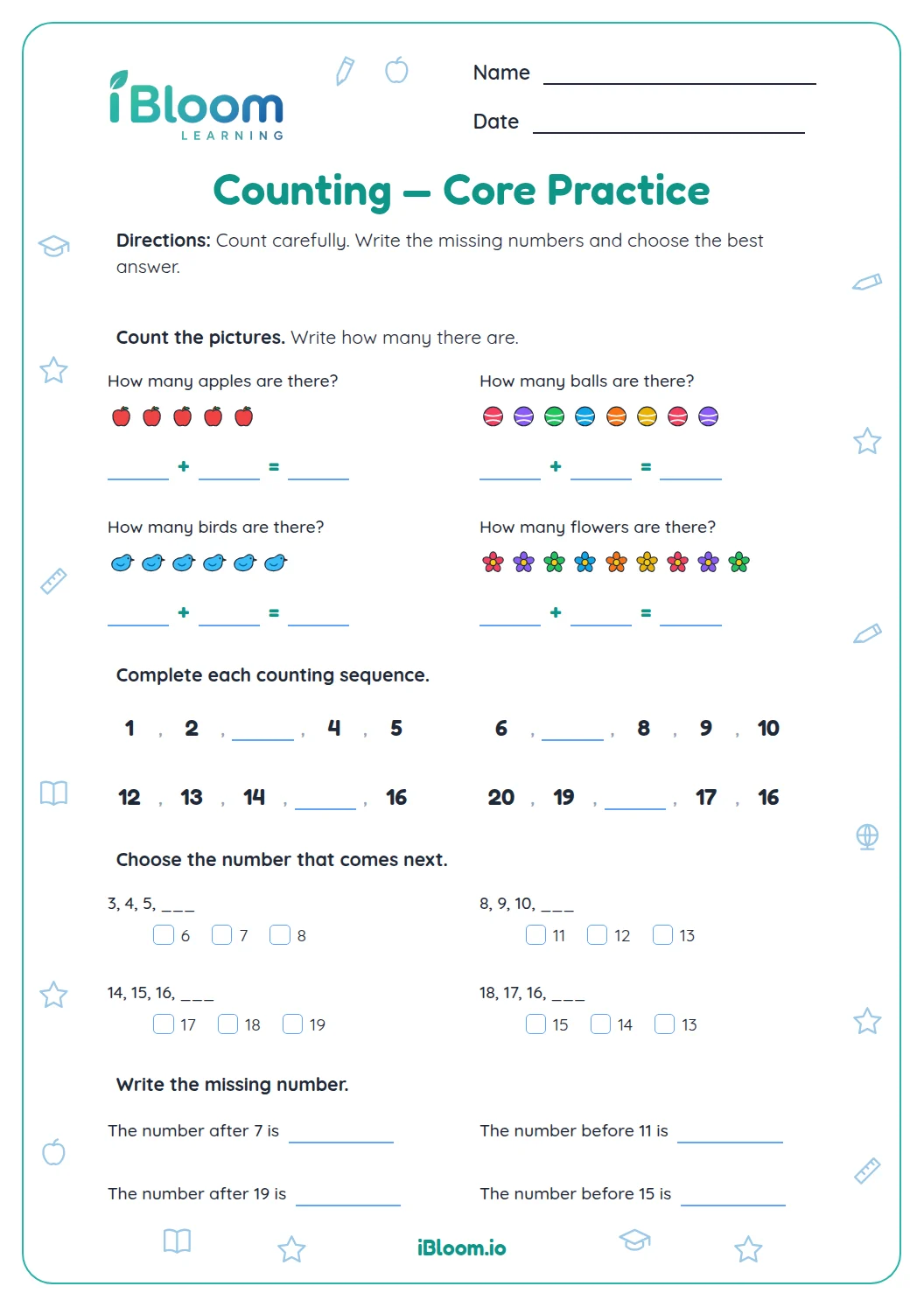
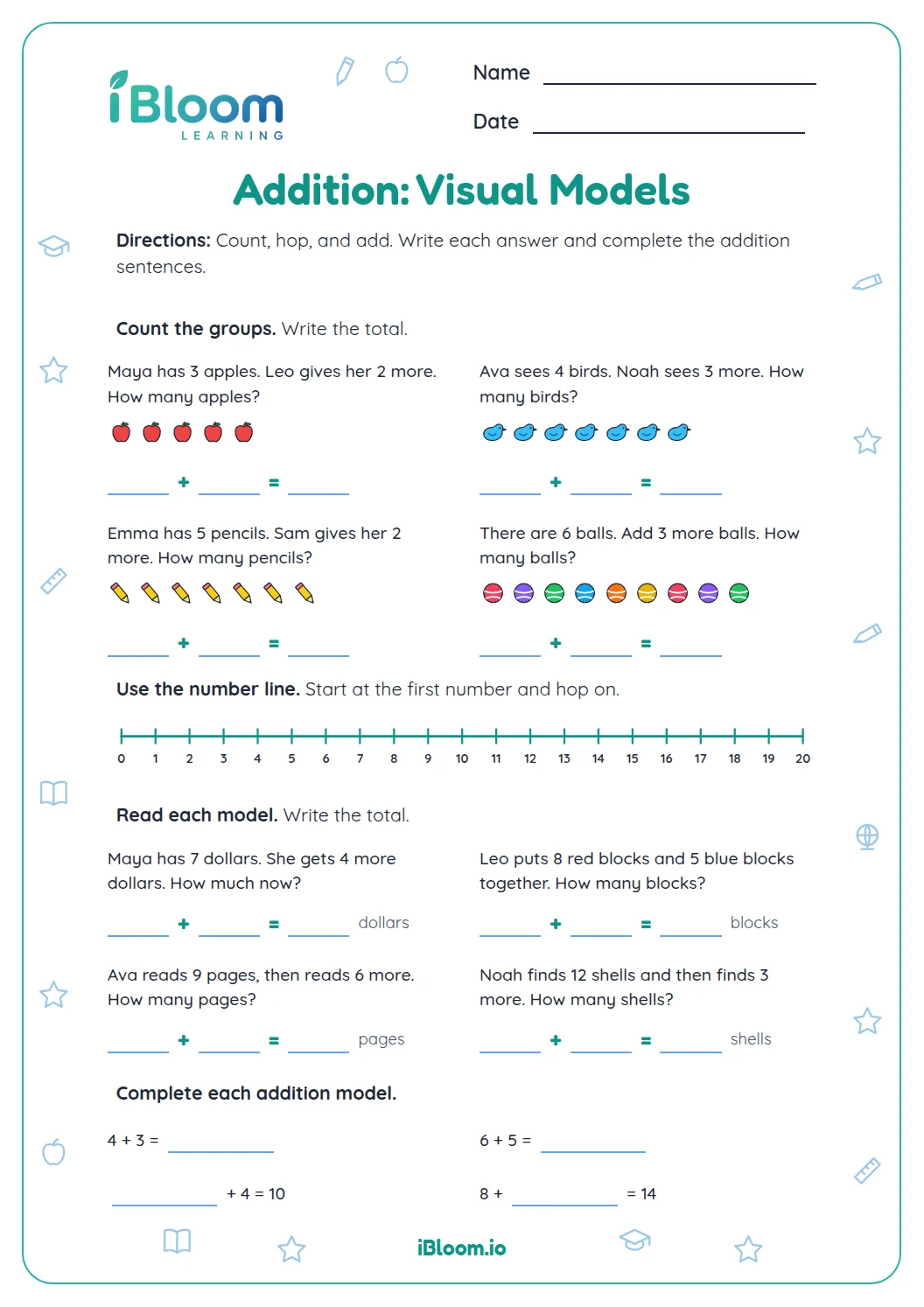
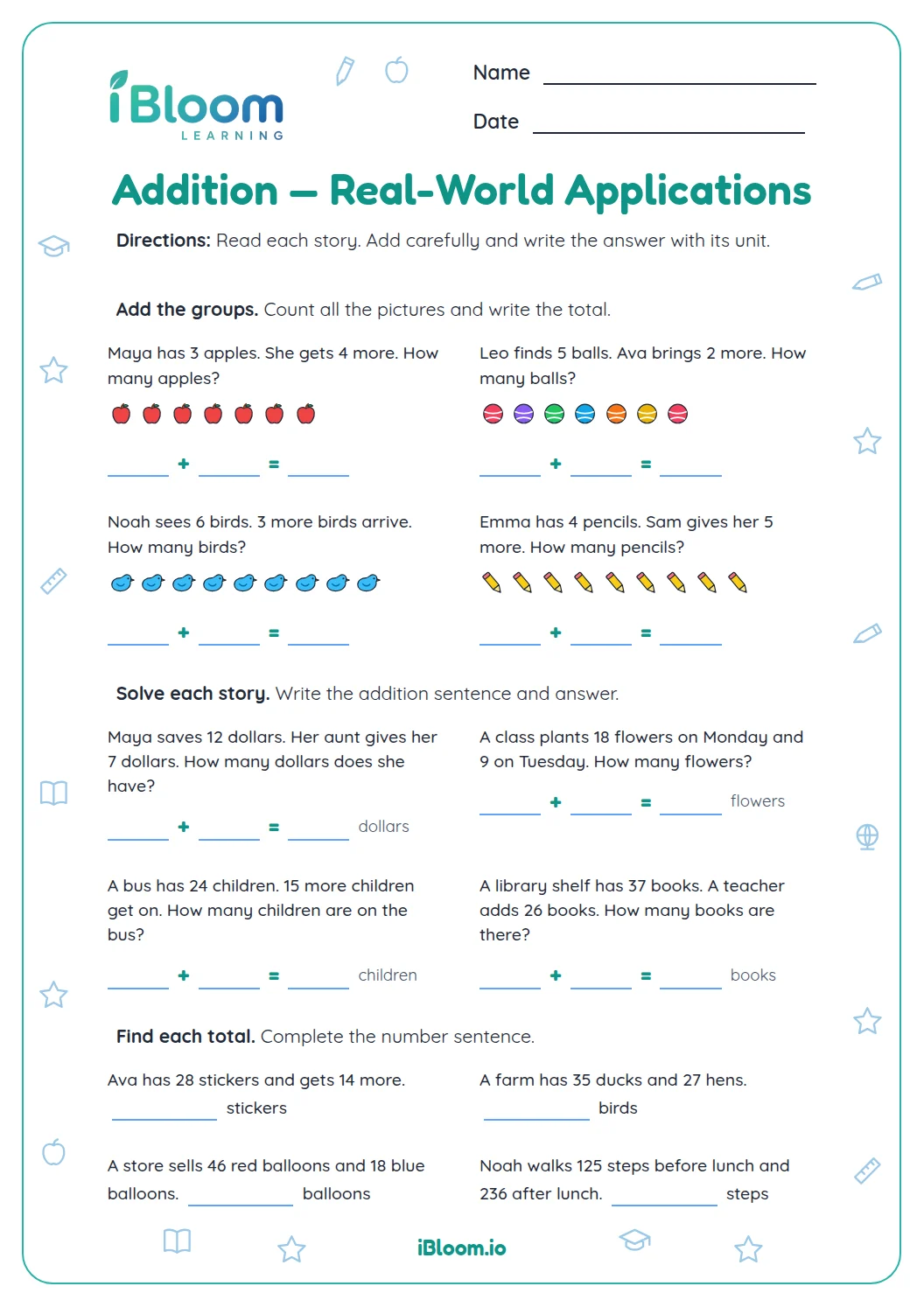
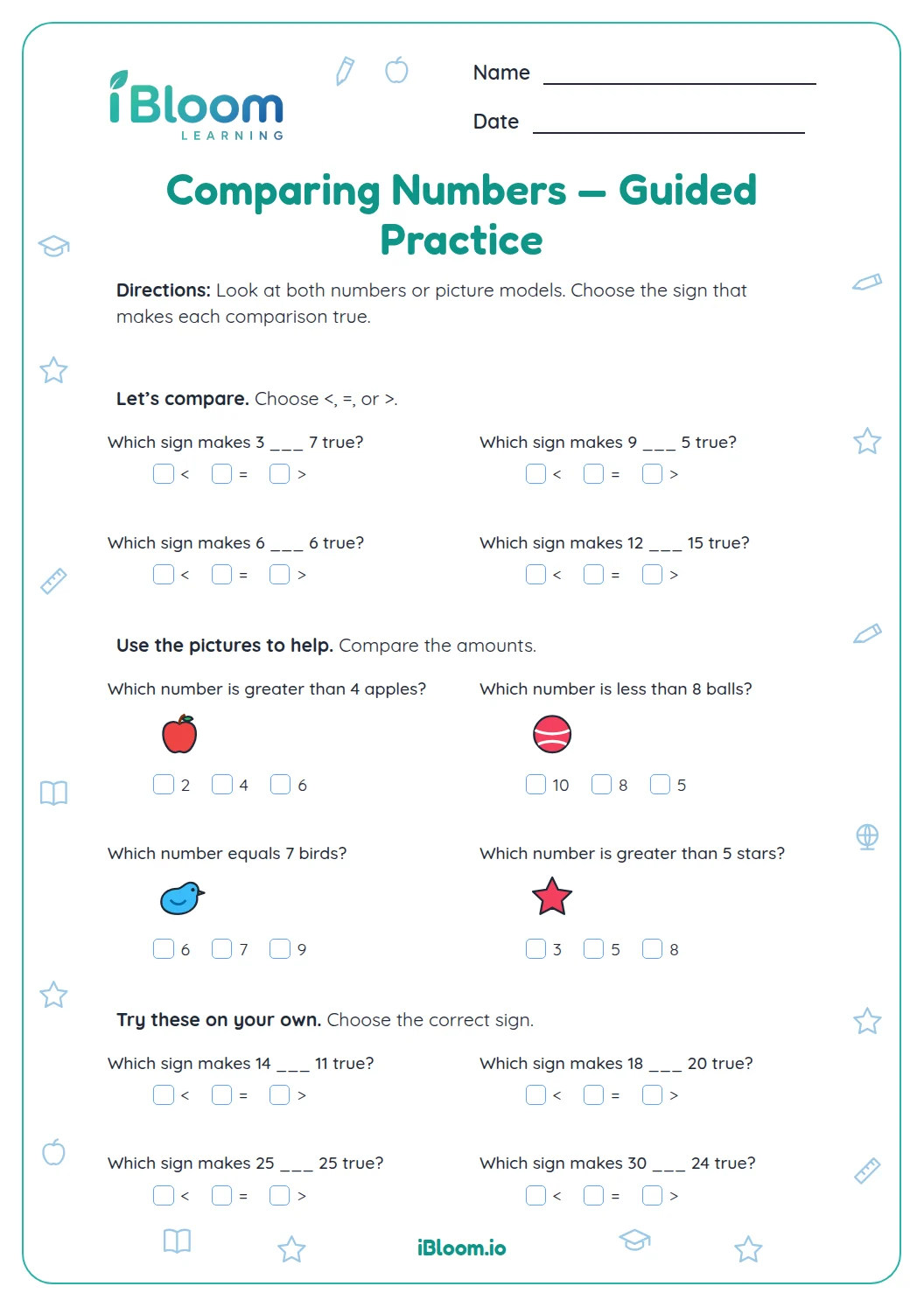
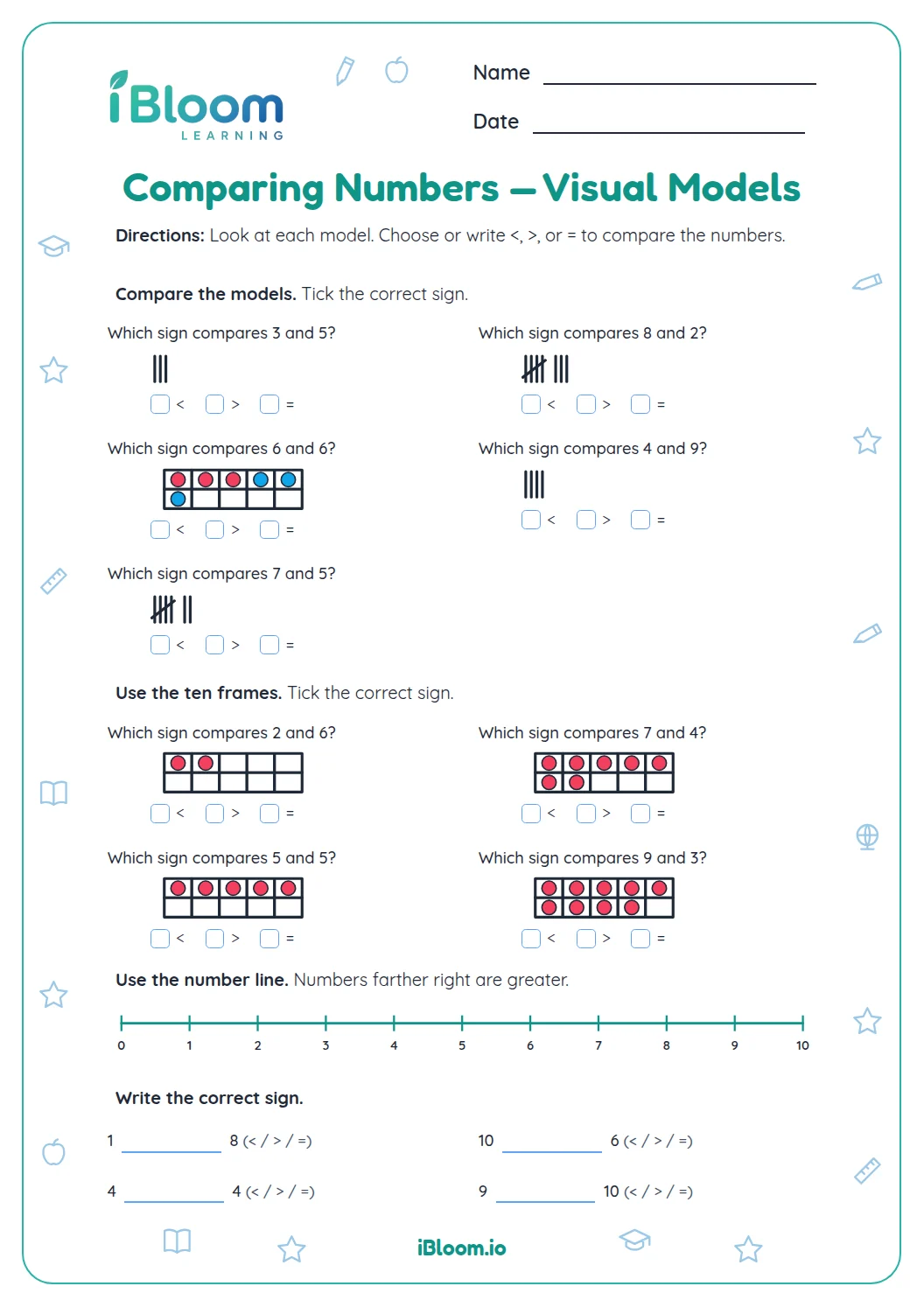
This printable counting challenge has 14 questions for Kindergarten through Grade 2. Children count pictured objects, continue from a number already named, complete forward and skip-count patterns, and solve three short counting challenges. The separate answer key lists each count and missing number.
Aligned to K.CC.A.2
How can pictures support accurate counting?
Touch or point to each object once while saying one number. Grouping objects into rows can help keep track without counting an item twice.
- 1There are 12 stars.
- 2Count each one once: 1, 2, 3 … 12.
What does counting on mean?
Count on by saying the next number after the starting number. For example, five numbers after 8 are 9, 10, 11, 12, and 13. The starting number is not counted as one of the five.
- 1Start at 8. Say the next 5 numbers.
- 29, 10, 11, 12, 13
- 3The fifth number is 13.
How do you find a number pattern?
Compare neighboring numbers to see how much the sequence changes. A pattern that goes 5, 10, 15 adds five each time.
How can counting solve a short story?
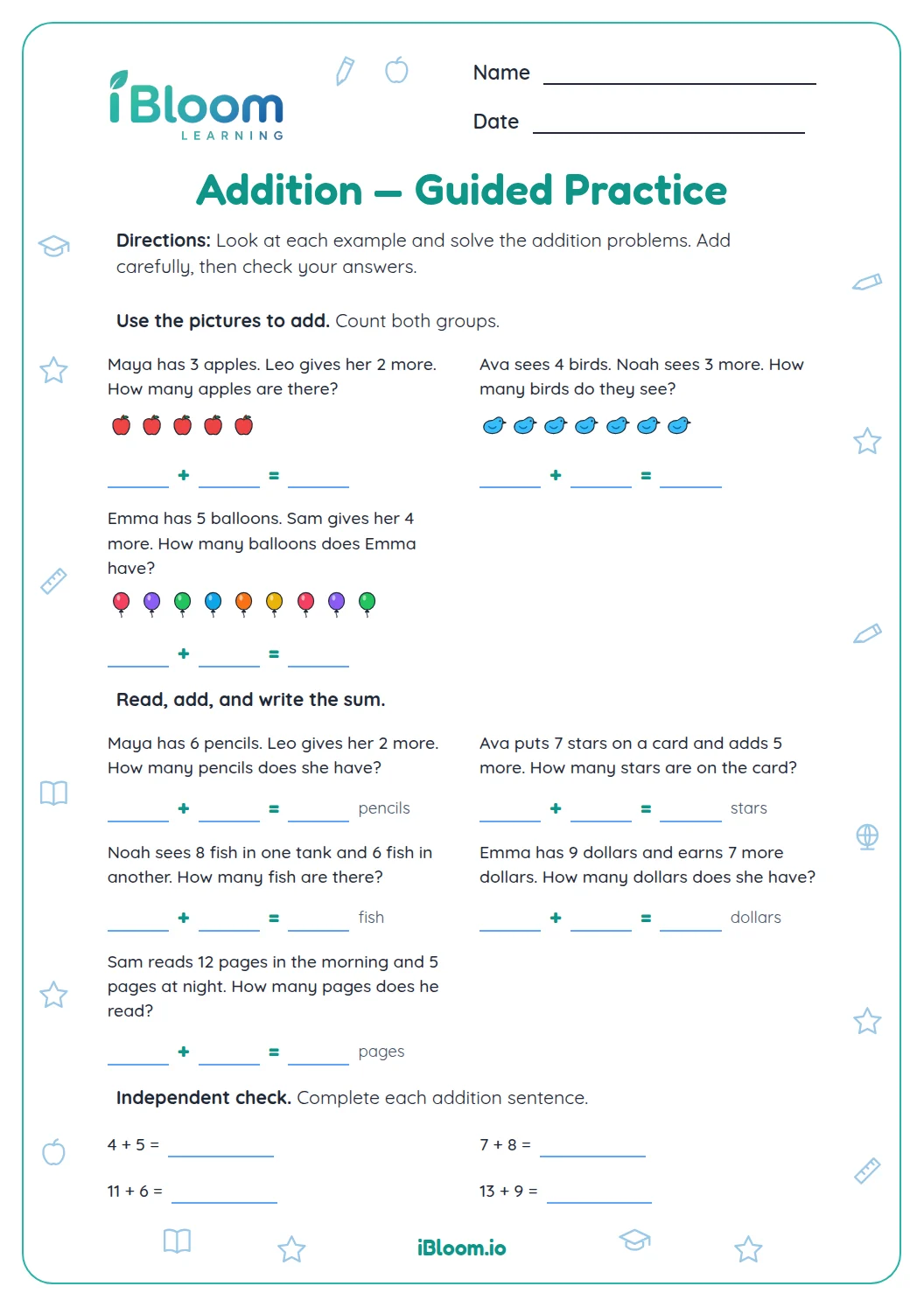
Track the starting number and the change. Adding two more means count two numbers forward; finding a number between neighbors uses the order of numbers.
How to use this worksheet
- 1Count each pictured object once in Part A.
- 2In Part B, begin at the stated number rather than starting over at one.
- 3Compare neighboring numbers in each pattern.
- 4Use the story information to count forward in Part D.
- 5Read the answer key and practice any sequence again aloud.
Common mistakes and quick fixes
The mistake
Skipping an object or counting it twice
The fix
Point to one object for each number word.
The mistake
Starting over at one when asked to count on
The fix
Say the given number, then continue with the next number.
The mistake
Changing the pattern step
The fix
Compare two terms at a time and repeat the same step.
Common Core alignment
This worksheet gives focused practice with the standard below.
Continue counting forward from a number already named.
On this sheet: Several questions ask children to continue the counting sequence from a given starting number.
Show the official wordingHide the official wording
Count forward beginning from a given number within the known sequence (instead of having to begin at 1).
What to practice next
Make more practice
Further reading
Questions parents and teachers ask
What counting skills are practiced?
Children count pictured objects, continue a sequence from a named number, fill missing terms in patterns, and solve short counting situations. The pictures include apples, balls, and stars; later questions use number sequences and small additions. Each item has one clear count or sequence answer.
Which grades can use this worksheet?
The source page is labeled Kindergarten, Grade 1, and Grade 2. The sheet starts with pictured counts and familiar forward sequences, then includes larger numbers and patterns for children ready to reason across a wider range. An adult can choose items that match the child’s current number range.
How many questions and parts are included?
There are 14 questions in four parts: three picture counts, four count-on choices, four number patterns, and three short challenges. The answer key lists the object counts and the number that completes each sequence or situation. The order moves from concrete pictures toward number reasoning.
What does “count on 5 numbers” mean?
Start with the number given, then say five numbers after it. Starting at 8, the next five are 9, 10, 11, 12, and 13, so the fifth number said is 13. The starting number itself is not included in the five.
How can I help a child who loses track while counting?
For picture groups, have the child touch each object once while saying one number. For a sequence, point to the starting number and then to each next term. This keeps the count connected to the pictures or numerals on the page.