Free printable practice
Lengths Conversion Table Practice Activities
Class 5 maths worksheets for practising metric length conversions using conversion tables, place value, and mixed-unit questions.
Free printable worksheet PDFs
Preview every available page, then download the free worksheet PDF for home, homeschool, tutoring, or classroom practice.
Preview the exact activity before downloading it.
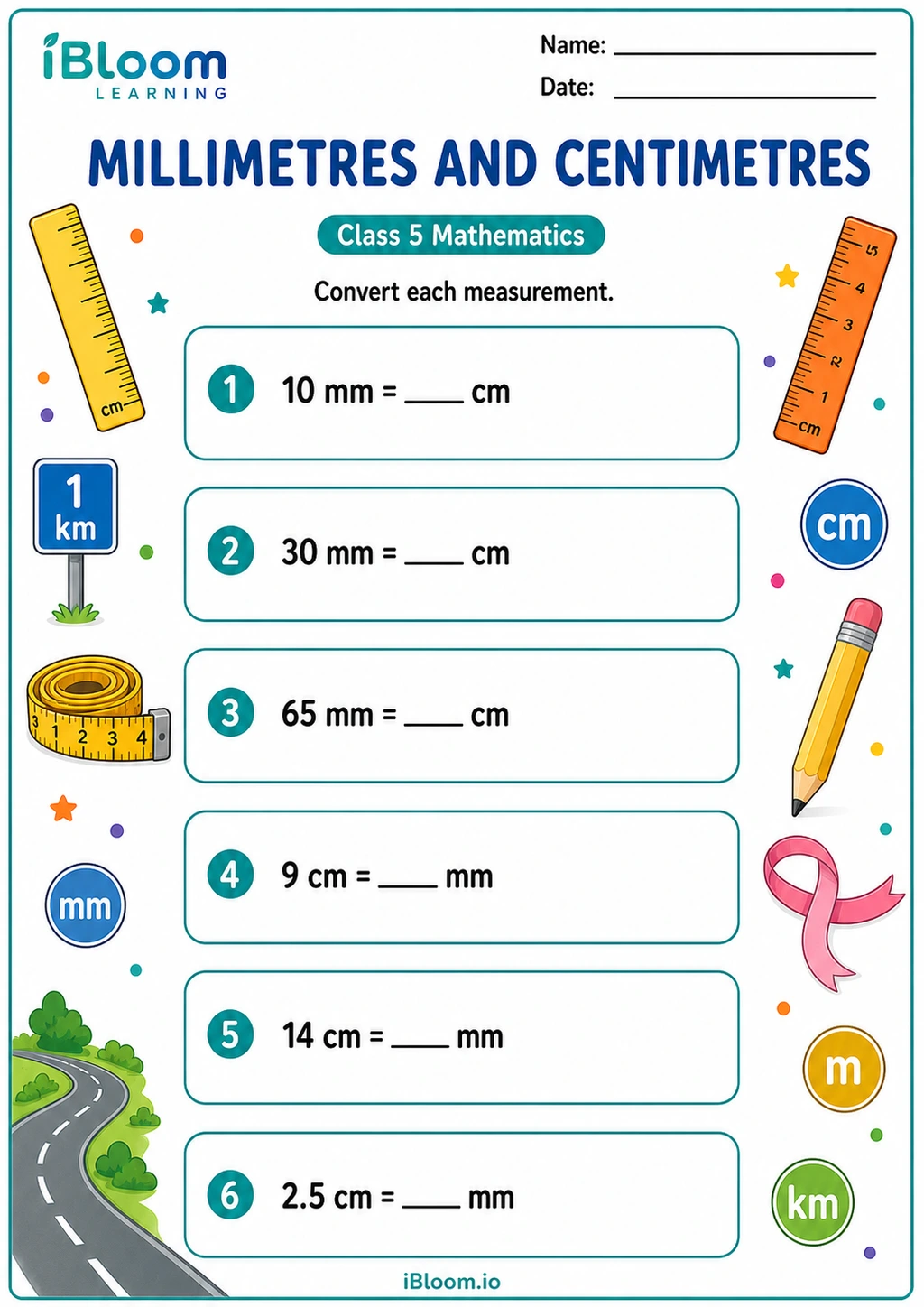 Millimetres and CentimetresFocused length conversion practice for Class 5 learners.Class 5Free PDF preview
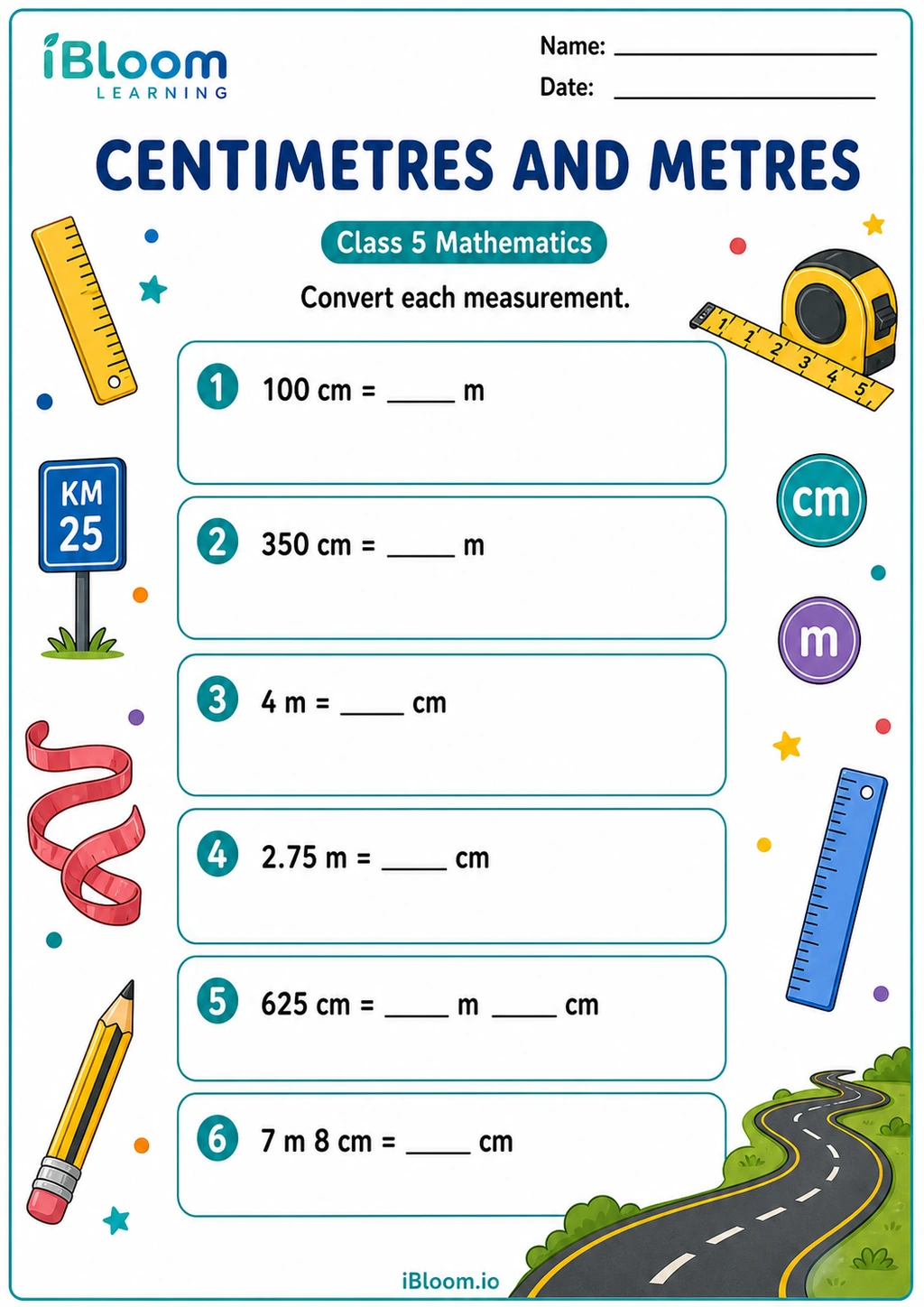 Centimetres and MetresFocused length conversion practice for Class 5 learners.Class 5Free PDF preview
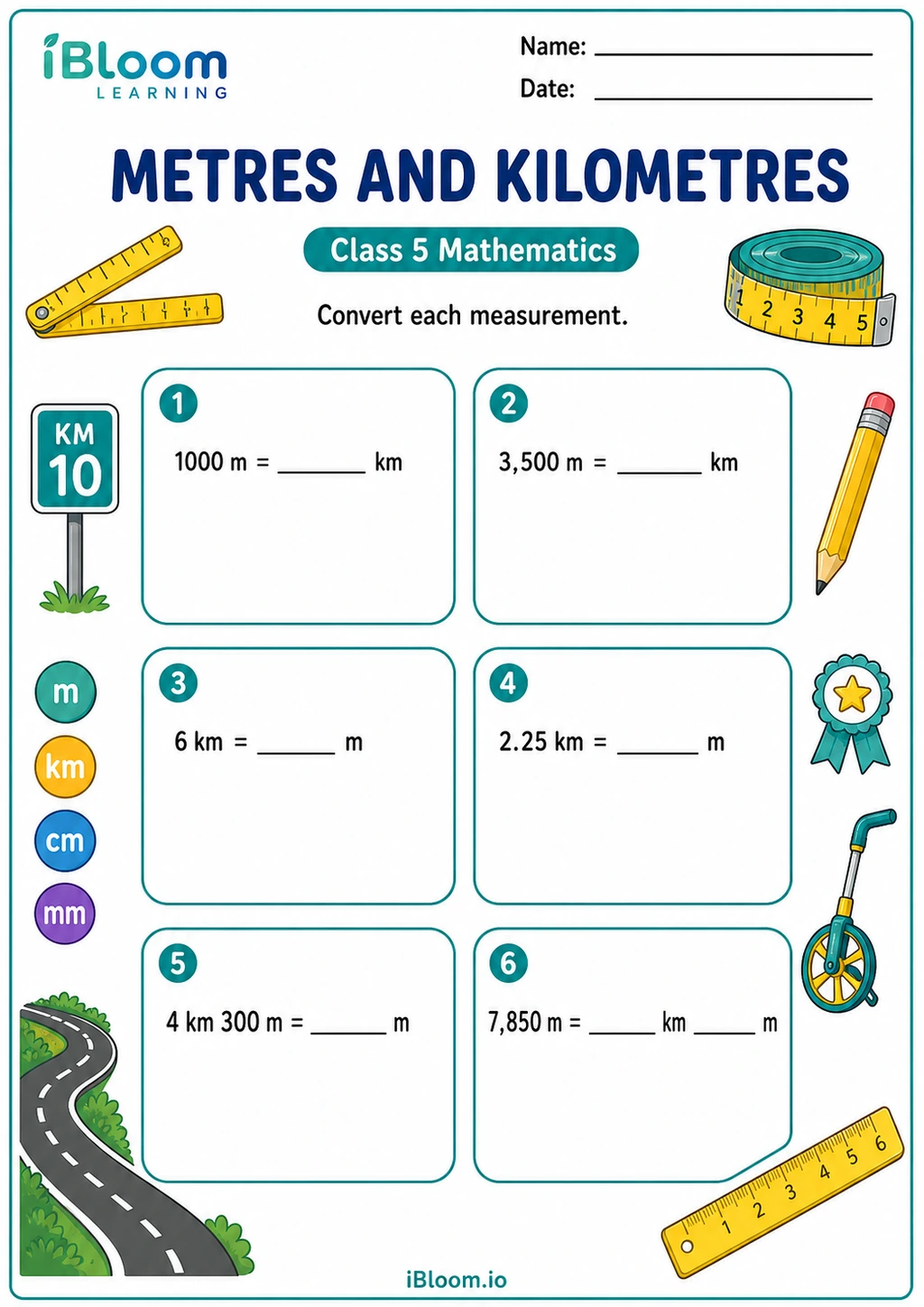 Metres and KilometresFocused length conversion practice for Class 5 learners.Class 5Free PDF preview
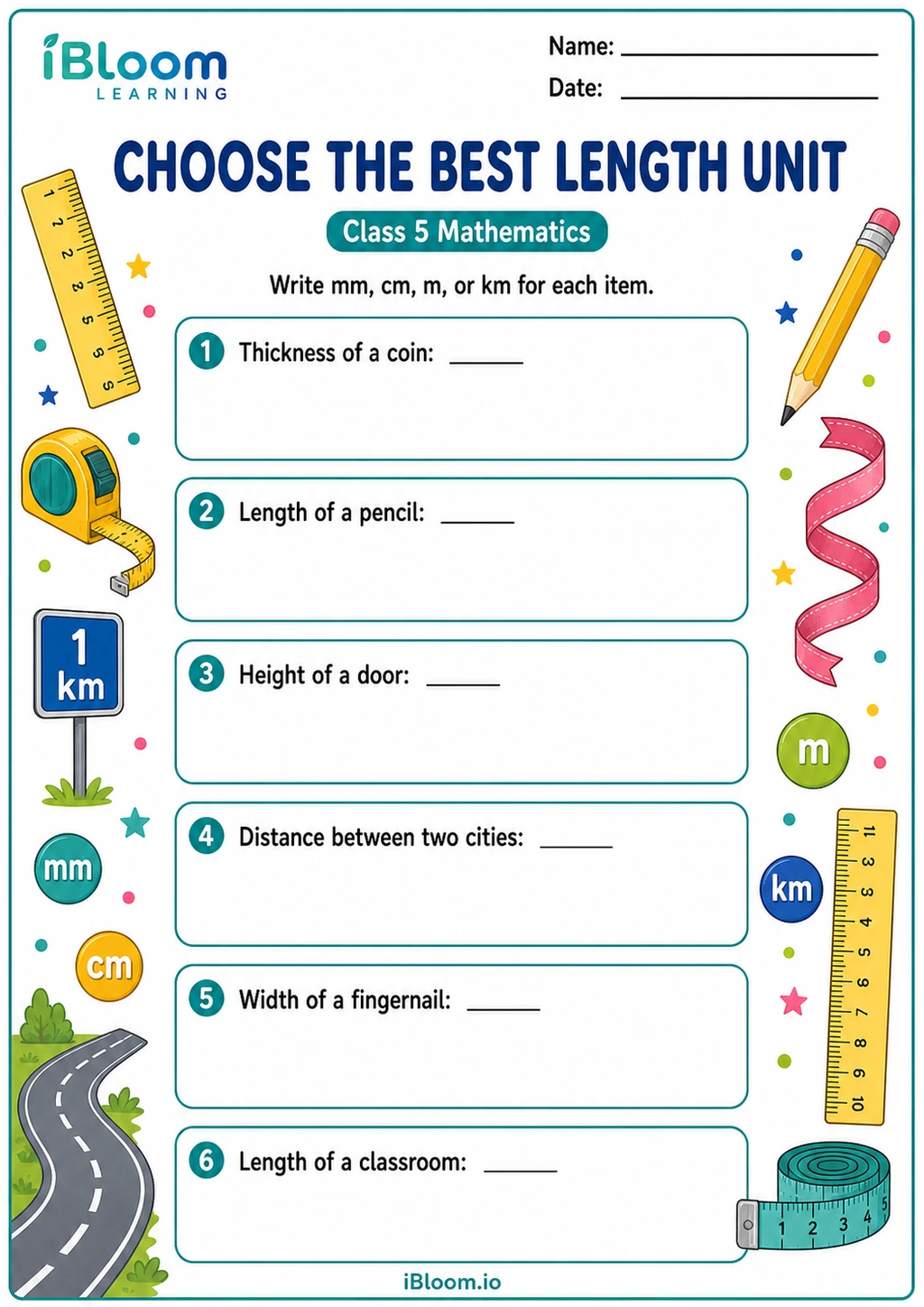 Choose the Best Length UnitFocused length conversion practice for Class 5 learners.Class 5Free PDF preview
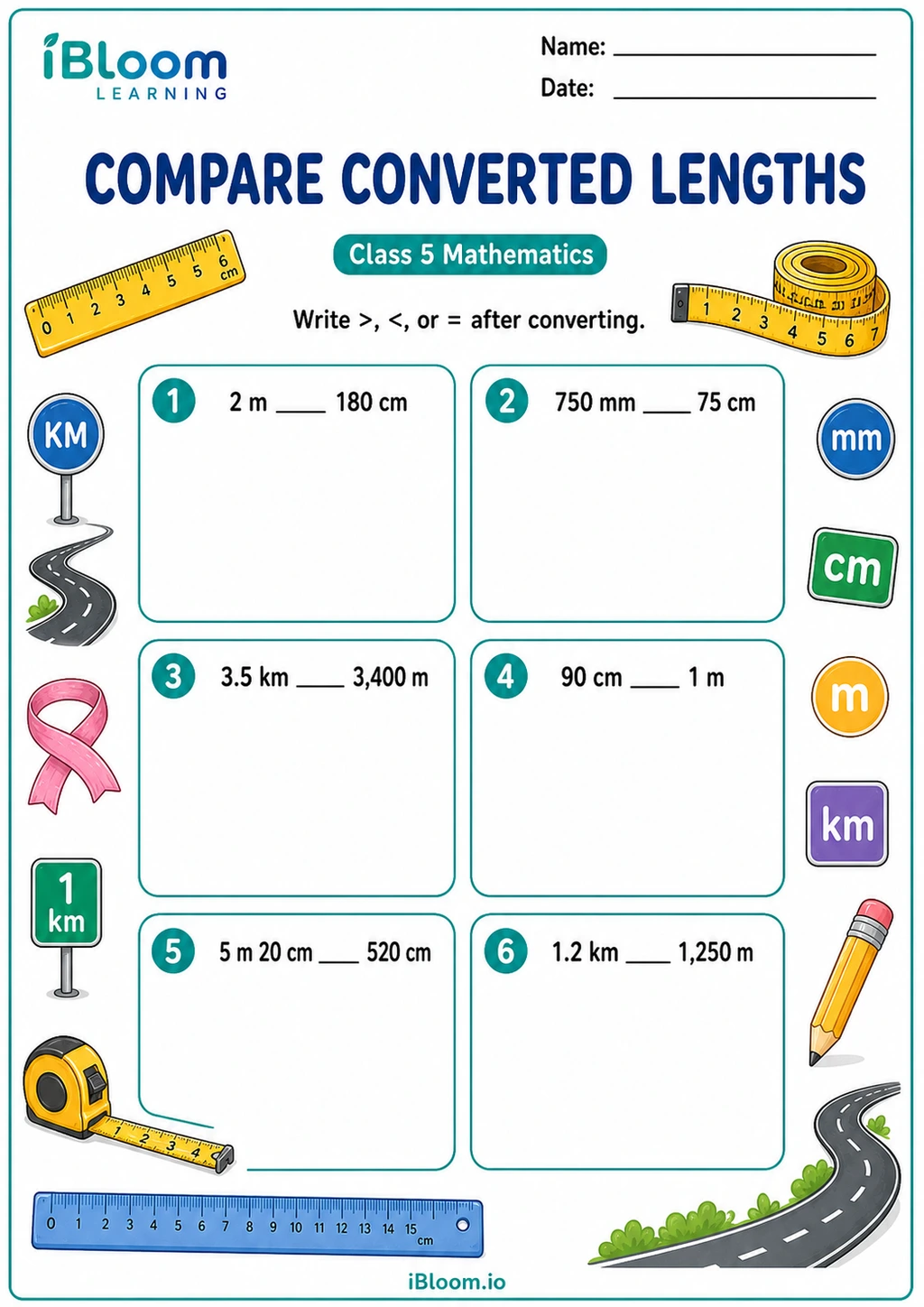 Compare Converted LengthsFocused length conversion practice for Class 5 learners.Class 5Free PDF preview
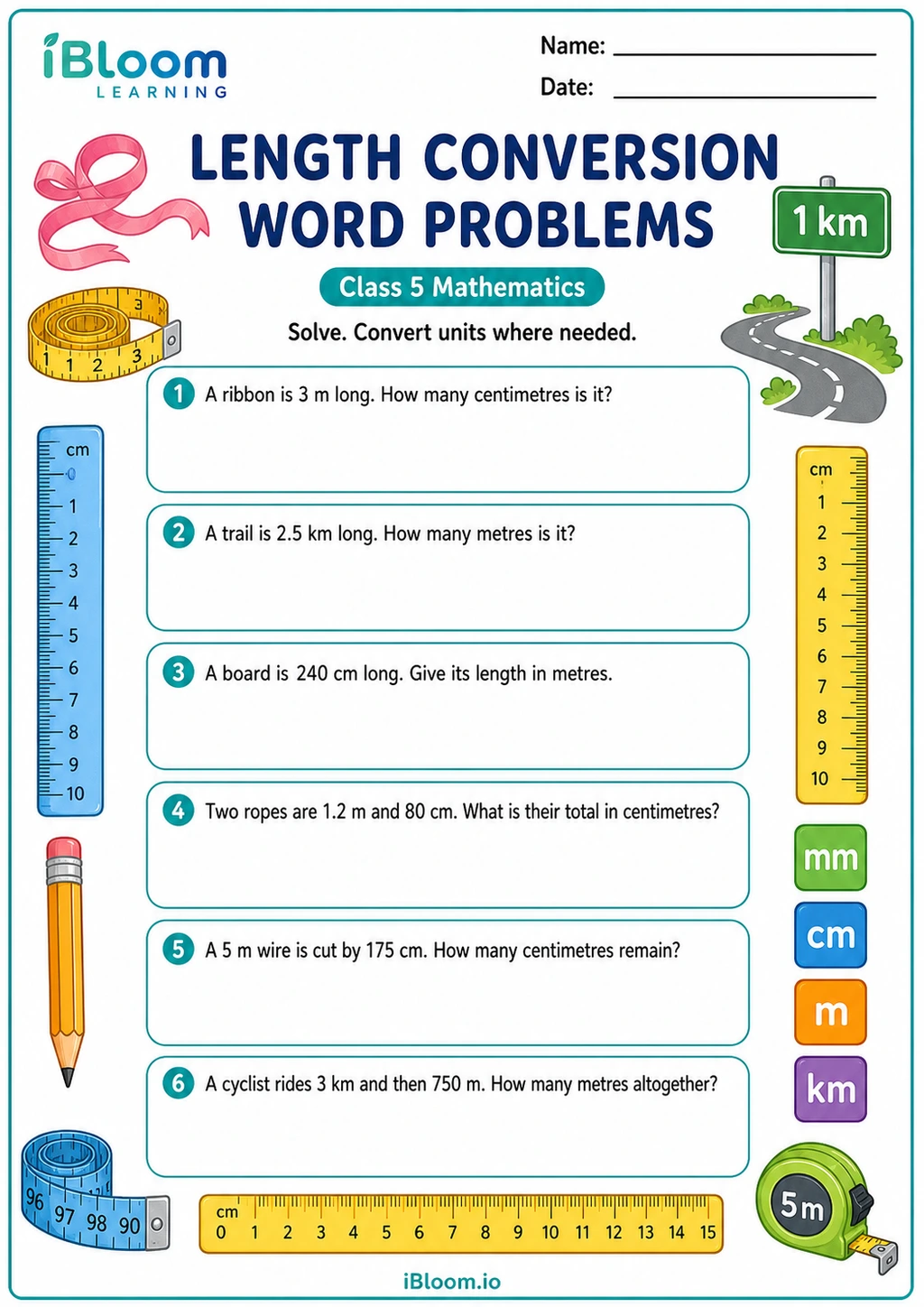 Length Conversion Word ProblemsFocused length conversion practice for Class 5 learners.Class 5Free PDF preview
Practice that builds confidence
Understanding the conversion table
These Class 5 measurement worksheets help children practise converting lengths within the metric system using a clear conversion table. Learners work with common units such as kilometre, metre, centimetre, and millimetre, building confidence with multiplying and dividing by 10, 100, and 1,000.
The printable activities include table-based conversions, fill-in-the-blank questions, comparison tasks, and word problems. Children learn to read the unit headings carefully, move between larger and smaller units, and show accurate answers with the correct unit.
A lengths conversion table gives children a structured way to see how metric units are related. In Class 5 maths, this supports the move from memorising facts to using place value: 1 km = 1,000 m, 1 m = 100 cm, and 1 cm = 10 mm. The worksheets encourage children to notice whether they are changing to a smaller unit or a larger unit before choosing the operation.

Progression across the activities
The practice begins with direct conversions, such as metres to centimetres or centimetres to millimetres. It then moves into missing-number tables, mixed units, comparisons, and simple measurement word problems. This progression helps children connect the table to real situations, such as the length of a ribbon, a race distance, or the height of an object.
A simple parent routine
At home, ask your child to read the question aloud and underline the starting unit and target unit. Then have them say, “larger to smaller means multiply” or “smaller to larger means divide.” After solving, let them check whether the answer is reasonable: 5 m becoming 500 cm makes sense, but 5 m becoming 50 cm does not.

Classroom uses for teachers
Teachers can use these printables for measurement revision, maths centres, small-group support, or quick checks after teaching metric conversions. The table format is useful for learners who need visual support, while the word problems help stronger learners apply the same conversion facts in context.

Common errors to watch for
Children often reverse the operation, forget a zero, or write the correct number with the wrong unit. Decimal placement can also become confusing when converting to a larger unit. Encourage neat alignment and unit labels in every answer so mistakes are easier to spot.
Free printable PDF download
Use this Class 5 lengths conversion table worksheet page to preview the activity, print it, or download it as a PDF for quick practice. It works well for homework, homeschool lessons, tutoring, morning work, revision, and classroom centers.
Answers and answer key support
After the child completes the worksheet independently, parents and teachers can use the answer support or answer key information to check the work, review mistakes, and choose the next practice step.
Why iBloom worksheets help
iBloom worksheets keep the focus on one skill: using a lengths conversion table accurately. The mix of tables, blanks, and short problems gives repeated practice without feeling identical. A child-friendly strategy is: read the units, decide the direction, multiply or divide, then write the unit.
Helpful answers
Frequently asked questions
Which length units are practised in these worksheets?
The worksheets focus on common metric length units used in Class 5 maths, including kilometre, metre, centimetre, and millimetre.
How does a conversion table help children?
A conversion table shows the relationship between units clearly, helping children decide whether to multiply or divide when changing from one length unit to another.
What is the most common mistake in length conversions?
A common mistake is using the wrong operation, such as dividing when converting metres to centimetres. Children may also forget zeros or leave out the final unit.
Can these worksheets be used for revision before tests?
Yes. They are useful for revising metric length facts, practising table-based conversions, and applying conversions in short word problems.
How can I support my child at home with this topic?
Ask your child to identify the starting unit and target unit first. Then help them decide whether the answer should become bigger or smaller before calculating.
Is this Class 5 lengths conversion table worksheet free?
Yes. You can preview it for free and use the printable worksheet for home or classroom practice.
Can I download this Class 5 lengths conversion table worksheet as a PDF?
Yes. Use the worksheet download option to save a printable PDF, or print the worksheet directly from the page.
Does this Class 5 lengths conversion table worksheet include answers or an answer key?
When the activity has fixed answers, iBloom includes answer support so parents and teachers can check the completed worksheet.