Free printable practice
Metric Units Length Km M Cm Mm Practice Activities
Class 5 learners practise converting and comparing metric length units: kilometres, metres, centimetres, and millimetres.
Free printable worksheet PDFs
Preview every available page, then download the free worksheet PDF for home, homeschool, tutoring, or classroom practice.
Preview the exact activity before downloading it.
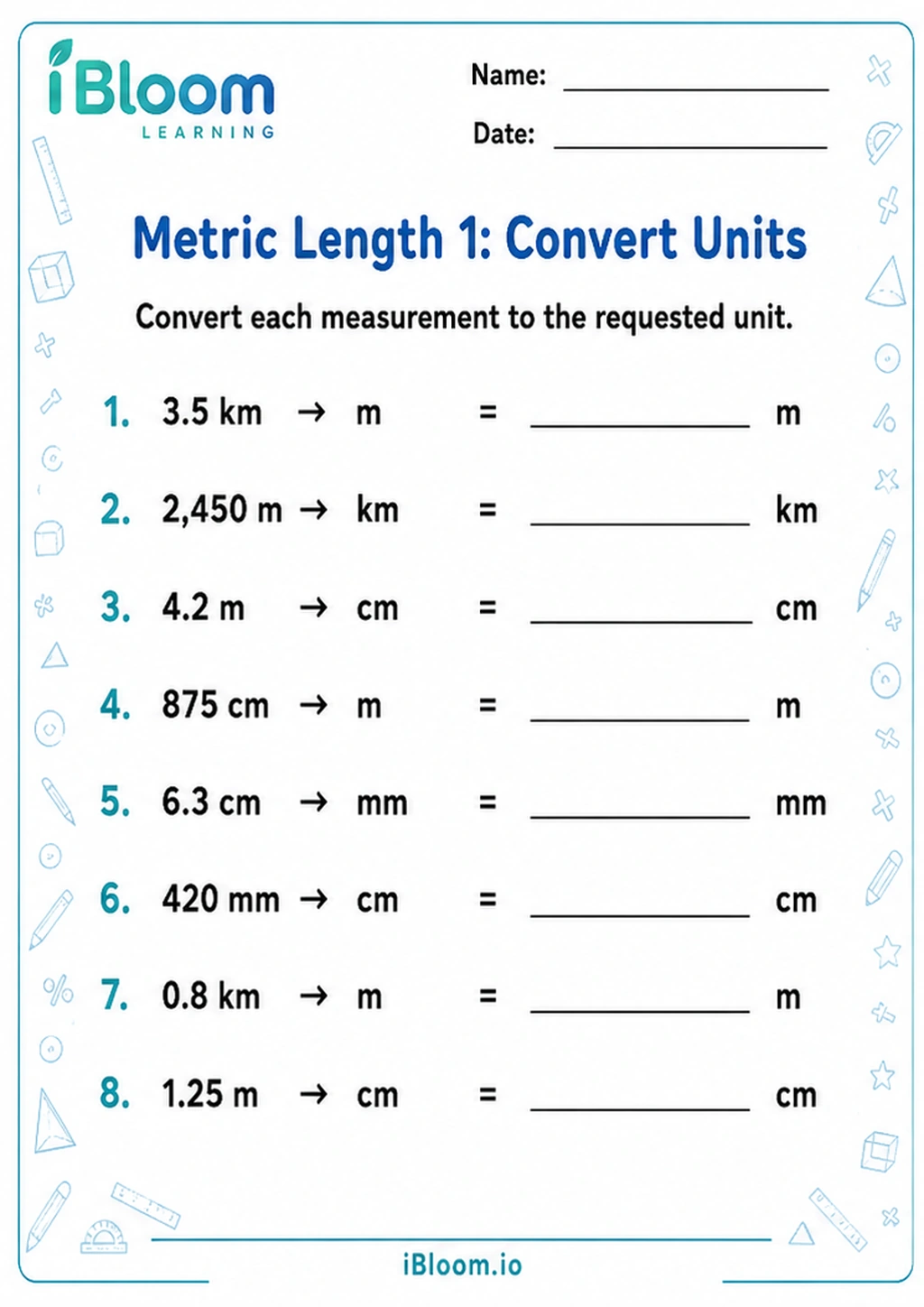 Metric Length 1: Convert UnitsClass 5 printable practice for Metric Length Units.Class 5Free PDF preview
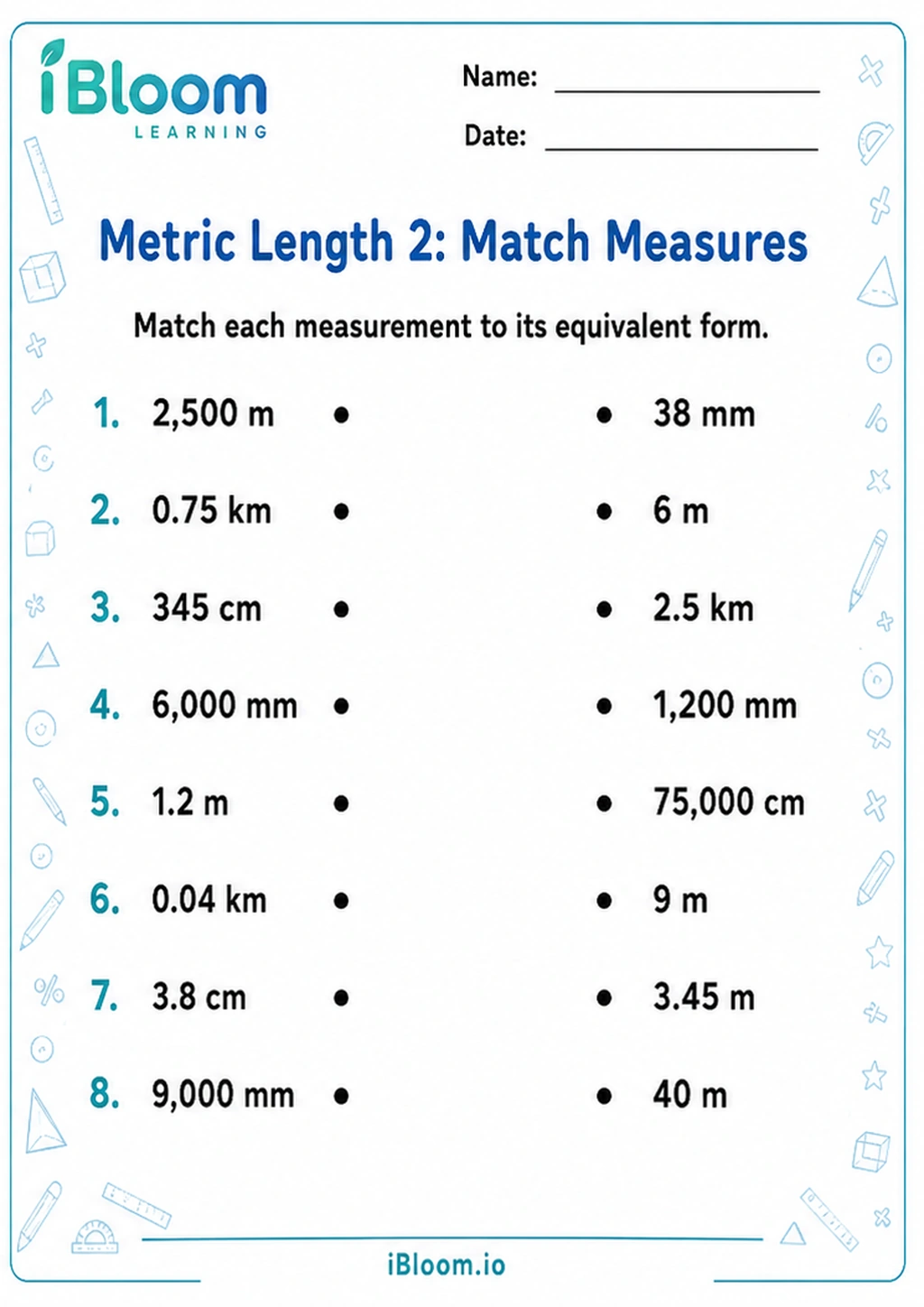 Metric Length 2: Match MeasuresClass 5 printable practice for Metric Length Units.Class 5Free PDF preview
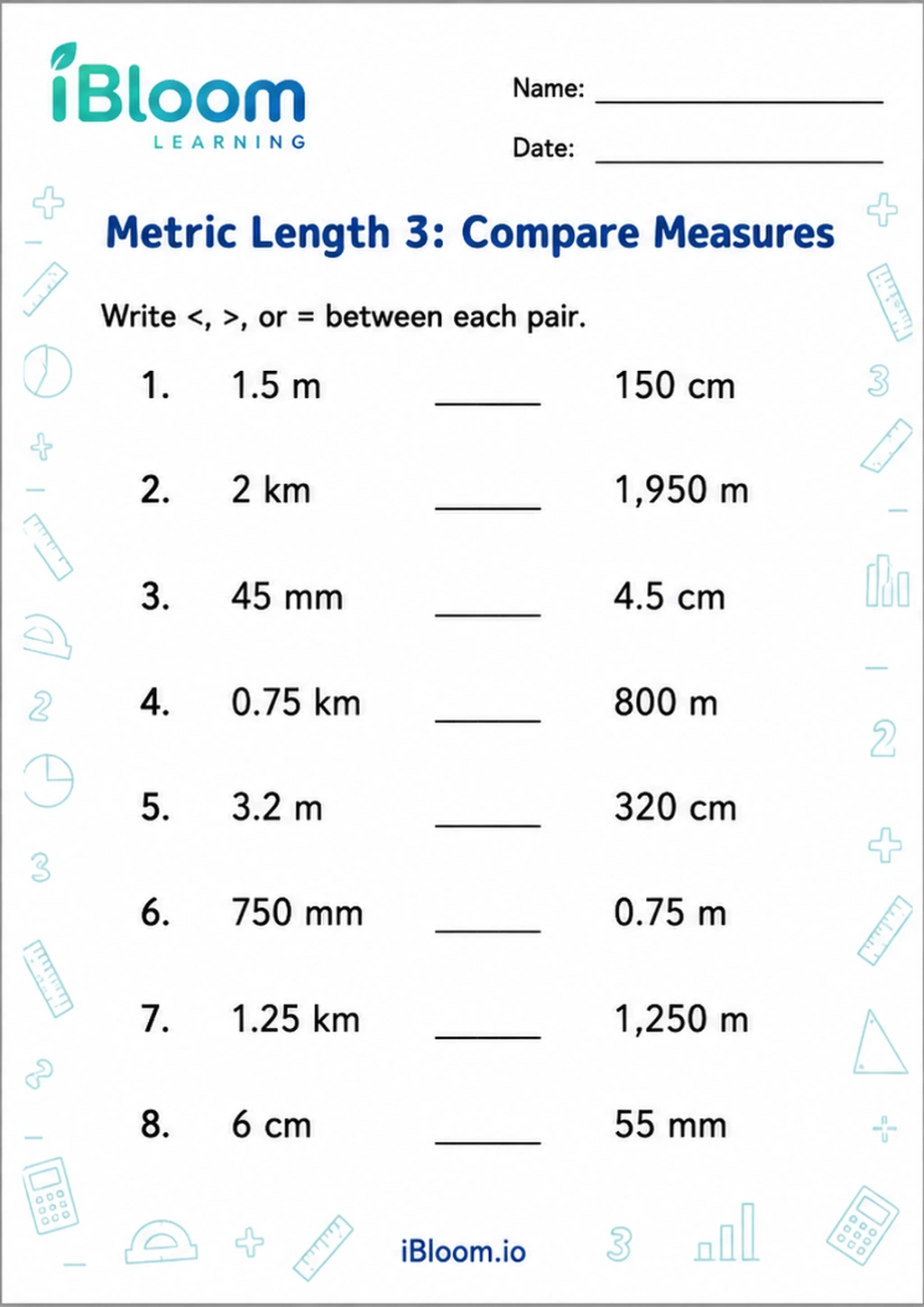 Metric Length 3: Compare MeasuresClass 5 printable practice for Metric Length Units.Class 5Free PDF preview
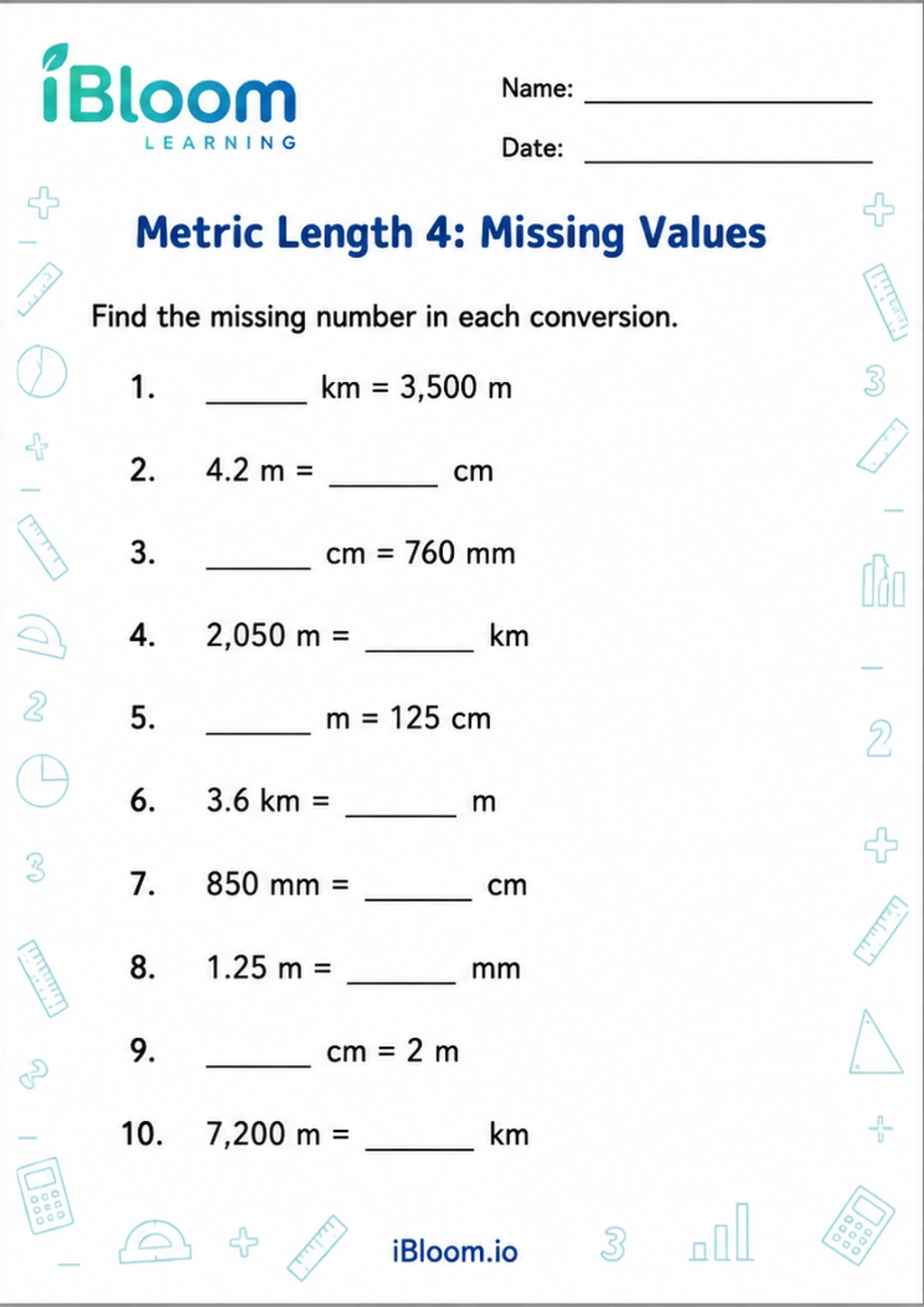 Metric Length 4: Missing ValuesClass 5 printable practice for Metric Length Units.Class 5Free PDF preview
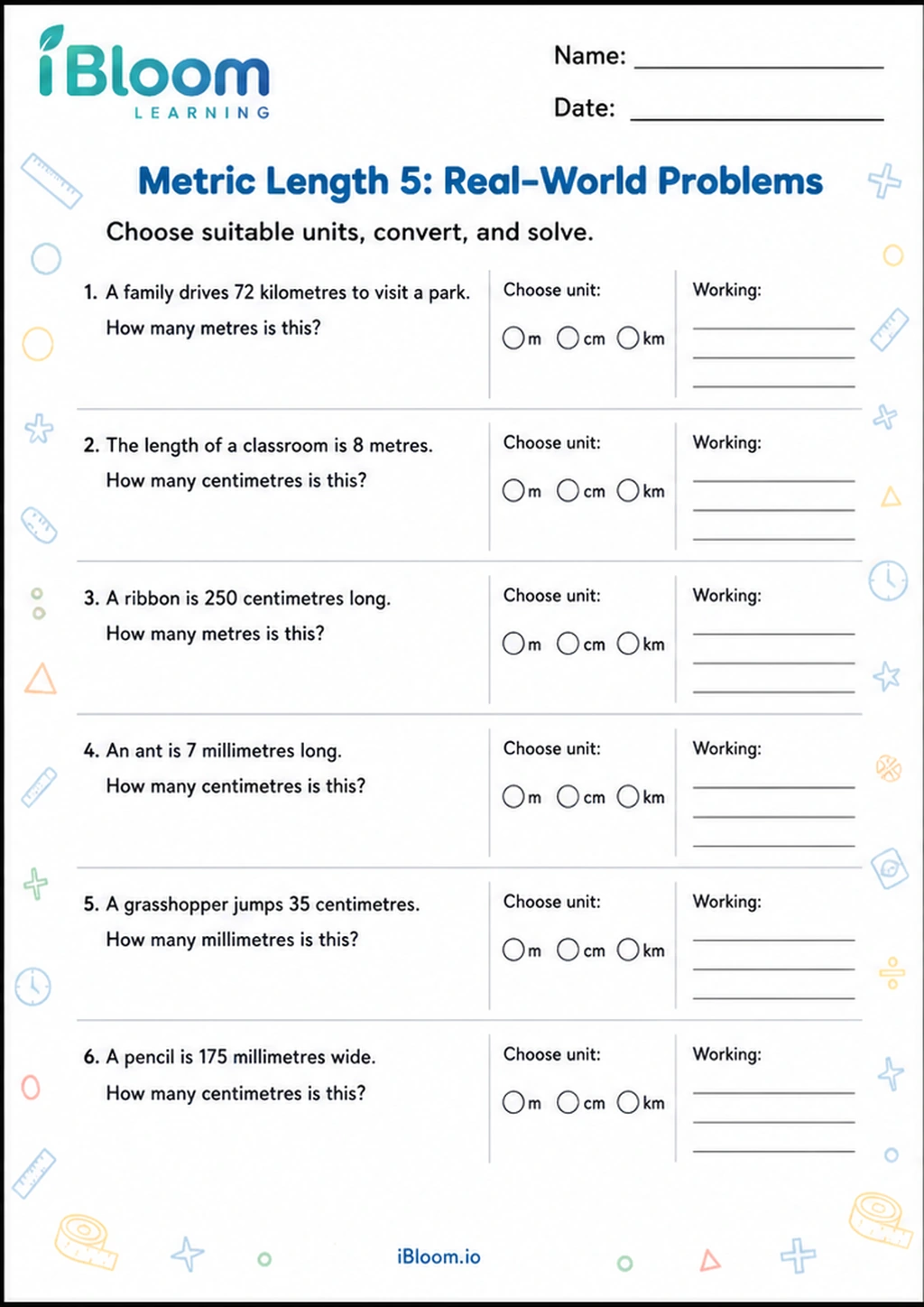 Metric Length 5: Real-World ProblemsClass 5 printable practice for Metric Length Units.Class 5Free PDF preview
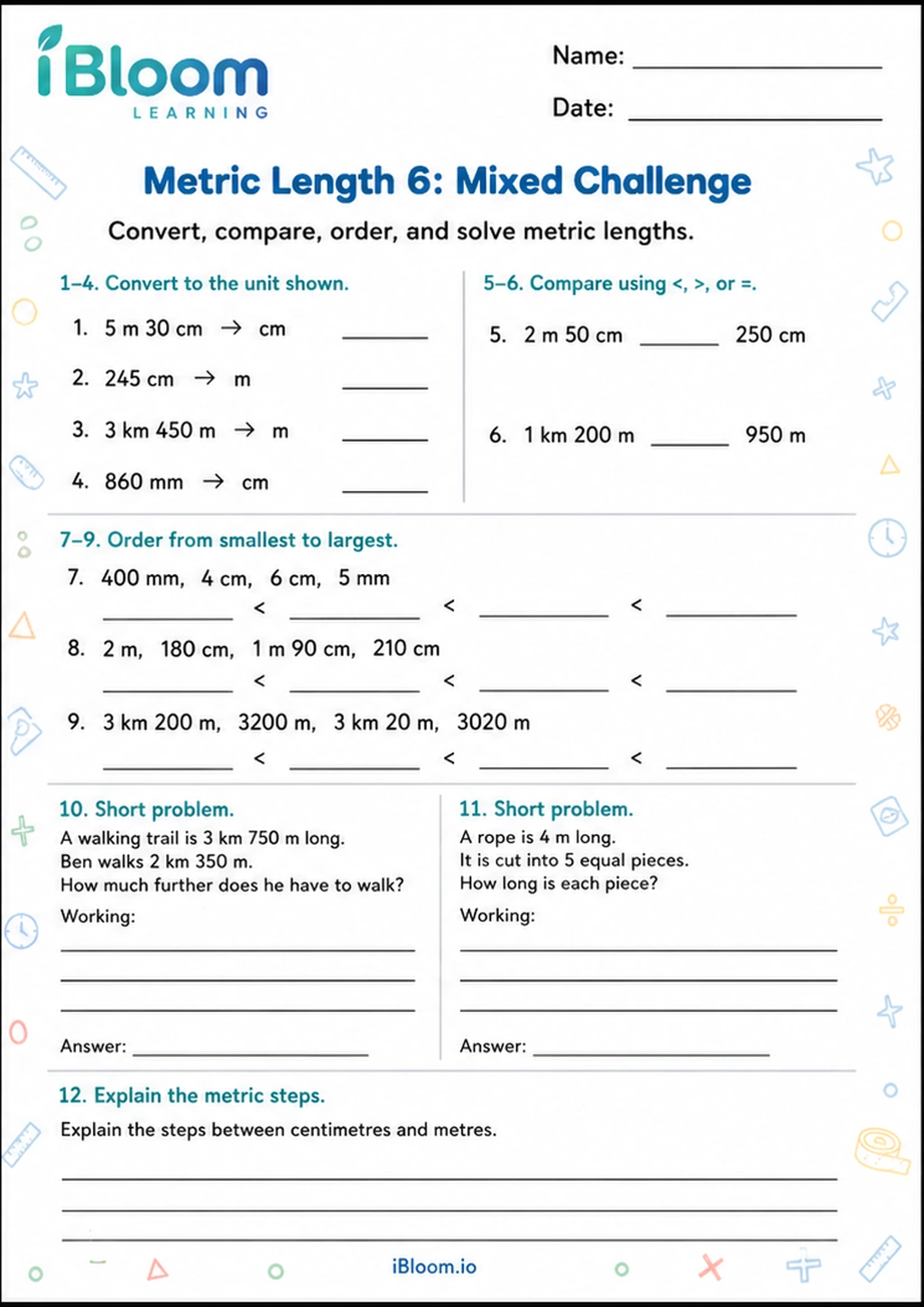 Metric Length 6: Mixed ChallengeClass 5 printable practice for Metric Length Units.Class 5Free PDF preview
Practice that builds confidence
Metric length units in Class 5
These Class 5 measurement worksheets build fluency with metric units of length: km, m, cm, and mm. Pupils practise recognising suitable units, converting between related units, and comparing lengths written in different forms.
The printable activities include unit conversion questions, mixed-unit comparisons, ordering tasks, and real-life length examples. Children strengthen their understanding of place value in measurement while using accurate abbreviations and maths vocabulary.
The metric system is based on powers of 10, which makes it logical once pupils know the relationships. In length measurement, 1 km = 1000 m, 1 m = 100 cm, and 1 cm = 10 mm. Class 5 children learn to move between large units used for distances and smaller units used for objects, drawings, and fine measurements.

What the worksheets practise
The pages guide pupils through converting kilometres to metres, metres to centimetres, centimetres to millimetres, and back again where appropriate. They also compare lengths such as metres and centimetres by first changing them to a common unit. Some activities ask children to choose the best unit for a road distance, a pencil, a classroom wall, or a small line segment.
A parent routine for daily practice
Use objects at home to make the units meaningful. Ask your child which unit suits the length of a book, the height of a door, or the distance to school. Then solve two conversions orally: “If 1 m is 100 cm, what is 3 m?” Encourage your child to write the unit after every answer. A short ruler activity with centimetres and millimetres can make the smallest units clear.

Classroom uses for teachers
Teachers can use these worksheets for measurement revision, maths centres, homework, or quick assessment after a metric conversion lesson. They pair well with metre scales, rulers, measuring tapes, and map-distance discussions. Pupils can work in pairs: one estimates the correct unit and the other verifies by converting or measuring.

Common errors to watch for
Children may multiply when they should divide, especially when moving from a smaller unit to a larger one. Some confuse cm and mm, or write answers without units. Teach them to ask, “Am I changing to a smaller unit or a larger unit?” Smaller units need more of them, so the number becomes bigger; larger units need fewer, so the number becomes smaller.
Free printable PDF download
Use this metric units length km m cm mm worksheet page to preview the activity, print it, or download it as a PDF for quick practice. It works well for homework, homeschool lessons, tutoring, morning work, revision, and classroom centers.
Answers and answer key support
After the child completes the worksheet independently, parents and teachers can use the answer support or answer key information to check the work, review mistakes, and choose the next practice step.
Why iBloom worksheets help
The iBloom practice keeps km, m, cm, and mm together so pupils see the full length scale, not isolated facts. Repeated conversions, comparisons, and practical examples help Class 5 learners connect calculation with real measurement. Clear unit abbreviations and varied question types build both accuracy and confidence.
Helpful answers
Frequently asked questions
What metric length facts should Class 5 pupils know?
They should know 1 km = 1000 m, 1 m = 100 cm, and 1 cm = 10 mm, and use these facts to convert and compare lengths.
How can children decide whether to multiply or divide?
If they convert to a smaller unit, the number gets bigger, so they multiply. If they convert to a larger unit, the number gets smaller, so they divide.
Why are units important in measurement answers?
The number alone is incomplete. Writing km, m, cm, or mm shows the size of the unit being counted and prevents confusion.
Which unit is best for measuring a pencil?
Centimetres are usually best for a pencil, while millimetres can be used for very small details or more precise measurement.
Can these worksheets be used with practical measuring tools?
Yes. Rulers, metre scales, and measuring tapes help pupils connect the written conversions with actual lengths.
Is this metric units length km m cm mm worksheet free?
Yes. You can preview it for free and use the printable worksheet for home or classroom practice.
Can I download this metric units length km m cm mm worksheet as a PDF?
Yes. Use the worksheet download option to save a printable PDF, or print the worksheet directly from the page.
Does this metric units length km m cm mm worksheet include answers or an answer key?
When the activity has fixed answers, iBloom includes answer support so parents and teachers can check the completed worksheet.