









About this worksheet
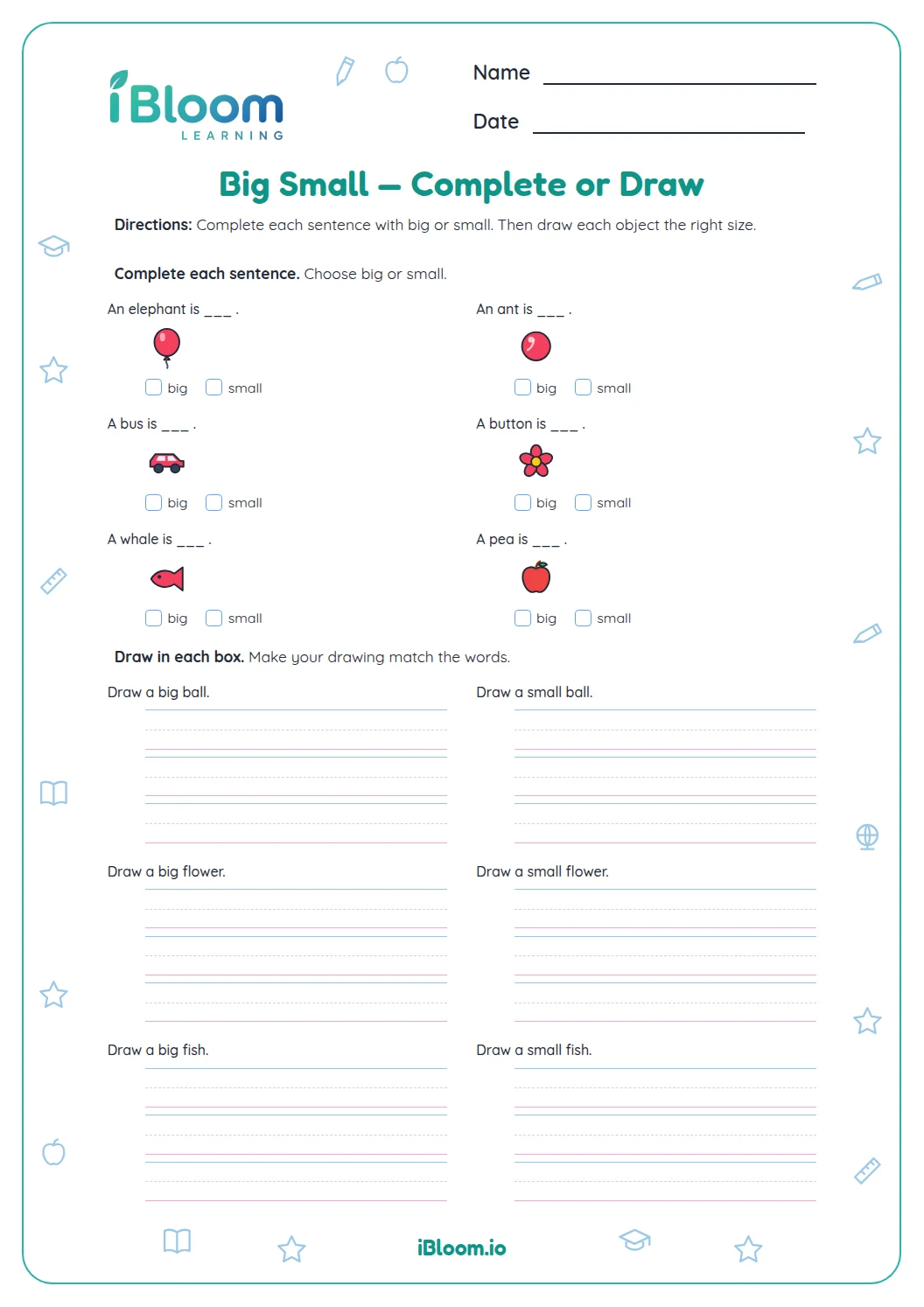
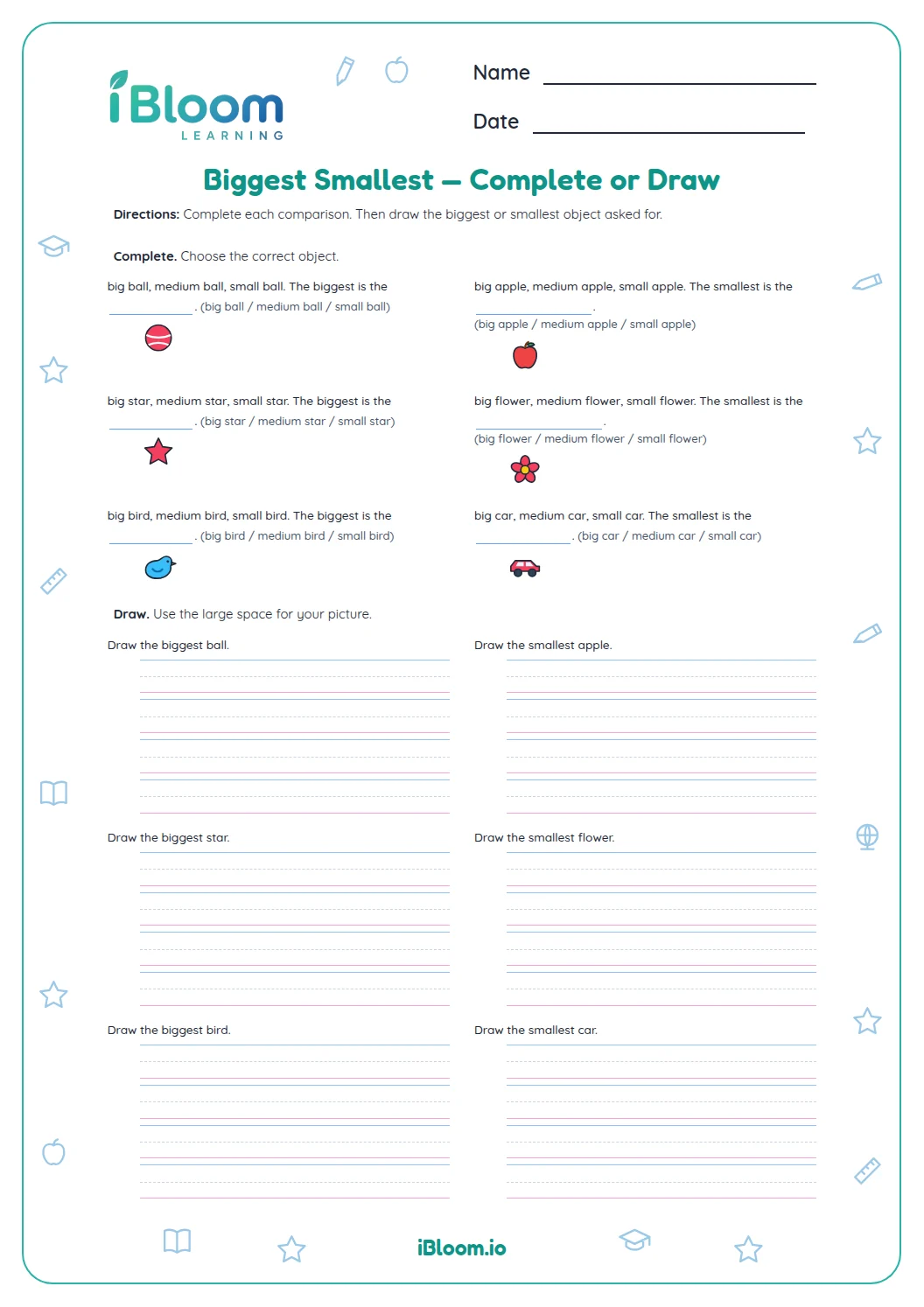
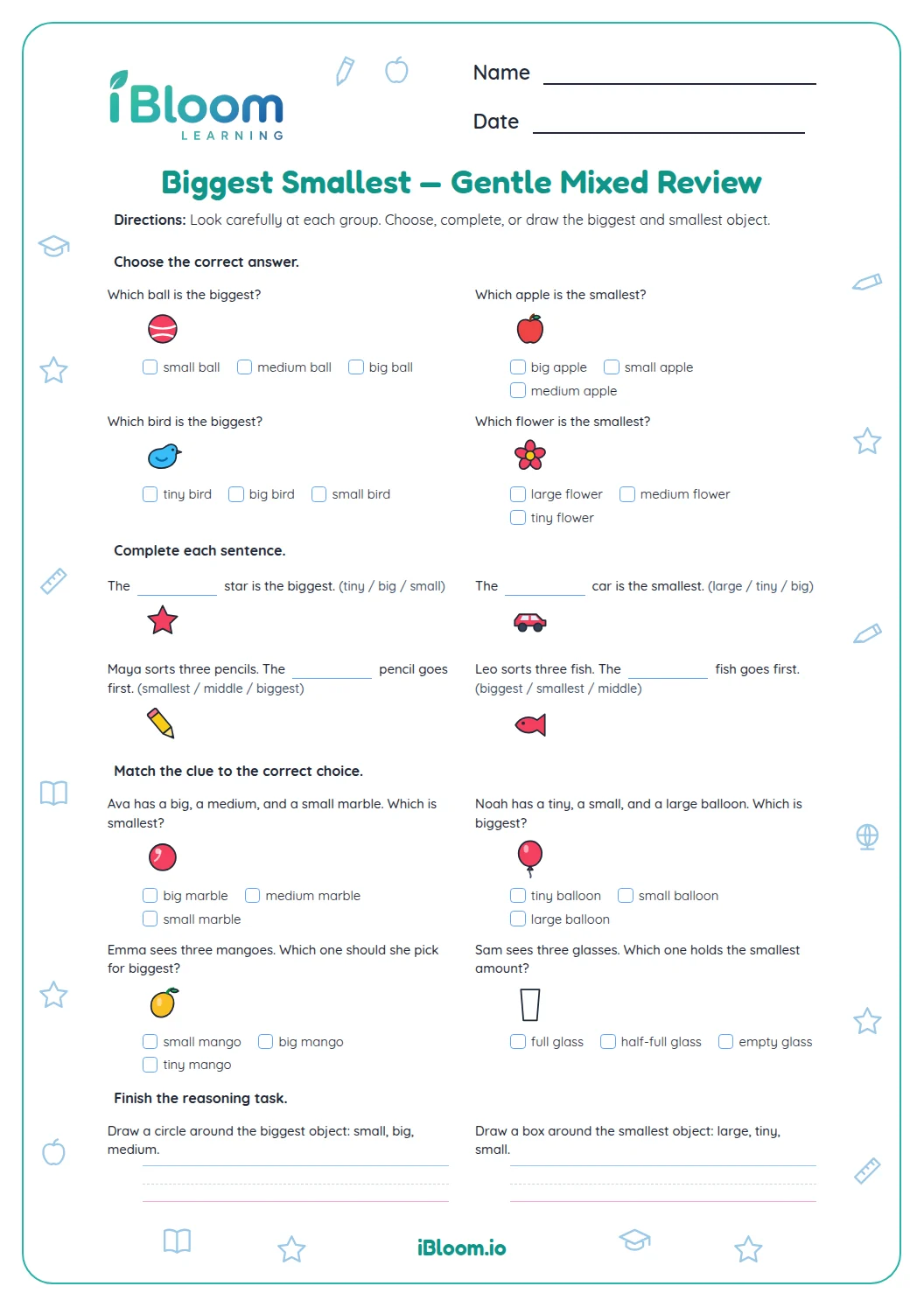
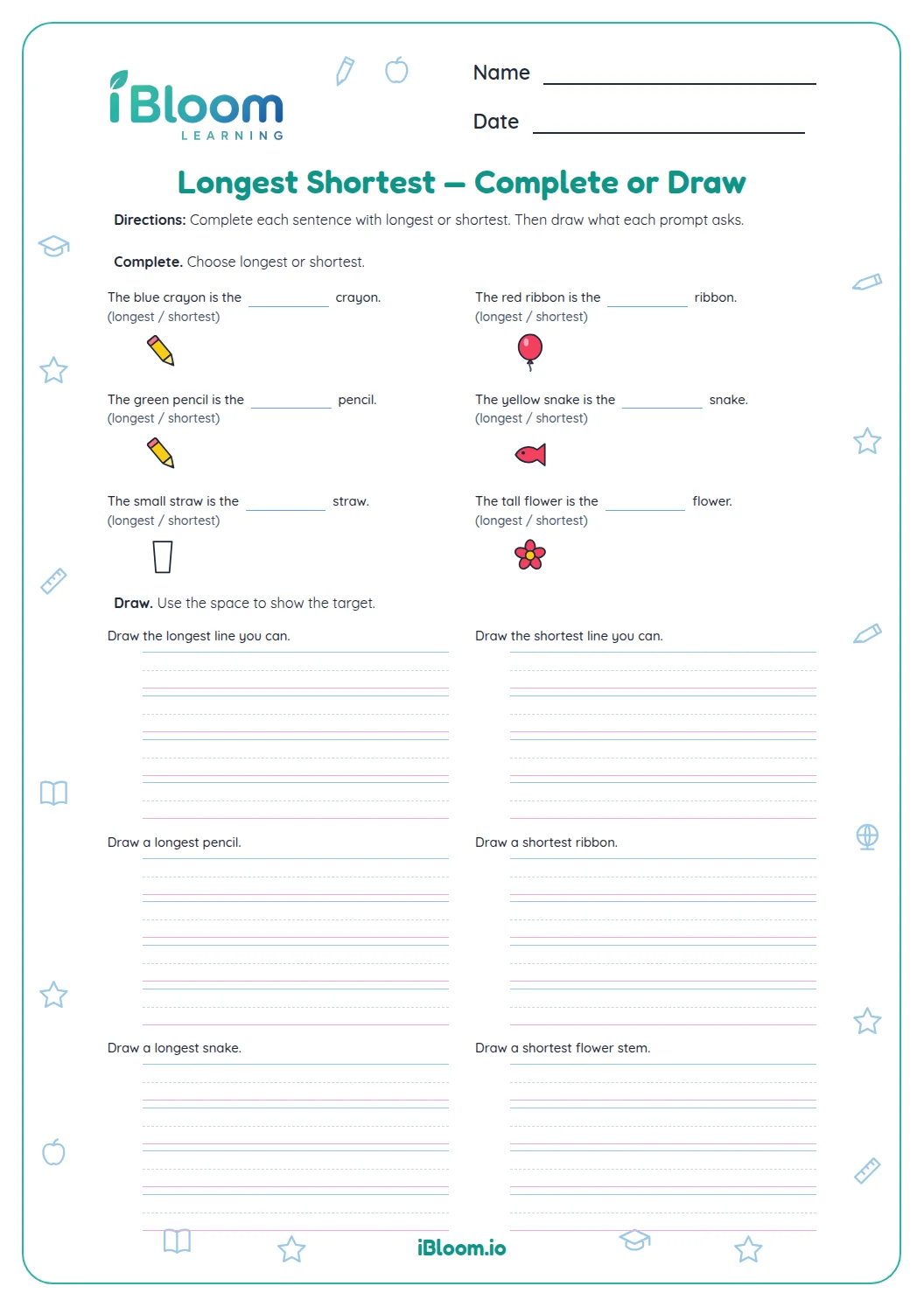
This printable asks young learners to compare two pictured objects and choose which is bigger. Fourteen picture pairs use familiar animals and things from everyday settings. Children name the larger object in each pair; a separate key makes checking simple.
How do children compare big and small?
Children compare the two pictured objects and decide which takes up more space. Familiar pairs make size differences visible: a whale is bigger than a crab, while a grape is smaller than a watermelon.
Each question includes both objects so the comparison is clear. Invite your child to say a full sentence, such as “The whale is bigger than the crab.”
What is on this worksheet?
The page has 14 picture-pair questions arranged in two parts. Each prompt names both objects and asks which is bigger, giving children repeated practice with comparative size language.
- Part A: Compare the first seven familiar picture pairs.
- Part B: Continue with seven more pairs from everyday settings.
- The answer key identifies the larger object in every pair.
Build size language while you work
After your child answers, repeat the comparison as a full sentence. Then switch the wording: “The bus is bigger; the bicycle is smaller.” Hearing both words tied to the same pair builds understanding of their relationship.
A simple way to use the page
- 1Read both object names aloud and point to each picture.
- 2Ask which object would take up more space in real life.
- 3Have the child say a full sentence naming the bigger object.
- 4Compare real objects nearby if a pair is unfamiliar.
- 5Use the key after the learner finishes.
Common mix-ups and helpful prompts
The mistake
Choosing the favorite or most exciting object instead of the larger one.
The fix
Repeat the size word and ask, “Which takes up more space?”
The mistake
Thinking “smaller” means less important.
The fix
Explain that both objects matter; the question only compares their size.
The mistake
Mixing up bigger and smaller.
The fix
Compare two toys side by side and say both sentences: one is bigger, and the other is smaller.
What to practice next
Make more practice
Questions parents and teachers ask
What does “bigger” mean here?
Bigger means larger in size. In every question, your child sees two objects and chooses which one takes up more space. The activity does not compare age, importance, or how much someone likes an object. Ask your child to name both items before deciding.
How should I help with a picture pair?
Read the two object names aloud and point to each picture. Give your child a moment to think about the objects in real life, then ask which is larger. A complete sentence such as “The whale is bigger than the crab” gives extra practice using the comparison word.
Does the worksheet include pictures?
Yes. Each of the 14 questions shows two familiar objects, and the prompt names both items. The pictures support early learners who are still building size vocabulary. Children can answer by choosing the larger object and saying its name aloud.
Is an answer key included?
Yes. A separate answer key lists the bigger object for all 14 pairs. The worksheet is designed for young learners, so children can respond orally or point to the larger item while an adult marks the answer. Check the key after the page is complete.
Can I use real objects too?
Yes. After a few picture questions, compare two safe objects nearby, such as a book and a pencil. Ask which is bigger and have your child explain the choice. Keep the comparison about size, then return to the worksheet pairs.