






About this worksheet
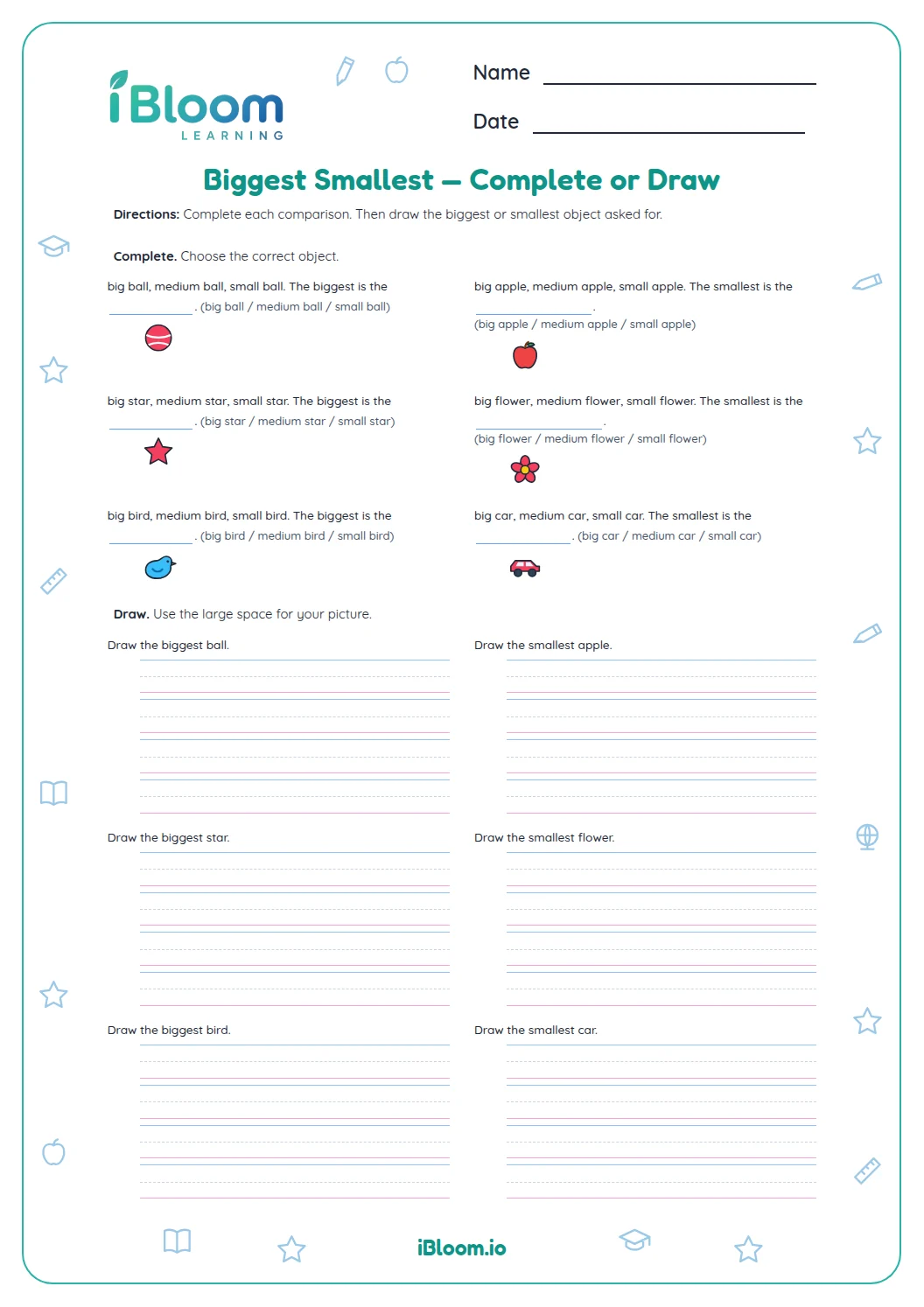
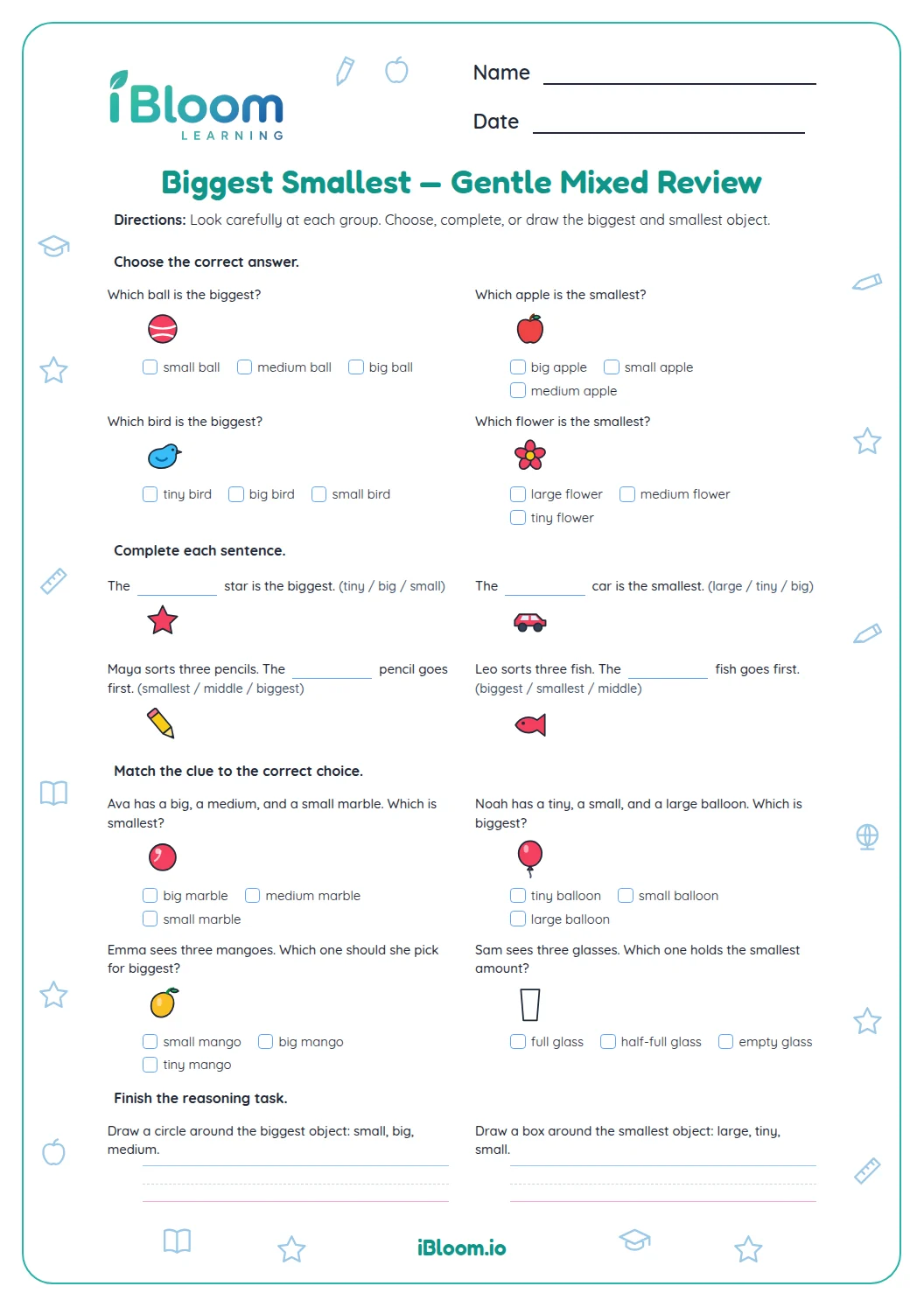
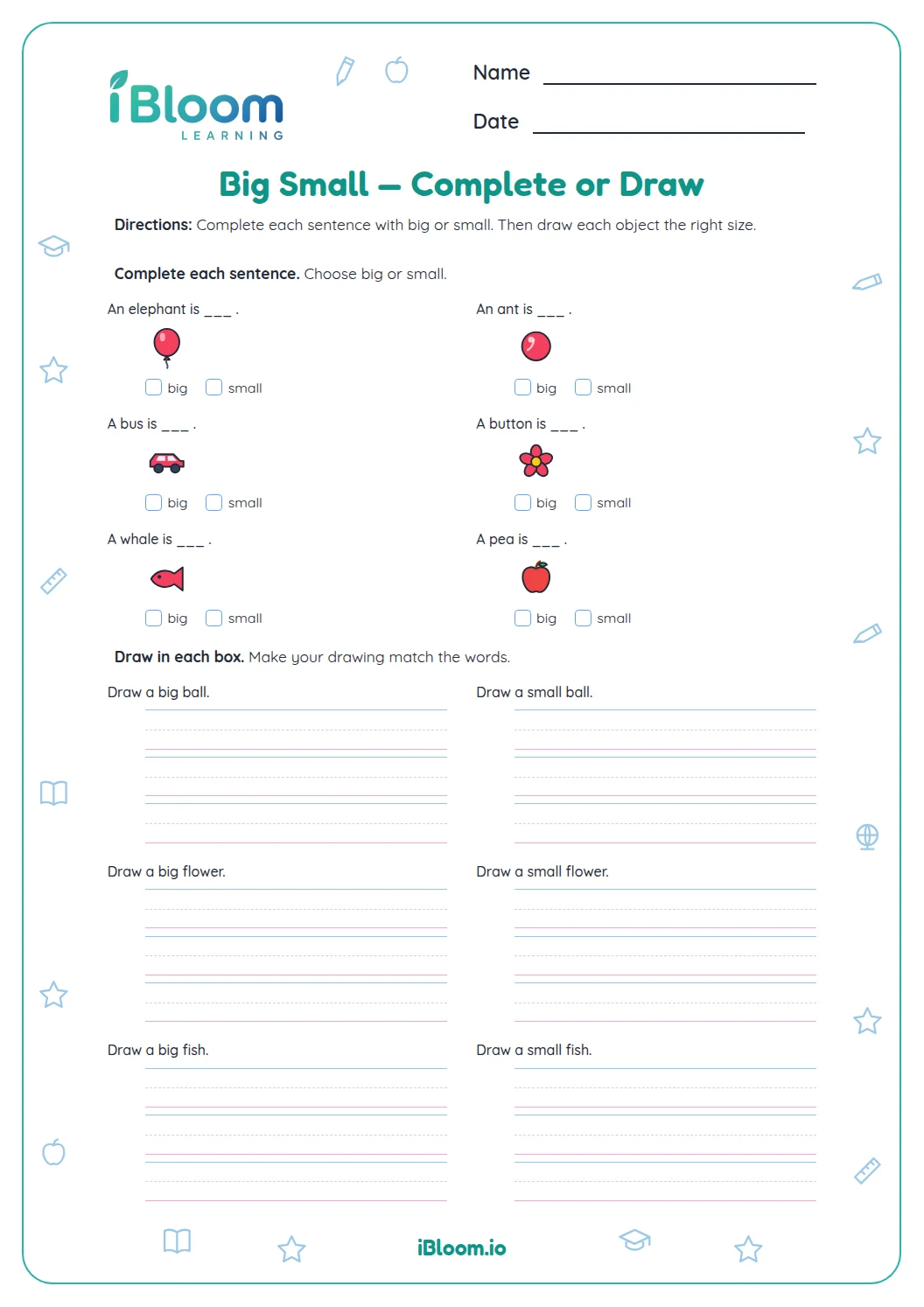
This free printable gives preschool and kindergarten children 16 picture choices for practicing biggest and smallest. They compare familiar animals, foods, vehicles, toys and classroom items, choosing the bigger item in Part A and the smaller item in Part B. An adult can read the short prompts aloud and ask children to explain a choice. The activity connects to Kindergarten Common Core K.MD.A.2, comparing objects by a measurable attribute. The answer key shows the intended picture for each pair.
Aligned to K.MD.A.2
How do the pictures connect size words to familiar things?
Each question names a familiar group, such as pets, classroom objects or garden items. The student compares two pictures and picks the one that is bigger or smaller. The pairs give children a concrete way to use these comparison words.
Part A asks for the biggest item in familiar groups. Part B asks for the smallest. The pictures are the activity, so an adult can invite the child to point before choosing.
- 1Look at the elephant and mouse.
- 2Ask which animal is usually bigger.
- 3Choose the elephant, then say “The elephant is bigger.”
How can a child tell biggest from smallest?
Start with the group named in the question. Think about the actual objects or animals, then compare the two: which is bigger or smaller? For example, a bus is usually bigger than a bicycle.
The page uses familiar pairs because real objects can vary in size. Children can explain a choice by naming the comparison: “The bus is bigger than the bicycle.”
How can an adult make the comparison hands-on?
After the page, find two safe, nearby objects and ask which is bigger or smaller. Let the child place them side by side when that makes sense. This turns a picture choice into a direct comparison they can see and describe.
How to use this worksheet
- 1Read each short prompt aloud if helpful.
- 2Name the group: animals, fruit, vehicles or another familiar set.
- 3Look at all three pictured choices before picking.
- 4Say a comparison aloud: “The bus is bigger than the scooter.”
- 5Check each choice with the answer key and talk through any tricky one.
Common mistakes and quick fixes
The mistake
Choosing a favorite picture instead of the biggest or smallest.
The fix
Compare all three choices using the size word in the question.
The mistake
Comparing different attributes, such as speed instead of size.
The fix
Ask which item takes up more or less space, not which one moves faster.
The mistake
Assuming every real object is exactly the same size.
The fix
Use “usually” and compare familiar examples, then try two real objects side by side.
Common Core alignment
The picture choices connect size words to objects children may recognize.
Compare familiar objects by size and choose the biggest or smallest.
On this sheet: The choices ask students to reason about which familiar object is bigger or smaller.
Show the official wordingHide the official wording
Directly compare two objects with a measurable attribute in common, to see which object has “more of”/“less of” the attribute, and describe the difference.
What to practice next
Make more practice
Further reading
Questions parents and teachers ask
How many picture questions are included?
There are 16 picture questions in two parts. Children choose the bigger item in eight pairs, then the smaller item in eight pairs. The pairs show familiar animals, foods, vehicles, classroom objects and toys, with one answer key.
Why does the page use the word “usually”?
The worksheet asks children to compare familiar pictured pairs using bigger and smaller. For example, an elephant is bigger than a mouse, while a coin is smaller than a backpack. An adult can read each prompt aloud and invite the child to explain the choice.
Is this worksheet suitable for preschool?
The questions use familiar objects, short sentences and picture choices for children working on biggest and smallest. An adult can read each prompt aloud and invite the child to point before choosing. Kindergarten learners can also explain their comparison in a few words.
What should I say if my child picks a different answer?
Ask the child to compare the three choices aloud: “Is a bus bigger than a scooter? Is it bigger than a truck?” This helps reveal whether they understand the size word or are choosing based on a favorite picture. Then compare real objects nearby when possible.
What does the answer key show?
Ask the child to look at both items and say which one is bigger or smaller. Some real objects vary in size, so focus on the familiar examples shown in the question. The adult can then invite the child to explain the comparison in a short sentence.
What can we do after the worksheet?
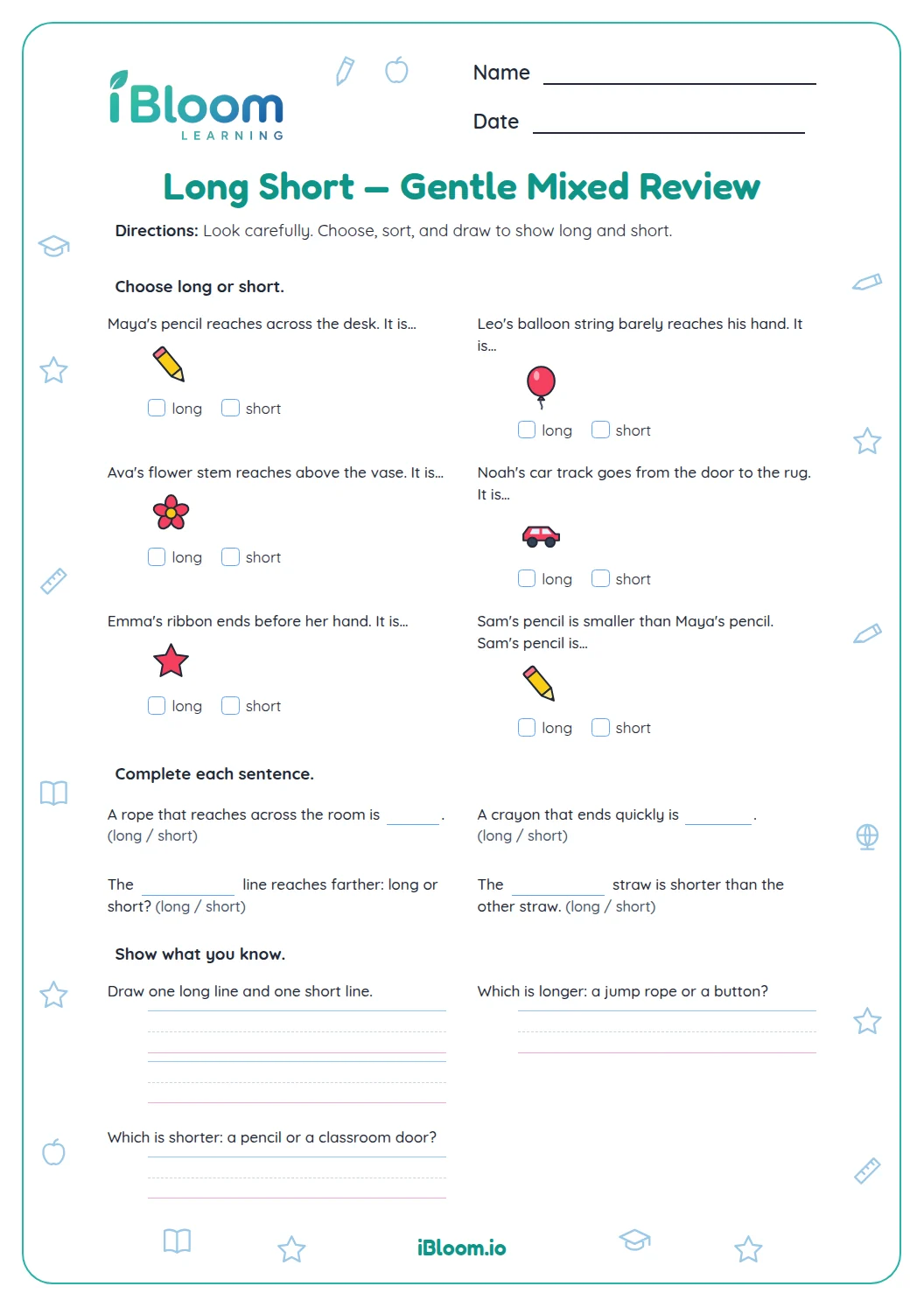
Try a hands-on comparison with two objects in the room. Place them side by side and ask which is bigger, smaller, longer or shorter. The linked Big and Small, Long and Short, and Tall and Short pages give children more practice describing familiar comparisons.