





About this worksheet
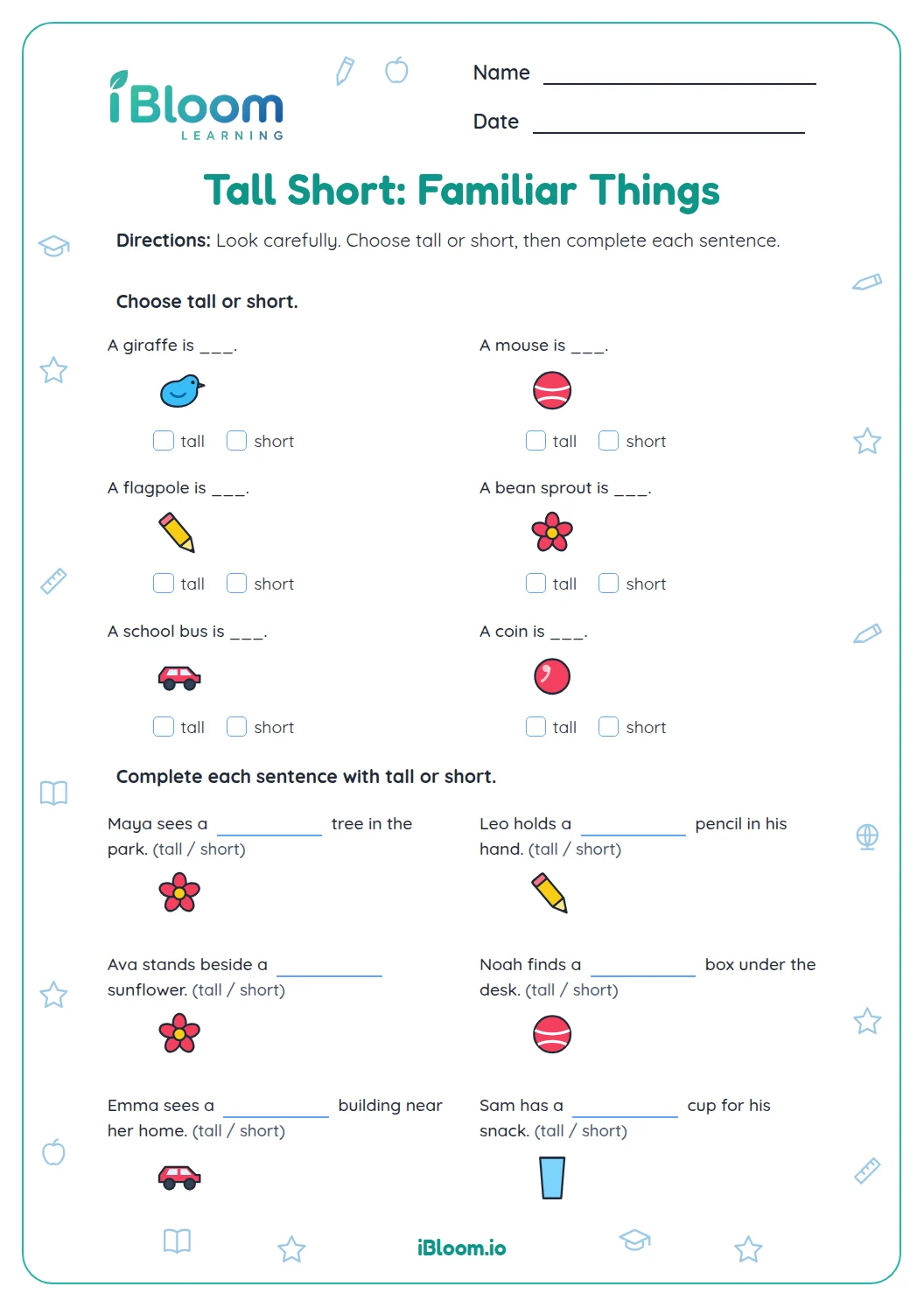
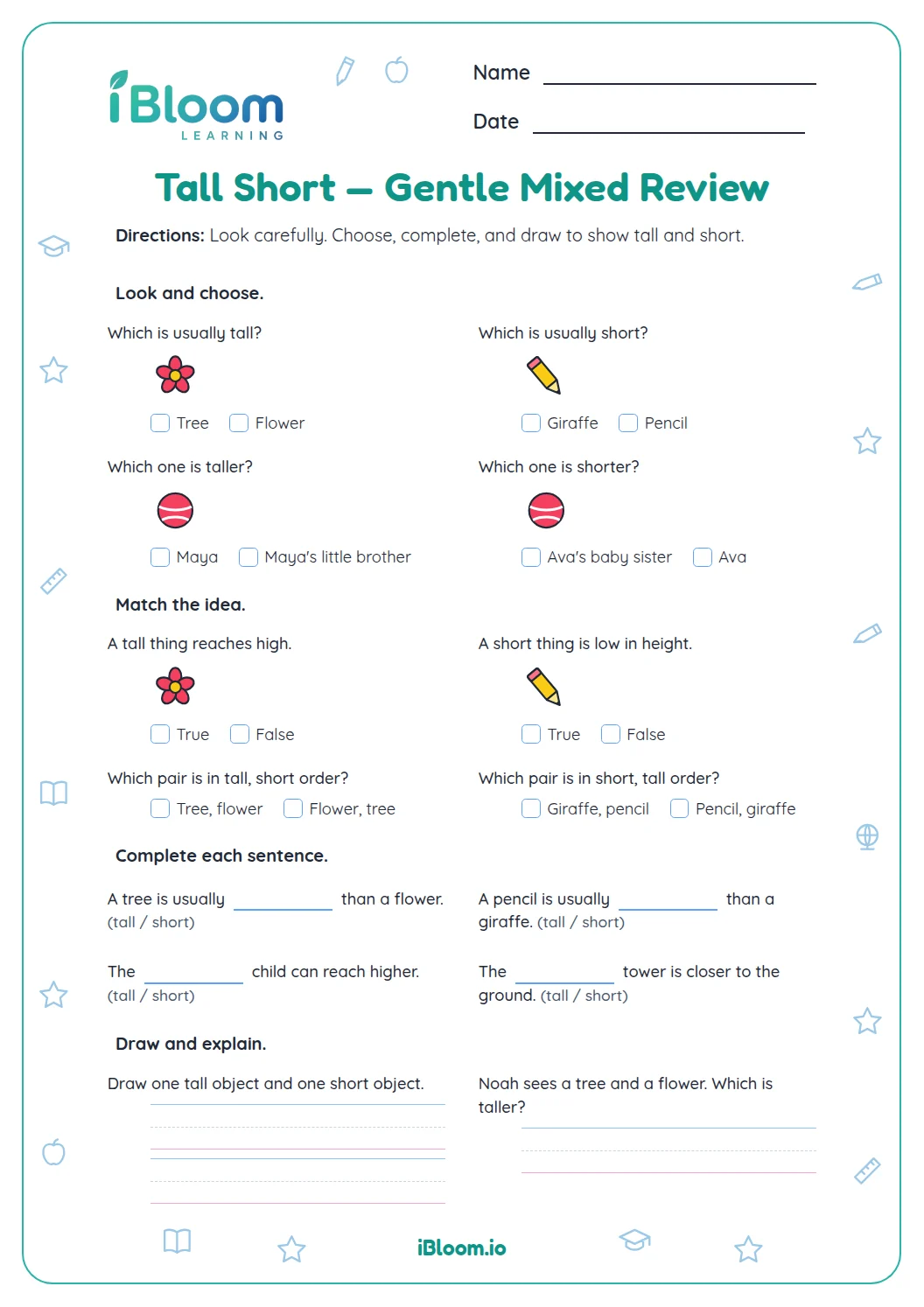
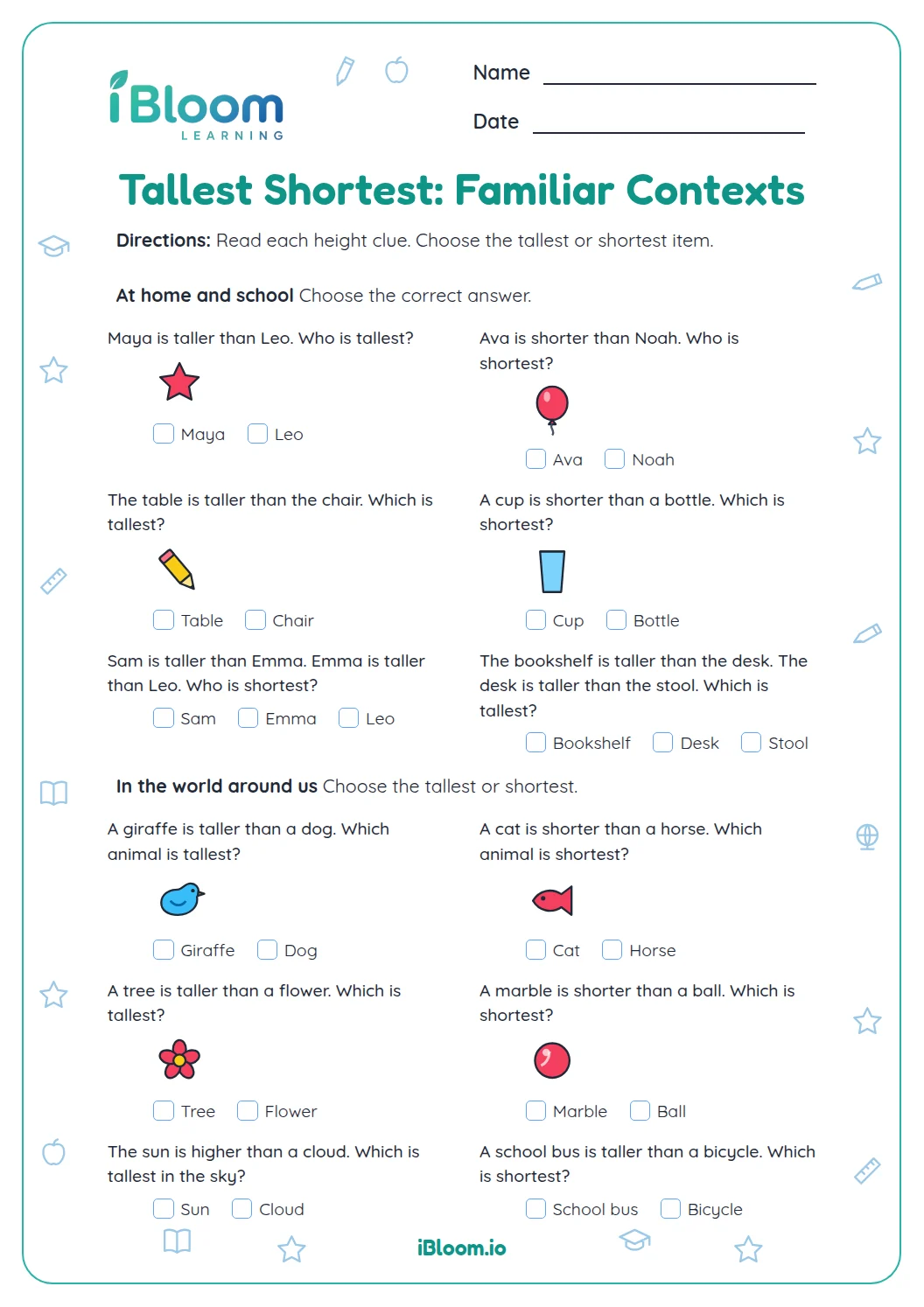
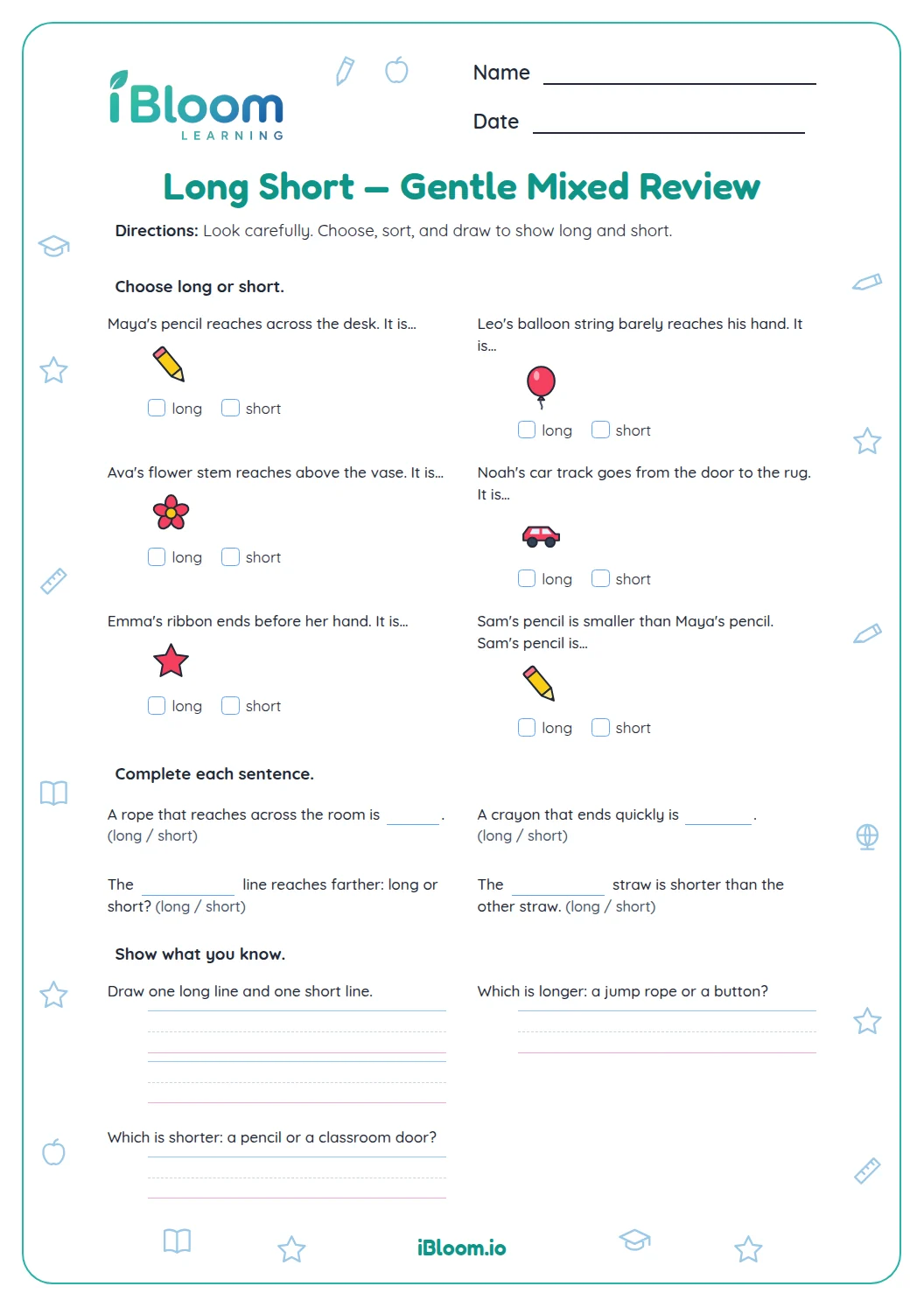
This free preschool and kindergarten worksheet asks children to compare twelve pairs of shapes by height, complete four sentences with taller or shorter, and draw two object pairs. Part A uses A-or-B choices, Part B names a shape for a word answer, and Part C asks children to draw towers and flowers with aligned bottoms. The 14 tasks practice direct comparisons of height described in Common Core K.MD.A.2. An adult can read prompts aloud and record spoken answers. A separate answer key gives the choices, words, and drawing criteria.
Aligned to K.MD.A.2
How do children compare the shapes?
Six picture comparisons ask children to choose the taller or shorter shape. Six more illustrated pairs ask children to complete a sentence with taller or shorter. Trace each shape’s height with a finger, moving from its own bottom to its own top. The shape with more height is taller; the shape with less height is shorter.
The pairs use squares, rectangles, circles, and ovals. A shape can be wider and still be shorter. An adult can read the directions and help identify A and B before the child makes a choice.
How do taller and shorter change the answer?
Pause on the comparison word before choosing a letter in Part A. Part B reverses the task: it shows a pair and asks the child to supply taller or shorter. Both parts use shape pictures so children can compare the actual heights.
- 1Shape A is a wide oval; shape B is a circle.
- 2Trace from the bottom to the top of each shape.
- 3A has less height than B, so write shorter.
What makes a drawing answer correct?
Question 13 asks for two towers, and question 14 asks for two flowers. In each pair, both objects should begin at the same level, and one should clearly reach higher. Simple outlines are enough.
Ask the child to point to the taller object and then the shorter object. The key describes those height relationships; the child’s drawings can look different from another child’s and still satisfy the task.
How to use the worksheet
- 1Read taller and shorter aloud, tracing a vertical path with a finger.
- 2Compare each shape from its own bottom to its own top.
- 3Complete the four A-or-B choices, rereading the comparison word each time.
- 4Let the child say each missing word in Part B before writing it or dictating it.
- 5Draw each pair from a shared bottom line, then name the taller and shorter object.
What to watch for
The mistake
Choosing the taller shape when the question asks for the shorter one.
The fix
Repeat just the target word, shorter, and compare the shapes’ bottom-to-top heights again.
The mistake
Comparing how wide an object looks instead of its height.
The fix
Trace from bottom to top with a finger. Height is the upward distance being compared here.
The mistake
Drawing the short tower on a higher starting line.
The fix
Add one ground line first and start both towers there so their heights can be compared directly.
Common Core alignment
Compare the heights of paired shapes and draw taller and shorter objects.
On this sheet: Children compare two shapes by height, then draw object pairs with different heights.
Show the official wordingHide the official wording
Directly compare two objects with a measurable attribute in common, to see which object has “more of”/“less of” the attribute, and describe the difference. For example, directly compare the heights of two children and describe one child as taller/shorter.
What to practice next
Make more practice
Further reading
Questions parents and teachers ask
Does my child need to name the shapes?
No. Children need to compare heights and identify the letters A and B, which an adult can read aloud. Knowing words such as oval and rectangle can help discussion, but the task asks only which shape is taller or shorter. Trace each shape’s height before choosing.
Can a preschooler answer without writing the words?
Yes. Let the child say taller or shorter for Part B, and an adult can record the response. The comparison is the important thinking task. Part A uses A-or-B choices, while Part C gives children room to draw two pairs and explain their height differences aloud.
Why line up the bottoms in the drawings?
A shared starting level makes the height difference between the drawn objects easier to see. Add one ground line before drawing the towers or flowers. Start both objects there, then compare their tops. In the printed shape pairs, compare the full height of each shape from its own bottom.
What should the two drawings show?
One drawing should show a tall tower beside a short tower; the other should show a tall flower beside a short flower. Within each pair, the bottoms should line up. Simple shapes and stems work well as long as the difference in height is easy to see.
What is included in the answer key?
The key identifies the four correct letter choices and supplies taller or shorter for the four blanks. It also gives a short description of a successful drawing for each final task. Use those descriptions to check height relationships, while accepting different tower and flower designs from children.