







About this worksheet
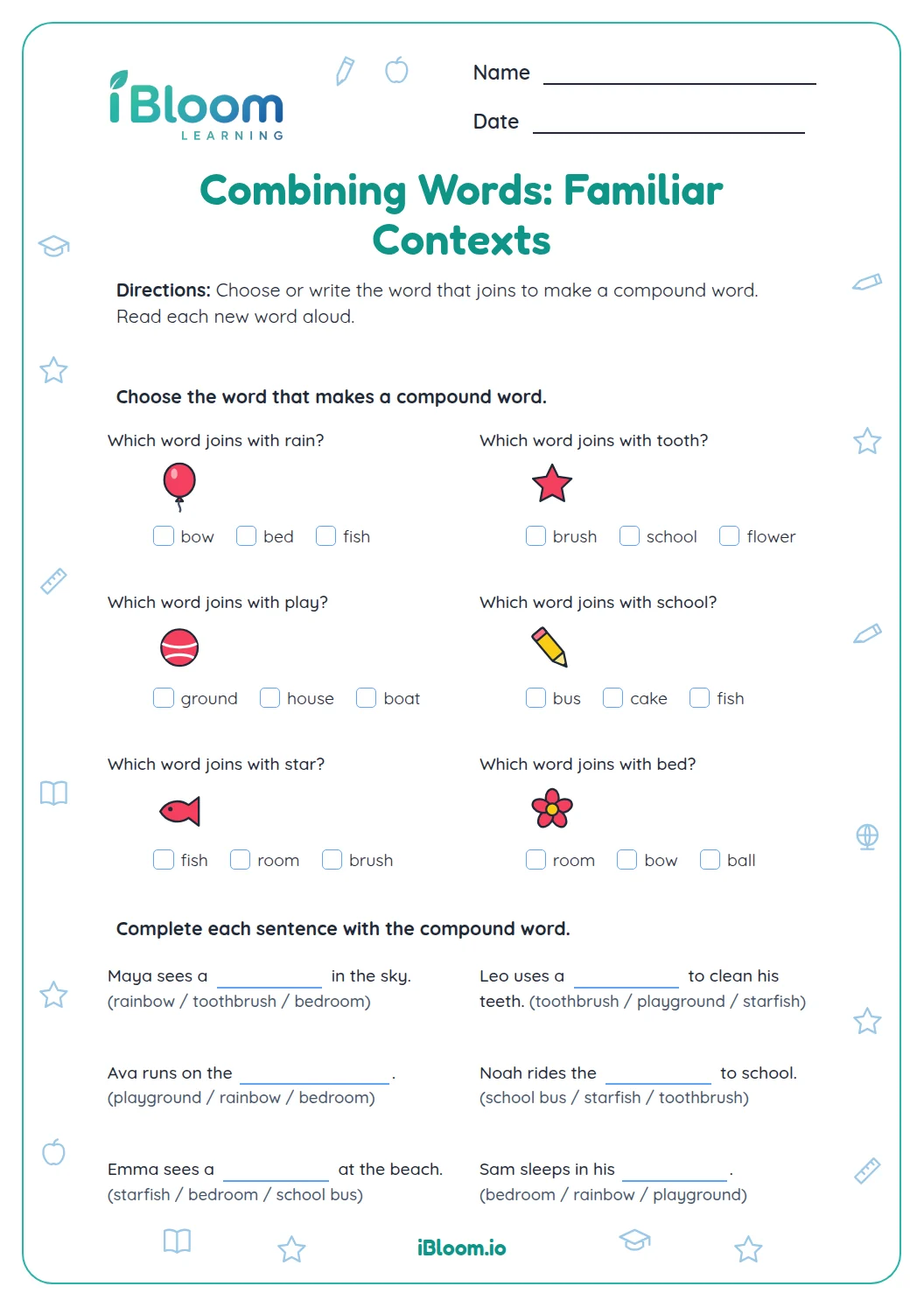
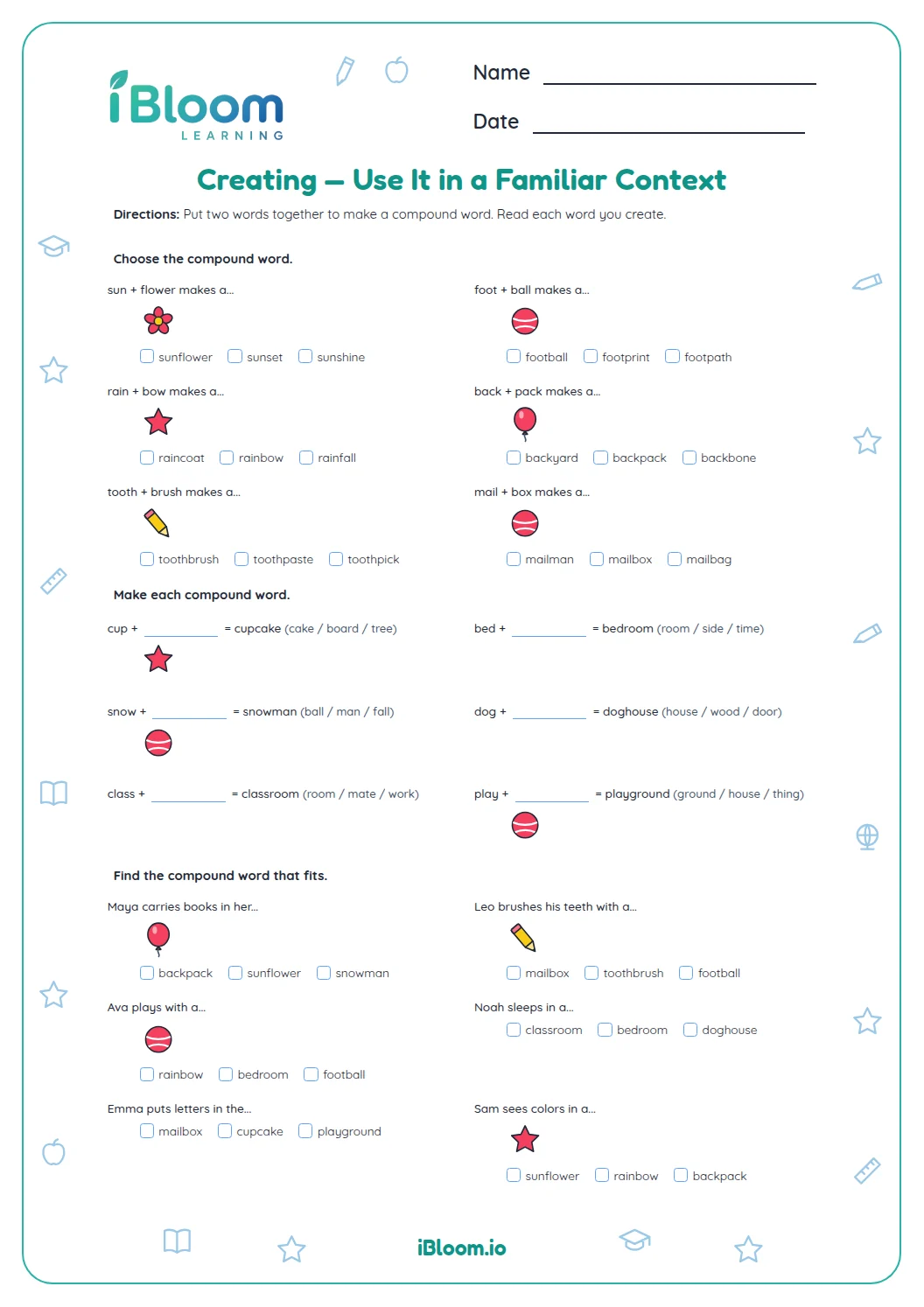
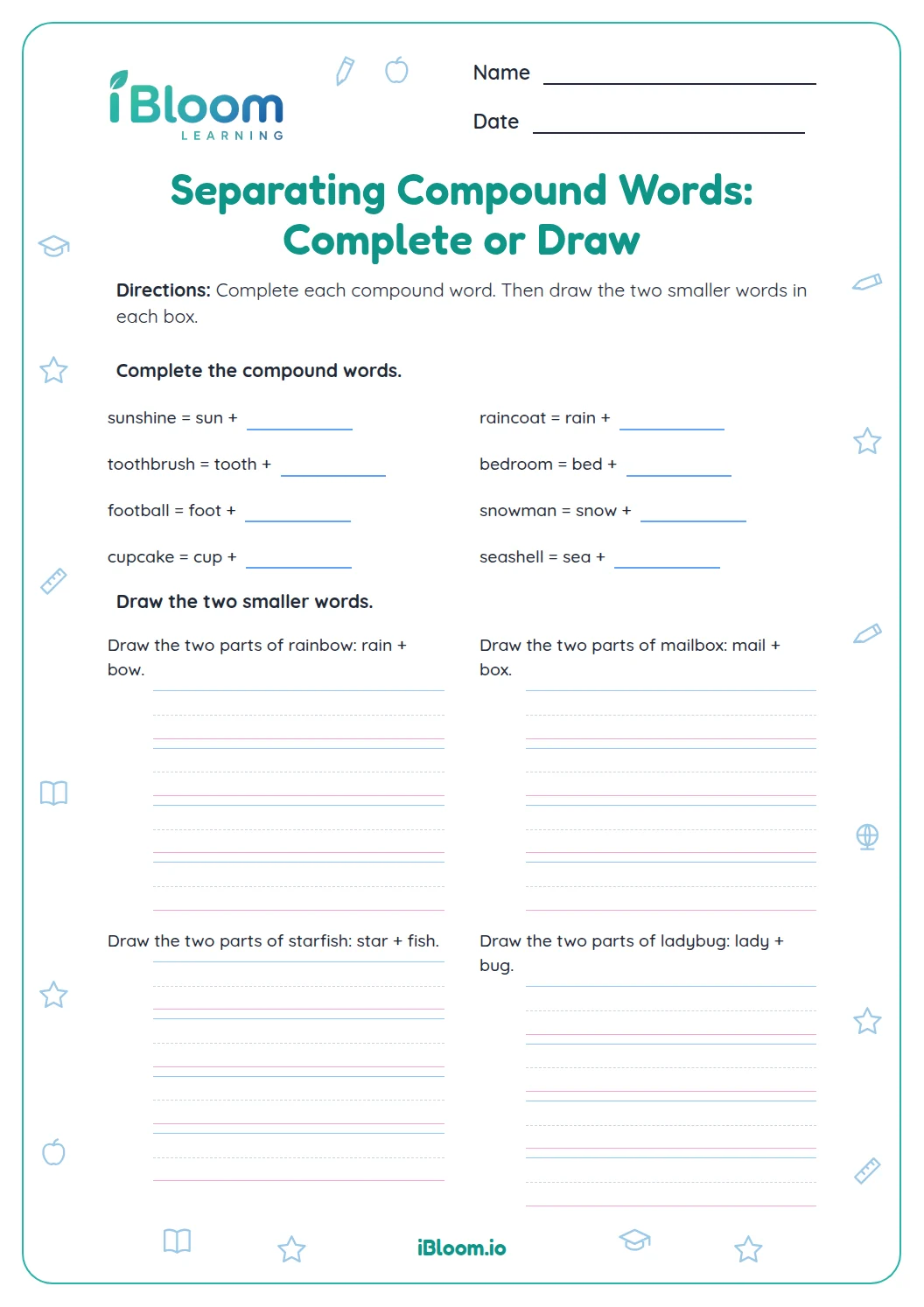
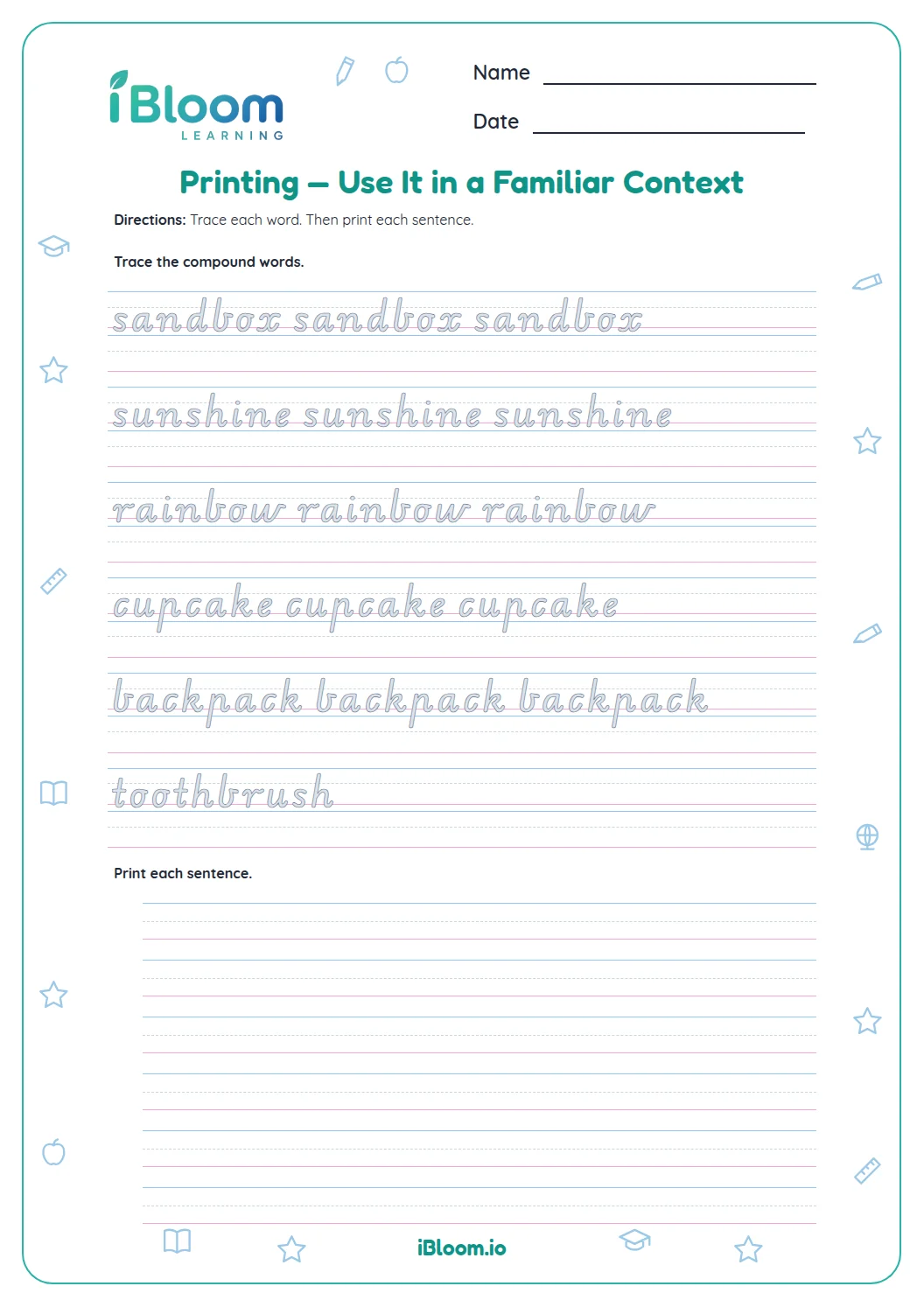
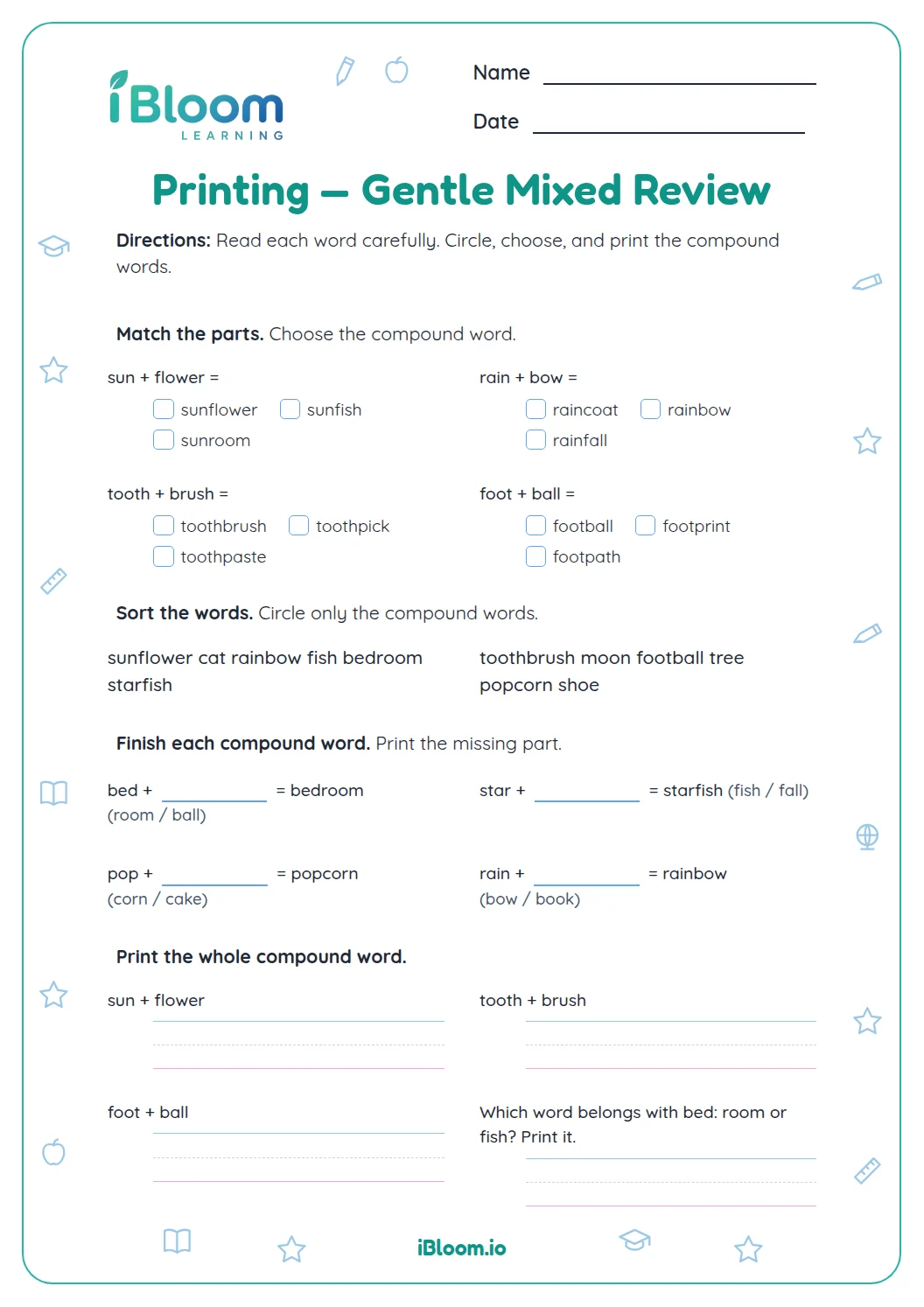
This printable gives preschool and kindergarten learners picture-supported practice joining familiar words into compounds. Eight items use picture pairs; six use printed word-part clues for words whose parts are not both pictured in the icon set. Children choose the compound word each pair makes. There are 14 unique questions and a separate key.
What skill does this worksheet practice?
This printable gives preschool and kindergarten learners picture-supported practice joining familiar words into compounds. Eight items use picture pairs; six use printed word-part clues for words whose parts are not both pictured in the icon set. Children choose the compound word each pair makes. There are 14 unique questions and a separate key.
How can a child work through a question?
Say or count the clue first. Then choose or write the response that matches that item.
- 1[pic:sun] + [pic:flower]
- 2Say “sun” and “flower.”
- 3Together they make sunflower.
What is included on the page?
Eight questions use picture pairs and six use printed word parts. All 14 ask children to join two smaller words and choose the compound they make.
How to use this worksheet
- 1Read the directions aloud together.
- 2Name or count the pictured clues.
- 3Answer one item at a time.
- 4Check that the answer matches the clue.
- 5Use the separate key to review the work.
Common mistakes and quick fixes
The mistake
Guessing before naming or counting the clue.
The fix
Say each word or touch-count the objects first.
The mistake
Writing the shown part instead of the missing part.
The fix
Ask what is still needed to complete the whole.
The mistake
Rushing through repeated-looking choices.
The fix
Read each prompt again; the answer can change from item to item.
What to practice next
Make more practice
Questions parents and teachers ask
How many questions are included?
A compound word joins two smaller words into one word, such as sun and flower joining to make sunflower. Children name the two parts first, then choose the compound word that results. This sheet uses pictured pairs and printed word-part clues.
What skill does the first part practice?
Eight questions show two pictures, and six show the word parts in print. An adult can name picture clues aloud, then help the child blend both parts. The choices provide possible compounds to compare before the child selects one.
How can a child use the models or clues?
The picture-pair questions let children focus on saying and joining familiar words before reading the compound. The final six show the two parts in print instead. Adults may read those parts aloud and invite the child to blend them.
What words or examples appear?
Examples include sunflower, cupcake, starfish, football, raincoat, earring, treehouse, bookworm, mailbox, bathtub, pineapple, snowman, doghouse, and toothbrush. Eight pairs use pictures and six show the word parts in print. Adults can name the parts aloud. Each one appears just once on the page.
How can an adult support practice?
Invite the child to say both small words first, then blend them without a pause. If the compound is unfamiliar, name the parts together and explain the whole word briefly. The answer choices help distinguish words made by other pairs.