








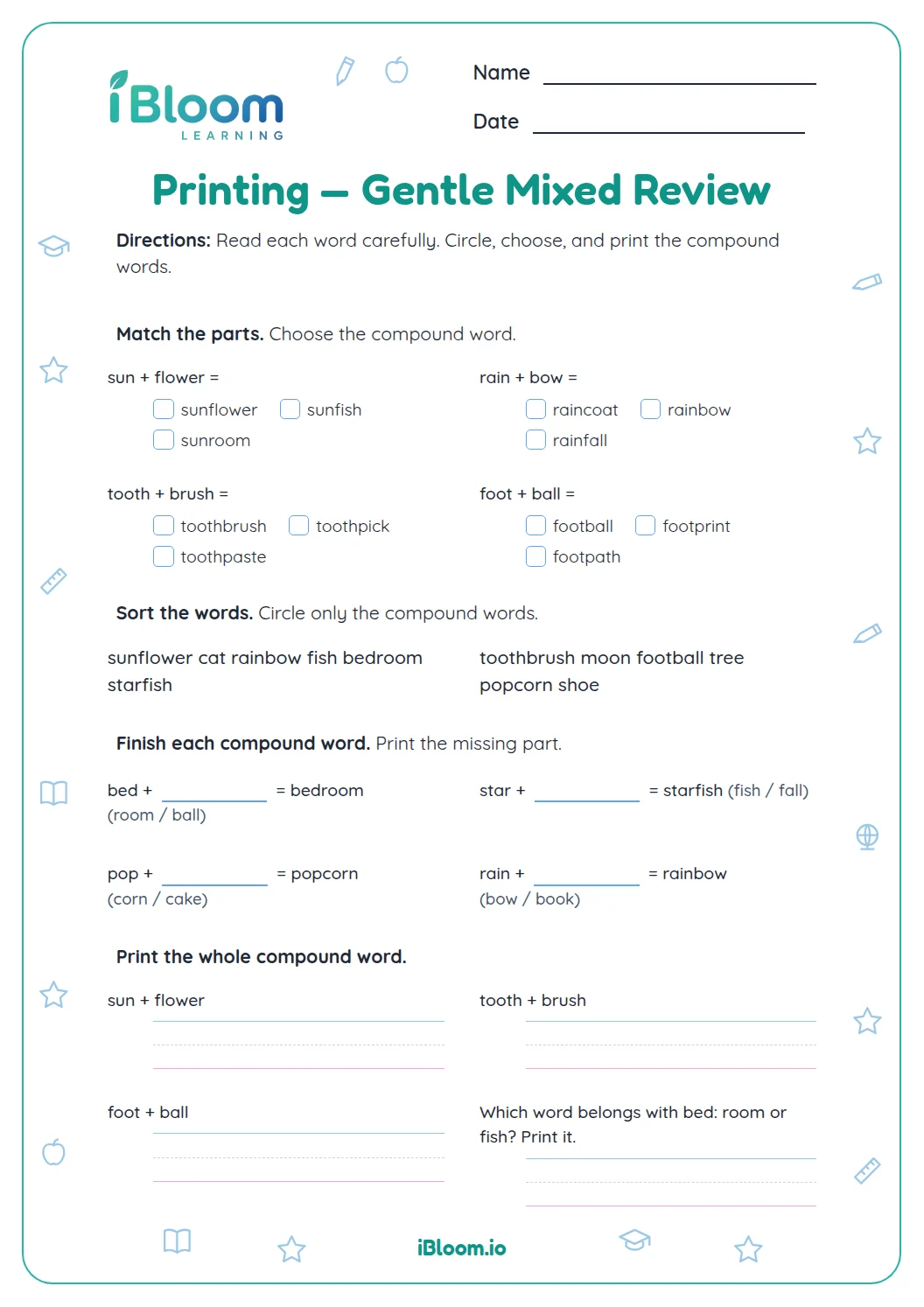
About this worksheet
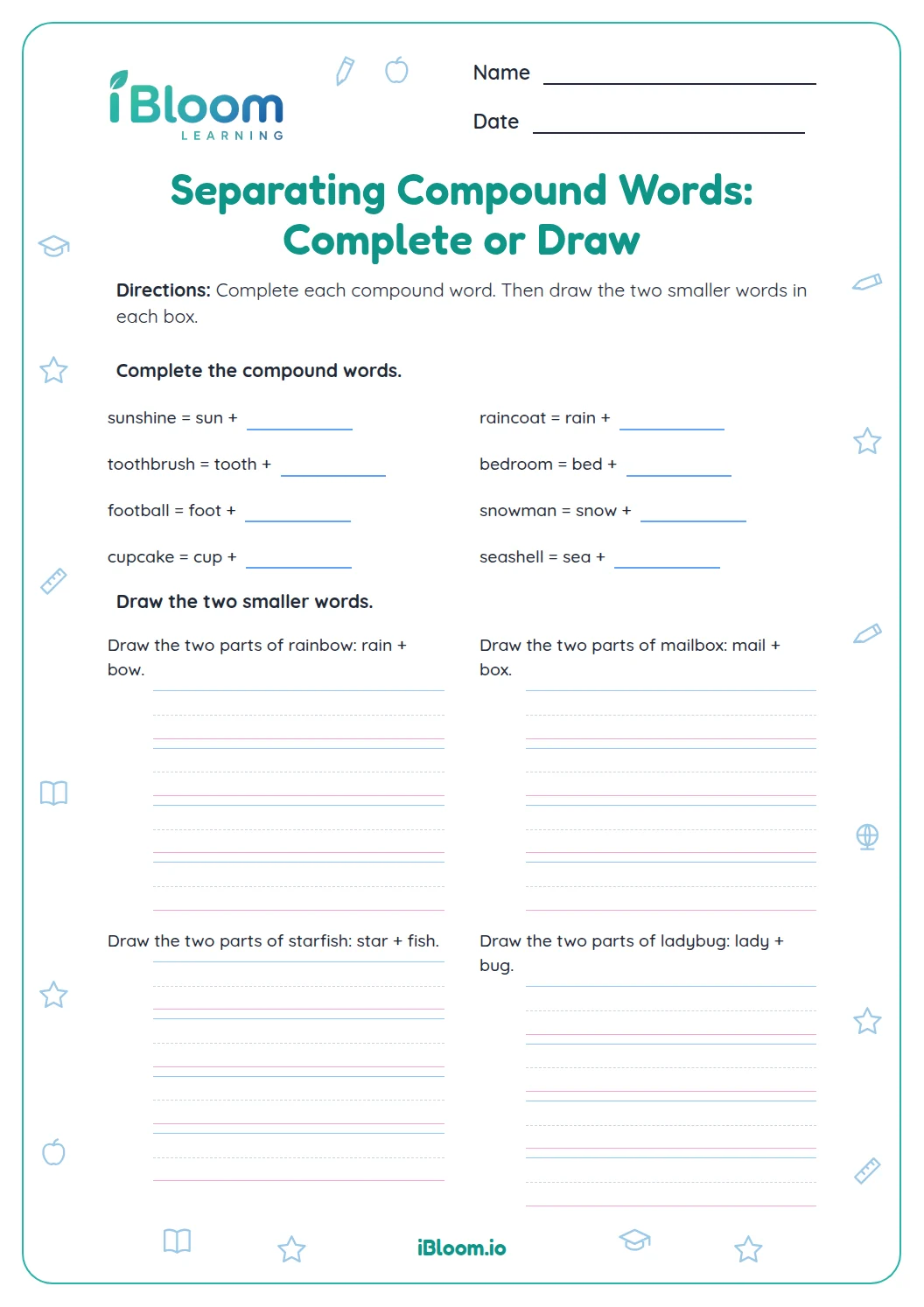
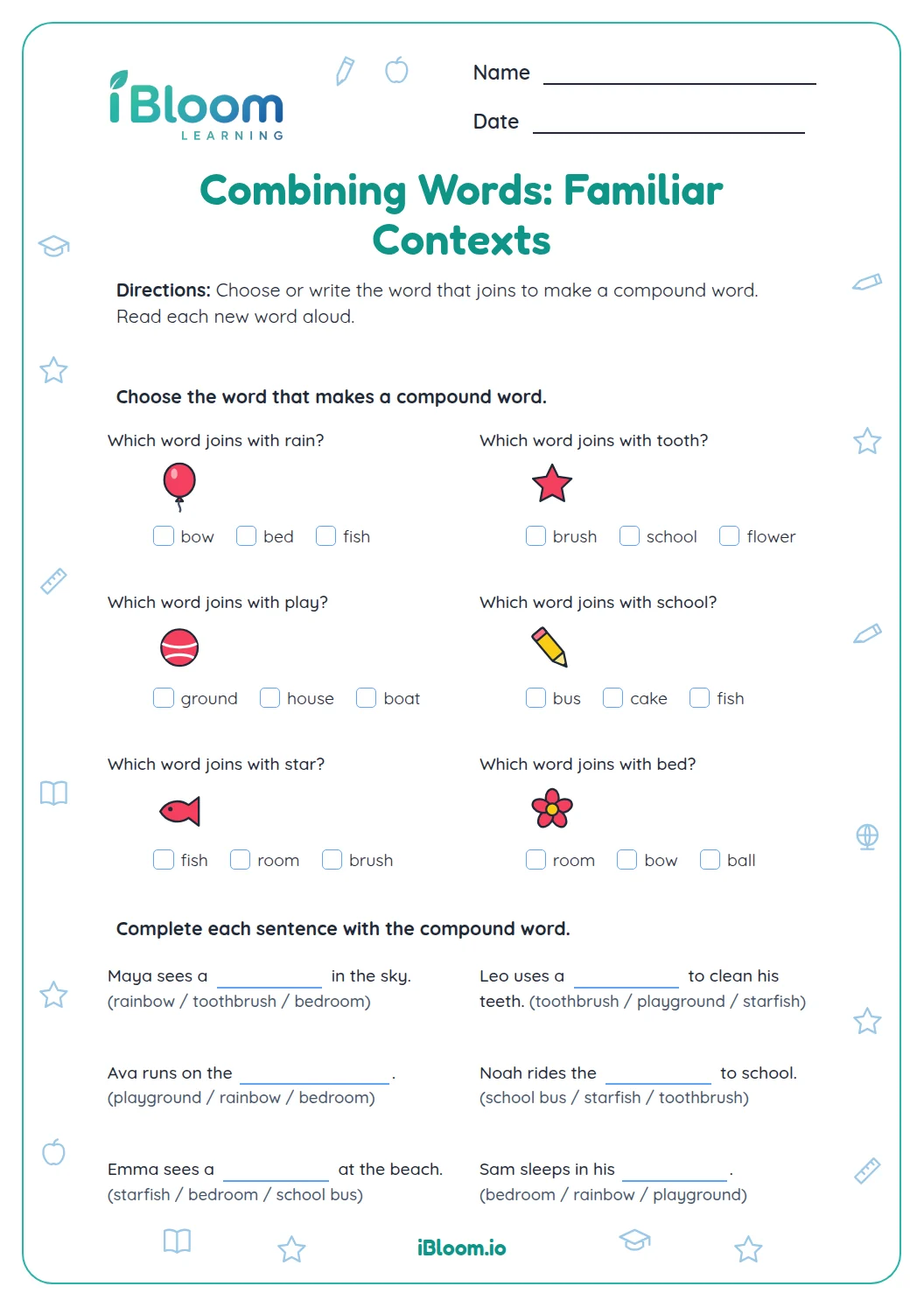
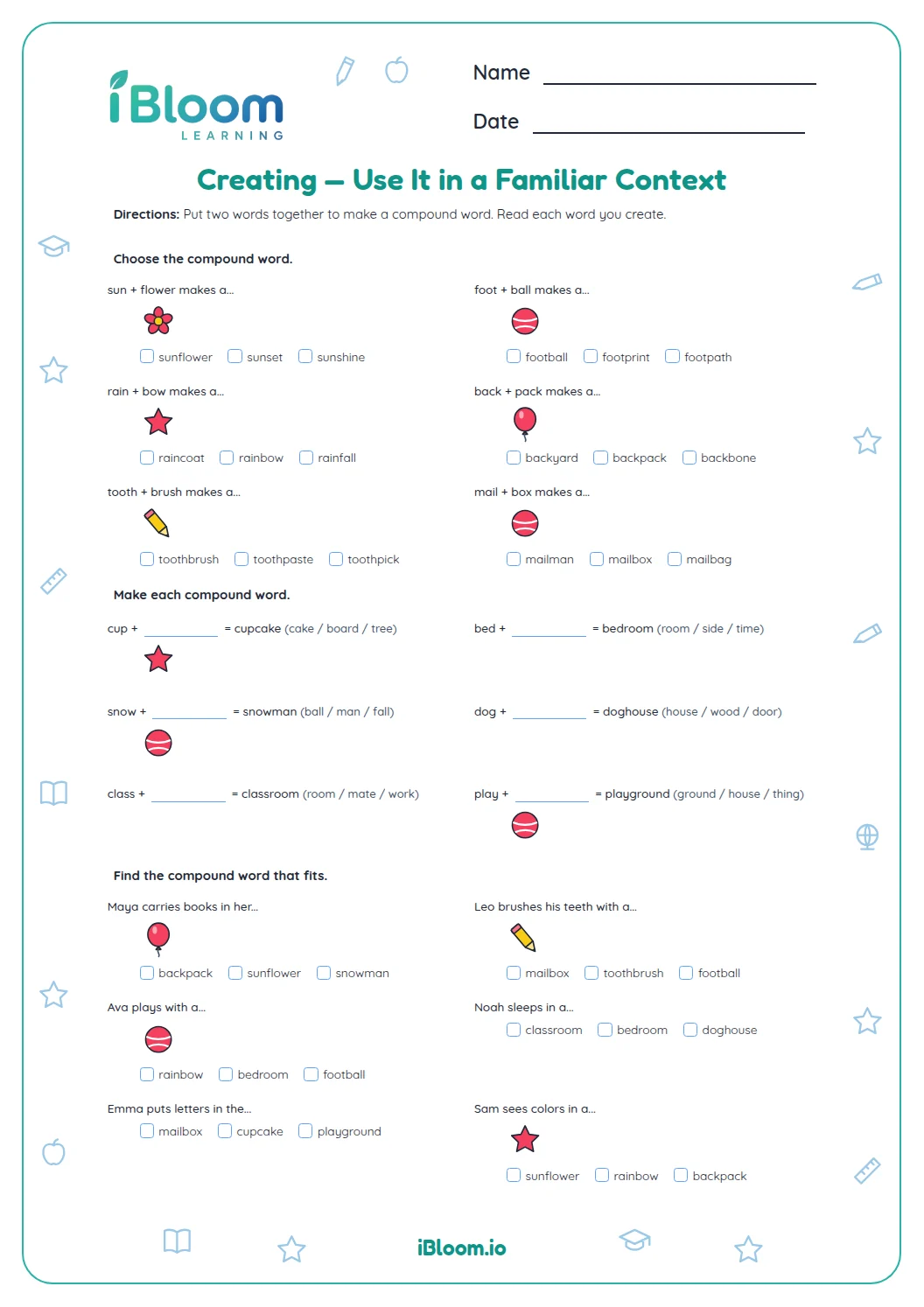
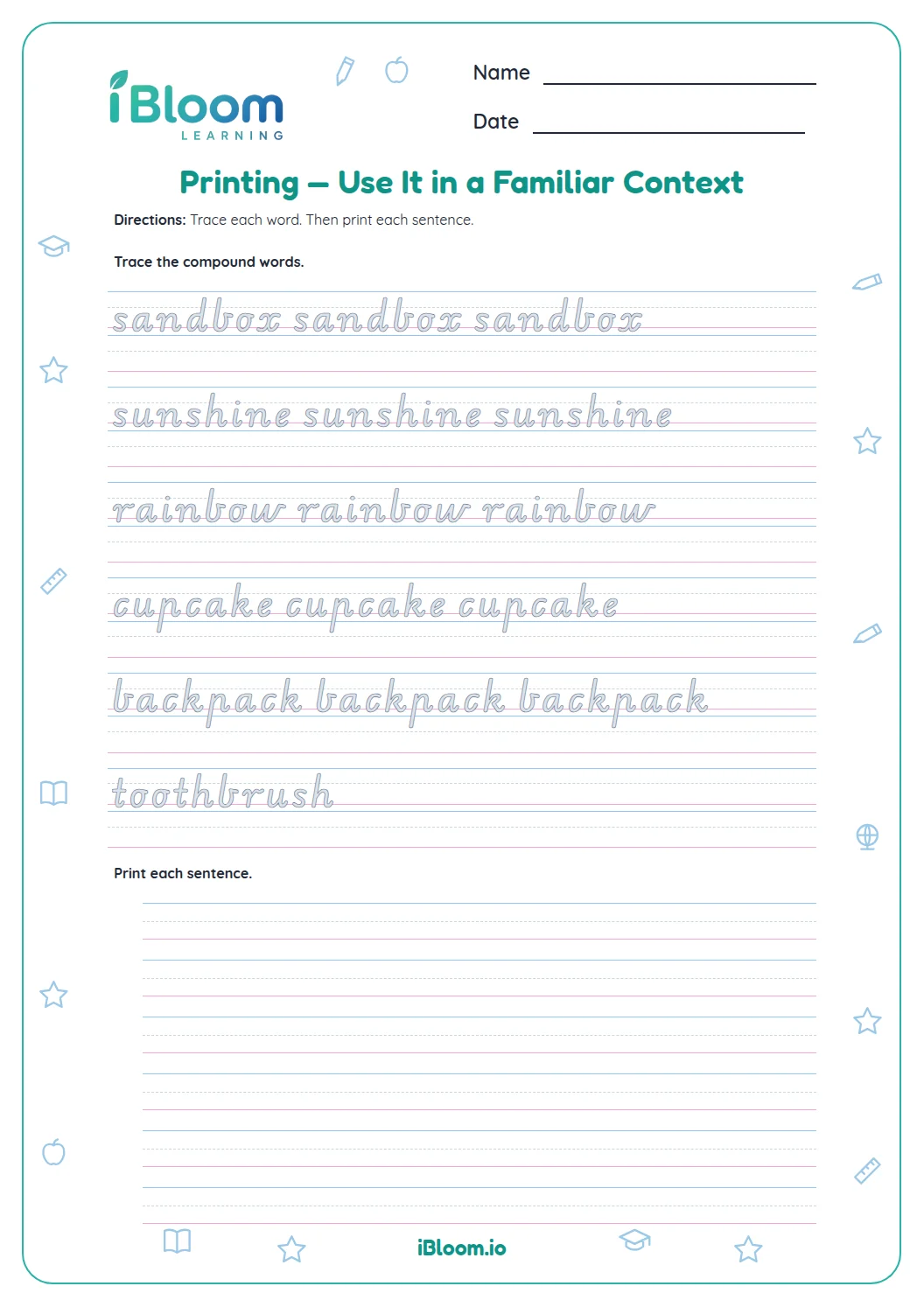
This printable helps preschool and kindergarten learners hear how two familiar words join to make one compound word. Picture clues introduce the parts, sentence choices show how a compound word fits a familiar context, and a final section asks children to separate the words again. The page uses recognizable images and short, read-aloud prompts, with an answer key for an adult to check responses.
Aligned to L.K.6
What is a compound word?
A compound word joins two smaller words to make a new word. For example, sun and flower join to make sunflower.
How does a sentence help?
A sentence gives clues about which familiar compound word makes sense. “The ___ swam in the ocean” points to starfish.
What will children do?
Picture clues, familiar sentence choices, and word-part practice provide three ways to work with compounds.
- Part A: use pictures to identify compounds
- Part B: choose a word that fits a sentence
- Part C: name the two smaller words
Try it together
- 1Name each picture aloud.
- 2Say the two picture words together and listen for a familiar word.
- 3Read the whole sentence before choosing a word.
- 4Ask the child to clap once for each smaller word in the compound.
- 5Use the key after the child has tried the page.
Helpful reminders
The mistake
Treating the compound as one indivisible sound.
The fix
Say each smaller word slowly, then blend them together.
The mistake
Choosing a word from just one picture clue.
The fix
Name both picture parts and combine them.
The mistake
Choosing a word that sounds familiar but does not fit the sentence.
The fix
Reread the whole sentence and check its meaning.
Common Core alignment
This early literacy activity builds awareness that familiar compound words consist of two smaller words.
Use words and phrases acquired through conversations and reading.
On this sheet: Recognizing that a compound word contains familiar smaller words supports word analysis.
Show the official wordingHide the official wording
Use words and phrases acquired through conversations, reading and being read to, and responding to texts.
What to practice next
Make more practice
Questions parents and teachers ask
What is a compound word?
A compound word puts two smaller words together to make one word with its own meaning. Sun and flower form sunflower. Children can say each part, blend the parts, and then use the full word in a sentence to check that it makes sense.
How do the picture clues help?
The pictures give young learners a familiar starting point before they read the word parts. Name both pictured things, join the words aloud, and see whether the compound word is familiar. An adult can read the prompt and choices aloud as needed.
What does the sentence section practice?
A complete sentence provides a meaning clue. Children choose the compound word that fits the sentence, then can explain how its two smaller words connect to the clue. This lets them practice using a compound word in context, not only naming it.
Should children write the word parts?
They can say the two parts aloud or write them if ready. The final questions expect responses such as “sun + flower.” The key shows the intended parts, while an adult can support spelling and reading at the child’s level.
How many picture-supported questions are included?
The page has 16 questions in three parts, and pictures support the compound-word work throughout. Children combine picture clues, choose a word that fits a sentence, then identify the two smaller words that form a pictured compound word. Adults can say each part aloud before the child chooses.