








About this worksheet
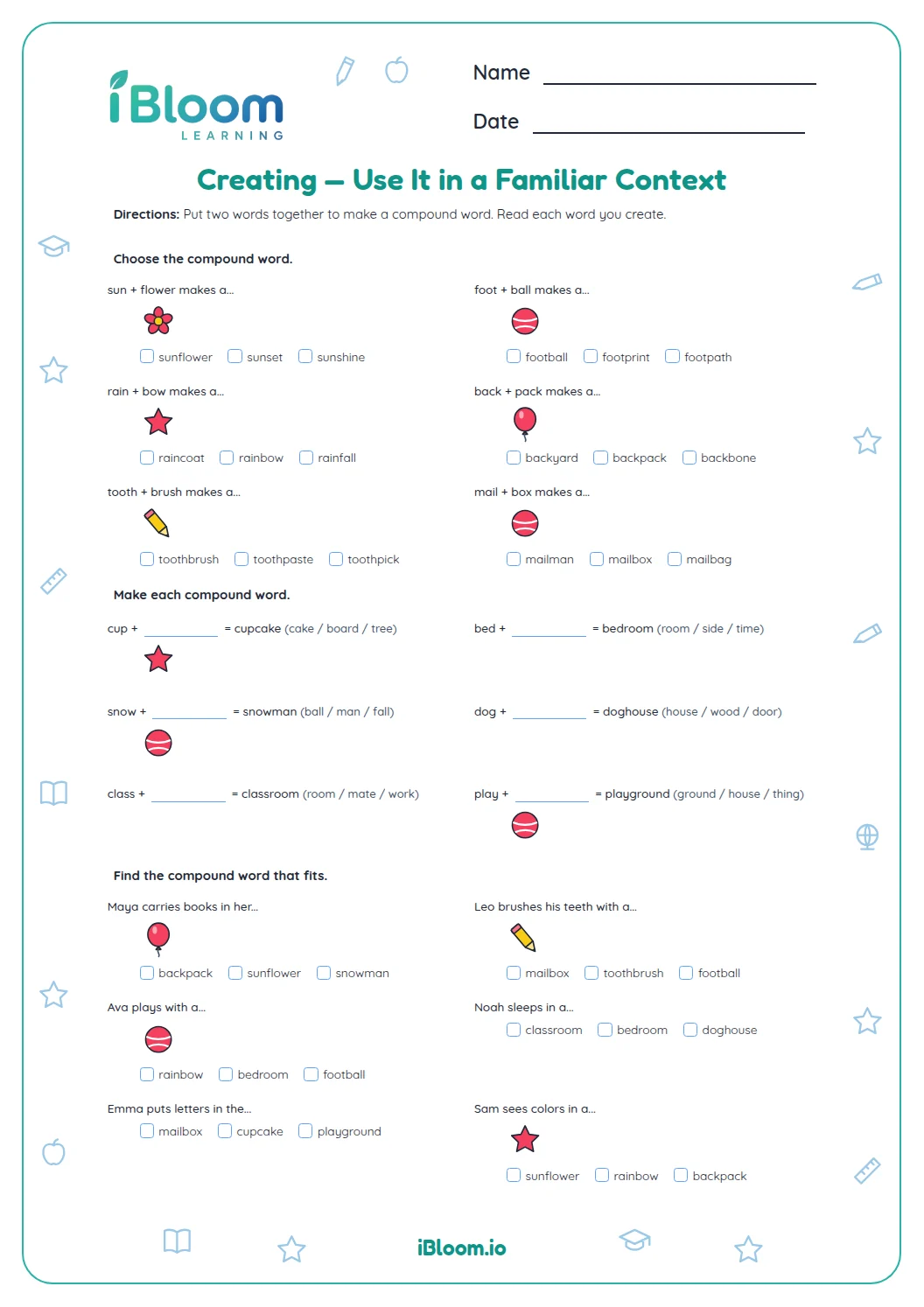
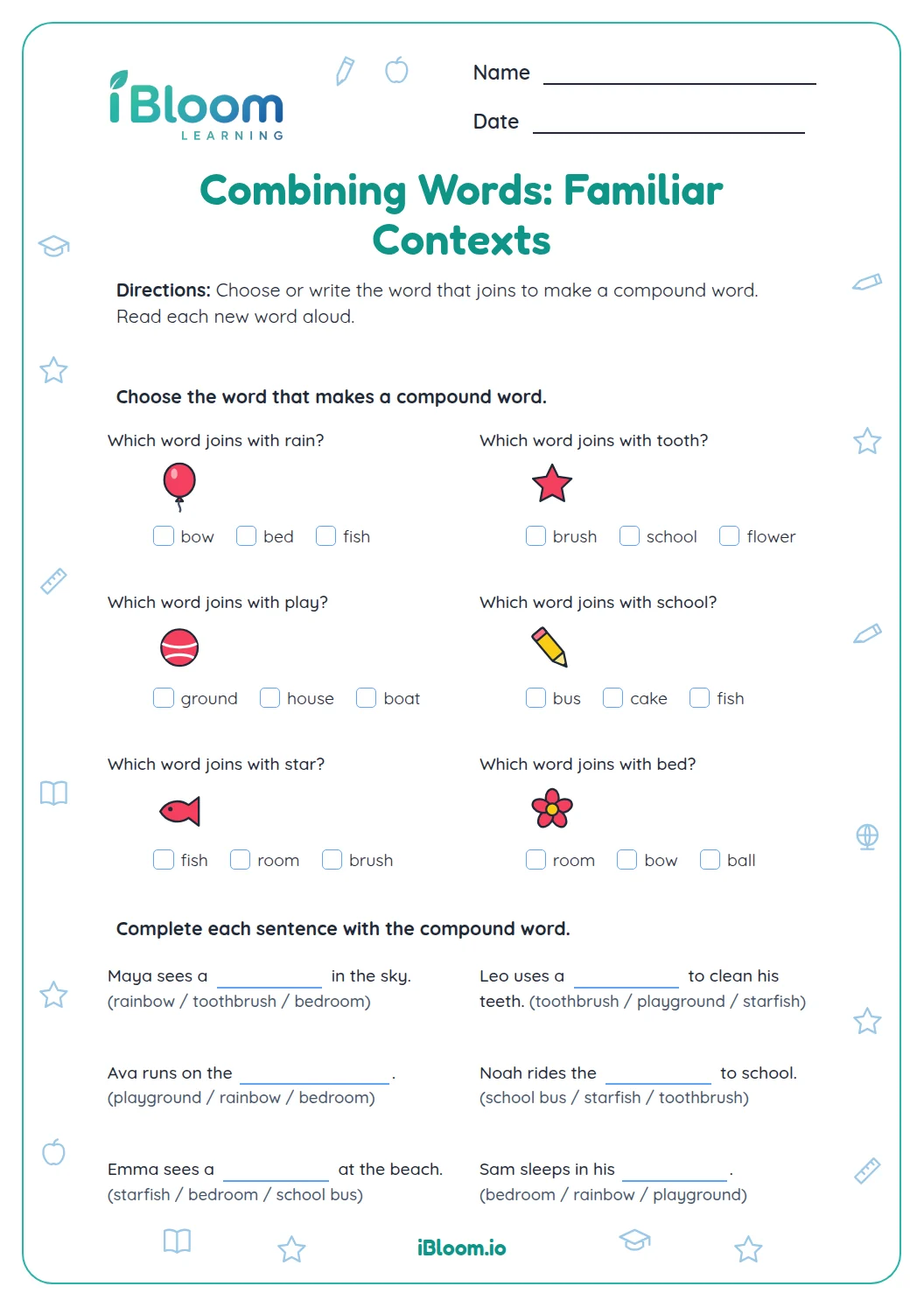
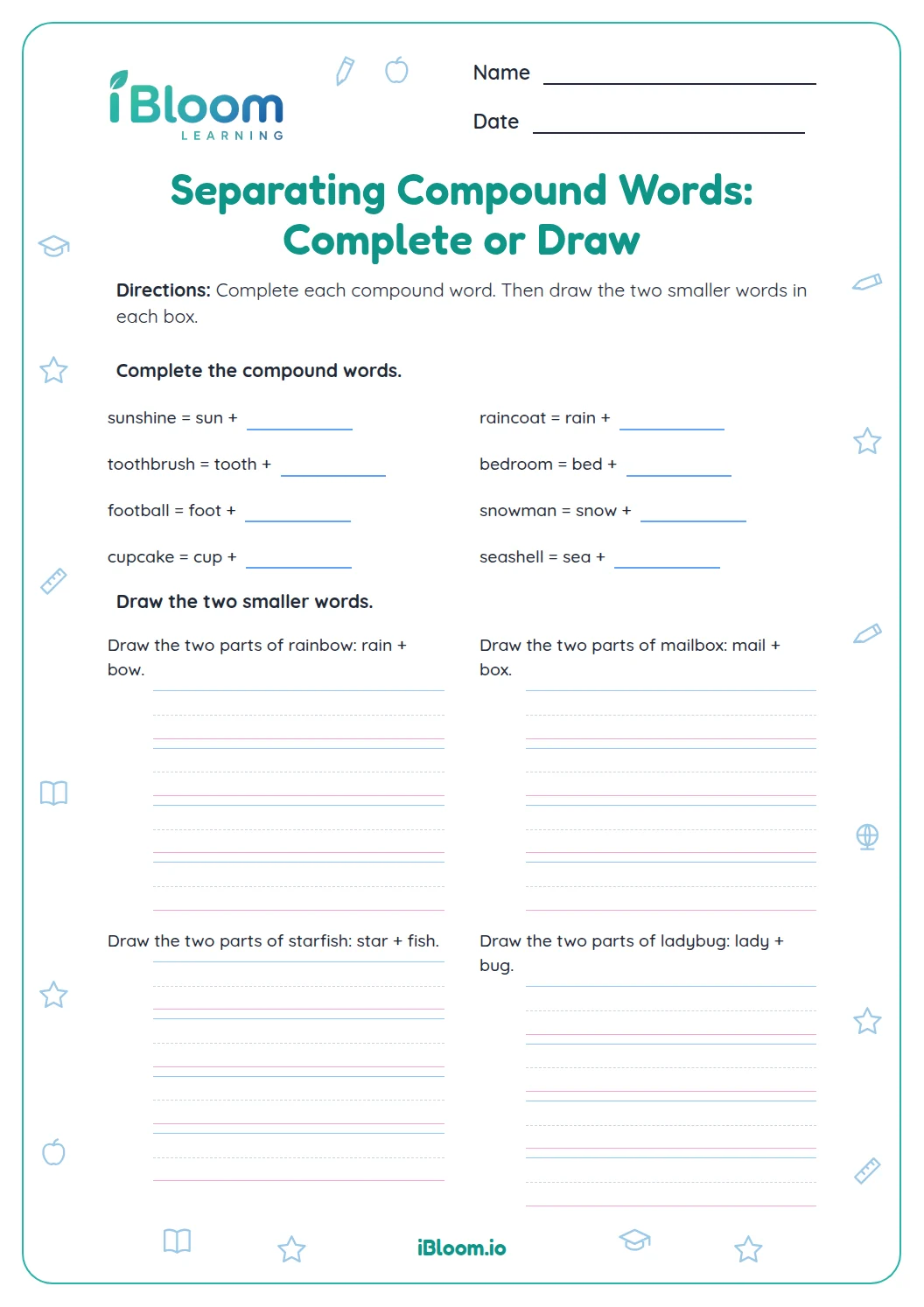
This printable compound words worksheet is for preschool and kindergarten learners. Children join pictured word parts, complete six different compound words, and draw six compounds of their own. The first part uses clear picture clues such as sun and flower; later parts move from supplying a word part to showing a compound in a drawing. An adult can read the prompts aloud for children who are not writing independently yet.
How do the picture clues build a word?
Part A pairs two pictures. Say the name of each picture, then look for the answer that joins both words. For example, sun and flower make sunflower.
- 1sun + flower
- 2Answer: sunflower
How can I complete a compound word?
In Part B, one smaller word is already given. Say the whole compound aloud and write the missing part in the blank.
- 1rain + ___ = rainbow
- 2Answer: bow
What should a compound-word drawing show?
Part C invites children to draw each named compound. Accept a recognizable picture that represents the whole word and gives clues to both parts.
- 1Draw a starfish.
- 2A star-shaped sea animal is one possible drawing.
How to use this worksheet
- 1Name each picture before choosing a word.
- 2Say the two smaller words together.
- 3Read the completed compound aloud.
- 4Write only the missing word part in each blank.
- 5For each drawing, include clues to both word parts.
Compound-word mix-ups to check
The mistake
Naming only one pictured part
The fix
Say both picture names, then combine them into one word.
The mistake
Writing the whole word in a missing-part blank
The fix
Read the part already printed and add only the word that completes it.
The mistake
Drawing just one part of the compound
The fix
Add details that help a reader recognize the complete compound word.
What to practice next
Make more practice
Questions parents and teachers ask
What is a compound word?
A compound word joins two smaller words to make one word, such as sun and flower forming sunflower. This worksheet asks children to spot pictured parts, supply a missing word part, and draw complete compound words. Saying each part aloud can help children hear how the joined word is built.
How many questions are on the worksheet?
There are 18 questions in three parts: six picture clues, six missing-part blanks, and six drawing prompts. The answer key lists each selected compound and missing part. For drawings, it gives a simple guide to the idea rather than one required way to draw it.
What are the picture clues for?
Each item in Part A shows two familiar pictures, such as a bird and a house. Children choose the compound word that joins both names. The pictures provide clues to the parts, while the answer choices help children focus on how the words combine.
Can a child complete it without writing independently?
Yes. An adult can read the directions and answer choices aloud, and the child can point to a picture clue or say a missing word part. In the drawing section, children can sketch freely; an adult may write a spoken explanation if needed.
What should a drawing include?
A drawing should make the named compound recognizable and give clues to both of its word parts. For starfish, for example, a star-shaped sea animal is one possible idea. The answer key accepts varied clear drawings, so children can show the word in their own way.