



About this worksheet
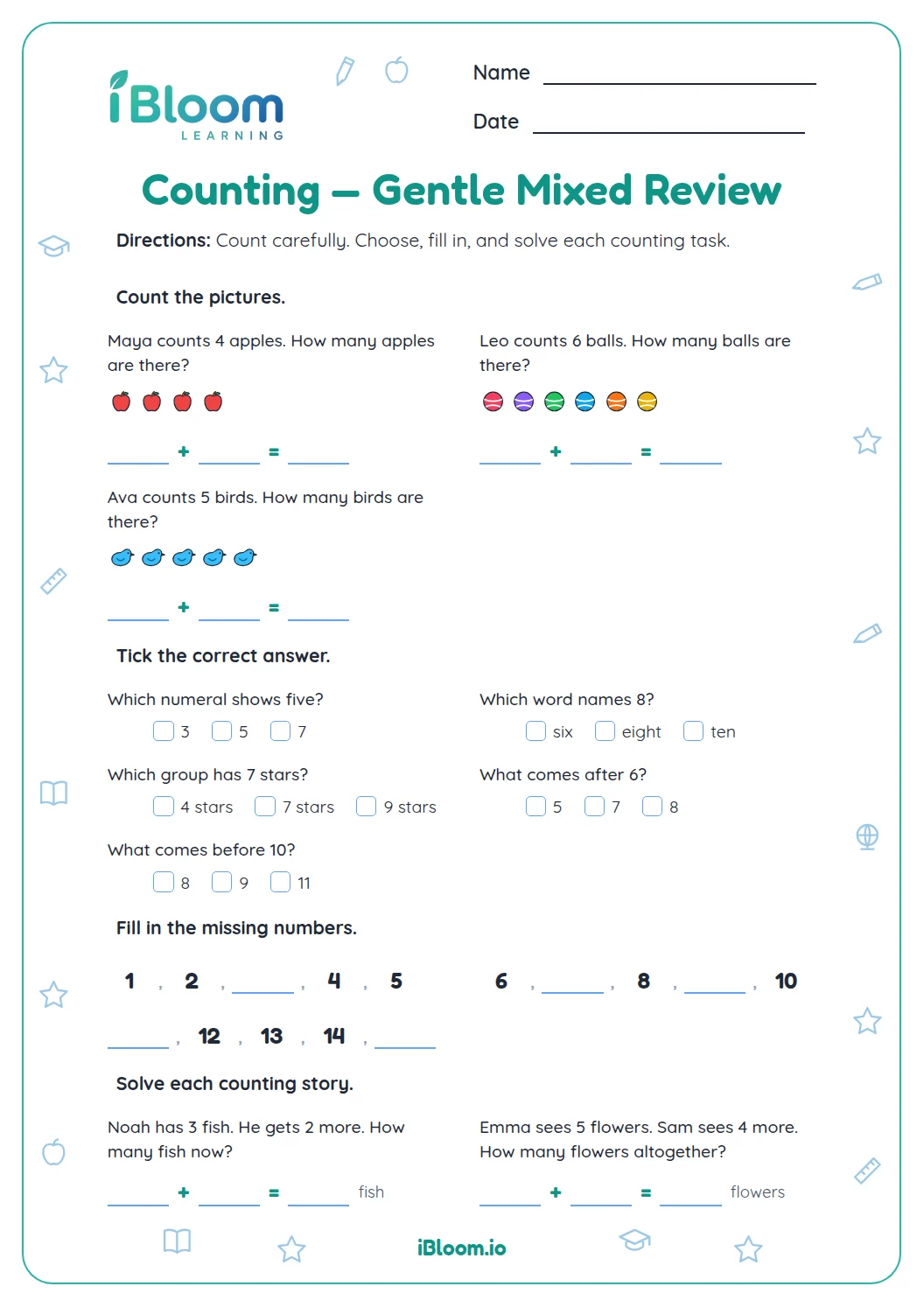
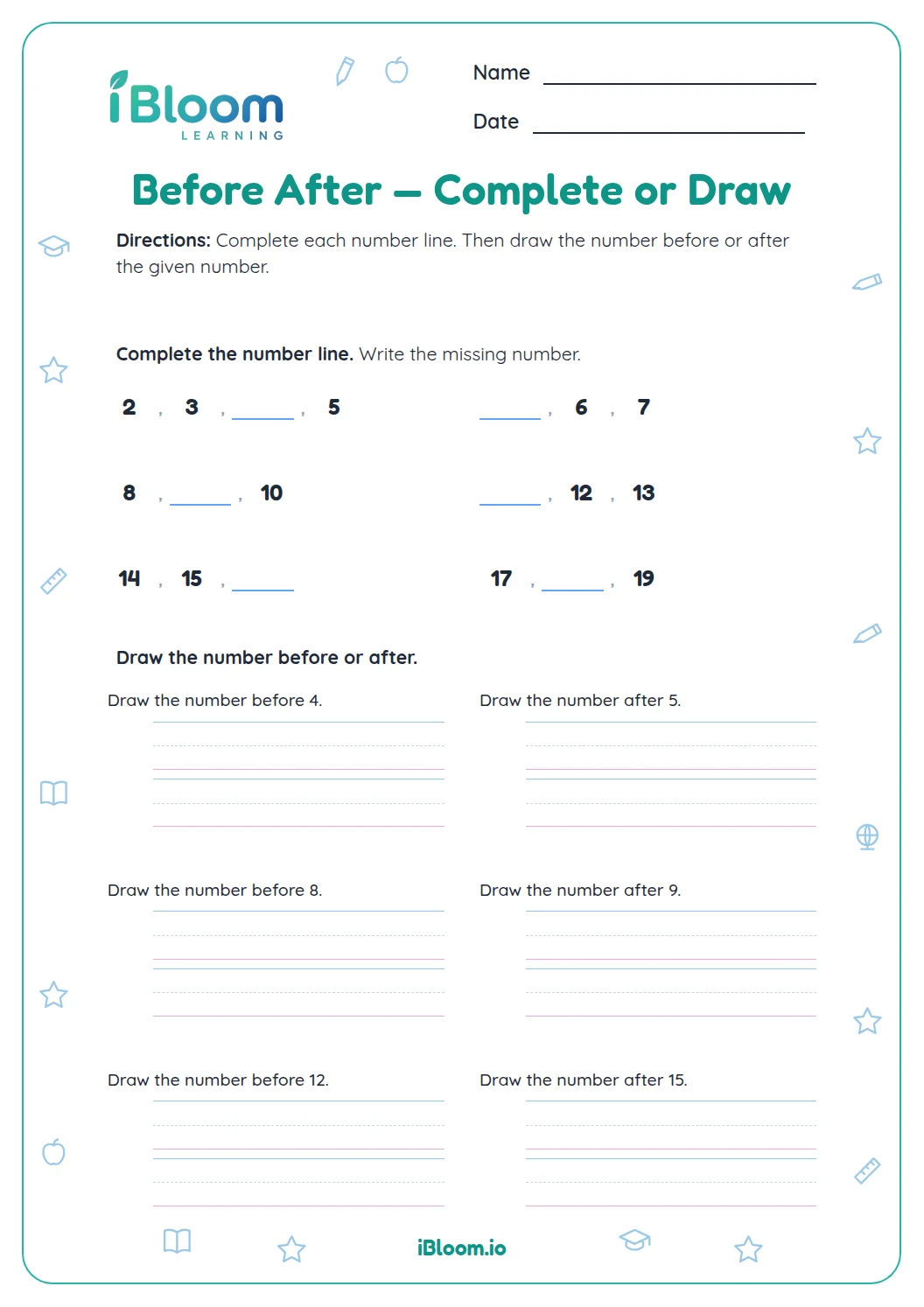
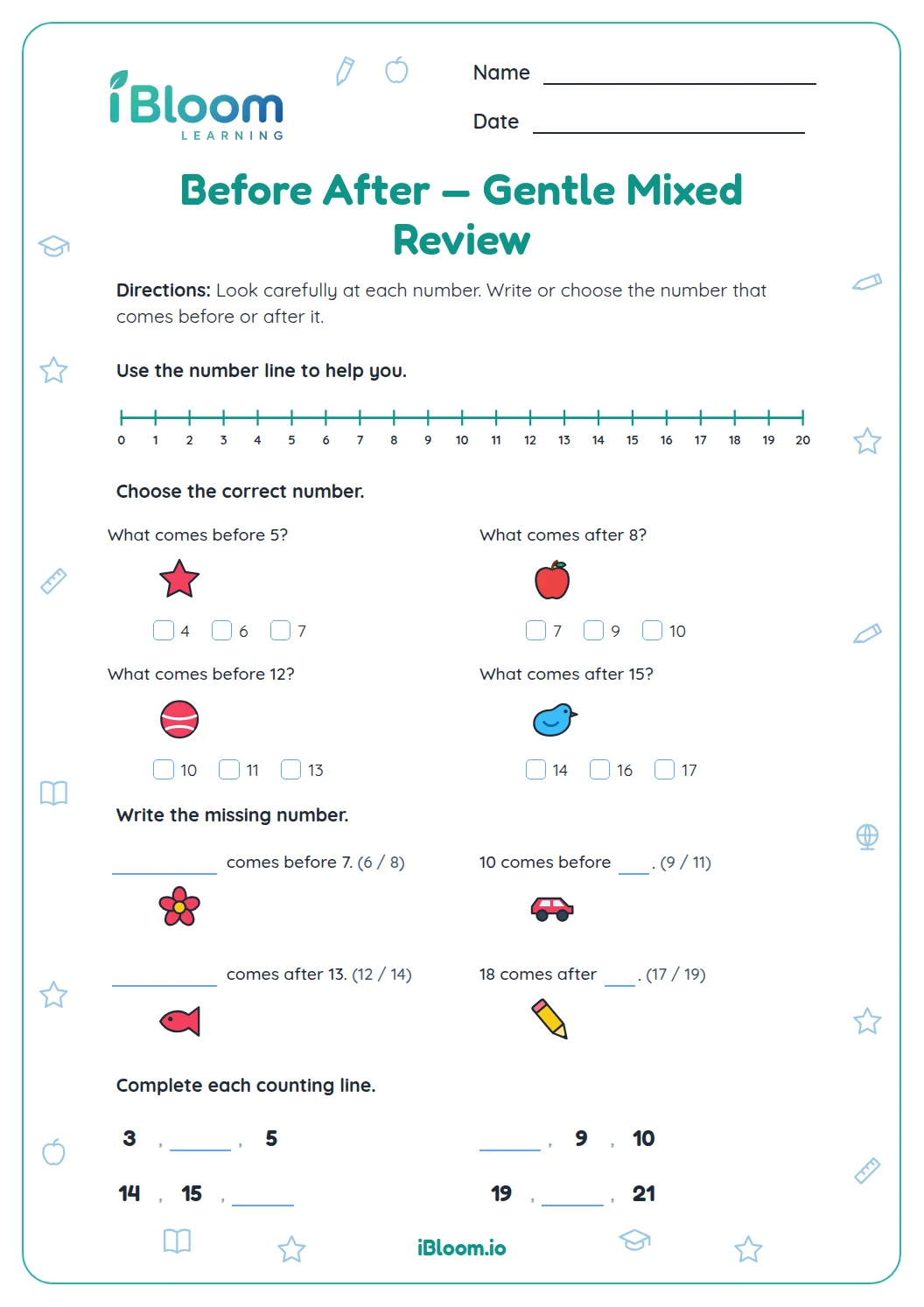
This printable counting page is for preschool and kindergarten learners practicing one-to-one counting and number order. Children count six pictured groups, complete four short sequences, draw a group of two, and answer three before-or-after questions. The answer key shows the expected counts and sequence numbers. The worksheet practices the kindergarten idea of connecting counted objects to their total.
Aligned to CCSS.MATH.CONTENT.K.CC.B.4
How can a child count each group?
Point to one object at a time and say one number for each object. After the last object, the number said tells how many are in the group. The first six questions use clear pictures such as apples, ducks, stars, fish, flowers, and balls.
- 1A group of 3 apples
- 2Point to each apple once and say 1, 2, 3. There are 3 apples.
How do the number patterns work?
Each short sequence counts forward by one. Say the numbers in order, then write the number that comes next. The final choices also ask which number comes just before or after a given number.
What does the drawing prompt practice?
The drawing prompt asks the child to make a group of two suns. Count the suns after drawing to check that the group has the requested amount.
Try the worksheet together
- 1Let the child point to each picture while counting aloud.
- 2Ask “How many altogether?” after the last number.
- 3For the number patterns, say the numbers in order and fill the next spot.
- 4Count each drawing together to check it.
Counting reminders
The mistake
Skipping an object or counting one object twice.
The fix
Move a finger from one picture to the next as each number is said.
The mistake
Starting a new count instead of giving the group total.
The fix
Ask for the last number said after every object has been counted.
Early math skills
This activity supports one-to-one counting and understanding that the final number names the amount.
Understand the relationship between numbers and quantities.
On this sheet: Children count small groups and tell how many objects are present.
Show the official wordingHide the official wording
Understand the relationship between numbers and quantities; connect counting to cardinality.
What to practice next
Make more practice
Further reading
Questions parents and teachers ask
Should children count aloud or silently?
Either approach works. Pointing to each picture while saying the number can help a learner keep track of which objects have already been counted. Invite the child to count again if the group total is uncertain. One-to-one pointing can make the count easier to follow for a young learner.
What does the last number tell us?
When each object is counted once, the final number word tells how many objects are in the group. Children can answer “how many?” by saying that last number rather than starting over. This idea is called cardinality and connects number words with quantities.
What should a child draw for the drawing prompts?
Any clear objects are fine. The important part is that the group contains the requested number. Count each mark or object aloud together to check the drawing. Children may draw dots, shapes, or other simple marks to make the group.
What counting skills does this page practice?
Children count familiar pictured objects, continue short number sequences, and make their own small groups. The activities support one-to-one counting and connecting the last number word to the amount in the group. Repeating a familiar count-and-check routine can help children build confidence.
How many picture groups does the child count?
There are six picture groups, each with between three and eight objects. The child points to each picture once and writes the total. The remaining questions practice short count-forward sequences, before-and-after numbers, and drawing a group of two.
Does the child need to write number words?
No. The counting and sequence answers are numerals, and the drawing prompt asks for two suns. An adult can invite the child to say the number aloud while pointing to each object, then compare the written numeral with the answer key.