







About this worksheet
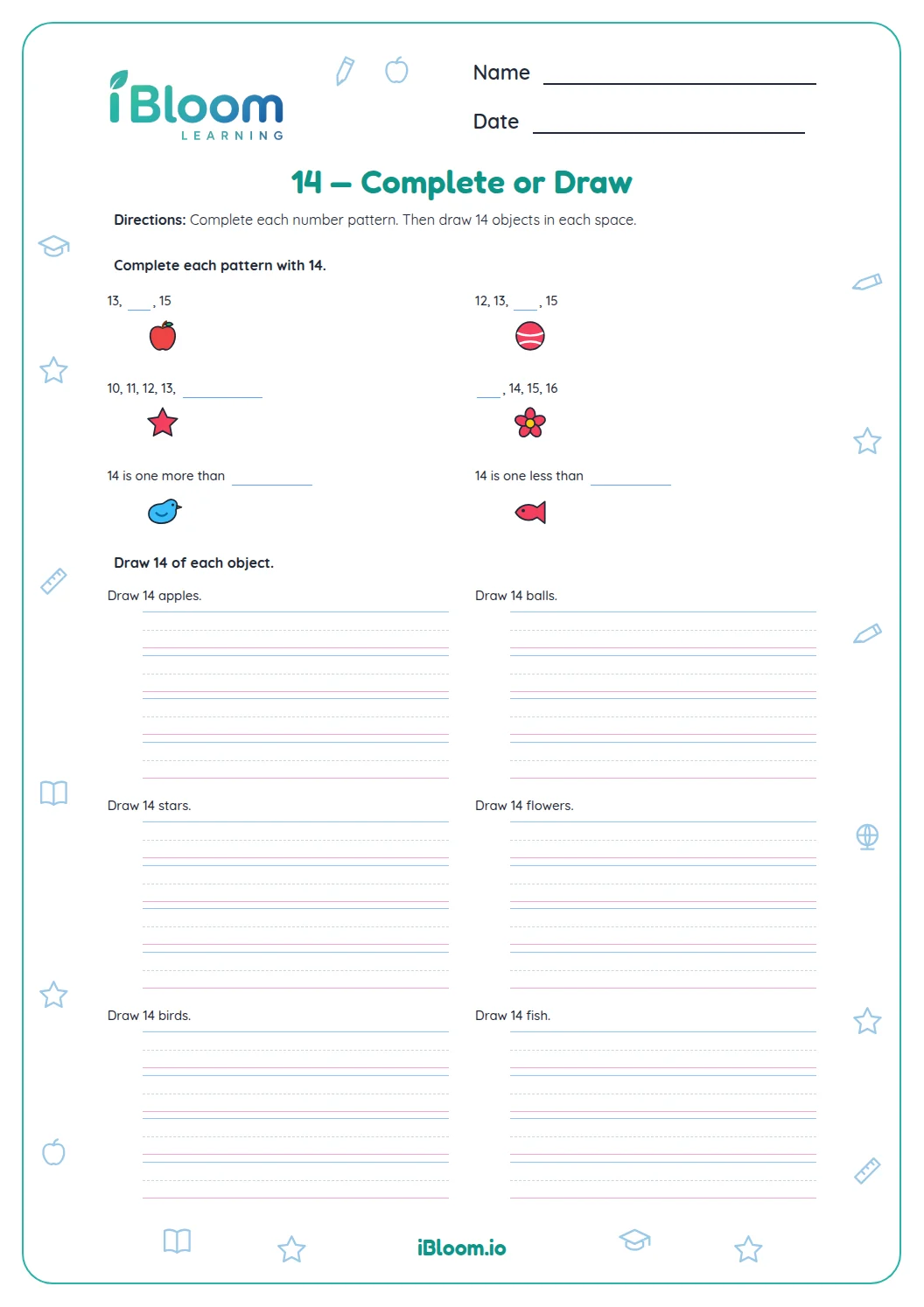
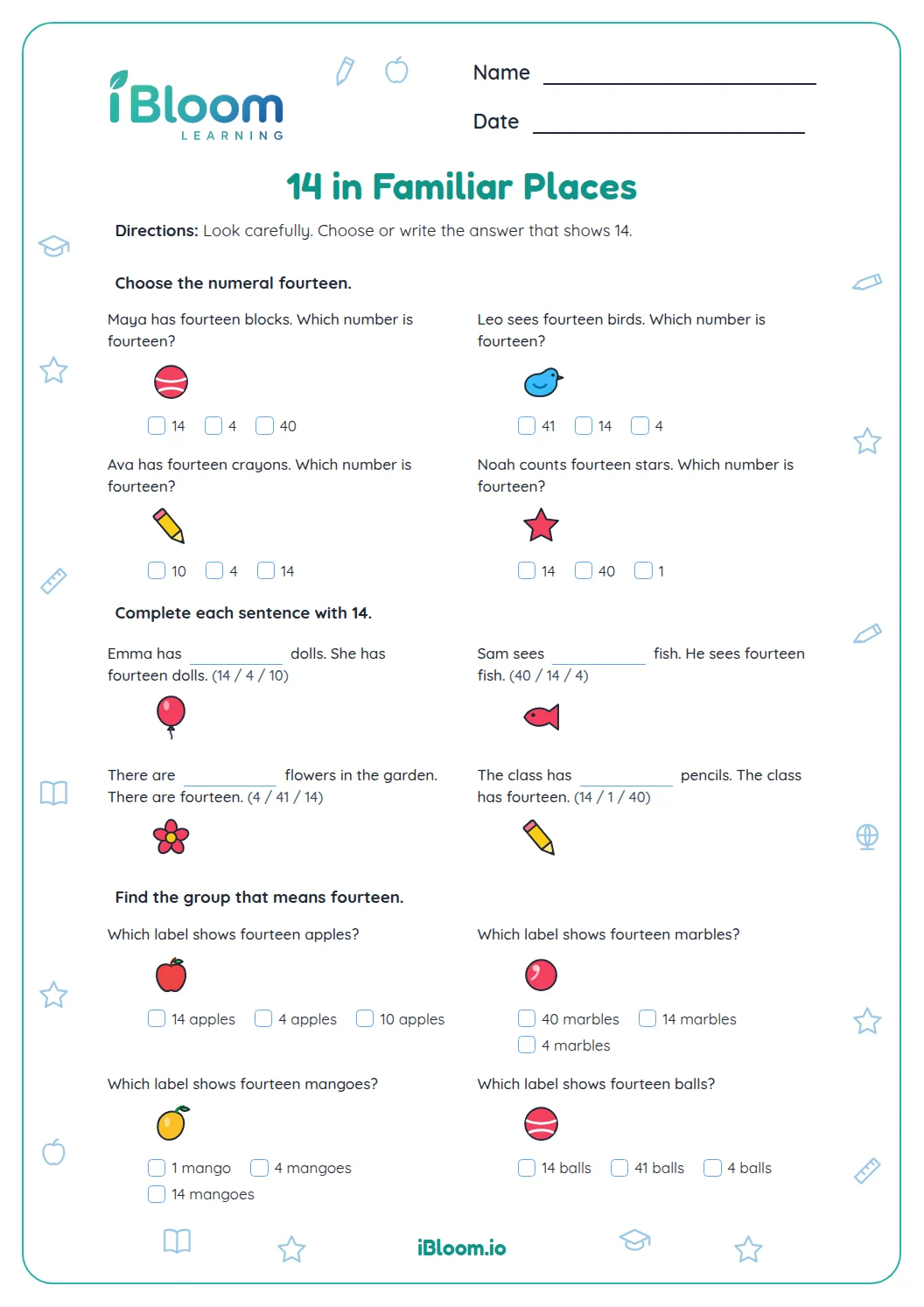
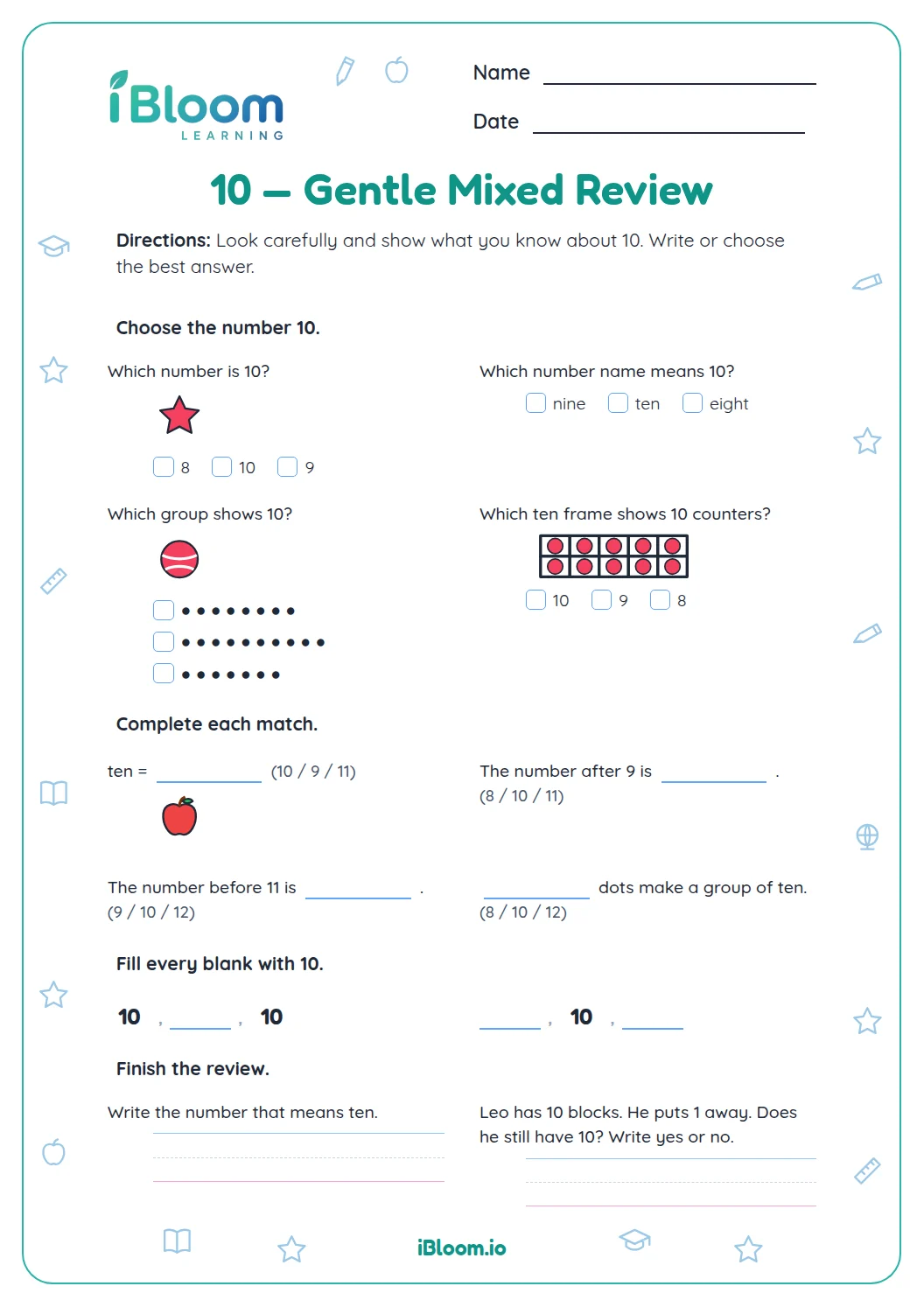
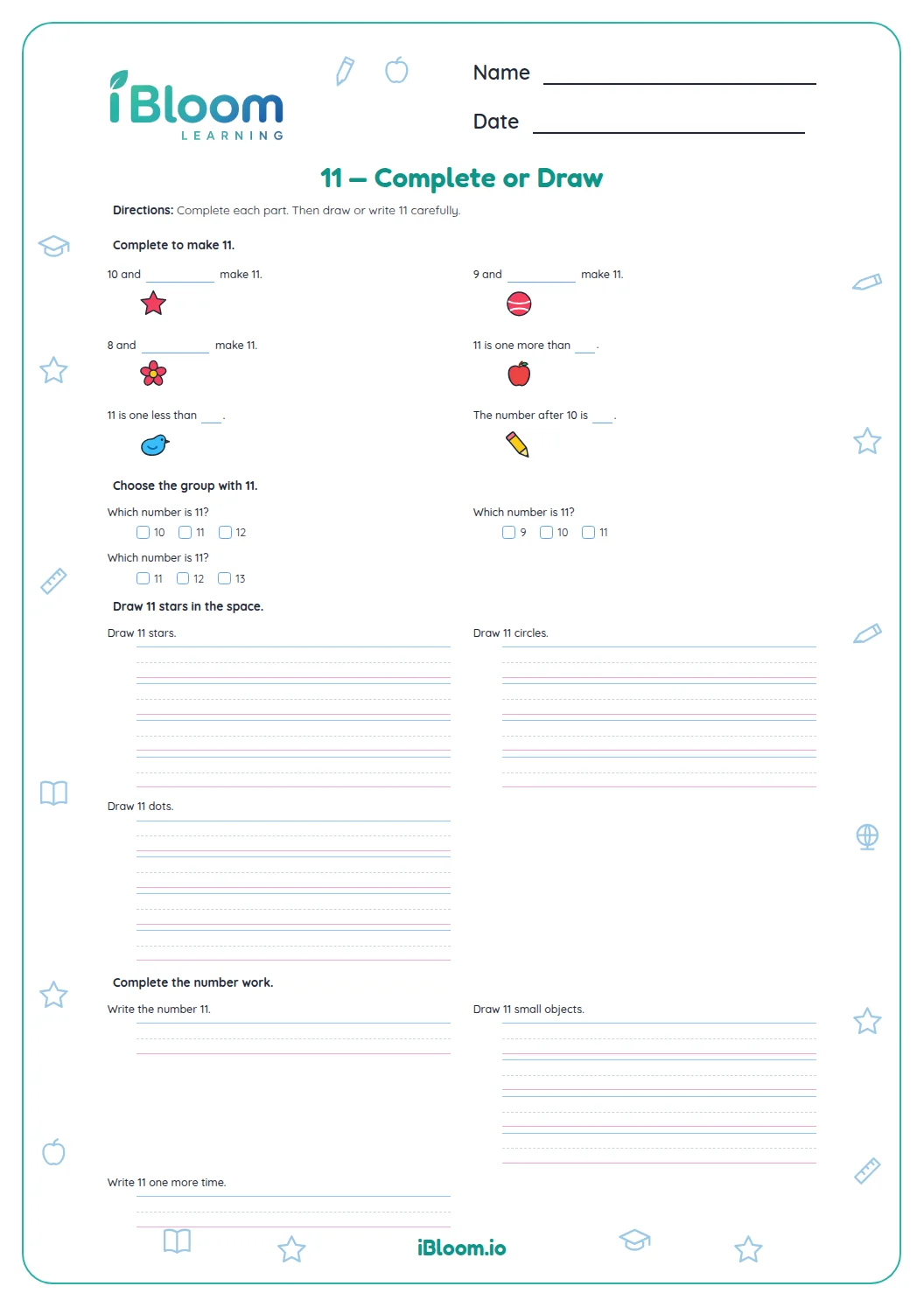
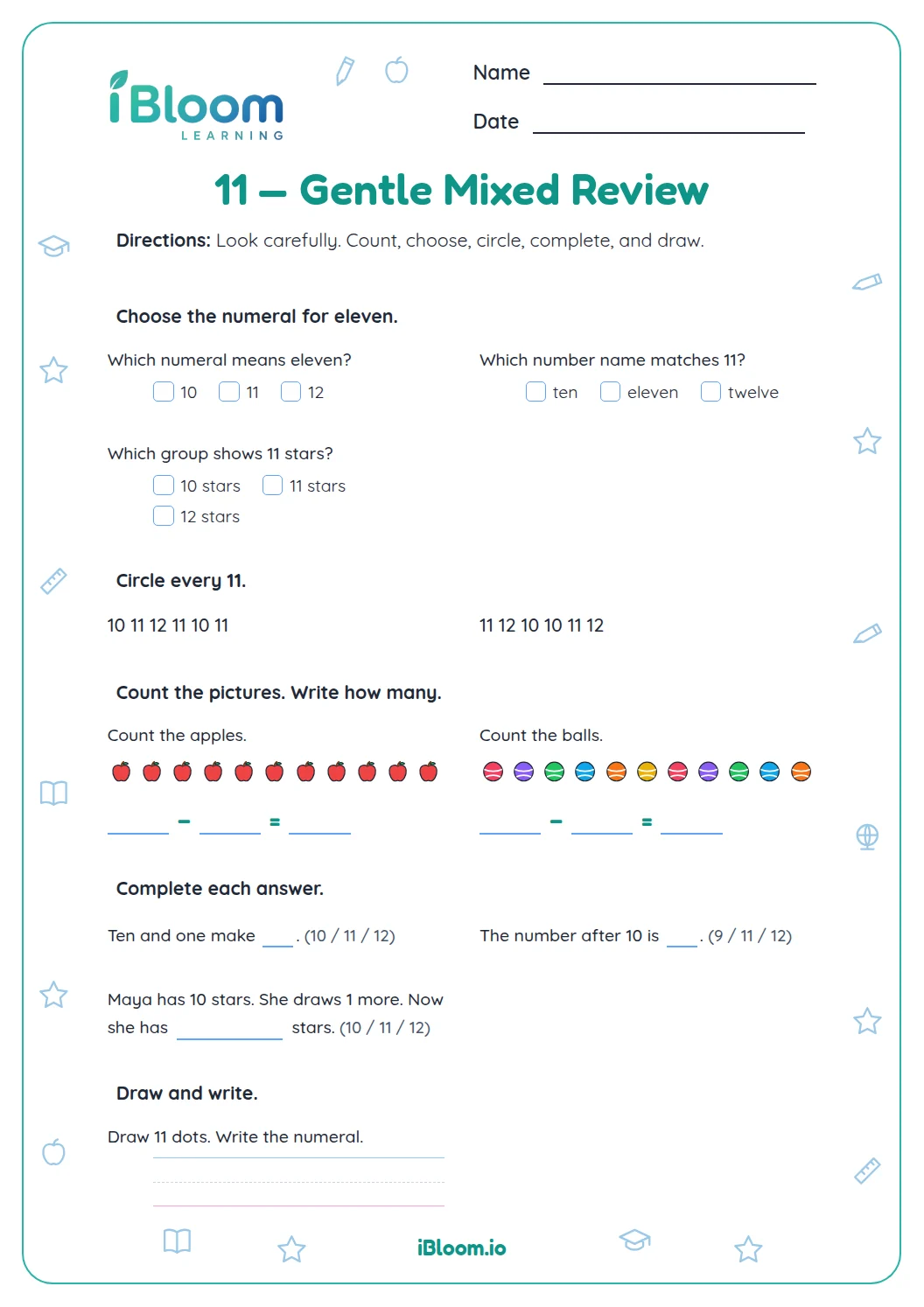
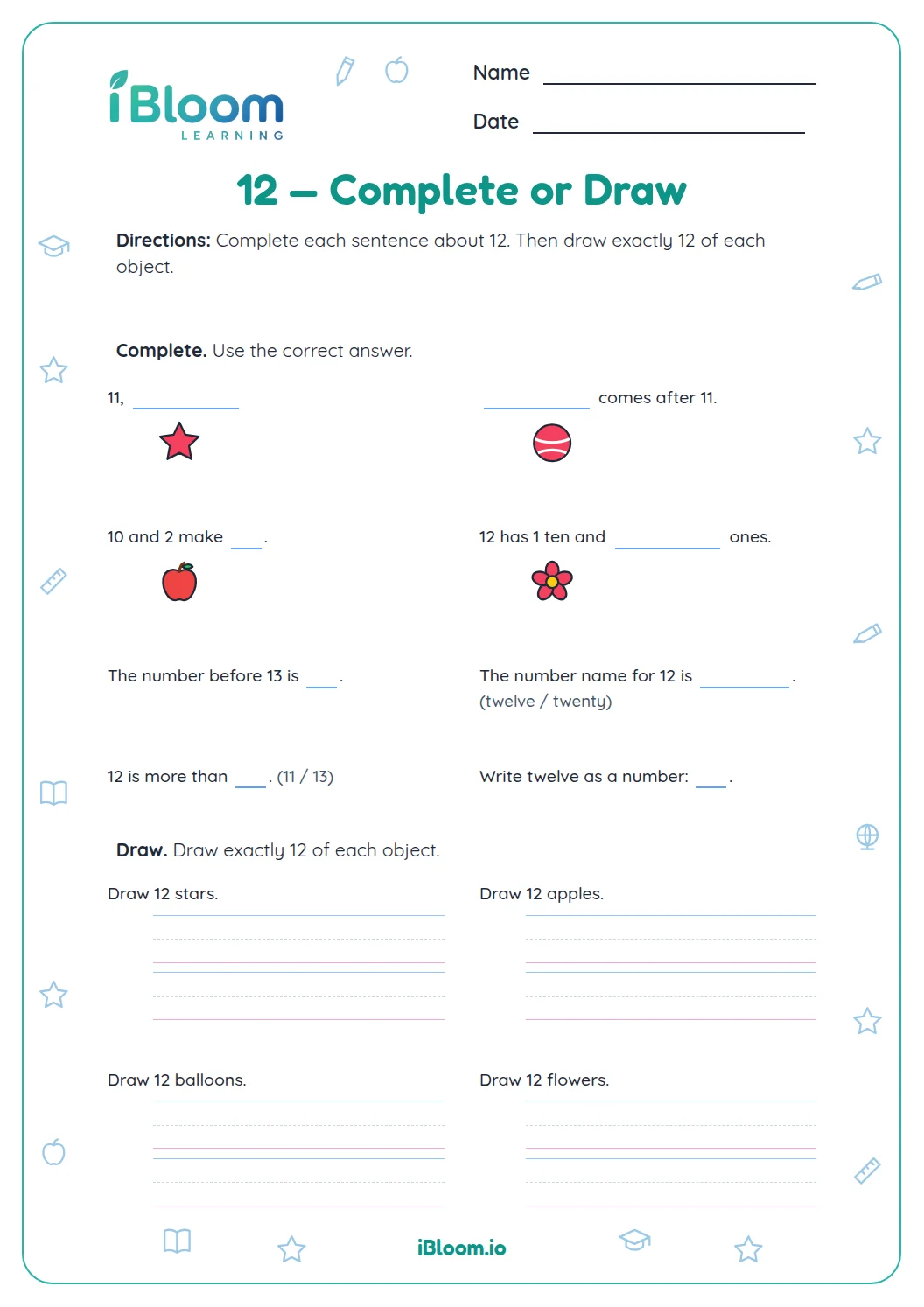
This free printable Preschool–Kindergarten worksheet builds recognition of the number 14 in several forms. Part A identifies the numeral and word, finds one more and one less, and counts a set and tally marks. Part B places 14 in short number sequences and counts another pictured group. The two-page worksheet has 16 questions, with a separate two-page answer key.
Aligned to K.CC.B.5
What kinds of number 14 practice are included?
Part A connects the numeral 14 and the word fourteen with quantities: children count 14 tally marks and 14 ducklings, and see that 14 is 10 and 4 more. Part B revisits the number in a sequence and in another set of 14 stars.
- 16 questions in 2 parts
- Numeral, number word, tens-and-ones, and neighbor numbers
- Tally and picture-count questions
How can a child count the pictured group?
Touch or point to one object at a time while counting aloud. Keep track of the last number word; it tells how many objects are in the group.
- 1Count the 14 ducklings one at a time.
- 2The last number said is 14, so choose 14.
How does 14 fit between nearby numbers?
Count forward from 12: 12, 13, 14, 15, 16. The number before 14 is 13, and the number after it is 15. The worksheet asks children to use these relationships in both parts.
How can adults help with one-to-one counting?
For a picture group or tally question, have the child touch each mark or object once and say one number word. If the count changes when counting again, move each counted object aside or track it with a finger.
How to use this worksheet
- 1Read the instruction line and look over the first part together.
- 2Complete the first question as a model, naming the clue or step used.
- 3Finish the rest of that part independently.
- 4Move to the next part and use the same strategy on the new format.
- 5Check answers with the key and revisit any missed item.
Number 14 mix-ups and quick fixes
The mistake
Reading 14 as 41 or 4.
The fix
Say “fourteen” and check that the digits are 1 ten and 4 ones.
The mistake
Skipping or counting an object twice in a pictured group.
The fix
Point to each object once while saying the next number.
The mistake
Putting 14 after 14 instead of identifying its neighbor.
The fix
Count forward or backward one step: 13, 14, 15.
Common Core alignment
This worksheet practices the listed skill through short, explicit examples.
Count a set of 14 objects and connect the count to the numeral 14.
On this sheet: Children count pictured groups of 14 and tally marks, then connect those sets to the numeral.
Show the official wordingHide the official wording
Count to answer “how many?” questions about as many as 20 things arranged in a line, a rectangular array, or a circle, or as many as 10 things in a scattered configuration; given a number from 1-20, count out that many objects.
What to practice next
Make more practice
Further reading
Questions parents and teachers ask
How many questions are on the number 14 worksheet?
There are 16 questions in two parts, with a separate two-page answer key. Children recognize the numeral and word fourteen, count groups and tally marks, identify the numbers before and after 14, and place 14 in short sequences. Use the numbers printed on the page as well as the pictured groups; not every question is a counting task.
What does a child count on the sheet?
The sheet includes 14 tally marks, 14 ducklings, and 14 stars. Children count each mark or picture once, then choose the matching number. Pointing to one item at a time can help keep track of the count. The worksheet includes both the written number name and a numeral choice, with objects and tally marks to connect symbols to a quantity.
Does this worksheet include number words?
Yes. One multiple-choice question asks which word names 14, with “fourteen” among the choices. Children also connect 14 to a group of ten and four more, and practice the nearby numbers 13 and 15. Children count, identify the number before and after 14, and fill the missing middle number in a short sequence.
How should we use the two parts?
Start with Part A to identify 14, count objects, and connect the number to ten and four ones. Part B returns to 14 in a number sequence and another pictured count. Use the key after the child has attempted each part.
What should I do if the count is off by one?
Have the child point to each picture or tally once while saying one number word. Then ask which number was said last. For number neighbors, count forward from 13 or backward from 15 to check the answer. If a child misses one, recount one-to-one or count from a known neighbor number, then compare with the key.