







About this worksheet
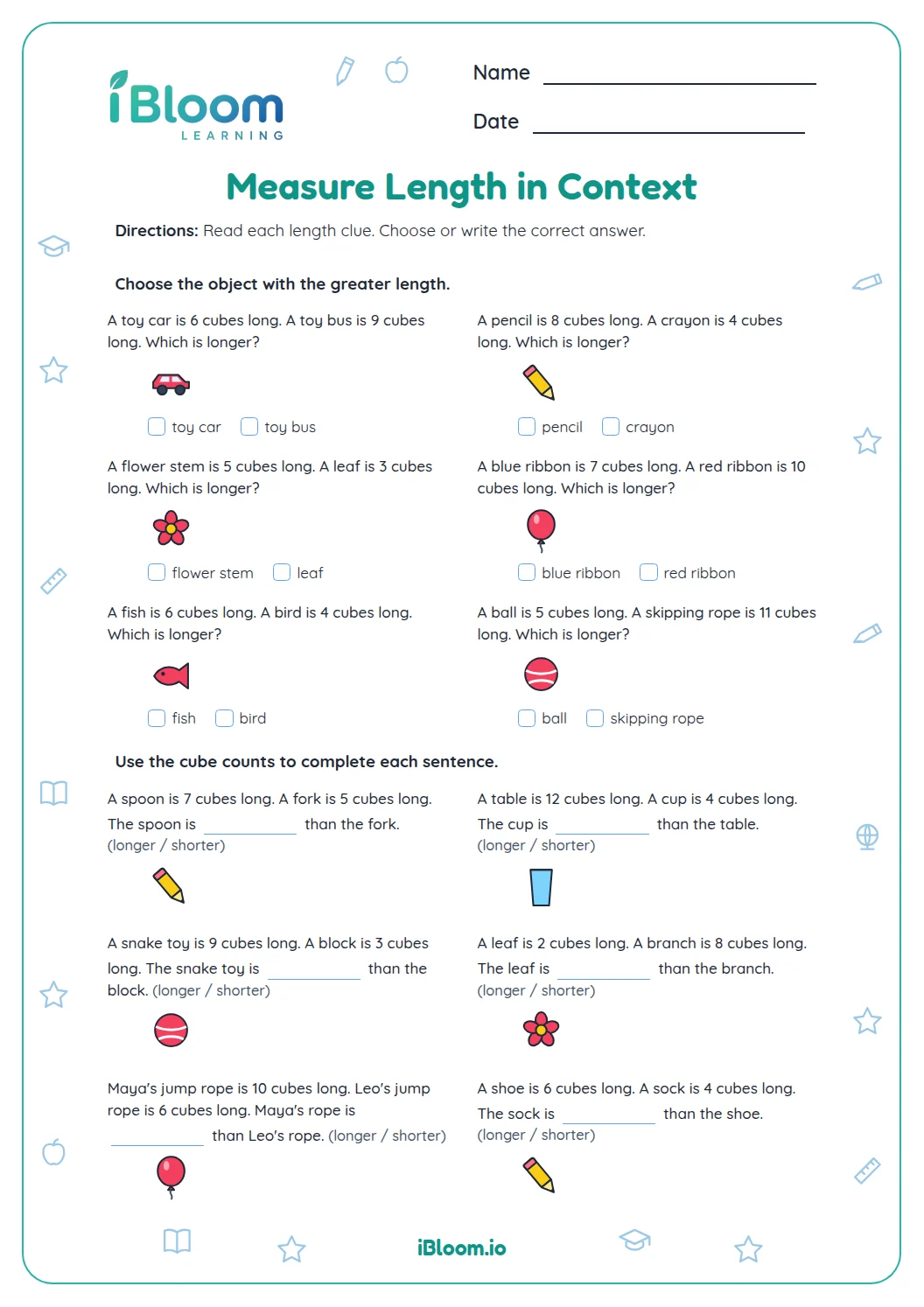
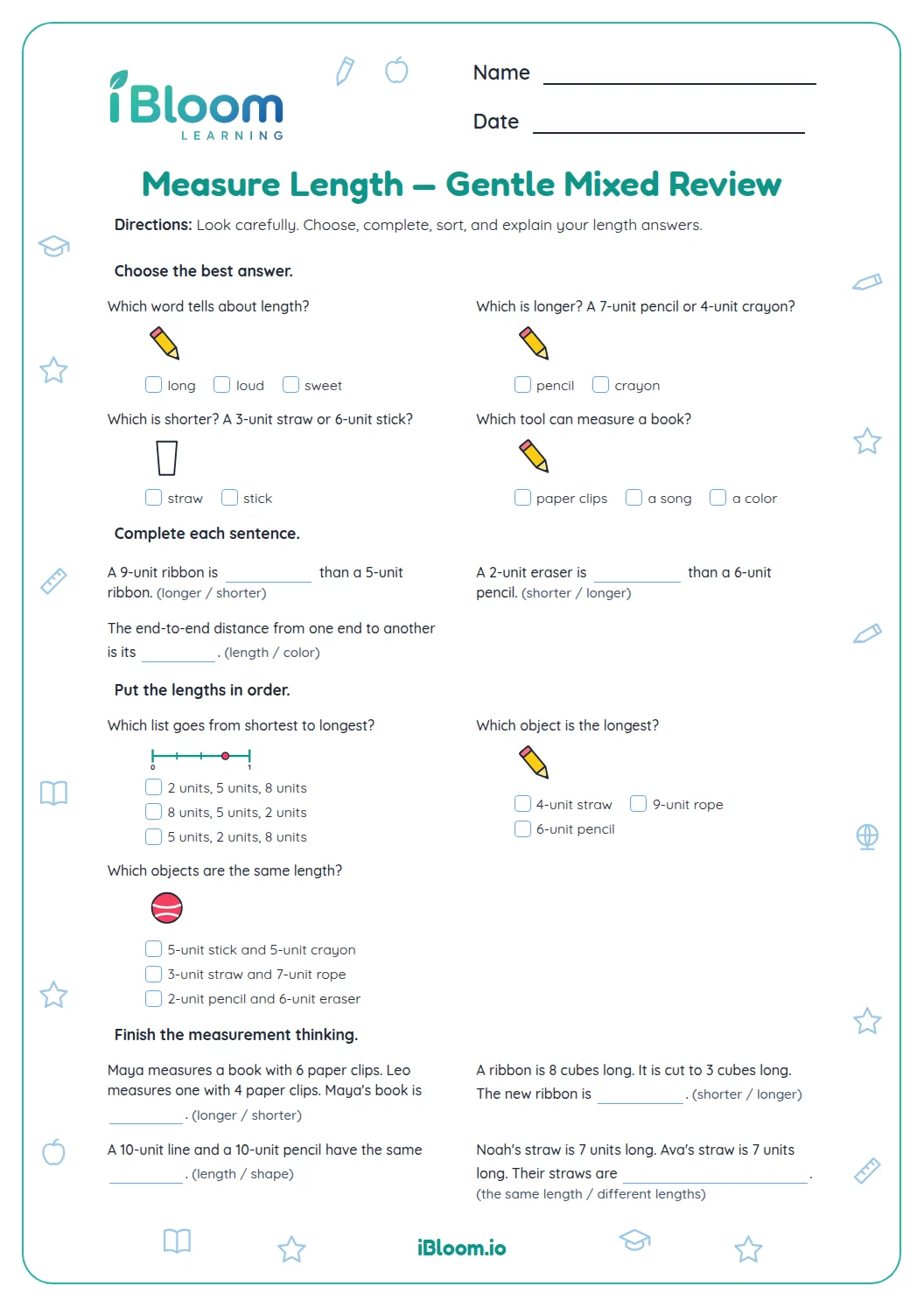
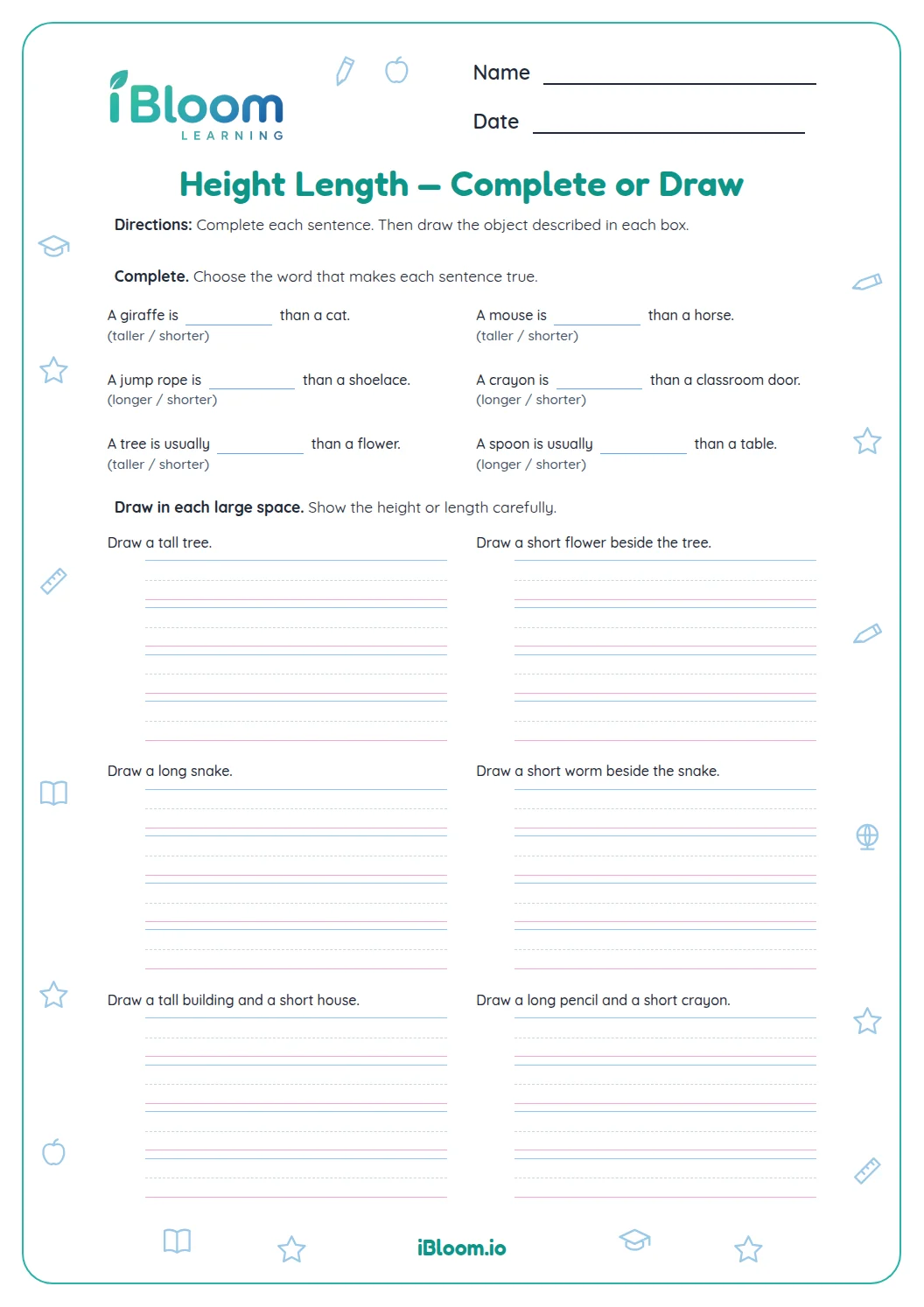
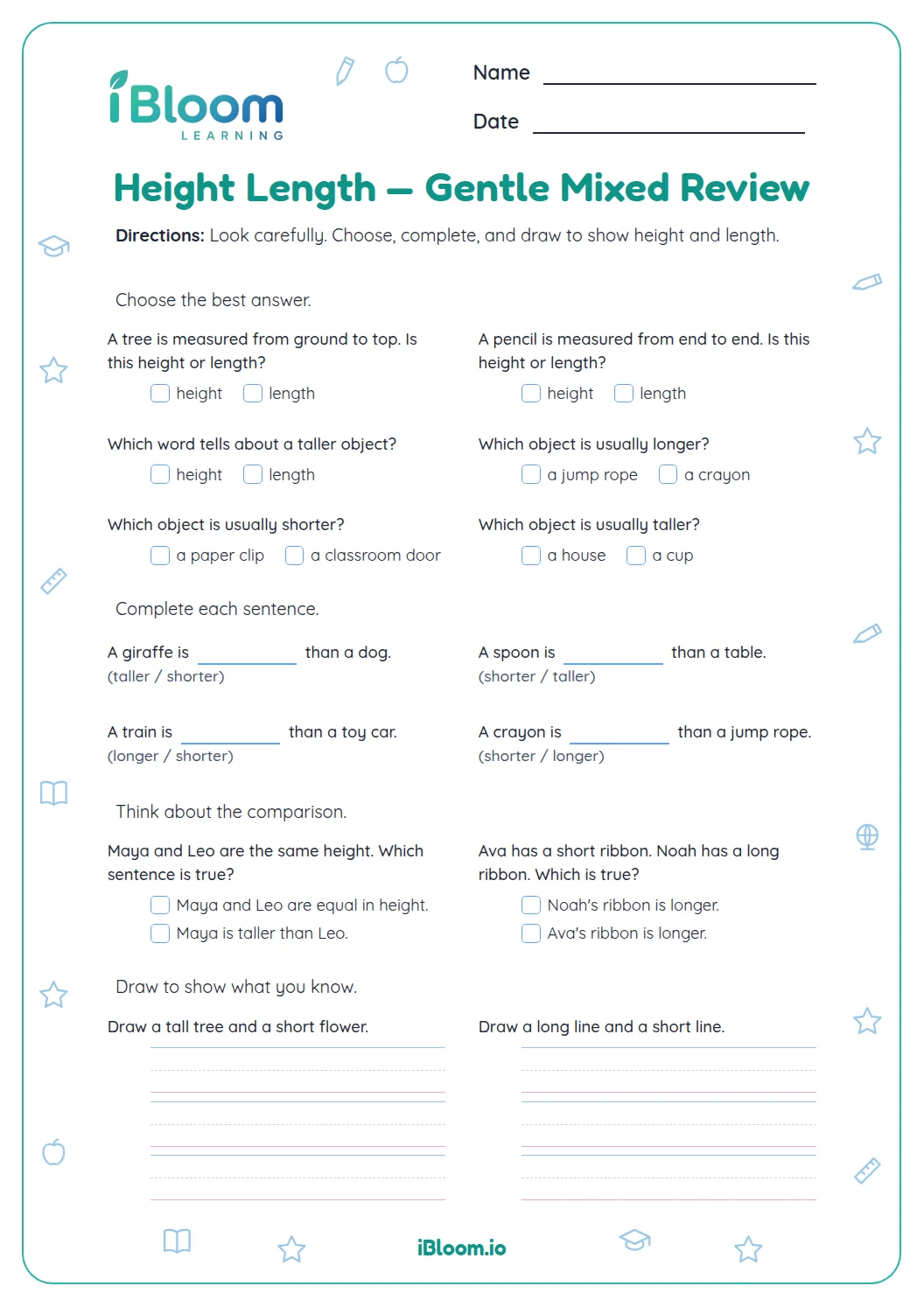
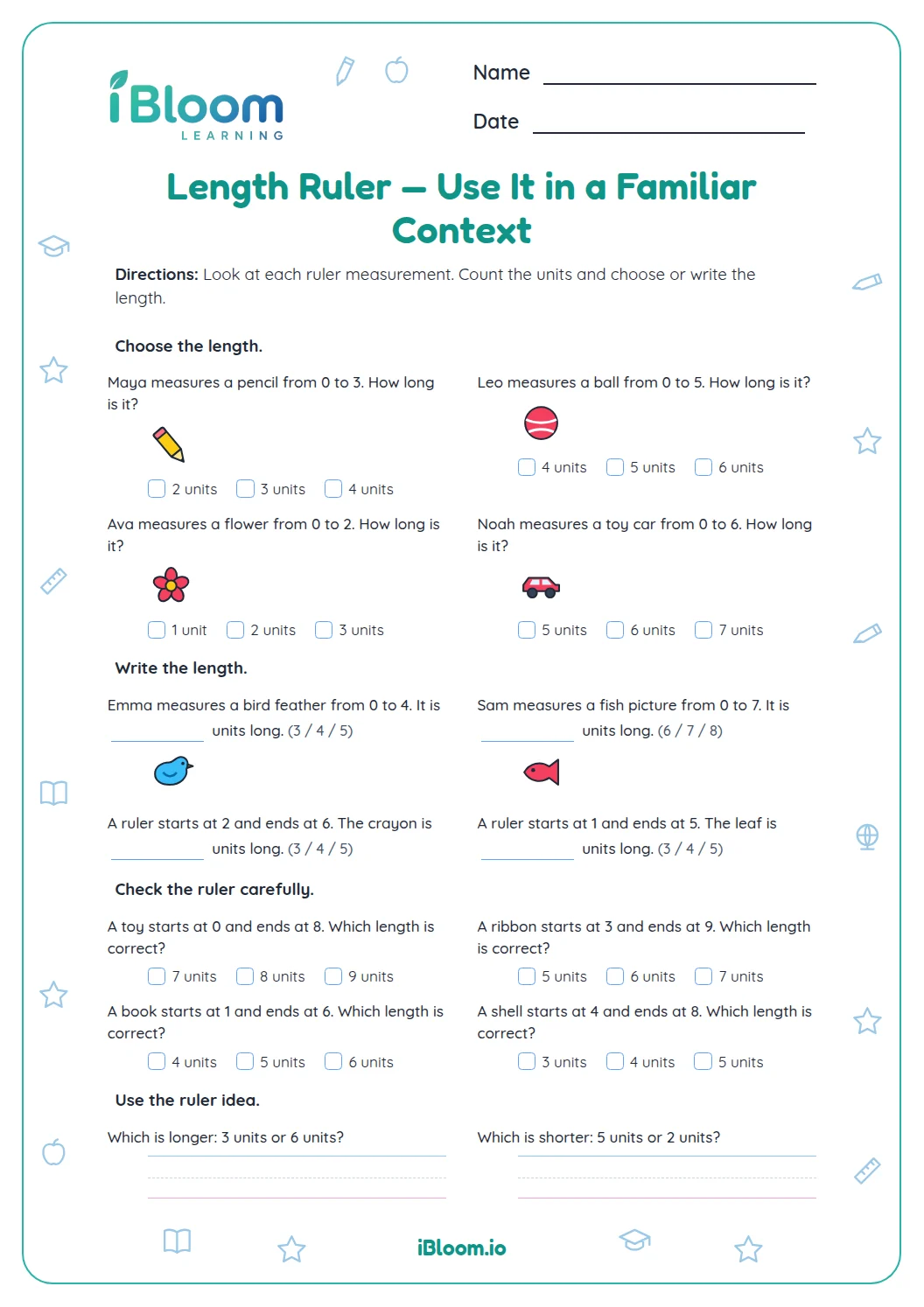
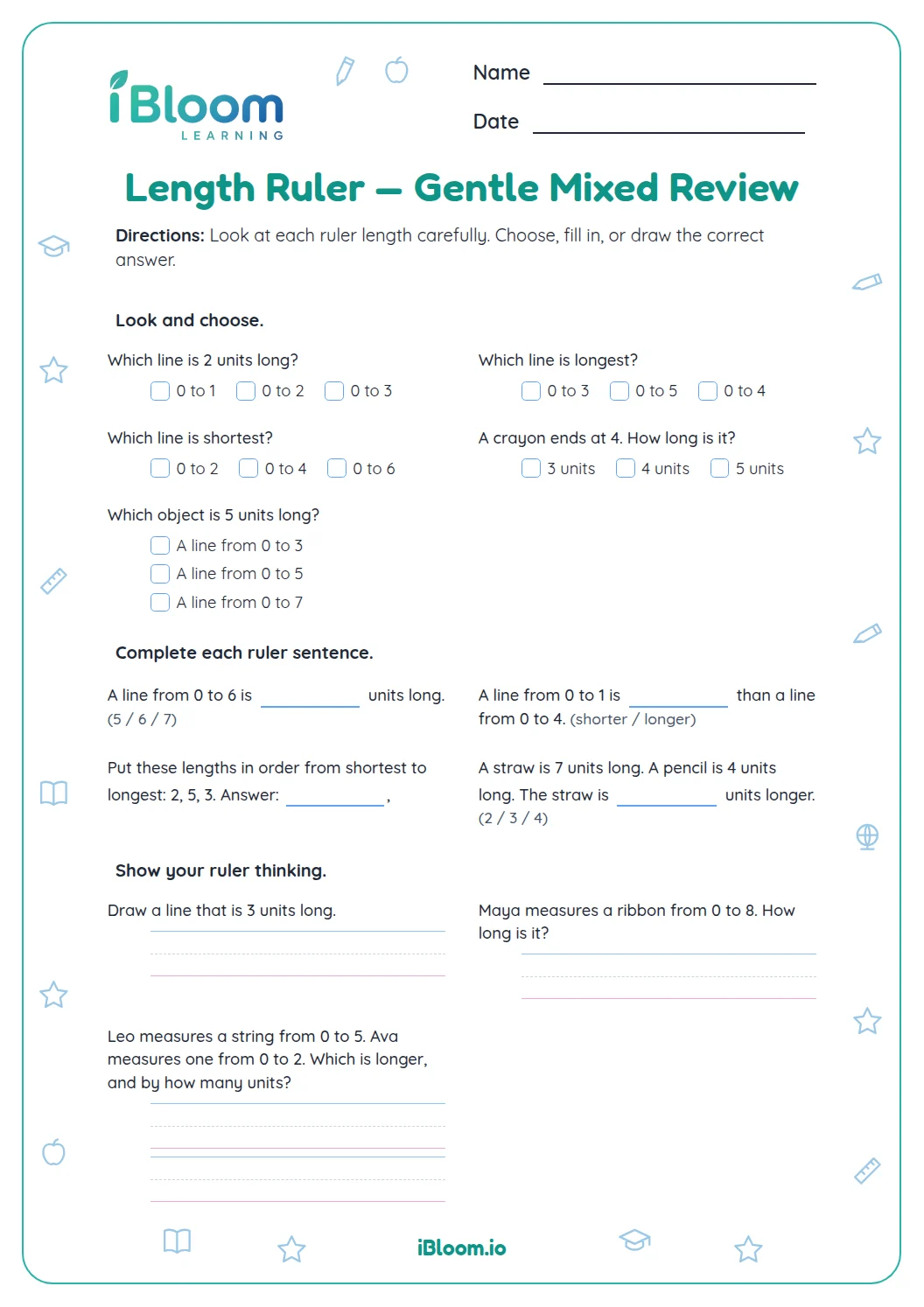
This printable length worksheet is for preschool and kindergarten learners beginning to compare measurable attributes. Children read centimeter ruler drawings from zero, identify object lengths, and compare two stated lengths. Each ruler question has its own bar. It practices Common Core K.MD.A.1. A separate answer key gives the measurements and comparisons.
Aligned to K.MD.A.1
How can children use the clues?
Read centimeter ruler pictures and compare short lengths with a separate answer key.
This printable length worksheet is for preschool and kindergarten learners beginning to compare measurable attributes. Children read centimeter ruler drawings from zero, identify object lengths, and compare two
- 1Find zero at the left end of the ruler.
- 2Follow the object to its endpoint.
- 3It reaches 3 cm.
How can families check the work?
Read the full question, choose or write one response, then check the separate answer key. Ask the child to point to the clue that supports the answer.
How to use this worksheet
- 1Find zero at the start of each ruler.
- 2Follow the object to its endpoint.
- 3Read the centimeter number.
- 4For a comparison, choose the greater length.
Common mistakes and quick fixes
The mistake
Starting at the ruler’s first numbered mark instead of zero.
The fix
Line the object up with zero before reading its endpoint.
The mistake
Thinking the larger number is shorter.
The fix
Compare how far each length reaches from the same start.
The mistake
Measuring an object at an angle.
The fix
Keep the object straight alongside the ruler marks.
Common Core alignment
The activities compare measurable attributes using centimeter models.
Describe and compare measurable attributes such as length.
On this sheet: Children read and compare lengths shown by ruler drawings.
Show the official wordingHide the official wording
Describe measurable attributes of objects, such as length or weight. Describe several measurable attributes of a single object.
What to practice next
Make more practice
Further reading
Questions parents and teachers ask
Where should an object start on a ruler?
Begin at zero, then look at the mark where the object ends. The worksheet shows centimeter ruler drawings with each object aligned at zero. Children can point along the bar and count the marks before selecting a length from the answer choices.
What does longer mean?
An object is longer when it reaches farther from the same starting point. In a comparison, use the same unit for both measurements, then choose the greater number of centimeters. The separate answer key gives a response for each question.
Why are centimeter rulers pictured?
The ruler drawings make the unit and endpoint visible. Children can see where an object ends and connect that point to a centimeter number. The worksheet uses the drawings as measurement models, with a separate key for checking the readings.
How many questions are included?
There are 14 questions across ruler readings and length comparisons. Each reading item has a pictured bar; the remaining items ask which stated centimeter length is longer. The separate answer key lists each measurement and comparison. Children can explain which endpoint supports each choice.
What if my child is learning ruler numbers?
Point to zero first and move a finger along the centimeter marks toward the endpoint. Count aloud together, then ask the child to choose the matching length. Children may point or answer orally while becoming familiar with the numerals.