








About this worksheet
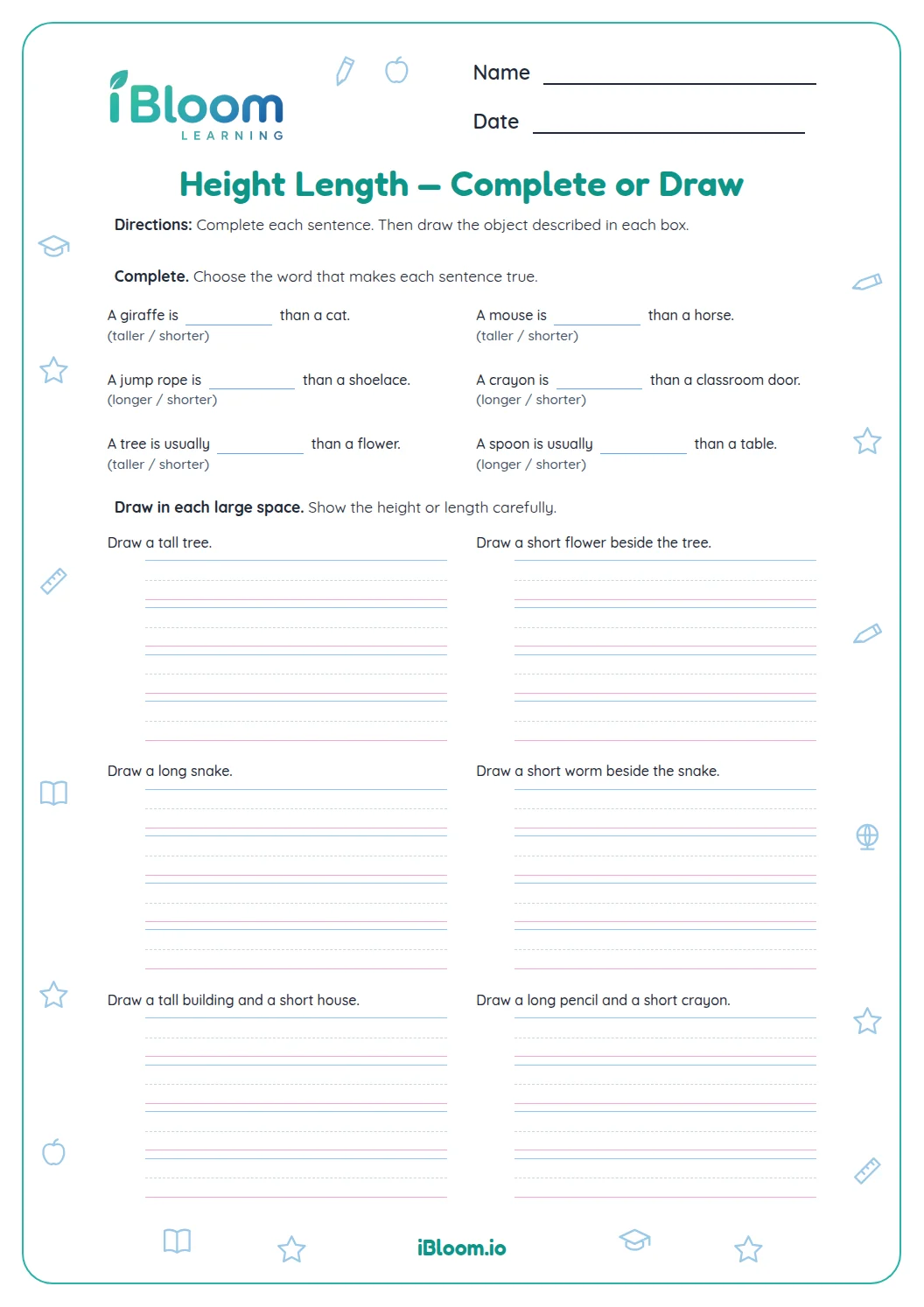
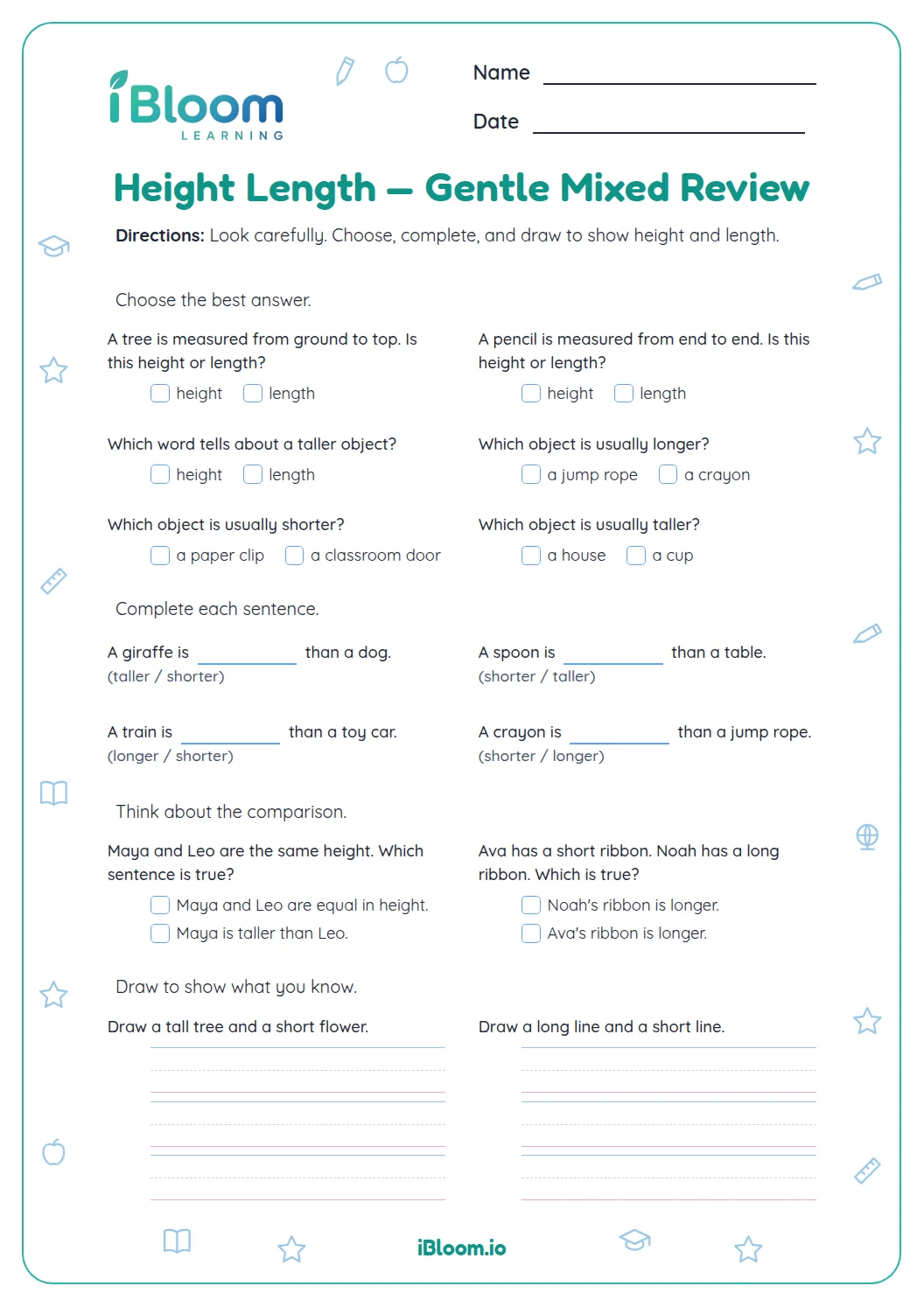
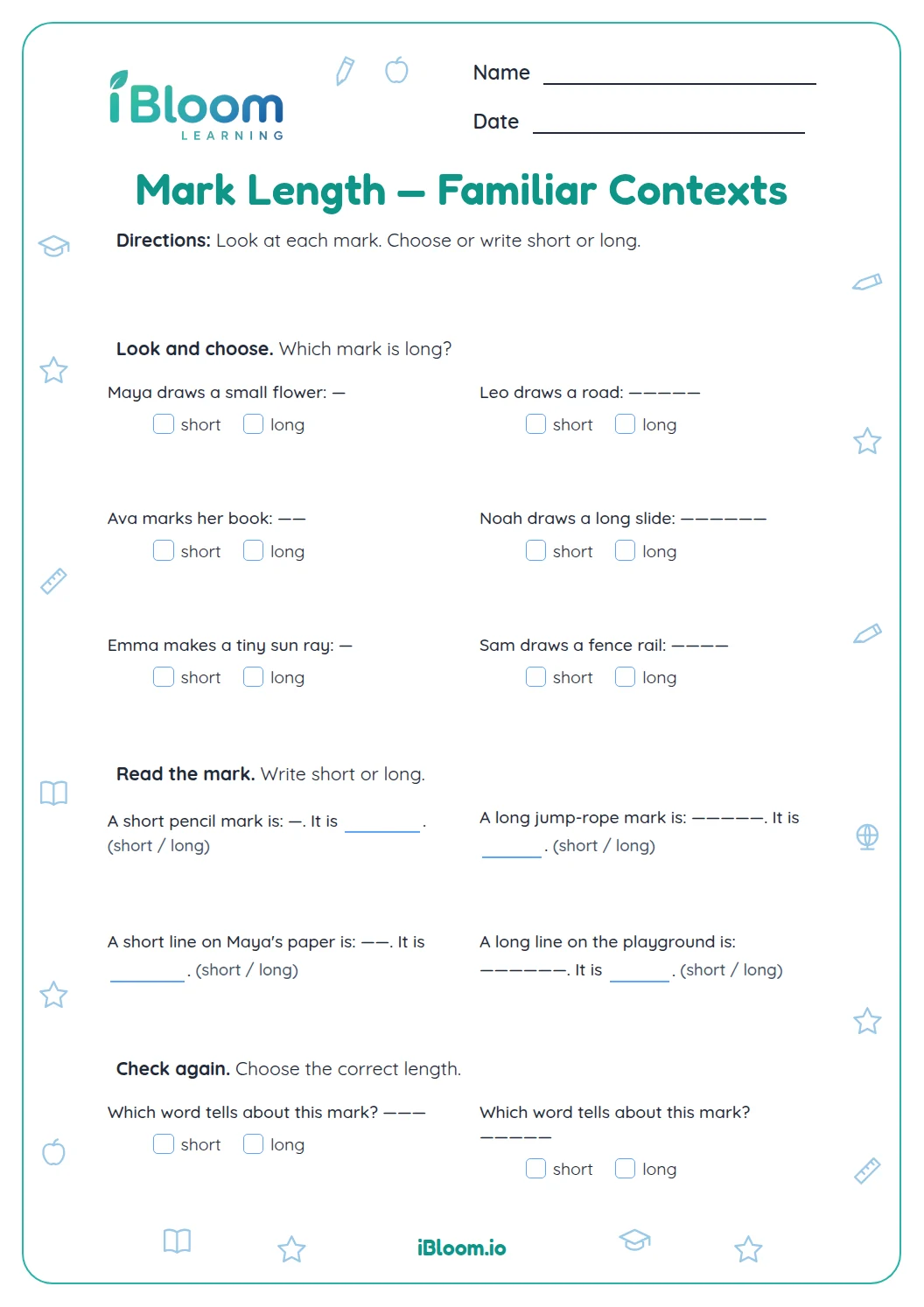
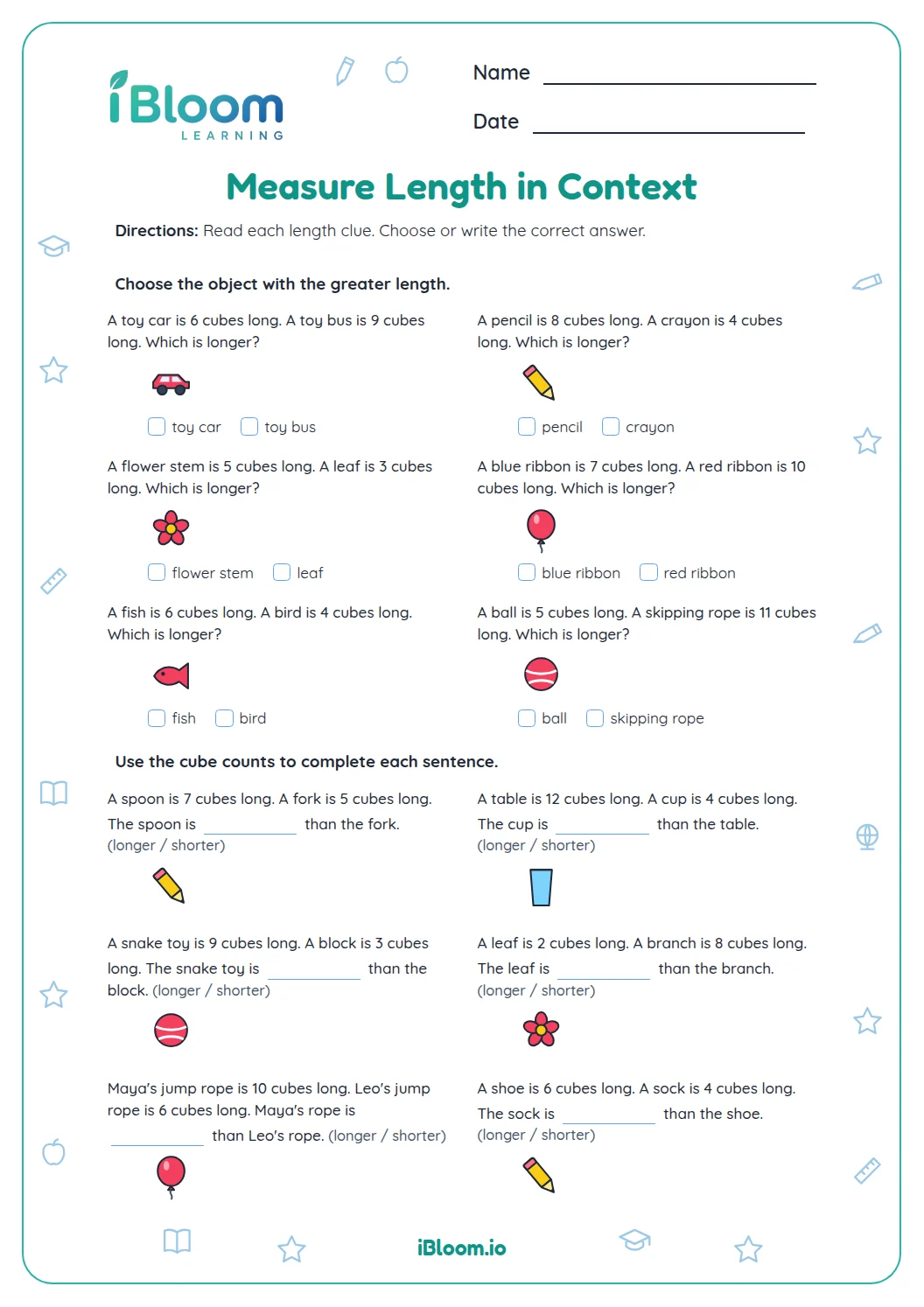
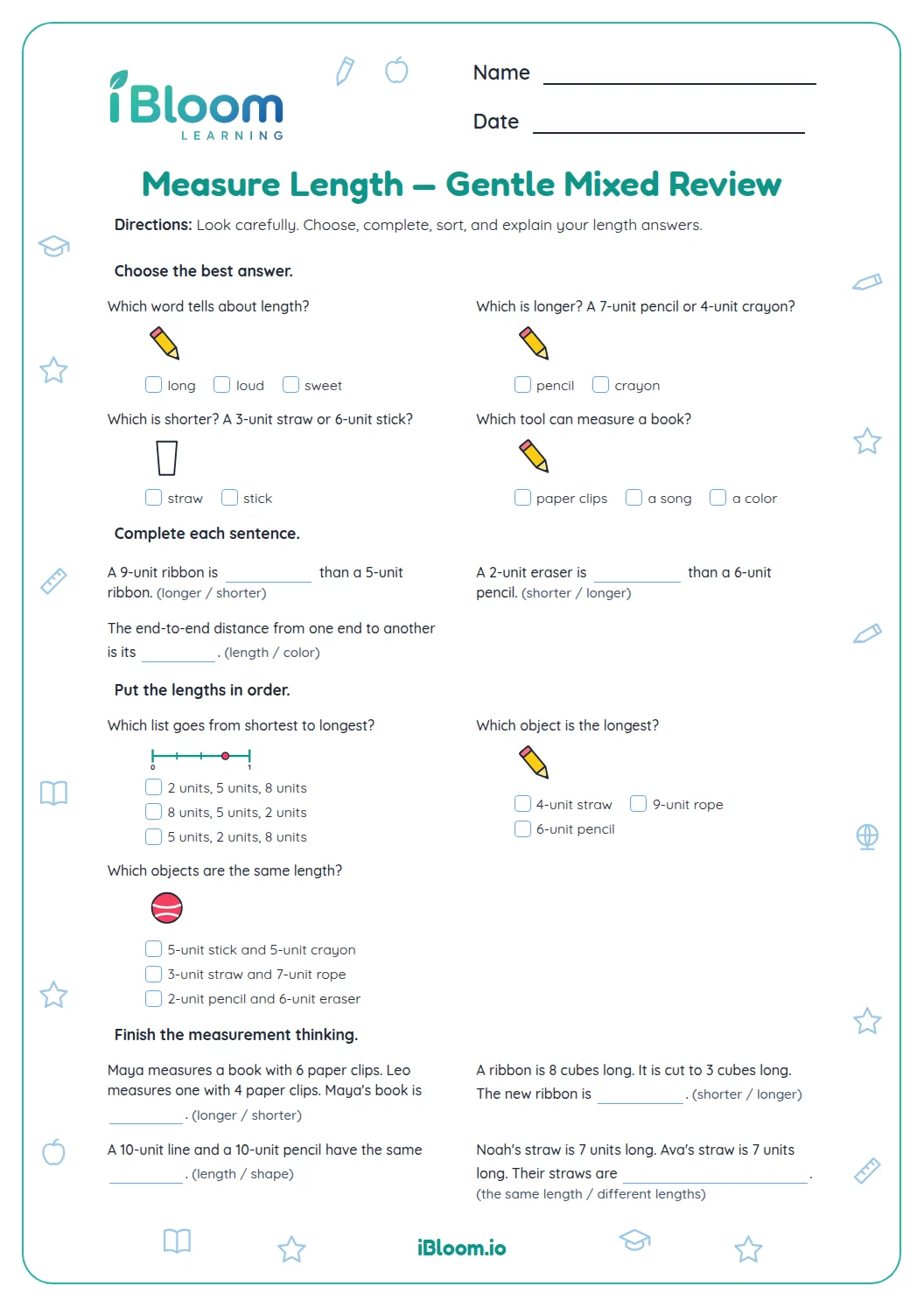
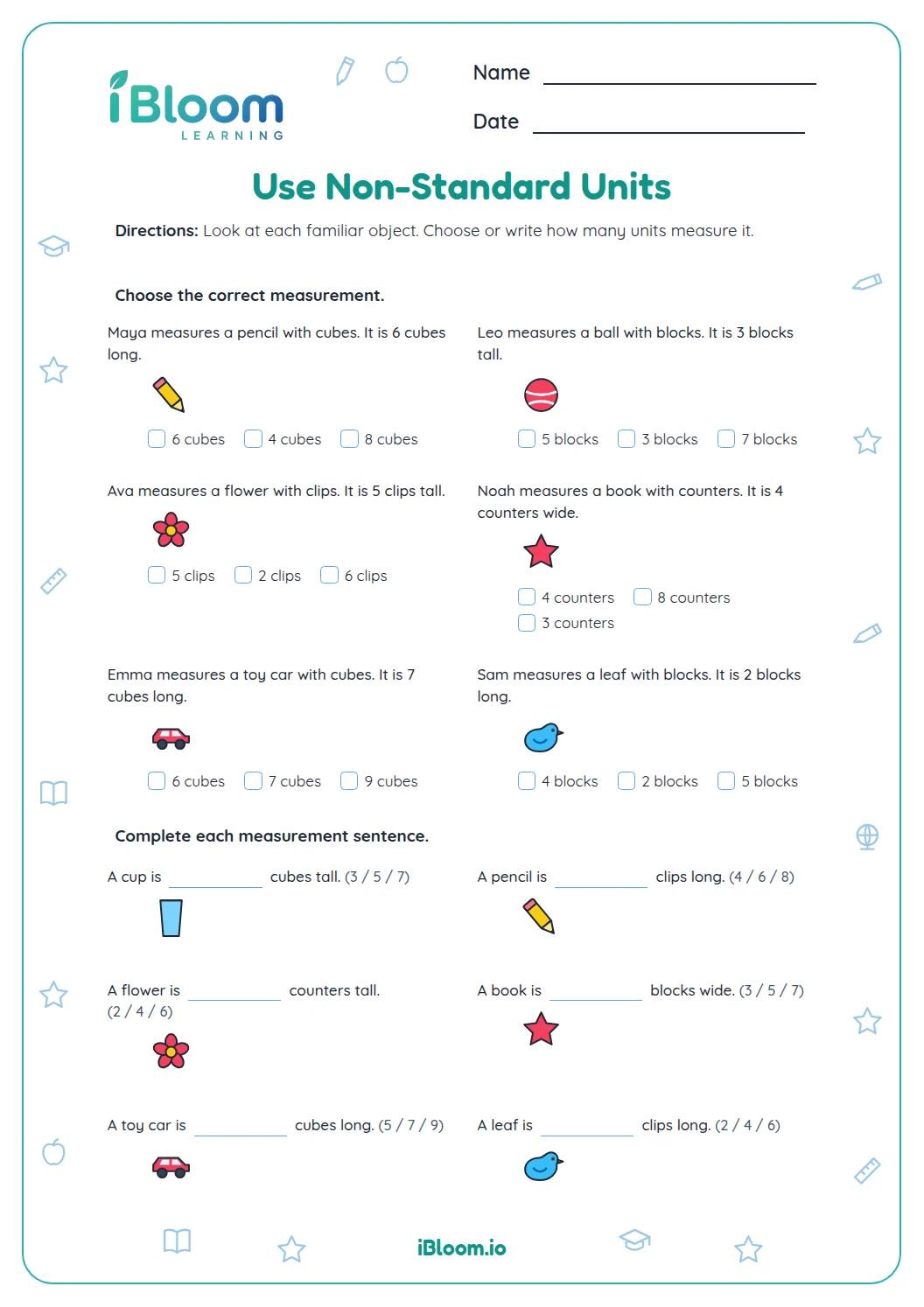
This picture-supported preschool and kindergarten worksheet practices height and length words in familiar comparisons. Children choose whether an object is taller, shorter, or longer than another object in each of 14 items. The pictures keep the comparison grounded in familiar things, and the answer key supports a quick check. The work connects to CCSS K.MD.A.1.
Aligned to K.MD.A.2
What comparisons are on the page?
Fourteen picture pairs show familiar objects such as a tree and flower, a pencil and crayon, or a bus and toy car. Children choose the word that describes their relative height or length.
How do taller and longer differ?
Taller compares how high something reaches. Longer compares how far it extends from one end to the other. Look at the objects named in the sentence and choose the word that fits their familiar sizes.
- 1A tree is ___ than a flower. → taller
How can an adult support the comparison?
Point to each object in the pair and ask which one reaches higher or extends farther. Invite the child to say the whole sentence with the comparison word.
How to use this worksheet
- 1Name the two objects in the picture pair.
- 2Ask which object reaches higher or extends farther.
- 3Choose taller, shorter, or longer to finish the sentence.
- 4Say the complete sentence aloud.
- 5Check the 14 answers together.
Common mix-ups
The mistake
Using longer when comparing height.
The fix
Ask which object reaches higher; use taller or shorter.
The mistake
Choosing a word before looking at both objects.
The fix
Compare the pair together, then finish the sentence.
The mistake
Mixing up shorter and longer.
The fix
Use shorter for the object that does not extend as far.
Common Core alignment
Compare two objects by height or length and describe which has more or less.
On this sheet: Children directly compare familiar objects by height or length and choose taller, shorter, or longer.
Show the official wordingHide the official wording
Directly compare two objects with a measurable attribute in common, to see which object has "more of"/"less of" the attribute, and describe the difference. For example, directly compare the heights of two children and describe one child as taller/shorter.
What to practice next
Make more practice
Further reading
Questions parents and teachers ask
What does this worksheet teach?
It helps preschool and kindergarten children compare the height or length of familiar objects. Each of the 14 picture-supported questions asks children to choose a word such as taller, shorter, or longer. Every pair includes a familiar object to name before comparing.
Does a child need a ruler?
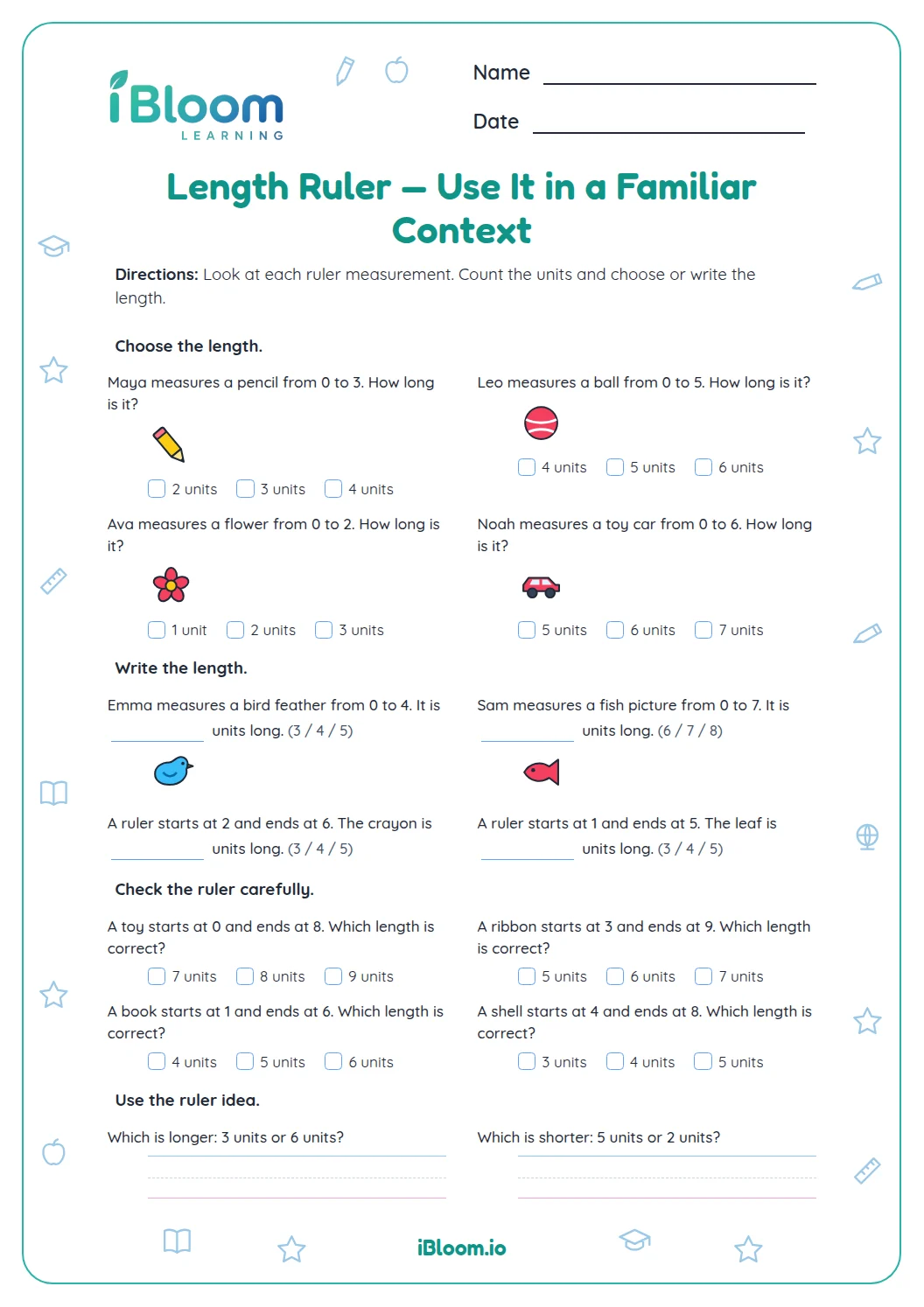
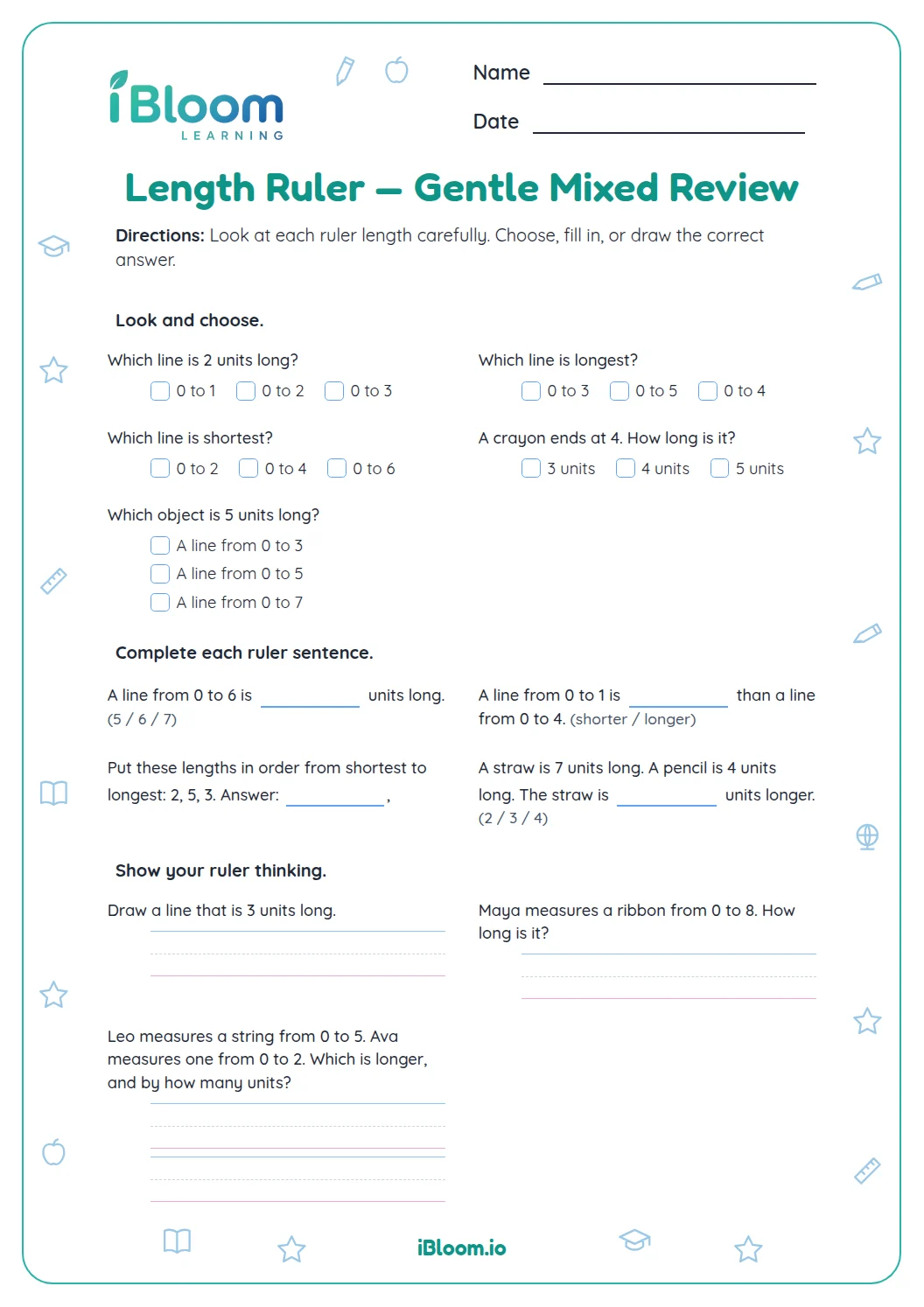
No ruler is needed for this page. Children compare familiar objects shown in pairs and use everyday words about height and length. A ruler generator is linked for a later measurement activity. The pictures and sentences work together to make each comparison concrete.
How can I explain taller and longer?
Taller describes which object reaches higher from the ground or its base. Longer describes which object extends farther from one end to the other. Pointing to the pair can help a child decide which comparison fits. Children can answer by saying the complete sentence aloud.
What age is this worksheet for?
The worksheet is written for preschool and kindergarten. An adult can read each sentence aloud and invite the child to name the objects before choosing the comparison word. An adult can keep the activity conversational and move at the child’s pace.
How long does it take?
Plan for about 20 minutes, with time to name the pictures and talk through comparisons. Children can complete a few pairs at a time and check their choices with the answer key. The answer key is helpful for checking each word choice together.
What can we do after this worksheet?
Practice comparing objects around the room: Which book is longer? Which object reaches higher? The linked measurement pages move toward ruler and other measurement activities. Everyday objects provide more chances to practice the same comparison words. for home or classroom practice.