






About this worksheet
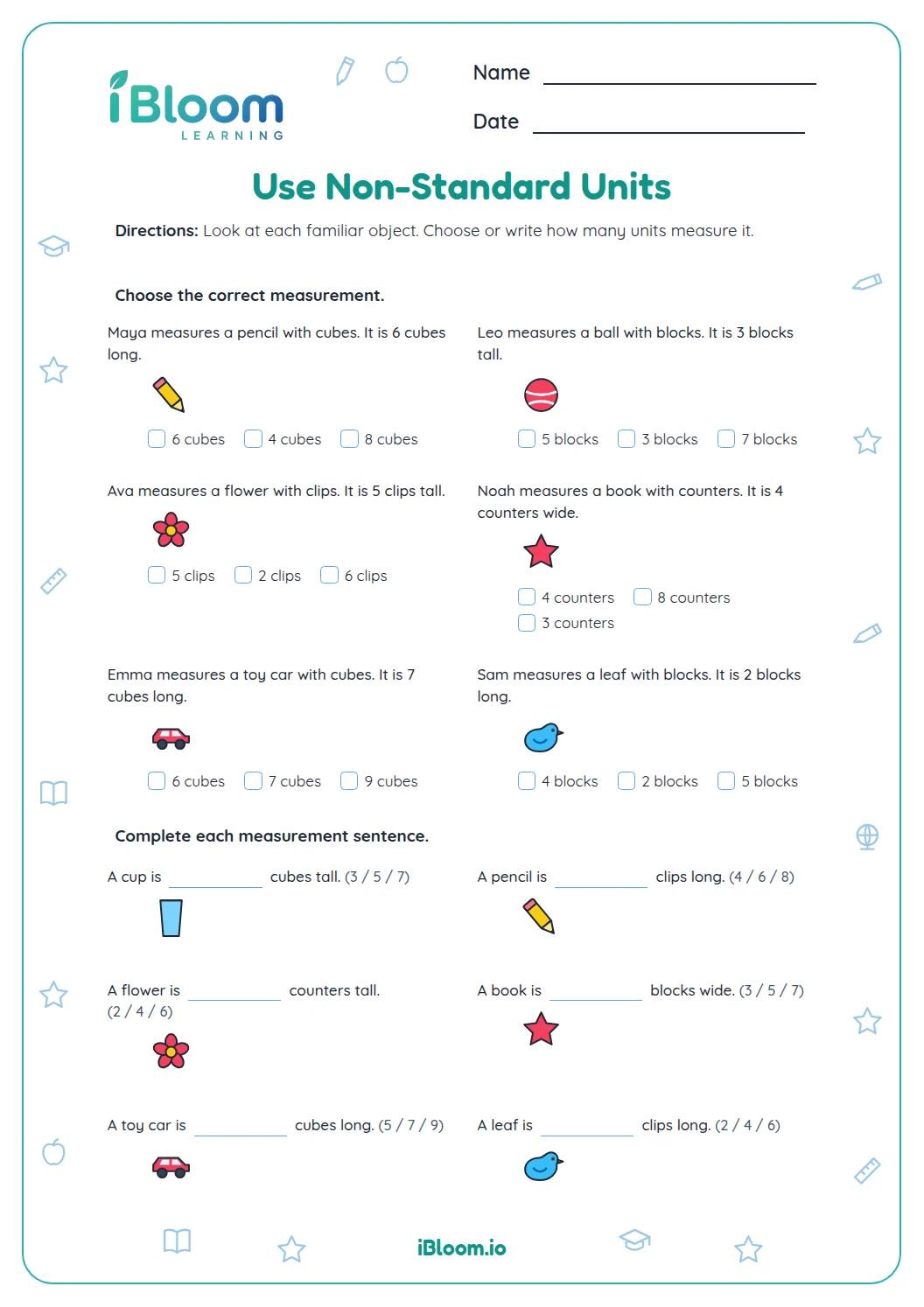
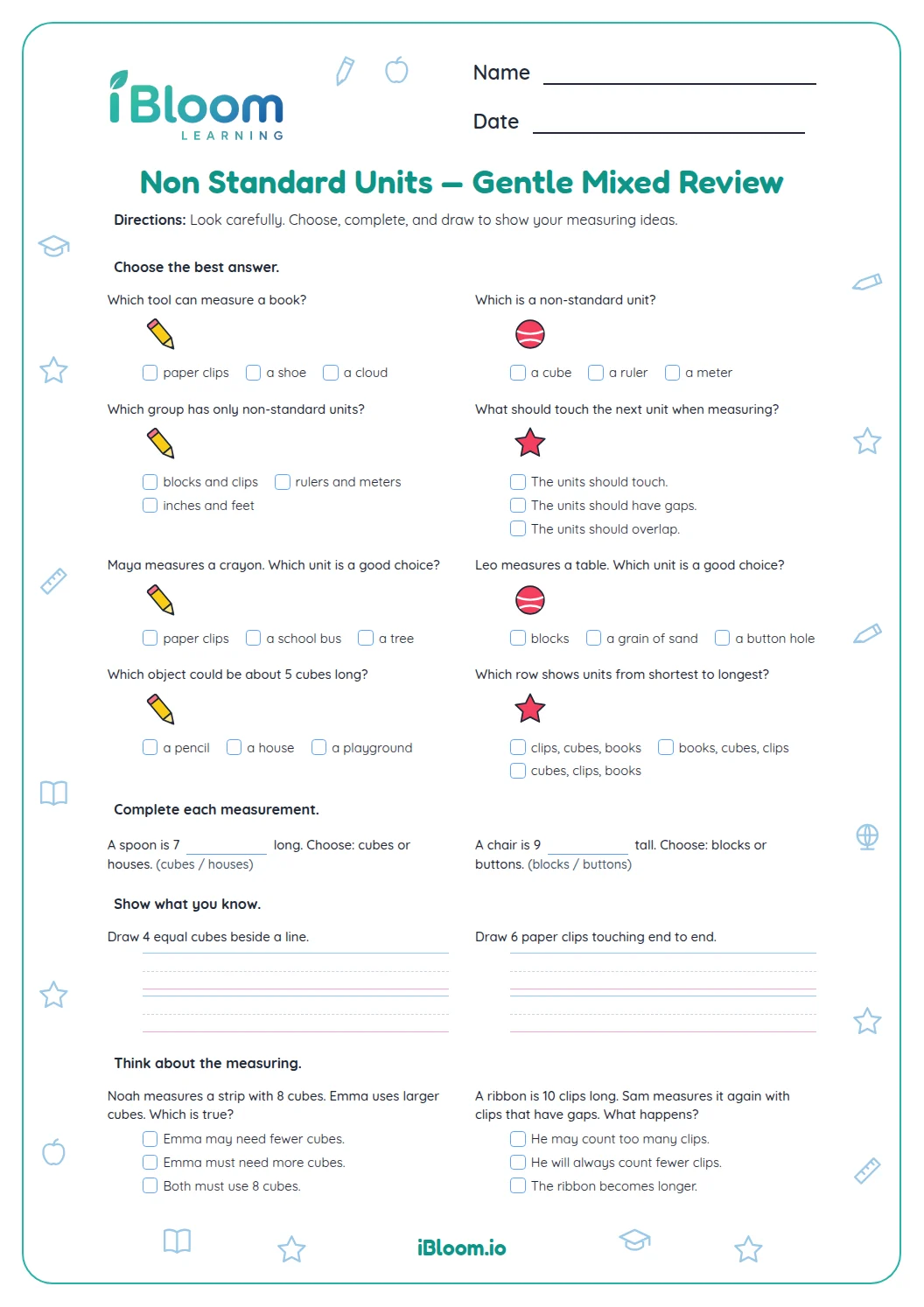
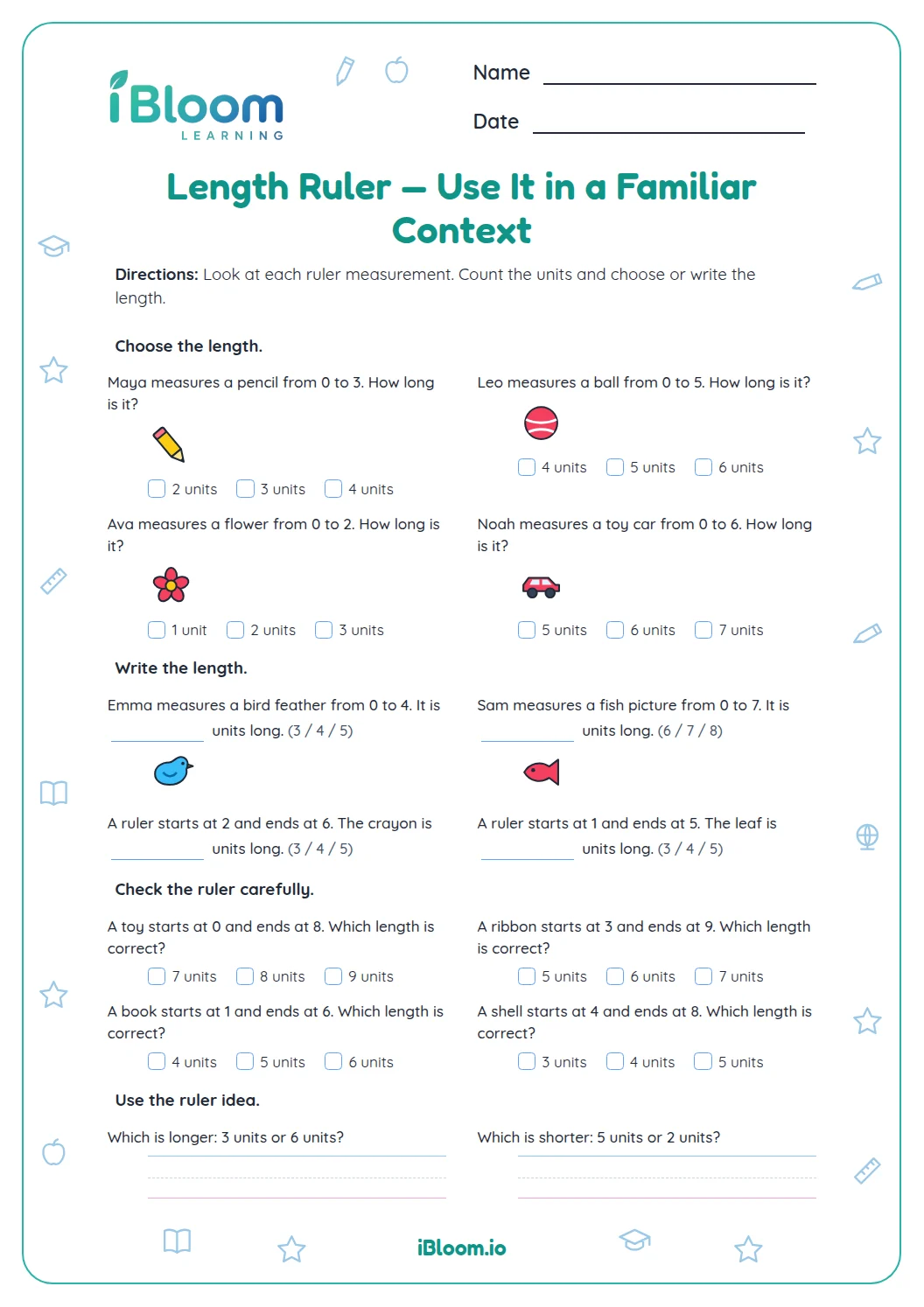
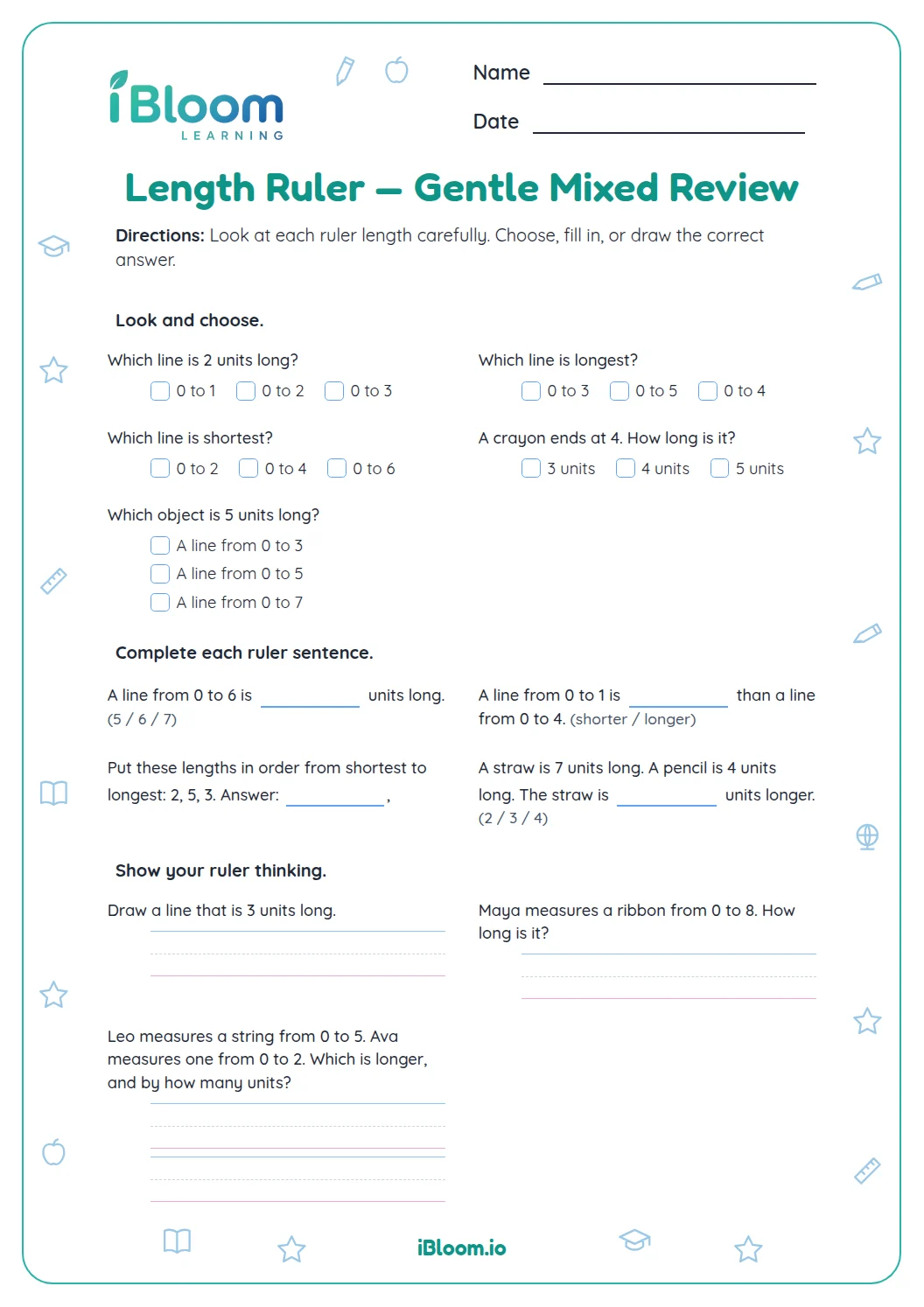
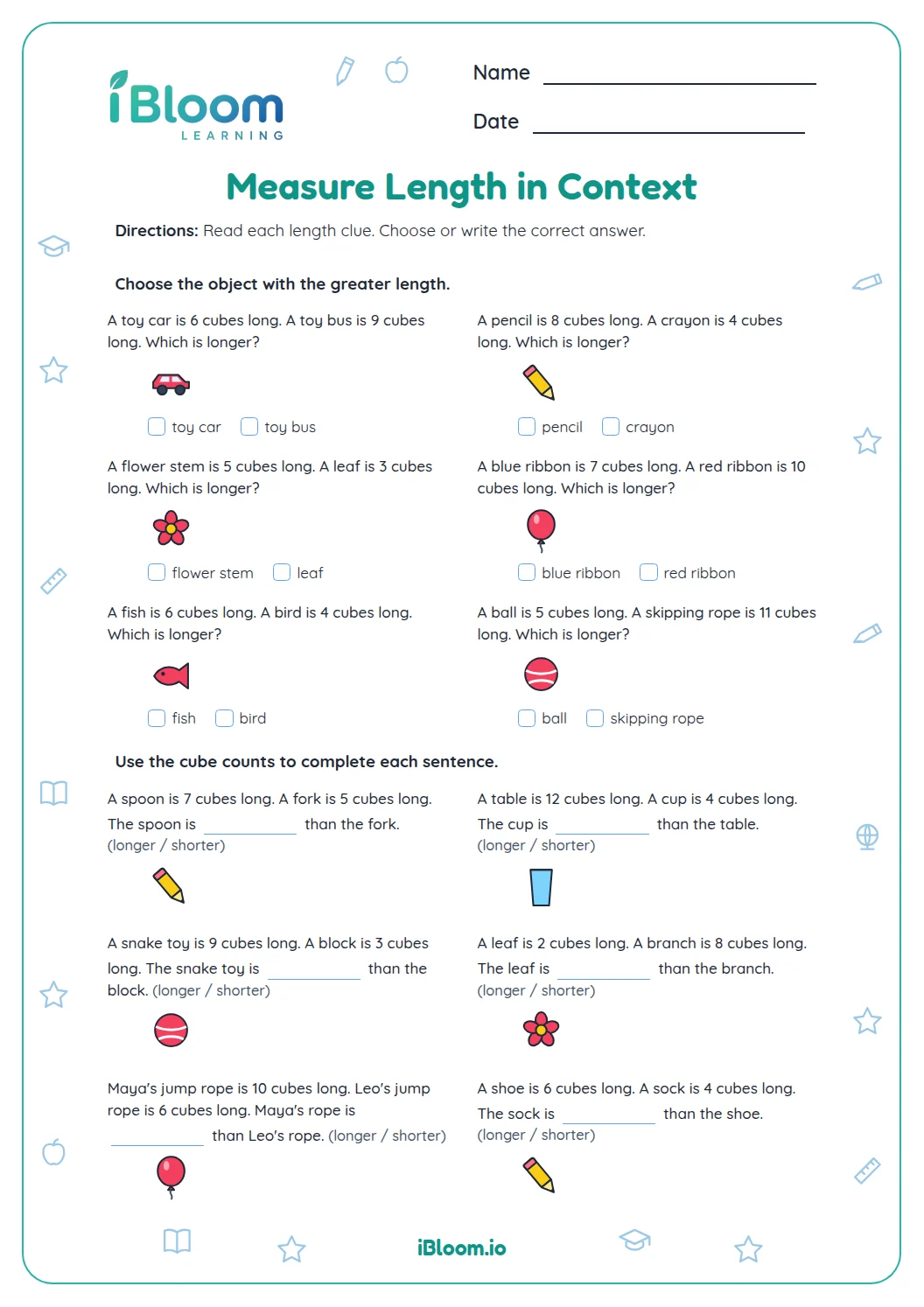
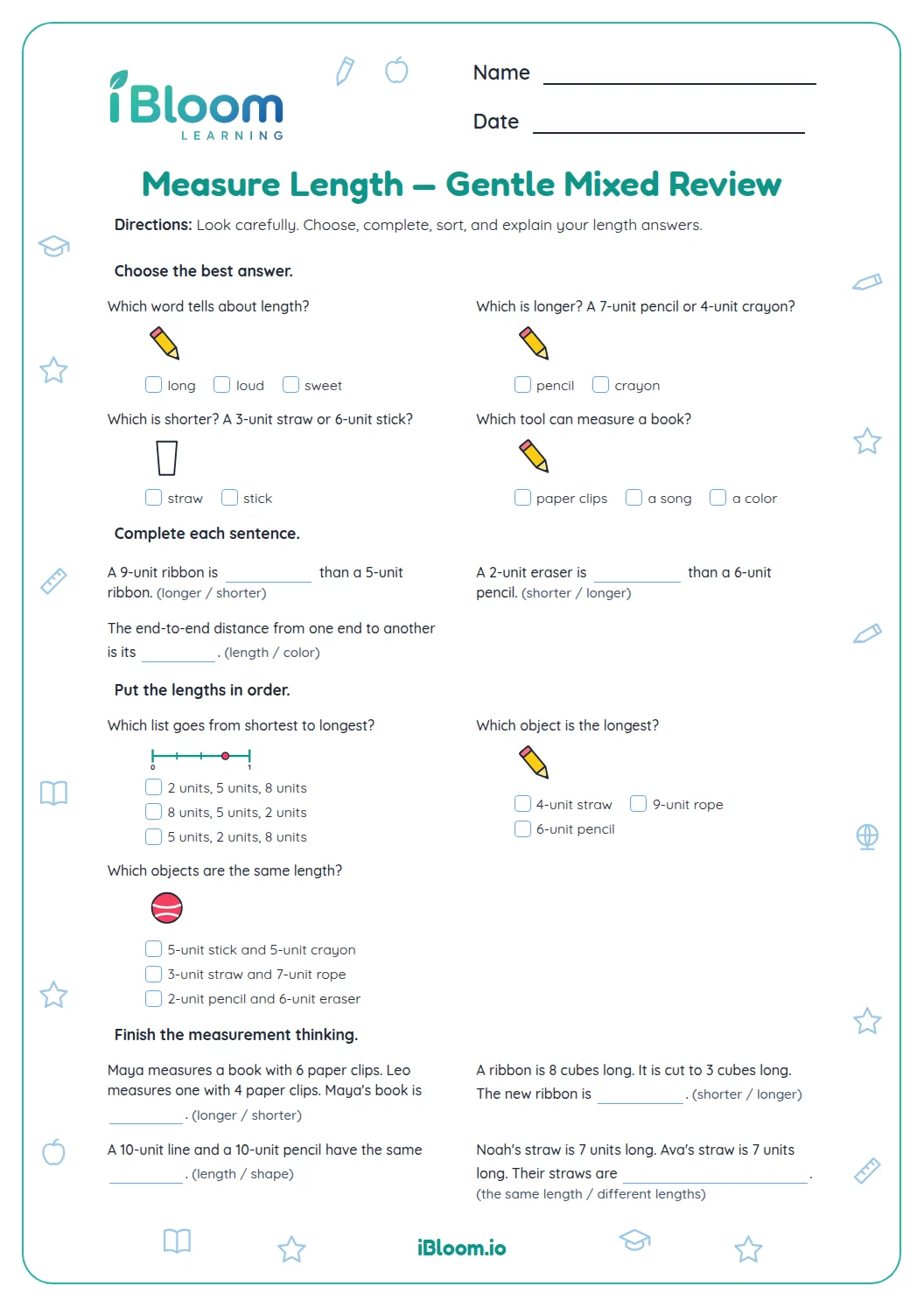
This printable gives preschool and kindergarten learners practice with length measured in familiar, nonstandard units. Children count a pictured group, compare lengths measured with the same kind of unit, find differences, and decide how units should line up. It practices Common Core 1.MD.A.2. A separate answer key is included.
Aligned to 1.MD.A.2
How can children use the clues?
Count equal picture units, compare lengths measured with the same unit, and line units up end to end.
This printable gives preschool and kindergarten learners concrete practice with length measured in familiar, nonstandard units. Children count pictured units, compare lengths measured in the same kind of unit,
- 1Count the apple pictures: 1, 2, 3, 4.
- 2The path spans 4 apple units.
How can families check the work?
Read the full question, choose or write one response, then check the separate answer key. Ask the child to point to the clue that supports the answer.
How to use this worksheet
- 1Count every pictured unit once.
- 2Check that compared lengths use the same unit.
- 3Choose the greater count for longer.
- 4Remember equal units touch end to end.
Common early measurement slips
The mistake
Using different units to compare two objects.
The fix
Measure both with the same kind and size of block or tile.
The mistake
Skipping or counting a picture twice.
The fix
Point to each unit once as you say the next number.
The mistake
Leaving spaces between repeated units.
The fix
Push units together end to end with no gaps or overlaps.
Common Core alignment
The questions practice measuring length with equal repeated units.
Measure with equal shorter units end to end, without gaps or overlaps.
On this sheet: Children count and reason about lengths measured with repeated equal units.
Show the official wordingHide the official wording
Express the length of an object as a whole number of length units, by laying multiple copies of a shorter object (the length unit) end to end; understand that the length measurement of an object is the number of same-size length units that span it with no gaps or overlaps.
What to practice next
Make more practice
Further reading
Questions parents and teachers ask
What are nonstandard units?
They are familiar objects repeated to measure a length, such as blocks, tiles, or clips. Each unit in one measurement should be the same size. This worksheet uses picture counts and short examples so children connect a count with a measured length.
Why should units be equal in size?
Equal-size units make measurements fair to compare. If one length uses large blocks and another uses tiny clips, the counts do not compare directly. The questions name the unit so children can notice when two counts are comparable.
How many questions are included?
There are 14 questions in two parts. Children count pictured units, compare informal measurements, and apply ideas about counting and lining units up. A separate key gives counts, comparisons, and measurement ideas. Adults can read questions aloud as children count.
What does end to end mean?
Place one unit next to the next so their ends touch. Do not leave gaps or overlap the units. This makes the count match the span being measured. One question asks children to choose this correct arrangement from three options, while the other items build the same idea.
Is an answer key included?
Yes. The separate key gives picture counts and comparison responses, including how many units longer one object is. It also states how equal units should line up and what gaps can do to a measurement. Adults can check each short answer.