



About this worksheet
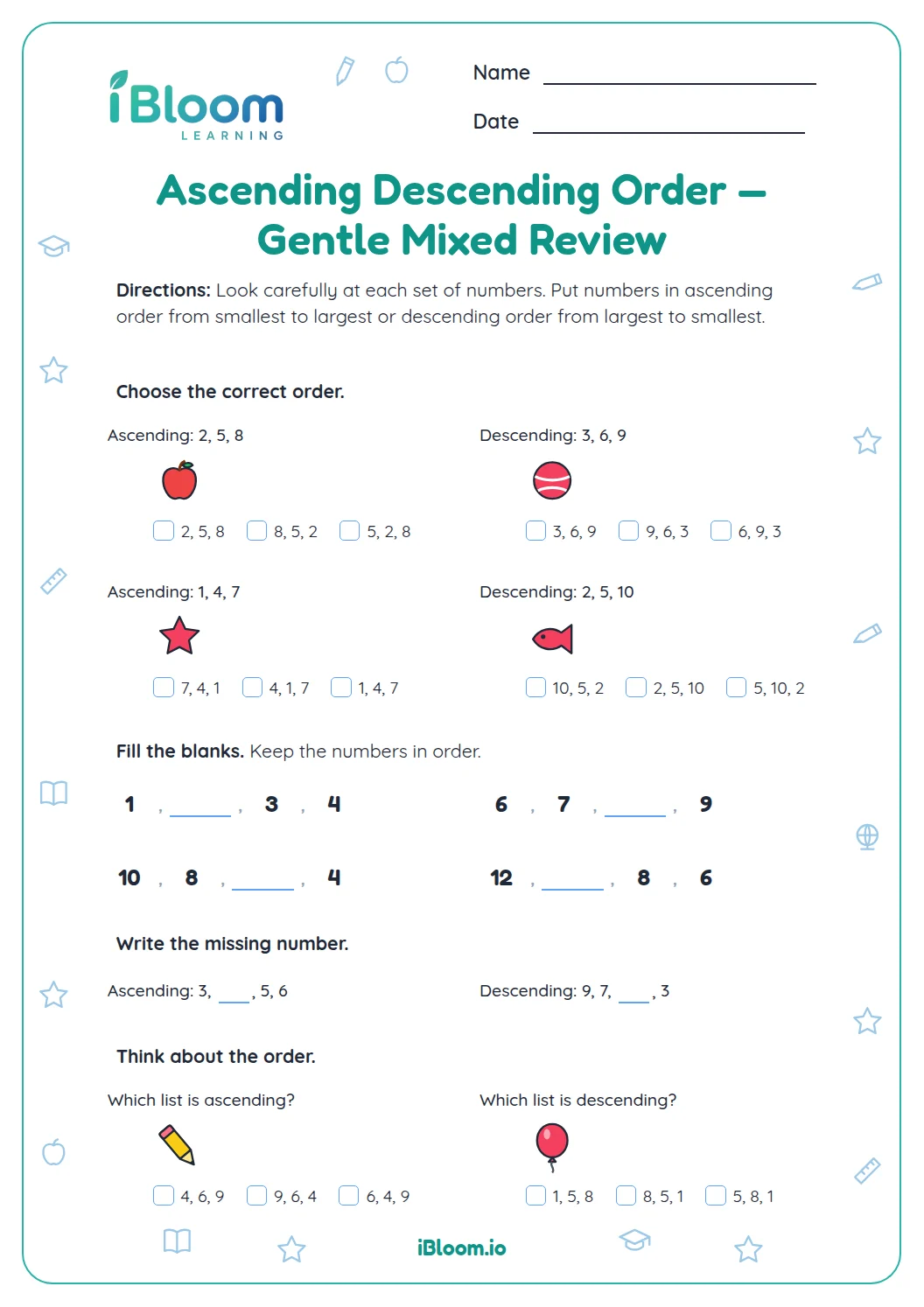
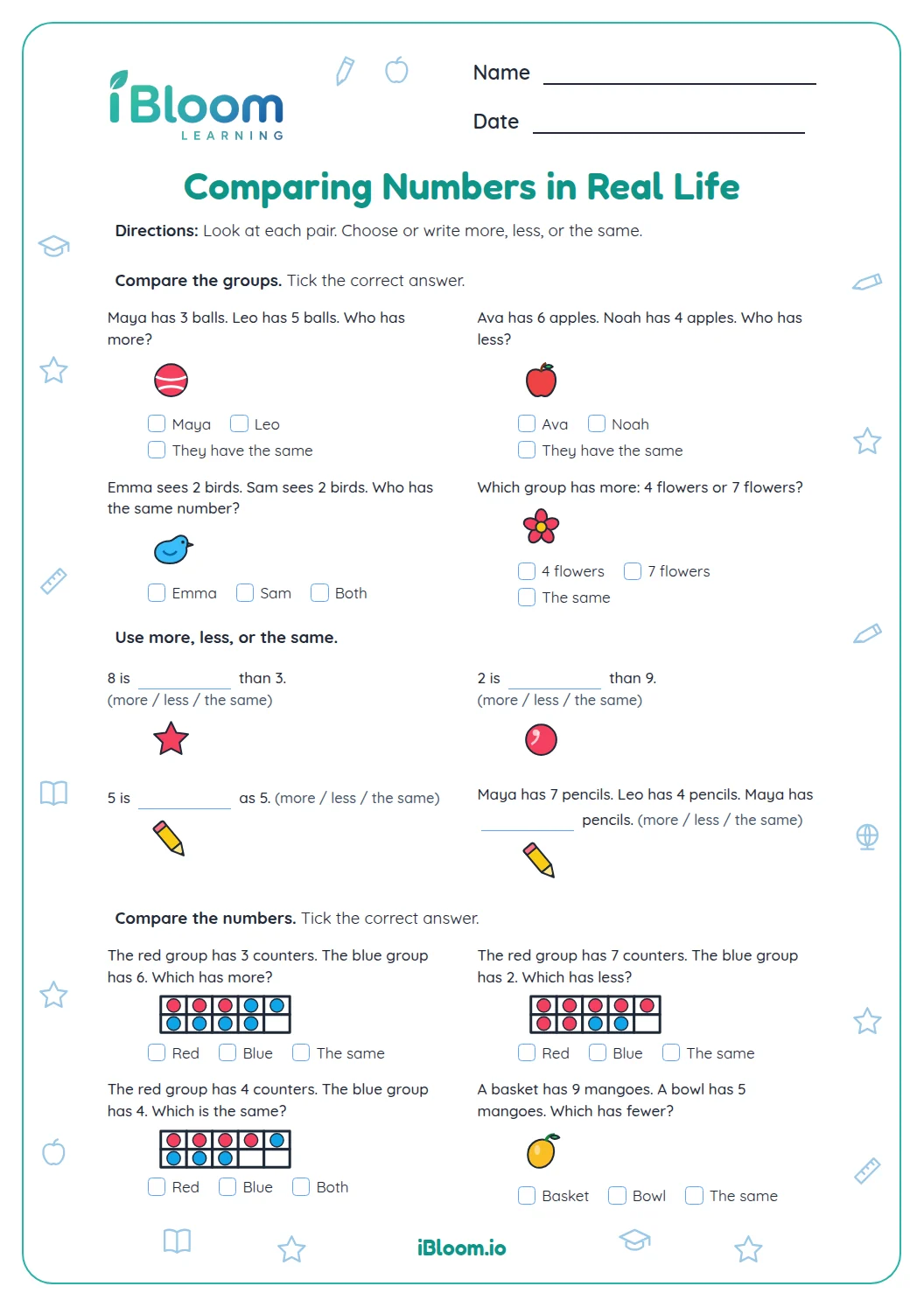
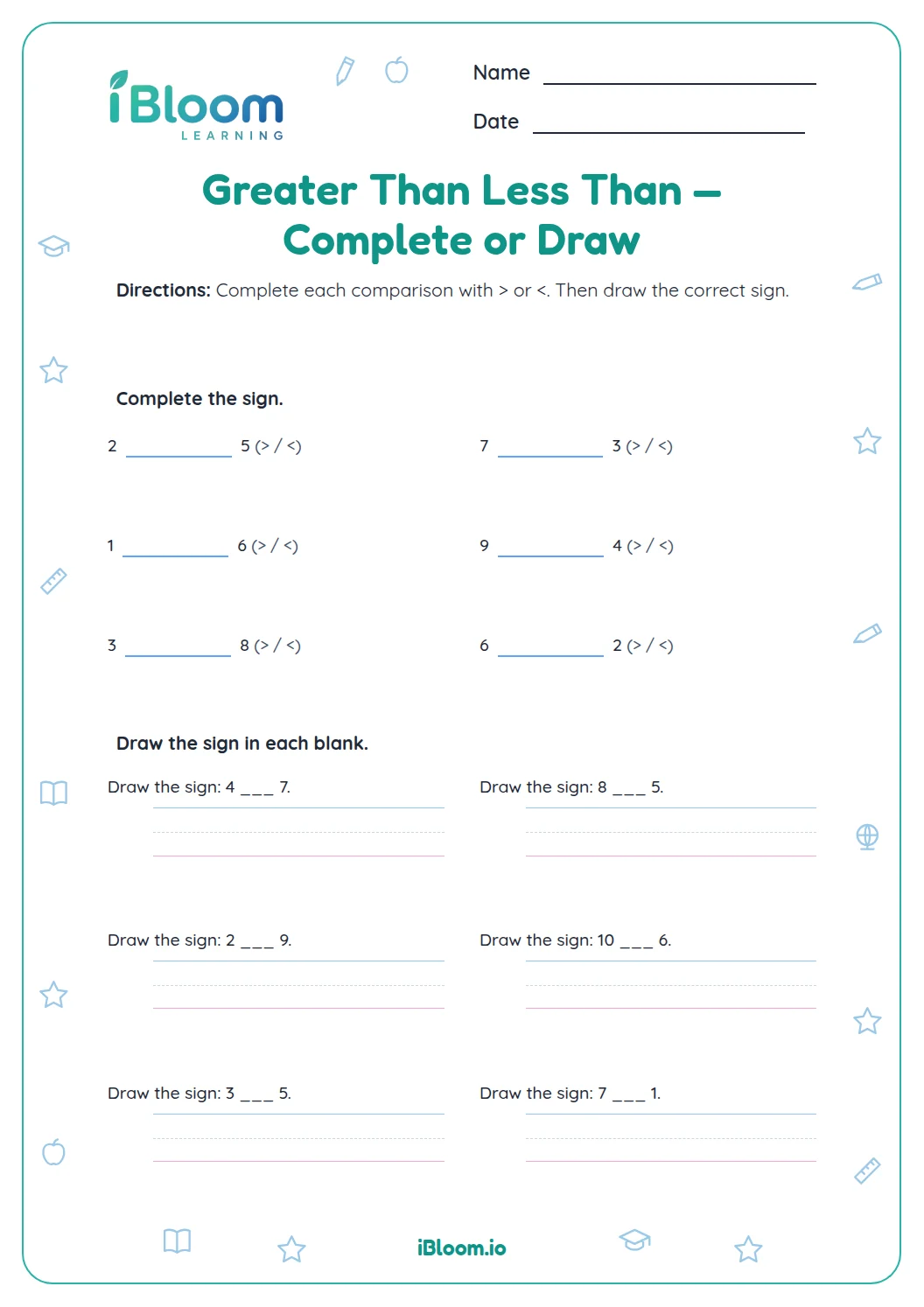
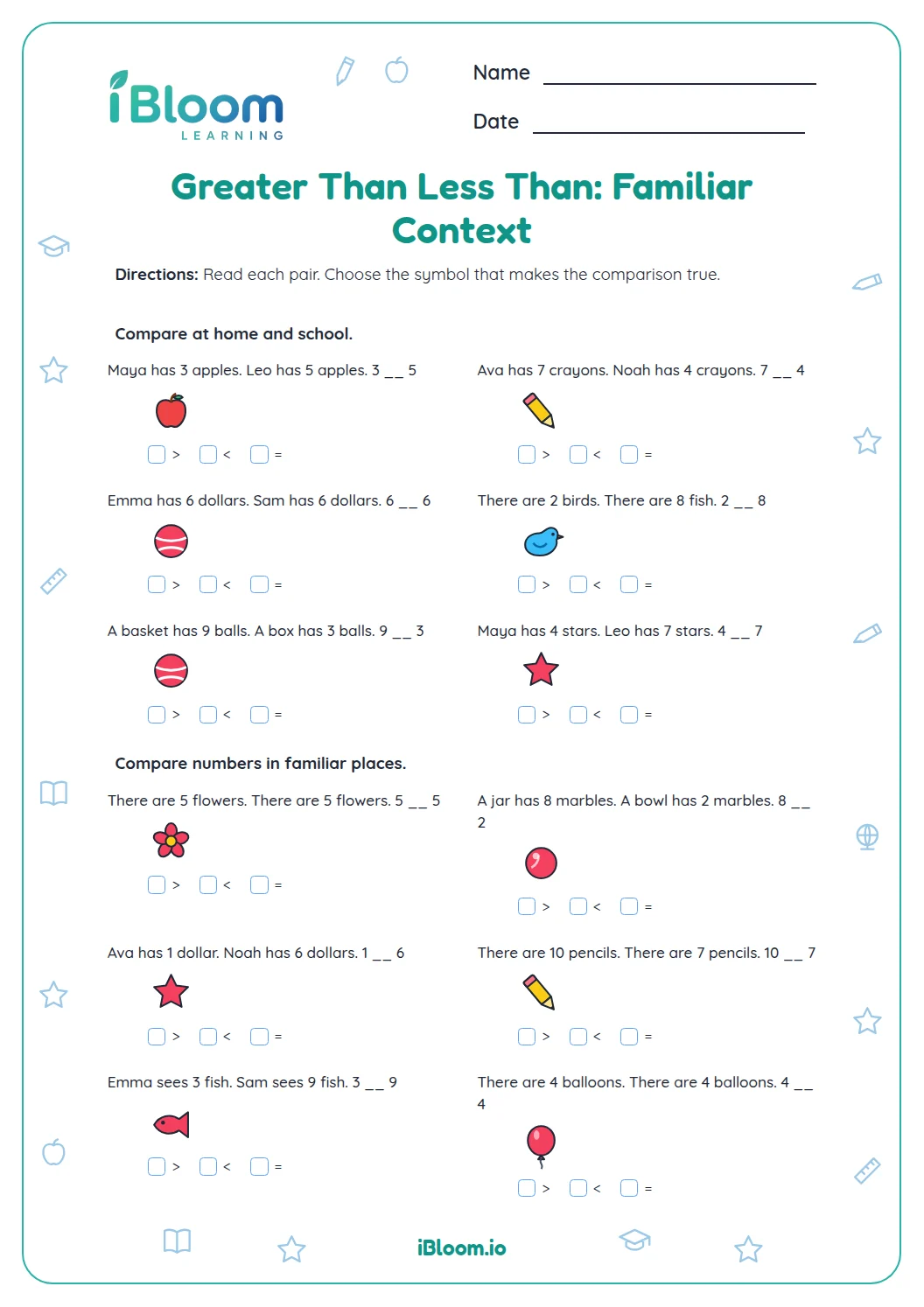
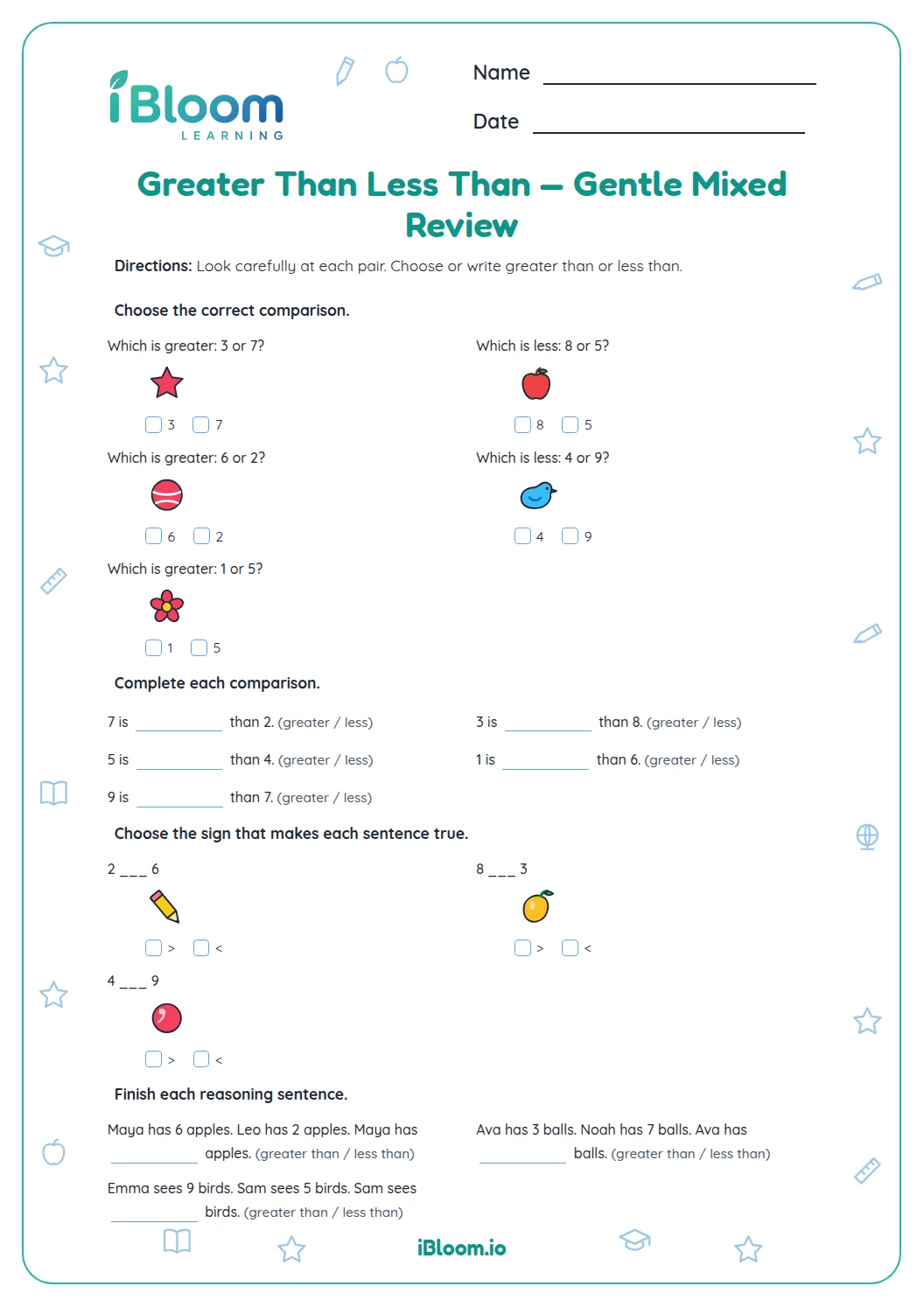
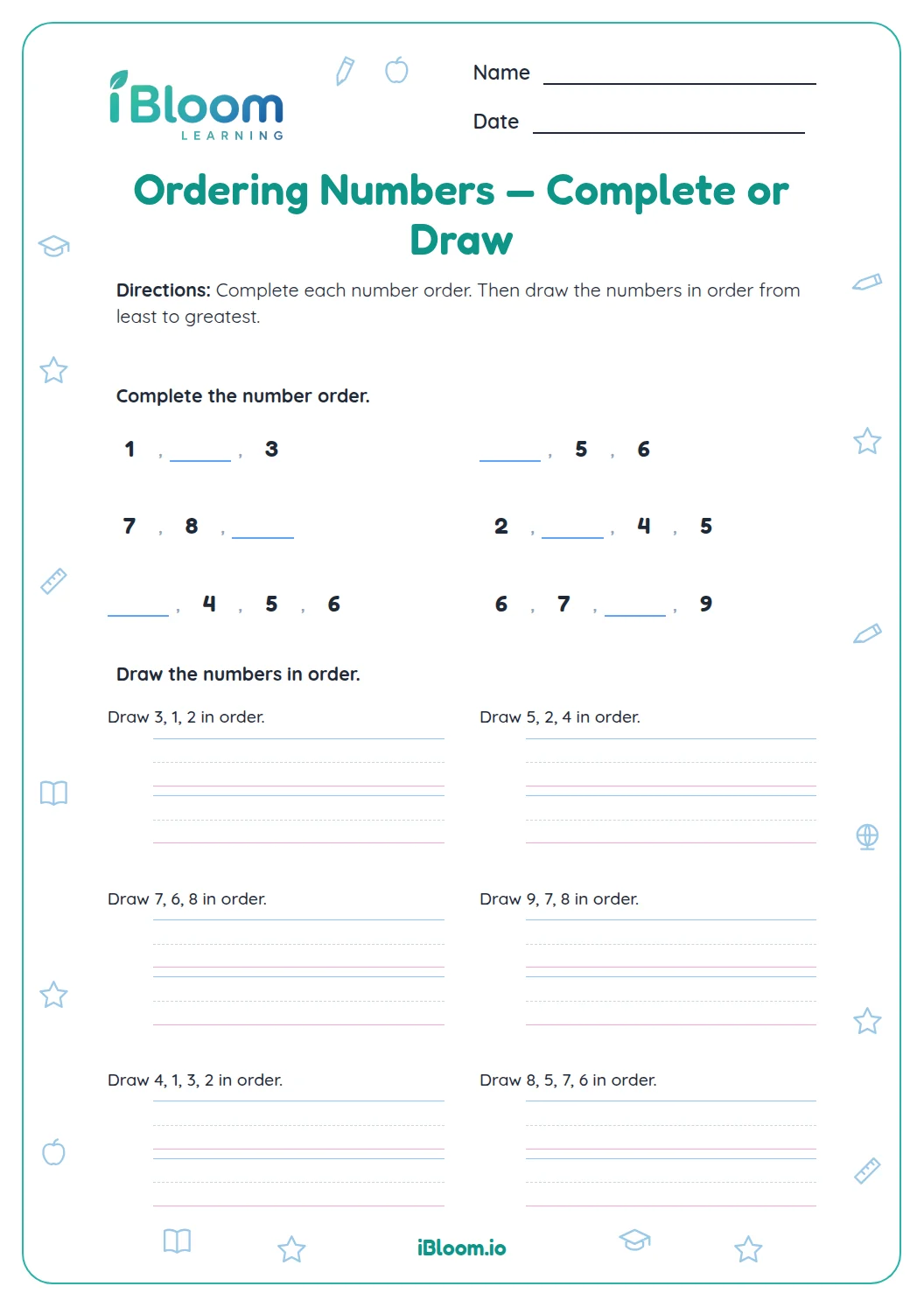
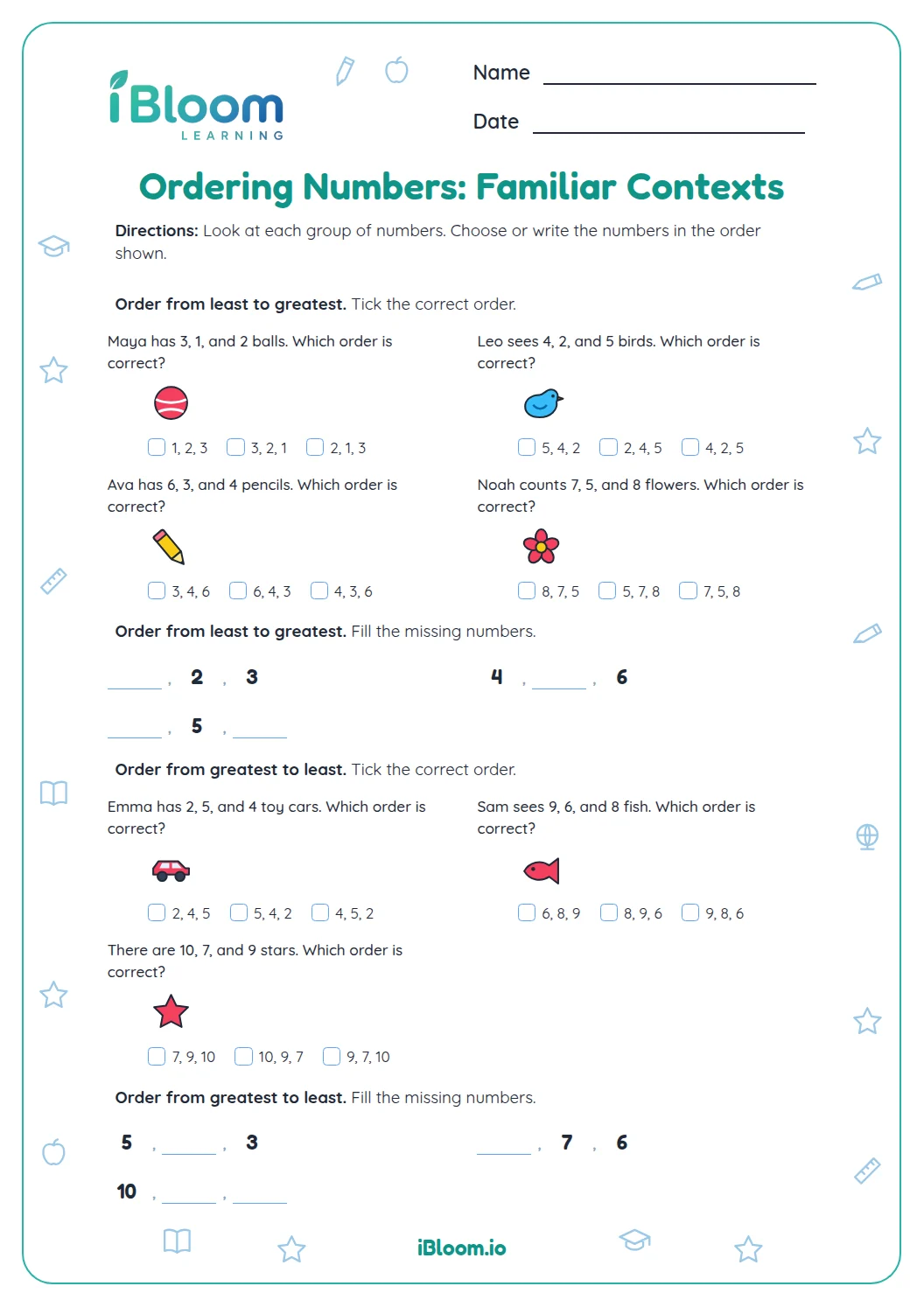
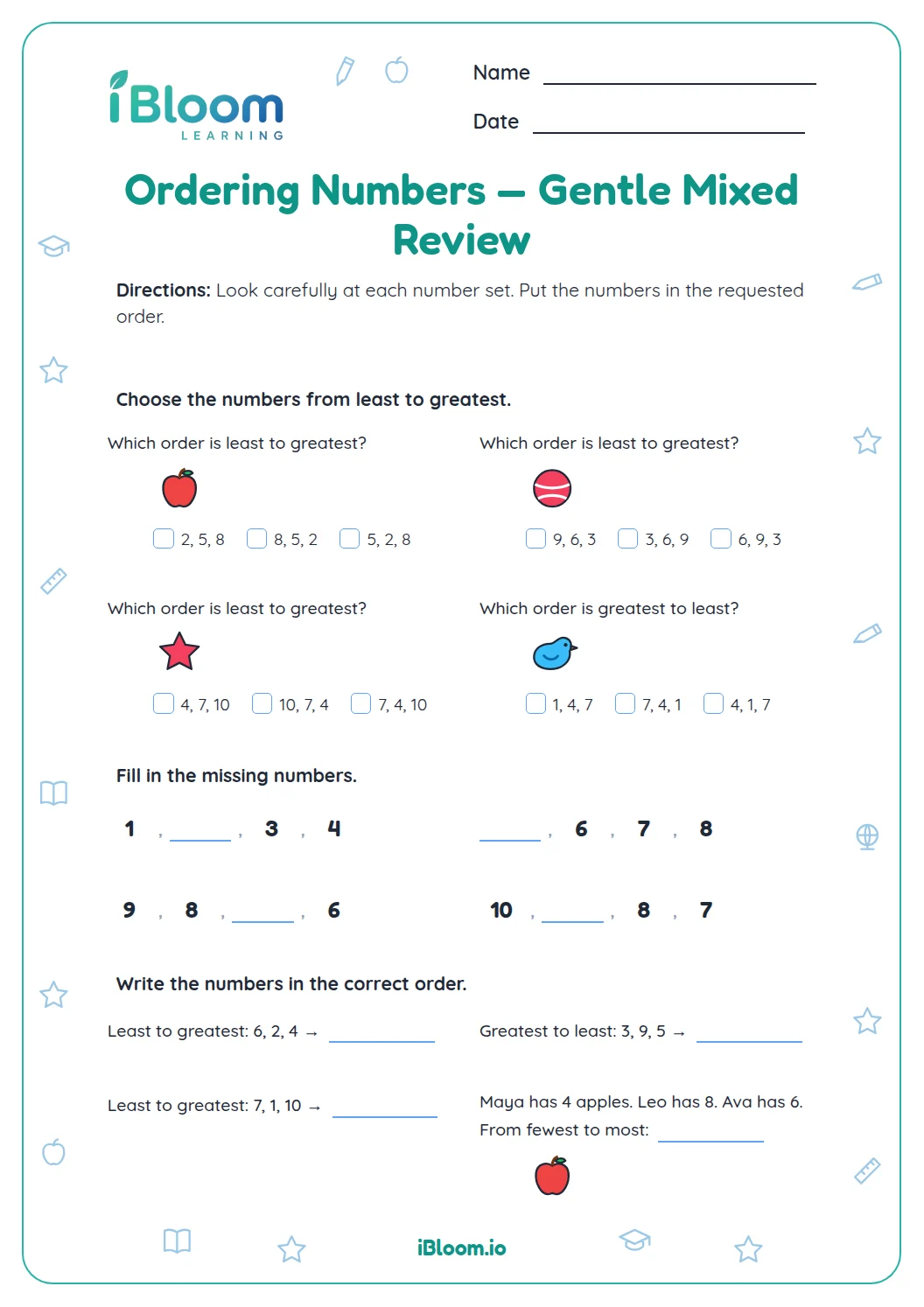
This Kindergarten printable uses familiar picture clues such as apples, stars, fish, and flowers to practice ordering numerals from 1 to 10. Children choose ascending order (least to greatest), descending order (greatest to least), and apply either direction to familiar groups. The 14 multiple-choice questions practice comparing written numerals under CCSS K.CC.C.7, with a separate answer key.
Aligned to K.CC.C.7
What does ascending or descending mean?
Ascending order goes from the least number to the greatest. Descending order goes from the greatest number to the least. Each question gives three familiar counts and a matching picture clue.
The small pictures connect numerals with familiar objects; choose the order from the three numerals in each prompt.
How do I find which number comes first?
For ascending order, point to the smallest numeral first and then choose the next smallest. For descending order, begin with the biggest numeral.
- 1Put 2, 5, 3 in ascending order.
- 2The smallest is 2. The next is 3. The greatest is 5.
- 3Answer: 2, 3, 5.
How can I check the order?
Read the numbers in order and check each neighboring pair. In ascending order each number gets bigger; in descending order each number gets smaller.
How to use this worksheet
- 1Look at the direction: ascending or descending.
- 2Read all three numerals before writing an answer.
- 3For ascending, find the least number and continue upward.
- 4For descending, find the greatest number and continue downward.
- 5Read your finished list and check that it changes in the requested direction.
Common mistakes and quick fixes
The mistake
Starting with the greatest number when ascending is requested.
The fix
Ascending starts with the least number and grows.
The mistake
Reversing a correct ascending list for a descending prompt incorrectly.
The fix
Check the instruction again; descending moves from greatest to least.
The mistake
Skipping a middle number.
The fix
Compare all three numbers, then place the remaining middle value between the ends.
Common Core alignment
The numeral comparisons use numbers within the Kindergarten range.
Compare written numerals from 1 to 10 while putting sets in order.
On this sheet: Children order familiar quantities represented by numerals from 1 to 10.
Show the official wordingHide the official wording
Compare two numbers between 1 and 10 presented as written numerals.
What to practice next
Make more practice
Further reading
Questions parents and teachers ask
What does ascending and descending order mean?
Ascending and descending describe the direction of a number list: ascending goes from least to greatest, and descending goes from greatest to least. This sheet gives children 14 chances to practice, moving from a clear starting point to mixed examples. The separate answer key makes it easy to check each response and talk through a missed step.
What grade is this ascending and descending order worksheet for?
This printable is written for Preschool and Kindergarten learners. The directions use short, direct language, and the problems build within the named skill. An adult can read directions aloud or work through the first example before the learner continues independently.
What is on the worksheet?
The worksheet has 14 questions in two parts. Part A begins with putting 2, 5, and 3 in ascending order; later questions ask children to apply the same idea in fresh examples. The answer key is a separate page, so you can print it only when you are ready to check the work.
How should I check a missed answer?
Ask the learner to explain the step that led to the answer, then compare it with the answer key. For this skill, arrange numerals from least to greatest or greatest to least. A quick spoken explanation can reveal whether the issue was reading the prompt, choosing a strategy, or carrying out a step.
Does this printable include an answer key?
Yes. The answer key is included after the worksheet pages and lists a correct response for every item. For any open response, it gives a model answer or the feature to look for, so an adult can check the idea without expecting identical wording.