





About this worksheet
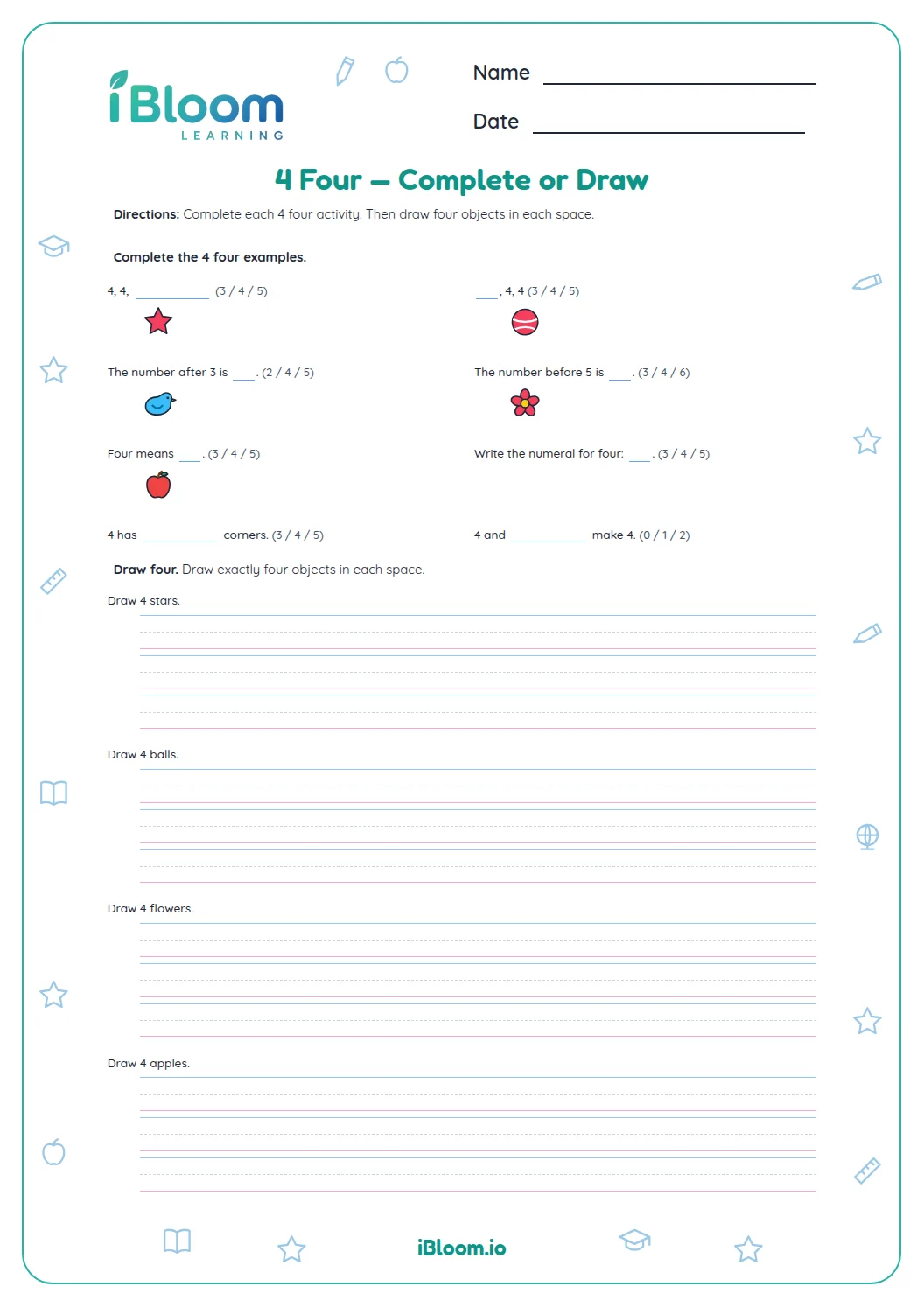
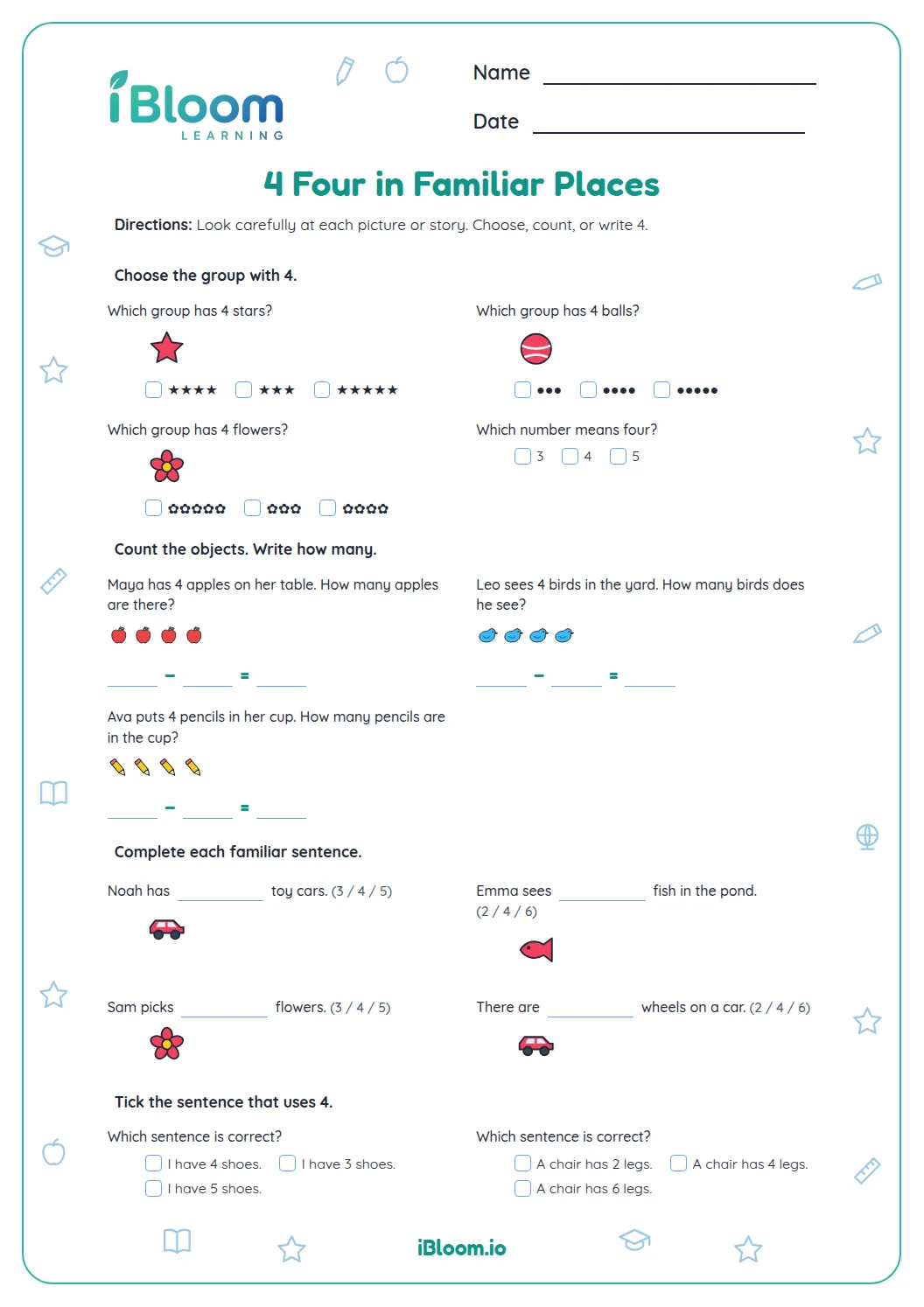
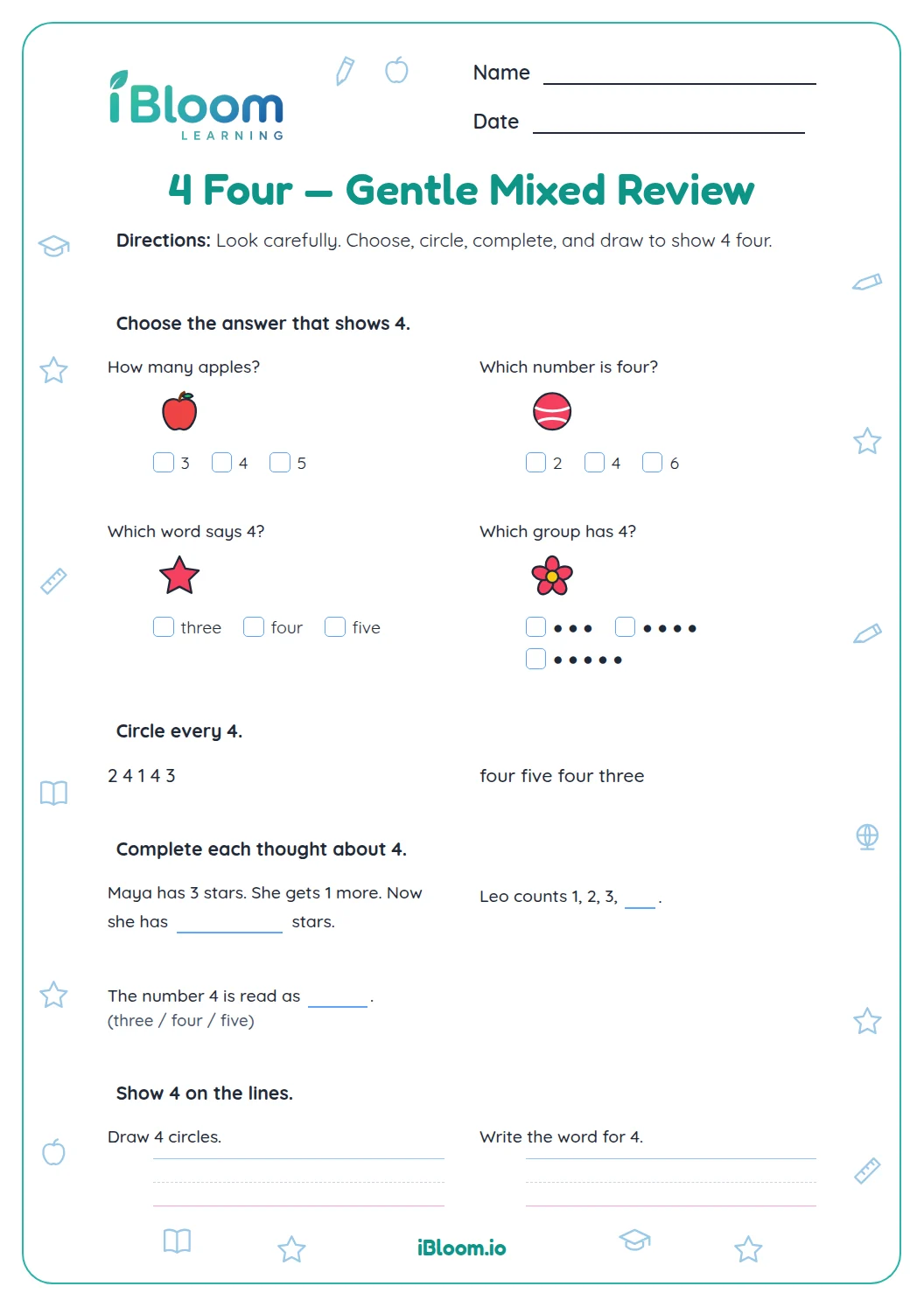
This printable gives preschool and kindergarten learners picture-rich practice with the number 3. Children count familiar objects, choose groups that contain three, connect the numeral 3 with the word three, and complete familiar number sentences. The page keeps the focus on one number while using different objects and response types. A separate answer key shows the expected counts and responses.
Aligned to K.CC.A.3
How do the picture groups show three?
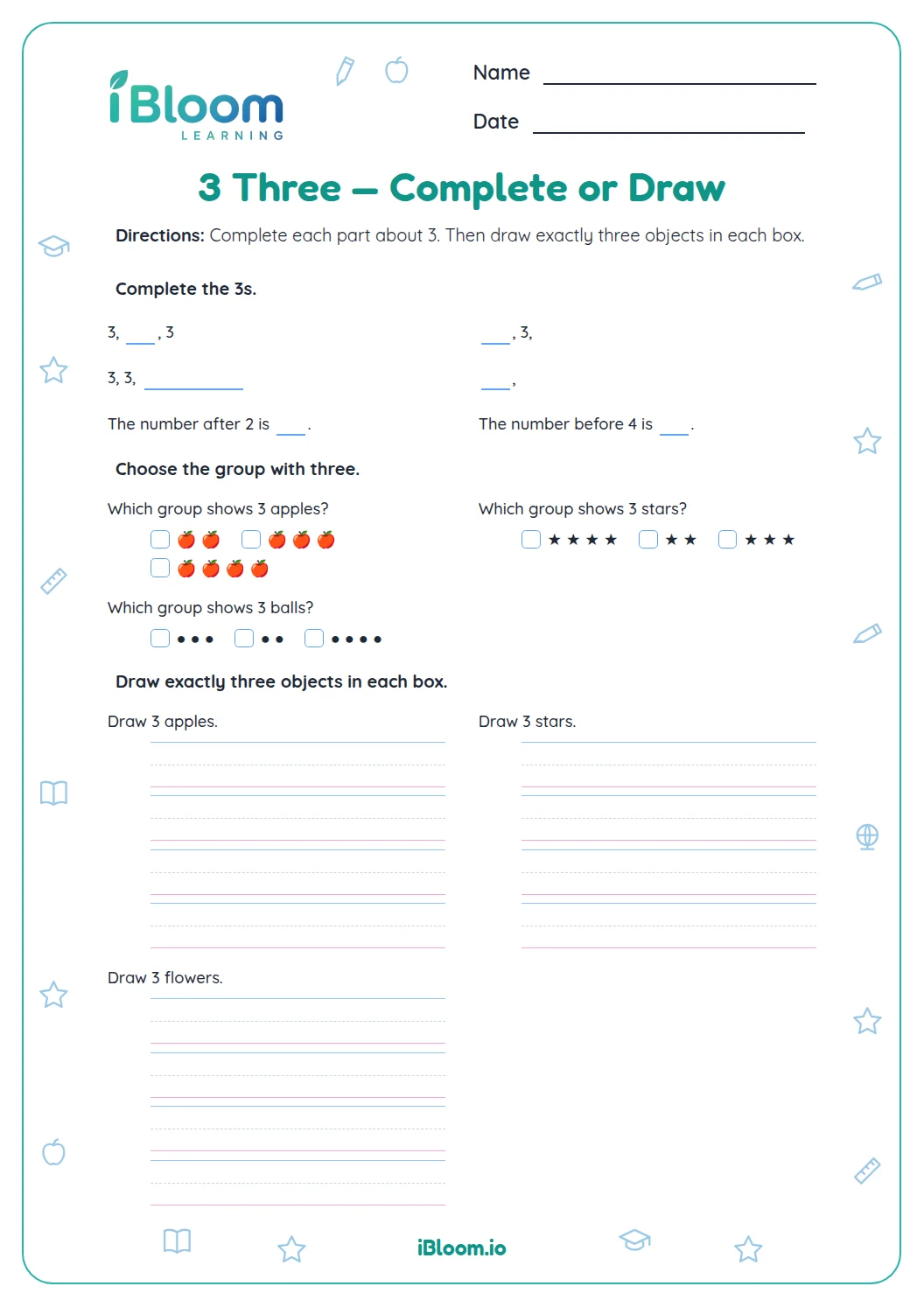
In Part A, each question shows two pictured groups. Children choose the group with exactly three objects, such as apples, birds, stars, flowers, or pencils. They can touch each picture once while counting.
Part B connects the group count to the numeral 3 and the word “three.”
How can a child check the apple group?
Touch the apples one at a time and say “one, two, three.” Choose the group with three apples, then compare it with the group that has only two. Counting each object once makes the answer easier to check.
Use the same touch-and-count routine for the other pictures.
- 1Which group has 3 apples?
- 2Count each apple once; choose the group of three.
Where can children use the number three?
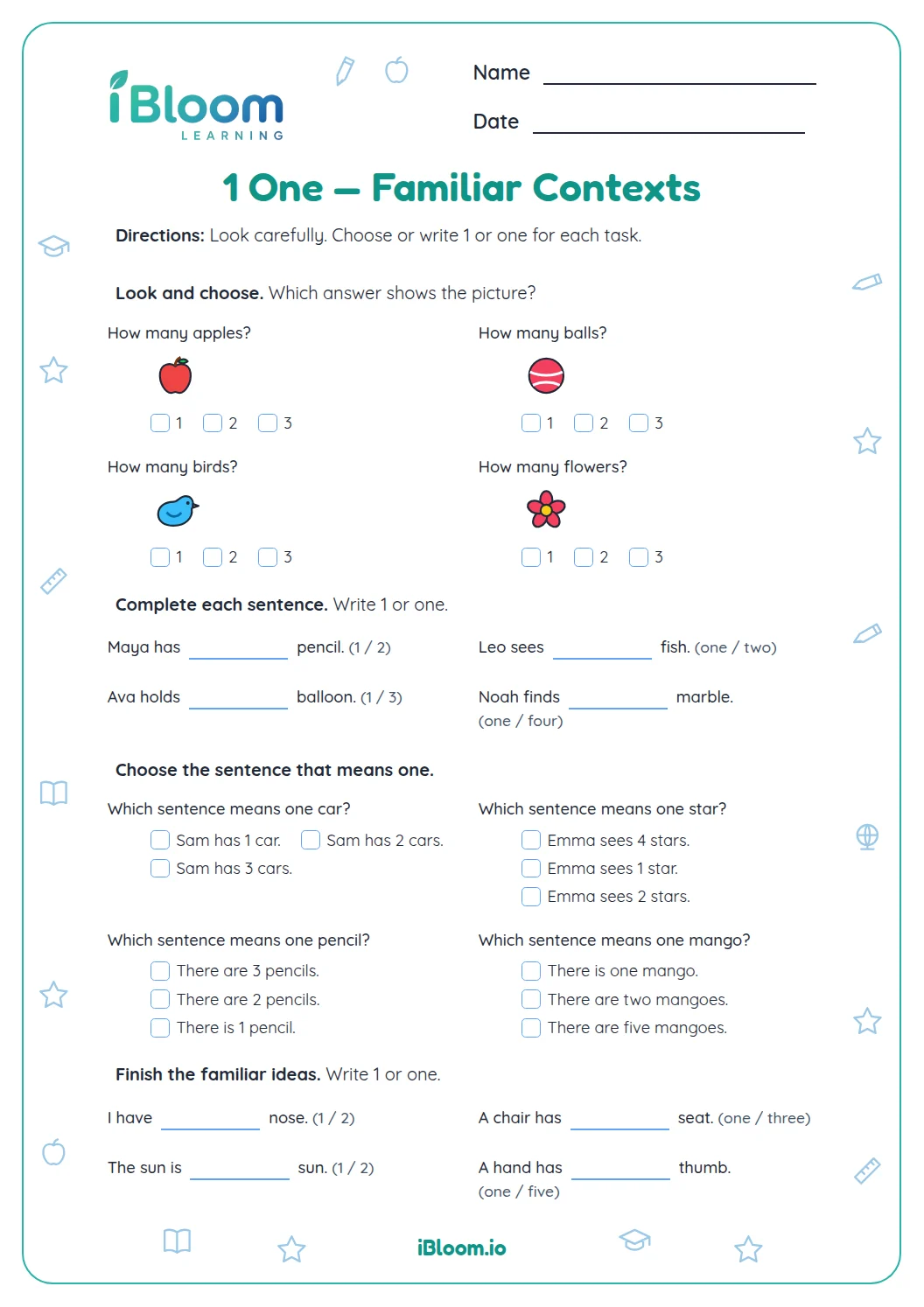
The final questions connect three to toy cars, apples, fish, flowers, and balls. Children write the numeral or number word and fill in a count, practicing the idea that three names a group with three objects.
Invite a child to find another familiar group of three at home.
How to use this worksheet
- 1Count each pictured object once.
- 2Choose the group that has exactly three.
- 3Write 3 for the numeral question and “three” for the word question.
- 4Fill the familiar-context blanks by counting the named objects.
Common mistakes and quick fixes
The mistake
Skipping an object while counting a picture group.
The fix
Point to each picture once while saying one number word.
The mistake
Choosing the group with two objects.
The fix
Count to the last object; a group of three ends with “three.”
The mistake
Writing the word “three” when the blank asks for a numeral.
The fix
Check whether the prompt asks for the number word or the numeral 3.
Curriculum alignment
This page gives students focused practice with a standard that connects to the skill.
Recognize, write, and represent the number three.
On this sheet: Children connect a group of three objects with the written numeral 3.
Show the official wordingHide the official wording
Write numbers from 0 to 20. Represent a number of objects with a written numeral 0–20 (with 0 representing a count of no objects).
What to practice next
Make more practice
Further reading
Questions parents and teachers ask
How many picture groups should have three objects?
Each picture question has one group of three and one group of two. Count both choices, pointing to each object once, then choose the group whose count ends at three. Each choice uses the same object so the count is easy to compare.
How do you write the number three?
Write the numeral as 3. The number word is “three.” Part B asks for both forms so children can connect the written numeral and word with the pictured quantity. Pointing once to each object helps keep track of the count.
What is the difference between 3 and three?
They name the same number in different written forms. The symbol 3 is the numeral; “three” is the number word. The worksheet includes one question for each form. Say the numeral and word aloud while looking at the matching group.
How can I help if counting gets mixed up?
Have the child point to each object once while saying one, two, three. If the child loses track, start again at the first object and move across the group in an orderly direction. A steady count helps a child connect the word with the quantity.
What does the answer key show?
The key marks the pictured group with three objects and gives the expected number or word for each fill-in. For the picture choices, check the count together rather than asking the child to memorize the answer position. Ask the child to count the objects again before checking the key.