




About this worksheet
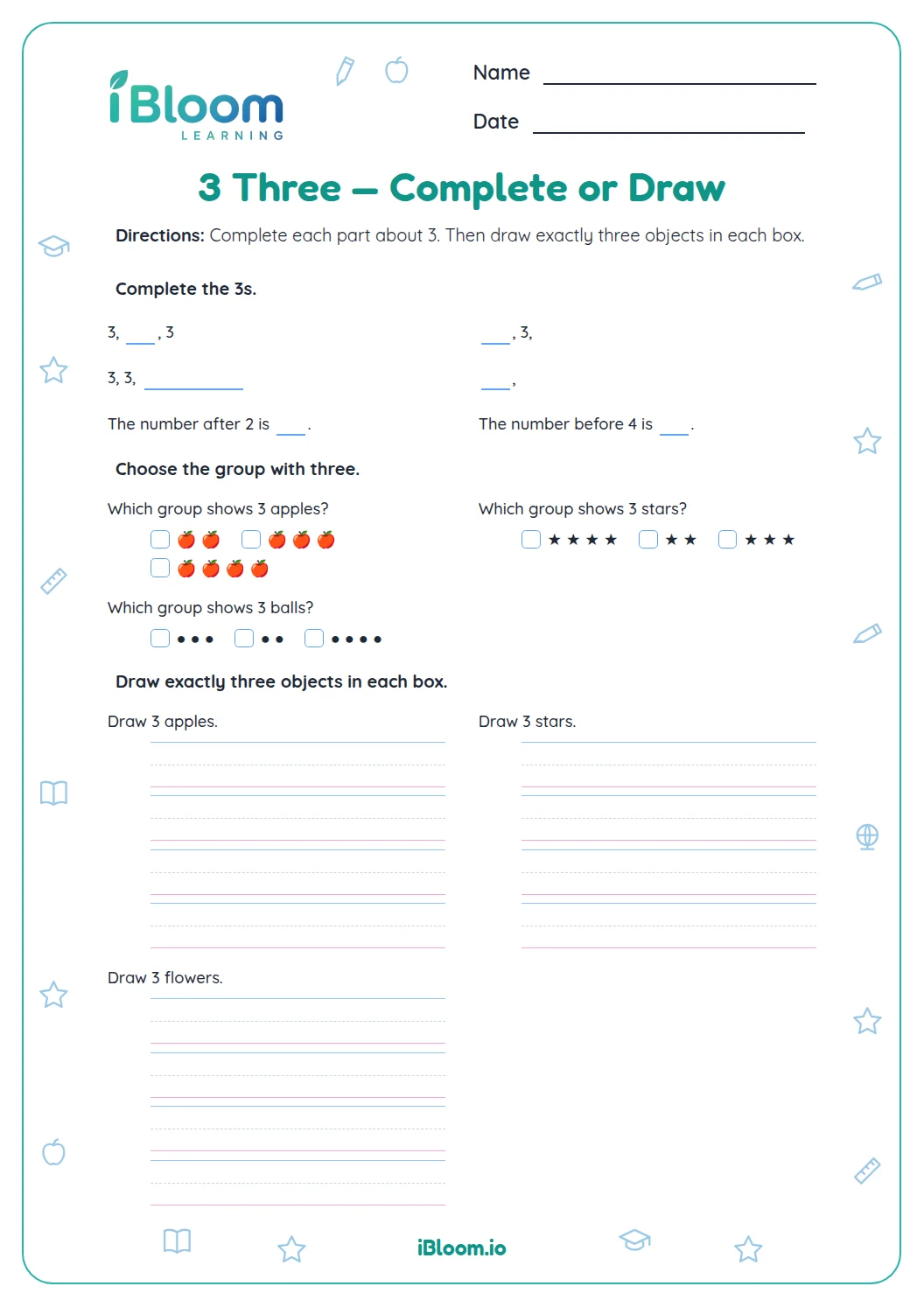
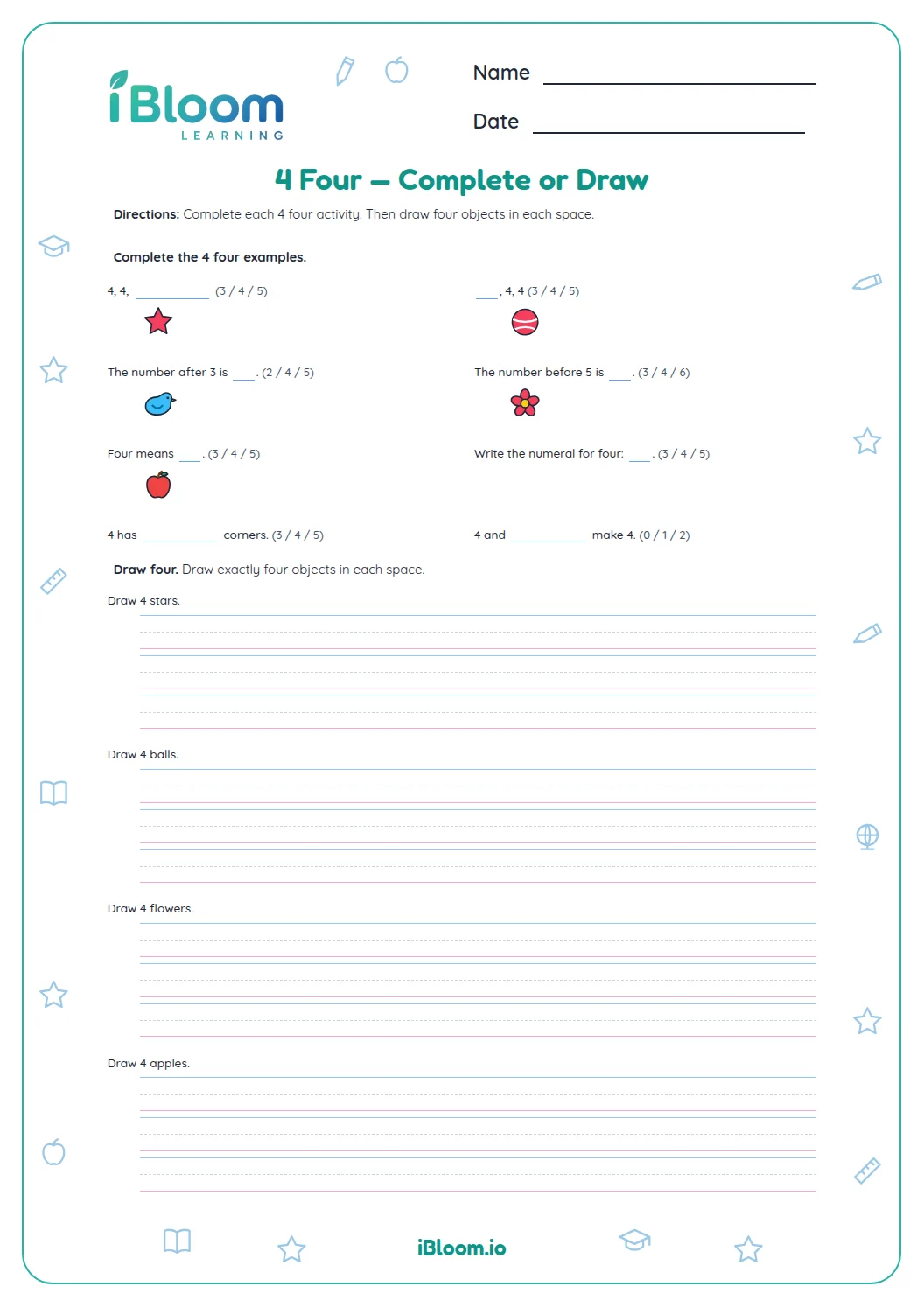
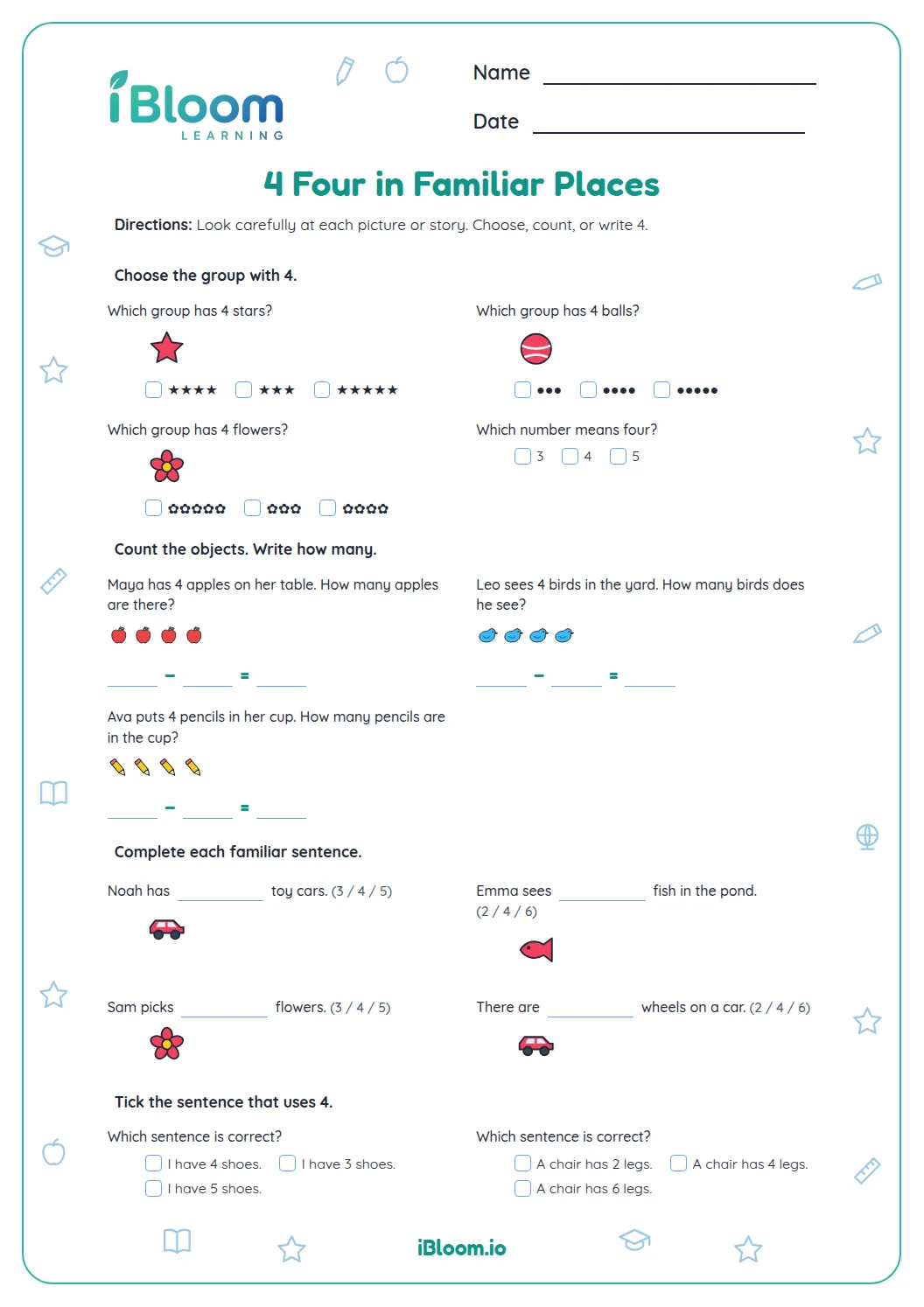
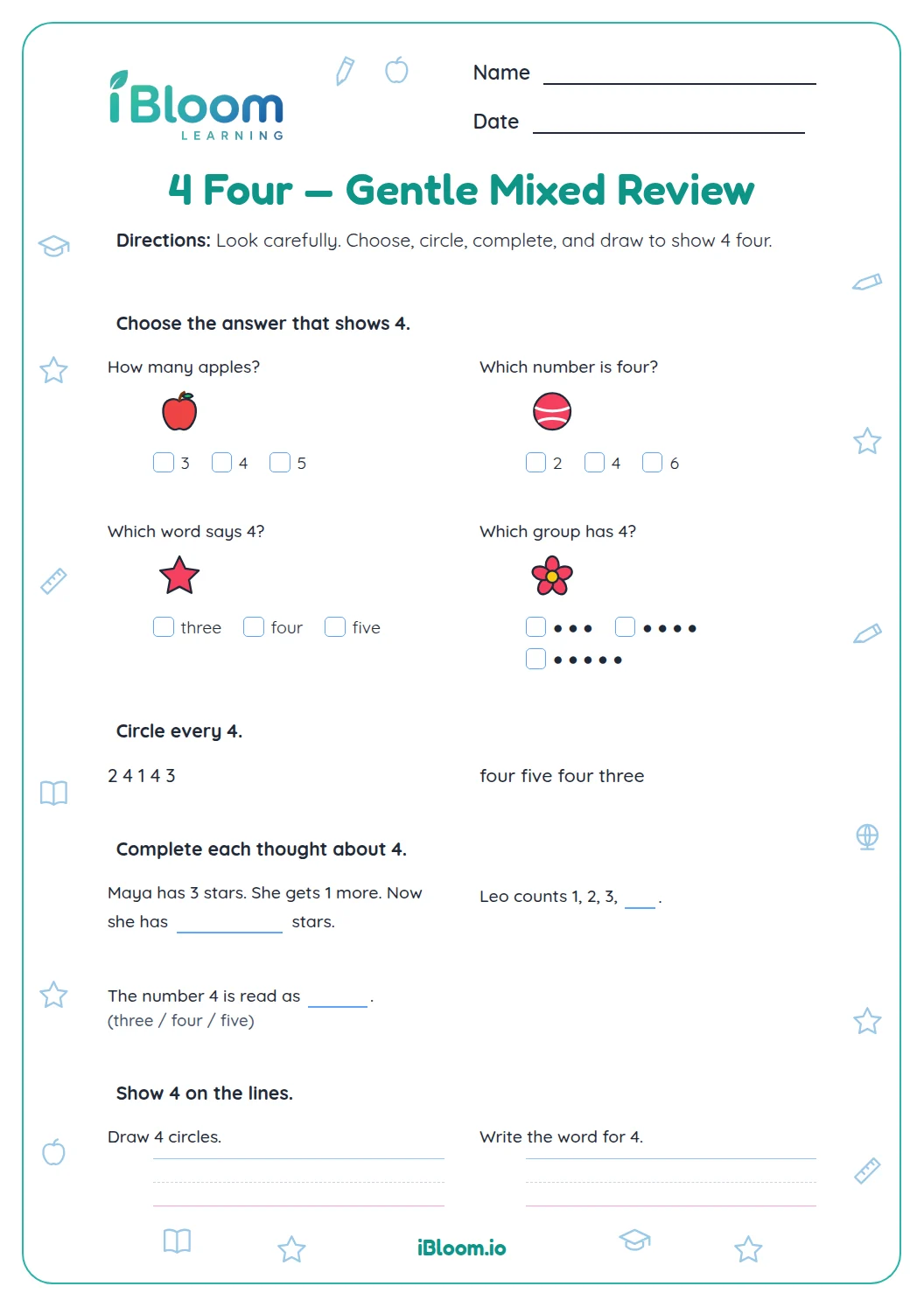
This free printable number three worksheet gives preschool and kindergarten learners practice recognizing the numeral 3 and the word three. Across 16 questions, children choose the number, count illustrated groups, circle 3 in number sequences, and draw three objects. Most pictured groups contain three, with a few groups of two or four for careful counting. A separate key supports checking.
Aligned to K.CC.B.4
How does counting tell how many are in a group?
The numeral 3 and the word three both name a quantity of three. Point to one object for each number word when counting; the last number word tells how many are in the group. The sheet moves among choosing, counting, circling, and drawing.
For q3, count each apple once: one, two, three. The matching numeral is 3.
- 1Point to each apple once.
- 2Say one, two, three.
- 3Choose 3 to name the group.
What kinds of groups appear on the pages?
Part B uses picture groups of two, three, or four. Count each group instead of guessing from the title, write the total, and color the objects. Most groups contain three.
How do the later parts reinforce the number three?
Part C asks children to find the numeral 3 or the word three in short sequences. Part D gives space to draw three circles and three small stars.
What counting idea does the standard describe?
K.CC.B.4 connects counting words and numerals to quantities. Children count each pictured object once, identify the final count, and connect three objects with the numeral 3.
How to use this worksheet
- 1Read the directions and name the numeral 3 and word three.
- 2For each picture group, point to every object once while counting.
- 3Write the final count and color the group.
- 4In Part C, circle only the numeral or word that names three.
- 5Check your answers with the key and recount any missed picture group.
Counting slips and quick fixes
The mistake
Choosing 2 or 4 when asked for the numeral three.
The fix
Say “three” and match it to the numeral 3.
The mistake
Skipping an object while counting a group.
The fix
Move a finger to each picture as you say one number word.
The mistake
Circling a number next to 3 in a sequence.
The fix
Look for the exact numeral 3 or the exact word three.
Curriculum alignment
This worksheet practices the standard below through its questions and worked examples.
Connect counting words and numerals to quantities.
On this sheet: Count pictured sets of three and connect the quantity to its number name.
Show the official wordingHide the official wording
Understand the relationship between numbers and quantities; connect counting to cardinality.
What to practice next
Make more practice
Further reading
Questions parents and teachers ask
What does the number three mean?
Three names a group with three objects and is written with the numeral 3. The worksheet connects the number word, written numeral, and pictured quantity through choice, counting, and circling. Most picture groups contain three. These activities give children several ways to name and find the same small quantity.
How should a child count the pictures?
Point to one picture for each number word, moving steadily across the group. After the last picture, say how many there are altogether. This keeps the count connected to the objects and helps prevent skipping or counting the same picture twice.
Why do children color the groups?
Coloring gives children a simple follow-up action after they count. The count still comes from matching one number word to each object; coloring does not change the total. An adult can ask the child to recount before coloring if the written numeral does not match.
Are all the groups made of three objects?
Most pictured groups contain three objects, while a few have two or four. Those different amounts encourage children to count what is actually pictured. Other questions focus directly on recognizing the numeral 3 and the word three. Counting each set makes the different amounts easy to check.
Can a child say the answer instead of writing it?
Yes. A preschool learner may say an answer aloud while an adult records the numeral or helps with the drawing. The choice questions also let children point to the answer. These responses keep attention on connecting the spoken number with three.
Is an answer key included?
Yes. A separate key lists the count for each picture group and the expected responses for the recognition, circling, and drawing questions. Use it after the child has tried each item, then revisit any missed count by pointing and counting together.