







About this worksheet
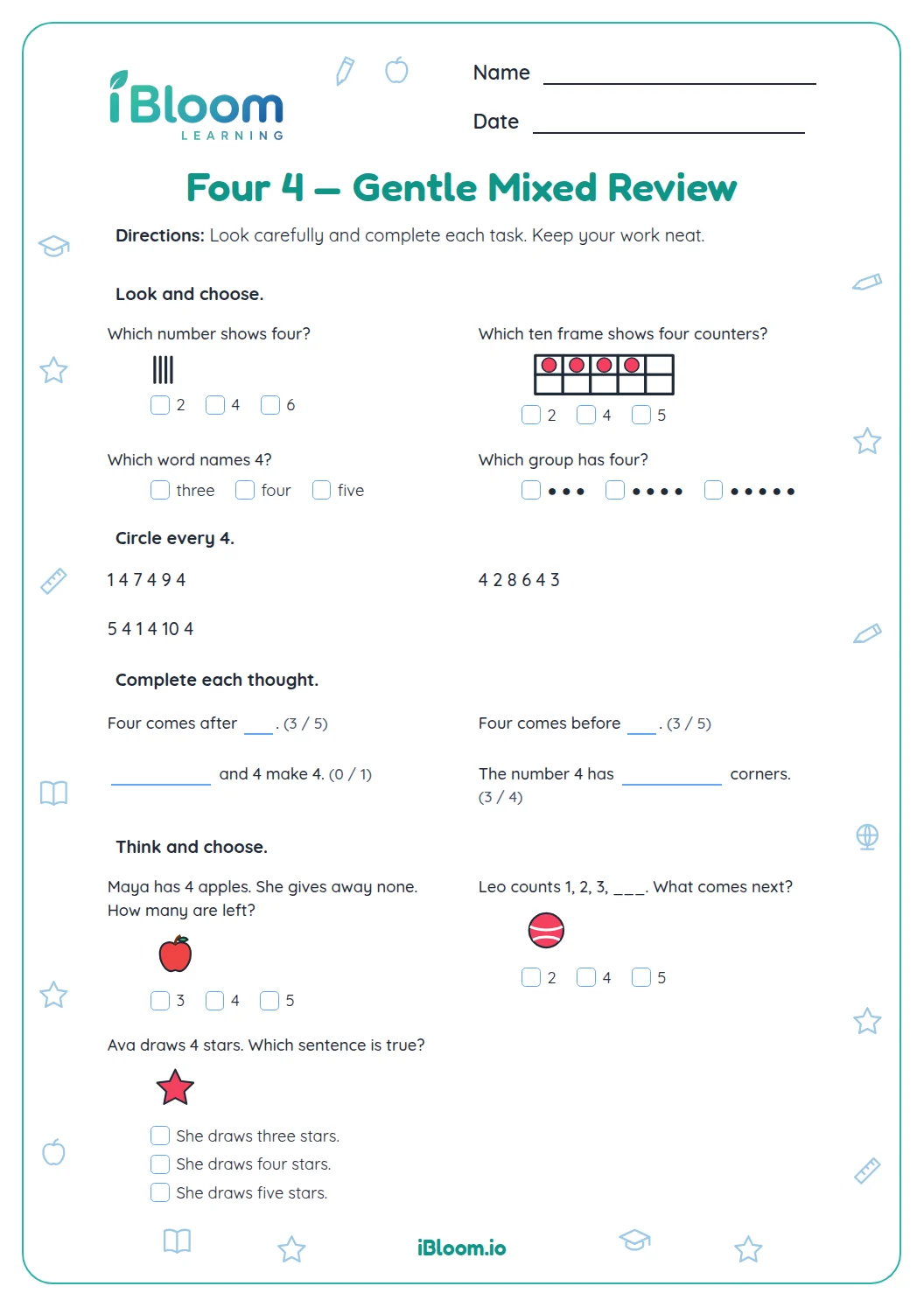
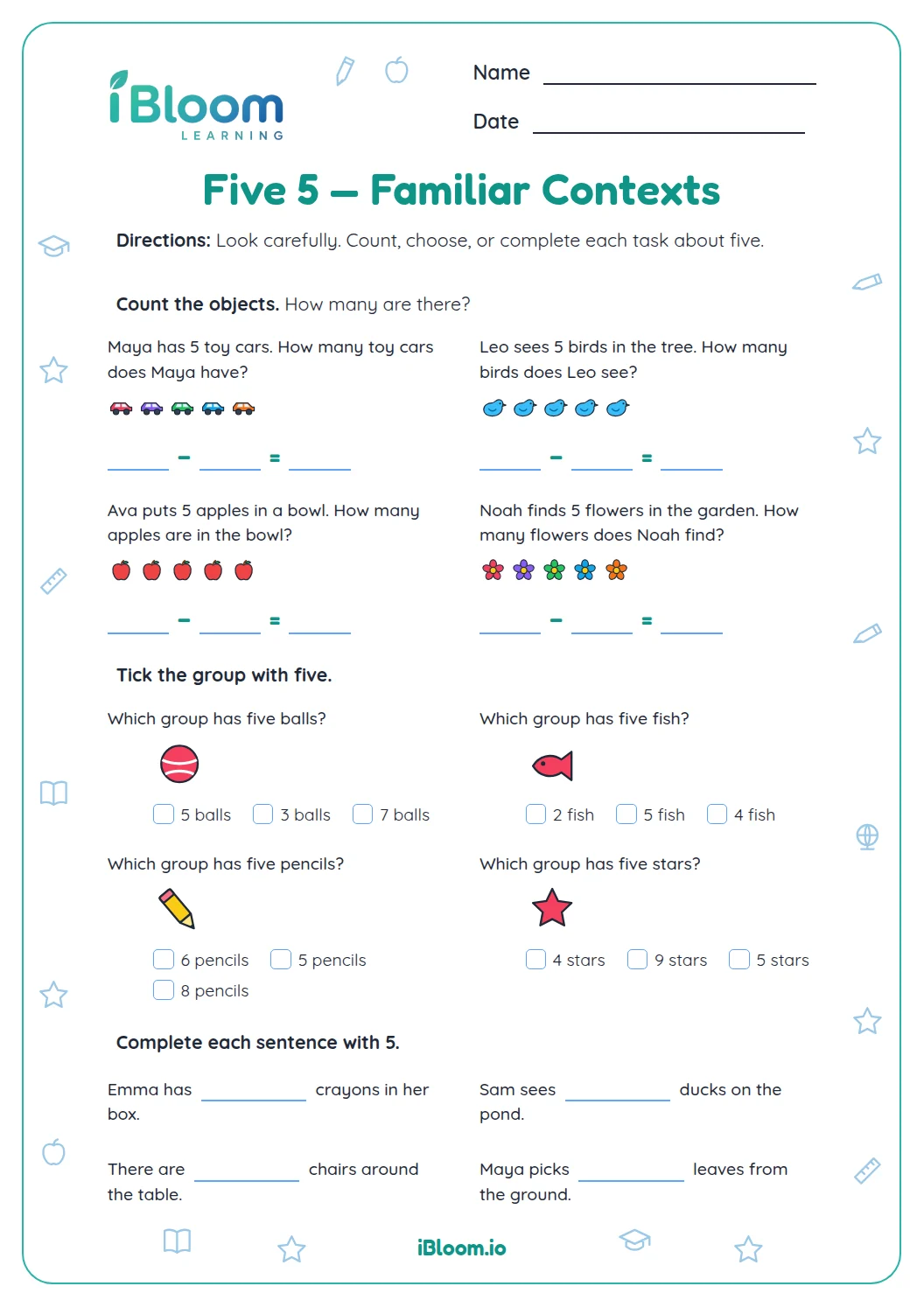
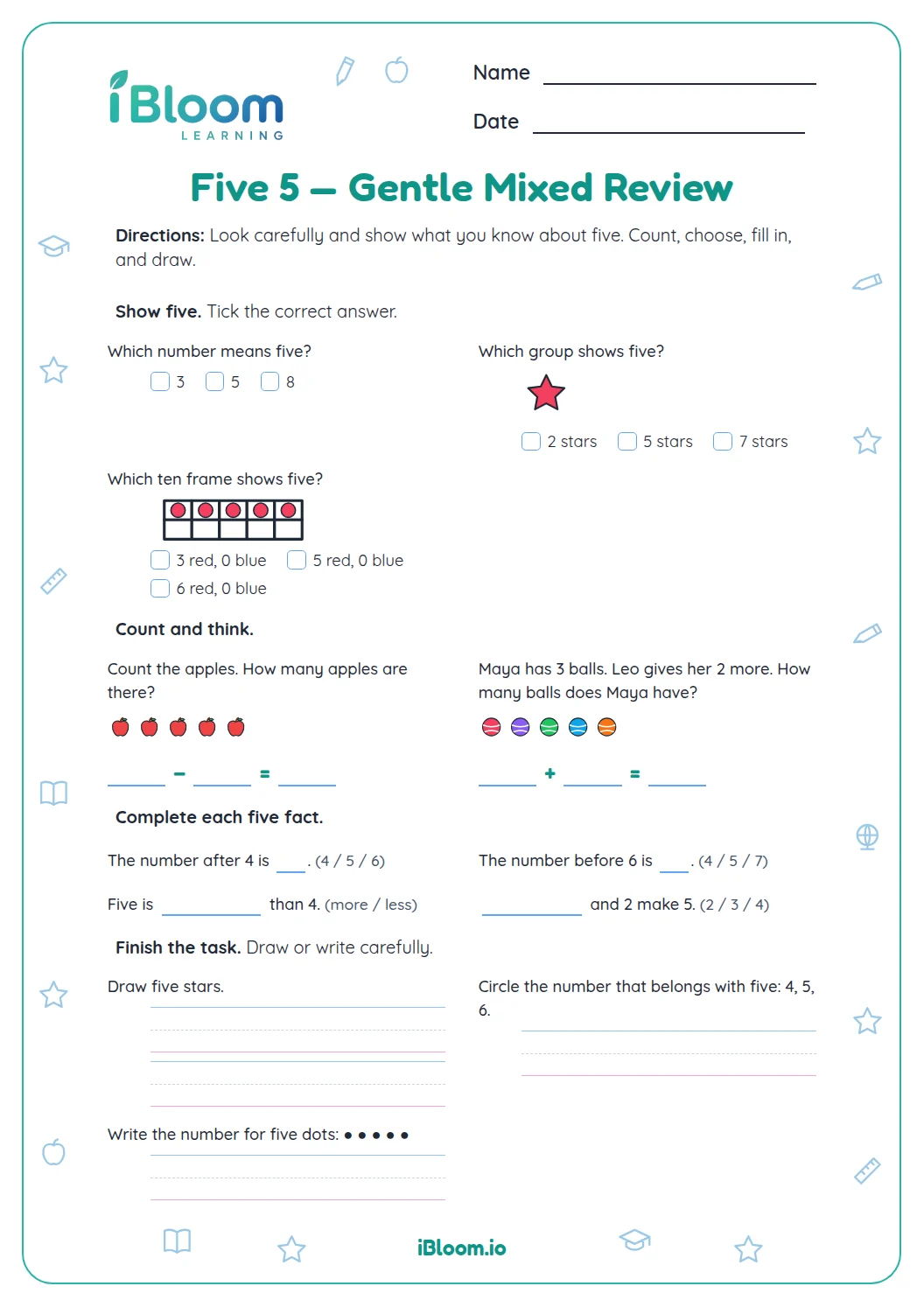
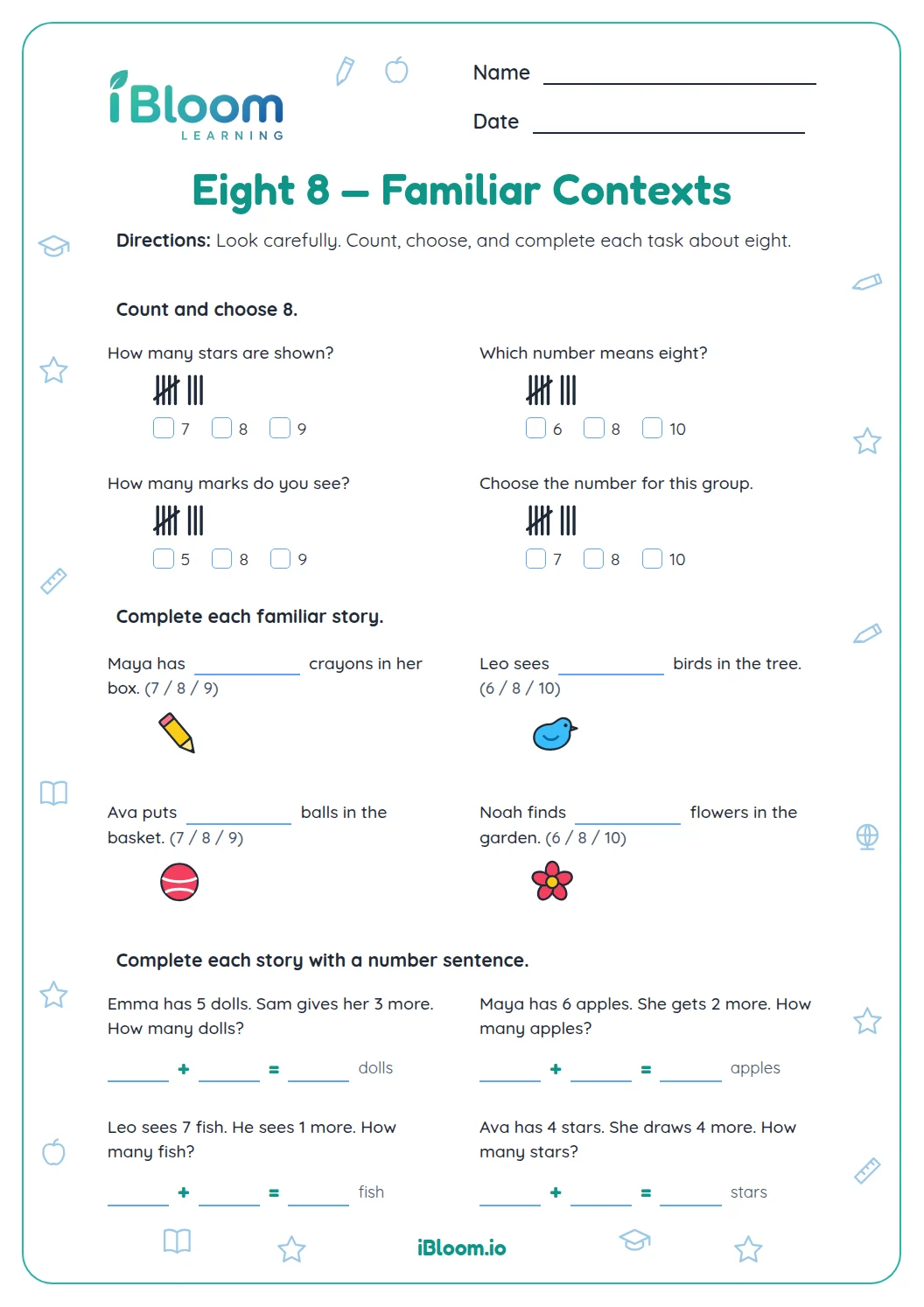
This preschool and kindergarten number 4 worksheet uses familiar groups of apples, stars, fish, flowers, balls, chairs, birds, and other objects. Children count each pictured set and choose its total. Most items show four objects, with a few groups of three or five to keep the count tied to what is pictured. The key lists each correct total.
Aligned to K.CC.B.4
How do children count the pictured groups?
Part A shows groups of three, four, and five familiar objects. Children point to one object at a time and write the total.
- 1Count the four apples once each and write 4.
Where does four appear in familiar examples?
Part B completes short sentences about apples, birds, pencils, and stars. Part C uses everyday objects and a square to connect the quantity four with familiar facts.
How to use this page
- 1Name the object in the group.
- 2Touch one object as you say each number.
- 3Stop after the last object and say the total.
- 4Look at the number choices and select the matching numeral.
- 5Recount if the total seems different from the first count.
Helpful reminders
The mistake
Touching one object more than once.
The fix
Move across each row in one direction as you count.
The mistake
Saying the count words but not naming how many altogether.
The fix
Repeat the last number word as the group total.
The mistake
Choosing 4 without counting.
The fix
Check each pictured group because some totals are 3 or 5.
Curriculum alignment
This worksheet practices counting objects and connecting a count to its numeral.
Count pictured objects and match the total to a numeral.
On this sheet:
Show the official wordingHide the official wording
Understand the relationship between numbers and quantities; connect counting to cardinality.
What to practice next
Make more practice
Further reading
Questions parents and teachers ask
How many pictured groups show four objects?
Two pictured groups show four objects. The other count groups show three and five, so children need to count each set instead of assuming every group has the same total. There are 14 items in all, and the answer key gives each count and number choice.
How can I help a child avoid skipping a picture?
Invite the child to touch one object for each count word and move steadily across the group. If the arrangement is crowded, point across one row at a time. The final number word said gives the number of objects in the group.
What does the last number in a count tell us?
The last number word tells how many objects are in the whole group. For example, after touching four apples and saying “one, two, three, four,” the child can say there are four apples altogether. The final count gives the group total. The key can be used to check the count.
Why are some groups not four?
A few groups show three or five objects. Those nearby totals help children count carefully instead of assuming every group has four. The key follows each pictured group and sentence, so children can recount a set or review a number choice.
What standard does the page practice?
The page aligns with kindergarten standard K.CC.B.4, which connects number words, counted quantities, and cardinality. Children use the last number word in a count as the total and match that total to a numeral shown among the choices. The key helps adults check this counting work.