








About this worksheet
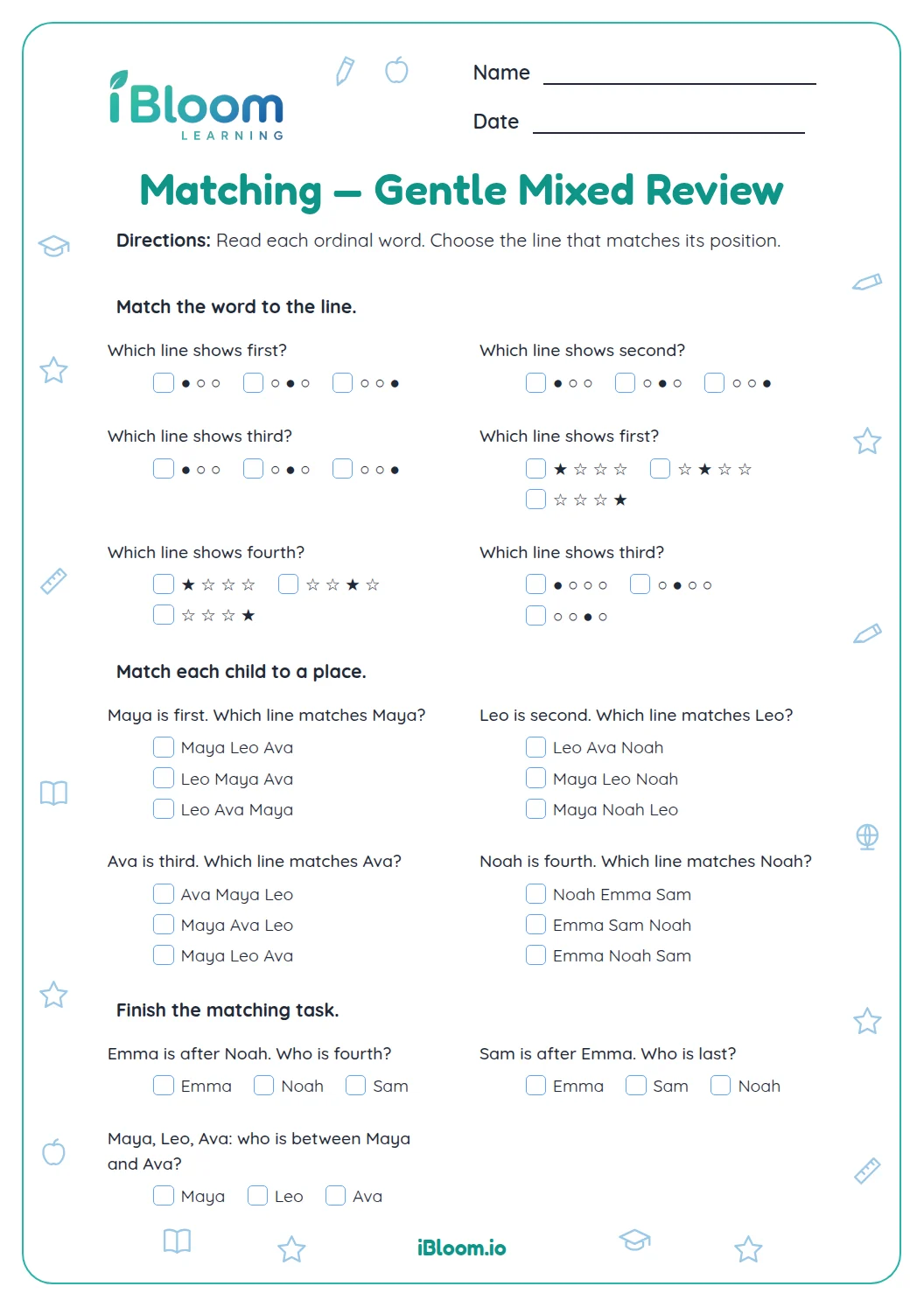
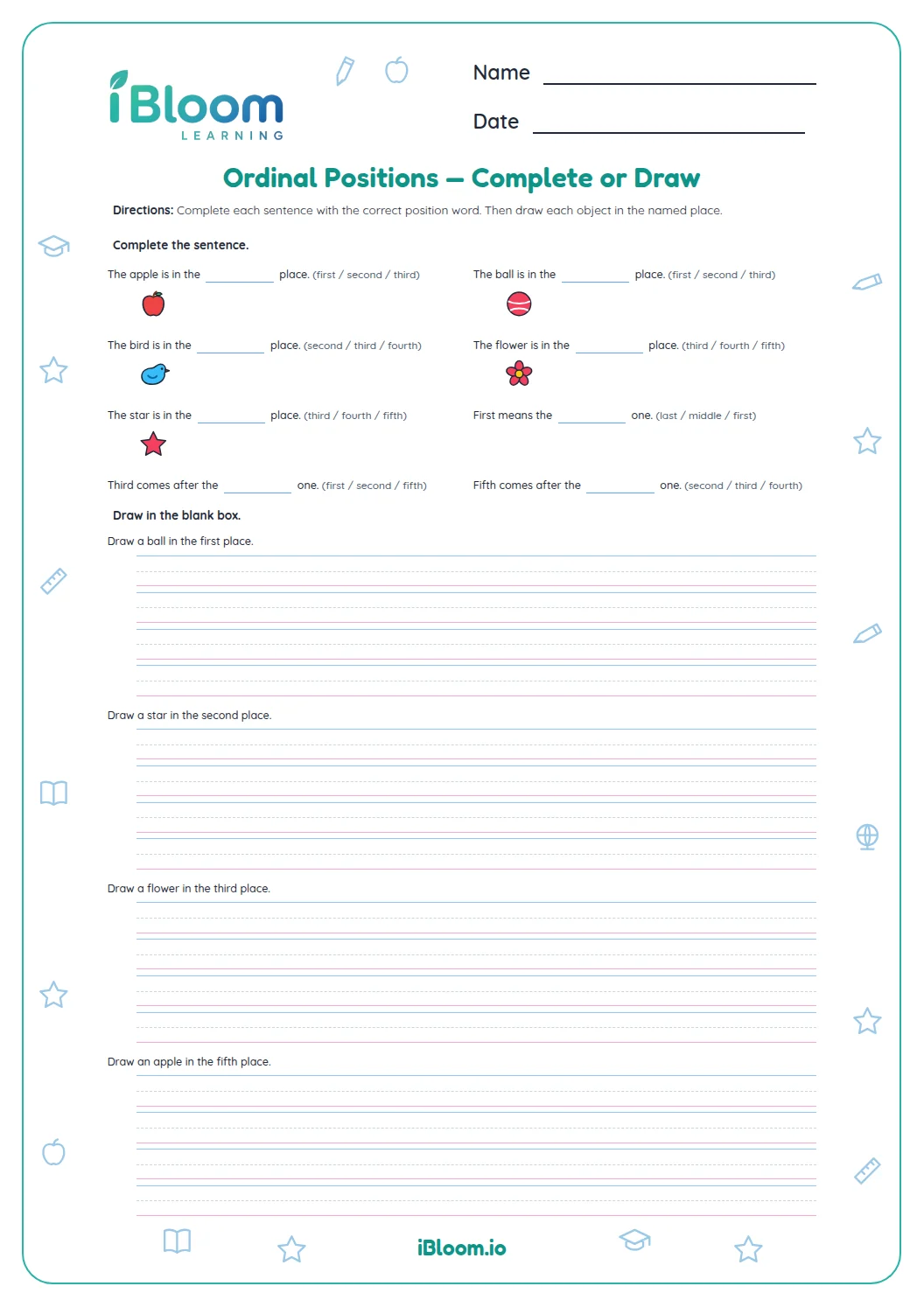
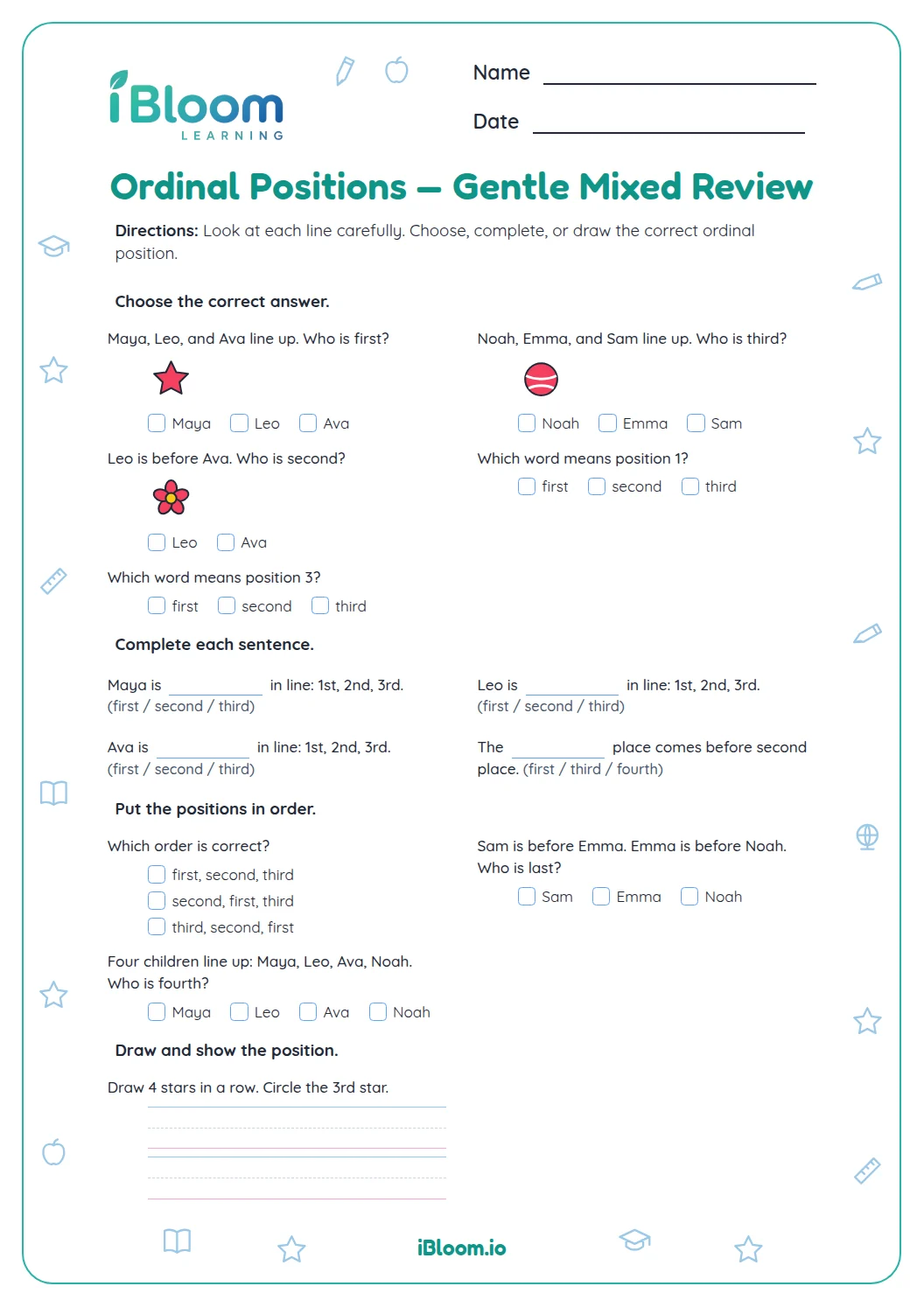
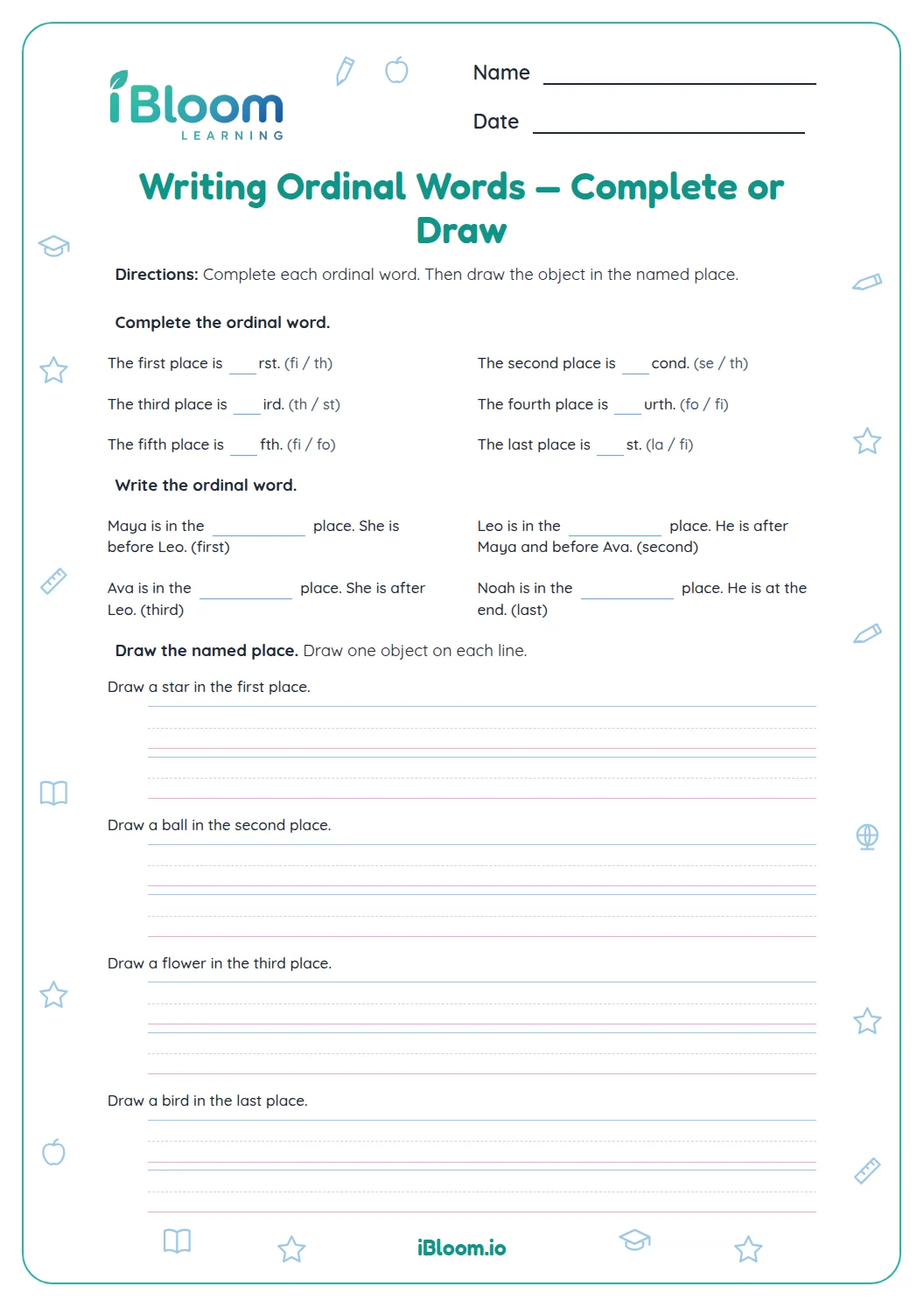
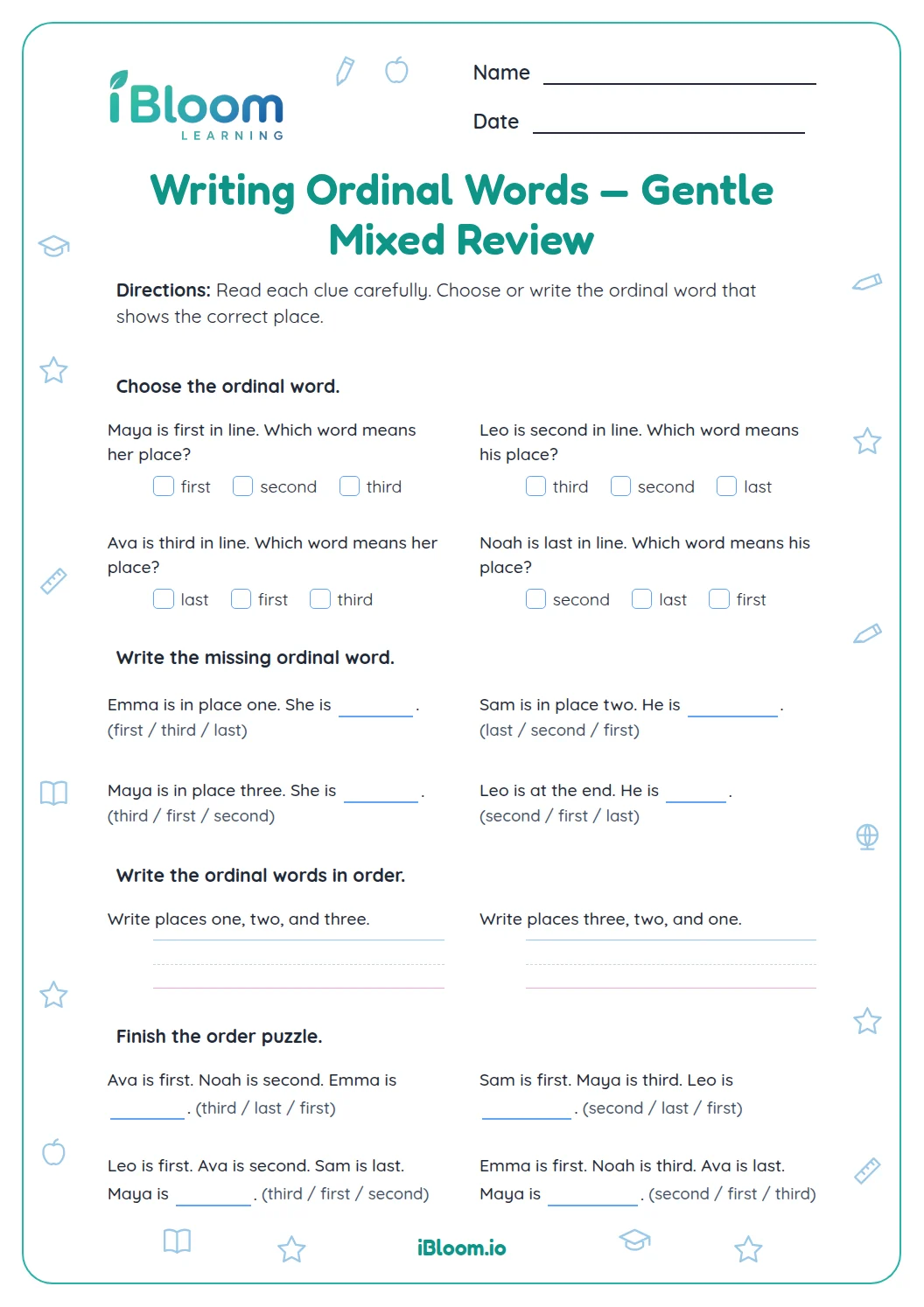
This ordinal-numbers worksheet gives preschool and kindergarten learners practice with first, second, and third. Children answer short questions about the order words, identify the place of pictured items in familiar rows, and finish by drawing three stars with the second one colored. The picture section makes the position concrete, while the first section builds familiarity with the ordinal sequence. A separate answer key lists the fixed answers and a sample drawing response.
What do ordinal words tell us?
Ordinal words tell where something is in a row. The item at the left is first, the next is second, and the next is third. Pointing while naming the places helps children keep the order clear.
How do the picture rows help?
Each picture question shows three familiar objects. The child finds the named item and writes whether it is first, second, or third in the row.
What does the drawing prompt ask?
Question 14 asks the child to draw three stars in a row and color the second star. The answer key gives a simple model description; the child’s stars can look different.
How to use this worksheet at home or in class
- 1Read first, second, and third aloud.
- 2Point across a row from left to right.
- 3Answer the short order clues.
- 4Find each named picture and say its place.
- 5Draw three stars and color the second one.
- 6Check answers with the key.
Common mistakes and quick fixes
The mistake
Starting the count at zero.
The fix
Begin with the leftmost item as first, then move one place at a time.
The mistake
Marking the named animal instead of its position.
The fix
Count across the row first, then mark the picture at that place.
The mistake
Marking the first picture when the direction says third.
The fix
Touch each picture as you say first, second, and third before marking.
What to practice next
Make more practice
Questions parents and teachers ask
What ordinal words are practiced?
The worksheet uses first, second, and third. Children answer short order clues, find the place of a pictured animal, toy, or food item in a row, and draw three stars with the second one colored. Adults can model the sequence before trying the worksheet.
How many picture questions are included?
There are 14 questions: seven short ordinal clues, six picture-position questions, and one drawing prompt. The order clues practice the ordinal sequence, while the picture rows ask learners to identify first, second, or third. They also connect these words with familiar counting routines.
Should children count from the left?
Yes. The picture rows are read from left to right, so the leftmost item is first. Point to each picture while saying first, second, and third to keep the order steady. Then find a named item and say its place.
What if a child draws the row differently?
The answer key lists the ordinal word for each fixed-answer question and a short model for the drawing prompt. Check that the child colored the second star in a row of three. The stars may look different from the key’s description.
Is this worksheet suitable for preschool and kindergarten?
Yes. It uses familiar pictures and short ordinal words with rows of three objects. An adult can read directions aloud, let the child point before answering, and help with the drawing prompt if writing or coloring is still developing at this stage.