






About this worksheet
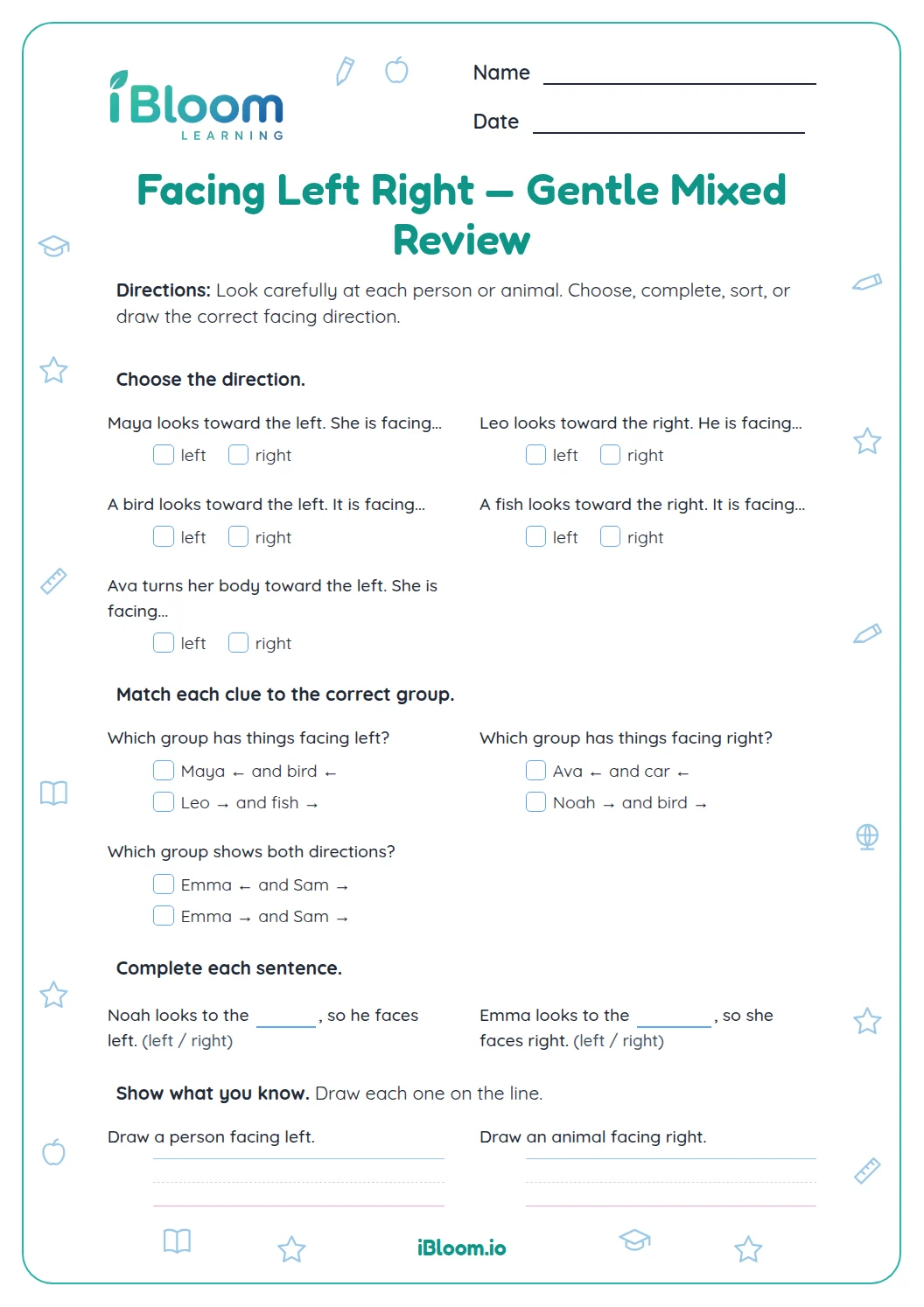
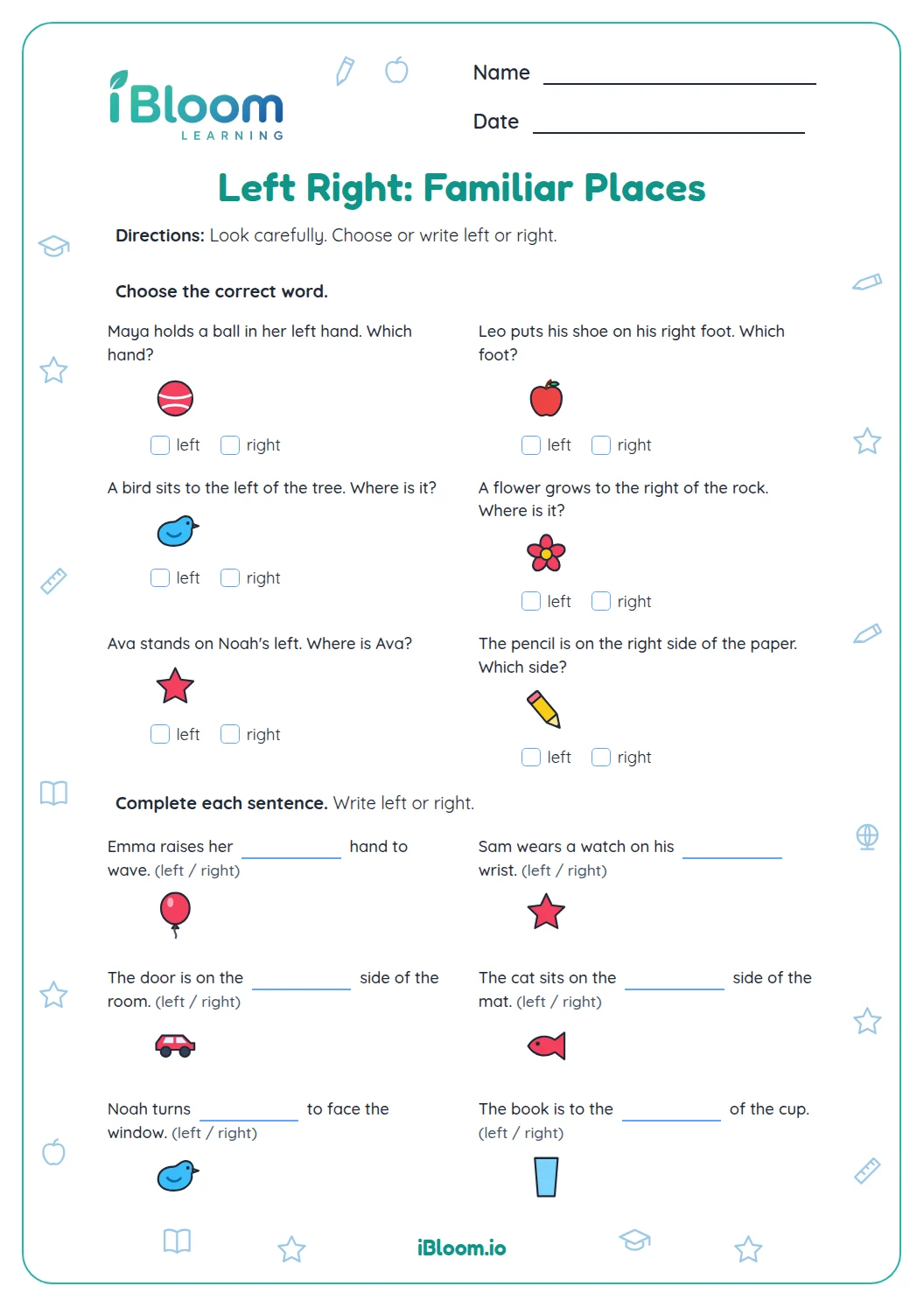
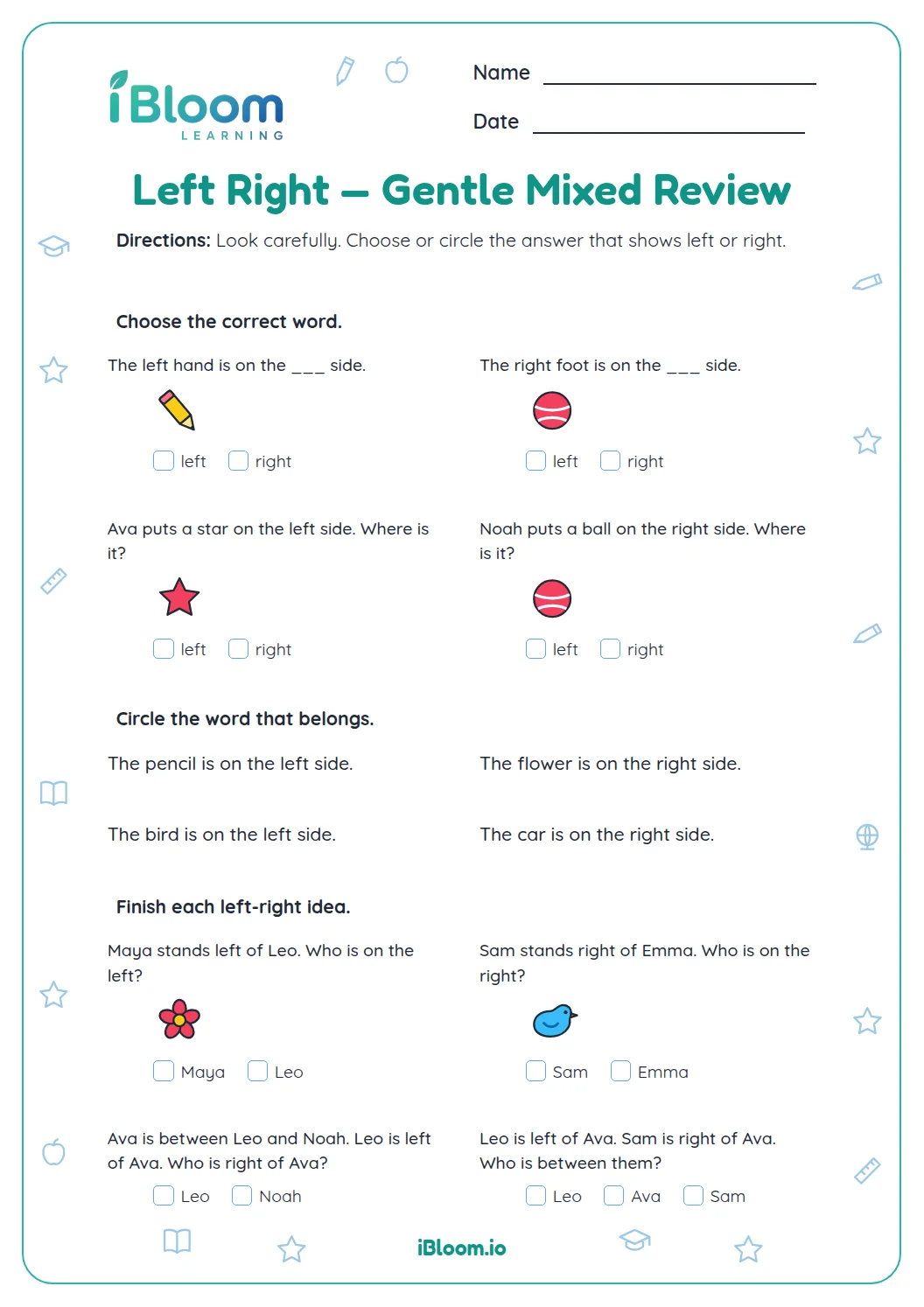
This printable preschool and kindergarten worksheet introduces left and right through familiar objects and simple situations. Children choose the direction named by each clue, then apply the words to movement toward a shelf, rug, or classroom door. The separate answer key marks each choice; an adult can read the prompts aloud.
Aligned to K.G.A.1
What do children do on the page?
Each question shows two familiar objects in a row. Children identify whether the named object appears on the left or right, then apply those direction words in a fresh set of paired scenes.
- Part A: eight object pairs
- Part B: six new object pairs using left and right
How can a child remember left and right?
Start with the direction word in the clue. If a ball rolls to the left side, choose left. For children who need support, an adult can point left and right while reading the prompt.
How can families practice after printing?
Use the same words during play: place a toy to the left of a book, then ask the child to point to it. Keep the child facing the same direction while practicing.
How to use this worksheet
- 1Look at the two objects in the row.
- 2Find the named object.
- 3Choose left or right based on its position.
- 4Say the whole clue and answer together.
- 5Try the directions with a toy after checking the key.
Left and right reminders
The mistake
Mixing up the two direction words.
The fix
Point left and right while saying each word.
The mistake
Turning around and changing which side is left.
The fix
Keep facing the same direction during the activity.
The mistake
Answering from a different person’s viewpoint.
The fix
Use the viewpoint named in the prompt and picture clue.
Common Core alignment
This worksheet practices CCSS.MATH.CONTENT.K.G.A.1 with focused questions at Grades K–2 level.
Left and Right
On this sheet: Questions across the page give direct practice with left and right.
Show the official wordingHide the official wording
Describe objects in the environment using names of shapes, and describe the relative positions of these objects using terms such as above, below, beside, in front of, behind, and next to.
What to practice next
Further reading
Questions parents and teachers ask
What ages can use this worksheet?
The page is labeled for preschool and kindergarten learners. The prompts are short and use familiar objects and places. An adult can read them aloud and invite the child to point left or right before selecting an answer.
How many questions are on the printable?
There are 14 questions in two parts across two worksheet pages. Eight use familiar object clues, and six use simple classroom or play situations. A separate answer key marks the correct direction choice for each item and supports checking after the child finishes.
Why does the child need to keep facing one way?
Left and right depend on the direction a person is facing. Keeping the same orientation makes the words easier to connect with the prompt. During practice, the adult can point in the named direction and avoid turning around midway.
Does this worksheet show left and right with pictures?
Yes. Each item includes two familiar object pictures arranged from left to right. The child finds the named object and chooses which side it occupies. The picture row supplies the position clue, while the words in the answer choices reinforce the direction terms.
How can we practice beyond the worksheet?
Place a toy beside a book and ask the child to move it left or right while both of you face the same way. Keep the activity brief and repeat the position words during play. The printable answer key helps check the selected choices.