








About this worksheet
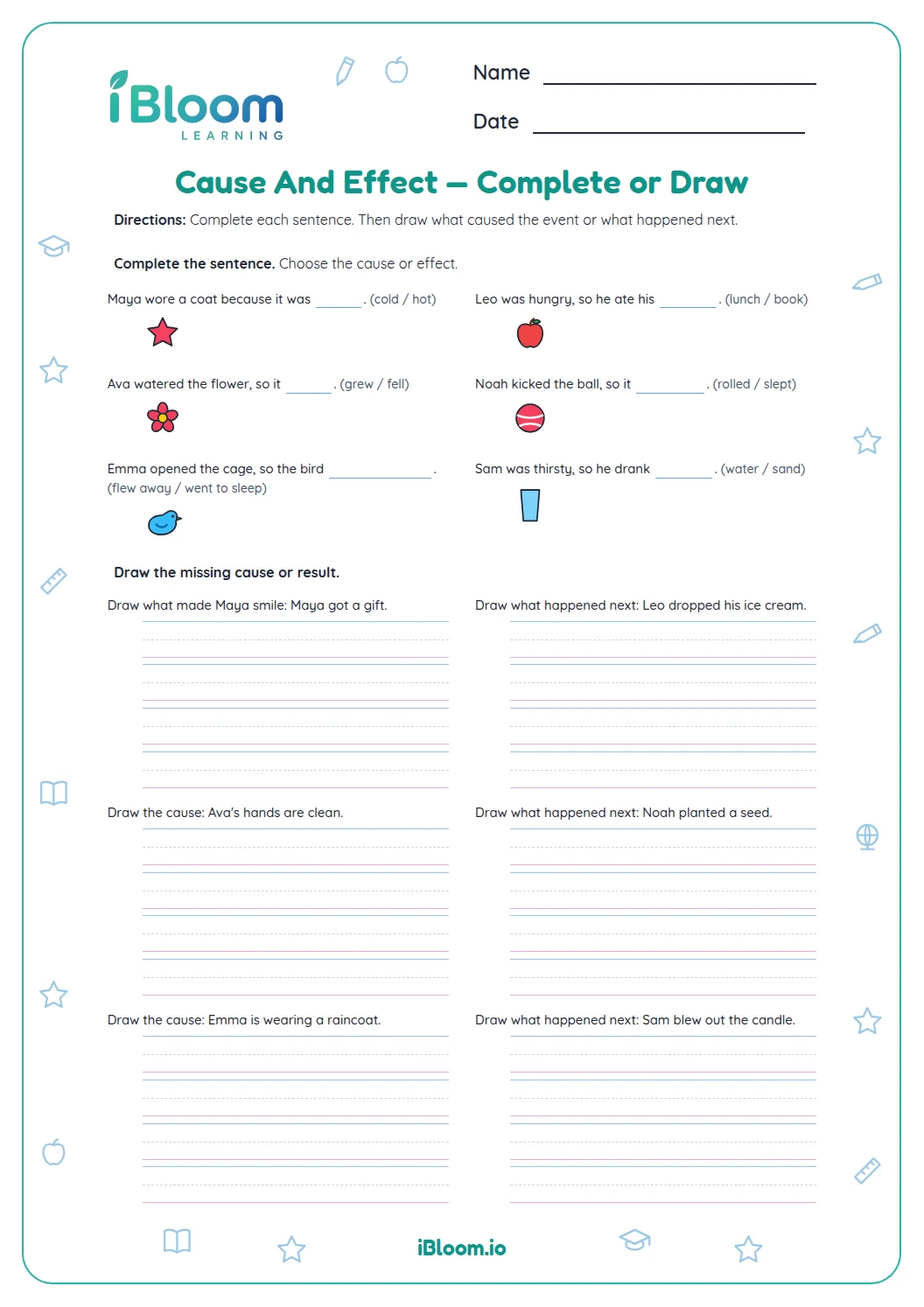
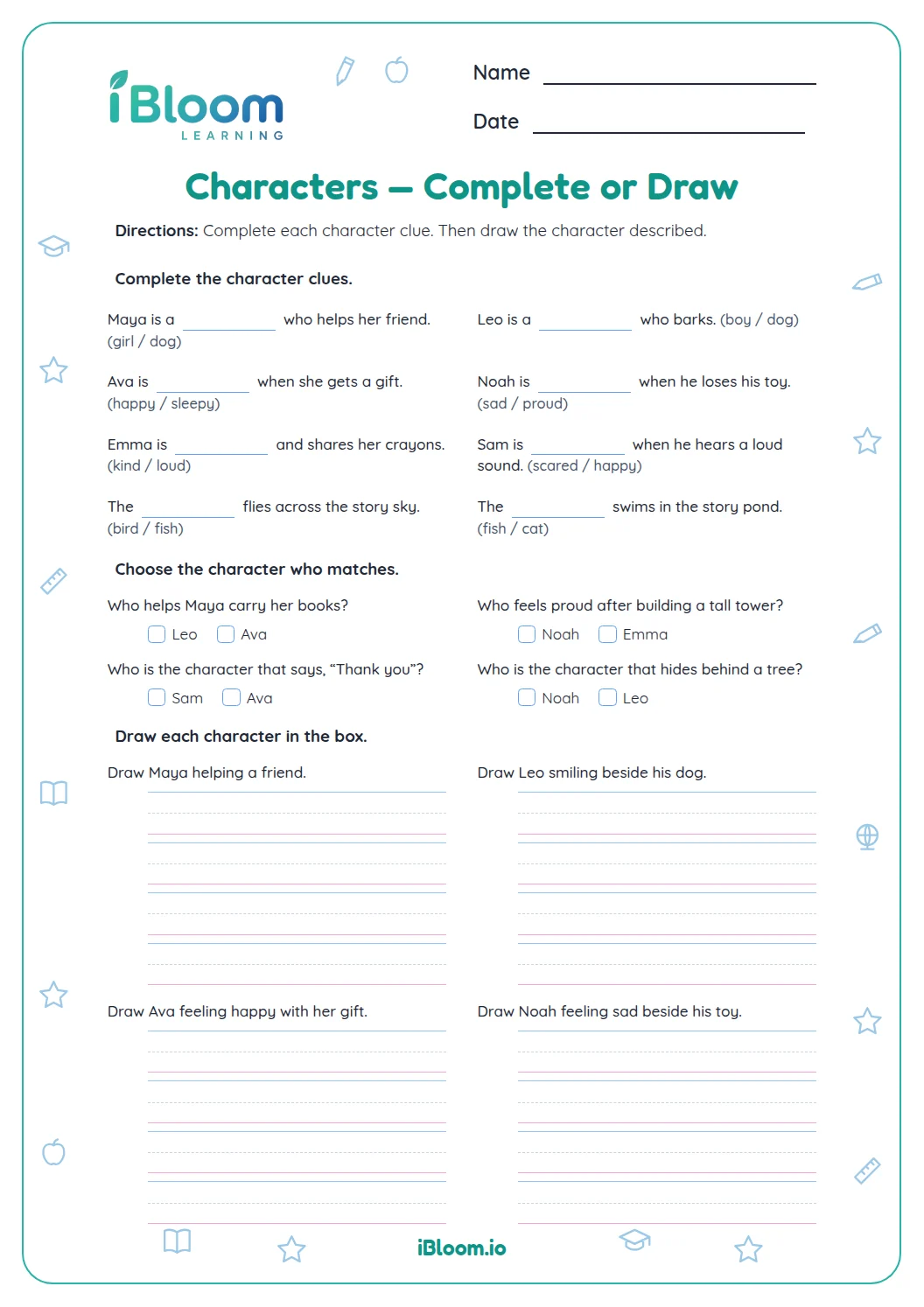
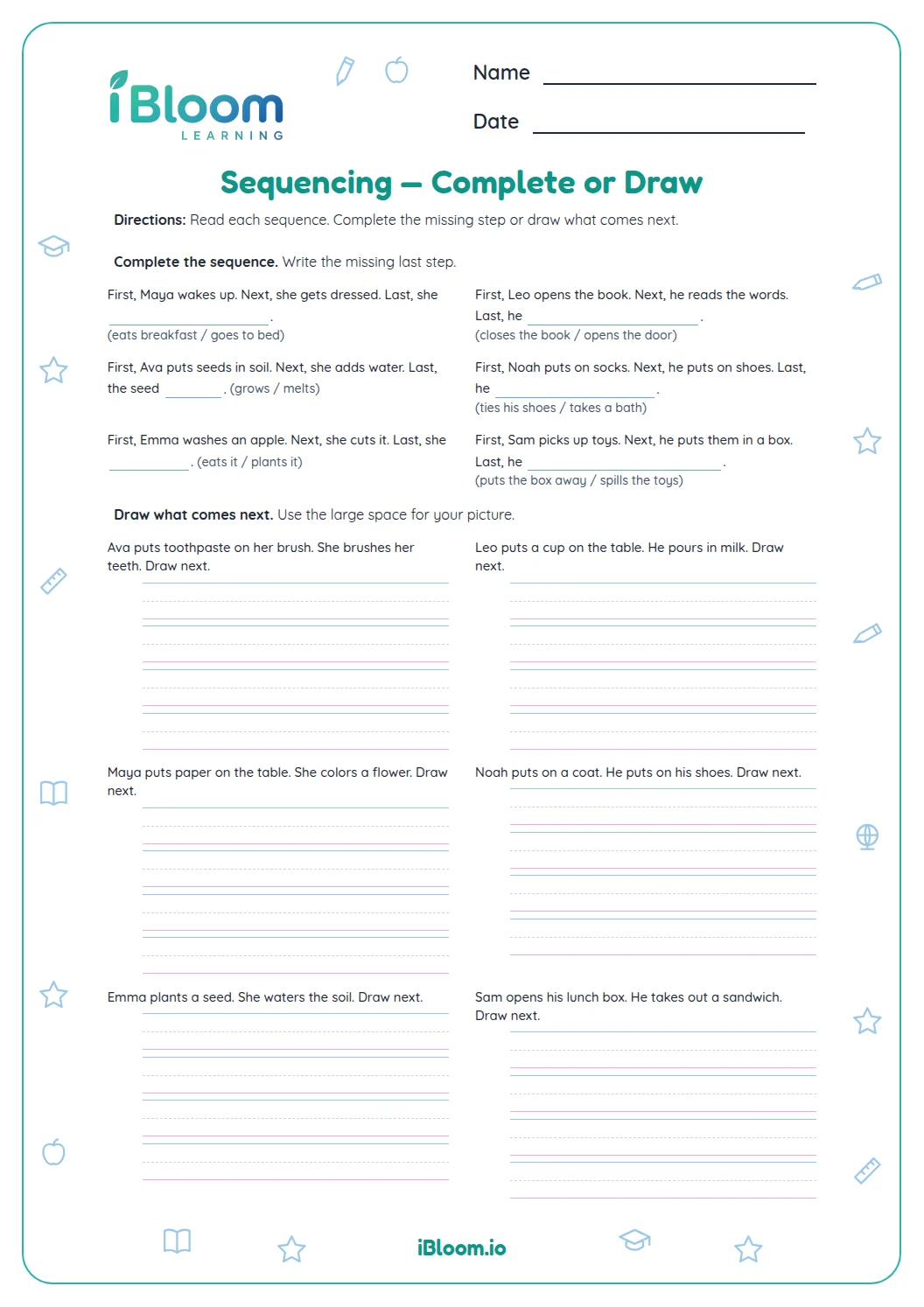
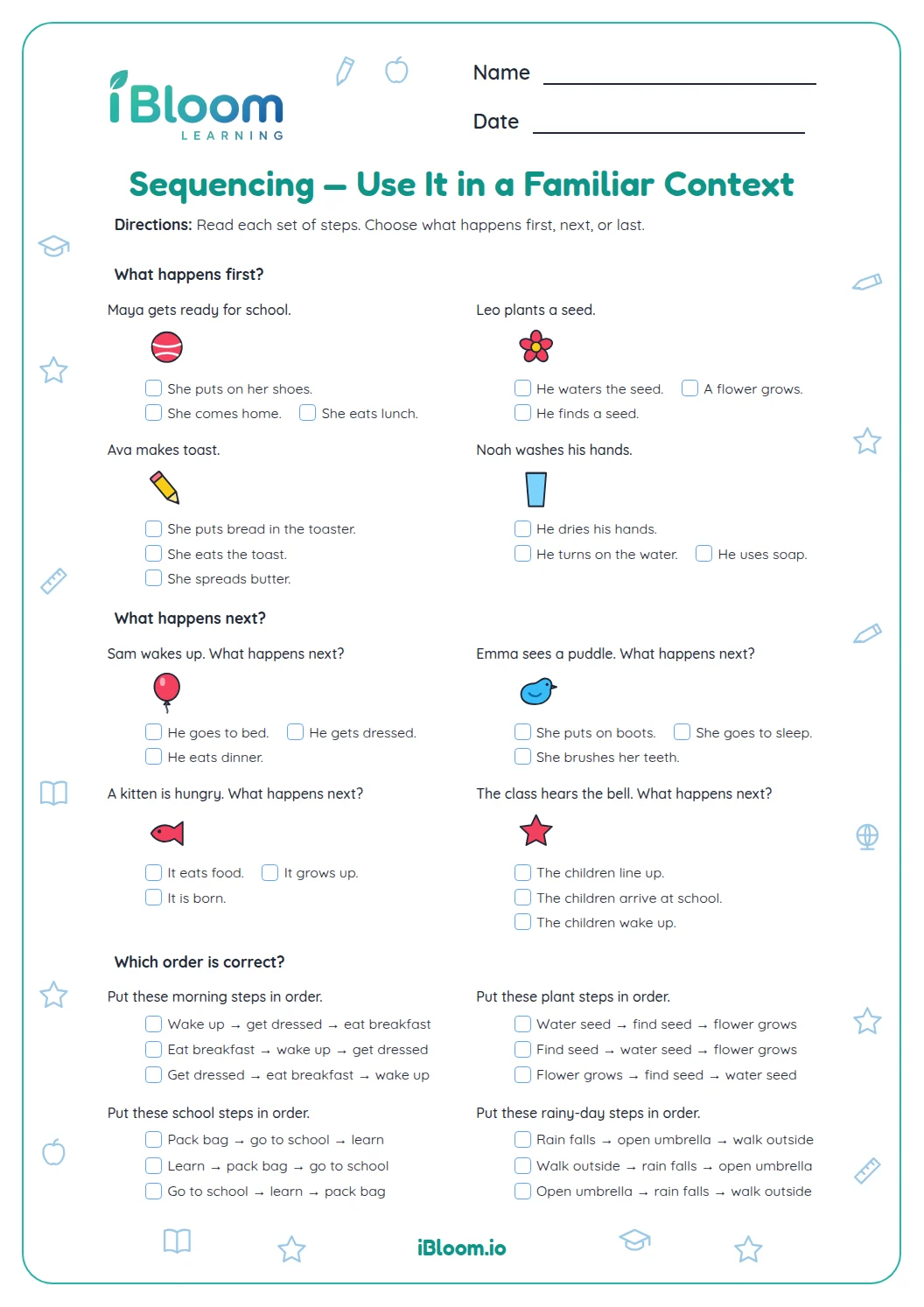
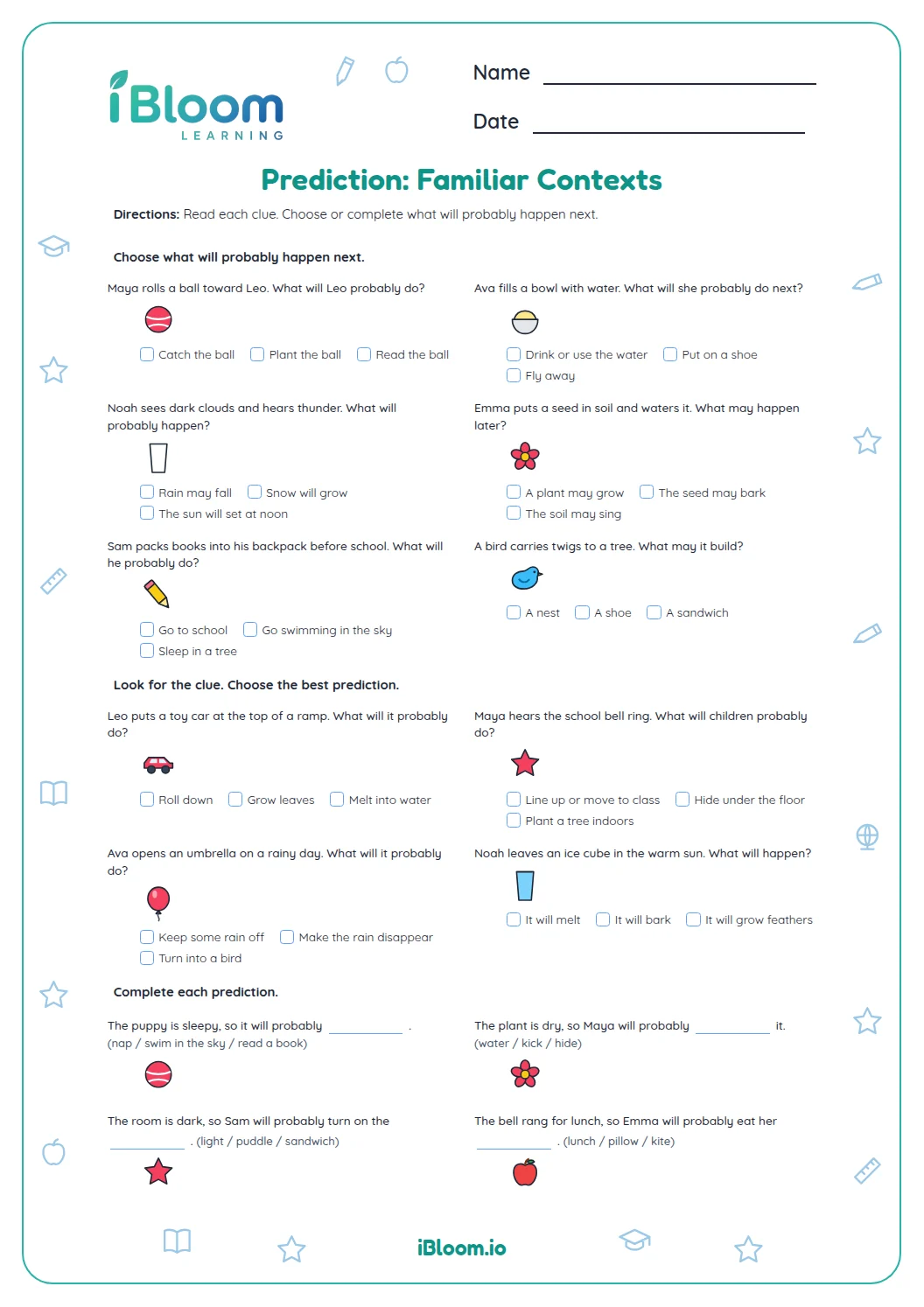
This preschool and kindergarten printable gives 14 picture-supported cause-and-effect questions in two parts. Children use familiar situations, such as rain, a seedling, and a tipped glass, to choose a likely result or cause. Each short prompt can be read aloud, making the activity suitable for emerging readers. A separate answer key lists the expected choice for each question.
What is a cause?
A cause tells why something happens. If rain falls, the sidewalk may become wet. In the first question, the rain is the cause; a puddle is one possible effect.
- 1Cause: Rain falls.
- 2Effect: A puddle may form.
What is an effect?
An effect is what happens because of a cause. A seed gets water and sunlight, and later a small plant may grow. The pictures offer familiar clues while children explain the connection.
How can a child predict what may happen next?
Look at the situation and choose an outcome that makes sense. A coat on a cold day can help a child feel warmer. “May” and “might” allow reasonable predictions rather than requiring one exact story event.
How can an adult support the practice?
Ask the child to say both parts aloud: “This happened, so that may happen.” Then ask which part came first. The answer key gives one sensible response; a child may use different words and still show the connection.
How to use this worksheet
- 1Name what happened first.
- 2Ask why it happened or what came next.
- 3Use the pictures as clues, then say the connection aloud.
- 4For a short response, name both the event and the result.
- 5Check the key together and accept a sensible answer that fits the clue.
Common mistakes and quick fixes
The mistake
Mix up the cause and the effect.
The fix
Ask “Why did it happen?” for the cause and “What happened?” for the effect.
The mistake
Pick an outcome that cannot follow from the clue.
The fix
Talk through the event in order and choose a familiar result.
The mistake
Give only one part of the connection.
The fix
Use “because” or “so” to connect the cause and effect.
What to practice next
Make more practice
Further reading
Questions parents and teachers ask
What does this cause-and-effect worksheet practice?
The 14 picture-supported questions ask preschool and kindergarten learners to connect familiar events with likely results. One part focuses on a cause or clue; the next asks what may happen next. Invite the learner to say which detail, number, or clue in the prompt helped them choose, then check the result together with the key.
Do children need to read a story first?
No. Each question gives a short situation and a familiar picture clue, such as rain, a seedling, or a tipped glass. An adult can read the prompt aloud and let the child choose an outcome. Invite the learner to say which detail, number, or clue in the prompt helped them choose, then check the result together with the key.
Is an answer key included?
Yes. A separate answer key lists the expected choice for all 14 questions. Several prompts describe likely outcomes, so use the key to guide discussion while accepting a sensible response that fits the situation. Invite the learner to say which detail, number, or clue in the prompt helped them choose, then check the result together with the key.
How long does the activity take?
Try about 10 minutes for 14 short, picture-supported choices. Younger learners may benefit from pausing after each answer to say which event caused the result. Invite the learner to say which detail, number, or clue in the prompt helped them choose, then check the result together with the key.
What is an example of cause and effect on this page?
Question 8 says a glass tips over and asks what may happen. Water may spill; the tipping is the cause and the spill is a possible effect. Invite the learner to say which detail, number, or clue in the prompt helped them choose, then check the result together with the key.
How can I support a learner who is unsure?
Read the prompt aloud and point to its picture clue. Ask what usually happens in that situation, then compare the two choices and let the child explain the likely connection. Invite the learner to say which detail, number, or clue in the prompt helped them choose, then check the result together with the key.