






About this worksheet
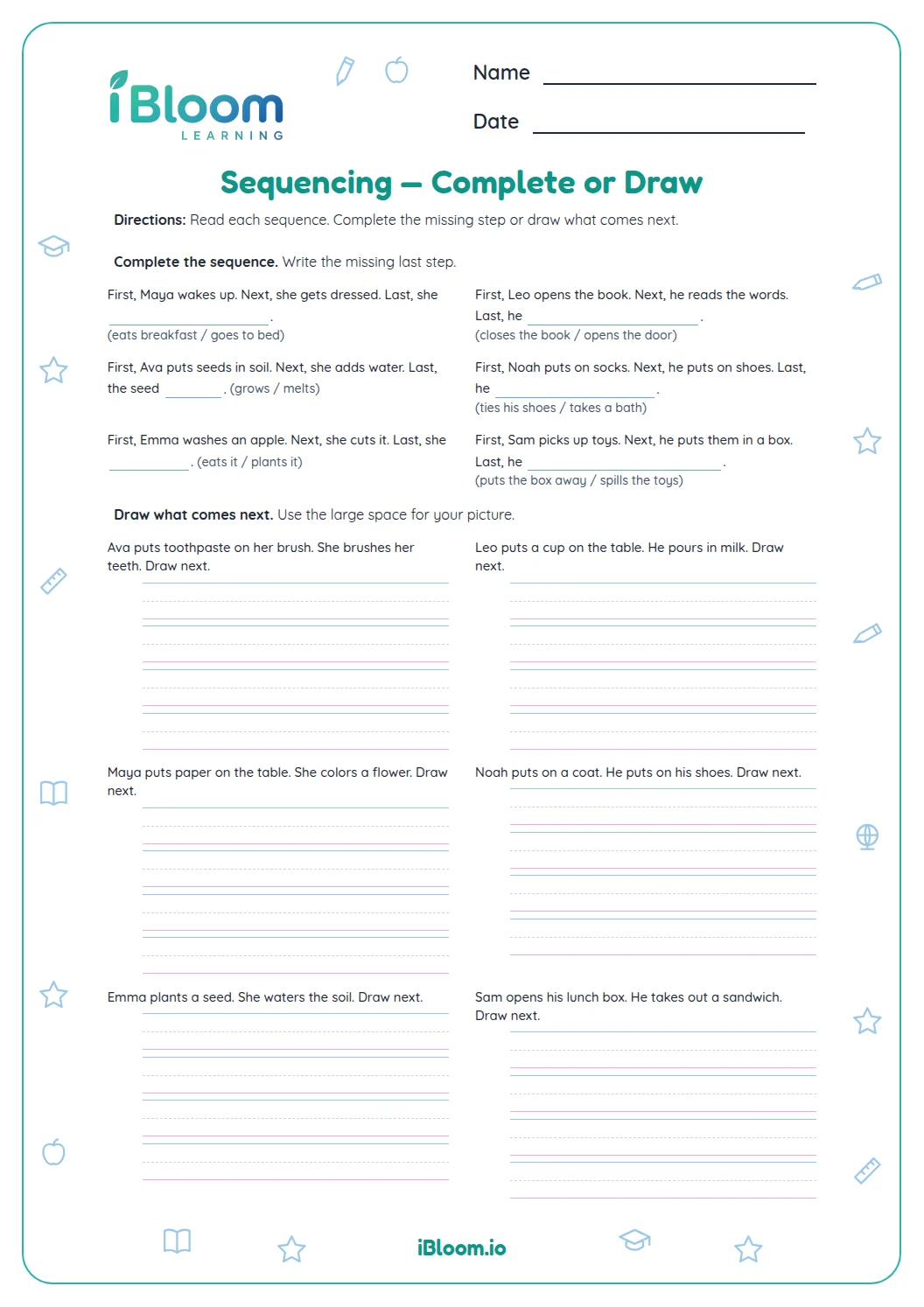
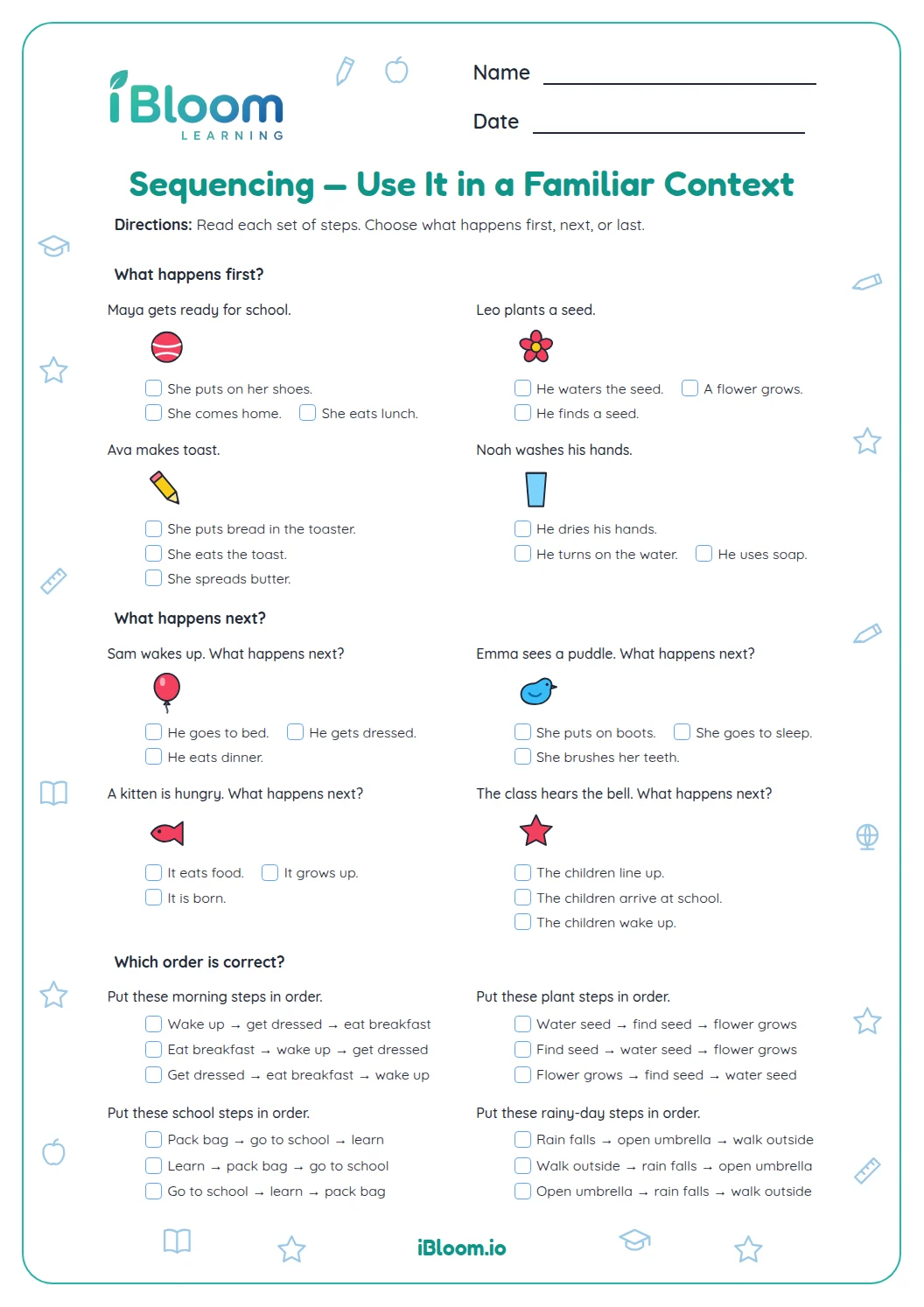
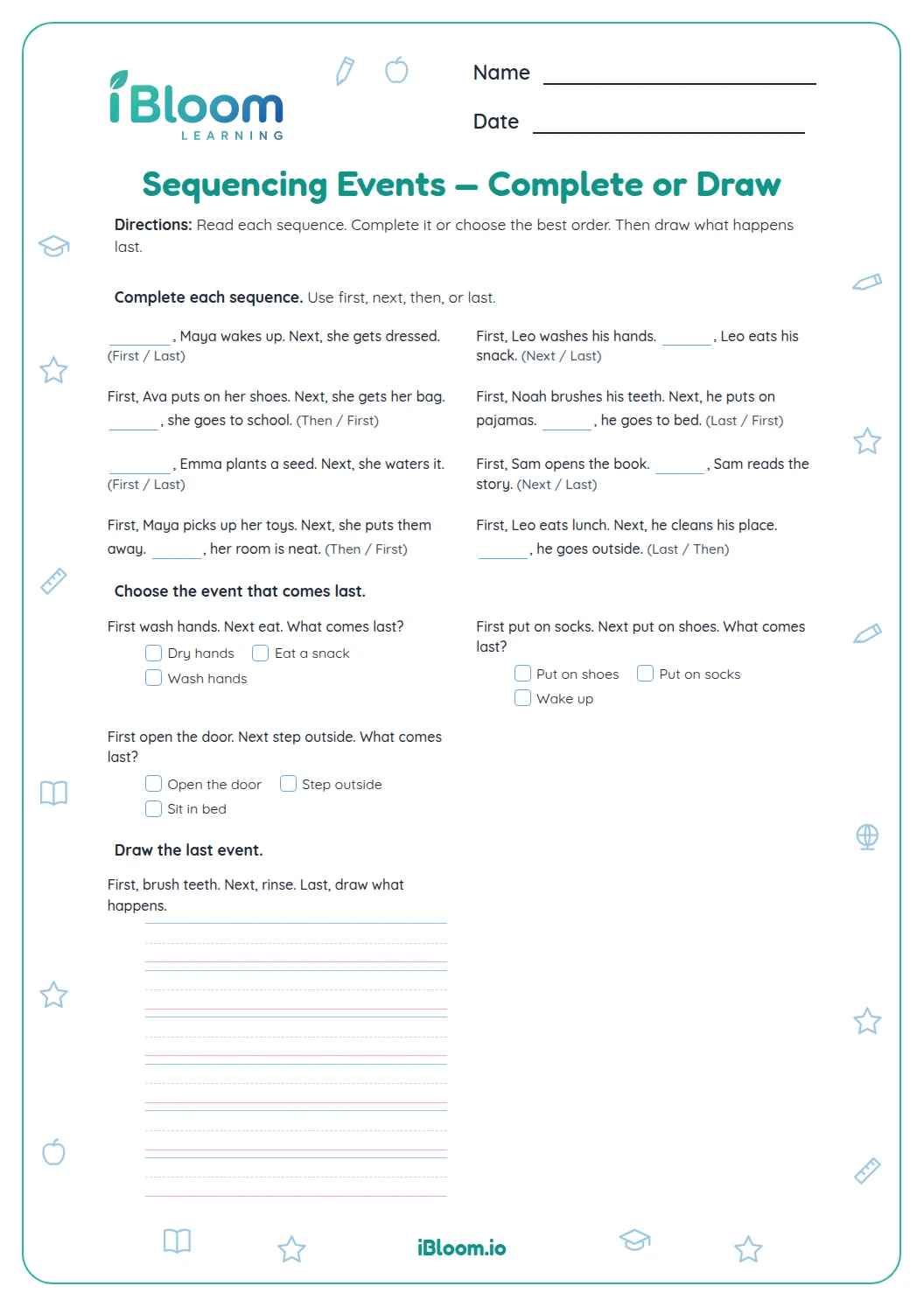
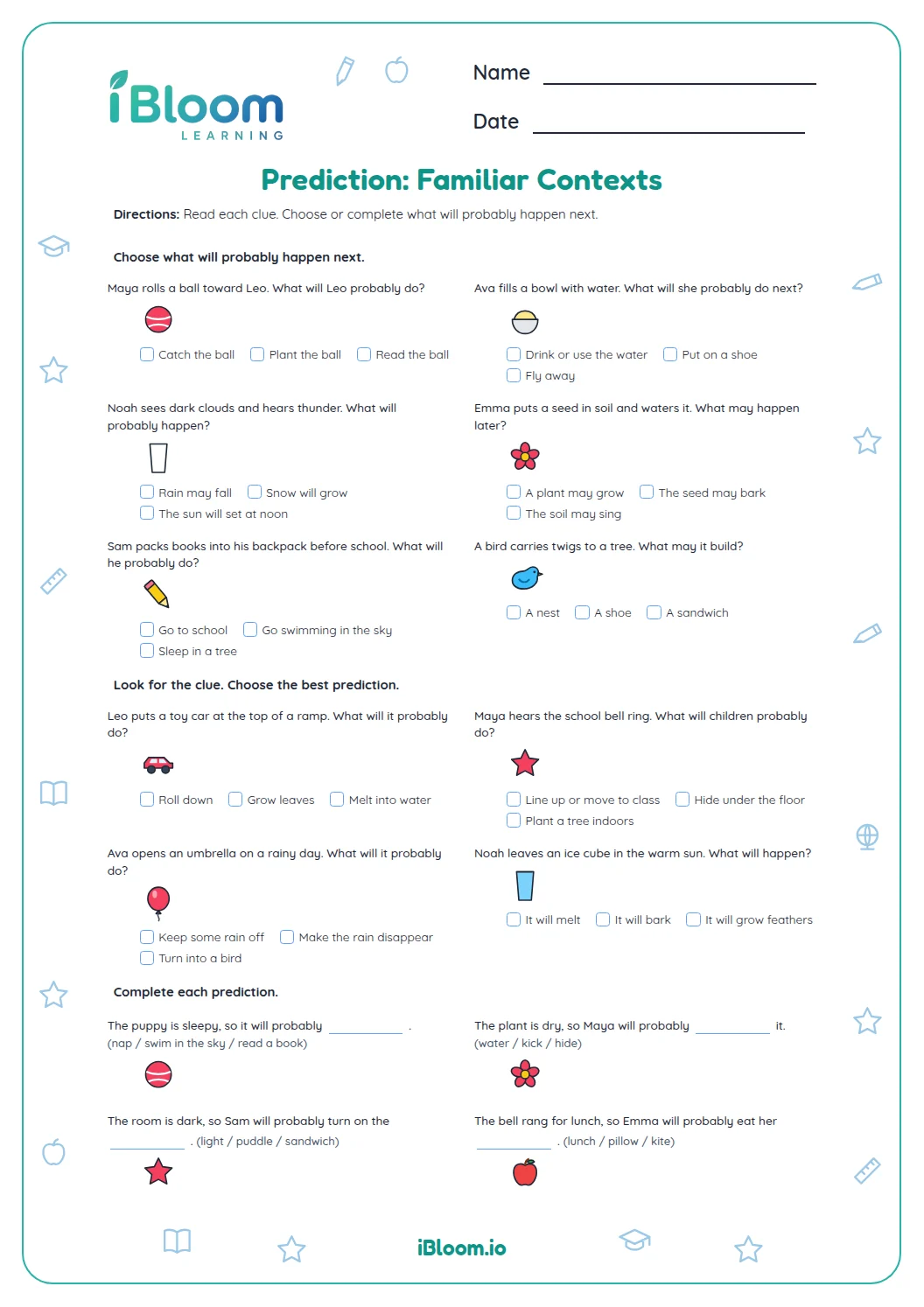
This two-page sequencing worksheet helps preschool and kindergarten learners reason about the order of familiar events. Fourteen concise questions use clear first, next, last, before, and after clues. The answer key lists the event that fits each sequence.
Which order words matter?
First, next, and last tell where an event belongs. Before and after help learners compare two steps in a familiar routine.
How do we find what comes first?
Look for the named action, then compare the choices with the order clue.
- 1Ben puts on socks, then shoes. What comes first?
- 2Socks come before shoes.
Why use familiar routines?
Everyday actions such as getting dressed or washing hands give children a clear sequence to reason about.
How to use this worksheet
- 1Read the whole question aloud.
- 2Find the order word: first, next, last, before, or after.
- 3Say the routine in order.
- 4Choose the event that matches the clue.
Common mix-ups and quick fixes
The mistake
Choosing the last step when asked for the first.
The fix
Point out the order word before choosing.
The mistake
Treating next as another word for first.
The fix
Say the steps aloud from beginning to end.
The mistake
Guessing without connecting the routine.
The fix
Describe what a person would do in that familiar situation.
What to practice next
Make more practice
Questions parents and teachers ask
What does this sequencing worksheet include?
It includes 14 choice questions about familiar routines and events. Children decide what happens first, next, last, before, or after, then check responses with the answer key. The short prompts make it easy to discuss each event together.
Is this worksheet suitable for preschool?
The prompts use short sentences and familiar actions, so an adult can read them aloud with a preschool learner. Kindergarten children can read or discuss them more independently. Examples include getting dressed, washing, and preparing food at home.
How can I explain first, next, and last?
Use a routine the child knows, such as putting on socks and then shoes. Say each step aloud in order, then ask which step is first, which follows, and which ends the routine. Familiar examples make order words concrete.
Does every question use the same routine?
No. The questions include different everyday situations, such as washing, dressing, preparing food, and noticing plant growth. This lets children apply order clues across varied contexts instead of memorizing one repeated routine. Each prompt asks for a single event.
What does the answer key show?
The answer key gives the event that correctly matches each question’s order clue. Review a response by retelling the short sequence together and identifying the clue word, such as first, next, last, before, or after. Children can point to each event while retelling it aloud.