







About this worksheet
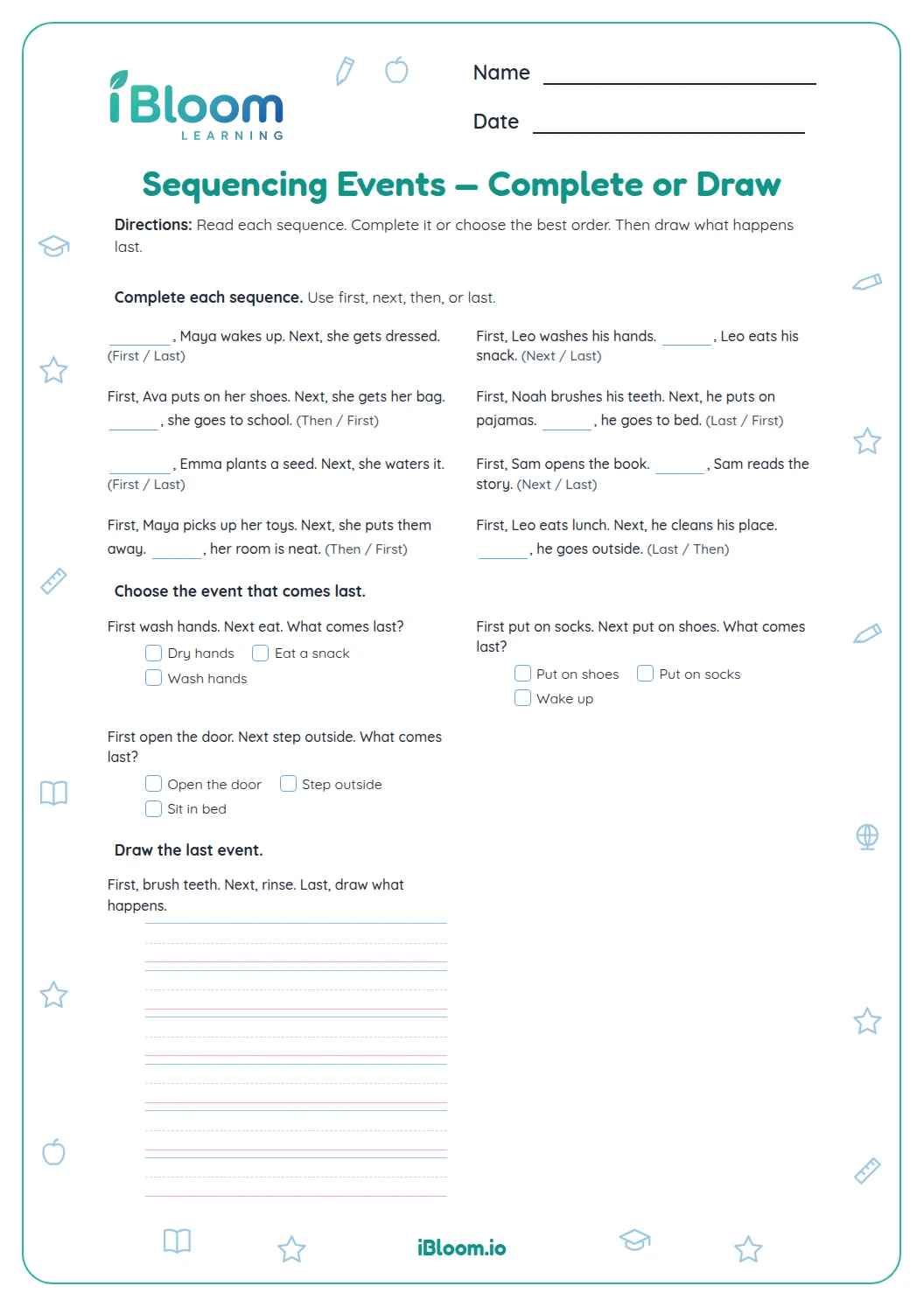
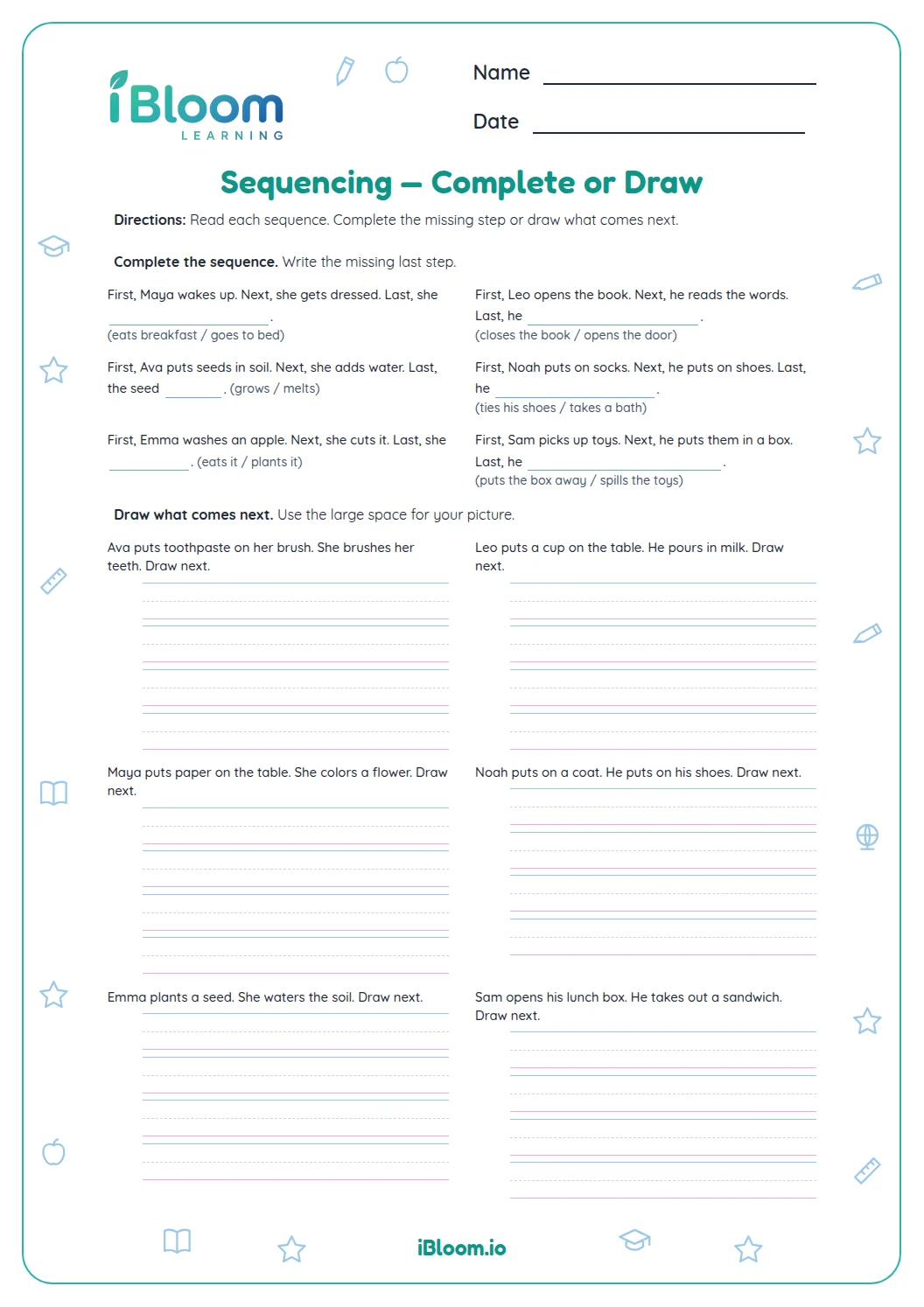
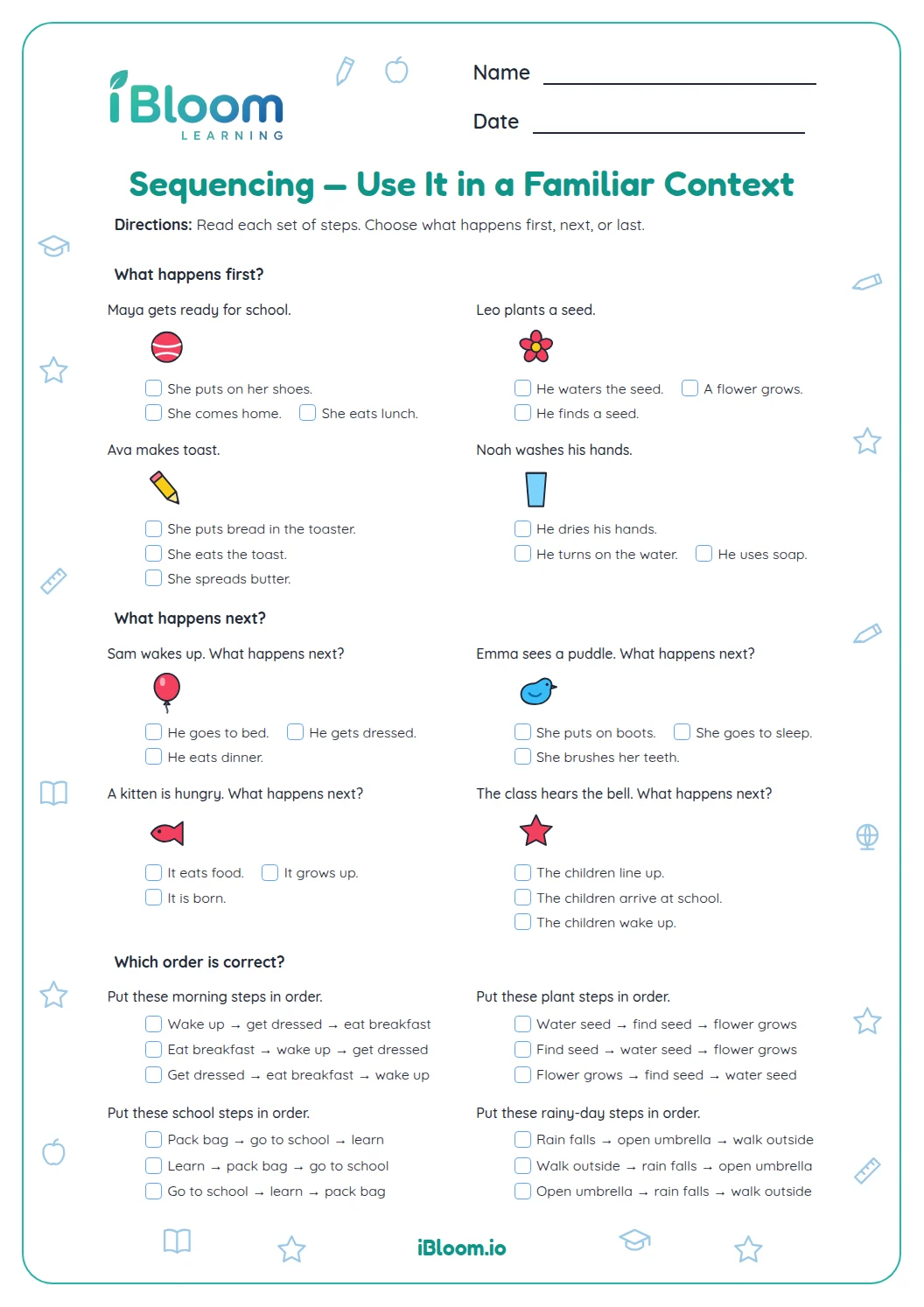
This gentle sequencing worksheet is designed for preschool and kindergarten learners who are beginning to talk about event order. Familiar routines such as getting ready, planting a seed, and eating lunch give children a clear sequence to follow. Picture cues support each item, and the practice moves from choosing an event to naming an order word and giving a short response. There are 16 questions and a separate answer key.
How can a child tell what happens first?
Look for the event that starts the routine. In question 1, waking happens before eating lunch or going to bed. A picture cue helps the child connect the words to a familiar sequence.
- 1Wake up comes before lunch and bedtime.
- 2The first event is waking up.
When do we use next and last?
Next names the event that follows another event. Last names the final event. In question 9, putting on socks happens before putting on shoes, so Next fits.
What will children practice?
The sheet includes first, next, and last questions, picture cues, short routine descriptions, and two brief written responses.
How to use this worksheet
- 1Say the events aloud in the order they happen.
- 2Find the event that starts the routine.
- 3Use next for the event that follows.
- 4Use last for the final event.
- 5Check that the answer matches the routine and picture clues.
Common mix-ups and fixes
The mistake
Choosing a favorite event instead of the first.
The fix
Retell the routine from its beginning and look for the starting action.
The mistake
Using last for the event after the first.
The fix
Next means the following event; save last for the end.
The mistake
Putting events in a possible but unsupported order.
The fix
Use the sequence stated in the sentence and picture cues.
What to practice next
Make more practice
Further reading
Questions parents and teachers ask
What does first mean?
First means the event that starts the sequence. In the morning routine, waking up comes before eating lunch or going to bed, so waking up is first. Say the events aloud to hear their order. The worksheet begins with familiar events so children can focus on the order words instead of learning an unfamiliar routine.
What does next mean?
Next is the event that follows the event already named. If a child puts on socks and then shoes, shoes come next. This worksheet asks children to choose Next or Last in familiar routines. The word next points to the action that follows. For example, putting on shoes follows putting on socks in the routine.
What does last mean?
Last means the final event in a sequence. If Sam packs his bag, walks to school, and enters class, entering class happens last. Retell the actions from the beginning to check. The final action is last. Retelling each event in order helps distinguish the ending from an action that happens in the middle.
Can children answer by talking instead of writing?
Yes. Each item is a choice, so a child can point to an answer or say it aloud. An adult can read the routine and choices aloud, then ask the child to retell the order. The pictures provide familiar clues, while the words in each item tell which event comes first, next, or last.
How many questions are included?
The worksheet has 16 picture-supported questions: six event-order choices, four Next or Last choices, and six more routine-order choices. The answer key gives the selected event or order word for each item. Children can explain their choice aloud by naming the action that happens before or after it.