




About this worksheet
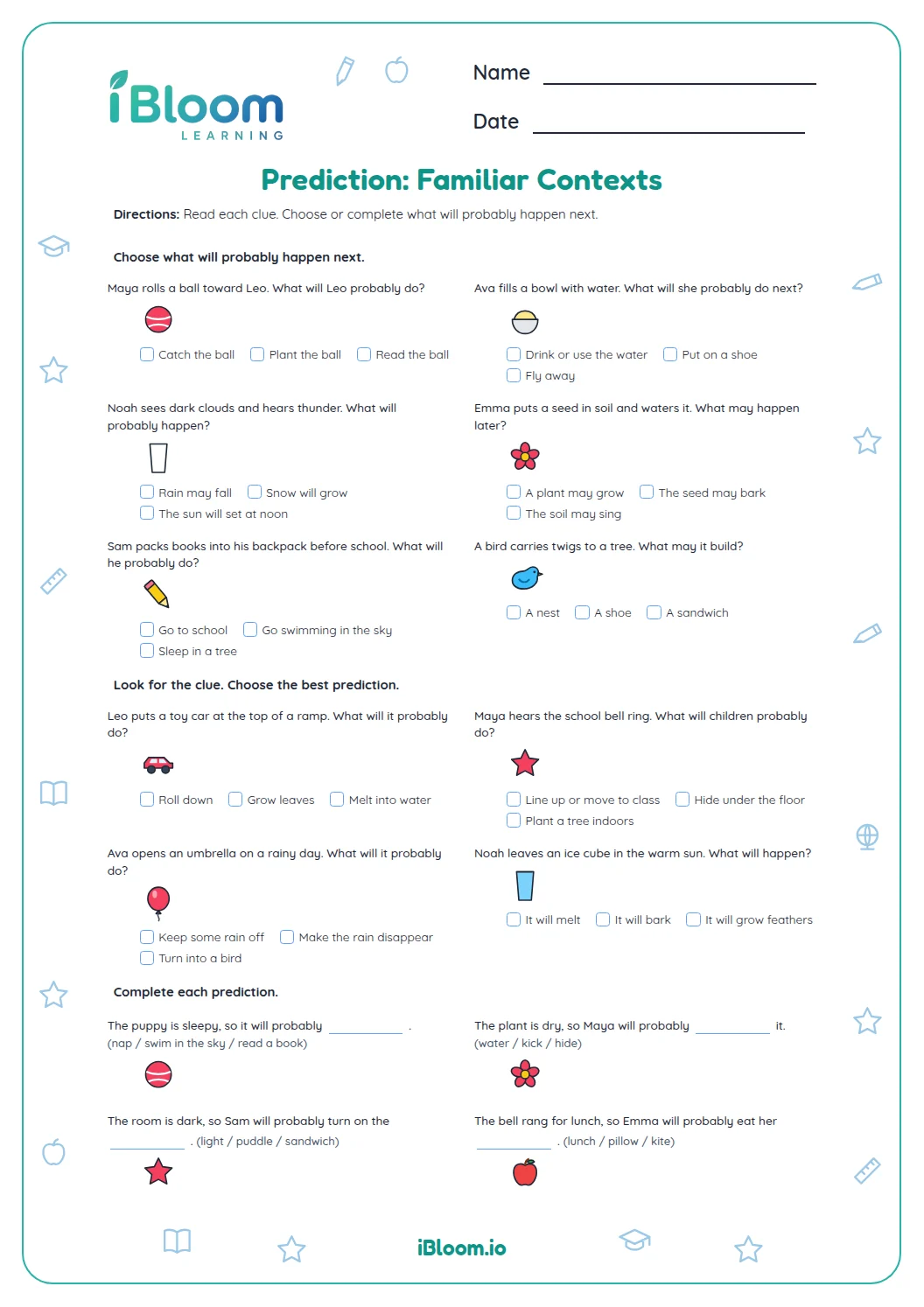
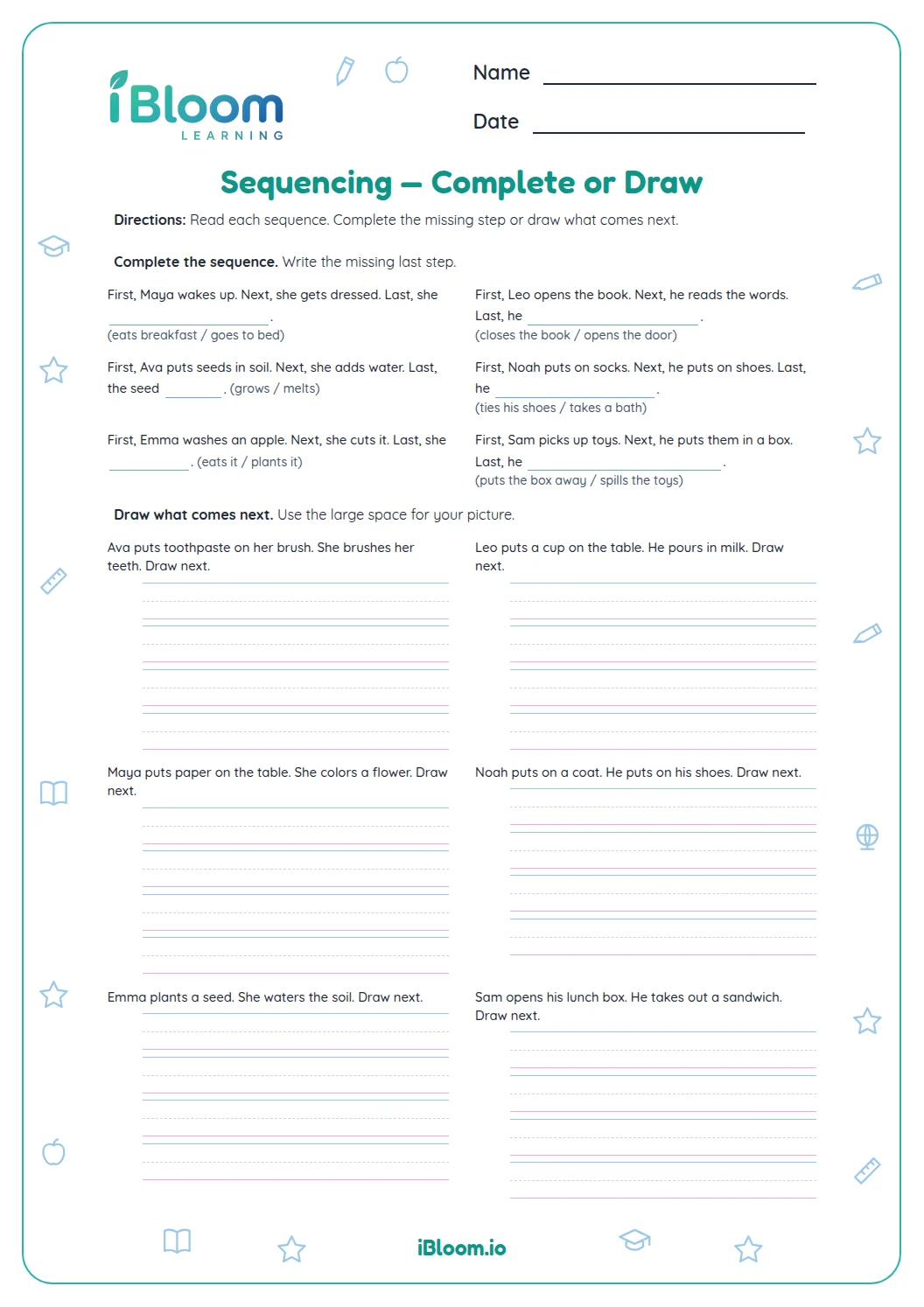
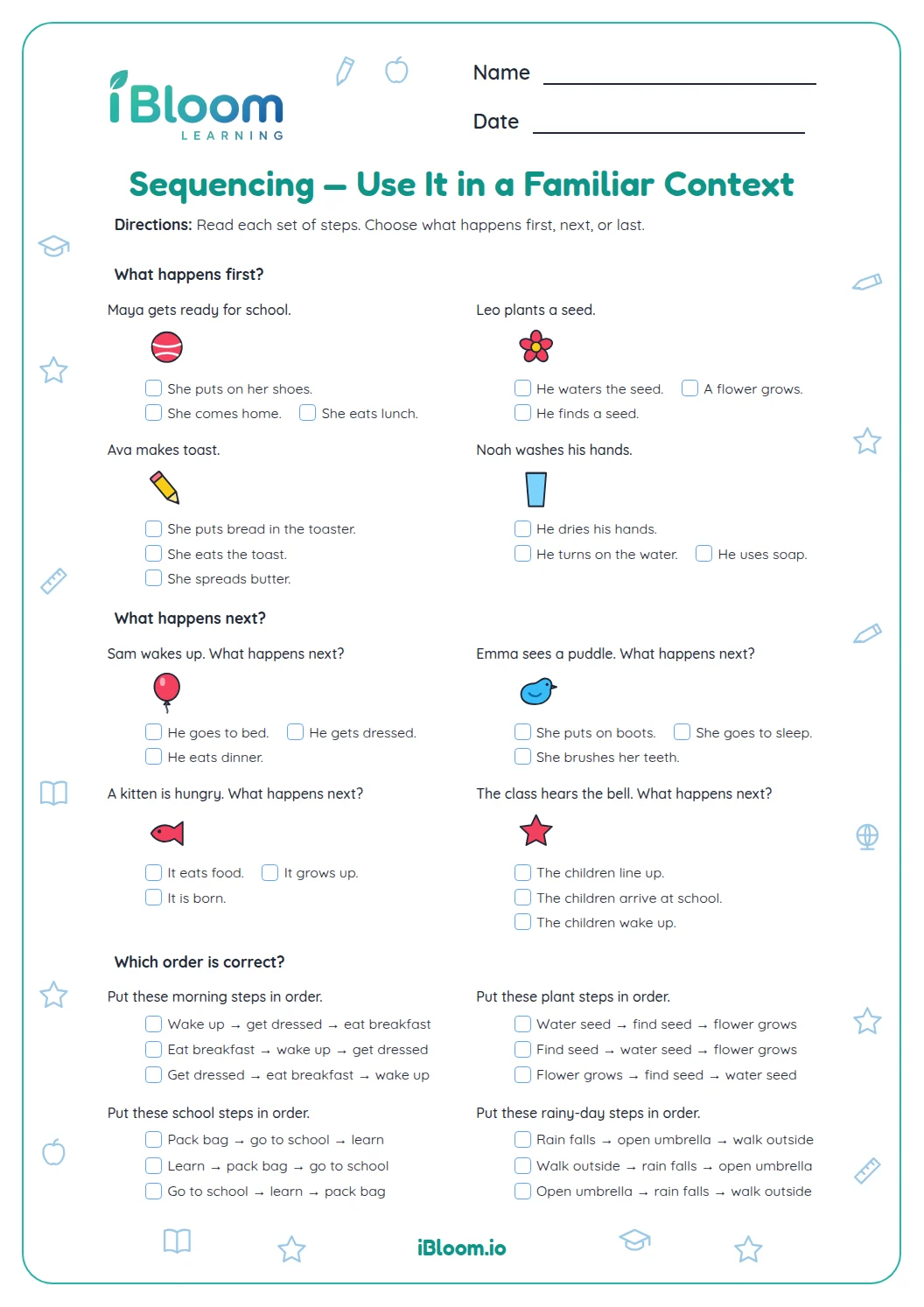
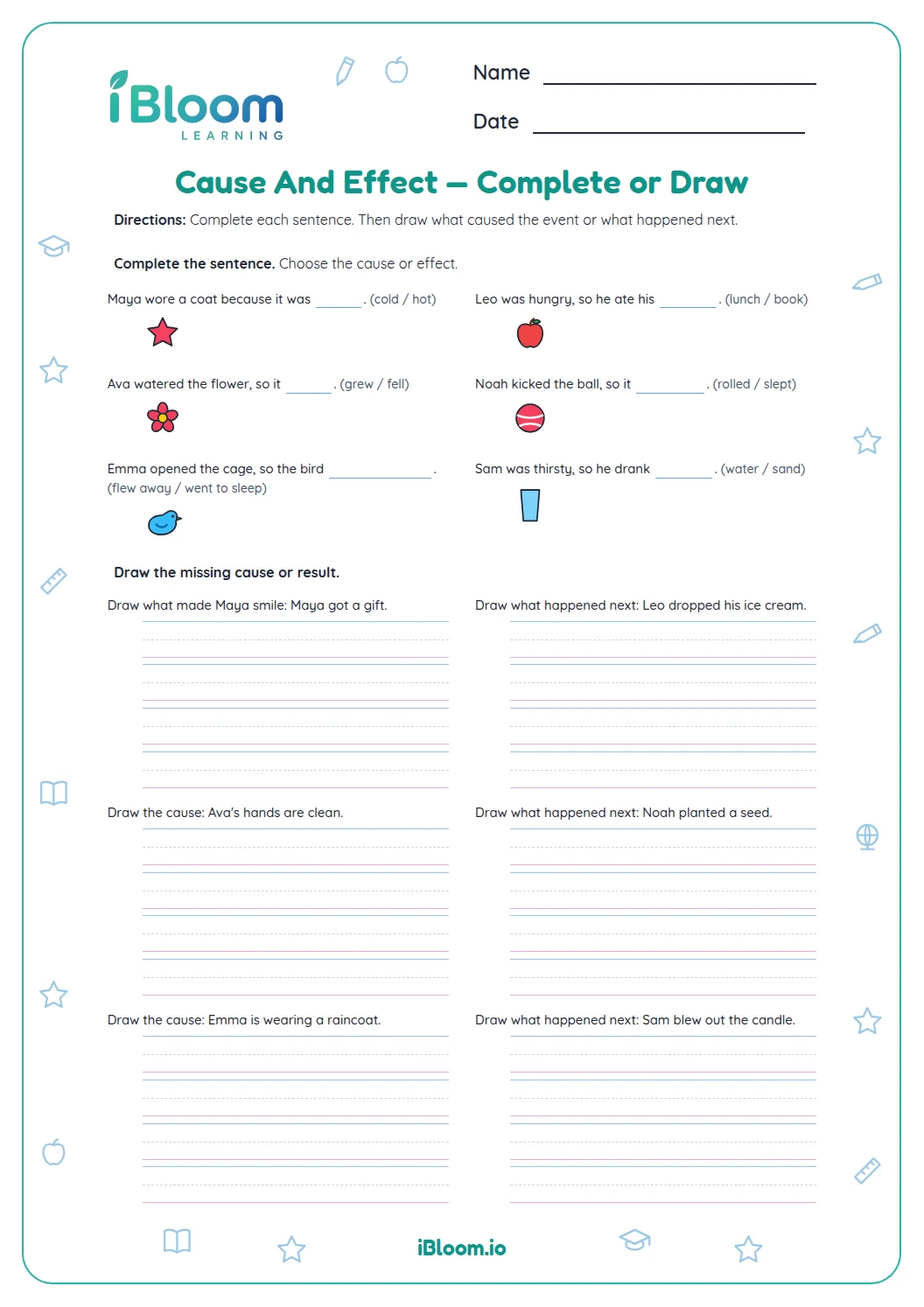
This free preschool and kindergarten worksheet helps children practice predicting what may happen next. It combines short, familiar situations with picture clues such as clouds, a seedling, a kite, and a snowman. An adult can read each prompt aloud while the child chooses a likely event and points to the clue. The printable has 14 questions across two pages and a separate answer key.
Aligned to RL.K.1
What clues can children use?
The sheet uses familiar events involving weather, plants, animals, and play. Pictures support many of the situations, while the adult can read the short text aloud.
How do children choose a prediction?
A prediction is a likely next event based on a clue. Dark clouds make rain a reasonable choice; a seedling and water suggest that a sprout may appear. Children can point to the clue and say “I think… because…”
How can an adult support the activity?
Read the prompt, give the child time to look, and ask what detail helped. More than one event may happen in real life, so focus the discussion on which offered choice best fits the clue.
How to use this worksheet
- 1Invite the child to name what they notice in each picture.
- 2Read the short situation aloud if needed.
- 3Ask what usually happens next in a similar situation.
- 4Let the child point to the clue that helped them decide.
Common mix-ups and quick fixes
The mistake
Choosing an event that could happen but does not fit the clue.
The fix
Ask which choice is most likely given what is happening now.
The mistake
Thinking a prediction must always come true.
The fix
Use “may” or “might” because a prediction is a reasonable possibility.
The mistake
Picking an answer without noticing the picture or situation.
The fix
Have the child point to the detail that supports the choice.
Common Core alignment
Ask and answer questions about key details in a text.
On this sheet: Children answer questions about short read-aloud situations and their pictured details.
Show the official wordingHide the official wording
With prompting and support, ask and answer questions about key details in a text.
What to practice next
Make more practice
Further reading
Questions parents and teachers ask
What is a prediction?
A prediction is an idea about what may happen next. A child notices a clue, such as dark clouds or wet socks, and chooses the likely event that fits. The answer is a thoughtful possibility, not a promise that the event will happen.
Does an adult need to read the questions?
An adult can read each short situation aloud, especially for preschool learners. The child can study the picture, point to a choice, and explain which clue helped. This keeps the focus on noticing details and thinking about what may happen next.
Why are there pictures on the worksheet?
Pictures give beginning readers a visible clue to discuss. The sheet pairs familiar images with situations about weather, plants, animals, and play. Invite the child to name what is pictured before choosing a likely next event. The pictures are prompts, not answer labels.
How many questions are on the printable?
There are 14 questions across two worksheet pages, plus a separate two-page answer key. The answer key shows the intended likely choice; adults can also discuss why the clue supports that choice. Read prompts aloud and let the child point to an answer.
Can a different prediction also make sense?
Real events can have several possible outcomes. Each question offers choices and asks for the one that best fits its clue. Ask the child to explain why that event is likely, using something in the situation or picture.