










About this worksheet
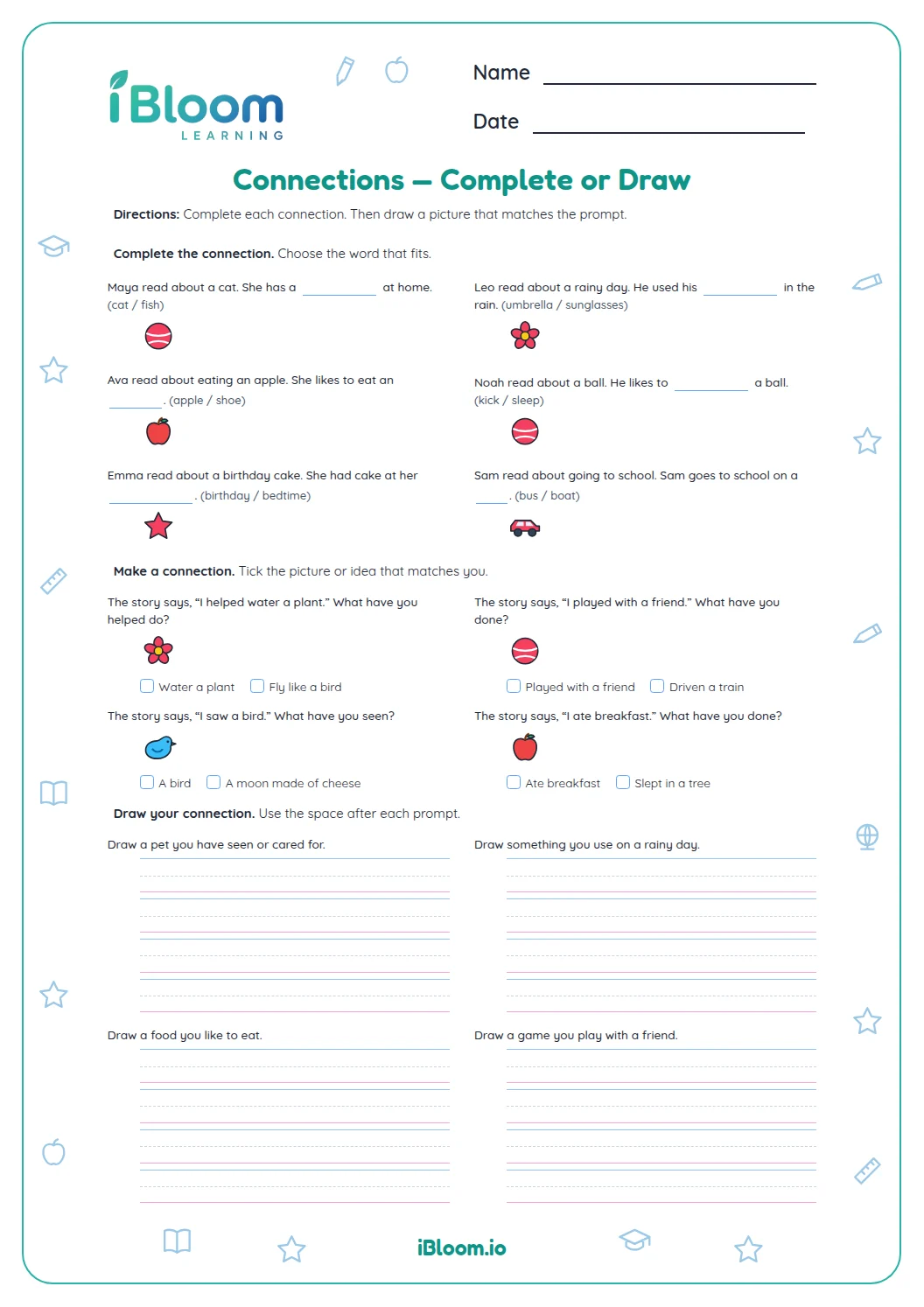
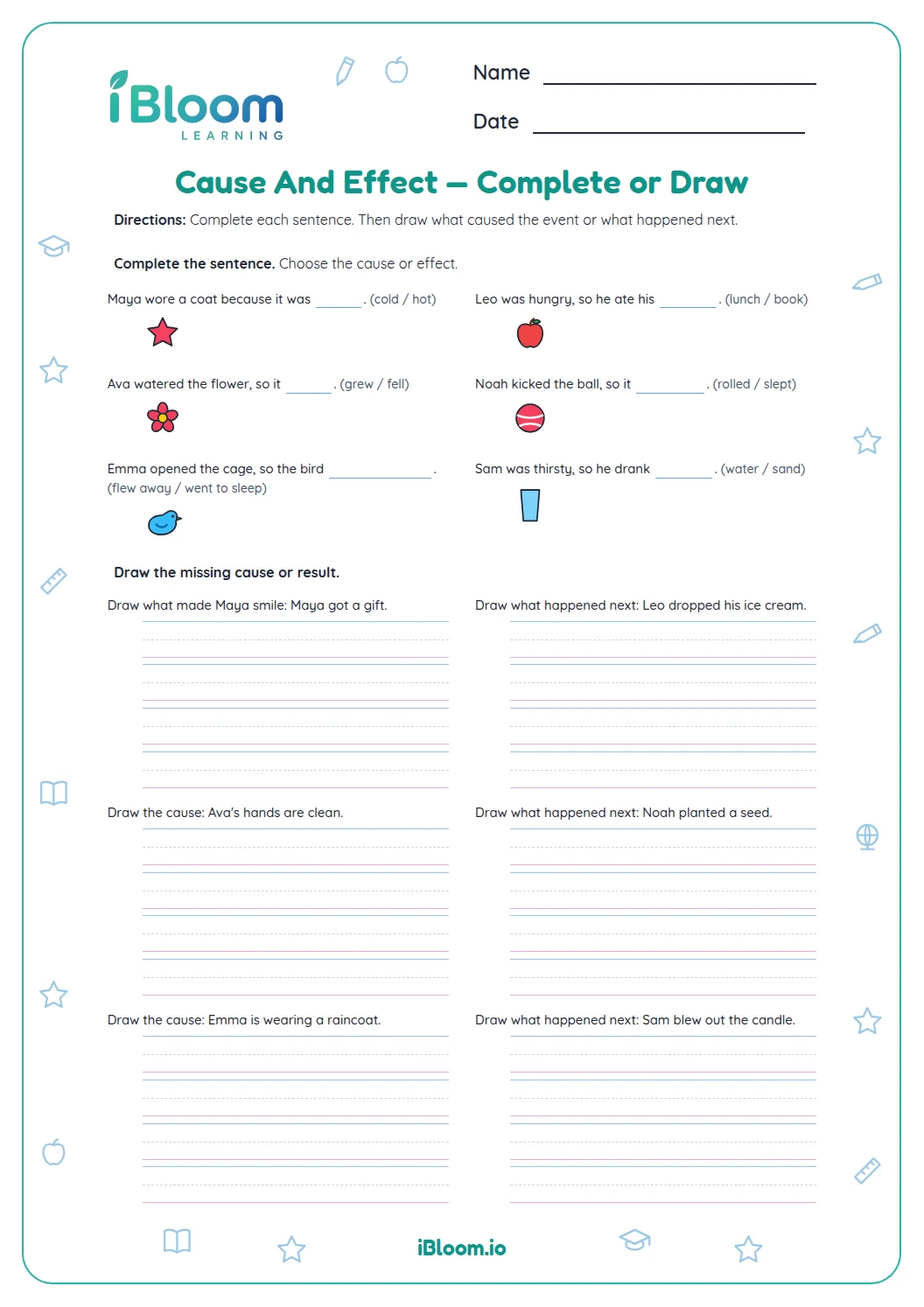
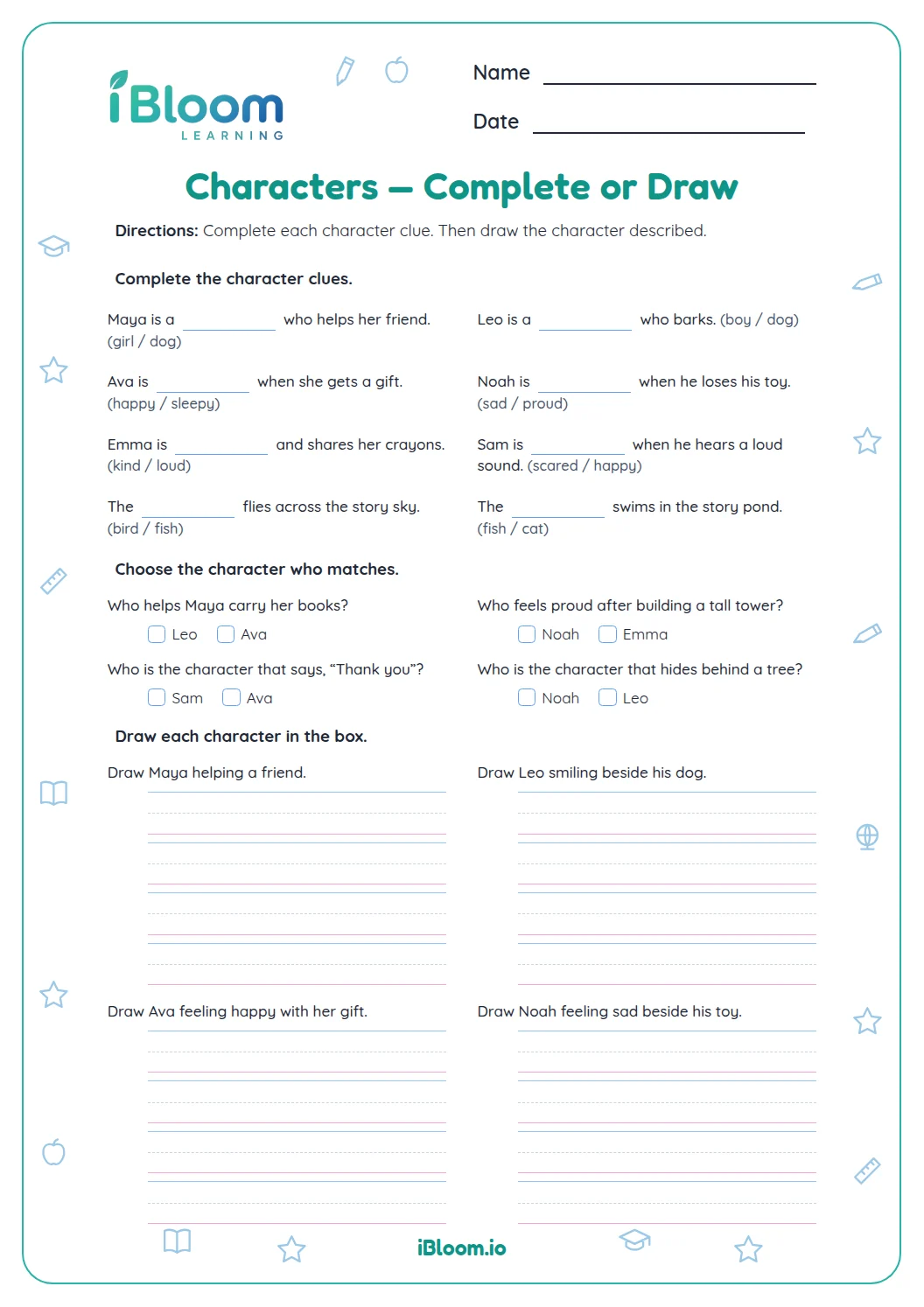
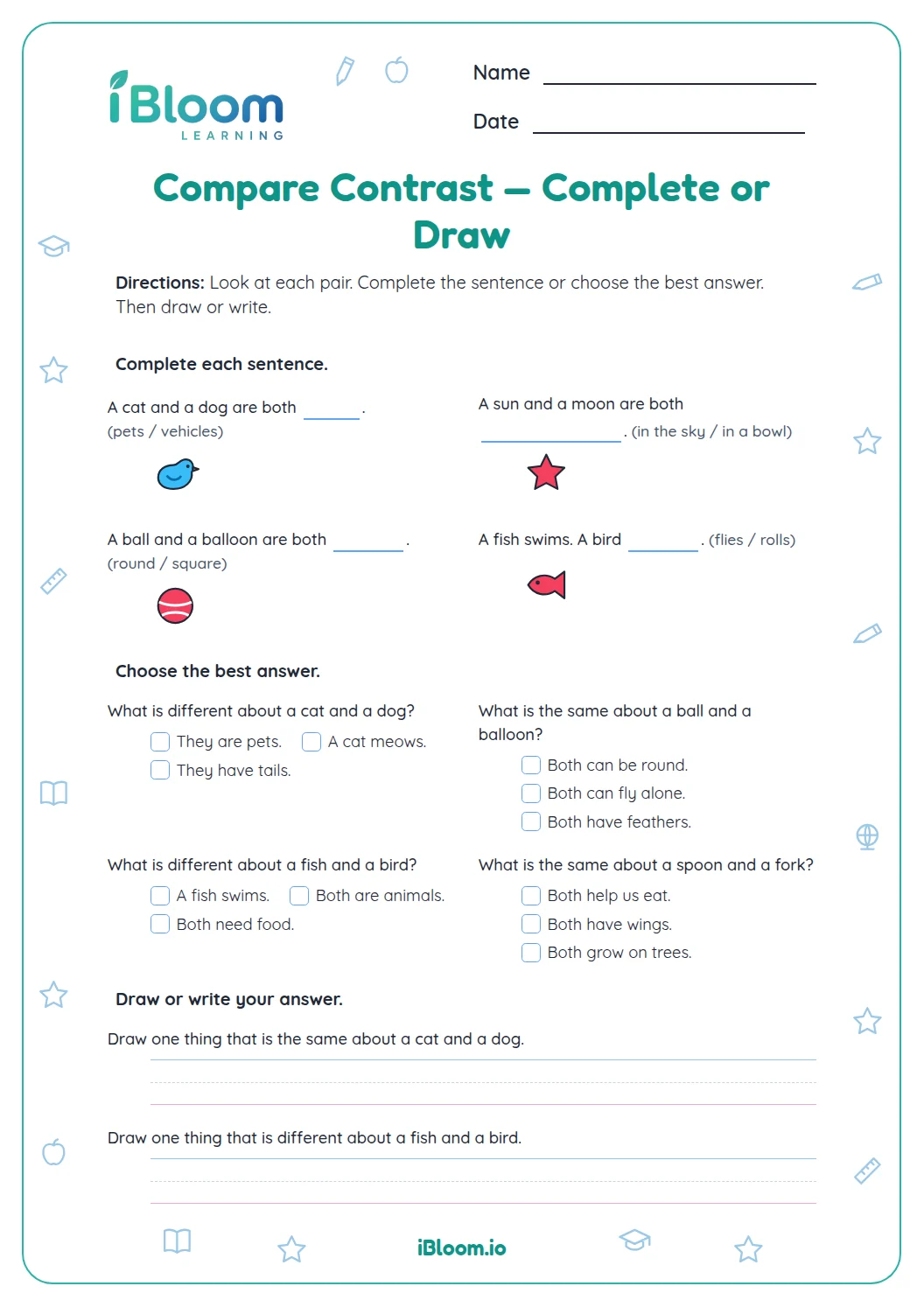
This preschool and kindergarten worksheet practices making familiar connections: what a seed grows into, what a cup is for, and which object fits a clue. Picture cues and short choices support 16 quick questions, with a separate answer key for an adult.
What does it mean to make a connection?
A connection links a clue to something a child knows from daily life. In question 1, a seed grows into a plant. Thinking about a garden or a planted seed helps select the word that belongs with the clue.
- 1A seed grows into a ___?
- 2Think: What can grow from a seed?
- 3Answer: plant
How can children use the clue?
Listen for what the clue tells you: an object’s job, where it belongs, or what it is used with. A spoon belongs with eating, a key opens a door, and a boat moves on water. The choices include familiar words so the child can compare them.
How can I invite a child to explain a choice?
After the child chooses, ask for a short reason: “A hat goes on my head.” The explanation lets the child name the connection in their own words. Read the prompt and choices aloud when needed, then let the child point to an answer.
How to use this worksheet
- 1Read a clue aloud if needed.
- 2Ask what the clue tells about an object or action.
- 3Let the child compare each choice.
- 4Invite a short spoken reason for the answer.
- 5Check responses with the answer key.
Common mistakes and quick fixes
The mistake
Choosing a word because it sounds familiar, without matching the clue.
The fix
Repeat the clue and ask which choice fits its meaning.
The mistake
Rushing past a clue about an object’s use.
The fix
Ask, “What do we use it for?” before choosing.
The mistake
Expecting a long explanation from a young learner.
The fix
Accept a clear phrase such as “a key opens a door.”
What to practice next
Make more practice
Questions parents and teachers ask
What is a connection on this worksheet?
A connection is a link between a clue and a familiar thing, place, or action. For example, a key can open a door. Children choose the word that fits and can explain the relationship in a few spoken words.
Can I read the choices aloud?
Yes. An adult may read each clue and choice aloud, then invite the child to point to or say an answer. The page practices understanding a familiar relationship, so children can show their thinking before they are ready to read every option independently.
What kinds of connections appear?
The questions connect familiar objects with their uses, places, or related things. Examples include a spoon and soup, a bird and nest, a pencil and writing, and a boat and water. This mix gives children varied everyday links to recognize.
How can I help without giving away the answer?
Repeat the clue and ask what the object does or where it belongs. For a key, you might ask, “What can this open?” Pause so the child can think, then have them compare the choices. The answer key is available afterward for checking.
Why does the sheet include picture choices?
Pictures provide a visual support for young learners as they listen to the clues and compare familiar choices. The printed word choices keep the connection clear for an adult reader, too. Children can point first and say their reasoning aloud.
How many questions are included?
There are 16 short choice questions across two worksheet pages, followed by a separate answer key page. The questions use familiar objects and actions, with one fitting answer in each set of three choices. An adult can read the choices aloud when useful.